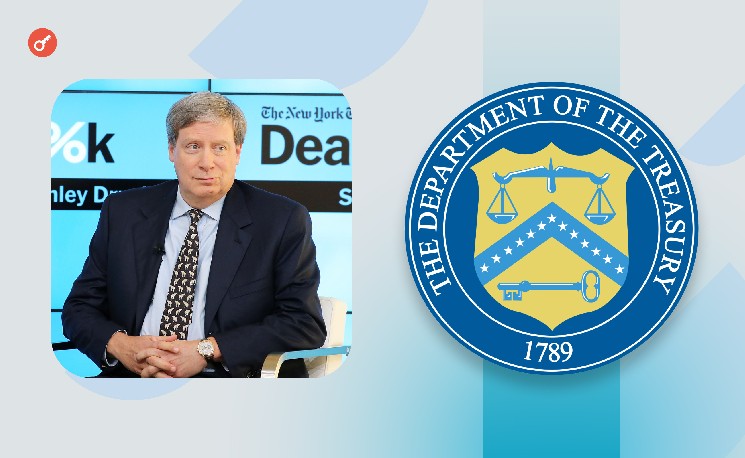
American financier and investor Stanley Druckenmiller commented on the U.S. Treasury Department's plan to increase the volume of long-term bond buybacks. In his note for the WSJ, he called this approach a mistake, criticizing the department's intervention as such.
Recall, the U.S. Treasury announced the increase in the volume of bond buybacks with maturities from 10 to 30 years on August 19, 2026. The amount was increased from $2 billion to $4 billion.
This factor, along with U.S. President Donald Trump's call to approve the framework bill (CLARITY), served as one of the catalysts for growth in the crypto market. For example, macro strategist Mark Connors believes the Treasury's decision could push Bitcoin to a level of $180,000.
Despite the overall positive effect for high-risk assets in general, Druckenmiller pointed to potential risks. According to him, the Treasury failed to achieve its stated goals - to reduce bond yields and slow the pace of increase in the national debt.
Immediately after the announcement, interest rates did fall, but the next day they recovered and rose even higher. At the same time, there were no prerequisites for intervention, the expert is sure.
According to Druckenmiller, this market was not "broken"; yields rose because its participants reassessed U.S. fiscal policy and began to demand more. That is why the Treasury's attempt to intervene did not bring results, and interest rates rose even higher, he is convinced.
The expert gives the following arguments:
- there were no liquidity problems. Trading was normal, auctions were not disrupted, banks were not under stress. The Treasury reacted to the rise in yields;
- such interest rates were justified by fundamental factors. Among them: high inflation, low unemployment, a deficit of about 6% of GDP, the size of the debt exceeded $40 trillion;
- bond yields are a mechanism of pressure on Congress from the market. As long as the government can borrow cheaply, politicians have little incentive to reduce the deficit and reform social spending. If the Treasury artificially lowers rates, it makes it easier for them to change nothing;
- this is a dangerous precedent. The expert wonders what the "ceiling" is for the Treasury's program. Once the market decides that the Treasury is protecting a certain level of rates, it will constantly test it, he believes;
- such a step by the department resembles the Fed's quantitative easing. The Treasury buys up long-term securities and effectively replaces them with shorter-term debt. But such actions are not taken during high inflation.
What should have been done?
The billionaire is sure that the right step would have been to let the market dictate bond yields, lowering them by reducing the deficit. In Druckenmiller's opinion, these securities could have traded even higher, up to 5.5%.
The Treasury's intervention, in turn, not only did not yield results but also created additional risks:
"Governments protecting prices from fundamental factors always lose. [...] Rising interest rates are a signal of impending problems, and artificially suppressing them only increases the danger," he summarized.
Note, immediately after the collapse following the Treasury's announcement of the buyback, the yield on 30-year bonds recovered to 5.27%, but then fell again to 5.2%.
Earlier we covered the opinion of billionaire Ray Dalio. He has repeatedly stated the growing risk of a U.S. debt crisis, calling for investing money in gold and bitcoin.