Written by: Eric, Foresight News
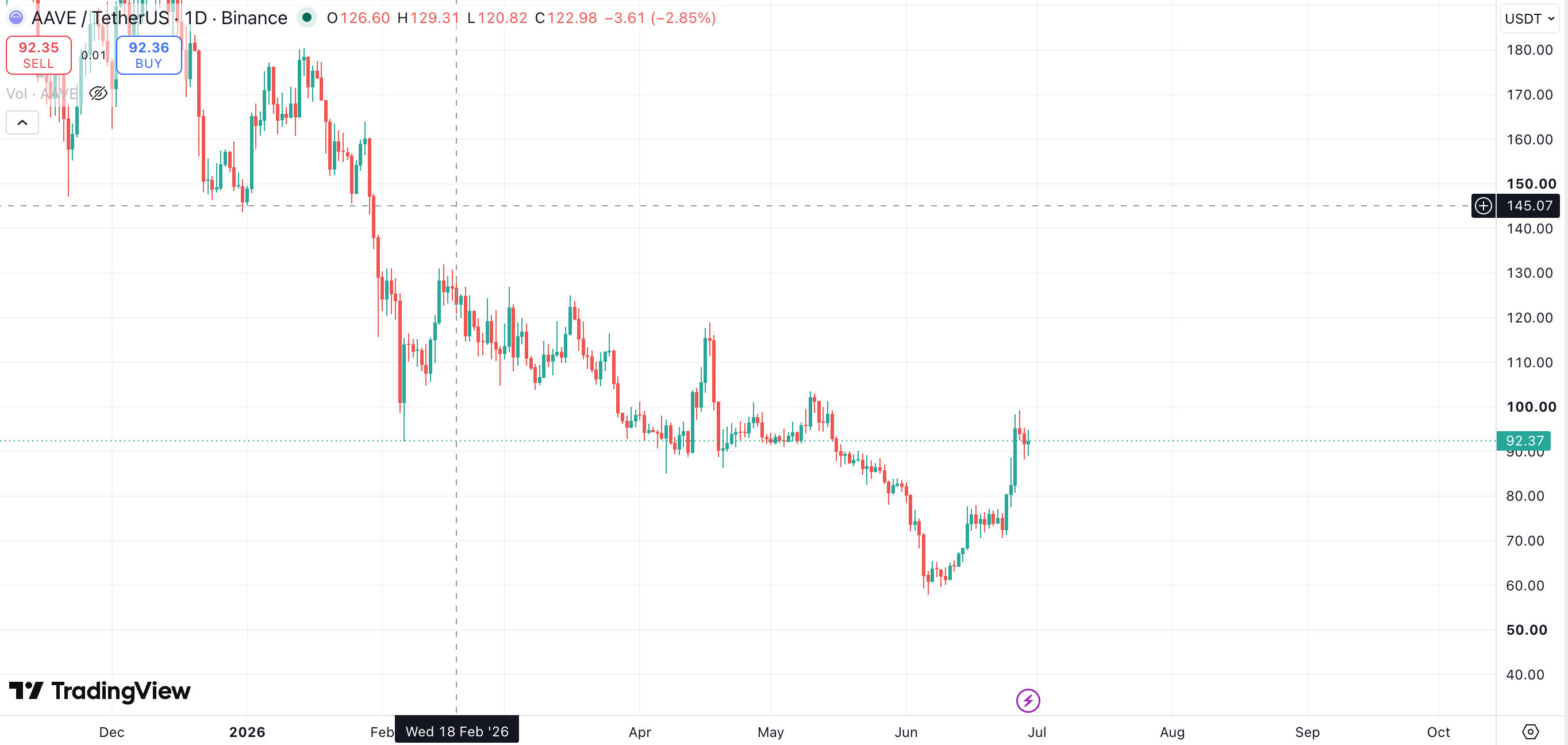
In the past week, the price of AAVE surged from around $70 to nearly $100, marking a rebound of over 30%.
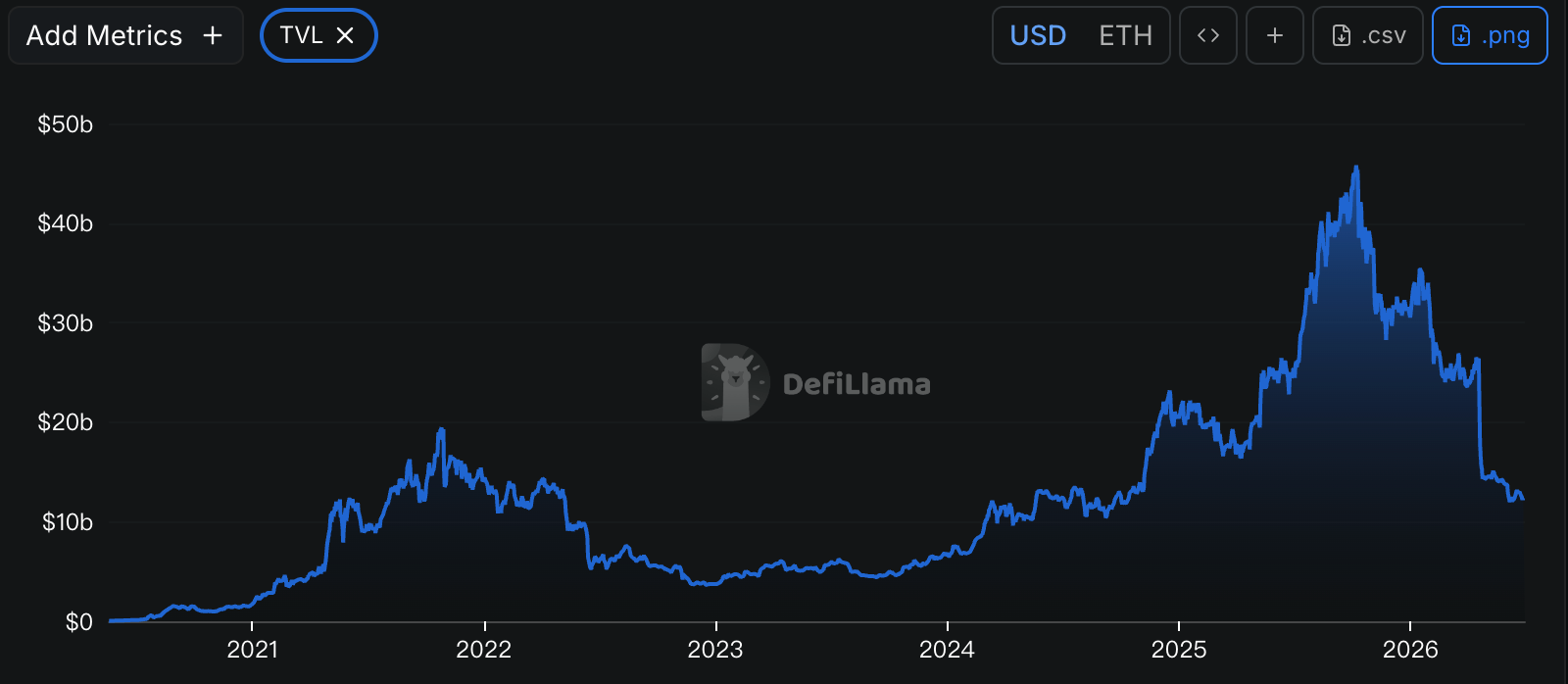
Looking solely at the TVL data, Aave still hasn't recovered from the Kelp DAO attack incident. In fact, its TVL has declined further compared to the panic-driven levels seen during that period.
Despite the underwhelming data, Aave continues to attract capital interest. In the early hours of June 26, CoinDesk, citing sources, reported that Kraken was in talks to acquire a stake in Aave. The potential deal involved exchanging 35,000 ETH for 250,000 AAVE tokens and 15% equity in Aave Group, valuing the entire transaction at $71 million.
This report from sources was quickly refuted by Aave founder Stani Kulechov, as the reported valuation would imply Kraken valuing Aave at less than one-third of its token's market capitalization. Stani denied any intention to "sell tokens at a 70% discount" but acknowledged that "multiple market participants have discussed directly or indirectly purchasing AAVE tokens held by Aave Labs through deeper, long-term partnerships."
The prospect of someone buying the dip naturally spurred others to front-run. Aave's price rose for three consecutive days on June 24, 25, and 26, with the peak gain on the 26th exceeding 20%. Beyond the acquisition rumors, Stani also revealed, while refuting the report, that research is underway for Tokenomics 3.0, which would introduce an automated buyback mechanism. Furthermore, on the evening of the 26th, he stated that Aave is expanding its target market from crypto assets to all asset classes through securities-backed lending and securities lending operations.
Standard Chartered Bank has given an extremely optimistic price prediction of $3,500 for Aave by 2030, citing bullishness on a future DeFi revival and the development of RWA tokenization. While more conservative, Grayscale also believes that, catalyzed by RWA tokenization, AAVE's price could reach $175 within a year.
Explicitly bearish views on Aave in the market are relatively few. However, reports released this year by Eco, Fensory, Coinstancy, among others, have pointed out that Morpho Blue surpasses Aave in rate optimization, capital efficiency, and custom market creation. Tiger Research went even further, suggesting that Morpho represents the "modular" trend, while Aave resembles a "traditional unified pool," lagging in flexibility.
From the initial source leak, to implicitly confirming the existence of potential AAVE token investors during the refutation, followed by successive revelations of protocol developments, the sequence carries a sense of strategic pacing. Setting these aside and looking purely at fundamentals, despite experiencing community division, security concerns, capital outflows, and other setbacks, Aave's TVL still firmly holds the top position among DeFi lending protocols. It is not only nearly double that of the second-place Morpho but also almost equal to the combined TVL of the 2nd, 3rd, and 4th place protocols.
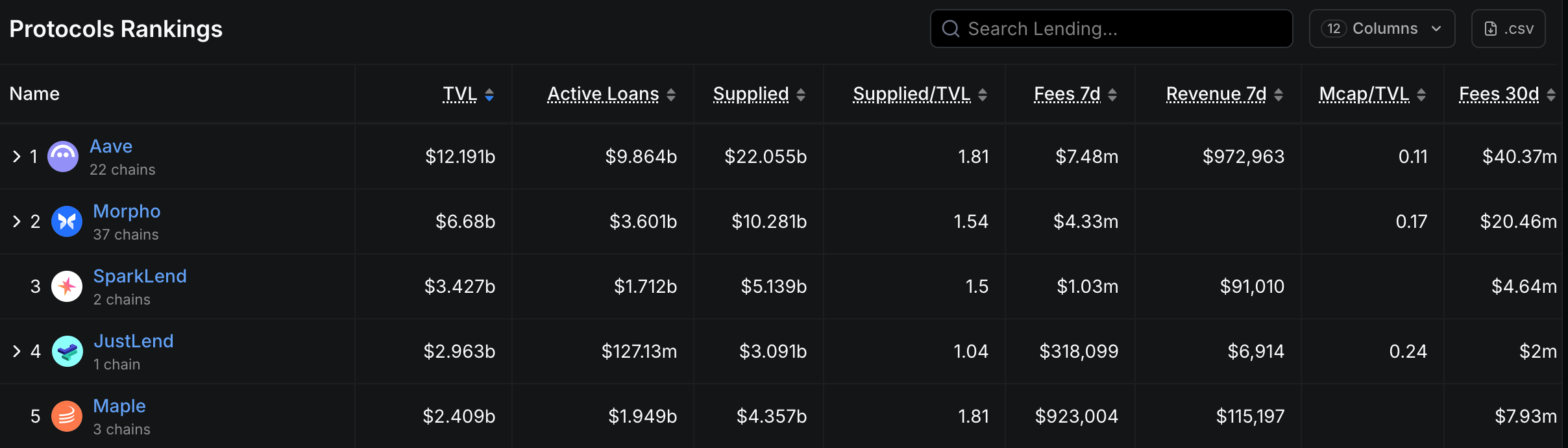
It's not just TVL; metrics like active borrowing, total supply, revenue, and fees also show significant leads. It has been nearly 9 years since ETHLend launched. Conflicts within the team and community, along with protocol risks, are not unforeseen, especially during an overall industry downturn. For a protocol whose code is immutable on-chain, as long as the protocol's core fundamentals haven't suffered a severe decline, the advantages accumulated over years are difficult to be fully eroded in a short period.
On the other hand, Morpho indeed shows a rising momentum. On June 9th, Morpho raised $175 million in a funding round led by Paradigm, Ribbit Capital, and a16z crypto, valuing the project at $2 billion, making it one of the largest single fundraising events in DeFi history. However, some also argue that Morpho and Aave have taken different paths, not competing directly on the same dimension, as each possesses core strengths that are difficult for the other to challenge.
Aave's lending depth makes it the preferred choice for whale users, and its not-high-but-stable yields are favored by many stablecoin holders—at least, this remained true before the Kelp DAO incident. Projects inevitably encounter bumps along the road. In a cryptocurrency market where quality investment targets are becoming increasingly scarce, projects that have withstood the test of time deserve sustained attention.