Ethereum Rebound Stalls As Policy Uncertainty Cools ETF Excitement

bitcoinistPublished on 2026-07-18Last updated on 2026-07-18

Abstract

Ethereum's recent price rebound has stalled, as initial excitement over potential spot ETF approval clashes with ongoing regulatory uncertainty and a cooling overall risk appetite in crypto markets. While ETH's narrative as a gateway for broader institutional access remains strong, traders are now demanding tangible evidence of real demand and strong fund flows, rather than acting on optimism alone. The article highlights that Ethereum's case is more complex than Bitcoin's, encompassing roles as a smart-contract platform, DeFi base, and staking network. This complexity presents both more adoption routes and more regulatory questions. The current price weakness reflects this multifaceted position. Although spot ETFs could significantly reduce friction for institutional investors, the market has likely front-run the initial optimism, leading to a stall as tougher questions about flow strength and issuer dominance arise. Furthermore, unresolved U.S. policy debates around staking, DeFi, and digital asset regulations continue to create a headwind, potentially causing investors to delay allocations despite a positive long-term thesis. This uncertainty can dampen price action and derivatives trading. Despite the weak price chart, Ethereum's fundamental base in stablecoins, DeFi, tokenization, and Layer-2 networks remains robust. The key for a turnaround will be whether ETH can hold technical support levels and show concrete signs of sustained spot demand and ETF-related inflows i...

Ethereum’s rebound has stalled as traders weigh ETF optimism against a colder policy backdrop and weaker risk appetite across crypto.

ETH has been carrying one of the market’s strongest narratives: broader institutional access through spot ETF products. That story still matters, but the price action is showing that optimism alone is not enough. Traders want evidence that demand is real, flows are strong, and regulatory uncertainty is not going to slow the next stage of adoption.

Ethereum’s position is more complicated than Bitcoin’s. Bitcoin can be framed as a macro asset and digital store of value. Ethereum is a smart-contract platform, settlement layer, DeFi base, staking network, and institutional product prospect all at once. That gives it more routes to adoption, but also more questions for regulators and investors.

The current weakness reflects that complexity.

TL;DR

  • Ethereum’s rebound has stalled as ETF excitement meets policy uncertainty.
  • ETH remains a major institutional-access story, but traders want confirmation from flows and market structure.
  • The next phase depends on whether Ethereum can hold support while risk appetite stays fragile.

ETF Excitement Needs Follow-Through

Ethereum ETFs are important because they can change who can buy ETH and how they hold it.

A spot ETF structure gives investors access through brokerage accounts, adviser platforms, and regulated investment channels. That reduces the friction of direct token ownership and opens the door to portfolios that would not otherwise hold crypto directly.

But markets usually price expectations before the full impact arrives.

ETH can rally into ETF optimism, then stall when traders begin asking harder questions. How strong will flows be? Which issuers will dominate? Will advisers allocate meaningfully? Will investors treat Ethereum as a core crypto holding or as a higher-risk satellite position?

Those questions matter because Ethereum’s ETF story is not identical to Bitcoin’s. Bitcoin has a simpler pitch. Ethereum’s pitch is broader but more complex. It includes smart contracts, DeFi, tokenization, staking economics, and network usage.

That can be attractive to sophisticated investors, but it may take longer to explain and longer to translate into steady demand.

Policy Risk Has Not Gone Away

Ethereum also remains tied to unresolved regulatory debates.

The market has made progress, but the US policy backdrop is still uneven. Lawmakers continue debating digital-asset market structure. Regulators are still deciding how to handle staking, DeFi, token issuance, and intermediaries. Institutional investors may like Ethereum’s opportunity set but still want more comfort around the rules.

That uncertainty can cool price action.

A trader may believe in Ethereum long term while still reducing exposure during a messy policy period. A fund may want ETH exposure but wait for clearer ETF demand. An adviser may need more confidence before recommending allocation. These delays do not kill the Ethereum thesis, but they can slow the market.

That is why ETH can weaken even while the big-picture story remains positive.

Policy uncertainty also affects derivatives positioning. When traders are unsure about timing, they may reduce leverage, hedge more aggressively, or avoid chasing rallies. That can leave ETH unable to hold rebounds unless spot demand steps in.

Ethereum Still Has A Stronger Fundamental Base Than The Chart Shows

The danger in a weak session is over-reading it.

Ethereum remains central to stablecoins, DeFi, tokenized assets, smart contracts, and much of the institutional blockchain conversation. Layer-2 networks continue to extend Ethereum’s reach. Developers still build around the ecosystem. The network’s role has not disappeared because price is struggling.

The problem is that markets do not reward fundamentals automatically.

They reward timing, liquidity, and proof that buyers are active. If ETH cannot hold key levels, traders may focus on the chart rather than the network. If support holds and flows improve, the conversation can quickly return to institutional access and ecosystem strength.

That makes the next few sessions important.

Traders will be watching spot flows, exchange balances, ETF-related demand, futures open interest, and whether Ethereum starts outperforming weaker altcoins again. A clean stabilisation would suggest the market is digesting the policy overhang. Continued weakness would raise the risk that ETF optimism was priced too aggressively in the short term.

For now, Ethereum is not broken, but it is being tested.

The market still believes ETH matters. What it needs now is evidence that belief is turning into demand at the current price range.

This article is based on information from Arkham Intelligence.

This article was written by the News Desk and edited by Samuel Rae.

Trending Cryptos

Related Questions

QWhy has Ethereum's price rebound stalled according to the article?

AEthereum's rebound has stalled because traders are balancing ETF optimism against a colder policy backdrop, weaker overall crypto risk appetite, and a desire for evidence of real demand and strong flows, not just optimism.

QHow does the article differentiate the market pitch for Ethereum from that of Bitcoin?

AThe article states that Bitcoin has a simpler pitch as a macro asset and digital store of value. Ethereum's pitch is broader and more complex, encompassing a smart-contract platform, settlement layer, DeFi base, staking network, and institutional product prospect.

QWhat specific unresolved regulatory debates pose a policy risk for Ethereum?

AThe unresolved regulatory debates include how US lawmakers and regulators will handle digital-asset market structure, staking, DeFi, token issuance, and intermediaries. This uncertainty can delay institutional investment and cool price action.

QWhat fundamental strengths does Ethereum possess that the article mentions despite its weak price chart?

ADespite price weakness, Ethereum remains central to stablecoins, DeFi, tokenized assets, smart contracts, and institutional blockchain discussions. Its Layer-2 networks continue to expand its reach, and developer activity around its ecosystem remains strong.

QWhat factors will traders be watching in the near term to gauge Ethereum's direction, as per the article?

ATraders will be watching spot flows, exchange balances, ETF-related demand, futures open interest, and whether Ethereum starts outperforming weaker altcoins again. A clean stabilization would be a positive signal.

Related Reads

From the "National Fortune ETF" to "Bloody July": How to Defuse South Korea's Stock Market Leverage Crisis?

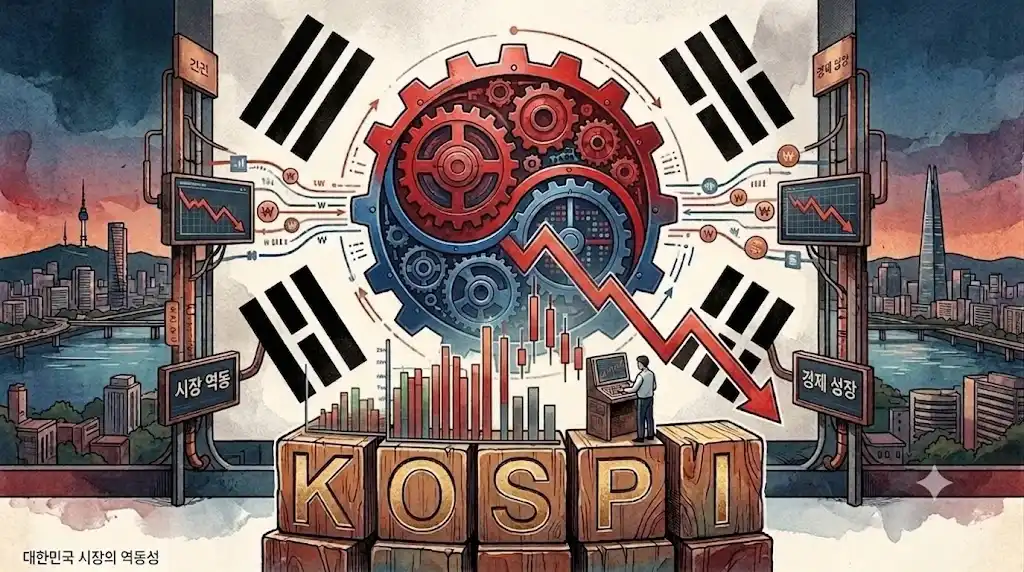
From "National Destiny ETF" to "Bloody July": How South Korea's Stock Market Leverage Crisis Unfolded In mid-July, South Korea's stock market experienced an epic "deleveraging" storm. Leveraged ETFs tied to semiconductor giants like Samsung and SK Hynix, once marketed as a shortcut to wealth, turned into financial shredders as market sentiment reversed. Over nine trading days, losses in popular leveraged ETFs exceeded 59.5 billion USD, with retail investors bearing 60% of the impact. Data shows散户 investors suffered losses of around 1.45 billion USD in a month. A severe wave of margin calls affected over 1.2 million accounts, leading to the complete liquidation of 460,000 accounts, 62% of which belonged to investors in their 20s and 30s. The crisis peaked around July 13th, with SK Hynix plunging over 15% and related 2x leveraged ETFs crashing 30%. The daily rebalancing mechanism within leveraged ETFs amplified the sell-off into a stampede. The situation was worsened by a credit crunch, as major banks neared their annual household lending caps, leaving散户 unable to borrow funds to meet margin calls. An unexpected 25-basis-point rate hike by the Bank of Korea on July 16th further intensified the panic. Facing mounting political pressure, President李在明 intervened. Financial authorities quickly announced seven stringent measures, including banning new sales of single-stock leveraged ETFs, raising investment thresholds, and strengthening risk warnings. The regulatory approach focused not on forcibly liquidating existing products but on restricting new inflows, aiming for a gradual market cool-down. However, risks persist, with over 235.5 billion USD in margin loan balances still outstanding in the market. The crisis served as a stark reminder of the dangers of excessive leverage, especially for retail investors, when speculative bubbles built on easy credit and complex products inevitably burst.

marsbit42m ago

From the "National Fortune ETF" to "Bloody July": How to Defuse South Korea's Stock Market Leverage Crisis?

marsbit42m ago

Trading

Spot

Hot Articles

Discussions

Welcome to the HTX Community. Here, you can stay informed about the latest platform developments and gain access to professional market insights. Users' opinions on the price of ETH (ETH) are presented below.

活动图片