Founder of Real Vision: We Are Living in the Era of Exponential Growth

Foresight NewsPublished on 2026-07-15Last updated on 2026-07-15

Abstract

Real Vision founder Raoul Pal argues that humanity is now in an "Age of Exponential Growth," a reality the human brain's linear intuition struggles to comprehend. The core drivers are the convergence of multiple, mutually-reinforcing technological curves: Artificial Intelligence, robotics, solar & storage, biotechnology, and blockchain networks. He notes that while his 2021 analysis correctly identified fiat currency debasement and assets like Bitcoin as inflation hedges, he underestimated the scale of change. Beyond monetary liquidity, a more profound force is at work: these key technologies have moved from theoretical promise into simultaneous, accelerating commercialization. They are no longer growing in parallel but are fusing, creating a "double exponential" growth curve. AI and robotics create an "artificial labor supply," breaking the cycle of debt-driven growth needed to offset aging demographics. Energy, particularly solar power guided by Wright's Law, is seeing collapsing costs, removing a key bottleneck for compute-hungry AI. Cryptocurrencies are evolving from monetary assets into the essential, programmable settlement layer for transactions between future AI agents. This fusion creates a feedback loop: AI optimizes energy grids, cheaper energy powers more compute, which builds better AI, and crypto networks settle the transactions. This leads to "Reed's Law" playing out at scale, where intelligent nodes (AI agents) form and re-form groups at machine speed, crea...


Author: Raoul Pal, Founder of Real Vision

Compiled by: Luffy, Foresight News


First, a fun calculation: One cent doubles every day for 30 days. How much money do you end up with? Most people guess a few hundred dollars. The real answer is over $5 million.


Almost no one gets it right on the first try because the human brain isn't wired for this kind of calculation. Our thinking is inherently biased towards linear logic. When crossing the street, a quick glance at the traffic lets your brain intuitively judge if it's safe; but when we imagine something doubling every year, we consistently and severely underestimate the final scale, often by orders of magnitude.


For most of human history, this cognitive limitation was almost irrelevant. Every tool we built, every system we established, developed at a pace that fit our linear intuition.


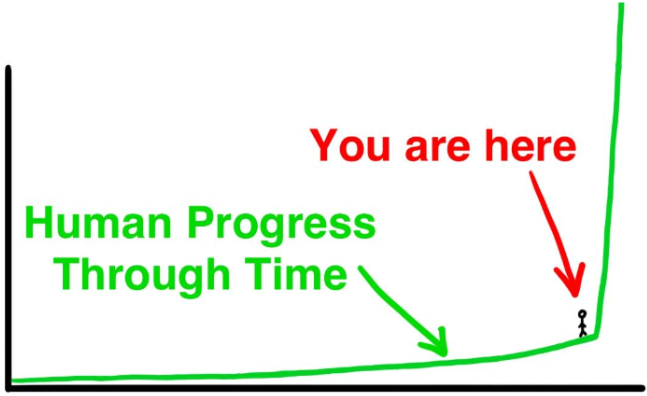
But now, for the first time, humanity possesses intelligent systems that operate non-linearly: they compound, provide self-feedback, and continually accelerate. Simultaneously, five or six exponential growth curves have reached the steep upward slope of their S-curves, bringing multiple transformations at once.


In April 2021, I first introduced this thesis in my GMI column, "The Exponential Age." Looking back now, I didn't fully realize at the time that the trends I was observing were of a magnitude far greater than I had imagined.


What Did I Get Right, and Where Was I Wrong?


In 2021, my core thesis was clear: fiat currency was depreciating at a rate far beyond market pricing, and only a handful of assets could compound fast enough to outpace inflation, with Bitcoin and tech stocks being prime examples. This judgment still holds. However, I severely underestimated the scale of the subsequent transformation at the time.


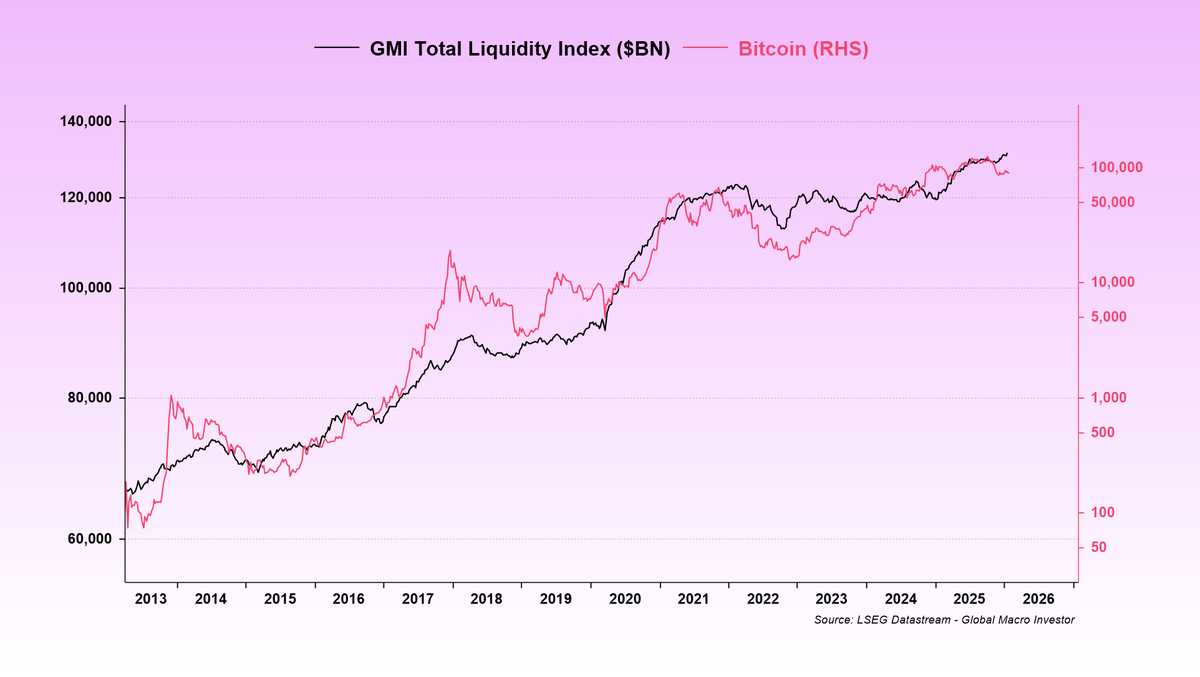
Back then, my focus was primarily on central bank balance sheets, especially the Federal Reserve. That analytical direction wasn't wrong, but the observation lens was incomplete. The true core driver wasn't a single central bank, but global aggregate liquidity: major central banks worldwide, rolling government debt from treasuries, credit expansion by commercial banks—all acting in a relay race. When the Fed tightens, China or Europe picks up the easing baton.


Focusing on a single central bank leads to misjudging the entire market cycle. 2017 was a classic case: the Fed was shrinking its balance sheet, but global markets soared in a one-way rally because China and Europe eased simultaneously, expanding global aggregate liquidity. Those only tracking the Fed completely missed that bull market.


Currently, global liquidity is expanding at about 8% annually. Combined with conventional inflation, for an asset to maintain its purchasing power, your required minimum real return is close to 11%.


The Truly Novel Force of Change


The logic of currency depreciation explains why money buys less, but it doesn't fully account for the feeling that *everything* is accelerating now. It's not just market moves; the pace of societal change itself is rapidly increasing.


This is another independent force layered on top of liquidity, and it's the core reason why the "Exponential Age" thesis has become even more critical five years later.


In 2021, I outlined five major growth curves: Artificial Intelligence, Robotics, Solar PV & Storage, Biotechnology, and Blockchain Networks. The list of sectors hasn't changed; what has changed is their stage of growth.


In 2021, most of these technologies were on the cusp of theoretical implementation. Keen observers could see the trends, but large-scale commercialization hadn't arrived. Five years later, all five technologies are accelerating simultaneously, empowering and synergizing with each other. This technological convergence is completely rewriting the development logic.


Artificial Intelligence


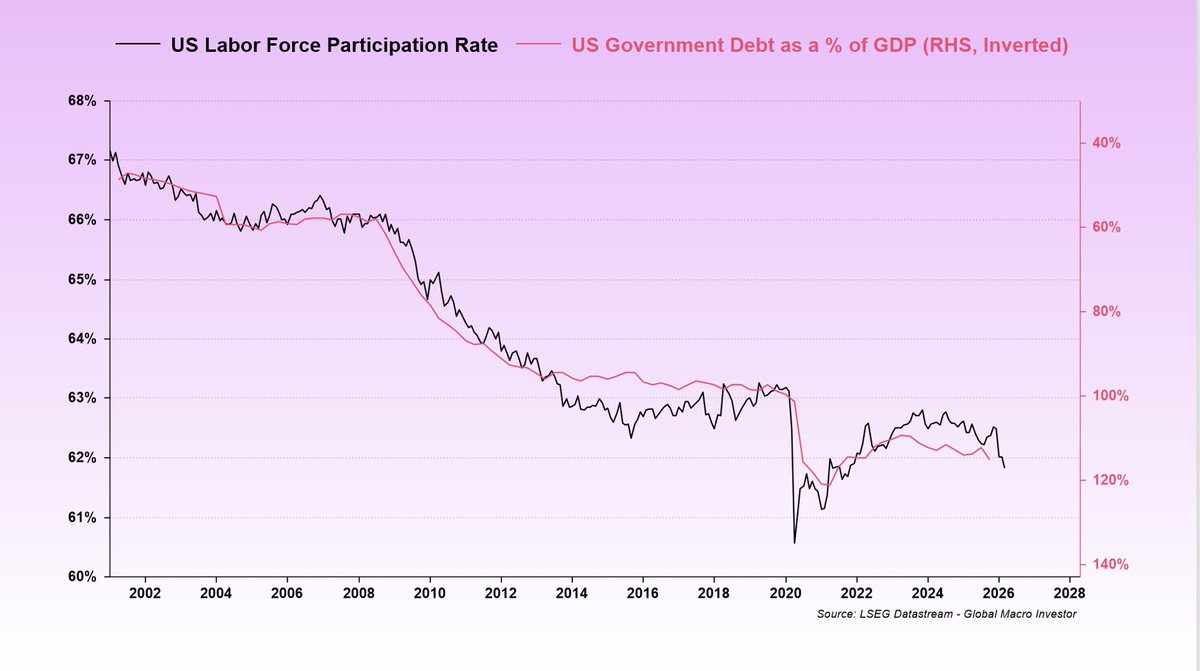
Most people miss the underlying logic behind debt expansion. Countries keep increasing debt not because leaders are stubborn or incompetent, but due to demographics. Aging populations, shrinking workforces, fewer producers, more social benefit recipients. Relying solely on human labor, natural economic growth is impossible, forcing nations to borrow and expand, balancing the gap by growing their balance sheets.


AI breaks this cycle. AI agents can perform white-collar knowledge work; humanoid robots can handle physical labor. Economic growth is no longer constrained by the size of the working-age population. We have created an "artificial labor supply." The productivity curve, dragged down by demographics, turns upward again, and it doesn't require the debt expansion we've depended on for the past fifty years.


Simultaneously, a deflationary force is at work. The marginal cost of intelligent services approaches zero, driving down the prices of many goods and services rapidly. This doesn't immediately solve currency debasement but reshapes the calculus of returns. When AI compresses costs across entire supply chains, the meaning of that 11% return threshold mentioned earlier changes completely.


The speed of this development is staggering and deserves a moment of reflection. Over the past six years, the complexity of tasks AI can perform autonomously has been doubling approximately every seven months. OpenAI's o3 model already surpasses human PhDs in corresponding scientific fields, with no signs of slowing down.


Energy


All technological transformations face a core bottleneck: energy. AI and robots run on compute, and compute consumes electricity. The scale of compute under construction globally is unprecedented, making energy the hard constraint for this entire technological shift. Microsoft's investments in nuclear and Google's geothermal deals aren't just for carbon neutrality; local grid power is already insufficient to support compute clusters.


China saw this first and has been the most aggressive in its布局 (layout). In 2024 alone, China added more new solar PV capacity than the rest of the world combined.


The core behind this is a little-known economic law—Wright's Law. Derived in 1936 from aircraft manufacturing data, it states: For a given type of product, costs decrease by a fixed percentage each time the cumulative total production doubles. Worker proficiency increases, defect rates fall, engineers optimize materials (less silver, thinner silicon wafers, etc.), continuously driving down costs.


Solar PV is the technology known to humanity that most closely follows Wright's Law. Every time global cumulative installed PV capacity doubles, manufacturing costs drop by over 20%. By leveraging massive manufacturing capacity, China dramatically increases global cumulative PV production, pulling the entire industry down the cost curve faster.


PV prices are now ~90% lower than a decade ago, with ample room for further cost reductions. PV boasts four unique advantages: low cost, short construction cycles, distributed deployment, and infinite scalability—qualities fossil fuels simply cannot match. Other energy sources always hit a supply chain bottleneck; PV's only limit is the available area with sunlight.


Storage was once PV's biggest weakness, but that gap is closing fast. Tesla's Megapack storage business is growing 50%–70% annually, with new factories coming online to meet demand. Grid-scale battery storage costs are plummeting, and most people haven't yet grasped the magnitude of change this will bring.


More crucially, a closed positive feedback loop is forming: AI optimizes grid management, reducing electricity costs; cheaper power further lowers compute costs; cheap compute iterates stronger AI, which in turn optimizes the energy system again. The growth curves are no longer parallel but amplify each other's growth rates.


Cryptocurrency


The linkage between Bitcoin and global liquidity cycles is well-documented. Since 2012, about 90% of Bitcoin's price movements correlate with liquidity cycles. This core logic still holds, perhaps even more strongly than I summarized back then.


But the crypto industry now has a core logic that was almost non-existent in 2021 and is impossible to ignore today. AI agents need to transact. In the future, there will be millions, even billions, of intelligent agents autonomously procuring services, allocating resources, and settling transactions machine-to-machine. The existing human financial system—with clearinghouses, correspondent banks, and three-day settlement cycles—is utterly incapable of handling this demand. An intelligent economy cannot be built on top of traditional financial plumbing.


Crypto technology fits the need perfectly: programmable, trustless, instant settlement, no counterparty risk. Blockchain is the only financial infrastructure that can scale synchronously with and adapt to a super-intelligent economy. The adoption thesis for crypto was already compelling in the past; the hard requirement for facilitating AI-autonomous transactions makes cryptocurrency an inevitability.


Convergence


This is precisely what's unique about this transformation wave. Past technological waves arrived individually, taking decades to普及 (popularize): the Internet was one independent growth curve, mobile Internet another. They reshaped the economy sequentially, with ample buffer time in between for institutions to adapt gradually.


But now, multiple exponential curves are simultaneously hitting the steep upward slope of their S-curves and pushing each other forward. AI designs more advanced chips; advanced chips train more powerful AI. Cheap energy supports massive compute; massive compute optimizes energy调度 (dispatch). Crypto networks enable trustless, bankless transaction settlement between intelligent agents.


Each technological curve can grow on its own, but when converged, the overall growth rate far exceeds the sum of their independent developments.


Global cloud service providers' capital expenditures exceed $600 billion annually, growing 36% year-over-year. This figure doesn't even include investments from Tesla, xAI, frontier AI labs, or national-level compute infrastructure projects in Middle Eastern countries. Corporate CapEx as a percentage of GDP now exceeds the scale of national spending on atomic bomb development in the past.


Double Exponential Growth


This compounding effect has a specific name, and it's the real reason human intuition fails to keep up. Single exponential growth already stretches beyond human comprehension. When multiple curves empower each other, they don't just create a steeper ordinary exponential curve; they give rise to *double exponential growth*—where the growth rate itself is accelerating. There's a clear mechanism behind it.


We can understand it layer by layer using three network laws:


  • Sarnoff's Law: A broadcast network's value grows linearly with the number of users (n).
  • Metcalfe's Law: A network where any two points can connect has value proportional to the square of the number of users (n²).
  • Reed's Law: A network that supports forming groups has value growing at 2^n, as the number of possible collaborative groups far exceeds simple pairwise connections.


Throughout history, Reed's Law remained largely theoretical because network nodes were humans: humans act slowly, supply is limited, and one can only participate in a few groups at a time.


Now, the network nodes are intelligent AI agents—never tire, can replicate infinitely, and can form, disband, and reconfigure collaborative groups at machine speed and scale unthinkable for human networks. For the first time in history, the network nodes themselves are intelligent, and Reed's Law is fully manifesting at the macroeconomic level. 2^n is not just a steep line; even when plotted on a logarithmic scale, the curve keeps bending upward.


This is the true shape of the current growth curve.
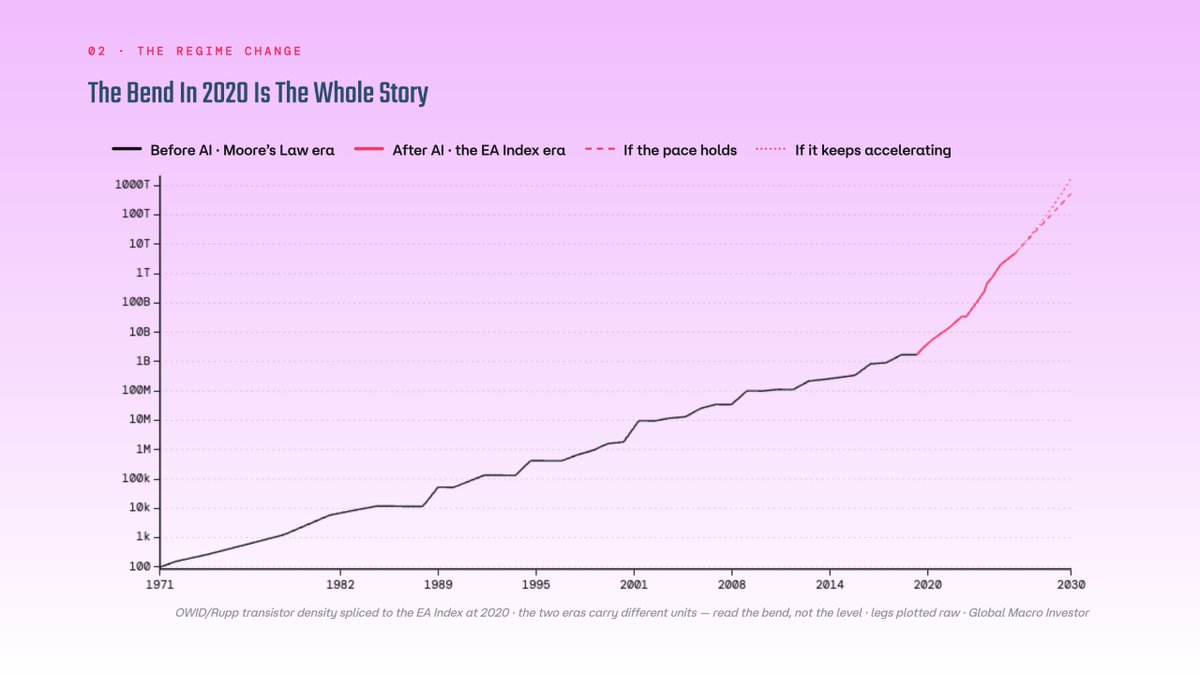


Returning to the coin example: Single exponential growth already breaks human intuition. Double exponential growth is of a completely different order of magnitude. No life experience, mental model, or evolutionary instinct can predict its scale. None of us can mentally picture this curve.


This is also what has truly changed since 2021. The technology sectors themselves haven't been added to; I listed all five directions back then. But I underestimated one critical point—they are no longer growing independently but are converging into a single super-curve rocketing off the top of the chart. Right now, we are likely still in the gentle起步阶段 (starting phase) of this curve. The future space is unimaginable.


How Should Ordinary People Respond?


So, how should you respond to all this?


If you accept that artificial labor will replace human labor, and AI agents and robots become the core productive force of the economy, then you must understand that returns will ultimately flow to those who own the machines and the underlying infrastructure.


The core question is no longer "How do I keep my job from being replaced by a machine?" but "How do I own a share of the machine-related assets?" The same logic that has AI replacing human labor also points to where value will accrete, and ordinary people can participate.


Scaling this logic across society is known as "universal basic fairness." Citizens directly own productive machine assets, and the gains from productivity increases are returned to owners as asset appreciation, rather than relying on a fixed wage. This is one of the主流解决方案 (mainstream solutions) for addressing the breakdown of the wage system.


I define the 2030-2032 period as the "Economic Singularity" window, when all technological trends fully converge, the economic system undergoes a fundamental transformation, and traditional economic models will彻底失效 (completely fail). Whether this transition is smooth or turbulent depends on the choices everyone makes today.


I'm not merely predicting the future; I'm showing the facts unfolding: quantifiably expanding global liquidity, plottable technology adoption curves, double exponential growth bursting off charts, and a handful of core assets directly tied to all these trends. Even if you label the current market action a bubble, the objective data doesn't support that judgment.


This is the Exponential Age.

Trending Cryptos

Related Questions

QWhat is the author's main thesis regarding the current era of technological development?

AThe author's main thesis is that we are in an 'Exponential Age' characterized by multiple S-curves (AI, robotics, solar & storage, biotech, blockchain) simultaneously reaching their steep adoption phases. Furthermore, these technologies are no longer developing in isolation but are converging and amplifying each other's growth, leading to a 'double exponential growth' curve that is fundamentally reshaping the economy at an unprecedented pace.

QAccording to the article, what was a key oversight in the author's 2021 analysis?

AIn his 2021 analysis, the author correctly identified the trends but severely underestimated their scale. He focused too narrowly on individual central banks (like the Fed) instead of observing the expansion of 'global total liquidity', which includes the combined actions of all major central banks, finance ministries, and commercial bank credit. This broader measure is the true driver, as when one entity tightens, another often provides liquidity, sustaining market cycles.

QHow does the article explain the connection between AI and the global debt expansion problem?

AThe article argues that persistent global debt expansion is driven by demographic challenges like aging populations and shrinking workforces. AI, along with humanoid robots, breaks this cycle by creating 'synthetic labor supply'. This artificial workforce can perform knowledge and physical work, enabling economic growth without being constrained by the size of the working-age population, thereby reducing the historical reliance on debt-fueled expansion to fill the productivity gap.

QWhat role does the article assign to cryptocurrency in the future AI-driven economy?

AThe article posits that cryptocurrency will serve as the essential financial infrastructure for the future AI economy. As millions or billions of AI agents need to autonomously transact, purchase services, and settle payments, the traditional financial system (with its intermediaries and settlement delays) is unfit. Cryptocurrency networks, being programmable, trustless, and enabling instant settlement, are uniquely positioned to facilitate machine-to-machine commerce and清算 at the required scale.

QWhat is 'double exponential growth', and why is it significant according to the author?

A'Double exponential growth' occurs when multiple exponential growth curves (like AI, energy, crypto) converge and reinforce each other, causing the rate of growth itself to accelerate. The author explains this using network laws: while Metcalfe's Law (value ~ n²) describes human networks, Reed's Law (value ~ 2ⁿ) describes the potential of networks where nodes (now intelligent AI agents) can form and re-form groups at machine speed. This creates a growth curve so steep it surpasses all human intuition and historical precedent, marking the unique character of the current transformation.

Related Reads

Will DeFi and TradFi Ultimately Merge? a16z Challenges Mainstream Market Predictions

The popular notion of DeFi and TradFi merging into a unified hybrid system is largely incorrect, argues this a16z analysis. In reality, traditional finance will selectively adopt blockchain technology—not for its decentralized ethos, but for its compelling cost advantages in areas like settlement, reconciliation, and new distribution channels. This adoption, however, comes with strict conditions: technologies must optimize costs and risks while remaining compatible with institutional controls, compliance, and accountability frameworks. Features like open access and anonymity, core to DeFi, are typically discarded or heavily modified. The result is not a fusion with DeFi but the rise of a new category: *programmable financial infrastructure*, built on blockchain but optimized for institutional constraints (e.g., permissioned networks like Canton, tokenized money market funds). This institutional track and the open, permissionless DeFi track represent two distinct but potentially complementary opportunities for developers. The open network remains the primary source of foundational innovation (e.g., atomic settlement, AMMs, programmable money), which institutions later adapt. Developers should choose their path clearly: building for institutions requires deep understanding of procurement and compliance, while building for the open network focuses on permissionless innovation and composability. The true future convergence is likely at the shared settlement layer (public blockchains), not in one system subsuming the other.

Foresight News1h ago

Will DeFi and TradFi Ultimately Merge? a16z Challenges Mainstream Market Predictions

Foresight News1h ago

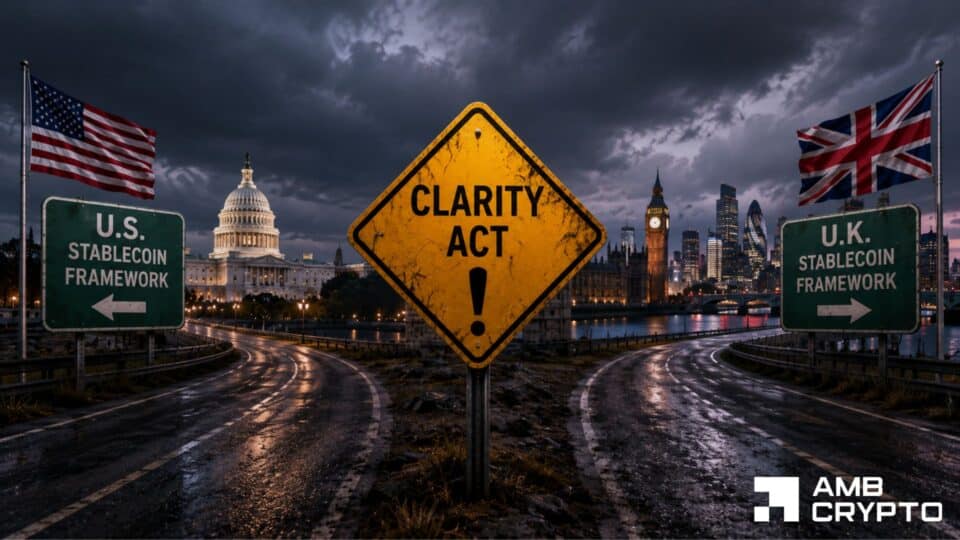
The Controversial Issue of the CLARITY Act in the Digital Markets: Should Stablecoins Be Allowed to Generate Yield?

Controversy Over the CLARITY Act: Should Stablecoins Be Allowed to Generate Yield? This article examines the ongoing debate in U.S. regulation regarding whether stablecoins should be permitted to generate interest for holders. It traces the regulatory evolution from the GENIUS Act, which imposed a blanket prohibition on issuer-paid stablecoin yield to protect traditional banking, to the recent bipartisan Tillis-Alsobrooks compromise on the CLARITY Act. The compromise introduces a key distinction: strictly prohibiting "passive yield" (rewards for merely holding) while potentially allowing "activity-based yield" tied to specific on-chain actions like providing liquidity or governance participation. A critical "economic equivalency test" is proposed to determine if a reward is functionally equivalent to a bank deposit interest payment. The analysis highlights significant implementation challenges for regulators. It questions their capacity to perform the nuanced, substantive reviews required to differentiate between genuine activity-based rewards and cleverly disguised passive interest schemes within complex DeFi protocols and smart contracts. The article concludes that this shift represents a move from regulating specific entities ("entity-based regulation") to overseeing entire financial behaviors and ecosystems ("ecosystem-based regulation"). This transition, while aiming for market stability, may signal the end of the crypto industry's earlier unconstrained "wild west" era.

marsbit1h ago

The Controversial Issue of the CLARITY Act in the Digital Markets: Should Stablecoins Be Allowed to Generate Yield?

marsbit1h ago

Trading

Spot

Hot Articles

What is LINON

Linde plc Tokenized Stock (Ondo): Revolutionizing Traditional Equity Access Through Blockchain Innovation The emergence of Linde plc Tokenized Stock (Ondo), represented by the ticker $LINON, signifies a monumental shift in the fusion of traditional financial structures and decentralized finance (DeFi). This innovative financial instrument showcases the tremendous potential of blockchain technology to democratize access to traditional equity markets while ensuring the security and regulatory compliance necessary for institutional-grade financial products. Through Ondo Finance's pioneering tokenization platform, $LINON provides a seamless pathway for global investors to engage with one of the world's leading industrial gas companies, Linde plc, creating a blockchain-native representation of the underlying equity. Introduction to Linde plc Tokenized Stock The landscape of financial markets is witnessing a groundbreaking transformation through the tokenization of real-world assets. Linde plc Tokenized Stock (Ondo) epitomizes this revolutionary approach by bridging the gap between conventional stock ownership and blockchain-enabled financial infrastructure. The $LINON token allows investors to gain exposure to one of the prominent industrial companies worldwide through decentralized technology. Operating within Ondo Finance's comprehensive ecosystem, $LINON symbolizes a practical application of tokenization technology that enhances accessibility, efficiency, and global connectivity in traditional financial markets. By leveraging blockchain infrastructure, this tokenized stock enables international investors to participate in U.S. equity markets, overcoming traditional barriers associated with cross-border investing. The significance of $LINON goes beyond technological innovation; it represents a fundamental shift in asset structuring, distribution, and trading in the digital age. This tokenized stock maintains all the economic benefits associated with traditional Linde plc shares while offering improved liquidity, programmable compliance features, and seamless integration with decentralized finance protocols. The development of $LINON indicates a growing acceptance of blockchain technology as a viable means for traditional finance, exemplifying how even well-established assets like Linde plc can integrate into blockchain systems. This approach preserves the core attributes that appeal to investors while introducing advanced capabilities that enhance the overall investment proposition. Project Overview and Objectives Linde plc Tokenized Stock (Ondo) encapsulates a strategic effort to democratize access to traditional equity markets through advanced blockchain technologies. The primary objective of $LINON is to provide approved global investors seamless access to the economic exposure associated with Linde plc shares, furthering an effort to create a more inclusive financial ecosystem. Beyond the digital representation of traditional assets, $LINON endeavors to eliminate barriers of geography and time zones that limit investor participation. Its design ensures that blockchain technology can elevate traditional investment vehicles without undermining the security or compliance requirements expected by investors. Key goals of the project include enhanced liquidity provision, programmable compliance mechanisms, and interoperability with other blockchain networks. Each $LINON token is fortified by actual Linde plc securities housed at U.S.-registered broker-dealers, allowing holders to reap economic advantages akin to traditional stockholders, such as dividend reinvestment. Furthermore, $LINON aims to establish new industry standards for institutional-grade tokenized securities, paving the way for traditional assets to embrace blockchain technology while remaining compliant with regulatory frameworks. By associating itself with a company as reputable as Linde plc, the project opens avenues for exploring tokenized equities catering to both conservative institutional players and daring retail investors. Project Creator and Development Team The vision for Linde plc Tokenized Stock (Ondo) comes from Nathan Allman, founder and CEO of Ondo Finance. His background in traditional finance coupled with expertise in blockchain technology positions him uniquely to navigate the complexities of asset tokenization. Allman's academic journey began at Brown University, focusing on Economics and Biology, equipping him with valuable analytical skills. His time at Goldman Sachs in the Digital Assets division strengthened his understanding of the interplay between financial institutions and emerging technologies, laying the groundwork for his later endeavors in alternative investment strategies. Under Allman's guidance, Ondo Finance has emerged as a leader in asset tokenization, launching $LINON as a flagship example of the company's larger mission towards revolutionizing traditional financial systems using blockchain technology. His commitment to leveraging blockchain for creating institutional-grade financial products has shaped the landscape of real-world asset tokenization. Investment and Funding Structure The growth of Ondo Finance, the platform powering Linde plc Tokenized Stock (Ondo), is bolstered by robust financial backing from prestigious venture capital firms and strategic investors. This strong investment foundation underpins the development of the key infrastructure essential for compliant tokenized securities like $LINON. In August 2021, Ondo Finance secured $4 million in seed funding led by a major venture capital firm, which enabled the company to commence platform development and establish the necessary regulatory processes for tokenizing real-world assets. This early investment cemented Ondo Finance's credibility within the industry. The Series A funding round followed, garnering $20 million with participation from renowned firms committed to transformative technology companies. This backing demonstrated substantial institutional confidence in Ondo Finance's vision, allowing it to hone its approach to asset tokenization through mechanisms that ensure compliance and accessibility. Noteworthy contributors, including institutional investors and experienced partners, have added significant value to Ondo Finance’s development efforts. Their involvement underscores the confidence across sectors in Ondo Finance's approach to bridging traditional finance with blockchain innovations. Technical Infrastructure and Innovation The technical architecture that underpins Linde plc Tokenized Stock (Ondo) represents a sophisticated melding of traditional finance systems and cutting-edge blockchain technology. The architecture's foundation is built on the Ethereum network, renowned for its security and programmability—both critical for intricate financial instruments. The $LINON tokenization process comprises creating a blockchain-native representation of Linde plc shares that preserves economic benefits while augmenting investor capabilities. Each token corresponds to actual shares held at U.S.-registered broker-dealers, creating a compliant custody structure that legitimizes the asset's existence and value. Automated compliance systems are integrated into the tokenization process, managing critical components such as know-your-customer (KYC) verification and anti-money laundering (AML) protocols. This incorporation of programmable compliance empowers $LINON to uphold regulatory standards essential for institutional proliferation. Cross-chain interoperability characterizes the advanced technical features of $LINON. While initially deployed on Ethereum, the framework is designed for expansion to other networks such as Solana and BNB Chain. This adaptability enhances liquidity and accessibility, allowing investors to select their preferred blockchain ecosystems. Historical Timeline and Development Crafting the history of Linde plc Tokenized Stock (Ondo) unfolds in parallel with the evolution of Ondo Finance's tokenization platform. The timeline's inception dates back to March 2021 when Nathan Allman laid the foundations for creating institutional-grade financial products on blockchain infrastructure. The initial funding round in August 2021 provided crucial resources for developing the platform and establishing partnerships necessary for effective tokenization. By January 2023, Ondo Finance launched its tokenized treasury products, establishing mechanisms that would facilitate future tokenized equities such as $LINON. A pivotal milestone arose in February 2025 when Ondo Chain—a Layer 1 blockchain designed specifically for asset tokenization—was introduced. This infrastructure enhances capabilities vital for institutional markets, demonstrating Ondo Finance's long-term commitment to tokenization. Subsequently, the launch of Ondo Global Markets in September 2025 marked the official debut of $LINON. This milestone showcased the successful transition from development to active trading, enabling investors around the world to access American financial markets seamlessly. Ongoing development plans include a targeted expansion of available tokenized assets to over 1,000 by the end of 2025, pointing to a bright future for Ondo Finance's ecosystem and its mission to broaden tokenized equity accessibility. Regulatory Compliance and Legal Framework The legal architecture governing Linde plc Tokenized Stock (Ondo) emphasizes a sophisticated approach to regulatory compliance, allowing tokenized securities to be implemented within a blockchain-based framework. The legal structure governing $LINON spans multiple jurisdictions while maintaining a robust legal footing. Compliance systems ensure that only eligible investors can access the token, enforced through automated verification that aligns with international regulations. This innovative regulatory technology promises real-time enforcement of complex requirements, considerably enhancing efficiency in operating within the regulatory landscape. The custody framework undergirding $LINON ensures that the underlying shares are securely held at U.S.-registered broker-dealers, complying with necessary regulations while delivering blockchain-driven access to investors. The token maintains its economic equivalency and security through this carefully structured custody arrangement. KYC and AML compliance systems are embedded within the smart contract architecture, ensuring integrity and adherence to regulatory practices while fostering transparency for investors. The jurisdictional restrictions mark a commitment to navigating the evolving landscape of international securities laws. Market Impact and Industry Significance The advent of Linde plc Tokenized Stock (Ondo) holds profound implications for the broader financial landscape, symbolizing a clear shift towards blockchain-enabled markets. $LINON serves as a proof-of-concept for integrating traditional companies into blockchain ecosystems, showcasing the potential benefits such as broader accessibility and improved efficiency. The market's response to $LINON indicates a growing acceptance of tokenization among institutional investors, contributing to the emergence of an expanding sector wherein traditional assets can be interconnected with blockchain innovations. The success of $LINON further solidifies market confidence, indicating an overarching shift towards recognizing asset tokenization as a transformative force in finance. Future Development and Expansion Plans The future trajectory for Linde plc Tokenized Stock (Ondo) centers around the expansion of the tokenization ecosystem and enhanced infrastructure supporting blockchain-enabled financial services. Plans for cross-chain integration usher in new opportunities for liquidity and flexibility within the investment framework, with existing capabilities poised for continuous enhancement. With the introduction of Ondo Chain, Ondo Finance aims to transition $LINON to an optimized blockchain environment specifically designed for asset tokenization. This new infrastructure heralds exciting prospects for the development of institutional-grade financial products, ensuring ongoing compatibility with contemporary investment strategies. Further integration with decentralized finance protocols signifies a commitment to empowering $LINON holders through advanced financial strategies. The anticipated expansion of available tokenized assets promises to broaden investor access, enhancing the utility and appeal of the platform. In alignment with ambitions for regulatory expansion, ongoing efforts to secure approvals for new jurisdictions will enhance investor access, further positioning $LINON at the forefront of the burgeoning tokenization market. Conclusion Linde plc Tokenized Stock (Ondo), as represented by the $LINON token, stands at the intersection of traditional finance and blockchain innovation. It embodies a transformative milestone in how financial assets are structured, distributed, and engaged within modern investment ecosystems. The technical sophistication behind $LINON, combined with its regulatory compliance framework, illustrates that asset tokenization can improve financial infrastructure rather than simply digitizing existing products. This pioneering effort not only enhances investor access to U.S. equity markets but also signifies an evolution of how traditional financial services can integrate blockchain technology. As the asset tokenization market grows exponentially, with prospects suggesting significant valuation increases, $LINON paves the way for a future where tokenized securities become standard fixtures in the financial landscape. The trajectory of $LINON will undoubtedly influence how traditional finance adapts to a transformed, blockchain-powered world.

3.4k Total ViewsPublished 2025.12.05Updated 2025.12.05

What is LINON

What is CRMON

Salesforce Tokenized Stock (Ondo): Revolutionising Traditional Equity Access Through Blockchain Innovation The emergence of Salesforce Tokenized Stock (CRMON) marks a pivotal advancement in integrating traditional financial markets with blockchain technology. This innovative approach offers investors unprecedented access to equity exposure through tokenisation. Developed by Ondo Finance, CRMON provides tokenholders with economic exposure equivalent to holding Salesforce stock (CRM) while automatically reinvesting dividends. This effectively bridges the gap between conventional equity markets and decentralised finance (DeFi). Introduction and Comprehensive Overview of Salesforce Tokenized Stock In recent years, the financial landscape has dramatically transformed due to blockchain technology, fundamentally altering how investors access and interact with traditional assets. The development of Salesforce Tokenized Stock (CRMON) is a prime example of this evolution, representing a sophisticated fusion of conventional equity markets with cutting-edge distributed ledger technology. CRMON is a tokenised version of Salesforce stock, emerging from the innovative work of Ondo Finance, a leading platform in the real-world asset tokenisation sector that positions itself as a bridge between traditional finance and decentralised systems. Designed to provide tokenholders with economic exposure that mirrors the performance of the underlying Salesforce stock, CRMON incorporates automatic dividend reinvestment mechanisms. This eliminates many traditional barriers associated with international equity investment, such as complex brokerage relationships, currency conversion challenges, and restricted trading hours. The tokenisation process reimagines stock ownership as a blockchain-native asset while maintaining its economic equivalence with the underlying security, offering enhanced portability and integration capabilities within decentralised finance ecosystems. CRMON transcends its individual utility as an investment instrument to represent a fundamental shift in how financial markets can operate in an increasingly digital world. By maintaining full backing through U.S.-registered broker-dealers and implementing robust compliance frameworks, CRMON demonstrates that tokenised securities can achieve the regulatory standards necessary for institutional adoption while delivering the technological advantages of blockchain infrastructure. Understanding Tokenized Real-World Assets and CRMON's Strategic Position Tokenised real-world assets signify one of the most significant innovations in modern finance, fundamentally reimagining how traditional securities are represented, traded, and utilised within digital ecosystems. CRMON operates as a tokenised equity instrument correlating directly with Salesforce stock while optimising accessibility and efficiency. This aligns with Ondo Finance's broader mission to democratise access to institutional-grade financial products through innovative tokenisation strategies. The tokenisation process guarantees complete economic equivalence with the underlying Salesforce equity. Each CRMON token represents a proportional claim on Salesforce stock held by qualified custodians, with dividend payments automatically reinvested to maintain continuous exposure to total return performance. This structure simplifies dividend management and ensures that tokenholders receive the full economic benefit of their equity exposure, encompassing both capital appreciation and income generation. Ondo Finance's strategy in tokenising Salesforce stock demonstrates its expertise in creating compliant, institutional-grade products that meet traditional financial markets' stringent requirements. The platform’s focus on merging regulatory compliance with blockchain benefits positions it at the forefront of decentralised finance, captivating both institutional and retail investors seeking blockchain-native solutions. The Technology and Innovation Framework Behind CRMON The technological infrastructure supporting CRMON integrates blockchain technology with traditional financial mechanisms, delivering institutional-grade security and compliance while maintaining the operational advantages of decentralised systems. Built on the Ethereum blockchain, CRMON utilises robust smart contract capabilities to ensure transparent, secure operations. The smart contract architecture incorporates layered security and compliance mechanisms, enabling automated compliance checks and real-time asset backing verification. Integration with oracle services maintains accurate pricing and dividend information, ensuring CRMON reflects the underlying Salesforce stock's accurate performance. This architecture delivers automated dividend reinvestments and other corporate actions, eliminating manual processing requirements and directly enhancing tokenholder benefits. Ondo Finance ensures CRMON's security structure includes daily third-party verification of holdings, independent collateral agents, and a multiple-layer custody system through partnerships with established financial institutions. This framework safeguards tokenholder interests against operational risks while providing robust asset backing. The user interface enhances integration capabilities, allowing seamless interaction between CRMON and various decentralised finance protocols, as well as cryptocurrency exchanges. This interoperability enables users to leverage their tokenised equity across multiple platforms, creating sophisticated investment strategies that marry traditional equity characteristics with blockchain-native innovation. Leadership and Corporate Structure of Ondo Finance The leadership team behind CRMON and Ondo Finance blends expertise from traditional finance and blockchain technology, presenting a robust combination of skills essential for successfully bridging conventional markets with decentralised finance. Nathan Allman, the founder and CEO, emerged from a distinguished financial background before establishing Ondo Finance in 2021. Allman's experience includes notable roles at major financial institutions, including significant contributions to developing cryptocurrency market services. His insights into regulatory compliance were paramount in developing products like CRMON that successfully unify traditional securities with blockchain technology. With a team of professionals boasting substantial experience in both conventional finance and blockchain sectors, Ondo Finance's leadership comprises diverse expertise that covers every aspect of tokenised asset development. Justin Schmidt serves as President and COO, contributing unique operational expertise, while Chris Tyrell brings essential compliance knowledge. Investment Landscape and Funding History The investment landscape surrounding Ondo Finance reflects significant institutional confidence in its mission to tokenise real-world assets. The company has raised substantial funds through various investment rounds, attracting leading venture capital firms and strategic investors that recognise the transformative potential of tokenised securities like CRMON. Notably, Ondo Finance completed a successful Series A funding round in 2022, led by well-known venture capital firms. This funding success validates Ondo Finance's innovative approach to creating compliant, institutional-grade tokenised products. In total, Ondo Finance has successfully secured substantial funding, raising significant capital for product development and market expansion, including a noteworthy token sale that reinforced its governance structure through the establishment of the ONDO token. The diverse composition of investors reflects broad market confidence in Ondo Finance's business model, demonstrating support from both traditional and blockchain-native organisations. Operational Mechanics and Technical Implementation The operational framework supporting CRMON exemplifies sophisticated integration of traditional financial mechanisms with blockchain technology. The technical implementation introduces multiple layers of security, compliance, and operational efficiency to meet institutional standards while enhancing accessibility. The tokenisation process begins by acquiring actual Salesforce stock through U.S.-registered broker-dealers, ensuring each CRMON token maintains direct correlation with the underlying equity performance. Smart contracts automate operational processes, including dividend reinvestment and corporate action processing, facilitating a streamlined user experience. The Minting and redemption processes allow authorised participants to manage CRMON tokens effectively. During U.S. trading hours, institutions can mint new tokens by depositing stablecoins that are used to purchase corresponding Salesforce equity. This structure maintains a tight correlation with underlying assets, enhancing liquidity and price discovery. Additionally, the infrastructure supports twenty-four-hour token transfer capabilities, providing CRMON holders with operations outside traditional market hours. This represents a significant advantage over conventional securities ownership, thus promoting integration with decentralised finance applications. Plans for cross-chain compatibility through partnerships signal further ambitions for CRMON's market reach. By expanding to other blockchain networks, Ondo Finance aims to enhance accessibility and user engagement with tokenised equity products. Timeline and Historical Development of Tokenized Equity Innovation The timeline of CRMON's development and Ondo Finance's broader tokenised capabilities demonstrates a systematic innovation process beginning with the company's founding in 2021. 2021: Ondo Finance is founded by Nathan Allman and co-founders, launching initial products focused on structured vault offerings on the Ethereum blockchain. 2022: The company completes substantial funding rounds—both equity and token sales—totaling significant capital and launching initial tokenised U.S. Treasury products. 2023-2024: Ondo Finance experiences substantial growth, establishing partnerships with major financial institutions while expanding its product offerings beyond fixed-income securities. February 2025: Ondo Global Markets is announced, marking the transition into equity tokenisation with plans for accessing over one hundred U.S. stocks and ETFs. September 2025: The official launch of Ondo Global Markets includes CRMON alongside other tokenised equity offerings, marking a significant evolution in Ondo Finance's product ecosystem. This timeline highlights the organisation's rapid growth and its capability to adapt its technological and compliance frameworks to accommodate different asset classes effectively while maintaining security and regulatory integrity. Regulatory Framework and Compliance Approach Ondo Finance's regulatory framework showcases a sophisticated compliance strategy, essential for achieving institutional adoption in the tokenised securities market. The company's strong partnerships with U.S.-registered broker-dealers promote adherence to Securities and Exchange Commission regulations and apply robust investor protections. Acquisitions, such as Oasis Pro—a registered broker-dealer—significantly enhance Ondo Finance's compliance capabilities, ensuring thorough alignment with existing regulatory structures. The company employs independent verification procedures that foster transparency, aiming for a solid performance standards reputation. Furthermore, Ondo Finance's commitment extends to international regulatory compliance, ensuring token access remains restricted to eligible investors while adhering to pertinent cross-border securities regulations. Comprehensive attention to tax implications and reporting requirements fortifies the security and compliance landscape of CRMON, ensuring that investor obligations remain manageable. Future Prospects and Market Positioning The forward-looking landscape for CRMON and Ondo Finance illustrates substantial growth opportunities driven by institutional adoption of blockchain technology and escalating demand for efficient alternatives to conventional securities ownership. Market projections indicate the tokenised asset sector could value multiple trillion dollars by 2030. With plans to scale CRMON offerings significantly and integrate it with a dedicated blockchain infrastructure—Ondo Chain—Ondo Finance aims to elevate its institutional-grade tokenised asset operations. Additionally, the development of strategic partnerships enhances distribution capabilities while establishing the company's credibility in the financial market. Furthermore, the integration of tokenised equity with decentralised finance protocols offers new potential for innovative financial products and strategies previously impossible with traditional securities. These factors underscore CRMON's positioning to effectively capture increased market share and deliver innovative solutions for international investment exposure. Conclusion Salesforce Tokenized Stock (CRMON) symbolises a transformative development within financial markets, successfully bridging traditional equity ownership with blockchain technology to create unprecedented accessibility for global investors. Through Ondo Finance's sophisticated tokenisation framework, CRMON provides complete economic exposure to Salesforce equity performance while enhancing operational advantages that exceed traditional ownership. The launch of CRMON reflects the broader evolution of financial markets towards blockchain infrastructures that maintain regulatory compliance while delivering increased efficiency. Ondo Finance's extensive approach to regulatory adherence, institutional-grade security, and technological innovation solidifies CRMON as a model for future tokenised securities, delivering access previously unattainable in conventional brokerage structures. As the tokenised asset sector continues to develop, CRMON is well-positioned to address historical inefficiencies in capital markets while providing investors with innovative solutions for accessing traditional securities. The outlook for CRMON looks exceptionally promising, supported by ambitious expansion plans, technological innovations, and strategic partnerships, thereby representing a pioneering model of modern financial infrastructure evolving through blockchain integration.

3.5k Total ViewsPublished 2025.12.05Updated 2025.12.05

What is CRMON

What is SHOPON

Shopify Tokenized Stock (Ondo): A Comprehensive Analysis of Real-World Asset Tokenization in Web3 This article delves into the Shopify Tokenized Stock (Ondo), recognised by its ticker symbol $SHOPON, exploring its implications at the intersection of traditional finance and blockchain technology. As a part of Ondo Finance's tokenized securities platform, Shopify’s tokenized stock exemplifies advancements in democratizing access to global capital markets through innovative digital assets. Introduction and Overview of Shopify Tokenized Stock (Ondo) Shopify Tokenized Stock (Ondo), or $SHOPON, portrays a pivotal innovation in the realm of tokenized securities, allowing investors to gain economic exposure akin to directly owning shares of Shopify Inc. This token, developed under the umbrella of Ondo Finance, not only provides investors with the ability to hold digital representations of the company’s stock but also integrates features such as automatic reinvestment of dividends. This advancement represents a substantial shift in the landscape of decentralized finance (DeFi), linking conventional equity markets with blockchain solutions designed to enhance accessibility, transparency, and liquidity. By eliminating geographical barriers and enabling 24/7 trading capabilities, $SHOPON is positioned as a bridge connecting traditional financial instruments and the emerging Web3 ecosystem. What is Shopify Tokenized Stock (Ondo), $SHOPON? The $SHOPON token serves as a digital manifestation of Shopify Inc.'s shares, engineered to provide a direct correlation to the underlying asset's performance. Through the utilization of blockchain technology, the token gives holders a mechanism to participate in the economic benefits associated with equity ownership, including capital appreciation and dividend distribution. The unique aspect of $SHOPON lies in its automatic dividend reinvestment mechanism, which allows returns to compound without necessitating active management by the investor. This feature inherently enhances its attractiveness as an investment vehicle, particularly for individuals seeking passive income growth alongside exposure to high-performing equities. The tokenization process is facilitated by the custody of actual Shopify shares through regulated intermediaries, ensuring that every $SHOPON token is verifiably backed by real equity. This structure empowers investors with the dual advantages of both traditional financial characteristics and the innovative benefits tied to blockchain technology. Who is the Creator of Shopify Tokenized Stock (Ondo)? The creator of Shopify Tokenized Stock (Ondo), Nathan Allman, is an experienced figure in the finance sector, formerly associated with Goldman Sachs. His rich background includes significant expertise in digital asset development, bridging the gap between traditional finance and cryptocurrencies. Allman’s educational journey, marked by studies at Brown University, provided him with a deep understanding of economics and biology, equipping him with analytical skills that inform his strategic vision. In 2021, he founded Ondo Finance, committing to developing tokenized securities that meet institutional-grade standards while leveraging blockchain's transformative capabilities. Under Allman's leadership, Ondo Finance has focused on creating compliant and innovative financial products that empower a diverse investor base. Who are the Investors of Shopify Tokenized Stock (Ondo)? The investment landscape surrounding Shopify Tokenized Stock (Ondo) is notably robust, underpinned by significant institutional support. Primarily, Pantera Capital stands out as a strategic partner through the Ondo Catalyst initiative, a $250 million commitment aimed at accelerating the development of on-chain capital markets. This partnership not only signifies institutional confidence in the potential of tokenized assets but also reinforces Ondo Finance's operational capabilities and market positioning. The funding pathways have included earlier rounds that amassed millions in seed funding and further structural investments, solidifying relationships with both venture capital firms and private investors. Moreover, the financial framework is complemented by strategic partnerships with established financial institutions and technology companies, enhancing Ondo’s infrastructure and operational expertise. How Does Shopify Tokenized Stock (Ondo), $SHOPON Work? At the core of $SHOPON's operational framework is a sophisticated system integrating traditional finance mechanisms with blockchain technology. The custody of actual Shopify shares ensures that token holders retain authentic economic exposure, safeguarding their investments in line with recognized legal structures. The smart contracts employed in managing $SHOPON handle various functions, including automatic dividend reinvestment and ownership transfer, offering instant settlement and increased liquidity, marking a significant departure from conventional trading systems plagued by multi-day settlement delays. By providing interoperability with other decentralized finance applications, $SHOPON empowers holders with potentially lucrative opportunities for advanced investment strategies, including lending and automated market making. This complex integration presents a unique value proposition, catering to both traditional and crypto-native investors. The innovative structure of $SHOPON also allows for real-time settlements and transactions documented on the blockchain, delivering unparalleled transparency and security—a major advancement over standard equity trading practices. Timeline of Shopify Tokenized Stock (Ondo) March 2021: Nathan Allman establishes Ondo Finance, initially focusing on decentralized finance yield optimization. August 2021: Completion of a $4 million seed funding round led by Pantera Capital. January 2023: Launch of initial tokenized treasury security products, laying the groundwork for future equity tokenization. July 2025: Announcement of the Ondo Catalyst initiative, a strategic investment program valued at $250 million, aimed at propelling the development of tokenization in capital markets. September 3, 2025: Launch of Ondo Global Markets featuring over 100 tokenized U.S. stocks and ETFs, including $SHOPON. Technical Implementation and Blockchain Infrastructure Shopify Tokenized Stock (Ondo) operates on a technical architectural framework that marries blockchain protocols with traditional financial custody arrangements. The ecosystem leverages Ethereum's smart contract capabilities, providing seamless transaction management while ensuring compliance with regulatory standards through established financial custodians. Central to this architecture are security measures and transparent transaction records that affirm the legitimacy of each tokenholder's economic stake. With automated features managed by intricate smart contracts, $SHOPON not only streamlines ownership transfers but also allows for the tactical reinvestment of dividends—a hallmark of modern investment strategies. Moreover, the incorporation of LayerZero technology facilitates cross-chain interoperability, making $SHOPON accessible across multiple blockchain environments while preserving its functional robustness. This forward-thinking technical design positions $SHOPON as an adaptable asset within the larger DeFi milieu. Regulatory Framework and Compliance Architecture $SHOPON's regulatory framework is built upon the meticulous navigation of existing financial regulations that govern securities. The custody arrangements for the underlying Shopify shares are managed by U.S.-regulated broker-dealers, ensuring compliance and protection for investors. By maintaining a separation between the blockchain tokenization process and traditional custody, $SHOPON adheres to legal requirements while offering innovative functionalities that challenge conventional constraints. This dual-layered compliance approach enhances investor confidence and underscores Ondo Finance's commitment to regulatory integrity. Notably, the availability of $SHOPON is tailored to international investors from regions such as Asia-Pacific, Europe, and Africa, as regulatory parameters in the U.S. and U.K. present challenges in accessing tokenized securities. Market Access and Global Distribution Strategy The distribution strategy of $SHOPON is keenly designed to optimize global access while conforming to regulatory standards. The platform aims to establish comprehensive coverage for eligible investors across multiple regions, effectively dismantling traditional barriers through the implementation of blockchain technology. Integration with various cryptocurrency wallets and exchanges also promotes user-friendliness and accessibility, establishing a streamlined experience for investors to manage their holdings. Moreover, the 24/7 trading capabilities afforded by the tokenized model allow participants to react promptly to market shifts, fundamentally transforming how global equities are accessed and traded. Technology Integration and Cross-Chain Functionality The remarkable technological underpinnings of $SHOPON propagate its multi-chain functionality, set to expand its reach beyond Ethereum to networks such as Solana and BNB Chain. Such cross-chain capabilities allow users flexibility when navigating between blockchains, concurrently leveraging distinct network attributes to optimize their trading experience. LayerZero serves as the backbone for ensuring decentralized transfers between networks while providing the requisite security and speed, quintessential for maintaining investor trust. This comprehensive interoperability illustrates $SHOPON's commitment to being a versatile, user-centric asset in the evolving investment landscape. Ecosystem Integration and DeFi Compatibility Incorporating $SHOPON into broader DeFi protocols signifies its potential beyond traditional stock ownership. Token holders can leverage their holdings for various sophisticated strategies and applications, enhancing investment returns and liquidity management. By establishing a presence in lending protocols and automated trading systems, $SHOPON effectively democratizes access to advanced financial strategies previously limited to institutional investors. Such integration contributes to a more competitive and dynamic financial landscape, where individual investors can capitalize on tools typically reserved for larger entities. Risk Management and Security Framework Security remains paramount in the operational infrastructure of $SHOPON. The tokenization framework employs multiple layers of protection—beginning with regulated custody of the underlying Shopify shares. The operational protocols establish rigorous auditing, key management, and transaction monitoring standards, thus safeguarding against potential vulnerabilities. Moreover, meticulous adherence to evolving regulatory requirements provides an extra layer of security, fortifying investor protections and institutional compliance. Market Impact and Industry Implications The introduction of Shopify Tokenized Stock (Ondo) heralds a transformative shift in how financial markets operate, emphasizing the potential of tokenized securities to reshape traditional investment paradigms. The successful integration of $SHOPON encapsulates the efficiencies inherent in blockchain technology and opens avenues for new user demographics previously barred from extensive market participation. The impact extends beyond the immediate benefits to token holders, indicating broader trends that may challenge the status quo of investment services, particularly in addressing geographic restrictions and operational costs typically associated with traditional brokerage platforms. Undeniably, $SHOPON encapsulates the potential for traditional institutions to innovate further, leveraging the increasing demand for seamless blockchain access to complement existing financial infrastructure. Future Development Roadmap and Strategic Vision As Ondo Finance looks forward, the trajectory of $SHOPON rests on ambitious goals aimed at broadening the spectrum of available tokenized assets significantly. Over the next few years, plans are in place to expand to more than 1,000 tokenized securities, further enhancing market participation and investment options for individuals worldwide. Continued integration with traditional financial actors, development of specialized institutional products, and enhancements in automated trading capabilities will ensure that $SHOPON maintains its position at the forefront of financial innovation. Regulatory collaboration will also remain a focal point, establishing a framework that not only supports the compliance requirements but also promotes a healthy environment for tokenized asset proliferation. Conclusion and Market Significance In summary, Shopify Tokenized Stock (Ondo), represented by the ticker $SHOPON, is more than merely a tokenized equity offering; it embodies the innovation possible when traditional finance collides with modern blockchain applications. With a robust technical architecture, a commitment to compliance, and a clear strategic vision, $SHOPON exemplifies the potential for tokenized assets to enhance liquidity, accessibility, and functionality in capital markets. As the global investment landscape evolves, the transformative implications of $SHOPON extend beyond individual investors to revolutionize how financial instruments are perceived, traded, and utilized within both traditional and decentralized frameworks.

3.5k Total ViewsPublished 2025.12.05Updated 2025.12.05

What is SHOPON

Discussions

Welcome to the HTX Community. Here, you can stay informed about the latest platform developments and gain access to professional market insights. Users' opinions on the price of ERA (ERA) are presented below.

活动图片