Прогноз цены биткоина: взлом Coldcard и отток ETF опустили BTC ниже 63 тысяч долларов

cryptonews.ruPublished on 2026-08-03Last updated on 2026-08-03

Abstract

Bitcoin fell 1.22% to $62,726 on August 3rd, testing the key $62,000 support level. The decline was driven by bearish sentiment from the first weekly net outflows for spot Bitcoin ETFs in a month, and a major exploit of Coldcard hardware wallets. Technically, BTC remains below all four major daily EMAs, with the RSI at 44.32 favoring sellers. It continues to trade within a broad consolidation range between approximately $58,000 and $67,000. Spot Bitcoin ETFs recorded a daily net outflow of $265.37 million on July 31st, led by products from BlackRock and Fidelity, breaking a three-week streak of positive inflows. Separately, a firmware vulnerability in Coldcard wallets allowed attackers to steal an estimated $89 million in Bitcoin from over 1,200 addresses in under an hour on July 30th. The flaw made seed phrases predictable. Coinkite, the manufacturer, has released a firmware patch but urged users to create a new wallet seed and transfer funds immediately. The bullish scenario sees BTC holding $62,000 support and rising towards the 50-day EMA at $64,599. The bearish risk is a break below $62,000, potentially targeting the range low of $58,000, fueled by ongoing ETF outflows and security concerns.

Биткоин торгуется на уровне $62 726 3 августа, снизившись на 1,22%, что давит на горизонтальную поддержку $62 000, поскольку спотовые ETF показывают свою первую отрицательную неделю за месяц, а эксплойт аппаратного кошелька снижает настроения. Цена остаётся ниже всех четырёх EMA на дневном графике, при этом RSI опустился ниже 50 до 44,32, сохраняя импульс на стороне продавцов.

$BTC консолидирует минимальные значения близкого диапазона по мере того, как каждая EMA фиксирует накладные расходы
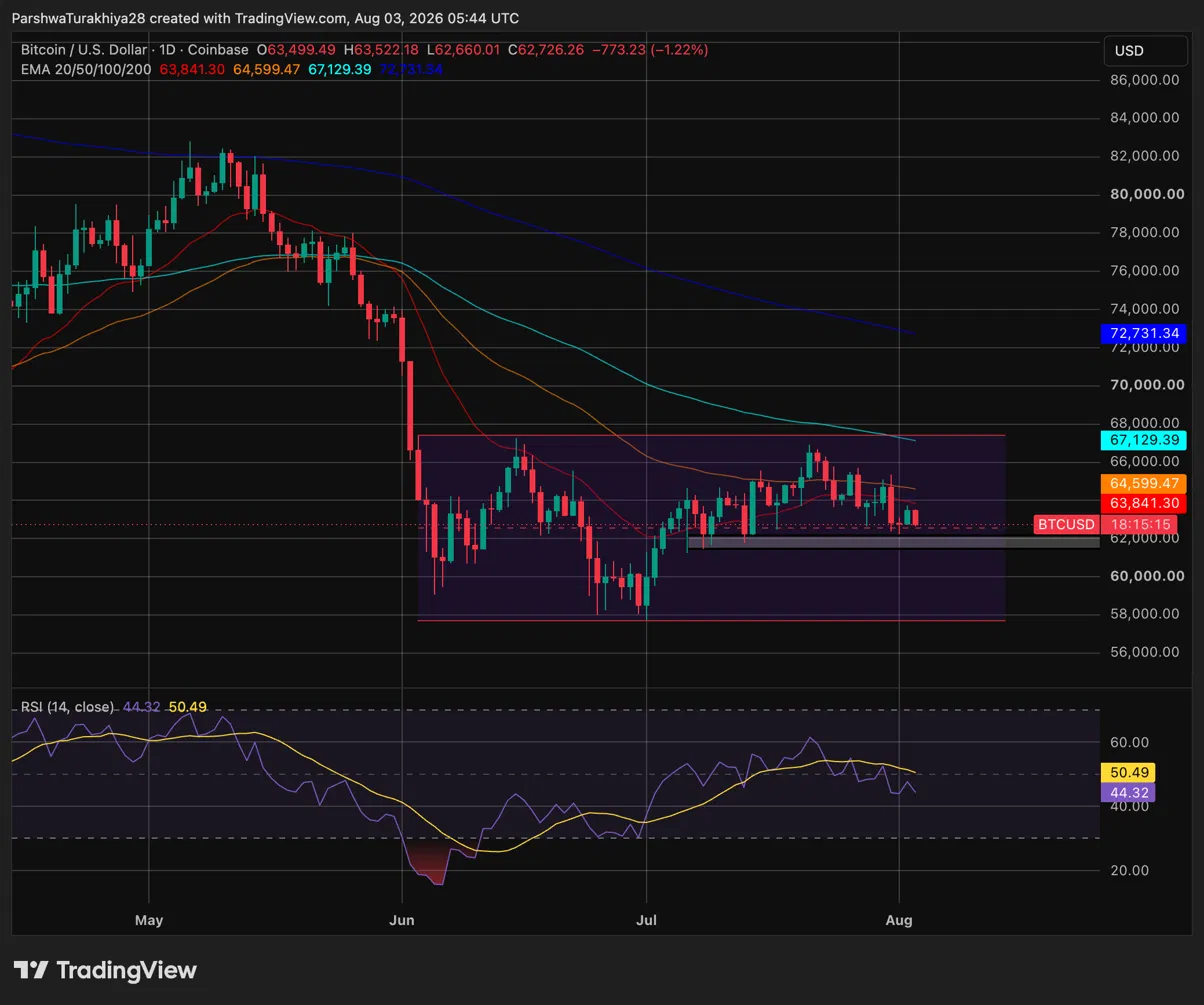
Акция цены $BTC (Источник: TradingView)

Дневной график показывает, что Биткоин торгуется в широком диапазоне консолидации, который с июня цен составлял примерно от $58,000 до $67,000. После попытки восстановления в верхнюю половину этого диапазона до середины июля цена снова опустилась к нижней части: сегодняшняя сессия достигла минимума $62,660 и закрылась на уровне $62,726.

Связано: Прогноз цены на Cardano: жив ли прорыв ADA на фоне роста управленческой активности?

Все четыре EMA наклоняются вниз выше текущей цены. 20-дневный — $63,841 — это ближайший потолок, за ним следуют 50-дневный — $64,599, 100-дневный — $67,129, а 200-дневный — $72,731 значительно выше. RSI на 44,32 находится ниже нейтральной линии 50, что означает, что импульс недостаточно восстановился, чтобы предположить сдвиг тренда. Уровень $62,000 — ключевой минимум, за которым стоит следить, а нижняя граница диапазона около $58,000 станет следующей значимой поддержкой, если этот уровень прорвётся.

Уровни поддержки и сопротивления $BTC, 3 августа 2026 года

Тип Цена Уровень
Сопротивление $63,841 20-дневная EMA, ближайший потолок
Сопротивление $64,599 50-дневная EMA
Сопротивление $67,000 Верхняя граница ареала и 100-дневная зона EMA
Сопротивление $72,731 200-дневная EMA, долгосрочный потолок
Поддерживать $62,000 Горизонтальная опора, ключевой пол
Поддерживать 58 000 долларов Нижняя граница диапазона и последняя крупная поддержка

Потоки спотовых ETF впервые за четыре недели стали отрицательными

Спотовые биткоин-ETF зафиксировали суточный чистый отток в размере $265,37 млн 31 июля, изменив неделю с 31 июля на чистый отток в $61,53 млн по данным SoSoValue. Это прерывает трёхнедельную серию положительных потоков, которая за предыдущие три недели принесла соответственно $197,40M, $75,67 млн и $33,79 млн.

Совокупные чистые поступления по всем продуктам по-прежнему держатся на уровне 51,32 млрд долларов, а общие чистые активы — 76,29 млрд долларов, поэтому разворот — это перерыв на одну неделю, а не структурный сдвиг, но тайминг вместе с эксплойтом Coldcard и более широким тоном снижения рисков придают вес краткосрочной медвежьей схеме.

IBIT от BlackRock возглавил отток с $122,66 млн, за ним следовали FBTC от Fidelity с $54,78 млн и GBTC от Grayscale с $52,63 млн. Bitwise и ARK потеряли около $17 млн. Несколько небольших продуктов, включая VanEck, Morgan Stanley, Valkyrie, Franklin, Invesco, WisdomTree и Hashdex, зафиксировали отсутствие потока в этот день.

Ошибка в прошивке Coldcard отнимает $89 млн из 1200 кошельков

Ошибка с прошивкой в аппаратных кошельках Coldcard позволила злоумышленникам вывести примерно $89 млн в биткоине с более чем 1200 адресов. Galaxy Research, которая первой идентифицировала атаку, обнаружила, что более 1 000 биткоинов было украдено из 1 196 кошельков всего за 41 минуту 30 июля, при этом ещё две подозреваемые волны увеличили общие потери.

Как действовала атака

Этот недостаток ослабил процесс генерации seed phrase в затронутых версиях прошивки, делая восстановительные фразы достаточно предсказуемыми для злоумышленников, не используя физического доступа к устройству. Слабость связана с самой фразой seed — а не в железе. Перенос одной и той же seed-фразы в другой кошелёк не помогает.

Coinkite выпустила патч прошивки, но ясно дала понять, что оно не исправляет кошельки, уже созданные с помощью уязвимого ПО. Пользователям необходимо создать новую seed-фразу с обновлённой прошивкой и перевести средства в новый кошелёк.

Эксплойт Coldcard — ключевые факты

Подробности Ценность
Общие оценочные потери ~89 миллионов долларов
Затронутые кошельки 1,200+
Биткоин украден (первая волна) 1 000+ $BTC из 1 196 кошельков
Время исполнения (Первая волна) 41 минута
Метод атаки Предсказуемое генерирование seed-фраз в затронутом прошивке
Доступно исправление Да — новый патч прошивки от Coinkite
Исправляет ли патч существующие кошельки Нет — пользователи должны генерировать новую seed-фразу
Реакция компании Выпущен патч прошивки, сотрудничающий с правоохранительными органами
Источник: Galaxy Research, Coinkite, 30 июля 2026 года.

Генеральный директор Coinkite Родольфо Новак публично извинился, заявив, что компания «разбита горем» и призвал всех клиентов действовать немедленно. Генеральный директор Jan3 Самсон Моу повторил предупреждение на X, предупредив всех, у кого есть Coldcard любой версии или модели, немедленно переводить средства.

Аналитик Бенджамин Коуэн назвал этот эксплойт «разрушительным» и отметил, что повторяющиеся сбои с безопасностью продолжают подрывать доверие розничной торговли наряду с мошенническими мемкоинами и обманом, отметив, что участие розничной торговли годами снижается отчасти именно по этим причинам.

Связано: Прогноз цены Bless: BLESS ожидает новых максимумов после недельного скачка на 117%

Этот эксплойт не несёт прямых последствий для безопасности блокчейна или целостности сети Bitcoin — недостаток заключался в прошивке Coldcard, а не в протоколе Bitcoin. Однако сумма в 89 миллионов долларов и скорость атаки явно повлияли на настроения перед началом недели.

Прогноз цены биткоина: цели для роста и снижения

Бычий случай, цель: $64,599 (50-дневная EMA)

$BTC удерживает горизонтальную поддержку на уровне $62,000 и стабилизируется выше середины диапазона. Отток ETF оказывается событием, охватывающим одну неделю, а не разворотом тренда, с возвращением новых поступлений по мере того, как история Coldcard исчезает из заголовков. RSI восстанавливается выше 50, и цена прорывается через 20-дневную EMA на уровне 63 841 доллара к 50-дневной на уровне 64 599 долларов, сохраняя более широкий диапазон консолидации.

Медвежий риск, уровень риска: $58,000 (Диапазон минимума)

Поддержка на уровне $62,000 не удерживается, так как продолжающиеся оттоки ETF и ущерб для настроений из-за эксплуатации Coldcard отпугивают покупателей. Дрейф RSI ниже 50 с ценой ниже всех четырёх EMA даёт продавцам путь наименьшего сопротивления к минимуму диапазона на уровне 58 000 долларов, где покупателям придётся вмешаться, чтобы предотвратить более глубокий прорыв ниже всей структуры консолидации.

end-content

Trending Cryptos

Related Questions

QWhat are the main reasons given in the article for the recent drop in Bitcoin's price below $63,000?

AThe article attributes the drop to two main factors: spot Bitcoin ETFs recording their first weekly net outflow in a month, and a security exploit of Coldcard hardware wallets which negatively impacted market sentiment.

QAccording to the article, what is the nearest resistance level for Bitcoin based on the daily EMA and the key horizontal support level to watch?

AAccording to the article, the nearest resistance is the 20-day EMA at $63,841. The key horizontal support level to watch is $62,000.

QHow significant were the net outflows from spot Bitcoin ETFs for the week, and which funds led the withdrawals?

AFor the week ending July 31, 2026, spot Bitcoin ETFs recorded a net outflow of $61.53 million. The BlackRock iShares Bitcoin Trust (IBIT) led the outflows with $122.66 million, followed by Fidelity Wise Origin Bitcoin Fund (FBTC) and Grayscale Bitcoin Trust (GBTC).

QDescribe the nature of the Coldcard exploit. What was the flaw, and what action must affected users take?

AThe Coldcard exploit was a firmware flaw that weakened the seed phrase generation process in affected versions, making the recovery phrases predictable. Users must update their firmware, generate a completely new seed phrase, and transfer their funds to a new wallet, as the patch does not fix wallets already created with the vulnerable software.

QWhat are the stated bullish and bearish price targets for Bitcoin in the article's forecast?

AThe stated bullish target is a rise to the 50-day EMA at $64,599. The stated bearish risk level is a drop to the bottom of the consolidation range at $58,000.

Related Reads

Once-Popular Web3 Enters Wave of Layoffs

The once-hot Web3 industry is experiencing a severe wave of layoffs. While many companies attribute job cuts to AI-driven restructuring, the primary reason is often financial pressure. The Web3 sector, at the intersection of tech and finance, has been hit particularly hard. Employees at major cryptocurrency exchanges report sudden, impersonal layoffs—often with system access revoked overnight—and minimal or no severance. Common tactics include setting impossible performance targets or terminating employees for minor policy violations. The working atmosphere has become toxic, marked by intense monitoring, excessive meetings, and management obsessed with control and internal politics rather than product innovation. The industry's core business model is collapsing. Exchange revenue from trading fees and listing charges has plummeted due to a decline in quality projects and retail investor exodus. Events like the massive forced liquidation on October 10th further shattered confidence. Competition from on-chain derivatives platforms and prediction markets is intensifying the downturn. As layoffs continue, displaced workers struggle to find new opportunities. Many transition to the AI sector, but face significant bias from traditional finance and even some AI firms, which view crypto industry experience with suspicion. The current downturn appears more structural than cyclical, driven by unsustainable practices, internal strife, and a failure to innovate, raising questions about the industry's future trajectory.

marsbit45m ago

Once-Popular Web3 Enters Wave of Layoffs

marsbit45m ago

Sales Drop 26% But Prices Rise? Xiaomi's Dilemma

Xiaomi, facing a significant 26.3% year-on-year decline in global smartphone shipments in Q2 2026, has implemented its third price hike of the year. On August 2nd, prices were raised for nine models, including the flagship Mi 17 series (up 400-500 yuan) and Redmi K90/Turbo 5 series (up 300 yuan). This move completes a pattern where cost pressure, originating from surging memory chip prices, has climbed from entry-level to mid-range and now flagship products. The primary driver is a severe supply squeeze on consumer-grade DRAM and NAND flash memory, as major manufacturers like Samsung shift advanced capacity to more profitable HBM for AI applications. According to Xiaomi President Lu Weibing, memory prices for the same configuration have skyrocketed nearly fourfold since Q1 2025, adding roughly 1500 yuan to the cost of a mainstream 12GB+512GB phone. IDC estimates consumer memory costs have risen nearly 300% year-on-year. While the price increases hurt demand and contributed to the sales slump, Xiaomi's strategy of reducing entry-level models and upgrading its product mix also played a role. Domestically, its market share in China fell to 12% (5th place), while leaders Huawei and Apple saw shipments grow over 24%. To mitigate future risks, Xiaomi is accelerating its in-house "Surge" chip development and optimizing memory configurations across its lineup. Xiaomi is not alone; major brands like OPPO, vivo, and Apple have already raised prices in 2026, with industry insiders predicting another round of increases (200-800 yuan) in the second half. A full-scale industry-wide涨价 cycle is underway, forcing both manufacturers and consumers to recalibrate their strategies and purchasing decisions amid sustained cost pressures.

marsbit56m ago

Sales Drop 26% But Prices Rise? Xiaomi's Dilemma

marsbit56m ago

Trading

Spot

Hot Articles

What is $BITCOIN

DIGITAL GOLD ($BITCOIN): A Comprehensive Analysis Introduction to DIGITAL GOLD ($BITCOIN) DIGITAL GOLD ($BITCOIN) is a blockchain-based project operating on the Solana network, which aims to combine the characteristics of traditional precious metals with the innovation of decentralized technologies. While it shares a name with Bitcoin, often referred to as “digital gold” due to its perception as a store of value, DIGITAL GOLD is a separate token designed to create a unique ecosystem within the Web3 landscape. Its goal is to position itself as a viable alternative digital asset, although specifics regarding its applications and functionalities are still developing. What is DIGITAL GOLD ($BITCOIN)? DIGITAL GOLD ($BITCOIN) is a cryptocurrency token explicitly designed for use on the Solana blockchain. In contrast to Bitcoin, which provides a widely recognized value storage role, this token appears to focus on broader applications and characteristics. Notable aspects include: Blockchain Infrastructure: The token is built on the Solana blockchain, known for its capacity to handle high-speed and low-cost transactions. Supply Dynamics: DIGITAL GOLD has a maximum supply capped at 100 quadrillion tokens (100P $BITCOIN), although details regarding its circulating supply are currently undisclosed. Utility: While precise functionalities are not explicitly outlined, there are indications that the token could be utilized for various applications, potentially involving decentralized applications (dApps) or asset tokenization strategies. Who is the Creator of DIGITAL GOLD ($BITCOIN)? At present, the identity of the creators and development team behind DIGITAL GOLD ($BITCOIN) remains unknown. This situation is typical among many innovative projects within the blockchain space, particularly those aligning with decentralized finance and meme coin phenomena. While such anonymity may foster a community-driven culture, it intensifies concerns about governance and accountability. Who are the Investors of DIGITAL GOLD ($BITCOIN)? The available information indicates that DIGITAL GOLD ($BITCOIN) does not have any known institutional backers or prominent venture capital investments. The project seems to operate on a peer-to-peer model focused on community support and adoption rather than traditional funding routes. Its activity and liquidity are primarily situated on decentralized exchanges (DEXs), such as PumpSwap, rather than established centralized trading platforms, further highlighting its grassroots approach. How DIGITAL GOLD ($BITCOIN) Works The operational mechanics of DIGITAL GOLD ($BITCOIN) can be elaborated on based on its blockchain design and network attributes: Consensus Mechanism: By leveraging Solana’s unique proof-of-history (PoH) combined with a proof-of-stake (PoS) model, the project ensures efficient transaction validation contributing to the network's high performance. Tokenomics: While specific deflationary mechanisms have not been extensively detailed, the vast maximum token supply implies that it may cater to microtransactions or niche use cases that are still to be defined. Interoperability: There exists the potential for integration with Solana’s broader ecosystem, including various decentralized finance (DeFi) platforms. However, the details regarding specific integrations remain unspecified. Timeline of Key Events Here is a timeline that highlights significant milestones concerning DIGITAL GOLD ($BITCOIN): 2023: The initial deployment of the token occurs on the Solana blockchain, marked by its contract address. 2024: DIGITAL GOLD gains visibility as it becomes available for trading on decentralized exchanges like PumpSwap, allowing users to trade it against SOL. 2025: The project witnesses sporadic trading activity and potential interest in community-led engagements, although no noteworthy partnerships or technical advancements have been documented as of yet. Critical Analysis Strengths Scalability: The underlying Solana infrastructure supports high transaction volumes, which could enhance the utility of $BITCOIN in various transaction scenarios. Accessibility: The potential low trading price per token could attract retail investors, facilitating wider participation due to fractional ownership opportunities. Risks Lack of Transparency: The absence of publicly known backers, developers, or an audit process may yield skepticism regarding the project's sustainability and trustworthiness. Market Volatility: The trading activity is heavily reliant on speculative behavior, which can result in significant price volatility and uncertainty for investors. Conclusion DIGITAL GOLD ($BITCOIN) emerges as an intriguing yet ambiguous project within the rapidly evolving Solana ecosystem. While it attempts to leverage the “digital gold” narrative, its departure from Bitcoin's established role as a store of value underscores the need for a clearer differentiation of its intended utility and governance structure. Future acceptance and adoption will likely depend on addressing the current opacity and defining its operational and economic strategies more explicitly. Note: This report encompasses synthesised information available as of October 2023, and developments may have transpired beyond the research period.

1.4k Total ViewsPublished 2025.05.13Updated 2025.05.13

What is $BITCOIN

Discussions

Welcome to the HTX Community. Here, you can stay informed about the latest platform developments and gain access to professional market insights. Users' opinions on the price of BTC (BTC) are presented below.

活动图片