Hedge fund with $1.1B in Bitcoin miner stocks seeks capital after AI sell-off: FT

cointelegraphPublished on 2026-07-30Last updated on 2026-07-30

Abstract

Hedge fund Situational Awareness, founded by ex-OpenAI researcher Leopold Aschenbrenner, is seeking new capital after heavy losses from an AI stock sell-off in July. The fund, which reportedly managed around $20 billion in assets, saw gains of 439% through June, but leveraged bets led to significant losses when AI stocks fell. Aschenbrenner argued the sell-off created new investment opportunities. The fund holds major positions in Bitcoin miners pivoting to AI, with a March SEC filing showing about $1.11 billion across stocks like IREN, Core Scientific, Riot Platforms, and CleanSpark. The fund was launched alongside Aschenbrenner's essays predicting artificial general intelligence surpassing college graduates by 2030.

Situational Awareness, the hedge fund founded in 2024 by ex-OpenAI researcher Leopold Aschenbrenner, has approached investors and lenders for fresh capital after suffering heavy losses in the recent artificial intelligence stock sell-off, the Financial Times reported Thursday.

The fund, which the Wall Street Journal said had around $20 billion in assets under management as of June 8, has also offered some investors the option to buy portfolio assets, according to the FT, citing people briefed on the discussions and a July 24 investor letter.

The size of the losses and amount sought were not disclosed. Aschenbrenner’s fund had gained 439% after fees through June, according to the letter, but the FT said borrowing increased the size of the fund’s bets, driving up losses when AI stocks collapsed during July’s market rout. Aschenbrenner also reportedly argued in the letter that the sell-off had created attractive investment opportunities.

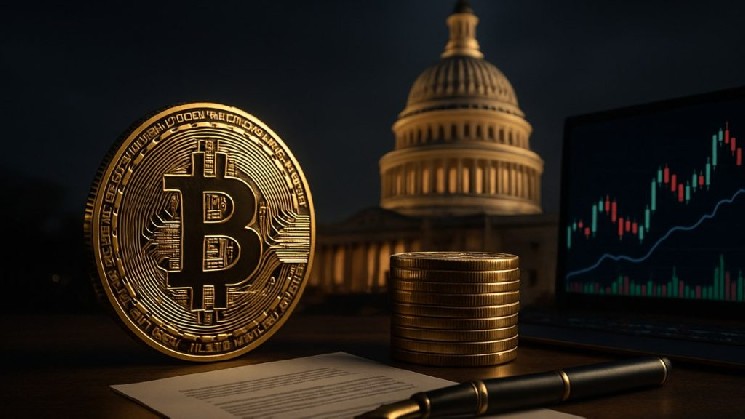
Cointelegraph previously reported that the fund had made a big bet in its portfolio around the power and data centers supporting AI, including Bitcoin (BTC) miners pivoting into AI computing. A filing with the US Securities and Exchange Commission in March showed about $1.11 billion in positions across seven Bitcoin miner stocks, including IREN, Core Scientific, Riot Platforms and CleanSpark.

Aschenbrenner wrote a series of essays on artificial general intelligence in mid-2024 around the same time he launched his Situational Awareness fund. In it, he predicted that AGI machines will outpace college graduates by the end of the decade.

Cointelegraph contacted Situational Awareness for comment but had not received a response by publication.

Related: Bitcoin mining’s 2026 reckoning: AI pivots, margin pressure and a fight to survive

Trending Cryptos

Related Questions

QWho founded the hedge fund Situational Awareness and what is his background?

ASituational Awareness was founded in 2024 by Leopold Aschenbrenner, who is a former OpenAI researcher.

QWhat triggered Situational Awareness's need to seek fresh capital according to the report?

AThe hedge fund needed to seek fresh capital after suffering heavy losses in the recent artificial intelligence stock sell-off in July.

QHow much did the hedge fund invest in Bitcoin miner stocks according to an SEC filing?

AAccording to an SEC filing in March, the fund had about $1.11 billion in positions across seven Bitcoin miner stocks, including IREN, Core Scientific, Riot Platforms, and CleanSpark.

QDespite the recent losses, what was the fund's performance through June 2024?

AAccording to a July 24 investor letter, the fund had gained 439% after fees through June 2024.

QWhat connection did Leopold Aschenbrenner draw between Bitcoin miners and AI in the fund's portfolio?

AThe fund's portfolio included a big bet on Bitcoin miners that were pivoting into AI computing, focusing on the power and data centers supporting AI.

Related Reads

US Senate Makes Important Amendments to "Conflict of Interest" Section of Cryptocurrency Bill

The U.S. Senate has taken a key step regarding the CLARITY Act, which could shape the future of the U.S. crypto market. On July 29, Senators Tom Tillis and Ruben Gallego finalized amendments to the bill's "conflict of interest" rules, one of its most contentious aspects. The bipartisan bill aims to tighten restrictions on high-level federal officials' ties to digital assets. The new text, crafted as an alternative to a White House-endorsed ethics code, is expected to impose stricter rules limiting officials' ability to issue or directly participate in digital asset projects. However, with Congress entering an August recess and the revised text not yet reviewed by much of the Senate, the bill's timeline is uncertain. Senate Majority Leader John Thune indicated a procedural vote could occur between July 29 and August 1 but expressed doubt the full bill could pass before the break. The House-approved CLARITY Act, passed in July 2025, has been under Senate negotiation for over a year. Key goals of the CLARITY Act include clarifying jurisdictional boundaries between the SEC and CFTC, setting rules for digital commodity spot markets, and addressing topics like stablecoin yields, DeFi, and illicit financing. The stablecoin yield provisions could significantly impact U.S.-based DeFi protocols, exchanges, and issuers, affecting their global competitiveness. The outcome is being closely watched by both the U.S. and global digital asset markets.

cryptonews.ru31m ago

US Senate Makes Important Amendments to "Conflict of Interest" Section of Cryptocurrency Bill

cryptonews.ru31m ago

Pavel Durov Designated as a Terrorist in Russia. What Does This Mean for Telegram Users?

Pavel Durov, the founder of Telegram, has been added to Russia's list of terrorists and extremists by Rosfinmonitoring, as published on July 30. The entry includes his name and date of birth. The designation follows an announcement by the Russian Federal Security Service (FSB) on July 29, which charged Durov with aiding terrorist activity. The FSB alleges that a Telegram dating bot named "DaiVinchik" was used to recruit 46 individuals for attacks on police and arson, orchestrated by Ukrainian special services. The FSB also accuses Telegram's administration of failing to remove channels and bots used by Ukrainian intelligence and extremist groups. Durov is reportedly subject to an international arrest warrant. Inclusion on the Rosfinmonitoring list leads to significant restrictions: the freezing of Durov's bank accounts and assets, severe limitations on financial transactions, and a ban on election participation, media interaction, and event organization. Transfers to his accounts may be considered terrorism financing. For ordinary Russian Telegram users, purchasing Telegram Premium is not classified as financing terrorism, according to an IT expert. General use of the messenger—messaging, managing channels—does not automatically make a user a participant in extremist activity. There has been no official decision to ban Telegram itself. It is noted that French authorities are also investigating Durov over allegations of inadequate measures against criminal activity on the platform and insufficient cooperation with law enforcement. Durov denies all charges.

cryptonews.ru40m ago

Pavel Durov Designated as a Terrorist in Russia. What Does This Mean for Telegram Users?

cryptonews.ru40m ago

Trading

Spot

Hot Articles

What is $BITCOIN

DIGITAL GOLD ($BITCOIN): A Comprehensive Analysis Introduction to DIGITAL GOLD ($BITCOIN) DIGITAL GOLD ($BITCOIN) is a blockchain-based project operating on the Solana network, which aims to combine the characteristics of traditional precious metals with the innovation of decentralized technologies. While it shares a name with Bitcoin, often referred to as “digital gold” due to its perception as a store of value, DIGITAL GOLD is a separate token designed to create a unique ecosystem within the Web3 landscape. Its goal is to position itself as a viable alternative digital asset, although specifics regarding its applications and functionalities are still developing. What is DIGITAL GOLD ($BITCOIN)? DIGITAL GOLD ($BITCOIN) is a cryptocurrency token explicitly designed for use on the Solana blockchain. In contrast to Bitcoin, which provides a widely recognized value storage role, this token appears to focus on broader applications and characteristics. Notable aspects include: Blockchain Infrastructure: The token is built on the Solana blockchain, known for its capacity to handle high-speed and low-cost transactions. Supply Dynamics: DIGITAL GOLD has a maximum supply capped at 100 quadrillion tokens (100P $BITCOIN), although details regarding its circulating supply are currently undisclosed. Utility: While precise functionalities are not explicitly outlined, there are indications that the token could be utilized for various applications, potentially involving decentralized applications (dApps) or asset tokenization strategies. Who is the Creator of DIGITAL GOLD ($BITCOIN)? At present, the identity of the creators and development team behind DIGITAL GOLD ($BITCOIN) remains unknown. This situation is typical among many innovative projects within the blockchain space, particularly those aligning with decentralized finance and meme coin phenomena. While such anonymity may foster a community-driven culture, it intensifies concerns about governance and accountability. Who are the Investors of DIGITAL GOLD ($BITCOIN)? The available information indicates that DIGITAL GOLD ($BITCOIN) does not have any known institutional backers or prominent venture capital investments. The project seems to operate on a peer-to-peer model focused on community support and adoption rather than traditional funding routes. Its activity and liquidity are primarily situated on decentralized exchanges (DEXs), such as PumpSwap, rather than established centralized trading platforms, further highlighting its grassroots approach. How DIGITAL GOLD ($BITCOIN) Works The operational mechanics of DIGITAL GOLD ($BITCOIN) can be elaborated on based on its blockchain design and network attributes: Consensus Mechanism: By leveraging Solana’s unique proof-of-history (PoH) combined with a proof-of-stake (PoS) model, the project ensures efficient transaction validation contributing to the network's high performance. Tokenomics: While specific deflationary mechanisms have not been extensively detailed, the vast maximum token supply implies that it may cater to microtransactions or niche use cases that are still to be defined. Interoperability: There exists the potential for integration with Solana’s broader ecosystem, including various decentralized finance (DeFi) platforms. However, the details regarding specific integrations remain unspecified. Timeline of Key Events Here is a timeline that highlights significant milestones concerning DIGITAL GOLD ($BITCOIN): 2023: The initial deployment of the token occurs on the Solana blockchain, marked by its contract address. 2024: DIGITAL GOLD gains visibility as it becomes available for trading on decentralized exchanges like PumpSwap, allowing users to trade it against SOL. 2025: The project witnesses sporadic trading activity and potential interest in community-led engagements, although no noteworthy partnerships or technical advancements have been documented as of yet. Critical Analysis Strengths Scalability: The underlying Solana infrastructure supports high transaction volumes, which could enhance the utility of $BITCOIN in various transaction scenarios. Accessibility: The potential low trading price per token could attract retail investors, facilitating wider participation due to fractional ownership opportunities. Risks Lack of Transparency: The absence of publicly known backers, developers, or an audit process may yield skepticism regarding the project's sustainability and trustworthiness. Market Volatility: The trading activity is heavily reliant on speculative behavior, which can result in significant price volatility and uncertainty for investors. Conclusion DIGITAL GOLD ($BITCOIN) emerges as an intriguing yet ambiguous project within the rapidly evolving Solana ecosystem. While it attempts to leverage the “digital gold” narrative, its departure from Bitcoin's established role as a store of value underscores the need for a clearer differentiation of its intended utility and governance structure. Future acceptance and adoption will likely depend on addressing the current opacity and defining its operational and economic strategies more explicitly. Note: This report encompasses synthesised information available as of October 2023, and developments may have transpired beyond the research period.

1.1k Total ViewsPublished 2025.05.13Updated 2025.05.13

What is $BITCOIN

Discussions

Welcome to the HTX Community. Here, you can stay informed about the latest platform developments and gain access to professional market insights. Users' opinions on the price of BTC (BTC) are presented below.

活动图片