Trading Moment: South Korean Stocks Fall into Technical Bear Market, Hong Kong Tech Leads Strongly, BTC Pulls Back Slightly

marsbitPublished on 2026-07-08Last updated on 2026-07-08

Abstract

Market Roundup: Tech Leads in Hong Kong, South Korea Enters Technical Bear Market, BTC Dips Global markets displayed divergent trends. Hong Kong's Hang Seng Tech Index surged over 5%, led by major tech stocks like Alibaba (+12%) and Xiaomi (+10%), as southbound capital inflows exceeded HK$11 billion. In contrast, South Korea's KOSPI tumbled 5.35%, entering a technical bear market (down >20% from June peak), heavily dragged by chip giants Samsung and SK Hynix. Japan's Nikkei 225 fell 2.11% for a third day, pressured by tech and rising bond yields. Bitcoin saw a slight pullback after its recent rebound, testing key support near $63,000. Analysts note the rally appears corrective, driven by macro factors rather than a structural shift. Sustained ETF inflows are seen as crucial for a trend reversal. Key near-term levels are support at $63,000 and resistance at $64,600-$65,000. U.S. spot Bitcoin ETFs recorded a third consecutive day of net inflows (+$21.44M). In mainland China, A-share indices closed lower, though semiconductor and computing power sectors saw gains. Market focus now turns to upcoming U.S. Fed minutes, Chinese macroeconomic data, and global liquidity conditions, which will be pivotal for near-term direction across these asset classes.

Every Monday, Wednesday, and Friday, we focus on the crypto market, Japan, South Korea, A-shares, and Hong Kong stocks, reviewing the market with data and seizing opportunities through trends. Presented by PANews.

BTC Tests 200-week Moving Average After Days of Rebound
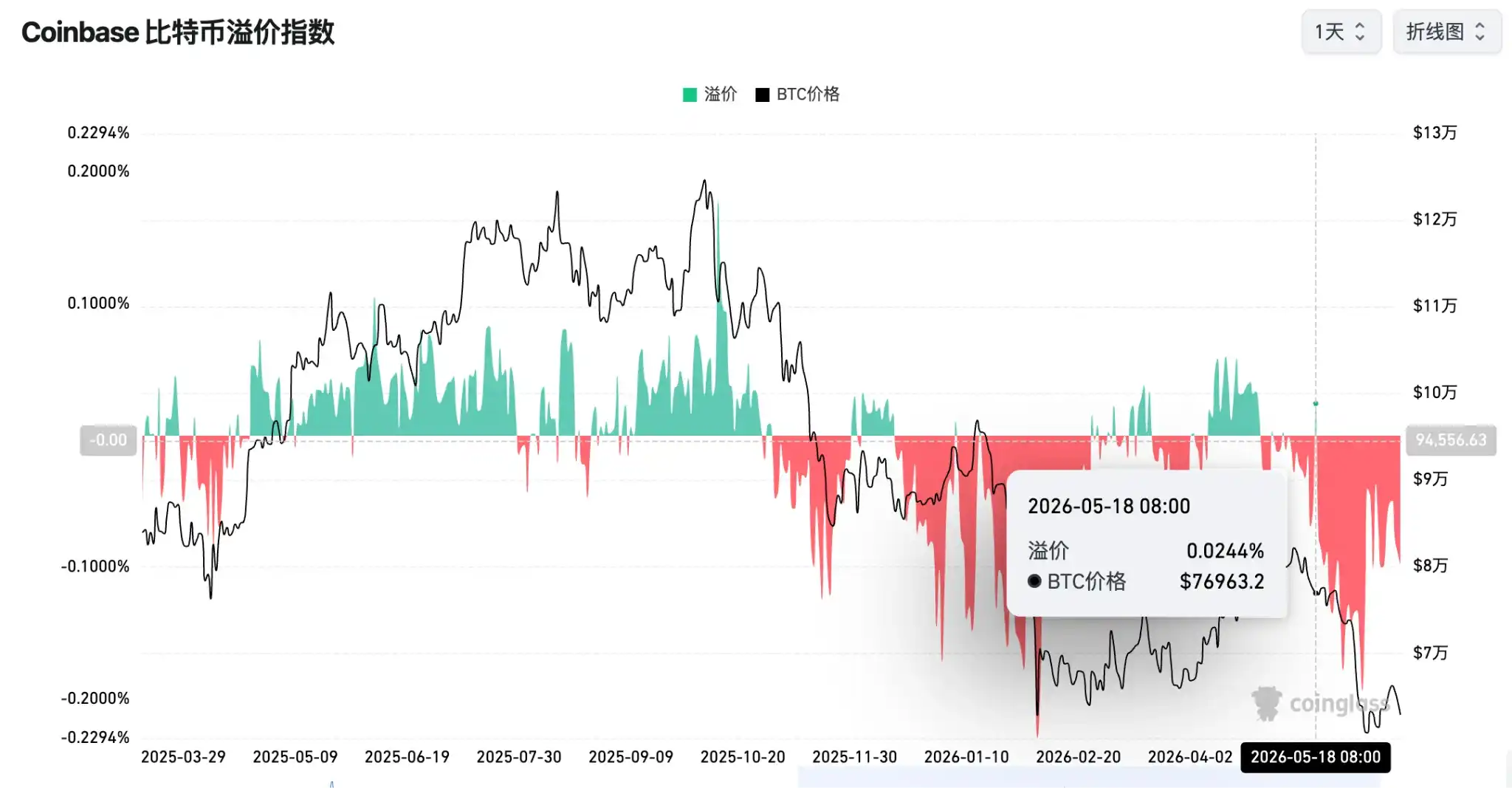
Bitcoin has entered a period of consolidation and repair after rebounding over 11%, with market sentiment easing from extreme panic but still facing tests of support. The Coinbase Bitcoin Premium Index has been in negative premium for 50 consecutive days, setting a record for the longest duration, reflecting significant selling pressure in the U.S. market and an overall risk appetite that has not fully recovered. Market maker Wintermute noted that this rebound is more of a "textbook repair" driven by macro easing, a dovish Fed tone, and institutional adoption benefits for Ethereum, rather than a structural shift. Short-term prices may rise slightly, but continued capital inflows are needed to confirm the trend.

On-chain data also fails to give a clear optimistic signal. A CryptoQuant analyst indicated that the Bitcoin NUPL indicator remains at 0.158. Although close to levels seen in early 2023, the 30-day and 100-day EMAs have not yet entered the negative territory typical of historical bear market bottoms, suggesting there may be further downside risks in this cycle. The Galaxy research team believes Bitcoin is gradually entering a value zone with limited downside, but prices could still fall back to the $40,000-$46,000 range if global liquidity tightens.

From a technical perspective, several traders are watching the support level near $63,000. If it holds steadily, there is potential to challenge the resistance zone around $64,600 to $65,000 again. If it falls below $63,000, the market may retest support near $60,000 or even $58,000. Short-term movements will remain highly dependent on capital flows and macro policy changes.

Looking ahead, Federal Reserve policy will be the core variable affecting the trend of digital assets. The market will focus on the latest meeting minutes, the U.S. Dollar Index, Treasury yields, and ETF fund flow changes. If institutional funds resume net inflows and U.S. market risk appetite improves, Bitcoin may continue its challenge towards $65,000 or higher. Conversely, the $63,000 support level will face a test.

Key Points Today:

  • Bitcoin L2 network Botanix will gradually shut down, users need to withdraw assets by July 9.

  • Base will activate the B20 token standard on the mainnet on July 9.

  • Movement (MOVE) will unlock approximately 165 million tokens worth about $2 million on July 9.

  • Upbit 24-hour trading volume ranking: XRP, SLX, BTC, ETH, AI.

  • Bitcoin Spot ETF: +$21.435 million, net inflows for 3 consecutive days.

  • Ethereum Spot ETF: +$26.9252 million, net inflows for 4 consecutive days.

  • HYPE Spot ETF: +$4.3227 million.

  • SOL Spot ETF: +$1.6720 million.

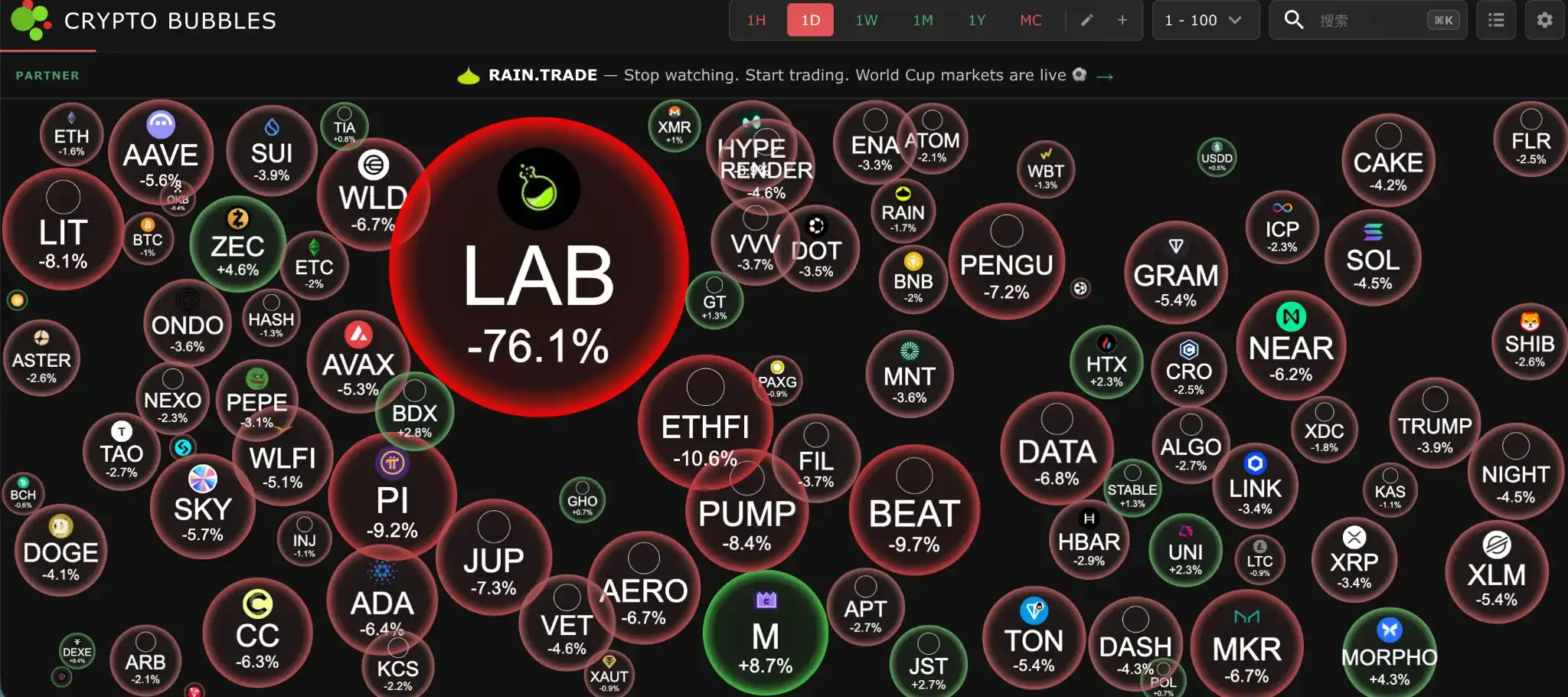
Today's Biggest Gainers among Top 100 Cryptos by Market Cap: M up 8.7%, ZEC up 4.6%, MORPH up 4.3%, BDX up 2.8%, JST up 2.7%.
Nikkei Technically Pressured, Falls for 3 Consecutive Days

Following a sharp overnight decline in the Nasdaq, the Tokyo Stock Exchange came under pressure today. The Nikkei 225 index experienced intense volatility throughout the day, ultimately closing down 2.11%, marking its third consecutive day of decline. Tech stocks led the losses, dragged down by U.S. chip stocks and in resonance with the South Korean market.

Worsening Middle East tensions have pushed up energy costs. Japan's reliance on crude oil from the Strait of Hormuz is as high as 93.5%, sparking fears of imported inflation that directly impacts corporate profits. High-valuation tech stocks suffered heavy blows: semiconductor giant Tokyo Electron fell 3.7%, capacitor maker Taiyo Yuden, a key supplier for AI servers, plummeted 8.5%, and Advantest dropped 4.7%, indicating market doubts about the sustainability of the semiconductor boom cycle.

Japan's macro-financial environment has entered a danger zone. The yield on 10-year government bonds rose to 2.86%, a 30-year high, while the 30-year bond yield exceeded 3.98%. A Daiwa Securities strategist pointed out that investor confidence in the AI sector has not recovered, and a Goldman Sachs economist warned Japan could fall into a vicious cycle of debt and high-interest payments. The market is highly focused on the potential for "fiscal dominance" by the Bank of Japan under fiscal pressure. The next 48 hours require close attention to U.S. wholesale inventory data and the Fed meeting minutes for guidance on global liquidity.

Chip Stock Volatility Drags Market, South Korean Stocks Fall into Technical Bear Market

South Korean stocks were among the most volatile markets in Asia. Affected by adjustments in the global AI industry chain, foreign capital profit-taking, and concentrated deleveraging, it closed down 5.35%. The index has now plunged more than 20% from its late-June all-time high, technically confirming entry into a technical bear market. The Ministry of Finance urgently stated it will closely monitor risks with the central bank and regulators, naming chip stock concentration as the main cause of market instability.

The previously profitable chip giants became the main source of market bleeding. Samsung Electronics shares plunged 6.25%, and SK Hynix fell 5.68%. Over-concentration in the semiconductor sector amplified volatility, with leveraged ETFs acting as volatility amplifiers. A South Korean economist publicly criticized that KOSPI has gradually become a "casino," and leveraged ETFs linked to single stocks are a policy failure, not only amplifying market fluctuations but also eroding corporate value and investor wealth.

IBK Investment & Securities researcher Byun Jun-ho noted that semiconductor stock prices are undergoing violent corrections following the inflection point of slowing earnings growth, and a peak in investment sentiment is an undeniable fact. A Fidelity International portfolio manager cautioned that the AI semiconductor boom entirely depends on annual capital expenditures of around $1 trillion by a few tech giants. Once this scale is proven unsustainable, the downside could be unimaginable.

A-shares Consolidate and Pull Back, Hong Kong Tech Leads Strongly
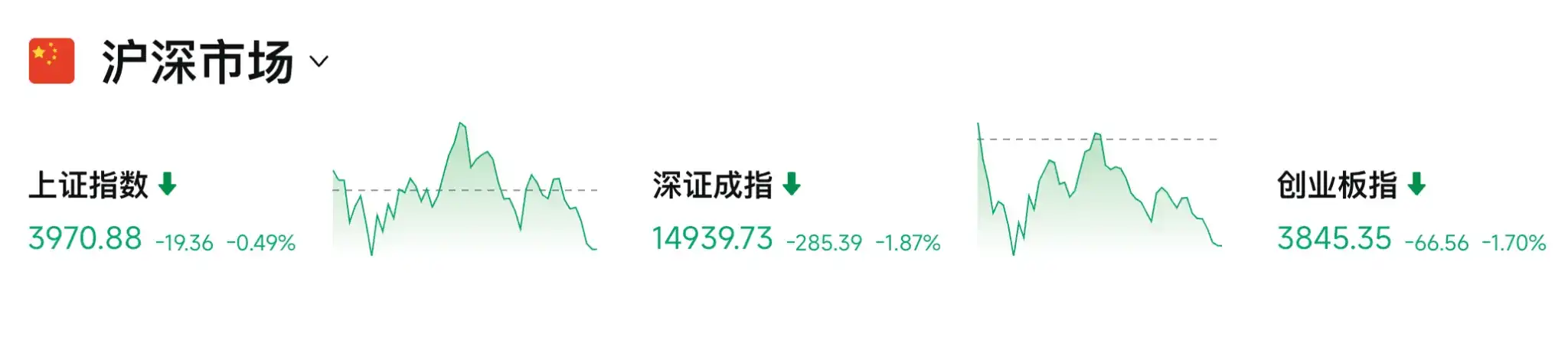
A-shares showed a consolidating and declining trend on Wednesday, with the Shanghai Composite Index down 0.49%, the Shenzhen Component Index down 1.87%, and the ChiNext Index down 1.7%.

More stocks fell than rose. Computing power, AI server, and cloud computing sectors bucked the trend and surged, with stocks like Inspur Information, Sangfor Technologies, Wangsu Science & Technology, and Yunsail Zhilian hitting the daily limit-up. Sectors like lithium batteries, lab-grown diamonds, and humanoid robots saw noticeable adjustments.

The semiconductor self-reliance theme saw a full-scale counterattack. CanSemi hit the limit-up, while Huahong Grace surged over 10% to a record high, driven by international investment banks raising target prices.
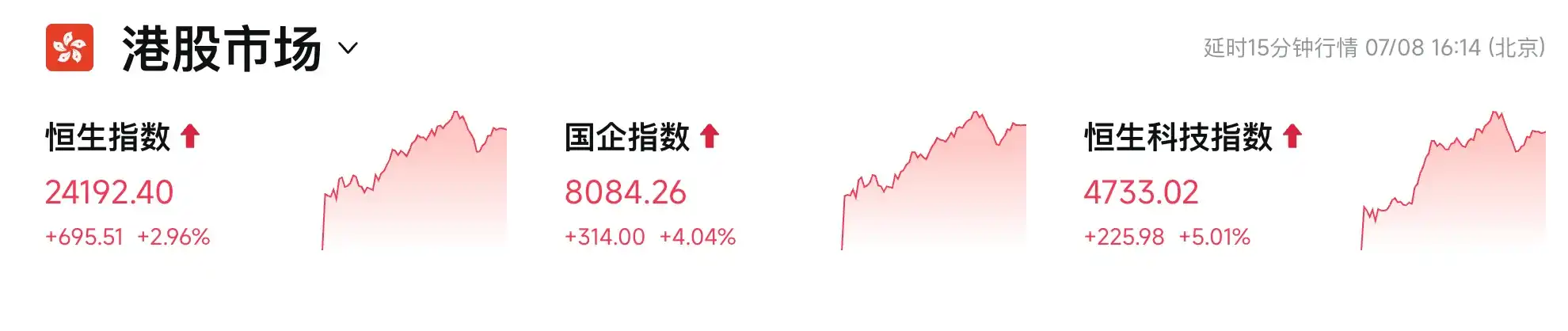
Hong Kong stocks, however, opened higher and rallied strongly. The Hang Seng Index rose about 700 points, reclaiming the 24,000 level, with the Hang Seng Tech Index surging over 5% and tech and internet stocks soaring across the board.

  • Alibaba surged over 12%, with its market cap returning to HK$2 trillion, leading the market. Reports suggest Taobao Flash Sales' losses are narrowing faster than expected, and Agent product integration is progressing.

  • Xiaomi Group's stock skyrocketed over 10%, returning above HK$25. The company officially announced the launch of a new car brand "SkyNomad," with its first model set for release in the second half of the year.

  • At the sensitive moment of the first batch of cornerstone lock-up shares being lifted for Zhipu AI, instead of the usual sell-off, nearly 70% of national-level strategic capital and local government guidance funds pledged long-term holdings with strong backing. J.P. Morgan ruthlessly raised its target price to HK$2,000,刺激其股价盘中逆势暴涨18% (stimulating its stock price to surge 18% against the trend intraday).

  • SMIC, Lenovo, Kuaishou, and other chip and tech stocks rose broadly.

Southbound capital recorded a net purchase of over HK$11 billion, indicating funds flowing from South Korea and Japan to Hong Kong stocks' "import substitution" and low-valuation AI assets. Institutional views suggest a resonance between Hong Kong stocks' valuation attractiveness and fund rebalancing, with short-term catalysts including Fed minutes and Chinese macro data.

In the next day or two, focus on China's June CPI/PPI data. The central bank and market participants expect policy implementation in the third quarter to improve liquidity, making tech and consumption recovery worth tracking closely. Overall, the market is seeking a new balance amid global volatility, with Hong Kong's resilience likely to persist.


Trending Cryptos

Related Questions

QWhat major indexes and markets were discussed in the article, and what was their general performance trend?

AThe article discussed the performance of Bitcoin (BTC), the Nikkei 225 (Japan), the KOSPI (South Korea), and the A-share and Hong Kong stock markets. The trends were mixed: BTC rebounded but faced a slight pullback; the Nikkei 225 fell for three consecutive days; the KOSPI entered a technical bear market; A-shares experienced a volatile decline; while Hong Kong's Hang Seng Tech Index led gains with a strong rally.

QAccording to analysts and data in the article, what are the key technical support and resistance levels for Bitcoin mentioned?

AAnalysts in the article noted key technical levels for Bitcoin. The support level is around $63,000. If this holds, Bitcoin could challenge the resistance zone between $64,600 and $65,000. However, if $63,000 is breached, the market may test support near $60,000 or even $58,000.

QWhy did the South Korean KOSPI index fall into a technical bear market, and which sectors were most affected?

AThe South Korean KOSPI index fell into a technical bear market, dropping more than 20% from its recent peak, due to adjustments in the global AI supply chain, foreign capital taking profits, and leveraged fund liquidations. The semiconductor sector was the most severely impacted, with giants like Samsung Electronics and SK Hynix experiencing significant declines, amplifying market volatility.

QWhich specific stocks led the gains in the Hong Kong stock market, and what were the reasons for their strong performance?

AIn the Hong Kong stock market, technology stocks led the gains. Alibaba surged over 12% due to positive news about its Taobao flash sales reducing losses faster than expected. Xiaomi's stock soared over 10% following the announcement of its new car brand 'SkyNomad'. Zhipu AI's stock also surged nearly 18% after receiving commitments from strategic investors and an upgraded price target from J.P. Morgan.

QWhat are the future factors that the article suggests could influence the market trends discussed?

AThe article suggests several future factors could influence market trends. For digital assets like Bitcoin, the core variable will be Federal Reserve policy, including meeting minutes, the US dollar index, Treasury yields, and ETF fund flows. For Asian markets, key factors include US wholesale inventory data, Fed guidance on global liquidity, China's June CPI/PPI data, and potential policy support in the third quarter to improve liquidity.

Related Reads

Weng Li's New Blog Proposes 'Self-Evolution Should Start from Harness', DeepSeek's Cui Tianyi Endorses with Repost

Lilian Weng, former OpenAI security VP and co-founder of Thinking Machines Lab, has published a new blog post titled "Harness Engineering for Self-Improvement," proposing a pragmatic path for AI self-evolution. She argues that Recursive Self-Improvement (RSI) may practically begin at the "Harness" layer—the external runtime system governing how models use tools, manage context, and execute tasks—rather than directly from the model rewriting its own weights. The blog outlines a progression from optimizing prompts (Context Engineering) to designing workflows, and ultimately to Self-Improving Harness systems. These systems can identify their own weaknesses, propose targeted, verifiable modifications to the harness code, and validate improvements. Works like Self-Harness and Darwin Gödel Machine (DGM) demonstrate significant performance gains on benchmarks like SWE-bench through such automated harness evolution, rivaling handcrafted agents. DeepSeek researcher Tianyi Cui endorsed the view, noting harness-based self-evolution is as promising as model-based approaches. Weng emphasizes this is complementary to model training, with both reinforcing each other. However, key challenges remain: weak evaluators for subjective tasks, reward hacking, diversity collapse, managing long-term system health versus short-term success, and defining the human oversight role. The consensus is growing: the harness is a critical variable, as the same model can exhibit vastly different capabilities within different harness systems.

marsbit49m ago

Weng Li's New Blog Proposes 'Self-Evolution Should Start from Harness', DeepSeek's Cui Tianyi Endorses with Repost

marsbit49m ago

Odaily Editorial Department Tea Party (July 8)

Odaily Editorial Team Casual Chat (July 8) This is an informal column from Odaily's editorial team, sharing immediate thoughts on industry news, data, and hot topics from various angles. It presents investment ideas and opportunity hypotheses still under verification—which may not be direct wealth codes but questions in themselves—alongside observations from industry interactions and materials that genuinely enhance the team's understanding. The content is based on real investment and observation experiences, carries no advertising, and does not constitute investment advice. Its purpose is to broaden perspectives and supplement information sources, not to create consensus. Team Member Shares: * **Wenser (@wenser2010):** Noted a deeper correction (nearly 30%) in US and Korean stocks, including memory stocks, but remains bullish on DRAM due to perceived supply shortages. In prediction markets, personal small bets outperformed blind copying; favors France to win the World Cup. Views crypto-related stocks like STRK as bearish for now, while seeing Circle and Coinbase as potential rebound plays. Observes recent strength in software stocks like Microsoft but is unsure if it's a sustained recovery. * **Bcxiongdi (@bcxiongdi):** Discusses the recent "recovery training" in meme coin markets on Solana and BSC, characterized by small-scale PVP opportunities, admitting to having sold many assets too early. Suggests also watching the Robinhood chain. Found World Cup prediction markets challenging, advising to consider buying during matches rather than only before. * **Azuma (@azuma_eth):** Focuses on the US stock market, particularly the significant semiconductor correction. Believes demand fundamentals remain and considers buying the dip in DRAM stocks. Notes a potential rotation signal as hedge funds have recently concentrated buying in tech stocks. Plans to continue adding to RKLB (Rocket Lab) stock, seeing limited downside and high upside potential at current levels after its founder's share sale window closed.

Odaily星球日报1h ago

Odaily Editorial Department Tea Party (July 8)

Odaily星球日报1h ago

Trading

Spot

Hot Articles

What is $BITCOIN

DIGITAL GOLD ($BITCOIN): A Comprehensive Analysis Introduction to DIGITAL GOLD ($BITCOIN) DIGITAL GOLD ($BITCOIN) is a blockchain-based project operating on the Solana network, which aims to combine the characteristics of traditional precious metals with the innovation of decentralized technologies. While it shares a name with Bitcoin, often referred to as “digital gold” due to its perception as a store of value, DIGITAL GOLD is a separate token designed to create a unique ecosystem within the Web3 landscape. Its goal is to position itself as a viable alternative digital asset, although specifics regarding its applications and functionalities are still developing. What is DIGITAL GOLD ($BITCOIN)? DIGITAL GOLD ($BITCOIN) is a cryptocurrency token explicitly designed for use on the Solana blockchain. In contrast to Bitcoin, which provides a widely recognized value storage role, this token appears to focus on broader applications and characteristics. Notable aspects include: Blockchain Infrastructure: The token is built on the Solana blockchain, known for its capacity to handle high-speed and low-cost transactions. Supply Dynamics: DIGITAL GOLD has a maximum supply capped at 100 quadrillion tokens (100P $BITCOIN), although details regarding its circulating supply are currently undisclosed. Utility: While precise functionalities are not explicitly outlined, there are indications that the token could be utilized for various applications, potentially involving decentralized applications (dApps) or asset tokenization strategies. Who is the Creator of DIGITAL GOLD ($BITCOIN)? At present, the identity of the creators and development team behind DIGITAL GOLD ($BITCOIN) remains unknown. This situation is typical among many innovative projects within the blockchain space, particularly those aligning with decentralized finance and meme coin phenomena. While such anonymity may foster a community-driven culture, it intensifies concerns about governance and accountability. Who are the Investors of DIGITAL GOLD ($BITCOIN)? The available information indicates that DIGITAL GOLD ($BITCOIN) does not have any known institutional backers or prominent venture capital investments. The project seems to operate on a peer-to-peer model focused on community support and adoption rather than traditional funding routes. Its activity and liquidity are primarily situated on decentralized exchanges (DEXs), such as PumpSwap, rather than established centralized trading platforms, further highlighting its grassroots approach. How DIGITAL GOLD ($BITCOIN) Works The operational mechanics of DIGITAL GOLD ($BITCOIN) can be elaborated on based on its blockchain design and network attributes: Consensus Mechanism: By leveraging Solana’s unique proof-of-history (PoH) combined with a proof-of-stake (PoS) model, the project ensures efficient transaction validation contributing to the network's high performance. Tokenomics: While specific deflationary mechanisms have not been extensively detailed, the vast maximum token supply implies that it may cater to microtransactions or niche use cases that are still to be defined. Interoperability: There exists the potential for integration with Solana’s broader ecosystem, including various decentralized finance (DeFi) platforms. However, the details regarding specific integrations remain unspecified. Timeline of Key Events Here is a timeline that highlights significant milestones concerning DIGITAL GOLD ($BITCOIN): 2023: The initial deployment of the token occurs on the Solana blockchain, marked by its contract address. 2024: DIGITAL GOLD gains visibility as it becomes available for trading on decentralized exchanges like PumpSwap, allowing users to trade it against SOL. 2025: The project witnesses sporadic trading activity and potential interest in community-led engagements, although no noteworthy partnerships or technical advancements have been documented as of yet. Critical Analysis Strengths Scalability: The underlying Solana infrastructure supports high transaction volumes, which could enhance the utility of $BITCOIN in various transaction scenarios. Accessibility: The potential low trading price per token could attract retail investors, facilitating wider participation due to fractional ownership opportunities. Risks Lack of Transparency: The absence of publicly known backers, developers, or an audit process may yield skepticism regarding the project's sustainability and trustworthiness. Market Volatility: The trading activity is heavily reliant on speculative behavior, which can result in significant price volatility and uncertainty for investors. Conclusion DIGITAL GOLD ($BITCOIN) emerges as an intriguing yet ambiguous project within the rapidly evolving Solana ecosystem. While it attempts to leverage the “digital gold” narrative, its departure from Bitcoin's established role as a store of value underscores the need for a clearer differentiation of its intended utility and governance structure. Future acceptance and adoption will likely depend on addressing the current opacity and defining its operational and economic strategies more explicitly. Note: This report encompasses synthesised information available as of October 2023, and developments may have transpired beyond the research period.

675 Total ViewsPublished 2025.05.13Updated 2025.05.13

What is $BITCOIN

Discussions

Welcome to the HTX Community. Here, you can stay informed about the latest platform developments and gain access to professional market insights. Users' opinions on the price of BTC (BTC) are presented below.

活动图片