Compiled & Edited by: Deep Chao TechFlow

Host: Taiki Maeda
Podcast Source: Taiki Maeda
Original Title: Why Bitcoin is About to Print A God Candle
Release Date: May 5, 2026
Key Takeaways
In this episode, Taiki Maeda provides an in-depth analysis of Bitcoin (BTC)'s current market movements and shares his latest views on this market cycle.
He believes that the market has largely absorbed marginal selling pressure, while the traditional narrative of the "Bitcoin four-year halving cycle" has caused many investors to exit prematurely. Meanwhile, Michael Saylor's continuous BTC purchases through STRC are pushing the market into a reflexivity-driven upward channel.
In Taiki's view, Bitcoin's most important current support is not market sentiment, but the monthly, quantifiable, structural buy pressure. As long as the demand for Bitcoin from STRC persists, BTC is very likely to continue climbing the "wall of worry."
Based on this judgment, Taiki also shares why he wants to break free from the "midcurve bias" (an investment misjudgment caused by overcomplication) and is experimenting with a small position bet on Zcash ($ZEC), viewing it as an asset with the highest reflexivity (where market sentiment and price movements reinforce each other). Additionally, he explains why he firmly believes this market cycle will be led by Bitcoin's rise first, gradually spreading to more volatile crypto assets.
Highlights Summary
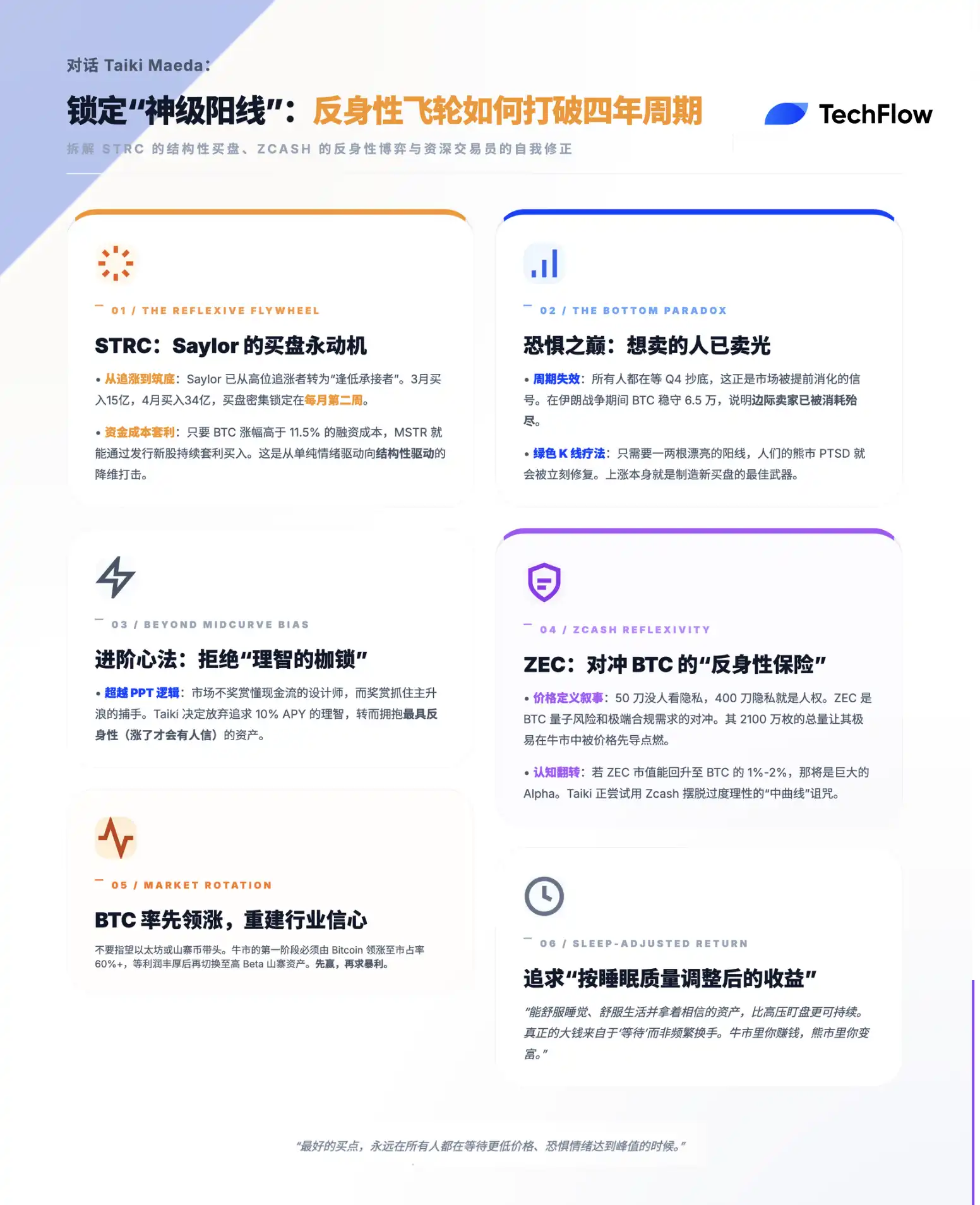
On Bullish BTC Logic and the "Four-Year Cycle" Failure
- "When the market top formed previously, marginal buyers were essentially exhausted, and the DAT pushing valuations higher had also run out of steam; now the situation is the complete opposite—marginal sellers, in my opinion, are almost exhausted, and DAT is starting to exert force again."
- "When BTC was around $65k-$66k, people's pessimism even exceeded the levels seen after the Luna, 3AC, and pandemic crashes."
- "The right time to buy usually doesn't feel comfortable; people always want to wait until social media sentiment is uniformly bullish again before jumping in, but that's often no longer the best price."
- "Many people think everyone can sell at the top together, then wait together to buy the dip in Q4, but I think this is a lazy expectation that the market priced in six to seven months ago."
- "If everyone who wanted to sell has already sold, who will continue to dump if Q4 really sees new lows?"
On the Reflexivity Flywheel of STRC (Saylor)
- "In March, he bought about $1.5 billion worth of Bitcoin; in April, he bought about $3.4 billion worth of BTC. More importantly, most of these purchases were concentrated in the second week of each month."
- "In the early days and the last bull run, Saylor often made large purchases when the market was already accelerating upwards with extremely hot sentiment, which was his role; but in recent months, he has actually been buying on dips, which is very noteworthy."
- "Saylor announcing multi-billion dollar BTC purchases for several consecutive weeks naturally pushes up Bitcoin's price; Bitcoin rising, in turn, boosts MSTR's mNAV, convincing shareholders that his leveraged strategy increases Bitcoin holdings per share; with mNAV recovering, it becomes easier for him to continue financing and buy more Bitcoin."
- "As long as the STRC price is above $100, Saylor can issue new shares, take the money, and buy BTC. In other words, he is leveraging up Bitcoin at a dollar funding cost of about 11.5%. As long as BTC's appreciation rate is higher than this threshold, this model can keep running."
- "Starting from mid-July this year, he plans to split the monthly large Bitcoin purchase into two transactions, scheduled for mid-month and month-end. This adjustment makes his buying operations less predictable for the market to front-run, and he may further increase the frequency to weekly in the future."
On Breaking Free from "Midcurve Bias"
- "I was too far left in my first cycle, too middle-of-the-road in my second cycle, so now in the third cycle, I want to try a different approach. I want to combine the lessons from the first two: retain sensitivity to risk, but don't let bear market PTSD trap me forever in the 'middle ground.'"
- "The market often doesn't reward the best PowerPoint presenter, but those who truly catch the main upward wave. So this time, at least on a portion of my portfolio, I want to try leaning towards 'maximum reflexivity.'"
On Zcash ($ZEC) Investment Logic and Reflexivity
- "Once it falls below $50, the market immediately thinks, 'who cares about privacy'; and once it rises to around $400, the narrative becomes 'privacy is a human right, this is one of the most important sectors.' In other words, much of Zcash's narrative is actually ignited by price first."
- "Naval also said something like 'Bitcoin is insurance against fiat, Zcash is insurance against Bitcoin.'"
- "Because, like BTC, it has a 21 million supply cap and a halving cycle; its current market cap is only about 0.5% of BTC's. So the market could completely start telling a new story at some stage: why can't Zcash reach 1%, 2%, or even more of BTC's market cap?"
On the Rotation Between BTC and Altcoins
- "The most important thing in the first stage of a bear market turning into a bull market is for BTC to lead the rise first. I don't believe in the script where 'the market just bottoms, and Ethereum takes off on its own.' To rebuild confidence in the entire industry, Bitcoin must take the lead."
- "The smartest approach is actually to accept higher entry prices, using profits already made from BTC to switch to higher Beta assets, rather than front-running a bunch of narratives you're not that sure about right now."
- "Stories like VC Tech, L1, DeFi are not the directions most easily accepted by capital at the moment. In contrast, narratives like Bitcoin's 'store of value' or Zcash's 'privacy' are simpler, more direct, and easier for the market to grasp quickly in a bull market."
On Trading Mindset and Big Money Logic
- "I increasingly feel that investing should also pursue a kind of 'sleep-adjusted return.' Being able to sleep well, live comfortably, while holding assets you truly believe in, is often more sustainable in the long run than high-pressure screen-watching every day."
- "Many think returns come from frequent trading, but I believe most money in the market is made by holding assets that appreciate, not by constantly switching."
- "In a highly reflexive market like crypto, often just one or two sufficiently beautiful green candles can immediately repair people's mentality. When the price rises, people start feeling smart again, willing to take risks again, believing the industry has a future again. Green candlesticks themselves create new buy pressure."
- "Shorts often sound smarter, and in bull markets they can always tell a bunch of sophisticated risk stories; but the reality is often that optimistic people are more likely to make big money."
- "Truly big money isn't about buying and selling, but about waiting. You make money in the bull market, you get rich in the bear market."
Reviewing My Bullish Logic on BTC
Taiki Maeda:
I believe Bitcoin is about to print a god-level bullish candle, one that will shut up the shorts and give the entire market a long-overdue "green candlestick therapy." In this video, I'll explain why I'm still bullish on BTC, why I've added Zcash to my long-term portfolio, and my overall plan going forward.
First, why I think the market has bottomed and is entering a new bull market. For the past few months, I've been emphasizing one judgment: when the previous market top formed, marginal buyers were essentially exhausted, and the DAT pushing valuations higher had also run out of steam; now the situation is the complete opposite—marginal sellers, in my opinion, are almost exhausted, and DAT is starting to exert force again. The DAT I'm referring to here are mainly structural buyers like Michael Saylor and Strategy, and I believe as long as Saylor's playbook continues to work, more people will follow sooner or later.
My focus for the past six months has been on fund flows. When analyzing the market, I repeatedly ask myself three questions: How are people positioned now? Who else will sell? Who else will buy? Six or seven months ago, when Bitcoin was around six figures, the market consensus was that BTC would go to $250k, ETH to $8k-$10k, and a Q4 altseason was almost treated as a given; in such an environment, the right thing to do was actually to sell positions to these uniformly bullish people.
An important signal I saw back then was MSTR's mNAV starting to collapse in October and November of last year, which I interpreted as a warning signal of a major cycle nearing its end. But in recent months, market sentiment has completely flipped. Once BTC dropped to around $60k, people started calling for $40k, $50k bottoms, Ethereum back to $1k, and a guaranteed better bottom in Q4. But to me, this view is very lazy. During the Iran war, US stocks fell 10% at one point, but Bitcoin held above $65k; and the Fear & Greed Index even printed its lowest monthly reading since its launch in 2017. In other words, when BTC was around $65k-$66k, people's pessimism even exceeded the levels seen after the Luna, 3AC, and pandemic crashes.
I'm not someone who mechanically follows sentiment indicators, but such extreme pessimism indicates one thing: many have sold, many have rotated into stocks, and Twitter is filled with depression and fatigue. If you are a long-term Bitcoin believer, this at least deserves serious thought. The right time to buy usually doesn't feel comfortable; people always want to wait until social media sentiment is uniformly bullish again before jumping in, but that's often no longer the best price.
I'm also growing increasingly skeptical that the four-year cycle will fail this time. Many people think, everyone can sell at the top together, then wait together to buy the dip in Q4, but I think this is a lazy expectation that the market priced in six to seven months ago. Last year, when the market was around $120k, many thought ETFs and Trump would bring a "supercycle"; when BTC corrected 40%-50% from the highs, dropping to the $60k-$70k range, those originally bullish at the highs finally capitulated, switching to believe in the four-year cycle, believing Q4 is the real bottom.
But the problem is, if everyone who wanted to sell has already sold, who will continue to dump if Q4 really sees new lows? Of course, black swans like recessions, quantum computing can always happen, but if you look only at the current market structure, the state of buyers and sellers, and the positioning of US stocks vs. crypto, I'm not sure what sufficiently strong force could push BTC much lower. For me, below $70k is at least a region worth taking risks, worth starting DCA and adding positions.
Another point I've been pondering lately: even if you believe in cycles, the so-called "real top" may not have occurred when Bitcoin briefly spiked to $125k last October. Instead, I think the real sentiment peak might have been when ETH surged to $5,000 last August. Back then, Tom Lee was buying frantically, and the market's enthusiasm for ETH felt more like a top than BTC's spike-and-fail wick. If you treat that moment as the sentiment peak, then we've actually completed most of the bear market; viewed this way, starting to take risks again in the summer isn't unreasonable.
So, my core conclusion is simple: historic levels of fear, not making new lows during the Iran war, marginal sellers exhausted, and Saylor phoenix-like, resurrecting structural buy pressure. These factors combined make me willing to remain bullish on BTC.
STRC Investment View Update
Taiki Maeda:
Next, let's talk about the STRC logic I've been tracking for months. So far, this line of thinking has largely progressed as I envisioned, and I believe it will continue to work.
I've been documenting Saylor's purchases monthly. In March, he bought about $1.5 billion worth of Bitcoin; in April, about $3.4 billion worth of BTC. More importantly, most of these purchases were concentrated in the second week of each month. We've just entered May, so I expect him to gradually ramp up buying starting next week, maybe buying a few billion this week, then forming a larger buying spike mid-month.
One thing impressed me deeply: if you list Strategy's largest Bitcoin purchase announcements historically, you'll find three of them this year already, in January, March, and April. Plotting these timestamps on the BTC chart, you'll notice a key difference from the past. In the early days and last cycle, Saylor often made large purchases when the market was already accelerating upwards with extremely hot sentiment, which was his role; but in recent months, he has actually been buying on dips, which is very noteworthy.
Rather than just watching price, I prefer to observe MSTR's mNAV. Saylor used to buy big when mNAV was above 2, because that meant he could sell MSTR's high premium to the market and use the cash to buy BTC; but these three recent big purchases all happened when mNAV was only around 1. That means he found new financing channels to keep buying Bitcoin even when the premium was almost gone.
The truly important thing behind this is the reflexivity flywheel. Saylor announcing multi-billion dollar BTC purchases for consecutive weeks naturally pushes up Bitcoin's price; Bitcoin rising, in turn, boosts MSTR's mNAV, convincing shareholders that his leveraged strategy increases Bitcoin holdings per share; with mNAV recovering, it becomes easier for him to continue financing and buy more Bitcoin. This logic isn't without risk, of course, but in my view, we are still in the early stages of this reflexivity unfolding. Rather than betting on doomsday now, it's better to first acknowledge it's working and bet it will continue.
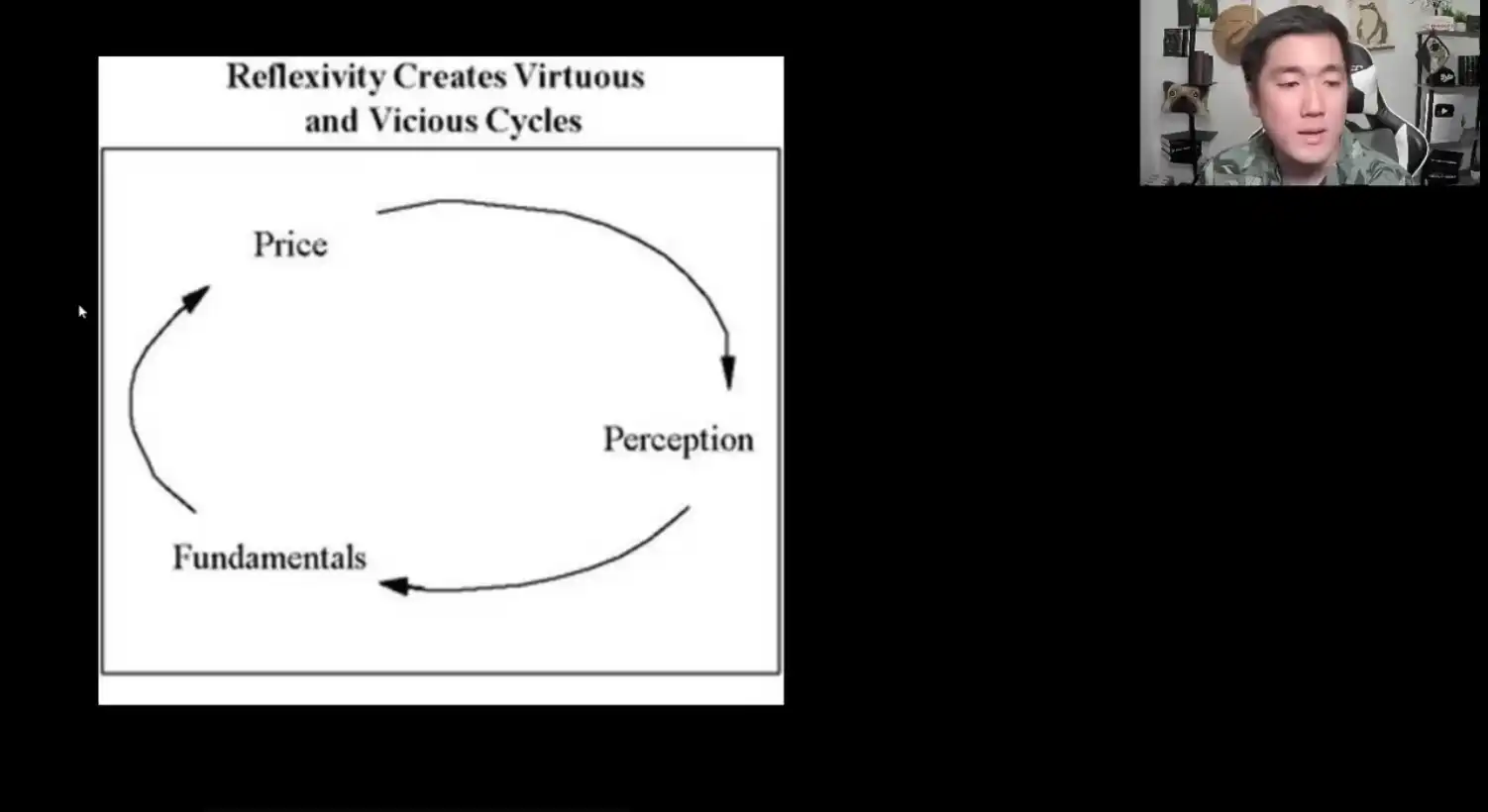
The STRC mechanism itself isn't complex. As long as you hold STRC before the ex-dividend date, you get about an 11.5% annualized yield; and when STRC's price is above $100, Saylor can issue new shares, take the money, and buy BTC. In other words, he is leveraging up Bitcoin at a dollar funding cost of about 11.5%. As long as BTC's appreciation rate is higher than this threshold, this model can keep running.
Of course, some will say this sounds dangerous. Yes, it does have leverage, but that doesn't mean it will immediately blow up. Saylor could very well sell MSTR after BTC rises higher, buy back and retire some STRC, completing deleveraging; he could also lower the yield when STRC sustainably stays above $101, pushing the funding cost from 11.5% towards 10%, reducing future risk. In my view, STRC's equilibrium yield is around 10%, and if the Fed cuts rates in the future, this threshold could drop further.
When Saylor tells this "digital credit" story, the core point is: it opens up a group of buyers who couldn't directly buy BTC before. For example, BlackRock's Preferred Shares & Income ETFs have now incorporated STRC-like products into significant holdings; VanEck's similar products also give it a decent allocation. The idea that "boomers will buy it for an 11.5% yield" sounds like a joke, but the reality is, as long as they buy it, Saylor can use that money to keep buying Bitcoin.
Moreover, if someone truly believes BTC will drop back to $40k or $50k, they have no reason to buy STRC in the first place. Precisely because of this, the demand for STRC, in my view, is essentially a more indirect expression of BTC bullishness. You may not like Saylor, you may think this will eventually fail, but as long as the market keeps buying it with real money, it deserves respect.
For me, the most direct trading conclusion is: when you know an entity will predictably buy tens of billions of dollars worth of BTC in the first two weeks of each month, the simplest way to make money is often to just hold BTC itself. As for how much he'll buy in May, I don't know; but as long as STRC can stabilize around $100, I tend to think BTC still has reasons to be lifted this month, next month, and even the coming quarters.
One secret to making money in markets is understanding certain things more deeply than others. For the past few months, understanding Stretch's operating logic has been a very effective investment strategy. And I believe that as long as Stretch continues to perform well, this opportunity still exists.
Michael Saylor is about to adjust his Bitcoin purchase strategy. Starting from mid-July this year, he plans to split the monthly large Bitcoin purchase into two transactions, scheduled for mid-month and month-end. This adjustment makes his buying operations less predictable for the market to front-run, and he may further increase the frequency to weekly in the future. The benefit of this strategy is that it can increase STRC's market liquidity, reduce volatility, thereby attracting more institutional investors.
Currently, Saylor has found a way to keep STRC running. Leverage usage on STRC in the market isn't high now, but if excessive leverage emerges in the future—like using STRC as collateral to borrow stablecoins or dollars, then using those funds to buy more STRC, repeating this to chase high APYs like 40%—then risk would rise significantly. However, this hasn't happened yet. So, as long as the market remains cautious about Stretch and leverage isn't too aggressive, I remain confident in holding Bitcoin and investing in other crypto risk assets.
In the next two weeks, I expect Saylor to buy tens of billions of dollars worth of Bitcoin. The basis for this prediction isn't absolute; for example, I expected him to buy $2 billion in April, and he bought $3.5 billion. So I can only make a conservative estimate this time, but I think this purchase could push Bitcoin above $80k. At that point, I plan to sell some of my positions. I'll explain this in more detail in the portfolio section later. I am long now, but I don't intend to stay that way long-term.
Regarding Stretch's future, some think it will eventually fail; I don't entirely agree. I think even if Stretch ultimately fails, it could still push certain token prices up during the process. And this isn't an "all-or-nothing" situation; Saylor could also adjust through deleveraging or lowering rates. I feel the market is too pessimistic now; many only focus on factors that could cause a crash, like quantum computing, four-year cycles, but few think about possible positive changes. For example, the success of digital credit could lead other DATs to imitate, pushing the market into a bull run, achieving "green candlestick therapy."
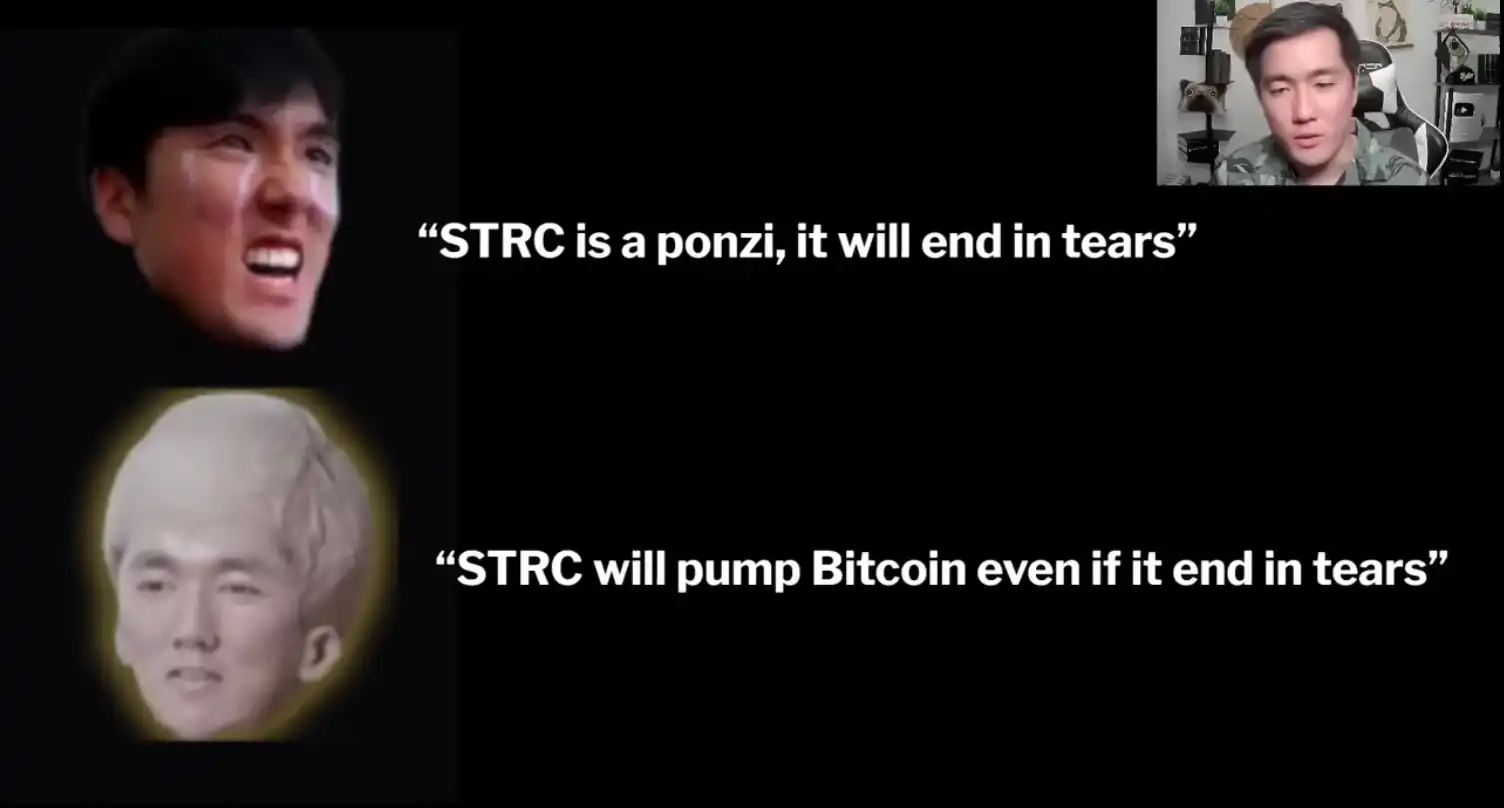
Of course, I'm no prophet; I can't predict the future. I'm just someone trying to grasp the reflexivity and flywheel effects of the crypto market, hoping to share these concepts with you.
Breaking Free from "Midcurve Bias"
Taiki Maeda:
Going further, I want to talk about why I've recently started actively breaking free from "midcurve bias" and share my mental journey through past crypto cycles.
If you've experienced a few cycles in crypto, you might relate to this psychological shift. In my first cycle, I was completely on the left curve: chasing the fastest-rising projects, completely ignoring risk. My highest-viewed YouTube video back then was even teaching people how to participate in high-yield projects on Polygon.
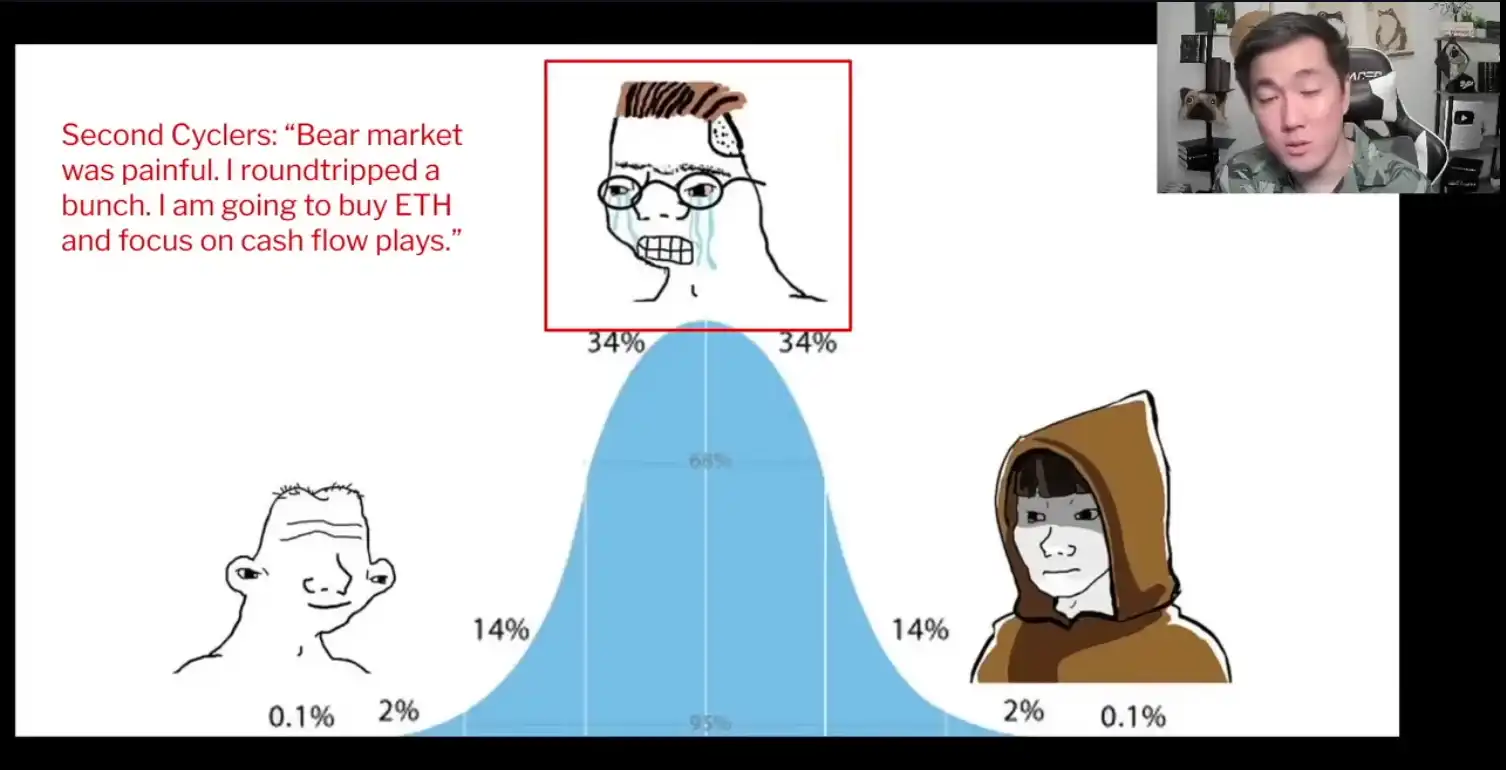
During the 2022 bear market, I sold at the top but bought the dip too early and still got hit hard. Precisely because of this experience in the last bear, from 2023 to 2025, I became a full-on mid-curve player. During that time, I focused most on cash flow, buying ETH, researching DeFi, Uniswap and MakerDAO, and indeed made some money, but looking back, I clearly underperformed.
That is, I was too far left in my first cycle, too middle-of-the-road in my second cycle, so now in the third cycle, I want to try a different approach. I want to combine the lessons from the first two: retain sensitivity to risk, but don't let bear market PTSD trap me forever in the "middle ground." If we really have entered a new bull market, then I'd rather bet on the most reflexive things, buy whoever is most likely to have their narrative further reinforced by price increases during the bull run.
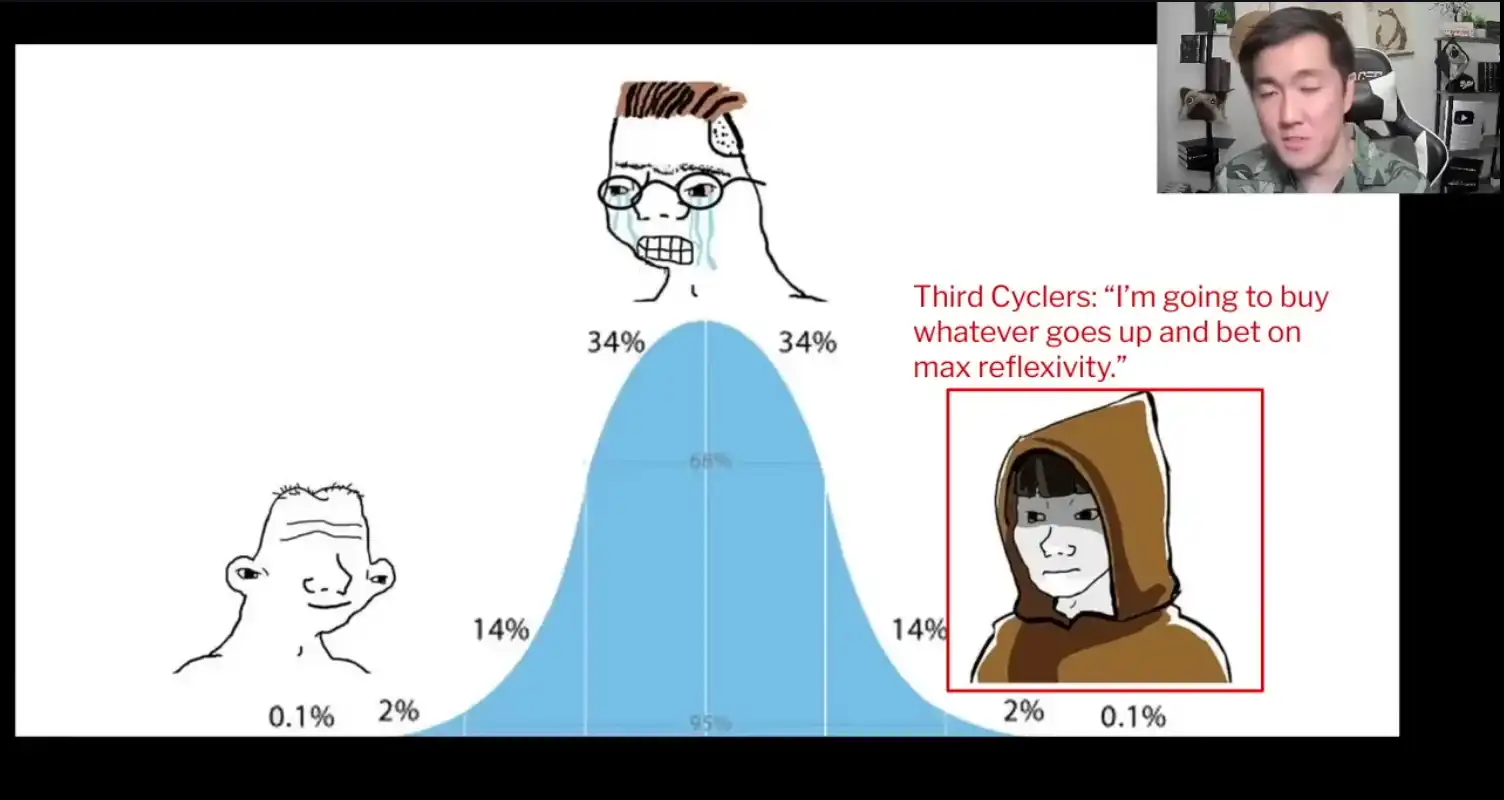
This doesn't mean I'll put my entire portfolio into the craziest assets, but I don't want to limit my returns by being overly rational anymore. The market often doesn't reward the best PowerPoint presenter, but those who truly catch the main upward wave. So this time, at least on a portion of my portfolio, I want to try leaning towards "maximum reflexivity."
Market Reflexivity and ZEC's Investment Logic
Taiki Maeda:
Under this framework, I bought some Zcash, not a large position, but I think it's one of the most typical and interesting reflexive assets I've seen recently.
My understanding of reflexivity is simple: price increases generate stronger market confidence in an asset's fundamentals and narrative. Zcash's history fits this characteristic very well. Over the past 9 years, its price has mostly oscillated within a wide range. But once it falls below $50, the market immediately thinks, "who cares about privacy"; and once it rises to around $400, the narrative becomes "privacy is a human right, this is one of the most important sectors." In other words, much of Zcash's narrative is actually ignited by price first.
I remember last October, people like Balaji, Naval, Mert, Arthur Hayes almost simultaneously started hyping Zcash. My first reaction was confusion, especially when Naval said something like "Bitcoin is insurance against fiat, Zcash is insurance against Bitcoin." Back then, I was mainly shorting alts and ETH and wasn't interested. But anything that can suddenly surge forces you to take a look, so I started researching it again.
After researching, I admit it has some points I can't completely ignore. First, it has existed for nearly 9 years, not some VC-packaged project pumped solely by short-term narratives. Second, the SEC's multi-year investigation into the Zcash Foundation has concluded recently without any action. Third, Zcash ecosystem's Open Development Lab recently raised funds from institutions like a16z and Paradigm. At the same time, I've also seen lobbying and progress around compliant privacy coin directions.
Many compare Monero and Zcash, saying Monero is the "purer" privacy coin. But in my view, such sectors ultimately depend more on social consensus than technical parameters themselves. Just like Bitcoin as money may not actually be the most suitable for daily payments, but as long as more people agree it's "better money" than Litecoin, it wins. Zcash could also move towards a "more compliant privacy coin" positioning, and combined with future legal or regulatory changes, it might have a chance to regain market recognition.
Another angle I can't completely ignore is quantum computing. Since I hold a lot of BTC, I'm not someone oblivious to quantum risk, and I agree the Bitcoin community seems overly complacent about this. In that sense, Zcash can also be understood as a layer of hedge against Bitcoin. Plus, if the price rises first, narratives like privacy and quantum resistance will only get stronger, making its reflexivity even more pronounced.
If I must find some "fundamentals," I look at its shielded pool, which has been growing steadily. My understanding is: you can put Zcash into the shielded pool, then withdraw it from another address later, essentially like a mixing pool. The larger the pool, the larger the anonymity set, and the stronger its utility. There are already millions of Zcash in there now, which at least shows it's not a completely unused thing with only a price story.
Of course, I also admit the privacy narrative itself can easily seem vague. Zcash doesn't have a clear cash flow anchor like BTC, nor clear floors or ceilings, so it either pumps hard or dumps hard. But precisely because of this, when I already hold a lot of BTC and HYPE and want to put a truly "left-curve" asset in my portfolio, Zcash looks very suitable.
It has a 21 million supply cap like BTC and a halving cycle; its current market cap is only about 0.5% of BTC's. So the market could completely start telling a new story at some stage: why can't Zcash reach 1%, 2%, or even more of BTC's market cap? Honestly, I don't know the answer. I just acknowledge this is an asset easily driven by price and could suddenly explode in a bull market, so I'm willing to put a small position in.
BTC vs. Alts
Taiki Maeda:
The most important thing in the first stage of a bear market turning into a bull market is for BTC to lead the rise first. I don't believe in the script where "the market just bottoms, and Ethereum takes off on its own." To rebuild confidence in the entire industry, Bitcoin must take the lead. If you look at the BTC dominance chart, you'll see it's somewhat similar to the last bottoming phase: forming a double bottom first, then as BTC rises, dominance rises too. I think this is a healthy structure. For me, if Bitcoin dominance can continue to 60% or even 70%, that actually indicates a more solid bottom for this cycle.
The last cycle already gave us a clear lesson: in the first stage of a bear-to-bull transition, most altcoins won't immediately perform; the real excess returns for most alts often come in the later stages of the bull market. Solana is a great example; it truly took off after BTC rose from $16k to $35k. The market first regained confidence led by Bitcoin, wealth effect emerged, and people started chasing "the next hotter thing."
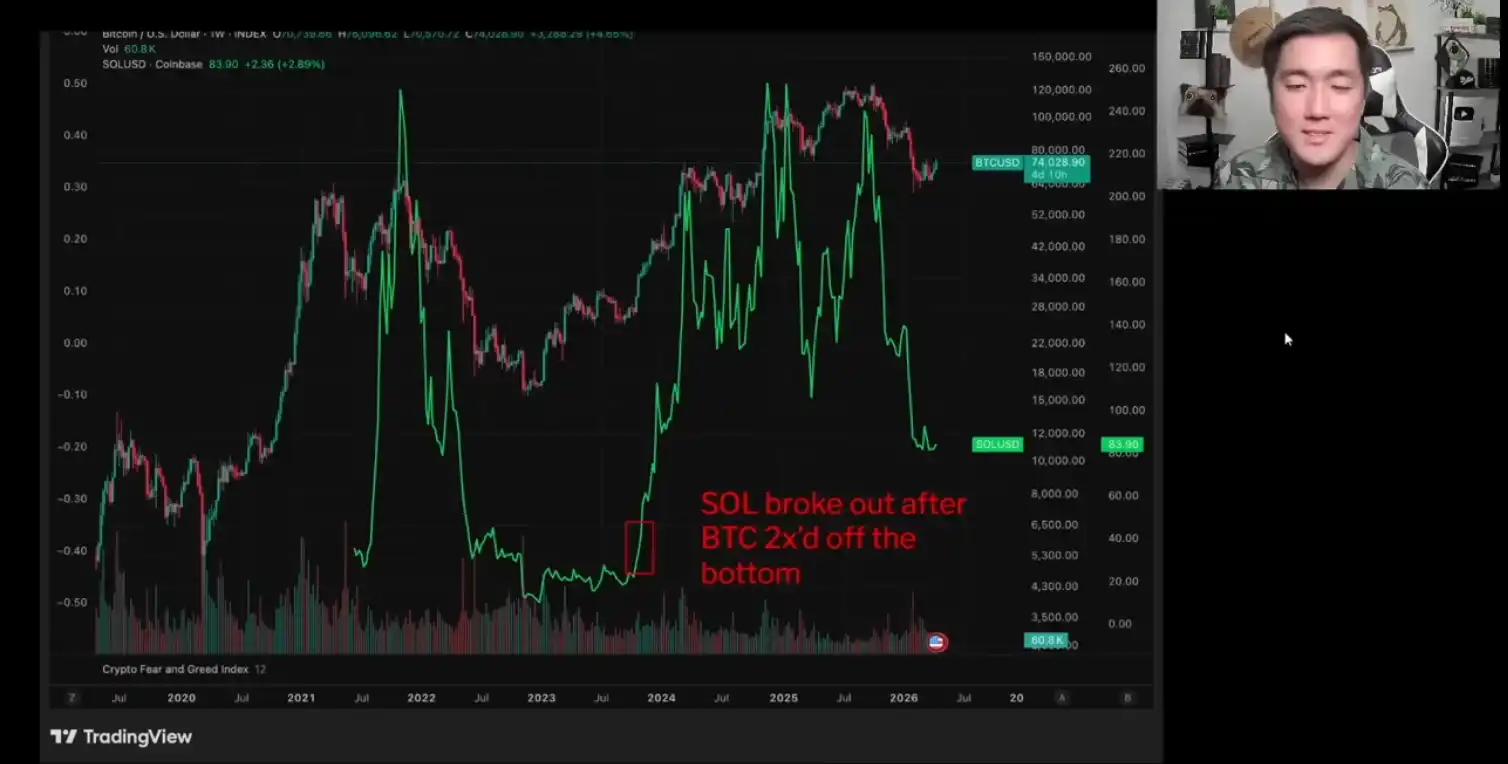
So, I'm more willing to focus my energy on BTC now, wait until BTC rises high enough and the market naturally gives signals before deciding which alts are worth participating in. Maybe the best approach then is to accept higher entry prices, using profits already made from BTC to switch to higher Beta assets, rather than front-running a bunch of narratives you're not that sure about now.
I've also been thinking lately: with AI and automation tools getting stronger, could hacking attacks increase? We've already seen a bunch of security incidents these years. If vulnerabilities, attacks, and code risks become more common in the future, crypto narratives centered on complex technology and execution may face persistent structural headwinds. DeFi TVL doesn't look particularly strong now either, metrics like Aave are still declining, which is actually a bit painful for someone like me who built content around DeFi.
But maybe the market is telling us one thing: stories like VC Tech, L1, DeFi are not the directions most easily accepted by capital at the moment. In contrast, narratives like Bitcoin's "store of value" or Zcash's "privacy" are simpler, more direct, and easier for the market to grasp quickly in a bull market. They certainly have execution risks too, but at least investors don't need to understand a whole set of complex mechanisms first to know why they should buy.
So, if you ask me what the market will care about next, my answer would be: it will first care about the simplest, most easily understood, and most reflexive flywheel narratives. BTC will rise first, then the alt rotation will follow.
My Investment Plan and Positions
Taiki Maeda:
I currently hold a large amount of BTC spot, along with some perpetual long positions, totaling about 150% long exposure; additionally, some Zcash and HYPE. I'll likely gradually close these BTC perpetual longs over the next month or two.
Saylor's buy pressure is concentrated in the second week of each month, so I might wait for this month, or maybe another month, to de-leverage after this wave of structural buying is done; I don't want to live forever watching liquidation prices and funding rates.
I increasingly feel that investing should also pursue a kind of "sleep-adjusted return." Being able to sleep well, live comfortably, while holding assets you truly believe in, is often more sustainable in the long run than high-pressure screen-watching every day. Maybe there will only be a few crazy altseason moments in a year, be more active then; but usually, what's more important is researching, building conviction, building positions during the bear market, and then holding them when the cycle returns.
Many think returns come from frequent trading, but I believe most money in the market is made by holding assets that appreciate, not by constantly switching. I now want to be a comfortable spot holder, not someone always highly leveraged and on edge.
On-chain, I've mainly been farming Saturn recently. My thinking is straightforward: if the STRC model continues to grow, an on-chain version will likely appear, and on-chain capital is always seeking yield. Tokenizing such assets and further looping/leveraging them in DeFi is almost inevitable. As long as this happens, it will mechanistically continue to benefit BTC.
So I'm willing to allocate some funds to participate in points farming for these projects. Of course, they're not risk-free products, and I won't say it's suitable for everyone. But in the past six months, there haven't been many "stable yield" opportunities on-chain I was willing to spend time researching and participating in, and these on-chain STRC derivatives are among the few directions I find worth the time.
From a more speculative angle, if these projects launch tokens in the future, they might even become, in a sense, the first "indirectly endorsed by Saylor" on-chain alt projects. Saylor has also been talking about these STRC-based on-chain stablecoins, risk tranching, and digital credit structures, so I believe this line will continue to see development. As for whether it's worth it, when TGE happens, please do your own research. I'm currently participating in both sides; Saturn's TVL is nearing $100 million, and if it continues towards $500 million, market attention will increase further.
BTC's "God-Level Bullish Candle" and Green Candlestick Therapy
Taiki Maeda:
While I'm not a religious believer, I do believe in Bitcoin's god-level bullish candle, and in the so-called "green candlestick therapy."
What I really mean is, in a highly reflexive market like crypto, often just one or two sufficiently beautiful green candles can immediately repair people's mentality. When the price rises, people start feeling smart again, willing to take risks again, believing the industry has a future again. In a sense, this is also the reflexivity analysis I've been discussing: green candlesticks themselves create new buy pressure.
This industry has been deeply hurt by various scams and failures over the years, but I still believe Bitcoin will lead the entire market out of the trough first. As long as you don't believe BTC will go to zero, its continued rise alone is enough to reinject confidence into the industry. Moreover, the next cycle's top may not come from Saylor alone. What's truly worth watching out for is, in the coming months and years, more people seeing the STRC playbook work and starting to replicate it.
Imagine if Tom Lee also started saying "digital credit" works, launching some version based on ETH staking yield, and other DATs start copying it for BTC, ETH, SOL, etc. The market would enter that stage again where everyone borrows to buy coins, using price rises to strengthen financing capability. When that really happens, you probably should start selling into those massive green candles, because that will be a very dangerous late-stage signal.
But before that, I still feel too many people focus only on what could go wrong, without seriously considering what might go right. Shorts often sound smarter, and in bull markets they can always tell a bunch of sophisticated risk stories; but the reality is often that optimistic people are more likely to make big money. Especially when the Fear & Greed Index drops below 10, I think the more reasonable choice isn't to indulge in disaster narratives further, but to start viewing this industry with a more positive lens.
Truly big money isn't about buying and selling, but about waiting. You make money in the bull market, you get rich in the bear market. The greatest gift a bear market gives you is the time to slowly take good assets from those panicking and selling at lows; after the market recovers, you just need to hold them, live your life, and look back later to find prices much higher.
So, what I most want to do now is not scare myself out too early, not let bear market PTSD dominate my judgment again. I truly believe that starting February 2026, we've entered a new bull market. Today, this sounds aggressive, but I believe looking back in the future, BTC's price around $65k will make many ask themselves: why didn't I buy then? Why didn't I acknowledge the market had changed sooner?
That's my conclusion. I like the coins I hold now, I hope they keep rising; I believe in green candlestick therapy, and I hope shorts keep getting schooled by the market.