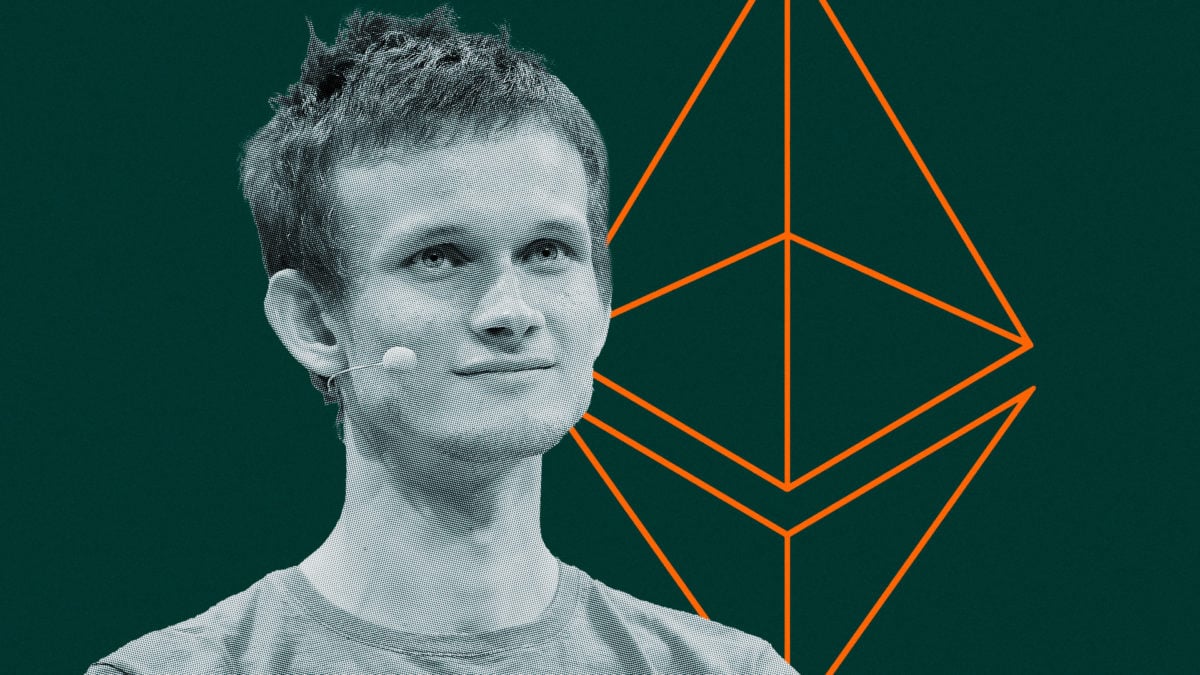
Vitalik Buterin proposes 'stealth addresses' to enhance Ethereum privacy

THE BLOCKPublished on 2023-01-24Last updated on 2023-01-24

Abstract

Vitalik Buterin proposed a system of “stealth addresses” to enhance transactional privacy on Ethereum.

QUICK TAKE

Vitalik Buterin proposed a system of “stealth addresses” to enhance transactional privacy on Ethereum.

The system would allow users to generate cryptographically obfuscated public addresses to receive funds privately.

Ethereum co-founder Vitalik Buterin has proposed a "stealth address system" to improve transactional privacy on the Ethereum blockchain. In a research blog, Buterin wrote that privacy is "one of the largest remaining challenges in the Ethereum ecosystem."

The stealth address system is based on a mechanism that would allow any Ethereum wallet to generate cryptographically obfuscated public addresses called "stealth addresses'' in order to receive funds in a private manner and access them using a special code called a "spending key."

Buterin described that stealth addresses give the same privacy properties as someone generating a fresh address for each transaction. These proposed stealth addresses are a way to increase privacy on Ethereum by creating unique, anonymous addresses for each transaction.

Each time someone makes a transaction, they can generate a new stealth address so that it is difficult for anyone to track the transactions or determine who is sending and receiving assets. This means that each user's transactional history can remain private. Buterin also suggested using ZK-SNARKs, shorthand for zero-knowledge proofs, to boost the privacy of the system and make it difficult to link the stealth addresses.

On Ethereum, transactions are public by default, which can pose a privacy concern. There are ways to attain transactional privacy on the network, such as using cryptocurrency mixers like Tornado Cash. However, such methods can raise regulatory issues. This was seen with Tornado Cash, which was sanctioned by the U.S. Treasury Department's Office of Foreign Assets Control (OFAC) for potentially illicit activities.


Trending Cryptos

Related Reads

The Full Story of How Crypto Unicorn Blockstream Is Mired in Serious Fraud Allegations

This article details serious allegations of fraud against Bitcoin infrastructure company Blockstream, founded by Bitcoin pioneer Adam Back. In June 2024, investigative account NatInfoSec published a report accusing Blockstream's mining note (BMN) program of potentially operating a multi-billion dollar scheme with Ponzi-like characteristics. The core allegations focus on Blockstream Mining Notes (BMNs), which offer investors fixed annual yields up to approximately 20% from Bitcoin mining. NatInfoSec's investigation raises several key issues: 1. **Suspicious Hashrate & Payout Capacity**: The analysis suggests Blockstream would need 20-45 EH/s of mining power to cover its BMN obligations, but its public dashboard shows only around 15 EH/s. Furthermore, no verifiable public evidence (e.g., grid connection records, import data) was found to support the massive mining operation required. 2. **Questionable Payout Source**: The BMN contract allows Blockstream to use Bitcoin from *any source* (Substitute Performance BTC) to fulfill investor payouts, raising concerns that payouts may not come from actual mining revenue. 3. **High-Risk, Fixed Returns**: Offering ~20% fixed yields in the volatile, cyclical Bitcoin mining industry is viewed as highly unusual and requires clear explanation. 4. **Undisclosed Criminal Record of Key Figure**: Christopher William Cook, a key figure in Blockstream's mining operations and CEO of spin-off Exacore, was found to have a federal felony conviction for mail fraud in 2008, a fact not disclosed in BMN offering documents. His background was also allegedly embellished. 5. **Potential Contagion to BSTR SPAC**: Questions were raised about whether these liabilities and Cook's record should have been disclosed in the SEC filings for Bitcoin Standard Treasury Company (BSTR), a separate Adam Back-associated firm planning a SPAC merger. The crypto community is divided. BitMEX Research validated Cook's criminal record and expressed concern over the high yields but found other evidence lacking or misleading, noting the legal separation between BMN, Blockstream, and BSTR. Blockstream defenders, like Samson Mow, argue the mining is real. Critics, however, emphasize the lack of independent, verifiable proof of the mining operation's scale and the true source of investor payouts. The article concludes that BMN remains shrouded in key unanswered questions regarding its actual size, the verifiability of its underlying mining assets and payouts, the source of its high yields, and the full role and disclosure concerning Chris Cook. Blockstream had not issued a comprehensive response at the time of writing.

marsbit1h ago

The Full Story of How Crypto Unicorn Blockstream Is Mired in Serious Fraud Allegations

marsbit1h ago

The Full Story Behind Encryption Unicorn Blockstream's Deep Entanglement in Serious Fraud Allegations

This article details allegations of serious fraud surrounding the crypto company Blockstream, founded by Bitcoin pioneer Adam Back. Investigation account NatInfoSec accuses Blockstream of raising billions through its Blockstream Mining Note (BMN) products, which offer high fixed yields of up to 20% from purported mining revenue. The core allegations are: 1) Blockstream's public mining hash rate (15 EH/s) appears insufficient to cover the massive payout obligations from sold BMN notes, raising questions about the true source of investor payouts. 2) Key executive Christopher William Cook, central to the mining operations, has a prior federal conviction for mail fraud, a fact not disclosed to investors. Cook's background and lavish lifestyle are highlighted as red flags. 3) The structure allows payouts from any source of BTC, not necessarily mining revenue, which critics argue gives it Ponzi-like characteristics. The controversy also touches on Bitcoin Standard Treasury Company (BSTR), a related entity planning a SPAC上市. Critics question whether BMN's liabilities and Cook's record should be disclosed in BSTR's filings. BitMEX Research offered a tempered analysis, confirming Cook's criminal record is likely true and the high yields concerning, but found other claims like insufficient抵押证据 less substantiated. Community debate centers on the need for verifiable proof of Blockstream's mining output and revenue. The article concludes that while fraud is not proven, BMN presents significant, unresolved questions regarding its actual scale, the source of its high fixed returns, the verifiability of its mining operations and payouts, and the full disclosure of associated risks and personnel backgrounds. Blockstream has not yet issued a formal response.

链捕手3h ago

The Full Story Behind Encryption Unicorn Blockstream's Deep Entanglement in Serious Fraud Allegations

链捕手3h ago

Trading

Spot
Futures

Hot Articles

Discussions

Welcome to the HTX Community. Here, you can stay informed about the latest platform developments and gain access to professional market insights. Users' opinions on the price of ETH (ETH) are presented below.

活动图片