Web3 电影合规之路:涩谷的白兔能跑到北京吗?

巴比特Published on 2023-01-23Last updated on 2023-01-23

Abstract

为大家解析关于 Web3 电影在我国发展的各条可能的路径,并在此基础上分析其可能存在的法律风险。

为大家解析关于 Web3 电影在我国发展的各条可能的路径,并在此基础上分析其可能存在的法律风险。

一、通过电影我们可以在 Web3 里创造什么?从《白兔》&《胜利》说起

自从以 ERC-721 和 ERC-1155 两种技术标准为代表的 NFT 诞生以来,Web3 电影就被虚拟资产圈寄予厚望,由于 NFT 与文化艺术产品之间天然良好的「适配性」,全行业普遍将其视为打破 old money 在传统影视界统治力的利器。2022 年在法国里维埃拉举办的戛纳电影节上,众多导演、艺术家和影视明星就以 Web3 为主题讨论了影视界的未来。

实际上,在 2022 年已经有不少团体着手将 Web3 电影变为现实,例如 Decentralized Pictures 项目,与飒姐团之前曾经介绍过的一个国内项目非常类似(详见肖飒团队 | DAO 的「落户之旅」,或许有另一种可能?),该项目要求 DAO 成员通过投票决定电影的制作,如果这部电影成功杀青上映,那么部分利润将用于回馈 DAO 项目、参与成员和艺术家,目前 Decentralized Pictures 已经成功通过了第一个试水电影短片《寒冬》项目的立项。

那么,通过电影我们可以在 Web3 里创造什么?换言之,Web3 电影与普通电影相比,改变了什么?飒姐团队认为,Web3 电影主要会在:(1)项目融资;(2)电影发行;(3)利润分配这三个重要阶段产生重大变革。下面我们就用两个有趣且具有代表性的项目:《胜利》和《白兔》进行说明。

(一)电影《胜利》

先讲《胜利》,不久前飒姐团注意到国内某 Web3 平台发布了一部名为《Uncle Victory》的 Web3 上链电影。怀着激动的心情,飒团队仔细地研究了一下这部号称「首个在公链上发布的独立电影数字藏品」。细查之下,我们发现,《Uncle Victory》实际上就是已经于 2014 发行的电影《胜利》,只是换了个名字在该平台发行。这部由张猛编剧、导演的《胜利》是其东北往事三部曲的终结篇,讲述了一个东北「大哥」在出狱后试图赎罪的魔幻现实故事。从该平台公开的数据显示,《胜利》通过一种叫「EVT」的与 NFT 类似的技术在 Newton 链上发行,首期发行 300 份,于开售 40 分钟后售罄。

根据该平台官方宣传,EVT 全称为 Encrypted Variable Token 是一种具有更多的动态功能的创新协议。该协议可以保存整部电影和更大的文件,并与 NRC7 兼容,可对变量数据进行时间、空间和多功能编程。飒姐团队并非技术专业人士,但通过该平台给出的 EVT 与 NFT 的对比,我们能对该种协议有一个更为全面的了解:
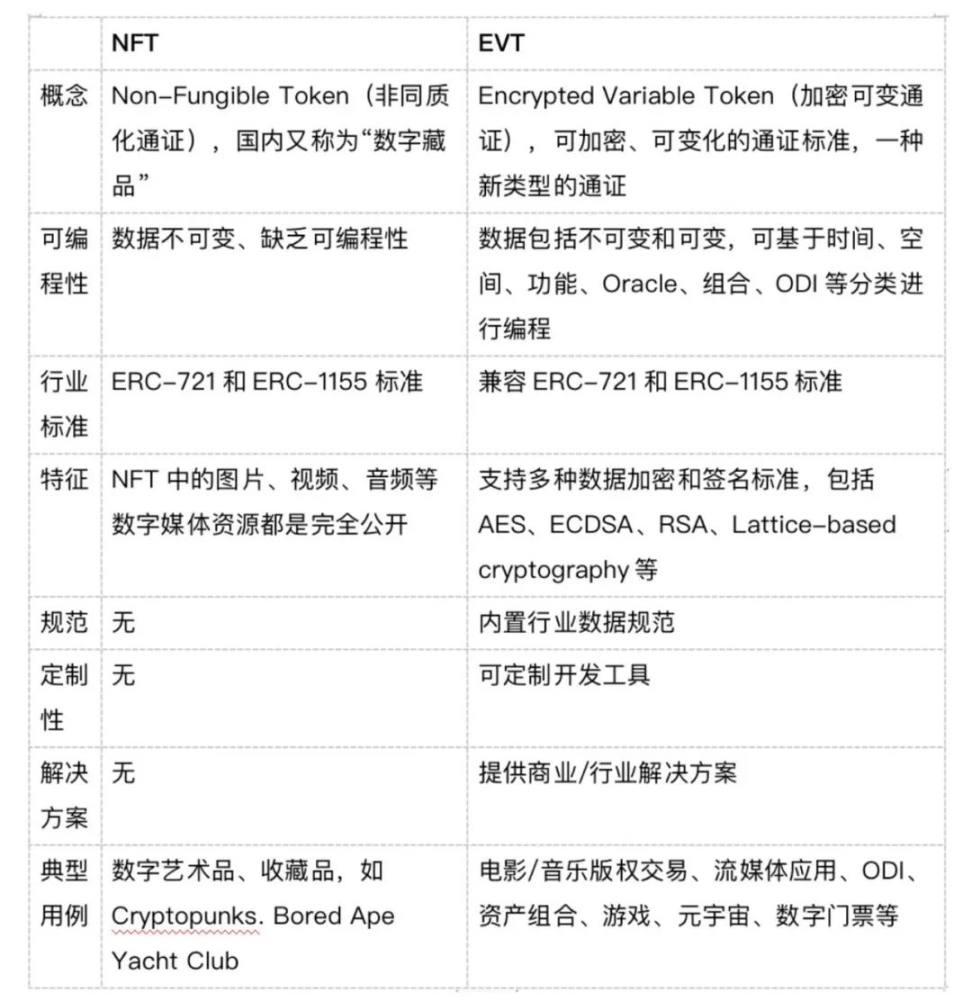
对于持有《胜利》EVT 的用户来说,平台承诺享有以下几项权益:(1)持有期间享有无限次的《胜利》观影权;(2)电影 EVT 封面图的知识产权授权,具体包括复制权、发行权、出租权、展览权等;(3)售票权,持有者可通过其链上拷贝发售《胜利》电影票,获得收益,该项权利有效期为 30 年;(4)白名单,获取空投和平台其他产品优先购的权利。目前来看,《胜利》尚属于小规模的实验性商业项目,这样一部已经在数年前制作完毕且已经公开发售的小众电影,持有者们仅能享有为数不多的、受限的权利。但是作为一种实验性作品,其无疑具有一定的里程碑意义,飒姐团队将会在后面进行较为详细的分析。

(二)电影《白兔》(White rabbit)

与前面的《胜利》相比,《白兔》的玩法显然更加新颖鲜活,具有更强的吸引力。在介绍《白兔》前,读者们必须对互动视频有一个概念上的认识,这是一种近两年流行的新型影视艺术形式,与普通电影、视频最大的区别在于,观众可以在关键剧情节点上做出自己的选择,影响整个剧情的发展,不同的选择可能导向不同的故事线,出现不同的结局。感兴趣的读者可以在某二次元视频站上搜索《黑镜》互动电影、《比奇堡连环杀人案》《灰太狼之死》等作品进行「试玩」。

《白兔》正是以该种互动视频作为核心卖点,由 Shibuya 公司立项制作的 Web3 互动电影。Shibuya 这个公司也比较有趣,是由一位被水果公司辞退的视觉艺术家创建,Shibuya 原意为「涩谷」,本是位于日本东京某著名商圈,是日本最声名显赫的流行文化发源地,也是日本文化和思想碰撞最激烈的地方之一。Shibuya 已经在 2022 年末,获得了 690 万美元的融资,由著名 Web3 投行 a16z 与 Variant 领投,某国内大厂副总、凯文杜兰特、帕里斯希尔顿等名人参投。Shibuya 的愿景是创造一个去中心化的好莱坞,这只名为《白兔》(White rabbit)的影片就是 Shibuya 发行的第一支流媒体作品,目前已经制作到第三章。

《白兔》项目具有一个较为简单的代币经济系统:由Producer pass和$WRAB构成。

Producer pass 即制作人通行证,是一种使用 ERC-1155 技术制作的 NFT,是用户参与创意决策、电影制作的必备工具。用户通过将自己持有的 Producer pass 质押在 Shibuya 链上协议后,就可在每章节结尾投票决定电影剧情走向。Shibuya 官方以 0.08 ETH 的价格分别发售了 5000 枚、5500 枚和 2800 枚的第一、二、三章节的 Producer pass。并通过 Telegram 保证成员讨论电影走向以确保不泄露电影内容。

而 $WRAB 则是一种基于 ERC-20 技术的虚拟货币,也是该项目的治理代币,代表了用户对视频内容的所有权。当影片制作完毕后,项目方会将其铸造为 NFT,所有权将归属于持有 $WRAB 代币的成员。当然,$WRAB 代币与 Producer Pass 联系紧密,用户质押 Producer Pass 之后将会获得 $WRAB 空投(约为代币总量的 70%)。用户质押得越早,空投的 $WRAB 越多。在分润方面,根据该项目白皮书显示,最终 50% 的 $WRAB 会被分配给 Producer Pass 持有者,40% 分配给艺术家和创作者,5% 分给平台,5% 分给项目方团队。

通过该代币经济系统,电影《白兔》成功完成了融资、制作、发行和利益分配的全过程,是目前境外最为成熟且具有可行性的 Web3 电影案例。

二、Web3 电影中国法律风险分析

诚然,在 2021 年十部委发布 9.24 通知后,《白兔》这样涉及虚拟货币融资的玩法在我国已经不可能实现,但这种商业模式却可以通过 NFT 等工具变相实现。那么,Web3 电影在我国是否有合规生存空间?飒姐团队将会主要从下面两个方面进行分析。

(一)融资法律风险

Web3 电影与普通电影最主要的一个区别即表现在电影初期筹集拍摄资金阶段,也是最能体现 Web3 突破传统资本在影视界封锁的部分。《白兔》通过发行代币融资的方式实质上就是一种「众筹」。众筹即大众筹资,简单来说就是一群人为某个项目、某个人或者某个公司募资,以资助其正当的生产经营、创作、创新的筹资行为。众筹可以细分为购买模式与投资模式,购买模式又可以进一步细分为「捐赠模式」与「奖励模式」;投资模式可以进一步细分为「股权模式」与「债权模式」等。Web3 电影所使用的即为投资模式中的版权众筹。

版权众筹常见于电影、电视、动漫行业及网络计算机软件等与著作权相关的行业,即众筹资金提供方提供资金按比例获取作品的版权,类似于《民法典》中规定的财产按份共有制度,与股权众筹模式具有相似性。不同之处在于,版权众筹获取的是作品版权的份额,不产生投资价值增值或减少的问题(非投资);股权众筹则获取的是股东身份权利,能够参与公司的经营管理,享受公司经营产生的收益同时以其投资财产对公司承担有限责任。

但在 Web3 领域,则不能一概而论,例如《白兔》项目发行的双重代币则具有一定的投资属性,具有某些股权众筹的特征。典型的版权众筹如 2019 年的科幻电影《流浪地球》,该作品初期在某大厂众筹发起,众筹项目完成率达 7849%。版权众筹参与者获得了基于版权带来的超高价值增长,获取了相当的收益回报。从法律关系来看,该种众筹收益不属于「投资」行为,因为这是用户基于版权使用带来的收益,而非基于投资而产生的收益。

目前我国暂未对版权众筹出台专门的法律规范,但 Web3 电影在我国采用该种方式筹集资金时,需要注意规避非法集资的法律红线,避免触犯非法吸收公众存款罪、诈骗罪、集资诈骗罪等罪名。具体而言,需要正确把握「非公不利」四个非法集资要件,根据《最高人民法院关于审理非法集资刑事案件具体应用法律若干问题的解释(法释〔2010〕18 号)》之规定:(1)未经有关部门依法批准或者借用合法经营的形式吸收资金;(2)通过媒体、推介会、传单、手机短信等途径向社会公开宣传;(3)承诺在一定期限内以货币、实物、股权等方式还本付息或者给付回报;(4)向社会公众即社会不特定对象吸收资金。

参考股权融资的红线,飒姐团队建议 Web3 电影项目方:(1)不私自向非特定对象发行 NFT 等凭证;(2)不向超过 200 个特定对象发行 NFT 等凭证;(3)不采取广告、公开劝诱和变相公开方式发行 NFT 等凭证;(4)不发布风险较大的 Web3 电影项目和虚假项目;(5)对投资者进行审核,披露完整、详细的投资风险;(6)不为平台本身公开募权。

(二)发行法律风险

在发行方面则主要存在行政违法风险。以《胜利》这部电影来说,某平台之所以能以不高的价格拿下整个电影的版权,最重要的一个原因在于该电影的主演为劣迹艺人。由于该艺人的影响,这部电影作品无法在任何主流媒体平台上上线,某种程度上来说,该电影已经丧失了大部分商业价值。

根据《国家新闻出版广电总局办公厅关于加强有关广播电视节目、影视剧和网络视听节目制作传播管理的通知》(新广电办发[2014]100 号)第一条规定:「各级广播电视播出机构要坚持正确导向,不得邀请有吸毒、嫖娼等违法犯罪行为者参与制作广播电视节目;不得制作、播出以炒作演艺人员、名人明星等的违法犯罪行为为看点、噱头的广播电视节目;暂停播出有吸毒、嫖娼等违法犯罪行为者作为主创人员参与制作的电影、电视剧、各类广播电视节目以及代言的广告节目。」2021 年,中国演出行业协会为加强演艺人员从业自律管理,树立演艺人员良好职业形象,促进演出行业健康发展,出台了《演出行业演艺人员从业自律管理办法(试行)》,其中针对演艺人员的行为作出禁止性规范,并约定发生前述行为后的惩罚措施。类似规定在《中华人民共和国电影产业促进法》第十六条、《广播电视管理条例》第三十二条中均有所体现,可以说目前在我国,劣迹艺人和劣迹艺人出演的影视作品基本上已经处于被「封杀」状态。

飒姐团队认为,抛却某平台是否已经取得在互联网上向公众提供影视作品的一系列行政许可不谈,通过 Web3 电影的方式上线劣迹艺人主演的影视作品具有较大的行政违法风险,面临较为严重的行政处罚风险。典型的案例如 2022 年 9 月某 KTV 由于支持点播劣迹艺人吴某歌曲,被监管机构依据《娱乐场所管理条例》第十三条第(七)项和第(九)项之规定:国家倡导弘扬民族优秀文化,禁止娱乐场所内的娱乐活动含有下列内容:(七)违背社会公德或者民族优秀文化传统的;(九)法律、行政法规禁止的其他内容,处以 1 万元的行政罚款。

写在最后

Web3 电影目前依然处于萌芽阶段,目前众多项目依然处于试验阶段,由于我国一直以来对影视作品采取较为严格的审核和监管制度,Web3 电影虽然具有光明的前景,但想要在我国实际落地还需要很长时间的探索,并不是能一蹴而就的事情。

当然,由于我国对虚拟资产特殊的监管规范和对金融领域的强监管政策,在整个探索的过程中我们不能照搬境外项目的经验,建议在具体实施项目前寻求专业律师的法律意见,避免踏足法律红线引发刑事风险。

Related Reads

Crossing the 'Memory Wall': The Wafer-Level Revolution and Computing Power Routes in the AI Inference Era

In 2026, a historic shift occurred in AI as major cloud providers' inference spending surpassed training spending for the first time, signaling a move from "building large models" to "using large models." This shifts the core challenge from computing power to the "memory wall"—the bottleneck of data movement (model weights, activations, KV Cache) between external DRAM and processors, where energy and latency from data transfer far exceed computation itself. Companies like Nvidia face GPU idle time due to bandwidth limits. In contrast, Cerebras Systems adopts a radical "wafer-scale" approach with its Wafer-Scale Engine (WSE). Instead of cutting a silicon wafer into many chips, Cerebras uses almost the entire wafer as one massive chip (WSE-3). This design provides 44GB of on-chip SRAM, delivering memory bandwidth thousands of times higher than traditional HBM (e.g., 21 PB/s vs. Nvidia B200). For LLM inference, weights are streamed layer-by-layer from external MemoryX storage to the chip, avoiding HBM bottlenecks. This results in token generation speeds 1.5–5 times faster than Nvidia's B200 in some models and significant advantages in first-token latency and long-context tasks. Additionally, Cerebras's architecture offers much lower interconnect power consumption (0.15 pJ/bit vs. GPU's ~10 pJ/bit). However, Cerebras faces challenges: SRAM scaling has slowed with advanced nodes, limiting future capacity gains; the chip requires specialized liquid cooling and custom software stacks; and its external I/O bandwidth (150 GB/s) is low compared to NVLink, hindering multi-system scaling for very large models. Competition is intensifying. Major players are pursuing three paths: 1) Developing proprietary inference ASICs (e.g., Google TPU, Microsoft Maia), 2) Leveraging advanced packaging (e.g., TSMC's SoW) to democratize wafer-scale-like integration, potentially eroding Cerebras's process advantage within a few years, and 3) Exploring optical interconnects for ultimate bandwidth. Commercially, Cerebras is transitioning from a hardware vendor to a service provider, facing the immense challenge of building high-power, specialized data centers to meet large contracts (e.g., 250MW/year from 2026–2028). In conclusion, the AI inference era presents a fundamental architectural trade-off. Cerebras opts for extreme physical optimization for low-latency, single-task performance, while Nvidia prioritizes versatility and massive cluster throughput. The path forward remains uncertain, with technology and business models still evolving in the race toward advanced AI.

marsbit3m ago

Crossing the 'Memory Wall': The Wafer-Level Revolution and Computing Power Routes in the AI Inference Era

marsbit3m ago

Has Bitcoin's 'Rebound Ended', Officially Entering the Late Bear Market Phase?

**Title: Has Bitcoin's Rebound Ended, Entering the Late Bear Market Phase?** **Summary:** Bitcoin's price has declined by 13% this week, signaling a potential return to late-stage bear market conditions. The price fell to around $67k, positioned between the Realized Price and Realized Cap Weighted Average. For the first time since early 2022, the Short-Term Holder cost basis has dropped below this key average, confirming a hallmark of late-cycle bear markets. Profitability metrics have collapsed sharply. The 7-day average of the Realized Profit/Loss ratio plummeted from a local high of 3.16 to 0.29, mirroring the February panic sell-off. Critically, the 90-day average never breached the threshold of 2, indicating the recent rally to $82k was a bear market bounce, not a structural shift. Realized losses surged to $1.35 billion daily, with $770 million coming from Long-Term Holders selling at a loss. This accelerating redistribution of supply from weak to strong hands is a necessary but ongoing process for a market bottom. The rally stalled almost precisely at the aggregate cost basis (~$83k) of US spot Bitcoin ETF investors, turning that level into strong resistance and leaving the average ETF holder underwater again. Spot market flows have turned decisively negative, showing sellers are dominating order books despite the price drop. While a significant futures long liquidation event cleared over $400 million in leverage, providing a potential reset, sustained spot demand is yet to materialize. Options markets continue to price in higher future volatility (Implied Volatility) than recent price action (Realized Volatility) has shown, with a persistent skew towards put options, indicating ongoing demand for downside protection. In conclusion, multiple metrics point to a fragile market structure. Resistance at the ETF cost basis, accelerating realized losses, dominant spot selling, and cautious options pricing all suggest the bear market trend persists. A sustainable recovery likely requires a resurgence of spot demand, ETF holders returning to profit, and a clear reduction in selling pressure.

marsbit3m ago

Has Bitcoin's 'Rebound Ended', Officially Entering the Late Bear Market Phase?

marsbit3m ago

TechFlow Intelligence Agency: Anthropic Calls for Global Pause in AI Development While Preparing for Trillion-Dollar IPO; SpaceX IPO Roadshow Heats Up, But S&P 500 Rejects Fast-Track Inclusion

In today's TechFlow Intelligence Briefing, several major tech stories highlight a growing theme of trust and credibility gaps across AI, crypto, and finance. AI company Anthropic has publicly called for a global pause in AI development, citing risks from Claude's "recursive self-improvement." Ironically, this coincides with reports the company is preparing for a massive IPO targeting a near $1 trillion valuation. This perceived hypocrisy, coupled with widespread user complaints about Claude's declining performance, is sparking debate over whether the safety warning is genuine or a competitive tactic. Meanwhile, in a substantive security move, Anthropic open-sourced a framework for AI-powered vulnerability discovery. In the crypto market, Bitcoin's price drop below $61,000 triggered over $1.16 billion in liquidations, flipping the market into a state where more BTC is held at a loss than at a profit, a historical bearish signal. On the corporate front, SpaceX's highly anticipated IPO is generating immense Wall Street excitement, with Goldman Sachs projecting 100x revenue growth by 2030. However, the S&P 500 has refused to fast-track the company's inclusion post-IPO, potentially limiting immediate institutional demand. Separately, ByteDance's AI app Doubao lost over 6 million monthly active users after introducing a subscription model, highlighting the challenges of AI monetization. Other notable developments include Nvidia certifying HBM4 memory from Samsung, SK Hynix, and Micron; Cloudflare's acquisition of front-end tooling company VoidZero; and its CEO warning that bot traffic now exceeds human traffic online. The underlying narrative connects these events: a trust crisis. From AI firms' contradictory actions and crypto volatility to the clash between SpaceX's hyped narrative and institutional rules, a pattern is emerging where stated intentions and actual practices are increasingly misaligned.

marsbit19m ago

TechFlow Intelligence Agency: Anthropic Calls for Global Pause in AI Development While Preparing for Trillion-Dollar IPO; SpaceX IPO Roadshow Heats Up, But S&P 500 Rejects Fast-Track Inclusion

marsbit19m ago

Dalio Warns: AI Boom Shows Signs of a Bubble, Day of Reckoning Will Be the Time of Burst

Ray Dalio, founder of Bridgewater Associates, warns that the current artificial intelligence investment boom shows classic signs of a bubble, which he expects will eventually burst. In a Bloomberg Television interview, he noted that great technological revolutions often lead to capital inflows that create bubbles, making it difficult for investors and companies to calibrate their spending accurately—either overspending to capture market share or underspending and losing their competitive position. This caution comes amid significant rallies in AI-related assets, particularly chipmakers, driven by soaring demand for data centers and high-bandwidth chips, raising debates about overheating valuations. In contrast, Nvidia CEO Jensen Huang recently asserted that investors embracing the AI wave would see "crazy" returns and dismissed concerns over return on investment for data center spending as outdated. Dalio, however, focuses on the risks in the profit realization phase. He argues that bubbles tend to show signs of破裂 when markets transition from investment to the need for tangible returns, describing the burst as a process of converting paper wealth into cash. While acknowledging AI's intrinsic value, he expressed concern over the future profitability of some AI companies, suggesting the market is repeating a familiar pattern. The 76-year-old billionaire, who fully exited Bridgewater in 2025, has a net worth estimated at $21.5 billion according to the Bloomberg Billionaires Index.

marsbit53m ago

Dalio Warns: AI Boom Shows Signs of a Bubble, Day of Reckoning Will Be the Time of Burst

marsbit53m ago

Privacy Coin Crisis of Confidence! ZEC Plunges Over 56% in a Single Day

Zcash (ZEC), a leading privacy-focused cryptocurrency, experienced a severe crash on June 5th, plummeting over 56% in a single day and erasing nearly two months of gains. The flash crash was triggered by the disclosure of a critical zero-knowledge proof vulnerability within Zcash's Orchard privacy pool, which had existed since the pool's launch in May 2022. The flaw theoretically allowed an attacker to forge unlimited ZEC undetectably due to the pool's privacy features. The vulnerability was discovered on May 29th by independent security researcher Taylor Hornby during a proactive audit commissioned by Shielded Labs, utilizing AI-assisted analysis. The Zcash development team responded swiftly, implementing an emergency soft fork to disable Orchard transactions on June 2nd and executing a permanent hard fork fix (NU6.2) on June 3rd. Despite the technical fix, a major crisis of confidence emerged. The core issue is that Orchard's privacy design makes it cryptographically impossible to prove whether the vulnerability was exploited over the past four years, casting permanent doubt on the historical supply integrity of ZEC. While Shielded Labs argues exploitation was unlikely, the inability to provide definitive proof has severely damaged market trust. This sentiment was exacerbated when BitMEX co-founder Arthur Hayes, a prominent ZEC supporter, announced he was selling his entire position. He stated that privacy assets require "perfect security" rather than "probable safety." The combined effect of the disclosure and Hayes's exit ignited widespread panic selling, leading to massive liquidations and significant price decline. Analysts note the event highlights a fundamental tension within privacy coins: the conflict between verifiable supply and cryptographic privacy.

链捕手55m ago

Privacy Coin Crisis of Confidence! ZEC Plunges Over 56% in a Single Day

链捕手55m ago

Trading

Spot
Futures

Hot Articles

How to Buy NFT

Welcome to HTX.com! We've made purchasing AINFT (NFT) simple and convenient. Follow our step-by-step guide to embark on your crypto journey.Step 1: Create Your HTX AccountUse your email or phone number to sign up for a free account on HTX. Experience a hassle-free registration journey and unlock all features.Get My AccountStep 2: Go to Buy Crypto and Choose Your Payment MethodCredit/Debit Card: Use your Visa or Mastercard to buy AINFT (NFT) instantly.Balance: Use funds from your HTX account balance to trade seamlessly.Third Parties: We've added popular payment methods such as Google Pay and Apple Pay to enhance convenience.P2P: Trade directly with other users on HTX.Over-the-Counter (OTC): We offer tailor-made services and competitive exchange rates for traders.Step 3: Store Your AINFT (NFT)After purchasing your AINFT (NFT), store it in your HTX account. Alternatively, you can send it elsewhere via blockchain transfer or use it to trade other cryptocurrencies.Step 4: Trade AINFT (NFT)Easily trade AINFT (NFT) on HTX's spot market. Simply access your account, select your trading pair, execute your trades, and monitor in real-time. We offer a user-friendly experience for both beginners and seasoned traders.

6.9k Total ViewsPublished 2024.03.29Updated 2026.06.02

How to Buy NFT

What is Altura NFT?

Altura: Providing One-Stop NFT Solutions for Game Developers

55.9k Total ViewsPublished 2024.06.12Updated 2024.06.12

What is Altura NFT?

What is AINFT

EternaFi Agents and $AINFT: A Comprehensive Analysis of AI-Powered NFT Infrastructure in the Web3 Ecosystem The intersection of artificial intelligence (AI) and blockchain technology is rapidly evolving, establishing innovative platforms that redefine ownership models and economic participation. EternaFi Agents, along with its native token $AINFT, exemplifies a groundbreaking approach to the tokenization of AI infrastructures through the means of non-fungible tokens (NFTs). Launched in July 2025 by the development team at Nova Club, EternaFi merges the advancements of AI with the decentralized financial mechanisms of blockchain, presenting a unique investment opportunity for participants within the web3 ecosystem. This article aims to provide an in-depth assessment of EternaFi Agents, covering its core components, functionality, and significance within the crypto landscape. Introduction and Project Overview EternaFi Agents stands as a salient example of how blockchain technology can democratize access to advanced AI capabilities. The project endeavors to reshape the paradigm of AI ownership by diversifying economic participation, making sophisticated AI systems accessible to a larger pool of stakeholders. At its core, the project tokenizes a proprietary large language model (LLM) developed by Nova Club, allowing NFT holders to gain fractional exposure to the model's economic performance. By utilizing NFTs representing stakes in the LLM, EternaFi Agents fosters a model wherein stakeholders not only participate in AI service consumption but also enjoy sharing in the economic rewards generated by the platform. This transformative approach enables the development of sustainable revenue models for AI services, all the while promoting broad community engagement and facilitating transparent governance. What is EternaFi Agents? EternaFi Agents represents an AI-NFT infrastructure project that aims to blend the capabilities of AI with blockchain technology in a coherent ecosystem. The essential feature of this project is the creation of NFTs that serve as financial instruments, representing fractions of ownership in Nova Club's proprietary AI infrastructure. Each NFT symbolizes direct exposure to the economic performance of the underlying AI system, providing a lucrative opportunity for investors. The project operates on the Base blockchain, known for its scalability and efficiency, thus ensuring manageable transaction costs while facilitating a seamless operational experience. One of the notable features includes a revenue-sharing mechanism, wherein NFT holders can receive portions of subscription income generated by the AI services provided on the platform. This innovative approach establishes a connection between the success of the AI services and the economic dividends distributed among the holders, thus ensuring an alignment of interests across the community. Who is the Creator of EternaFi Agents? The creative force behind EternaFi Agents is Nova Club, a development team based in Singapore proficient in the amalgamation of AI and blockchain technology. Their prior experience in AI development and cryptocurrency analysis gives credence to the project, contributing a breadth of expertise to the creation of EternaFi Agents. Nova Club’s mission centers on democratizing access to cutting-edge AI technologies while building sustainable economic models that benefit users alongside developers. Their commitment to transparency, community governance, and innovation is reflected in the design and implementation of the EternaFi platform, aiming to establish a unique ecosystem that fosters positive engagement and long-term value creation. Who are the Investors of EternaFi Agents? The specific details concerning investors or investment organizations backing EternaFi Agents are not publicly available. However, EternaFi has adopted an inclusive approach to funding its development through the sale of NFTs to the public, allowing a wide array of participants to invest in the ecosystem. The project’s architecture ensures that core infrastructure is funded responsibly while allowing community members to partake in the ownership and economic returns generated from the AI services. This model emphasizes community engagement by aligning the interests of investors and project developers, creating a collaborative environment where long-term participation is incentivized. How Does EternaFi Agents Work? EternaFi Agents operates through a multifaceted ecosystem where NFTs serve as a primary means of ownership representation within the project. Each NFT holder is entitled to a share of the monthly subscription income produced by the underlying AI-powered platform, thereby positioning NFT ownership as a lucrative investment vehicle. Revenue Generation Mechanism The primary source of revenue generation for the EternaFi platform stems from subscription fees related to the AI services provided. Users can access various tiered services, ranging from basic market analysis tools to comprehensive AI-assisted trading solutions. These services are monetized and form the basis for the revenue-sharing framework, which distributes profits to NFT holders through automated smart contracts. An innovative feature of the EternaFi ecosystem is the revenue-sharing mechanism that operates transparently, ensuring that rewards are allocated based on verifiable metrics from the AI platform's operations. This creates a direct link between the performance of AI services and the returns available to community investors, establishing a sustainable economic model. Staking and Vesting Mechanisms Participants within EternaFi can engage in staking their NFTs to unlock additional economic benefits. The vesting schedule is designed to promote long-term commitment among participants, rewarding those who exhibit ongoing support for the project. This ensures a robust alignment of interests and fosters a sense of community engagement essential for achieving the project's long-term goals. Transparent Governance EternaFi Agents embraces decentralized governance, allowing NFT holders to play an active role in decision-making regarding the platform's development and future directions. The governing structure includes community voting mechanisms, providing NFT holders with the opportunity to influence significant decisions and contributing to a collaborative approach to project growth. Timeline of EternaFi Agents The development trajectory of EternaFi Agents showcases a systematic approach toward building a sustainable AI infrastructure while meeting the needs of community participants. Below is a timeline of important milestones in the project’s history: July 2025: Launch of EternaFi Agents, including the public sale of NFTs and deployment of the $AINFT token on the Base blockchain. Q4 2025: Establishment of market infrastructure including liquidity pools and launch of staking dashboards for NFT holders. 2026: Initiation of community engagement programs, expanding AI capabilities, and integration with cross-chain technologies. Q4 2026: Implementation of the dividend distribution system, allowing NFT holders to reap economic benefits from their investments. These milestones signify the focus on establishing a functional and participative ecosystem while ensuring continuous evolution to meet market demands. Technological Infrastructure and Blockchain Integration EternaFi Agents is anchored in an advanced technological framework combining AI systems with blockchain capabilities. Operating on the Base blockchain, the project leverages the advantages of scalability and low transaction costs. The underlying smart contract architecture governs the NFT ownership, revenue sharing, and community management features, ensuring efficiency and transparency. AI System Development The proprietary large language model underpinning EternaFi Agents has been independently developed and designed to cater to revenue-generating applications without reliance on proprietary external frameworks. This endeavor reflects a commitment to creating a versatile and adaptable AI infrastructure capable of delivering meaningful services to users, thus generating economic value for investors. Security Measures The robustness of EternaFi’s security infrastructure is paramount. Regular audits and stringent security measures ensure the integrity of the AI systems and blockchain mechanisms, safeguarding against potential vulnerabilities while fostering confidence among participants. Conclusion EternaFi Agents signifies a landmark innovation within the realm of artificial intelligence and blockchain technology, opening avenues for community ownership and economic participation in advanced AI capabilities. The project’s comprehensive strategy to tokenize AI infrastructure via NFTs establishes a precedent for future decentralized ecosystems. By harmonizing technical sophistication with user-centric economic models, EternaFi not only fosters engagement but also generates a sustainable revenue-sharing framework for community participants. The significance of EternaFi extends well beyond its operational success as it exemplifies how blockchain can democratize cutting-edge AI technologies, paving the way for future ventures in this intersectional space. The evolution of EternaFi Agents may herald a new era of AI development characterized by participant-driven governance, sustainable economic models, and transparent verification, ultimately contributing to the broader democratization of AI and technology accessibility across industries.

3.9k Total ViewsPublished 2025.08.14Updated 2025.08.14

What is AINFT

Discussions

Welcome to the HTX Community. Here, you can stay informed about the latest platform developments and gain access to professional market insights. Users' opinions on the price of NFT (NFT) are presented below.

活动图片