Which celebrities joined and left crypto in 2022?

CointelegraphPublished on 2022-12-29Last updated on 2022-12-29

Abstract

Sports players, movie stars, models, musicians; the gang's all here, with more celebrities entering the blockchain space with each passing month. Will that trend continue in 2023?

The crypto world is still developing at lightning speed. The adoption of projects built on blockchain technology has increased tremendously in 2022, and this is partly due to the celebrities who have contributed to it. Thanks to these well-known people, crypto-related projects have reached a large audience, through their social media accounts and the many news outlets that wrote about them.

The developments in cryptocurrencies, nonfungible tokens (NFTs) and metaverse platforms have led to new ways people can make money and alternative methods to consume art and entertainment. They have also led to innovative ways people can communicate and interact with one another online. For example, people can even connect with their idols in this digital meeting place. But are there any celebrities left in the crypto world? In this article, you can discover all the celebrity activities in 2022.

Are NFTs hype or still in demand?

Many celebrities were active in the field of NFTs in 2022. This digital proof of ownership of unique items recorded on the blockchain was used for various purposes. For example, Muse, an English band, released an NFT album, with only 1,000 NFTs available. In addition to NFTs representing musical property, celebrities mainly focus on digital images as NFTs.

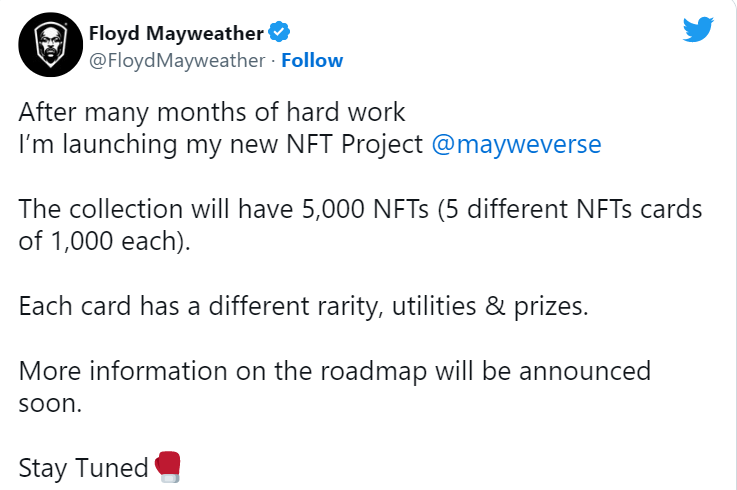
For example, in 2022, boxer Floyd Mayweather launched his NFT collection Mayweverse, which comprises 5,000 unique NFTs. In addition to launching their own NFT collections, many celebrities were also used to promote other collections. For example, the Lucky Block NFT collection was promoted by model Jamie Jewitt and boxer Dillian Whyte.
In addition, Cristiano Ronaldo partnered with Binance in 2022. The Portuguese star soccer player will launch his own NFT collection on the exchange’s NFT marketplace. This collection captures Ronaldo’s legacy on the blockchain, and it is not excluded that more collections will be launched in the future.

Celebrities and their interest in BAYC NFTs

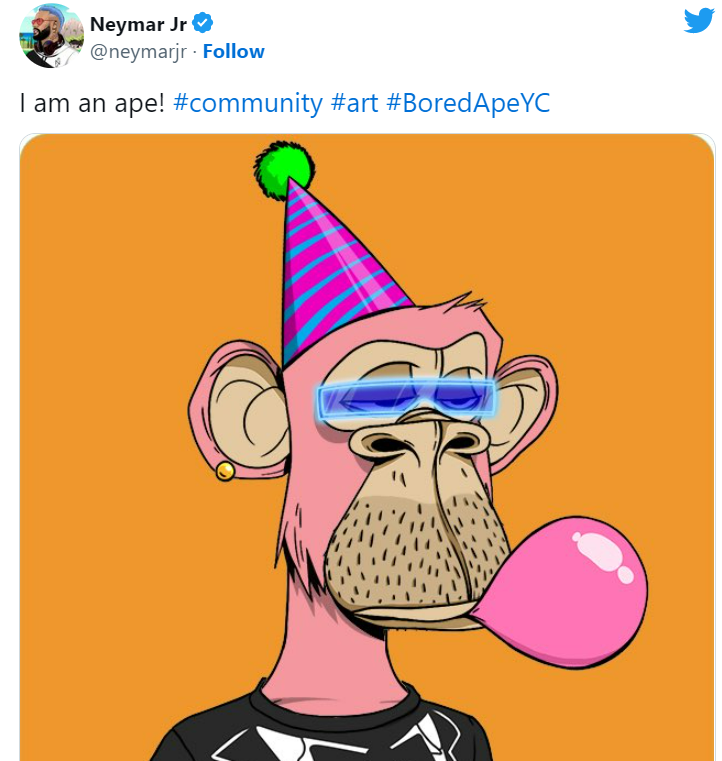
The Bored Ape Yacht Club (BAYC) NFT collection launched in 2021 and grew into a very popular project in a short period of time. This was partly because many celebrities invested in the project. Even in 2022, it was found that celebrities are still willing to pay hefty sums for a JPEG. For example, Brazilian soccer player Neymar bought two BAYC NFTs in the first month of 2022.

He was not the only celebrity, as Paris Hilton also managed to get a copy from the collection in the same month. However, hodling is not in every celebrity’s dictionary, as some celebrities also sold their BAYC NFT in 2022. For example, American football player Andrew Sendejo sold his BAYC NFT in February 2022, and Shaquille O’Neil followed suit a few months later by selling his Mutant Ape.
Is the metaverse still popular in 2022?

In the fall of 2021, there was a lot of hype surrounding metaverse platforms as Mark Zuckerberg announced that Facebook was being rebranded as Meta and the company was focusing on the next iteration of the internet. As a result, various metaverse-related cryptocurrencies skyrocketed and interest among celebrities rose along with the price.

The metaverse, also known as the virtual world, is an increasingly popular concept where people can move and socialize in digital environments. In 2022, several celebrities were found to be active in the metaverse and have created their own unique digital avatars.

In addition, investing in the metaverse also continues to interest several celebrities. Phil Jones, a Manchester United English defender who has barely seen the soccer field for over three seasons, invested in the metaverse in 2022. Together with the media platform Antourage, the footballer launched his own metaverse project.

David Beckham, another English soccer player, who also played for Manchester United, has found his way into the metaverse. David Beckham became a 2022 ambassador for DigitalBits, a blockchain platform that focuses on various blockchain applications.

Sergio Kun Agüero, another famous soccer player, entered the metaverse in 2022. The former footballer of Manchester City, Atletico Madrid and the Argentina national team has launched his own metaverse experience. This was done in collaboration with The Sandbox. Agüero’s metaverse, called the Kuniverse, is a perfect opportunity for fans to meet their idol. There are also special NFTs that you can use in this metaverse, with the collection totaling 9,320 Kun NFTs.

Concerts in the metaverse

The metaverse is a unique venue for fans and artists to interact. As a result, concerts in the metaverse are immensely popular, with numerous concerts and other activities featuring celebrities in 2022.

An example of one such celebrity is pop star Taylor Swift, who held her own digital concerts in the metaverse in 2022. Fans can create their own avatars and go to the virtual concerts to listen to Taylor and interact with other fans.

Popular gaming platforms, such as Roblox and Fortnite, are also keeping up with technological developments and regularly host concerts. For example, Charli XCX filmed a concert at Roblox on June 17, 2022. The British singer and songwriter, who was born Charlotte Emma Aitchison in 1992, has become known for her electronic music and has released several successful singles and albums.

In addition, there have been several Hypetype Metaverse Concerts in 2022 attended by many celebrities. These concerts included performances by Dimitri Vegas & Like Mike, Wolfpack and Thai rapper BamBam.

What celebrities were involved in cryptocurrencies in 2022?

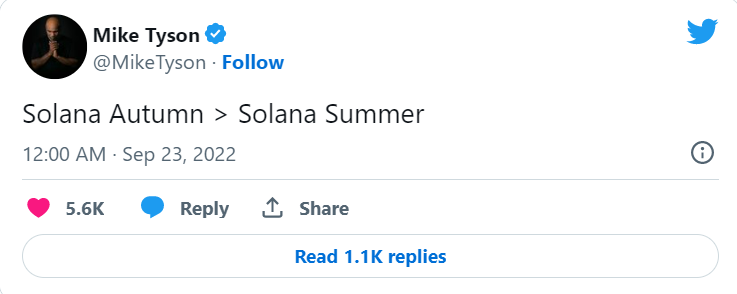
Despite the crypto market being hugely bearish in 2022, there are still celebrities who are confident in cryptocurrencies. For example, Mike Tyson, the famous boxer and former world heavyweight champion, has expressed his interest in cryptocurrency and blockchain technology. He has joined the Solana Foundation, a nonprofit organization dedicated to Solana development and adoption, and advertises several projects built on the Solana blockchain.
On the other hand, plenty of celebrities also got rid of their crypto investments in 2022. For example, Tesla, Elon Musk’s company, sold a large amount of Bitcoin in 2022. Back in March 2022, Musk said he was not going to sell Bitcoin, but a few months later, he sold 75% of his Bitcoin holdings.

Because second-quarter profits were down and the Shanghai factory had to be closed, Musk did not want to take any chances. Both the developments at Tesla and the falling price of Bitcoin meant that Musk saw no other way out but to sell much of the position.

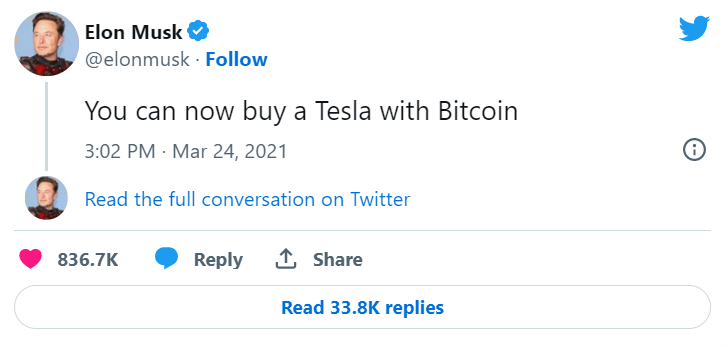
These developments are in stark contrast to the events of 2021, where Musk turned the crypto market completely upside down. In early 2021, he announced that Tesla had purchased $1.5 billion worth of Bitcoin. This news caused Bitcoin’s price to explode. In addition to the positive effect on Bitcoin’s price, Musk was also one of the causes of the hard fall a few months later. His criticism of the energy consumption of the proof-of-work (PoW) consensus system that Bitcoin runs on caused the price to drop by half.
The next co-founder to leave Ethereum

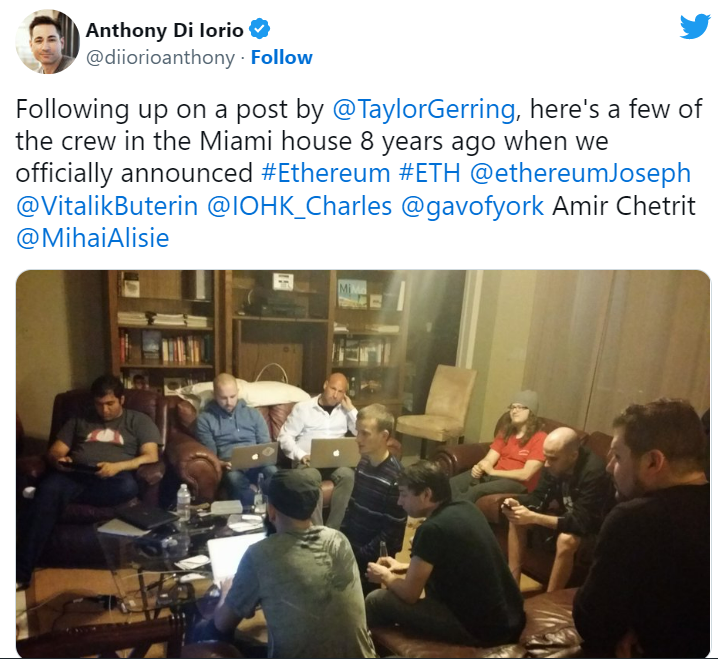
Not only did celebrities sell their cryptocurrencies, but a well-known person within the crypto landscape also announced his departure. Anthony Di Iorio is one of the co-founders of Ethereum and has announced that he is leaving the crypto world.

However, in the fall of 2022, Di Iorio announced his new challenge in blockchain technology. With his company, called Andiami, he wants to promote decentralization through hardware. This makes Di Iorio the next co-founder to leave Ethereum. In the past, Charles Hoskinson, Gavin Wood and Joseph Lubin preceded him. They founded Cardano, Polkadot and Infura, respectively.
What celebrities are involved in the FTX debacle?

Not only did Musk partially withdraw from the crypto market but so did a group of celebrities who were ambassadors for the FTX exchange. Big names, such as Stephen Curry and Tom Brady, were associated with the bankrupt FTX exchange. Brady and his partner, Gisele Bündchen, even invested in FTX.

In addition to Curry, Brady and Bündchen, Naomi Osaka, Larry David, Udonis Haslem, David Ortiz, William Trevor Lawrence, Shohei Ohtani and Kevin O’Leary were also involved with the exchange as FTX ambassadors. FTX has been a sponsor of several sporting events, so the link to a lot of top athletes is also quickly established.

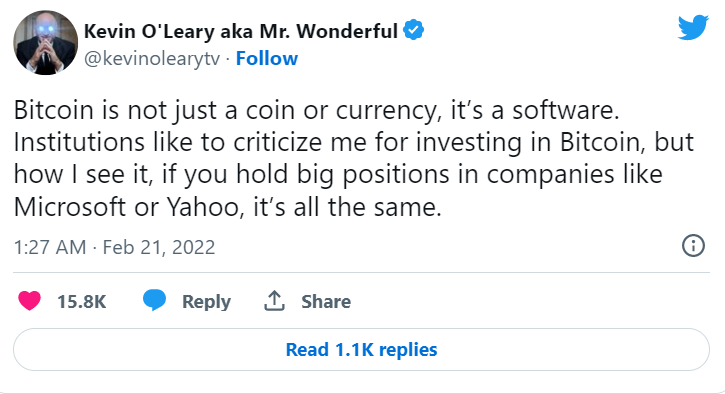
Whether these celebrities will leave the crypto world behind cannot be said with complete certainty. However, O’Leary has made it known in the past that he invests in cryptocurrencies. In addition, Curry has released his own NFT collection and also owns a BAYC NFT.
Trending Cryptos

Related Reads

a16z: In the AI Era, Company Competition for Talent Starts with Job Title Naming

The article discusses how companies in the AI era are competing for talent through strategic "title arbitrage," or the renaming of key roles to reflect and attract new, high-value capabilities. It uses Palantir's creation of the "Forward-Deployed Engineer" (FDE) as a prime example. This title reframed client-facing technical work from a peripheral "implementation" role into a core, high-status engineering function. The move was strategic, allowing Palantir to attract talent that blended technical skill with business acumen and to dominate the market's perception of this capability. The piece argues that job titles are an organizational language that signals the value and authority of certain work. Effective new titles, like "Data Scientist" or "Site Reliability Engineer," emerge when a role's strategic importance genuinely outgrows its old name. Conversely, mere title inflation without substantive change is ineffective. For AI companies, particularly in B2B, this is a crucial strategy. AI transformation creates new high-leverage roles (e.g., "Legal Engineer," "GTM Engineer") that combine domain expertise with technical automation. By naming these roles, a company can help clients internally legitimize these change-makers. This, in turn, builds market mindshare, associating the company with the new capability. In conclusion, as AI blurs the lines between product and service, the ability to accurately name and organize the critical, client-adjacent work that defines product learning will be a key competitive advantage. The first to define this new organizational language plants a flag in the market's mind.

marsbit36m ago

a16z: In the AI Era, Company Competition for Talent Starts with Job Title Naming

marsbit36m ago

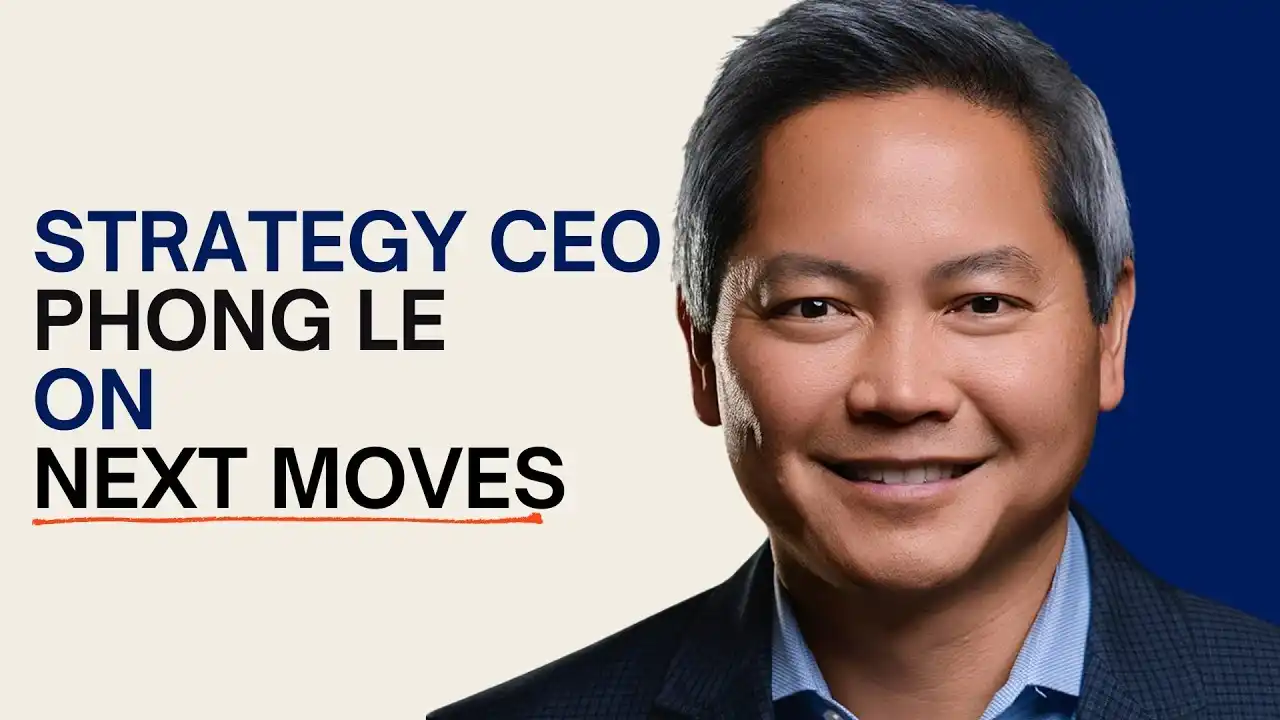
Interview with Strategy CEO: Can STRC Recover After Selling Bitcoin?

Interview with Strategy CEO Phong Le on the recent sale of 32 Bitcoin and its impact. He clarifies the move was a small, strategic action to demonstrate liquidity to debt holders, test internal processes, and prove operational discipline—not a response to fears of a "death spiral" from DeFi protocols leveraging STRC (Strategy's preferred stock product), which he notes holds less than 10% of STRC. Le emphasizes Strategy’s long-term focus as the largest corporate Bitcoin holder, using the adage that markets are a "voting machine" short-term but a "weighing machine" long-term. Decision-making is data-driven, involving the board, complex modeling, and multiple stakeholder considerations, moving beyond a founder-centric model. He outlines various capital options but stresses the strategic importance of "doing nothing" as a valid choice, citing resilience built during the 2022 bear market. Le expresses unwavering belief in Bitcoin's foundational value for global sovereignty and its future role in an AI-driven economy with trillions of autonomous agents. Addressing STRC's current price below its $100 face value, Le explains recent pressure was due to using dollar reserves for bond buybacks. He expects STRC to return to par as reserves are replenished and its semi-monthly dividend payments begin, noting the product is heavily over-collateralized. Finally, Le confirms the company sold Bitcoin the week prior to May 31st, as disclosed in an 8-K filing, leaving prediction market interpretations to others. The overarching philosophy remains "Spread Bitcoin with love," embracing all methods of gaining Bitcoin exposure.

marsbit1h ago

Interview with Strategy CEO: Can STRC Recover After Selling Bitcoin?

marsbit1h ago

IOSG Founder: Ethereum Doesn't Need Another Leap of Technical Faith, It Needs a Musk-style Compromise

Jocy, founder of IOSG Ventures, argues that Ethereum does not need renewed technological faith but a "Musk-like compromise." The recent formation of ETHLabs—funded by major ETH holders like BitMine and Lubin—highlights a market-driven move to fill a gap left by the Ethereum Foundation (EF), signaling a loss of confidence in its decentralized, hands-off approach. The core critique contrasts Vitalik Buterin's (V) idealistic, technology-first vision with Elon Musk's pragmatic, business-driven execution. The author asserts Ethereum's current shortage is not another technical roadmap but a clear, real-world application narrative and a leader willing to engage directly with commercial realities—like Musk. Internal issues are emphasized, citing EF's management problems and talent drain. While the new decentralized model with independent nodes like ETHLabs addresses the single foundation's limitations, it risks fragmentation without cohesive direction. True cohesion, the author suggests, must come from a shared, compelling narrative around ETH's value, not just from aligned financial interests. Independence claims for new entities are seen as aspirational, needing years of transparency to build trust. The ultimate threat is not competitors like Solana, but the broader shift of attention and talent toward AI. Ethereum has a limited window—12 to 18 months—to recapture focus by delivering tangible, real-world applications. The conclusion urges V to shift from abstract ideals to grounded, pragmatic leadership. The time for this crucial pivot is running out.

marsbit2h ago

IOSG Founder: Ethereum Doesn't Need Another Leap of Technical Faith, It Needs a Musk-style Compromise

marsbit2h ago

Trading

Spot
Futures

Hot Articles

What is $BITCOIN

DIGITAL GOLD ($BITCOIN): A Comprehensive Analysis Introduction to DIGITAL GOLD ($BITCOIN) DIGITAL GOLD ($BITCOIN) is a blockchain-based project operating on the Solana network, which aims to combine the characteristics of traditional precious metals with the innovation of decentralized technologies. While it shares a name with Bitcoin, often referred to as “digital gold” due to its perception as a store of value, DIGITAL GOLD is a separate token designed to create a unique ecosystem within the Web3 landscape. Its goal is to position itself as a viable alternative digital asset, although specifics regarding its applications and functionalities are still developing. What is DIGITAL GOLD ($BITCOIN)? DIGITAL GOLD ($BITCOIN) is a cryptocurrency token explicitly designed for use on the Solana blockchain. In contrast to Bitcoin, which provides a widely recognized value storage role, this token appears to focus on broader applications and characteristics. Notable aspects include: Blockchain Infrastructure: The token is built on the Solana blockchain, known for its capacity to handle high-speed and low-cost transactions. Supply Dynamics: DIGITAL GOLD has a maximum supply capped at 100 quadrillion tokens (100P $BITCOIN), although details regarding its circulating supply are currently undisclosed. Utility: While precise functionalities are not explicitly outlined, there are indications that the token could be utilized for various applications, potentially involving decentralized applications (dApps) or asset tokenization strategies. Who is the Creator of DIGITAL GOLD ($BITCOIN)? At present, the identity of the creators and development team behind DIGITAL GOLD ($BITCOIN) remains unknown. This situation is typical among many innovative projects within the blockchain space, particularly those aligning with decentralized finance and meme coin phenomena. While such anonymity may foster a community-driven culture, it intensifies concerns about governance and accountability. Who are the Investors of DIGITAL GOLD ($BITCOIN)? The available information indicates that DIGITAL GOLD ($BITCOIN) does not have any known institutional backers or prominent venture capital investments. The project seems to operate on a peer-to-peer model focused on community support and adoption rather than traditional funding routes. Its activity and liquidity are primarily situated on decentralized exchanges (DEXs), such as PumpSwap, rather than established centralized trading platforms, further highlighting its grassroots approach. How DIGITAL GOLD ($BITCOIN) Works The operational mechanics of DIGITAL GOLD ($BITCOIN) can be elaborated on based on its blockchain design and network attributes: Consensus Mechanism: By leveraging Solana’s unique proof-of-history (PoH) combined with a proof-of-stake (PoS) model, the project ensures efficient transaction validation contributing to the network's high performance. Tokenomics: While specific deflationary mechanisms have not been extensively detailed, the vast maximum token supply implies that it may cater to microtransactions or niche use cases that are still to be defined. Interoperability: There exists the potential for integration with Solana’s broader ecosystem, including various decentralized finance (DeFi) platforms. However, the details regarding specific integrations remain unspecified. Timeline of Key Events Here is a timeline that highlights significant milestones concerning DIGITAL GOLD ($BITCOIN): 2023: The initial deployment of the token occurs on the Solana blockchain, marked by its contract address. 2024: DIGITAL GOLD gains visibility as it becomes available for trading on decentralized exchanges like PumpSwap, allowing users to trade it against SOL. 2025: The project witnesses sporadic trading activity and potential interest in community-led engagements, although no noteworthy partnerships or technical advancements have been documented as of yet. Critical Analysis Strengths Scalability: The underlying Solana infrastructure supports high transaction volumes, which could enhance the utility of $BITCOIN in various transaction scenarios. Accessibility: The potential low trading price per token could attract retail investors, facilitating wider participation due to fractional ownership opportunities. Risks Lack of Transparency: The absence of publicly known backers, developers, or an audit process may yield skepticism regarding the project's sustainability and trustworthiness. Market Volatility: The trading activity is heavily reliant on speculative behavior, which can result in significant price volatility and uncertainty for investors. Conclusion DIGITAL GOLD ($BITCOIN) emerges as an intriguing yet ambiguous project within the rapidly evolving Solana ecosystem. While it attempts to leverage the “digital gold” narrative, its departure from Bitcoin's established role as a store of value underscores the need for a clearer differentiation of its intended utility and governance structure. Future acceptance and adoption will likely depend on addressing the current opacity and defining its operational and economic strategies more explicitly. Note: This report encompasses synthesised information available as of October 2023, and developments may have transpired beyond the research period.

440 Total ViewsPublished 2025.05.13Updated 2025.05.13

What is $BITCOIN

Discussions

Welcome to the HTX Community. Here, you can stay informed about the latest platform developments and gain access to professional market insights. Users' opinions on the price of BTC (BTC) are presented below.

活动图片