2023 会是 Move 生态掘金元年么?

R3POPublished on 2022-12-16Last updated on 2022-12-16

Abstract

对于未来属于 Move 生态公链这一点,市场基本已经取得共识,而现实是世间苦以太坊们久已。

对于未来属于 Move 生态公链这一点,市场基本已经取得共识,而现实是世间苦以太坊们久已。

公链是加密世界经久不衰的主流叙事,即使目前有 30+ 的主流 Layer 1,运行着上百万 + 的各类 DeFi、NFT、GameFi 和 SociaFi 等 DApp,但这个赛道仍显得极为早期。

「早期」在于目前公链只能承载数百万用户的使用,距离微信、Facebook 等 Web 2.0 的 10 亿 + 用户还差至少两个数量级,而弥合鸿沟的新公链们的将会大有作为。

在关于 Web 3.0 的构想中,最重要一点是现有互联网的基础设施和上层应用将会重构,从最底层的通信协议、到中间层的 SaaS,以及上层的各类应用,都将会活跃于于新一代的高性能公链之上,整体市场预期以万亿美元计。正如 Blockchain.com 联创 Peter Smith 所言,「这波牛市我们见证了 Solana、Avalanche 和 Near Protocol 的成功,在短期内获得了超高的回报,下一波 Layer 1 将是 Aptos 和 Sui 的主场。」

对于未来属于 Move 生态公链这一点,市场基本已经取得共识,而现实是世间苦以太坊们久已。

在展开介绍 Move 之前,我们简单回顾一下区块链长期面临的一些问题。

区块链基础设施的现状

性能瓶颈:矛盾已至临界点

时间来到 2022 年,区块链的矛盾集中为一点,用户日益增长的高速网络需求和现今公链延迟高、价格贵、确认慢之间的矛盾。

在 2020 年肇始的 DeFi Summer 浪潮中,让链上用户数量首次突破百万量级,随之而来的是以太坊高昂的 Gas Fee 问题,在高峰期一次链上交互就要花费上百美元,造就了巨鲸对散户的挤出效应,中心化的危机萦绕在加密世界。

以太坊王位不稳,野心家看到自己的机会。Solona 和 Avalanche 等主打「高性能」的新公链登上历史舞台。客观而言,这两条公链的 TPS 较之以太坊上升了两个数量级,基本接近 Visa 等 Web 2 巨头交易结算能力,但是 Solona 接二连三的宕机证明这不是最后的终点。

以太坊的回应是推进 EIP-1559 提案进行伦敦硬分叉,促进各类 L2 Rollup 的成长,以及明年彻底 Merge 之后的 2.0 时代,TPS 有望提升至 10 万级。
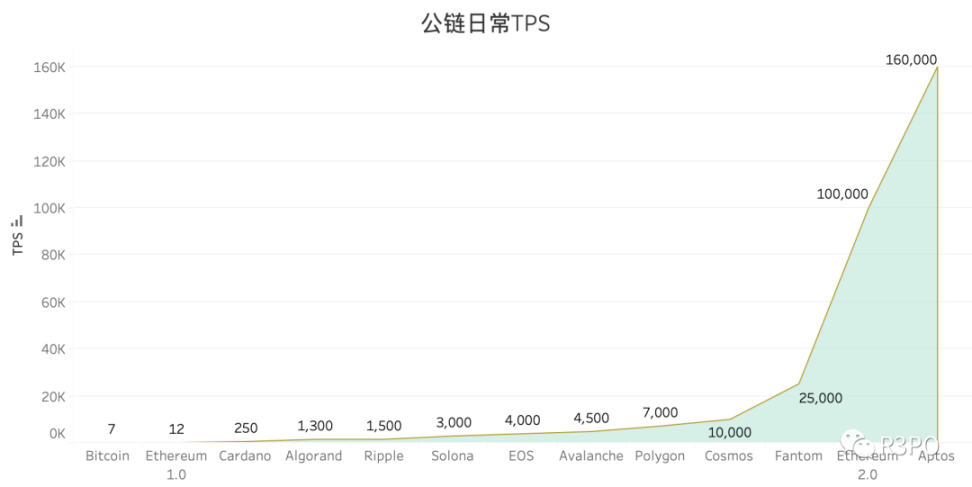
但是 dYdX 从以太坊生态的出走宣告以太坊阶段性的出师不利,一万年太久,加密世界现在就要高性能。

时间不等人,Web 3.0 时代,更多的外部用户将涌入加密兔子洞,我们需要提供超越 Web 2.0 时代的用户体验,来证实 DeFi、NFT、GameFi 的优越性。

是时候来讨论新一代的公链取代以太坊的可能性了,真正适合区块链下一个十年的高性能公链,而这是 Solidity 支撑下的以太坊无法完成的历史使命。

Solidity:智能合约的阿喀琉斯之踵

以太坊的成功建立在 Solidity 和比特币的肩膀之上,二者缺一不可,我们可以归纳为如下公式:

PoW 原则下的挖矿机制,让矿工通过哈希碰撞争夺记账权,给交易排序,是个体公平参与以太坊的物理基础。

智能合约是 DeFi、NFT、GameFi 等复杂逻辑操作的基础,第一次实现了由链上资产构建的 Crypto Native 生态。

成也萧何。Solidity 本身并没有问题,成功促成了 EVM 这个以太坊生态的最大护城河,其余公链基本都需要兼容 EVM 才能激发应用的迁移,可以这样认为,在 2022 年之前,公链赛道的竞争是以太坊和其他以太坊的竞争。
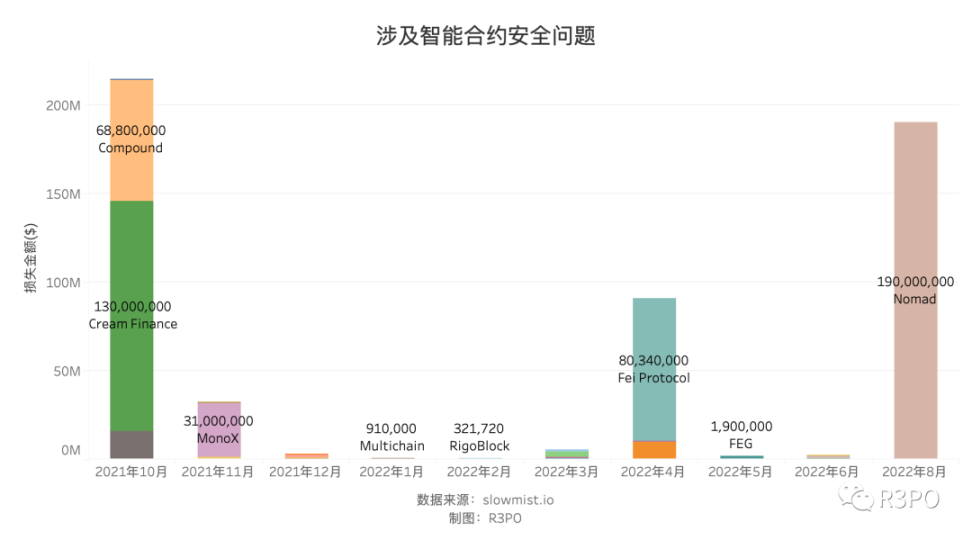
败也萧何。Solidity 编写出的智能合约经常出现问题,究其根本,Solidity 并非是完全为链上资产准备的编程语言,而更多是面向智能合约的撰写工具,在智能合约中,资产是由时间、整型、浮点数、布尔值等组合而来的常规的数值类型,一切传统攻击手法都可以适用,而恰恰 Solidity 支撑着庞大的链上资产,因此安全就成为巨人的脚踝,挥之不去的阴影。

总结一下,Solidity 语言特点的红与黑:

动态语言。便于开发调试 VS 难以在编译阶段发现问题;

语法灵活。支持动态调用 VS 危及资产安全;

支持资产属性。智能合约基础 VS 需要开发者逻辑完备。

资源集中存储。便于资产管理 VS 合约漏洞会波及全体使用者资产。

我们必须承认 Solidity 的优秀和不足,在其基础上看待未来的的编程语言发展,开发出下一个时代高性能公链。

而 Move 语言就是在前人基础上的进一步扬弃,接下来,就是 Move 的变革新时代。

Move 的由来及历史

Move 语言在迈入大众眼帘之前,就已经上演了一出大起大落的王子复仇记。

其本是含着金汤匙出生的大厂之子,后家道中落被家中售出,然又幸而得到 a16z、FTX、Coinbase 等资本扶持,最终构建出 Move 生态,这也是第一次由编程语言命名的公链生态,足见其优秀。
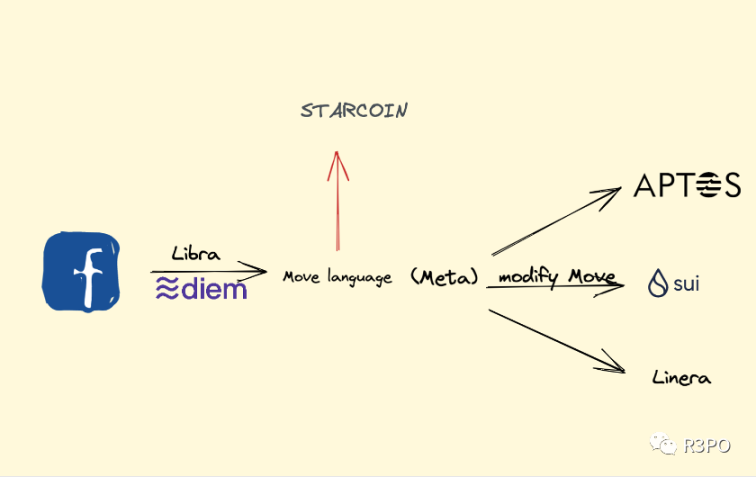
实际上,Move 并不是新出现的语言,其开发已经数年有余,最早是 Facebook 为其 Diem 项目所专项开发的语言,在 Facebook 迫于监管压力售出 Diem 团队后,Move 语言经历了一段很长时间的低迷。

在 Move 低谷期,Starcoin 技术团队选择长期坚持,编写一系列教程鼓励开发者参与,并且率先使用 Move 语言构建公链和生态,向开发者和市场证明了 Move 语言的威力。

长期坚持最终见到曙光,从 2022 年 3 月起,Move 系公链便开始映入主流视角,Sui、Aptos 和 Linera 先后完成融资,由于三者过于相似,并且高度同质化而迅速吸引了市场的注意。

三者开发主力均由原 Diem 团队构成,Meta 系正式成型;

都以 Move 作为开发语言,Sui 对原生 Move 进行了修改;

全部由 a16z 进行投资,由于目前三者主网均未上线,可以认为其更看好 Move 语言的未来;

三者均接受大额融资, Sui 完成 2.36 亿美元融资,Aptos 完成 3.5 亿美元融资,Linera 完成 600 万美元融资;

Move 本身是经由 Rust 语言修改而来的一门编程语言,其语法特色强调超越 Solidity,我们可以总结 Move 语言特点如下:

泛型 + 静态编程。摒弃 Solidity 的动态调用,转而用泛型工具实现高效开发,同时确保在编译阶段拦截合约漏洞,预防于危机之前,避免上链之后的资产损失。

语言级的形式化验证能力。形式化验证是指将合约逻辑数学化的验证手法,这是目前最安全的验证机制,在 Solidity 开发中,一般由专业的安全机构在,如慢雾,派盾在合约完成后进行验证。而 Move 从语言级层面实现这一工具,便于开发者调用。

面向资源编程。在 Move 语言中,资源被定义为特殊类型,在同一个时间戳下,资源只能有一个「主人」,只能存在一个状态(存在 or 销毁),从根本上避免了无线增发,归属不明等攻击手法的可能,保证了从开发到交付、端到端的全流程安全状态。

资源分散存储。在 Solidity 实现的智能合约中,资源是「串联」存储,黑客攻破其一点,则整个合约牵涉的资产都会被收入囊中;而在 Move 语言实现中,资源是「并联」存放,任何数据都有其具体所有人,黑客攻击也无法造成合约整体失效。

在资本的快速催熟下,市场第一次因为三条主网都没有的公链而陷入疯狂,Move 语言开发者 1200 美元的时薪 meme 都快速出圈,显然已经走出 Starcoin 苦苦坚持时的窘境。

Move 语言并非只停留在传说中,Starcoin 已经在其上布局生态,Aptos 测试网也来到第三阶段,Sui 和 Linera 也紧随其后,Move 生态会彻底取代 Solidity 生态吗?

光说不练假把式,接下来,我们为大家实际体验下基于 Move 编写的各条高性能公链生态。

Move 的生态现状

并且,这次的主打口号,已经悄然跃进为 Web 3.0,在刚刚发布的 Aptos 中占据首要地位,这不是为 DeFi 或者 NFT 准备的公链,而是为下一代互联网迁移至 Web 3.0 而筑基,70 亿人需要高性能,保护隐私需要新公链,无摩擦(Seamless)体验需要生态。

四条公链中,Starcoin 一马当先,已经具备较为完整的应用生态,包括 DeFi、NFT、元宇宙和硬件钱包等配套措施,Sui 率先拿到融资,但目前生态建设疲软,只有少数应用进行布局,需要进一步观察。

而 Aptos 上演了后来者居上的好戏,其在 7 月份仅有 30 个应用,而到 8 月中上旬,便已经有 80 余生态排队上线,可谓是当前顶流。

而 Linera 目前还在开发中,本文暂不涉及。

这些深耕 MOVE 生态,致力于推动 Web3.0 的团队值得被注意。

Aptos 四步走战略

Aptos 的崛起,不能忘记 Solona 开发者的贡献,大批量的开发者迁移至 Aptos 测试网,希望能复刻 Solona 在这个牛熊周期的成功。

根据官网资料,Aptos 目前已经进行一届黑客松,并且在 6 月推出 Grant 计划来资助生态发展,其测试网激励共计 4 轮,包涵:

AIT 1:启动,包括 43 个国家在内的 119 个节点参与其中

AIT 2 : 质押,包括 44 个国家在内的 226 个节点参与其中

AIT 3 :治理和升级,目前正在进行中

AIT 4 :动态验证器拓扑

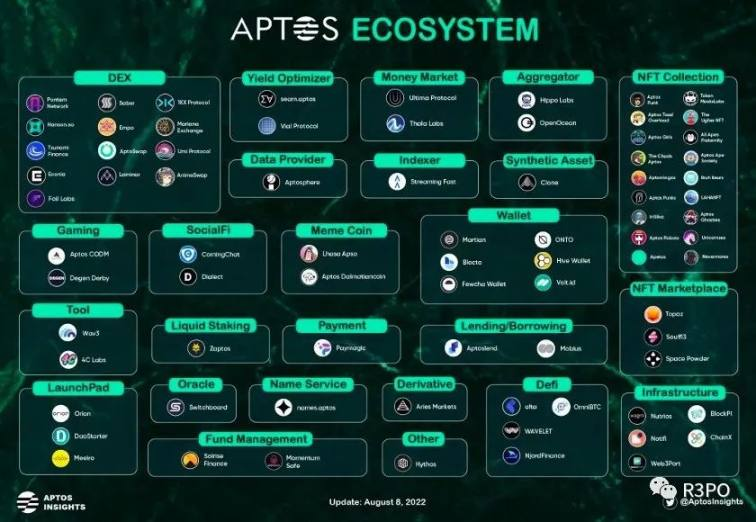
AIT 3 阶段促进了 Aptos 生态宛如寒武纪大爆发般的活跃,已经基本涵盖 DEX、GameFi、NFT、预言机等一系列配套基础设施,Aptos 团队并未如其他公链一样吸引现有成熟应用,而是希望应用伴随公链一起成长,之后无缝切换至主网,直接留存现有用户和开发者。
性能瓶颈:矛盾已至临界点

其中亮点项目如下:

基于 AMM 的 DEX Liquidswap。由 Aptos 官方和 Pontem Network 团队合作开发,其构建的 Move VM 可以进行跨链操作,首批支持 Rust 语言系列的 Polkadot。Liquid 以 Uniswap 为原型进行设计,有望成为 Aptos 链上的主流原生 DEX。

基于 Block-STM 机制的订单薄 DEX Econia。其关键之处在于利用 Aptos 的并行处理机制,对订单进行批处理,较少无常损失,促进撮合效率。

经过 AIT 3 的发酵,Aptos 的市场热度进一步提升,我们有望在今年见证真正 Aptos 高性能公链的大规模进步。

Sui 的久久为功

不同于 Aptos 在市场上的大开大合,Sui 背后的 Mysten Labs 显得更为低调和隐忍,不同于 Aptos,Sui 使用的 Move 语言有一定的修改色彩,其上的亮点为网络费用将分为计算和存储两部分,分别进行结算,用户为当前的存储付费,也可在不需要之后解除授权删除数据,更为强调保护用户隐私。

Mysten Labs 已经为 Sui 网络启动测试网 DevNet,主流应用为自身研发的 Sui wallet 插件钱包,包括代币和 NFT 管理功能,其他生态建设进步较为缓慢。

其在今年 3 月就发布关于游戏和 NFT 的开发指南,明显可以观察到 Sui 对 NFT、游戏等商业应用更为感兴趣。

Starcoin 的布局与未来

不同于 Aptos 和 Sui 仍旧挣扎于测试网,Starcoin 已经在开发面向用户的真实产品,总交易数已达 8 百余万次,平均交易费用仅为 0.000016 美元,其上的生态更是生机勃勃,万物竞发的状态。

生态包含钱包、DEX、NFT 交易平台、矿池和稳定币等板块,足以让我们一窥 Move 生态构建公链的全貌。

以其上的 DEX Starswap 为例,基于 AMM 机制的原生 Move 应用,目前 TVL 为 80 万美元,支持 WEN、FAI、XUSDT、STAR 和 STC 等五种资产之间的交易,并且支持跨链桥兑换更多资产,也是未来构建 Move 金融生态的起点。
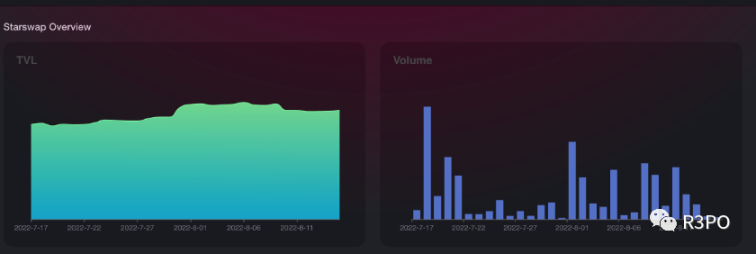
在 DeFi 之内,链上原生资产将会获得超额抵押稳定币 FAI 的无缝支撑,FAI 可由 STC 或者 ETH 抵押获得,构建属于 Starcoin 的稳定币体验,摆脱 USDC 等日益中心化稳定币的威胁,更好的促进 Move 生态建设。

在链下,Starcoin 和硬件钱包 OneKey 进行深度合作,目前已经支持 Starcoin Dapp,由软到硬,Move 语言负责链上资产安全,硬件钱包将确保物理资产安全。

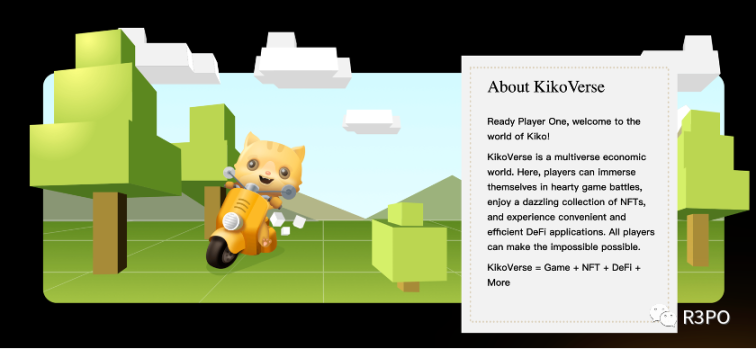
在 DeFi 之外,Starcoin 还进行包括 NFT 和元宇宙在内的布局与建设,不同于以太坊生态的高昂手续费和高延迟,基于 Move 开发的 Kiko Verse 是包含 NFT、代币机制以及 meme 文化在内的潮流元宇宙平台。

不同于 DeFi 应用对低延迟的需求,元宇宙平台需要进行高负载支撑,得益于 Move 语言生态和 Starcoin 的支持,Kiko verse 可以一站式解决 Game/NFT/DeFi 的需求,成为我们走向未来生活的入口。
结论及展望

Move 生态还处于一个早期阶段。一方面我们可以看到 Move 从设计以及已经实现的功能来看它已经具备声称的先进性与潜力。但在另外一方面,跟已有的 EVM 生态比较,Move 领域的生态还处于早期建设阶段。区块链的魅力就是它未来的可能性以及每个人都可以成为参与者。对于广大的开发者和乐于尝试的新项目早期使用者,Move 是 2023 年不可错过的一个全新领域。

Trending Cryptos

Related Reads

The "Impossible Triad" Is Fundamentally a Pseudo-Problem

The article argues that blockchain's fundamental limitation is not the scalability trilemma (decentralization, scalability, security), which has been largely solved, but the lack of **privacy** and, until recently, clear **legitimacy**. Blockchain is described as a slow, expensive, globally shared computer whose core value is censorship resistance and verifiability. While ideal for native digital assets like money (e.g., stablecoins), its default transparency acts as a **tax**, exposing all transactions and enabling MEV extraction, which deters serious institutional capital. Simultaneously, its permissionless nature created regulatory ambiguity. The piece contends that **privacy** is the missing critical feature. It rejects the false choice between total transparency and complete anonymity. Modern cryptography (like zero-knowledge proofs) enables **compliant privacy**: users can prove facts (solvency, KYC status, compliance) without revealing the underlying sensitive data (specific holdings, identities). This preserves auditability for regulators and eliminates the leak of financial information. With recent regulatory progress (e.g., the GENIUS Act) addressing legitimacy, adding default, provably compliant privacy becomes a pure upgrade. It transforms blockchain from a costly, public ledger into a confidential settlement layer, finally bridging the gap to mainstream institutional and individual adoption of on-chain finance.

链捕手9h ago

The "Impossible Triad" Is Fundamentally a Pseudo-Problem

链捕手9h ago

Optical Chips: Collective Capacity Expansion

The global optical chip industry is experiencing a massive wave of expansion driven by surging AI data center demand. Major players across the US, Japan, Europe, and China are aggressively investing to ramp up production capacity. In the US, Coherent is expanding its 6-inch Indium Phosphide (InP) semiconductor fab in Texas, supported by CHIPS Act funding and a $2 billion strategic investment from NVIDIA. Lumentum is building a new factory for InP optical devices, and Nokia is scaling its advanced photonic chip packaging and testing capabilities. NVIDIA's investments aim to secure future supply of critical lasers and optical interconnect products for AI infrastructure. Japan's JX Advanced Metals, a leading InP substrate supplier, plans a multi-billion yen investment to increase its capacity 7-10 times, strengthening its grip on the crucial upstream materials market. In Europe, IQE and Tower Semiconductor settled a patent dispute and signed a multi-year InP epitaxial wafer supply agreement, highlighting that next-generation silicon photonics platforms will integrate high-performance InP components. STMicroelectronics and Sivers Semiconductors are also expanding silicon photonics production and partnerships. China is rapidly building out its domestic supply chain. Dongshan Precision's subsidiary, Source Photonics, announced a $12 billion project to expand optical chip and module production. Companies like Sanan Optoelectronics and Yunnan Germanium are scaling up InP chip manufacturing and substrate production, moving towards vertical integration from materials to modules. While debate continues around the exact future architecture—whether CPO (Co-Packaged Optics), NPO, or pluggables will dominate—analysts like Morgan Stanley argue the underlying driver is unchangeable: the explosive growth in bandwidth demand. This will inevitably increase the volume of optical engines, lasers, and related content per GPU, regardless of the final technical path. The competition for "more light" in the AI era has intensified into a global, full-chain capacity race.

marsbit11h ago

Optical Chips: Collective Capacity Expansion

marsbit11h ago

Stablecoins Finally Find Real Yield: An In-Depth Look at On-Chain Reinsurance Re | A Conversation with Re Founder Karan Saroya

Stablecoin Real Yield Found: A Deep Dive into On-Chain Reinsurance with Re's Karan Saroya As stablecoin supply exceeds $170 billion, the search for sustainable, non-speculative yield intensifies. Re, an on-chain reinsurance platform, provides an answer: connecting stablecoin capital to the trillion-dollar traditional reinsurance market. Re operates as a regulated reinsurer, accepting stablecoin deposits as collateral to back US insurance companies. These insurers pay premiums, generating yield that flows back to on-chain depositors. Currently supporting 35 insurers and underwriting $500 million, Re projects scaling to over $1 billion soon. Key insights from a Bankless podcast with founder Karan Saroya and investor Avichal of Electric Capital: 1. **Uncorrelated, Real-World Yield:** Re offers stablecoin holders access to reinsurance returns (targeting 12-14%+), an asset class entirely separate from crypto or equity markets. 2. **Operational Efficiency via Smart Contracts:** Re replaces traditional, labor-intensive capital fundraising with smart contracts, allowing a ~12-person team to compete with industry giants. 3. **Regulatory Leverage:** For every $1 of collateral, regulations allow backing $5-7 in written premiums. This leverage amplifies returns from the underlying risk-free rate. 4. **DeFi Integration:** Depositors receive receipt tokens, which can be used in protocols like Morpho for "looping," potentially pushing yields to 18-20%+. 5. **The "DeFi Mullet" Model:** A compliant front-end (regulated reinsurer) paired with a decentralized back-end (smart contracts, DeFi capital markets). 6. **RE Governance Token:** Modeled on Lloyd's of London, the token governs the central capital pool's allocation, counterparty acceptance, and parameters. 7. **Real Economic Impact:** Capital funds real-world productivity (factories, clinics, businesses) via insurance, moving beyond crypto's internal loops. The discussion highlights a pivotal moment: DeFi's supply-side infrastructure is now met by real demand for productive yield, potentially kickstarting a flywheel where vast on-chain stablecoin capital seeks these real-world returns.

链捕手12h ago

Stablecoins Finally Find Real Yield: An In-Depth Look at On-Chain Reinsurance Re | A Conversation with Re Founder Karan Saroya

链捕手12h ago

1996 or 1999? Walsh's First Test is 'How to View AI'

"1996 or 1999? Wall's First Big Test Is 'How to View AI'" Federal Reserve Chairman Wall's initial challenge is not whether to raise or cut rates, but a more fundamental judgment: what kind of boom is the current AI boom? This will determine the Fed's policy path and define his legacy. Economics is split between two opposing views, according to reporter Nick Timiraos. One sees imminent productivity gains that will increase supply and cool inflation, allowing the Fed to hold steady. The other argues that while productivity benefits are distant, demand shocks are here now, and waiting for data confirmation risks missing the intervention window, forcing sharper rate hikes later. Wall has signaled a leaning toward the first view, echoing 1996-era Alan Greenspan, who embraced strong, productivity-driven growth without fear of inflation. However, Wall faces a different macro environment than Greenspan did, with tariff pressures, expanding fiscal deficits, and diminishing globalization benefits, which could force more significant inflation pressures even if AI benefits materialize. Wall's logic, expressed before taking office, is that AI-driven productivity gains won't show in official data for years. If the Fed waits for confirmation, it might mistakenly tighten policy and choke off the very growth that could suppress inflation. This argues for using forward-looking narratives over lagging data. Chicago Fed President Austan Goolsbee presents a key counter-argument. He distinguishes between expected and unexpected productivity booms. A widely anticipated boom, like the current AI wave, can cause people to spend future wealth gains in advance, overheating the economy before productivity actually rises, thus requiring preemptive rate hikes. He cites rising costs for AI data centers as evidence of such overheating. Fed Governor Christopher Waller offers a rebuttal to Goolsbee, noting the "expected spending" mechanism only works if people can borrow against future income, which many households cannot do due to borrowing constraints. Wall also faces a paradox related to his desire to reduce the Fed's use of "forward guidance" (pre-announcing policy moves). This practice was established in 1999 when Greenspan began signaling hikes to avoid market shocks. If the economy follows a less optimistic path, Wall may be forced to choose between using the guidance he wants to abolish or risking market volatility by staying silent. The ultimate question defining Wall's first major test remains: Is this 1996 or 1999?

marsbit13h ago

1996 or 1999? Walsh's First Test is 'How to View AI'

marsbit13h ago

Trading

Spot
Futures

Hot Articles

How to Buy NFT

Welcome to HTX.com! We've made purchasing AINFT (NFT) simple and convenient. Follow our step-by-step guide to embark on your crypto journey.Step 1: Create Your HTX AccountUse your email or phone number to sign up for a free account on HTX. Experience a hassle-free registration journey and unlock all features.Get My AccountStep 2: Go to Buy Crypto and Choose Your Payment MethodCredit/Debit Card: Use your Visa or Mastercard to buy AINFT (NFT) instantly.Balance: Use funds from your HTX account balance to trade seamlessly.Third Parties: We've added popular payment methods such as Google Pay and Apple Pay to enhance convenience.P2P: Trade directly with other users on HTX.Over-the-Counter (OTC): We offer tailor-made services and competitive exchange rates for traders.Step 3: Store Your AINFT (NFT)After purchasing your AINFT (NFT), store it in your HTX account. Alternatively, you can send it elsewhere via blockchain transfer or use it to trade other cryptocurrencies.Step 4: Trade AINFT (NFT)Easily trade AINFT (NFT) on HTX's spot market. Simply access your account, select your trading pair, execute your trades, and monitor in real-time. We offer a user-friendly experience for both beginners and seasoned traders.

7.1k Total ViewsPublished 2024.03.29Updated 2026.06.02

How to Buy NFT

What is Altura NFT?

Altura: Providing One-Stop NFT Solutions for Game Developers

56.0k Total ViewsPublished 2024.06.12Updated 2024.06.12

What is Altura NFT?

What is AINFT

EternaFi Agents and $AINFT: A Comprehensive Analysis of AI-Powered NFT Infrastructure in the Web3 Ecosystem The intersection of artificial intelligence (AI) and blockchain technology is rapidly evolving, establishing innovative platforms that redefine ownership models and economic participation. EternaFi Agents, along with its native token $AINFT, exemplifies a groundbreaking approach to the tokenization of AI infrastructures through the means of non-fungible tokens (NFTs). Launched in July 2025 by the development team at Nova Club, EternaFi merges the advancements of AI with the decentralized financial mechanisms of blockchain, presenting a unique investment opportunity for participants within the web3 ecosystem. This article aims to provide an in-depth assessment of EternaFi Agents, covering its core components, functionality, and significance within the crypto landscape. Introduction and Project Overview EternaFi Agents stands as a salient example of how blockchain technology can democratize access to advanced AI capabilities. The project endeavors to reshape the paradigm of AI ownership by diversifying economic participation, making sophisticated AI systems accessible to a larger pool of stakeholders. At its core, the project tokenizes a proprietary large language model (LLM) developed by Nova Club, allowing NFT holders to gain fractional exposure to the model's economic performance. By utilizing NFTs representing stakes in the LLM, EternaFi Agents fosters a model wherein stakeholders not only participate in AI service consumption but also enjoy sharing in the economic rewards generated by the platform. This transformative approach enables the development of sustainable revenue models for AI services, all the while promoting broad community engagement and facilitating transparent governance. What is EternaFi Agents? EternaFi Agents represents an AI-NFT infrastructure project that aims to blend the capabilities of AI with blockchain technology in a coherent ecosystem. The essential feature of this project is the creation of NFTs that serve as financial instruments, representing fractions of ownership in Nova Club's proprietary AI infrastructure. Each NFT symbolizes direct exposure to the economic performance of the underlying AI system, providing a lucrative opportunity for investors. The project operates on the Base blockchain, known for its scalability and efficiency, thus ensuring manageable transaction costs while facilitating a seamless operational experience. One of the notable features includes a revenue-sharing mechanism, wherein NFT holders can receive portions of subscription income generated by the AI services provided on the platform. This innovative approach establishes a connection between the success of the AI services and the economic dividends distributed among the holders, thus ensuring an alignment of interests across the community. Who is the Creator of EternaFi Agents? The creative force behind EternaFi Agents is Nova Club, a development team based in Singapore proficient in the amalgamation of AI and blockchain technology. Their prior experience in AI development and cryptocurrency analysis gives credence to the project, contributing a breadth of expertise to the creation of EternaFi Agents. Nova Club’s mission centers on democratizing access to cutting-edge AI technologies while building sustainable economic models that benefit users alongside developers. Their commitment to transparency, community governance, and innovation is reflected in the design and implementation of the EternaFi platform, aiming to establish a unique ecosystem that fosters positive engagement and long-term value creation. Who are the Investors of EternaFi Agents? The specific details concerning investors or investment organizations backing EternaFi Agents are not publicly available. However, EternaFi has adopted an inclusive approach to funding its development through the sale of NFTs to the public, allowing a wide array of participants to invest in the ecosystem. The project’s architecture ensures that core infrastructure is funded responsibly while allowing community members to partake in the ownership and economic returns generated from the AI services. This model emphasizes community engagement by aligning the interests of investors and project developers, creating a collaborative environment where long-term participation is incentivized. How Does EternaFi Agents Work? EternaFi Agents operates through a multifaceted ecosystem where NFTs serve as a primary means of ownership representation within the project. Each NFT holder is entitled to a share of the monthly subscription income produced by the underlying AI-powered platform, thereby positioning NFT ownership as a lucrative investment vehicle. Revenue Generation Mechanism The primary source of revenue generation for the EternaFi platform stems from subscription fees related to the AI services provided. Users can access various tiered services, ranging from basic market analysis tools to comprehensive AI-assisted trading solutions. These services are monetized and form the basis for the revenue-sharing framework, which distributes profits to NFT holders through automated smart contracts. An innovative feature of the EternaFi ecosystem is the revenue-sharing mechanism that operates transparently, ensuring that rewards are allocated based on verifiable metrics from the AI platform's operations. This creates a direct link between the performance of AI services and the returns available to community investors, establishing a sustainable economic model. Staking and Vesting Mechanisms Participants within EternaFi can engage in staking their NFTs to unlock additional economic benefits. The vesting schedule is designed to promote long-term commitment among participants, rewarding those who exhibit ongoing support for the project. This ensures a robust alignment of interests and fosters a sense of community engagement essential for achieving the project's long-term goals. Transparent Governance EternaFi Agents embraces decentralized governance, allowing NFT holders to play an active role in decision-making regarding the platform's development and future directions. The governing structure includes community voting mechanisms, providing NFT holders with the opportunity to influence significant decisions and contributing to a collaborative approach to project growth. Timeline of EternaFi Agents The development trajectory of EternaFi Agents showcases a systematic approach toward building a sustainable AI infrastructure while meeting the needs of community participants. Below is a timeline of important milestones in the project’s history: July 2025: Launch of EternaFi Agents, including the public sale of NFTs and deployment of the $AINFT token on the Base blockchain. Q4 2025: Establishment of market infrastructure including liquidity pools and launch of staking dashboards for NFT holders. 2026: Initiation of community engagement programs, expanding AI capabilities, and integration with cross-chain technologies. Q4 2026: Implementation of the dividend distribution system, allowing NFT holders to reap economic benefits from their investments. These milestones signify the focus on establishing a functional and participative ecosystem while ensuring continuous evolution to meet market demands. Technological Infrastructure and Blockchain Integration EternaFi Agents is anchored in an advanced technological framework combining AI systems with blockchain capabilities. Operating on the Base blockchain, the project leverages the advantages of scalability and low transaction costs. The underlying smart contract architecture governs the NFT ownership, revenue sharing, and community management features, ensuring efficiency and transparency. AI System Development The proprietary large language model underpinning EternaFi Agents has been independently developed and designed to cater to revenue-generating applications without reliance on proprietary external frameworks. This endeavor reflects a commitment to creating a versatile and adaptable AI infrastructure capable of delivering meaningful services to users, thus generating economic value for investors. Security Measures The robustness of EternaFi’s security infrastructure is paramount. Regular audits and stringent security measures ensure the integrity of the AI systems and blockchain mechanisms, safeguarding against potential vulnerabilities while fostering confidence among participants. Conclusion EternaFi Agents signifies a landmark innovation within the realm of artificial intelligence and blockchain technology, opening avenues for community ownership and economic participation in advanced AI capabilities. The project’s comprehensive strategy to tokenize AI infrastructure via NFTs establishes a precedent for future decentralized ecosystems. By harmonizing technical sophistication with user-centric economic models, EternaFi not only fosters engagement but also generates a sustainable revenue-sharing framework for community participants. The significance of EternaFi extends well beyond its operational success as it exemplifies how blockchain can democratize cutting-edge AI technologies, paving the way for future ventures in this intersectional space. The evolution of EternaFi Agents may herald a new era of AI development characterized by participant-driven governance, sustainable economic models, and transparent verification, ultimately contributing to the broader democratization of AI and technology accessibility across industries.

4.0k Total ViewsPublished 2025.08.14Updated 2025.08.14

What is AINFT

Discussions

Welcome to the HTX Community. Here, you can stay informed about the latest platform developments and gain access to professional market insights. Users' opinions on the price of NFT (NFT) are presented below.

活动图片