Arthur Hayes 博文: 下降的东西必会再次上升

吴说区块链Published on 2022-12-10Last updated on 2022-12-10

Abstract

眼下的问题是,比特币目前的价格是否已处于“底部”。

眼下的问题是,比特币目前的价格是否已处于“底部”。比特币是最纯粹、最久经考验的加密货币形式,虽然它可能不会跌得最惨的加密货币,但它作为加密货币储备资产的角色将确保比特币带领我们走出黑暗的阴影。因此,我们必须关注比特币的价格走势,以判断这个市场是否已经触底。

有三组群体被迫将他们的比特币抛售到真正信徒的手中:中心化贷款交易公司、比特币挖矿公司和普通投机者。在每一个情况中,无论是在他们的业务运营模式中,还是他们利用杠杆为交易融资,滥用杠杆都是导致清算的原因。随着美国短期国债收益率从 2021 年第三季度的 0% 升至目前的 5%,每个人都因他们的超级看涨信念而遭受了巨大损失。

在回顾了利率上升时杠杆是如何摧毁每个群体的头寸之后,我将解释为什么我认为他们没有更多的比特币可以出售了,以及为什么长期来看,我们可能已经在最近的 FTX/Alameda 灾难中触及了这个周期的低点。

在这篇文章的最后一部分,我将列出我计划在这个可能的底部交易的方式。为此,我最近参加了我的宏观偶像 Felix Zulauf 的网络研讨会。在广播的最后,他说了一些让我印象深刻的话。他表示,投资者和交易员需要注意识别顶部和底部,但大多数人关注的是中间的噪音,而判断底部通常是徒劳的。既然我正在做这个愚蠢的差事,我打算尝试以一种保护我的投资组合的方式来调用它,以最大限度地缓冲在价位和/或择时上的错误。

带着这个思路,让我们深入了解一下。

我们大多数人可能不像 Alameda CEO 那样有天赋(注:暗讽账目混乱),所以我们不得不通过艰苦的方式学习数学。你还记得 PEMDAS 吗?它是描述解方程时的运算顺序的首字母缩写。

● P — Parentheses 括号

● E — Exponents 指数

● M — Multiplication 乘法

● D — Division 除法

● A — Addition 加法

● S — Subtraction 减法

事实上,在第一次学习这个缩写词几十年后,我仍然记得它,这说明了它的粘性。

但方程并不是唯一具有静态操作顺序的东西:破产(以及随之而来的传染)也以非常特定的顺序发生。让我先解释一下这个顺序是什么样的,以及为什么会出现这个顺序。

但在此之前,我要承认,没有人想要或打算破产。因此,如果我对那些因为 SBF 的恶行而蒙受损失的人有所冒犯,我提前道歉。但是,这个骗子只是一直张着嘴,说些需要别人叫他说的蠢话。所以这篇文章的其余部分将会夹杂着 SBF 和他所负责的悲伤的情节剧。现在,让我们回到正题。

中心化贷款公司(CEL)通常会破产,因为它们要么把钱借给了无法偿还的实体,要么在贷款账簿上出现了期限错配。存续期不匹配的原因是,银行收到的存款可以在短时间内被储户收回,但它们在较长时间内利用这些存款发放贷款。如果存款人想要回他们的钱,或者由于市场条件的变化而要求更高的利率,那么 CEL 没有一些白衣骑士公司的注入就会资不抵债,很快就会破产。

在 CEL 无力偿还或破产之前,他们将试图筹集资金以改善情况。他们要做的第一件事就是尽可能收回所有贷款。这主要影响那些短期内从他们那里借钱的人。

想象一下,你是一家从 Celsius 借钱的交易公司,但在一个星期内,Celsius 要求归还这些资金,而你不得不答应。作为一家交易公司,在牛市中被召回并不是什么大问题。有很多其他 CEL 会借给你资金,这样你就不必清算你的现有头寸。但是,当牛市褪去,出现全市场的信贷紧缩时,所有的 CELs 通常会在同一时间召回他们的贷款。由于没有人可以求助于额外的信贷,交易公司被迫清算他们的头寸以满足资本要求。他们会首先清算他们流动性最强的资产(即 BTC 和 ETH),希望他们的投资组合不包含太多流动性差的垃圾币,如 Serum、MAPS和 Oxygen(如 Alameda 和 3AC 那样)。

在 CEL 收回所有它能收回的短期贷款后,它将开始清算支撑其贷款的抵押品(假设它真的要求需要抵押品,注:暗讽 Voyager 可以无抵押信贷)。在加密货币市场,在最近的内爆事件之前,最大的抵押贷款类别是由比特币和比特币矿机担保的贷款。因此,一旦事情开始恶化,CEL 就开始出售比特币,因为它是最常用于抵押贷款的资产,而且是流动性最好的加密货币。他们还求助于他们所贷款的挖矿公司,要求他们提供比特币或他们的矿机,但如果这些 CEL 没有经营一个拥有廉价电力的数据中心,矿机就像SBF的会计技能一样有用(注:反话暗讽)。

因此,尽管信贷危机仍在持续,但我们看到大量比特币的现货销售冲击了中心化和去中心化交易所:

1. CELs 试图通过出售作为抵押品的比特币来避免破产

2. 交易公司看到他们的贷款被召回,必须平仓。这就是为什么在 CELs 破产之前比特币的价格会暴跌。这是一个大动作。第二次下跌(如果真有的话)是由一种恐惧驱动的,即曾经被认为不可动摇的公司突然开始摆出僵尸的姿态,即将清算资产。这往往是一个较小的举动,因为任何面临破产风险的公司都已经忙着清算比特币,以便在崩溃中幸存下来。

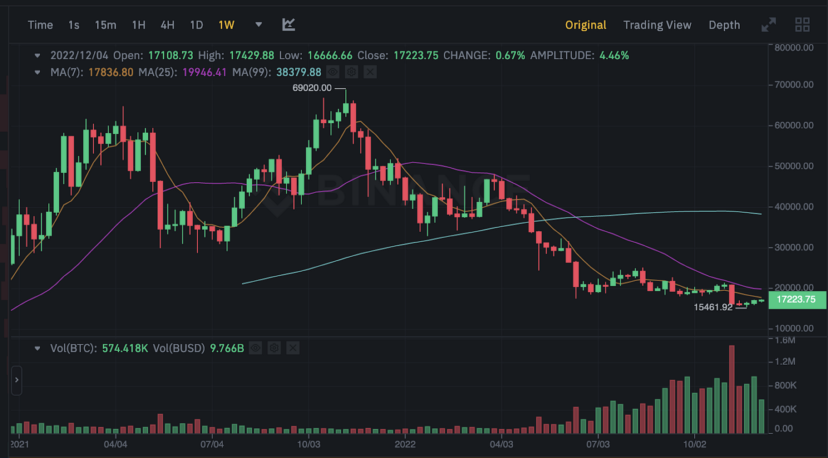
上图 Binance 的 BTC/BUSD 交易量说明,在 2022 年的两次信贷危机中,交易量激增。正是在这个时间跨度内,所有这些曾经的传奇公司都咬牙切齿。

总而言之,随着 CELs 从有偿付能力过渡到无偿付能力,再到破产,这些其他生态系统的参与者也受到影响:

1. 从 CEL 借入短期资金的交易公司,看到他们的贷款被收回。

2. 比特币挖矿公司,他们通常用资产负债表上的比特币、未来要挖的比特币和/或比特币矿机作为抵押。

两家最无知的加密货币交易公司 Alameda 和 3AC 都是因为廉价借贷而发展到如此庞大的规模。就 Alameda 而言,礼貌的说法是,他们从 FTX 客户那里“借用”了它,尽管其他人可能会称之为盗窃。在 3AC 的案例中,他们欺骗了易受骗和绝望的 CELs,让他们以很少甚至没有抵押品的情况下借钱给他们。在这两个案例中,银行都认为这些公司和其他交易公司从事的是超级聪明的套利交易,使这些公司不受市场变化的影响。然而,我们现在知道,这些公司只是一群堕落的、只做多头的赌徒。他们与大众的唯一区别是,他们有数十亿美元可以玩。

当这两家公司陷入困境时,我们看到了什么?我们看到流动性最强的加密货币比特币(DeFi中的 WBTC)和以太坊(DeFi 中的 WETH)大量转移到中心化和去中心化的交易所,然后出售。这发生在大的下跌期间。当一切尘埃落定,两家公司都无法将资产负债表上的资产部分提升到高于负债部分的水平时,它们剩下的资产几乎完全是流动性最差的垃圾币。通过查看中心化借贷机构和交易公司的破产申请,我们并不完全清楚还剩下哪些加密资产。文件把所有东西都堆在一起了。因此,我无法证明这些破产机构持有的所有比特币都在多次崩盘中被抛售,但看起来他们确实在破产前尽了最大努力清算流动性最强的加密抵押品。

CELs 和所有大型交易公司已经卖出了大部分比特币。现在剩下的只有流动性差的垃圾币、加密公司的私人股权和锁定的预售 Token 。破产法庭最终如何处理这些资产与加密熊市的发展无关。让我感到欣慰的是,这些实体几乎没有多余的比特币可以出售。接下来,让我们看看比特币矿工。

比特币矿企

电力是以法币定价和销售的,它是任何比特币挖矿业务的关键投入。因此,如果一个挖矿公司想扩大规模,他们要么需要借入法币,要么在资产负债表上出售比特币以换取法币,以便支付电费。大多数矿工希望不惜一切代价避免出售比特币,因此以资产负债表上的比特币、尚未生产的比特币或比特币挖矿机为抵押,进行法币贷款。

随着比特币价格的上涨,贷款人感到有恃无恐,向挖矿公司贷出越来越多的法币。矿工们有利可图,而且有硬资产可以贷款。然而,贷款的持续质量与比特币的价格水平直接相关。如果比特币价格迅速下跌,那么在挖矿公司能够赚取足够的收入来偿还贷款之前,贷款将突破最低保证金水平。而如果发生这种情况,贷款人将介入并清算矿工的抵押品(如我在上一节所述)。

据我们所知,发生这种情况是因为资产价格的大规模下滑,特别是在加密货币熊市中,与能源价格上涨一起挤压了整个行业的矿工。Iris Energy 正面临着债权人对 1.03 亿美元的设备贷款的违约索赔。9月,Compute North 是第一个破产保护的主要参与者,包括 Argo Blockchain(ARBK)在内的其他大公司似乎也在偿付能力的边缘徘徊。

但是,让我们看看一些图表,看看这些加密货币信贷紧缩的浪潮是如何影响矿工的,以及他们做了什么反应。

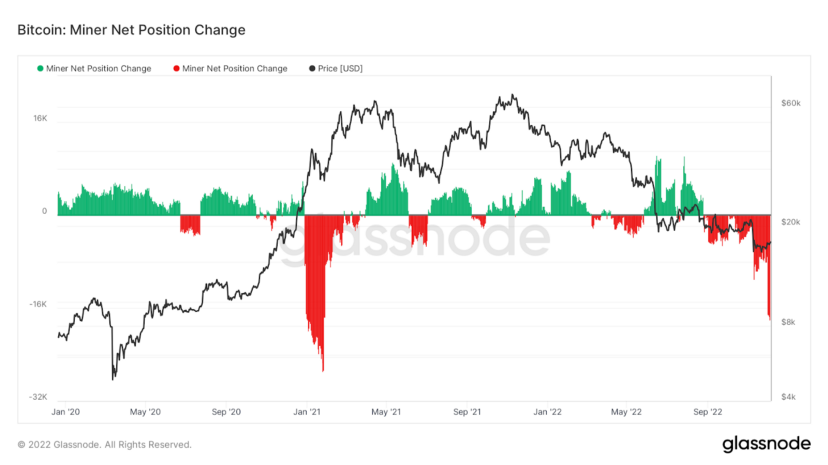
Glassnode 发布了一个很好的图表,显示了矿工持有的比特币 30 天的净变化。

我们可以看到,自从夏天第一次信贷紧缩以来,矿工们一直在净卖出大量的比特币。他们必须这样做,以试图保持他们的大笔法币债务负担。而如果他们没有债务,他们仍然需要支付电费,由于比特币的价格如此之低,他们必须出售更多的比特币来维持设施的运作。

虽然我们不知道,也永远不会知道是否已经达到了净卖出的最大数量,但至少我们可以看到,在这种情况下,挖矿公司的行为是我们所期望的。

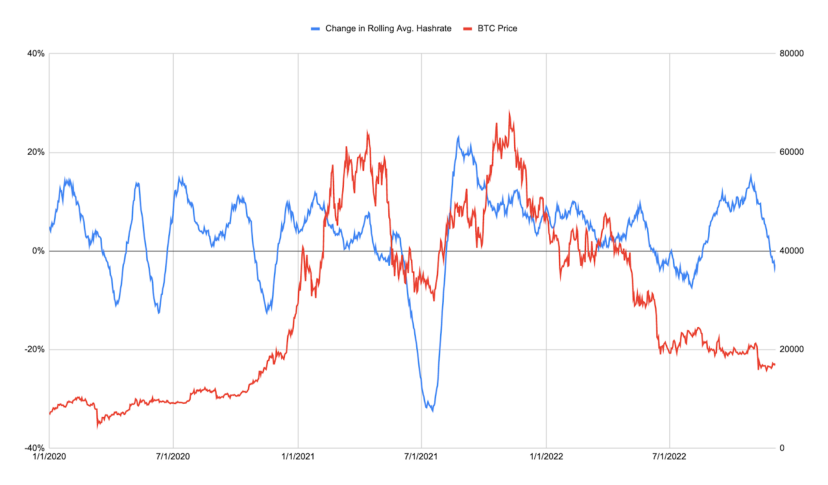
一些矿工没有成功,或者他们不得不缩减他们的业务。这在算力的变化中是很明显的。我拿算力首先计算了一个滚动的 30 天平均值。然后,我把这个滚动的平均值和 30 天的变化看了一下。我这样做是因为算力是相当不稳定的,它需要一些平滑。

一般来说,算力随着时间的推移呈上升趋势。但是,也有一些时期,30 天的增长是负的。夏天的崩溃之后,算力就下降了,然后最近由于 FTX/Alameda 的影响而暴跌。这再次证实了我们的理论,即当没有更多的信贷可用于资助他们的电费时,矿工会缩小业务规模。

我们还知道,一些高成本的矿工不得不停止运营,因为他们拖欠贷款。任何将矿机作为抵押品的贷款人都可能发现很难利用它们,因为他们本来就不是经营数据中心的企业。而由于他们无法使用这些机器,贷款人就必须在二级市场上出售这些机器,而这个过程需要时间。这也是导致算力在一段时间内下降的原因。

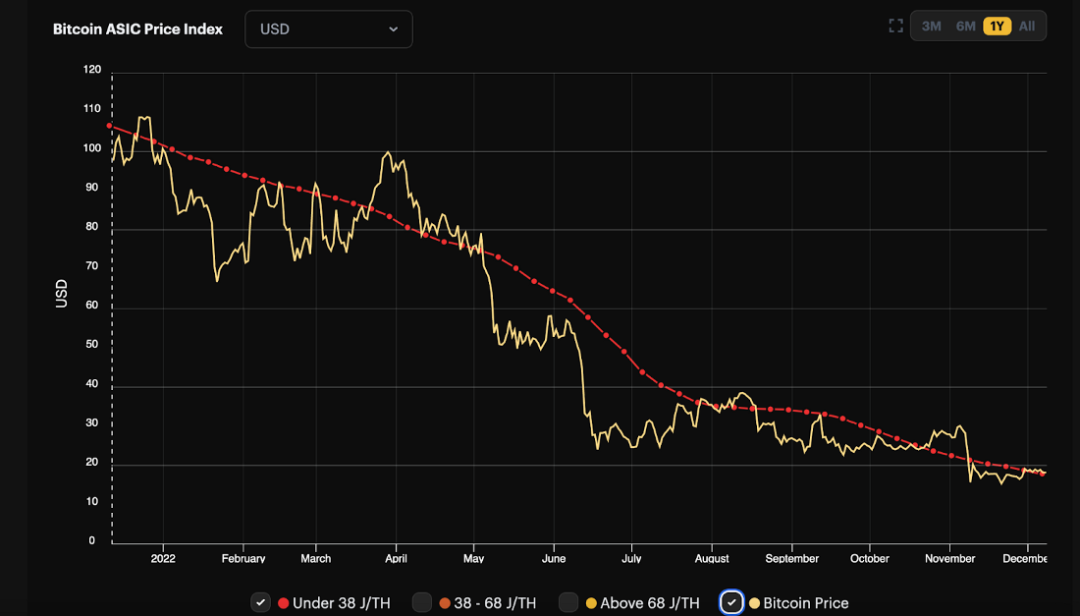
这是比特大陆 S19 或其他类似矿机的价格图表,效率低于 38 焦耳(J) /太哈希(TH)。正如我们所看到的,S19 的抵押品价值随着比特币的价格一起暴跌。想象一下,你用这些矿机作为抵押借出美元。你借给的矿工试图出售比特币,以提供更多法币来偿还你的贷款,但最终无法这样做,因为边际利润率下降了。矿工们随后拖欠贷款,并交出了他们的矿机作为偿还,这些机器现在的价值几乎比贷款时低了 80%。我们可以猜测,最狂热的贷款发放点是在市场顶部附近。无知放款人总是买顶卖底,每次都是!

既然 CELs 拥有大量无法轻易出售和运营的挖矿设备,他们可以尝试出售这些设备并收回一些资金,但这将是个位数的,因为新矿机的交易价格比一年前低了 80%。他们无法经营矿场,因为他们缺乏一个有廉价电力的数据中心。这就是算力消失的原因,因为无法重新启动矿机。

展望未来,如果我们认为大部分矿业贷款已经消失,并且没有新的资本可以借给矿工,那么我们可以预计矿工将出售他们获得的大部分)区块奖励。

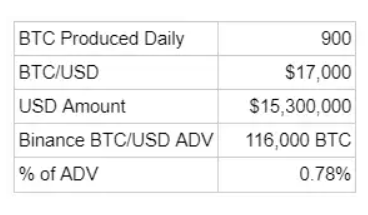
如上表所示,如果矿工将他们每天生产的比特币全部卖出,几乎不会对市场产生任何影响。因此,我们可以忽略这种持续的销售压力,因为它很容易被市场吸收。

我相信,CEL 和矿工强制出售比特币的情况已经结束。如果你必须卖出,你已经这样做了。如果你对法币有迫切的需求,没有理由会持有,以保持持续发展。鉴于几乎每一个主要的 CEL 都已经停止提款或破产,没有更多的矿工贷款或抵押品可供清算。

小规模投机者

这些赌客都是普通的交易者。虽然这些个人和公司中的许多人肯定会崩溃,但预计这些实体的失败不会在整个生态系统中产生大规模的负面影响。话虽如此,他们的行为仍然可以帮助我们猜测底部在哪里。

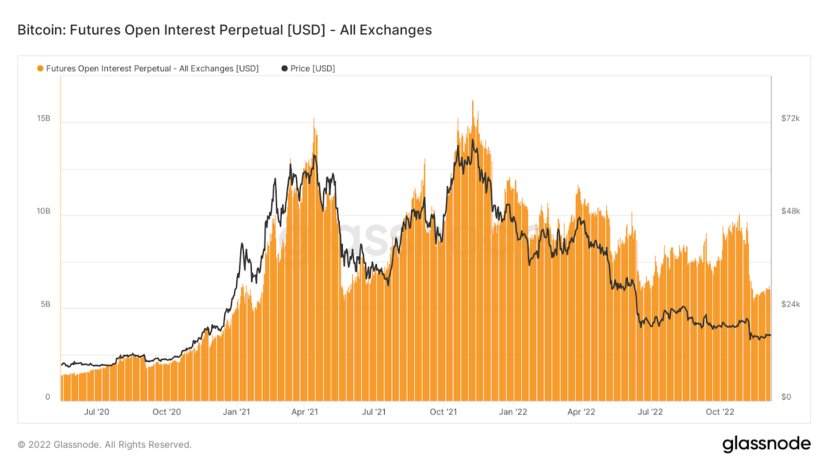
Bitcoin/USD 永续合约(由 BitMEX 发明)是所有加密工具中交易量最大的。未平仓的多头合约和空头合约的数量称为未平仓合约(OI),告诉我们市场的投机程度有多高。投机程度越高,使用的杠杆就越多。正如我们所知,当价格快速变化时,会导致大量的平仓。在这种情况下,OI 的历史高点与比特币的历史高点同时出现。随着市场下跌,保证金多头被平仓或平仓,这也导致 OI 下降。

看看所有主要的中心化加密货币衍生品交易所的 OI 总和,我们可以看到,OI 的局部低点也与 11 月 14 日星期一比特币的 16000 美元以下的针相吻合。现在,OI 回到了 2021 年初以来的水平。

OI 减少的时间和幅度让我相信,大多数过度杠杆化的多头头寸已经被扑灭了。剩下的是使用衍生品作为对冲的交易者,以及那些使用非常低的杠杆。这给了我们一个走高的基石。

当我们进入熊市的横盘、非波动部分时,OI 可能进一步下降吗?当然可以。但是,OI 的变化速度将放缓,这意味着以大量清算为特征的混乱交易期(尤其是在多头方面)不可能发生。

重新进场的时机

我所不知道的

我不知道 15900 美元是不是这个周期的底部。但是,我确信由于信贷紧缩所带来的被迫抛售停止了。

我不知道美联储何时或是否会再次开始印钞。然而,我认为,由于美联储收紧货币政策,美国国债市场将在 2023 年的某个时候出现功能失调。到那时,我预计美联储将再度放水,然后嘣嘣嘣,比特币和所有其他风险资产将飙升。

我所知道的

一切都是周期性的。下降的东西,会再次上升。

我喜欢通过投资期限短于 12 个月的美国国库券,赚取接近 5% 的收益。因此,在等待加密货币牛市回归时,我希望能赚取收益。

该做什么?

我理想的加密资产必须跑赢比特币,在较小程度上跑赢以太坊。这些是加密货币的储备资产。如果它们在上涨,我的资产应该至少上涨相同的数量,这被称为加密 beta。该资产必须产生收益,我可以作为 Token 持有者申领。这个收益率肯定比我购买 6 个月或 12 个月国库券所能获得的 5% 要高得多。

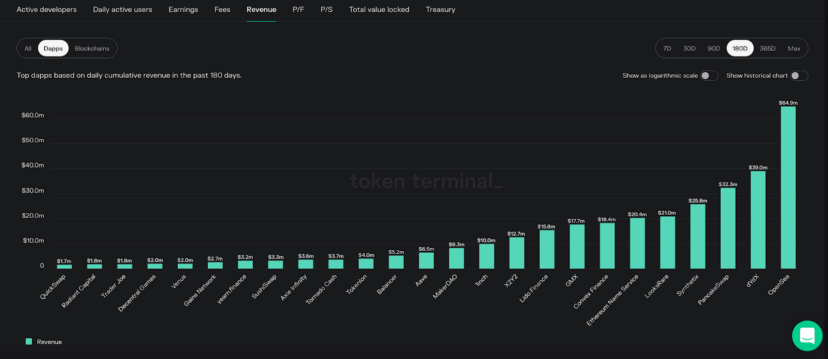
我的投资组合中有一些超级强大的资产,比如 GMX 和 LOOKS。在这篇文章中,我不会解释为什么我会在未来几个月的横盘熊市中机会主义地卖掉我的美国国债,并购买这些国债。但是,如果你想开始寻找正确的资产,在等待牛市回归的同时,既能参与上涨,又能赚取收入,那就打开一个像Token Terminal 这样的网站,看看哪些协议能产生实际收入。然后由您来研究哪些协议具有吸引人的通证经济学。有些人可能会赚取很多收入,但对于 Token 持有者来说,很难将他们的收入份额提取到自己的钱包中。一些协议直接向 Token 持有者持续支付大部分收入。

其中一些项目最好的部分是,DeFi 在 2022 年加密信贷危机的两次下行浪潮中遭到了重创。投资者把好的项目和坏的项目一起扔掉,因为他们急于筹集法定资金来偿还贷款。因此,许多此类项目的价格与费用之比(P/F)确实被砸了。

如果我可以从国债中获得 5% 的收益,那么当我购买这些代币时,我至少应该获得 4 倍的收益,即 20%。20% 的年收益率意味着我应该只投资 P/F 比为 5 倍或更低的项目。每个人都有不同的期望率,但这是我的。

我可以购买比特币或以太坊,但这两种加密货币都不能给我带来足够的收益。如果我没有获得足够的收益,我希望当市场转向时,以法定价格计算的价格将大幅上涨。虽然我相信这是会发生的,但如果有便宜的协议,我可以获得比特币和以太币的回报,加上实际使用服务的收益,那就太高兴了!

在你认为是底部的时候投资肯定是有风险的。勇敢正直的勇士啊,不要害怕,因为战利品必归忠信的人。

Trending Cryptos

Related Reads

GPT-5.6 Countdown: Abandon the Illusion of a Single API, Computational Iteration Can't Outpace a Single Page of Compliance

In mid-June, three seemingly independent industry events—the compliance-driven throttling of Fable 5, the open-sourcing of GLM-5.2, and the leaked release timeline for GPT-5.6—are pushing the global AI industry toward a watershed moment. These shifts signal a fundamental restructuring of the industry's underlying logic. First, **"usability" has substantially overtaken "advanced capabilities"** as the primary weight, pushing the global large language model (LLM) supply chain into a "dual-track" phase of controlled closed-source and local open-source coexistence. Second, **the competitive moats of closed-source giants are shifting**. Their technical focus is moving from "language intelligence" toward "spatial intelligence (world models)"—a domain heavily reliant on computing power. Third, faced with常态化 transnational compliance risks, **a "model-agnostic" decoupled design has become a survival necessity for application-layer developers to maintain business continuity.** The article details how Anthropic's Fable 5, despite its advanced engineering feats, was restricted for non-U.S. citizens within 72 hours of launch, highlighting how geopolitical compliance can instantly limit even the most advanced models. In response, the open-source camp, exemplified by Zhipu AI's MIT-licensed GLM-5.2, is gaining market share by offering stable performance improvements and significant cost advantages (up to 70% savings for enterprises), while achieving full adaptation with domestic semiconductor platforms. Meanwhile, closed-source leaders like OpenAI are pivoting. The anticipated GPT-5.6 reportedly shifts focus from language to spatial intelligence and world models, aiming to rebuild a generational gap in areas like 3D understanding, simulation, and industrial design that demand immense compute. The core conclusion is that the LLM supply chain's logic has changed. Enterprises must now evaluate infrastructure based on a composite of technical performance and policy compliance. For developers, complete reliance on a single closed-source API poses unacceptable risk. Implementing a truly model-agnostic architecture—enabling swift switches to compliant, locally deployable open-source alternatives—is no longer just good practice but a fundamental baseline for business continuity.

marsbit1h ago

GPT-5.6 Countdown: Abandon the Illusion of a Single API, Computational Iteration Can't Outpace a Single Page of Compliance

marsbit1h ago

Is the 'Token Subsidy War' Among AI Giants Almost Over?

The article discusses the ongoing "token subsidy war" among AI giants like OpenAI and Anthropic, questioning whether it's nearing its end. It reveals that current AI subscription prices are heavily subsidized, with some plans offering tokens at up to 70 times the actual cost to attract and retain heavy users, especially developers and enterprises. This strategy mirrors past internet-era subsidy battles, but with a key difference: AI tokens lack "lock-in" effects. Unlike ride-hailing or food delivery apps, users can easily switch between AI providers as APIs become standardized, making it difficult for companies to raise prices post-subsidy. The piece highlights a structural asymmetry in the competition. Giants like Google, with massive advertising revenue, can afford to subsidize tokens indefinitely, akin to using "tokens as a weapon." In contrast, venture-backed companies like OpenAI and Anthropic face pressure to become profitable, especially as they approach IPO. The article cites Google Ventures founder Bill Maris, who suggests Google could slash token prices by 80%, putting immense pressure on competitors. Two potential endgames are presented: the "internet service" model (subsidize, monopolize, then raise prices) and the "utility" model (tokens become a standardized, low-margin commodity like electricity). Given the low switching costs, the latter seems more likely. The competition may not have a single winner but could instead accelerate AI's evolution into a foundational, infrastructure-level technology, akin to a public utility. For now, users continue to benefit from heavily subsidized token costs.

marsbit1h ago

Is the 'Token Subsidy War' Among AI Giants Almost Over?

marsbit1h ago

Beyond the Stadium: The Profitable Games Surrounding the World Cup

"Beyond the Pitch: The Profit Game Around the World Cup" The FIFA World Cup transcends being a sporting spectacle, evolving into a massive global arena for speculation and profit-seeking. The 2026 tournament has amplified this dynamic, creating a multi-layered ecosystem of financial opportunism alongside the football. **Prediction markets** have surged into the mainstream. Platforms like Polymarket and Kalshi saw trading volumes for World Cup contracts soar, attracting new users with their financial trading model and high-profile, chain-based wealth stories that overshadow traditional sports betting in terms of growth and narrative. However, **traditional sportsbooks** remain the dominant force, leveraging established user habits, legal markets, and comprehensive product offerings to handle the vast majority of speculative wagers, with projections suggesting record-breaking betting volumes. Capital markets also react. **"Concept stocks"** in countries like South Korea and Japan experience volatile price swings based on team performance and anticipated fan spending on items like chicken, beer, and viewing parties, effectively becoming a stock market reflecting fan sentiment. The **ticket resale market** has become a sophisticated arena for arbitrage. Prices fluctuate wildly based on team draws and star power, with sellers sometimes listing tickets they don't yet own in a practice akin to short-selling, while FIFA's own "Right to Buy" tokens add another layer of speculative trading. **Collectibles and merchandise** offer another avenue. Panini sticker albums, with their inherent scarcity and nostalgic value, can become high-value collectibles. Limited-edition or locally themed jerseys command significant premiums on secondary markets, and even counterfeit vendors profit from fans' desire for affordable match-day identity. The **cryptocurrency** space has seen a frenzy of speculative, unauthorized World Cup-themed meme coins on chains like Solana. These tokens, often exploiting team names and player imagery, experience extreme pump-and-dump cycles, creating stories of massive gains for a few early entrants and steep losses for many others. Finally, an entire industry thrives on **providing information and tools** to other speculators. Developers create platforms like SeatSidekick to track ticket inventory and prices, while paid Telegram groups and subscriptions sell betting tips and predictions, monetizing the widespread desire for an informational edge. In essence, the World Cup has become a compressed, global laboratory for speculation. While the games determine champions on the field, a parallel, complex network of financial transactions—spanning prediction contracts, bets, stocks, tickets, collectibles, crypto, and information services—settles its own scores in the global market.

marsbit2h ago

Beyond the Stadium: The Profitable Games Surrounding the World Cup

marsbit2h ago

Trading

Spot
Futures

Hot Articles

What is $BITCOIN

DIGITAL GOLD ($BITCOIN): A Comprehensive Analysis Introduction to DIGITAL GOLD ($BITCOIN) DIGITAL GOLD ($BITCOIN) is a blockchain-based project operating on the Solana network, which aims to combine the characteristics of traditional precious metals with the innovation of decentralized technologies. While it shares a name with Bitcoin, often referred to as “digital gold” due to its perception as a store of value, DIGITAL GOLD is a separate token designed to create a unique ecosystem within the Web3 landscape. Its goal is to position itself as a viable alternative digital asset, although specifics regarding its applications and functionalities are still developing. What is DIGITAL GOLD ($BITCOIN)? DIGITAL GOLD ($BITCOIN) is a cryptocurrency token explicitly designed for use on the Solana blockchain. In contrast to Bitcoin, which provides a widely recognized value storage role, this token appears to focus on broader applications and characteristics. Notable aspects include: Blockchain Infrastructure: The token is built on the Solana blockchain, known for its capacity to handle high-speed and low-cost transactions. Supply Dynamics: DIGITAL GOLD has a maximum supply capped at 100 quadrillion tokens (100P $BITCOIN), although details regarding its circulating supply are currently undisclosed. Utility: While precise functionalities are not explicitly outlined, there are indications that the token could be utilized for various applications, potentially involving decentralized applications (dApps) or asset tokenization strategies. Who is the Creator of DIGITAL GOLD ($BITCOIN)? At present, the identity of the creators and development team behind DIGITAL GOLD ($BITCOIN) remains unknown. This situation is typical among many innovative projects within the blockchain space, particularly those aligning with decentralized finance and meme coin phenomena. While such anonymity may foster a community-driven culture, it intensifies concerns about governance and accountability. Who are the Investors of DIGITAL GOLD ($BITCOIN)? The available information indicates that DIGITAL GOLD ($BITCOIN) does not have any known institutional backers or prominent venture capital investments. The project seems to operate on a peer-to-peer model focused on community support and adoption rather than traditional funding routes. Its activity and liquidity are primarily situated on decentralized exchanges (DEXs), such as PumpSwap, rather than established centralized trading platforms, further highlighting its grassroots approach. How DIGITAL GOLD ($BITCOIN) Works The operational mechanics of DIGITAL GOLD ($BITCOIN) can be elaborated on based on its blockchain design and network attributes: Consensus Mechanism: By leveraging Solana’s unique proof-of-history (PoH) combined with a proof-of-stake (PoS) model, the project ensures efficient transaction validation contributing to the network's high performance. Tokenomics: While specific deflationary mechanisms have not been extensively detailed, the vast maximum token supply implies that it may cater to microtransactions or niche use cases that are still to be defined. Interoperability: There exists the potential for integration with Solana’s broader ecosystem, including various decentralized finance (DeFi) platforms. However, the details regarding specific integrations remain unspecified. Timeline of Key Events Here is a timeline that highlights significant milestones concerning DIGITAL GOLD ($BITCOIN): 2023: The initial deployment of the token occurs on the Solana blockchain, marked by its contract address. 2024: DIGITAL GOLD gains visibility as it becomes available for trading on decentralized exchanges like PumpSwap, allowing users to trade it against SOL. 2025: The project witnesses sporadic trading activity and potential interest in community-led engagements, although no noteworthy partnerships or technical advancements have been documented as of yet. Critical Analysis Strengths Scalability: The underlying Solana infrastructure supports high transaction volumes, which could enhance the utility of $BITCOIN in various transaction scenarios. Accessibility: The potential low trading price per token could attract retail investors, facilitating wider participation due to fractional ownership opportunities. Risks Lack of Transparency: The absence of publicly known backers, developers, or an audit process may yield skepticism regarding the project's sustainability and trustworthiness. Market Volatility: The trading activity is heavily reliant on speculative behavior, which can result in significant price volatility and uncertainty for investors. Conclusion DIGITAL GOLD ($BITCOIN) emerges as an intriguing yet ambiguous project within the rapidly evolving Solana ecosystem. While it attempts to leverage the “digital gold” narrative, its departure from Bitcoin's established role as a store of value underscores the need for a clearer differentiation of its intended utility and governance structure. Future acceptance and adoption will likely depend on addressing the current opacity and defining its operational and economic strategies more explicitly. Note: This report encompasses synthesised information available as of October 2023, and developments may have transpired beyond the research period.

411 Total ViewsPublished 2025.05.13Updated 2025.05.13

What is $BITCOIN

Discussions

Welcome to the HTX Community. Here, you can stay informed about the latest platform developments and gain access to professional market insights. Users' opinions on the price of BTC (BTC) are presented below.

活动图片