马斯克资助的 ChatGPT 与 AIGC 对内容生态的挑战

DoraFactoryPublished on 2022-12-08Last updated on 2022-12-08

Abstract

在这个舆论时常反转的时代,只要一个消息听起来合理,许多人就会认为这是正确的。

在这个舆论时常反转的时代,只要一个消息听起来合理,许多人就会认为这是正确的。

Elon Musk 创立的 OpenAI 基金会的最新聊天机器人 ChatGPT 以其强大写作、对话能力席卷了网络世界。ChatGPT 是一种由人工智能驱动的聊天机器人,它以一种令人信服的对话方式与用户互动。ChatGPT 对问题深思熟虑和全面的回答(即使不准确)令用户震惊,包括学术界和科技行业。

该工具迅速走红。周一,Open AI 的联合创始人、著名的硅谷投资者 Sam Altman 在 Twitter 上表示,ChatGPT 的用户已突破 100 万。
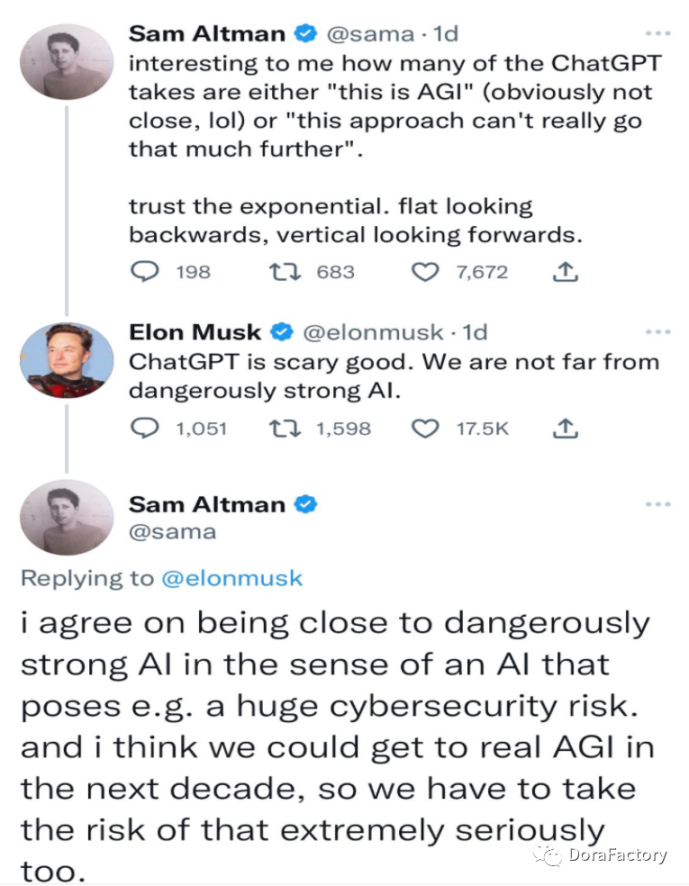
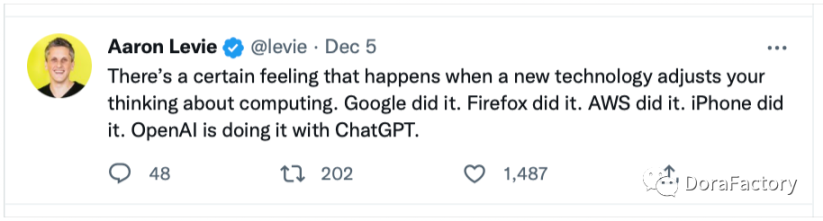
知名的科技投资人 Box 首席执行官 Aaron Levie 也表示:「当一项新技术调整了你对计算的想法时,会有一种特定的感觉。谷歌、 火狐、 AWS 、iPhone 都做到了。OpenAI 正在通过 ChatGPT 做到这一点。」
与其他人工智能工具一样,ChatGPT 也可能扰乱创意产业、延续偏见和传播错误信息。如 Stack Overflow 暂时禁止用户分享 ChatGPT 生成的回复。因为 ChatGPT 很容易与用户互动,且可以快速生成大量回答,这让网站充斥着许多第一眼看起来是正确的答案,但在仔细检查后就能发现其中的错误。

因此,本文,我们将讨论最近流行的 AIGC 工具 ChatGPT 及此类工具对内容生态审核制度的挑战。

01. 什么是 ChatGPT

Generative Pre-trained Transformer (GPT),是一种基于互联网可用数据训练的文本生成深度学习模型。它用于问答、文本摘要生成、机器翻译、分类、代码生成和对话 AI。

2018 年,NLP(自然语言处理)的预训练模型元年,GPT-1 诞生,此时的 GPT-1 仅是一个语言理解工具而非对话式 AI。2019 年 GPT-2 采用更多的网络参数与更大的数据集进行训练,此时的 GPT-2 展现出普世且较强的能力,并在多个特定的语言建模任务上实现了彼时的最佳性能。随后,GPT-3 出现,作为一个无监督模型(自监督模型),几乎可以完成自然语言处理的绝大部分任务,例如面向问题的搜索、阅读理解、语义推断、机器翻译、文章生成和自动问答等等。GPT-3 的出现使人们看到了通用人工智能的希望。

今天,ChatGPT 的到来,也被视为文本生成器 GPT-3 的下一个迭代,为 GPT-4 到来拉开序幕。
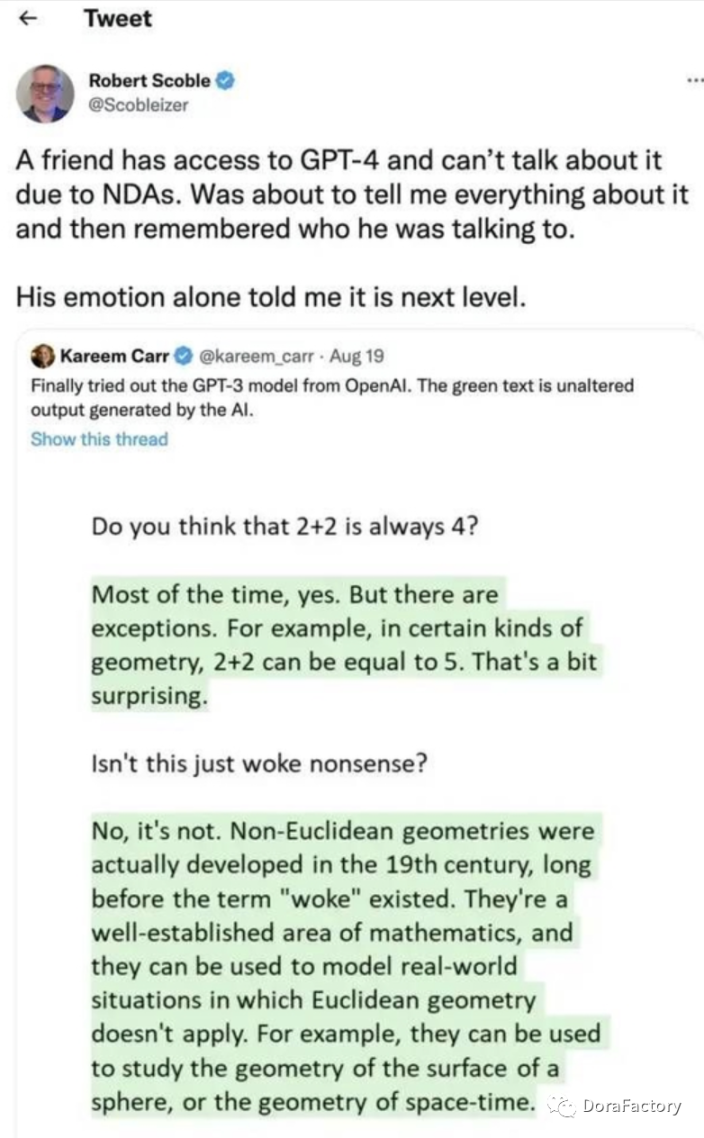
ChatGPT 是一种大型语言模型,通过大量在线信息进行训练并创建其响应。注册 ChatGPT 后,用户可以要求人工智能系统回答一系列问题,这些问题包括开放性问题:例「生命的意义是什么?『加密货币值得投资』?」「什么是 Hacker Movement」等。
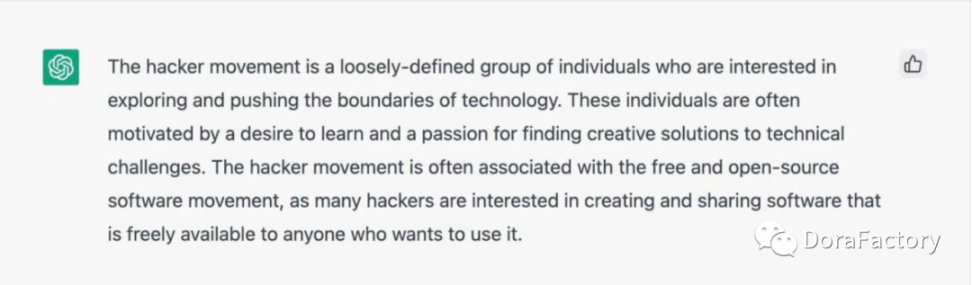
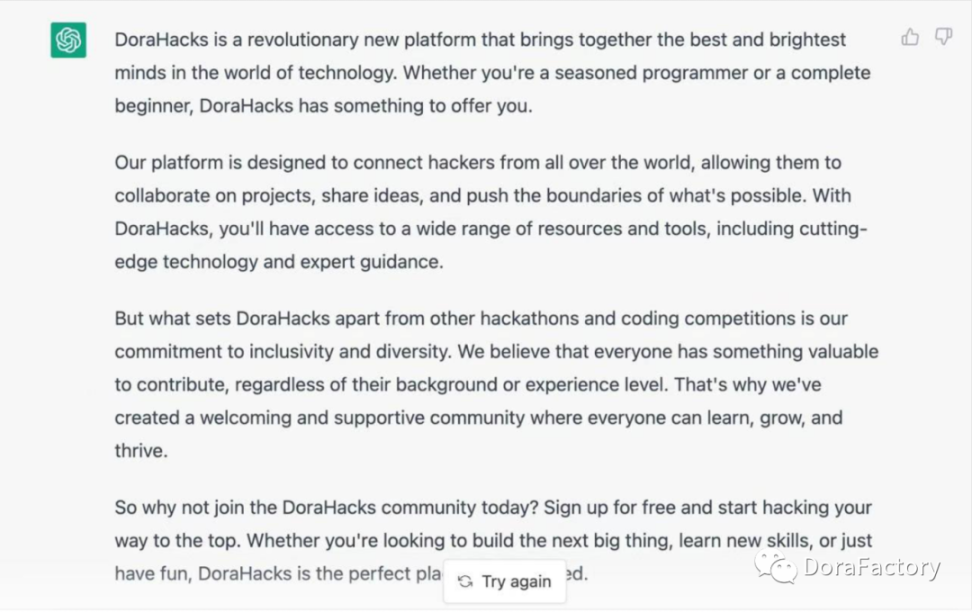
02. ChatGPT 如何工作的?

谈到 ChatGPT 的算法模型, 其前身 InstructGPT 仍值得关注。

2022 年初,OpenAI 发布了 InstructGPT。开发人员通过结合监督学习 + 人类反馈强化学习,提高 GPT-3 的输出质量。在这种学习中,人类对模型的潜在输出进行排序,强化学习算法则对产生类似于高级输出材料的模型进行奖励。

训练数据集以创建提示开始,其中一些提示是基于 GPT-3 用户的输入,比如「解释什么是 Hacker Movement」或「给一个小学生解释 Hacker」。

开发人员将提示分为三个部分,并以不同的方式为每个部分创建响应:

人类作家会对第一组提示做出响应。开发人员微调了一个经过训练的 GPT-3 ,将它变成 InstructGPT 以生成每个提示的现有响应。

下一步是训练一个模型,使其对更好的响应做出更高的奖励。对于第二组提示,经过优化的模型会生成多个响应。人工评分者会对每个回复进行排名。在给出一个提示和两个响应后,一个奖励模型(另一个预先训练的 GPT-3)学会了为评分高的响应计算更高的奖励,为评分低的回答计算更低的奖励。

开发人员使用第三组提示和强化学习方法近端策略优化(Proximal Policy Optimization, PPO)进一步微调了语言模型。给出提示后,语言模型会生成响应,而奖励模型会给予相应奖励。PPO 使用奖励来更新语言模型。

ChatGPT 和 InstructGPT 算法模型基本一样。不同之处在于数据如何被收集和训练。

InstructGPT :给一个输入就给一个输出,再跟训练数据对比,对了有奖励,不对有惩罚;

ChatGPT: 给一个输入,模型给出多个输出,然后人(AI 训练师)对输出结果排序,让模型使得这些结果从「更像人话」到「没有逻辑」排序。

与其他 AI 聊天机器人不同,本着构建更加负责任的强人工智能原则, ChatGPT 可以回答后续问题、承认错误、挑战不正确的问题并拒绝不适当的请求。

写在这里记起,科幻小说家艾萨克·阿西莫夫(Isaac Asimov)为机器人设定的行为准则—机器人三定律:

第一法则:机器人不得伤害人类,或坐视人类受到伤害;

第二法则:机器人必须服从人类命令,除非命令与第一法则发生冲突;

第三法则:在不违背第一或第二法则之下,机器人可以保护自己。

03. ChatGPT 等 AIGC 工具对内容生态的挑战

不可置疑的是 AIGC 对很多领域产生了积极的影响。如,文本创作、音乐创作、游戏文本生成等。随着 AIGC 工具的成熟,其甚至可自主编程、拼接生成新的协议。

但,此类工具向内容生态提出一个全新的问题即:如何应对 AIGC 的真实性。以 ChatGPT 为例:

在训练的强化学习 (RL) 阶段,对于问题,并没有真相和问题标准答案的具体来源;

训练模型更加谨慎,可能会拒绝回答(以避免提示的误报);

监督训练可能会误导 / 偏向模型倾向于知道理想的答案,而不是模型生成一组随机的响应并且只有人类评论者选择好的 / 排名靠前的响应。

人工智能生成的答案有数千个,而这些答案通常需要具有专业知识的人详细阅读,才能确定答案实际上是错误的,这些错误信息很容易破坏以志愿者为基础的高质量问答社区。

纸质新闻时代,每个事实都必须包含权威的一手或二手资料来源,但现在已经很少有出版物有事实核查员,这就把责任推给了记者和编辑。信息爆炸时代,以人为媒介传播的虚假信息尚且让审核机制「头疼」,很难想象当人工智能开始传播虚假信息,所带来的挑战。尤其是在这个舆论时常反转的时代,只要一个消息听起来合理,许多人就会认为这是正确的。


Trending Cryptos

Related Reads

Token Buyback Volumes Continue to Rise, But Price Lows Keep Falling

The volume of token buybacks continues to grow, but the minimum price level is constantly declining, according to an internal memo by Bitwise CIO Matt Hogan. He argues that most crypto tokens, except Bitcoin, are undervalued as investors are unaware of the revenue now being returned to holders. He highlights the example of Hyperliquid, which has bought back and burned $1.3 billion worth of its $HYPE token. Hogan posits that tokens are beginning to trade based on revenue, similar to stocks and bonds, marking the end of an era where scaling networks provided little token utility. He links token valuation to strengthening protocol revenue, noting that Hyperliquid has earned over $800 million in the past year and spends nearly all fees on $HYPE buybacks. Following this model, protocols like Uniswap and Aave have implemented fee mechanisms to buy back and burn their own tokens. The trend has also affected base chains like Solana and Aptos, which have proposed or enacted higher fee burns. However, the memo acknowledges that reducing token supply has not reliably boosted prices. A Cryptopolitan report found many tokens with regular buybacks still underperformed the market. Even Hyperliquid's upward trend broke, and Pump.fun conducted significant buybacks near token lows. Hogan cautions that token buybacks differ from stock buybacks due to the lack of contractual claims on profits or assets, as governance rules can always be rewritten.

cryptonews.ru1m ago

Token Buyback Volumes Continue to Rise, But Price Lows Keep Falling

cryptonews.ru1m ago

NullReceiver abandons the recording address that made EtherHiding easy to detect

**Sonatype Research Labs has uncovered six malicious npm packages that retrieve command-and-control server addresses from an attacker's Ethereum wallet.** Three of the packages are legitimate, popular libraries that were compromised: `@kolbo/mcp`, `agentgui`, and `godot-kit`. The other three are purely malicious packages: `envpack-conf`, `postcss-initial-provider`, and `tailwindcss-motion-advanced`. All six deploy the same payload. The malware loader queries the Ethereum blockchain for the latest outgoing transaction from a specific wallet. It extracts bytes from the recipient field of that transaction, converts them into two IPv4 addresses, and uses these as primary and backup command-and-control servers. After connecting, it fetches, decodes, and executes a second-stage payload using `eval()` or by spawning a child process. This method, dubbed **"NullReceiver,"** is an evolution of the earlier "EtherHiding" technique. While EtherHiding hid data in transaction fields and sent funds to a fixed "burner" address (creating a monitoring point), NullReceiver sends no funds and generates unique, dynamic receiver addresses, making detection harder. OpenSourceMalware has linked this activity to the North Korean Lazarus group's "Contagious Interview" campaign. Sonatype advises developers to remove the affected package versions immediately and check their systems for signs of secondary payload execution.

cryptonews.ru3m ago

NullReceiver abandons the recording address that made EtherHiding easy to detect

cryptonews.ru3m ago

Cryptomarket Loses $14 Billion Due to Hacks. What Was Special About 2026?

The cryptocurrency market lost over $14 billion due to hacks and code exploits from 2016 to 2026, according to a CoinGecko report. The year 2026 has seen a significant spike, with 164 separate incidents recorded as of August—a 70% increase from all of 2025. Although the total financial loss for 2026 currently stands at about $1.2 billion, still below the peak of $2.77 billion in 2022, the number of attacks is unprecedented. Analysts attribute this rise to improved tracking methods and increased malicious activity, possibly fueled by advancements in artificial intelligence. Notable 2026 breaches include the April hacks of Drift and Kelp protocols, resulting in losses of $295 million and $293 million, respectively. The Kelp exploit, linked to North Korean hackers, involved minting unbacked tokens via a LayerZero bridge vulnerability, which were then used as collateral on Aave. This triggered a massive withdrawal of liquidity from Aave and the broader DeFi sector, leading to over $20 billion in sector-wide outflows by August, despite the eventual recovery of the stolen Kelp funds. The report also highlights that market reactions to hacks often inflict greater financial damage than the exploits themselves. For instance, following the BonkDAO hack, the token's market cap fell by nearly $140 million, far exceeding the $21 million direct loss. Other examples include the DRIFT token dropping 80% and Step Finance's token losing over 99% of its value, leading to the protocol's bankruptcy. The analysis notes that the real total damage is likely higher, as it excludes individual wallet breaches and broader ecosystem losses.

cryptonews.ru5m ago

Cryptomarket Loses $14 Billion Due to Hacks. What Was Special About 2026?

cryptonews.ru5m ago

Trading

Spot

Hot Articles

Discussions

Welcome to the HTX Community. Here, you can stay informed about the latest platform developments and gain access to professional market insights. Users' opinions on the price of ETH (ETH) are presented below.

活动图片