Solana正经历艰难时刻,还会再次成功吗?

FPublished on 2022-12-01Last updated on 2022-12-01

Abstract

11 月对加密市场来说是艰难的一个月,市场不景气,代币和加密基金市值不断下跌,熊市的氛围全面蔓延。

11 月对加密市场来说是艰难的一个月,市场不景气,代币和加密基金市值不断下跌,熊市的氛围全面蔓延。

当把注意力再次集中到 FTX 和 Alameda 上,我们很明显能够感受到一些与之相关的社区和项目受到了严重打击。

本文我们将深入探究 Solana 生态目前遭遇的艰难时期,以及社区在哪些方面表现出了坚强韧性。

Solana 会再次成功吗?

FTX 和 Alameda Research 的倒闭对加密市场造成了严重破坏,借贷平台、交易所和基金等都出现不同程度的破产清算,加密货币总市值从 11 月 6 日的一万亿美元下跌到目前的 8600 亿美元 左右,跌幅达 14% 。

其中有些项目代币跌幅更大,例如本文要探讨的 Alameda Research 重仓代币之一 Solana。根据 CoinDesk 报告,Alameda 在 6 月 30 日持有大约 12 亿美元的 SOL 代币。
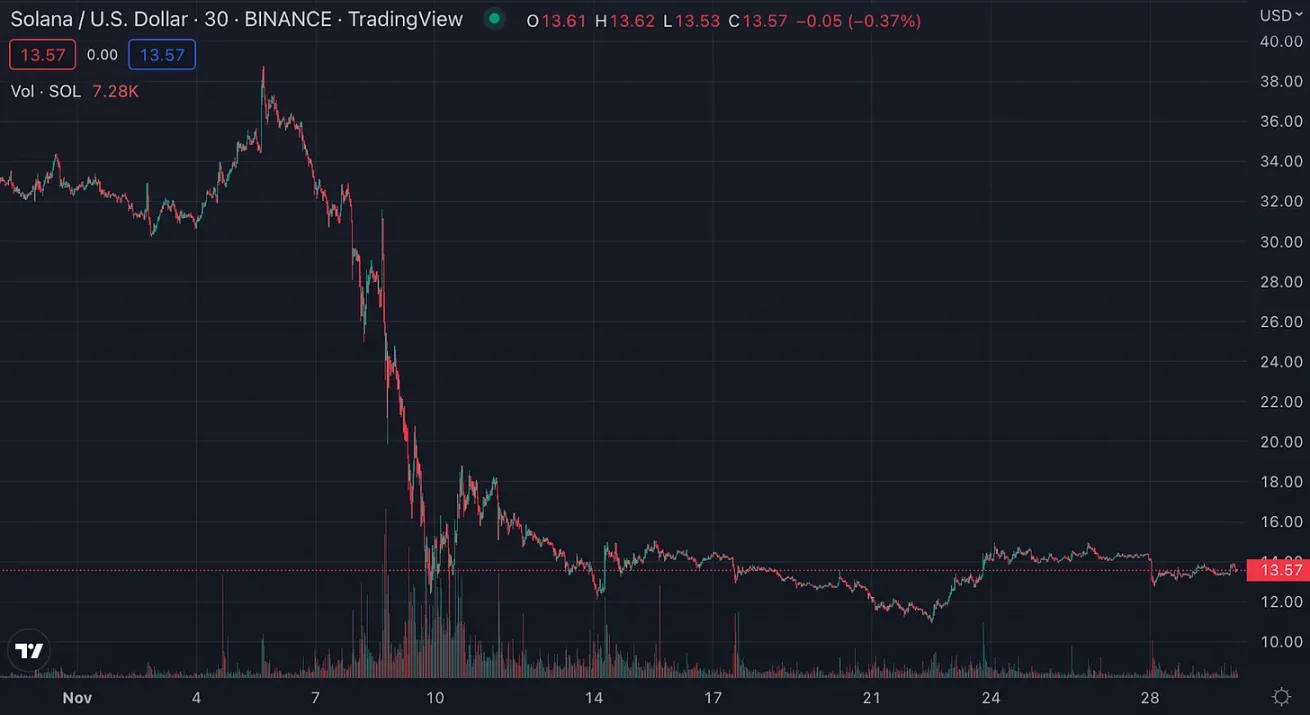
SOL/USDT 1M - Source: TradingView

目前无法确定最近的下跌在多大程度上是由 Alameda 本身或交易员的恐惧所推动的,但在 FTX 和 Alameda 内爆后的几周内,SOL 从约 35 美元暴跌至约 11 美元,跌幅达 68.5%。

在成为 2021 年牛市中表现最好的代币之一后,SOL 现在较历史高点已经下跌了 95%。这种规模的崩盘不仅会动摇其最热心支持者的信心,而且有可能对其 DeFi 生态系统和整个网络的安全构成重大风险。

这就引出了本文所探讨的重点:Solana 会再次成功吗?

首先让我们回顾一下崩盘的后果,并展望 Solana 的未来。

网络安全与稳定

L1 的原生代币在 72 小时内下跌 60%,这是一场巨大的压力测试。

这种规模的崩盘不仅会通过大规模清算给 DeFi 生态系统带来风险,也可能会使借贷协议背上坏账,同时会增加中断的可能性来带来稳定性和安全风险,并降低网络级攻击的成本。

安全

在 FTX 崩盘后的几个时期,Solana 出现了大量质押代币流失的情况。

自 11 月 6 日以来的九个时间段内(每个时间段通常为 2 到 3 天),净质押 5460 万个 SOL,质押的 SOL 总量从 4.112 亿到 3.566 亿,跌幅达 13.2%,约占 SOL 流通供应量的 15%。
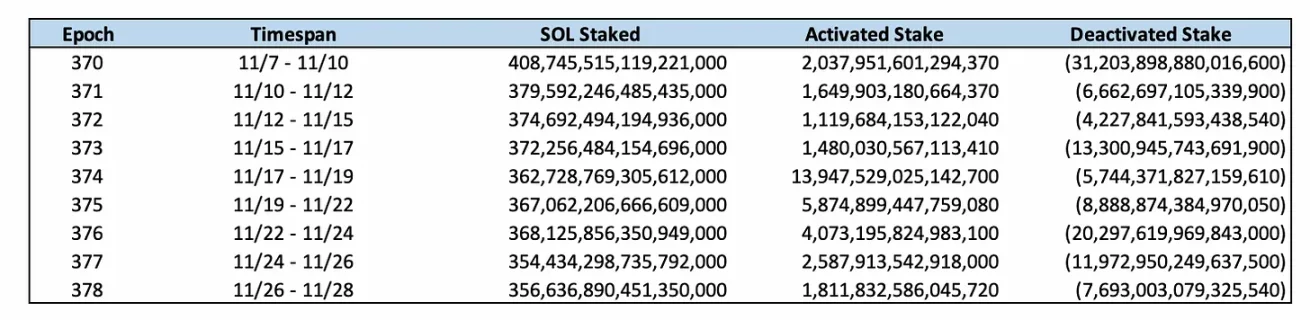
SOL Stake By Epoch - 来源:Solana Compass

其中在 11 月 7 日至 10 日危机最严重的 Epoch 370 期间,有高达 2910 万 SOL 解除质押。

显然保护网络安全的代币的美元价值出现了大幅下跌。考虑在 370 时期开始和 378 时期结束时的价格,保护网络的 SOL 价值从 147 亿美元下跌至 51 亿美元,暴跌 65.3% 。

如果不是 Solana 基金会决定在云服务提供商 Hertzner 改变政策后,推迟他们在 370 时期结束时取消质押 2850 万个 SOL 的计划,质押流出可能会更大。

尽管出现了这些资金流出,可能是由于未质押余额变为流动资产时会有大约 3 到 4 天的延迟,Solana 没有遇到任何安全问题或重大攻击。即使在这次质押流失之后,Solana 在 Staking Rewards 追踪的 PoS 网络质押价值中仍排名第四,质押率排名第 19 。

稳定

极端的市场条件会影响网络的安全性和稳定性。这是因为区块链在动荡时期经常会出现区块空间需求激增,由于用户和机器人试图疯狂地补充抵押品、执行清算并捕获市场混乱造成的其他套利行为,这会给验证者带来了更大的压力。

因难以处理区块空间需求激增,Solana 也经历了无数次性能下降和宕机。

自 2021 年 9 月以来,Solana 网络已发生 4 次宕机,总停机时间为 37 小时 11 分钟。

为了提高活跃度,Solana 社区一直致力于研究补救措施,其中包括权益加权服务质量 QoS 和在主网上线的 QUIC 等。费用市场和交易规模增加等其他改进计划可能将在未来几个月内推出。
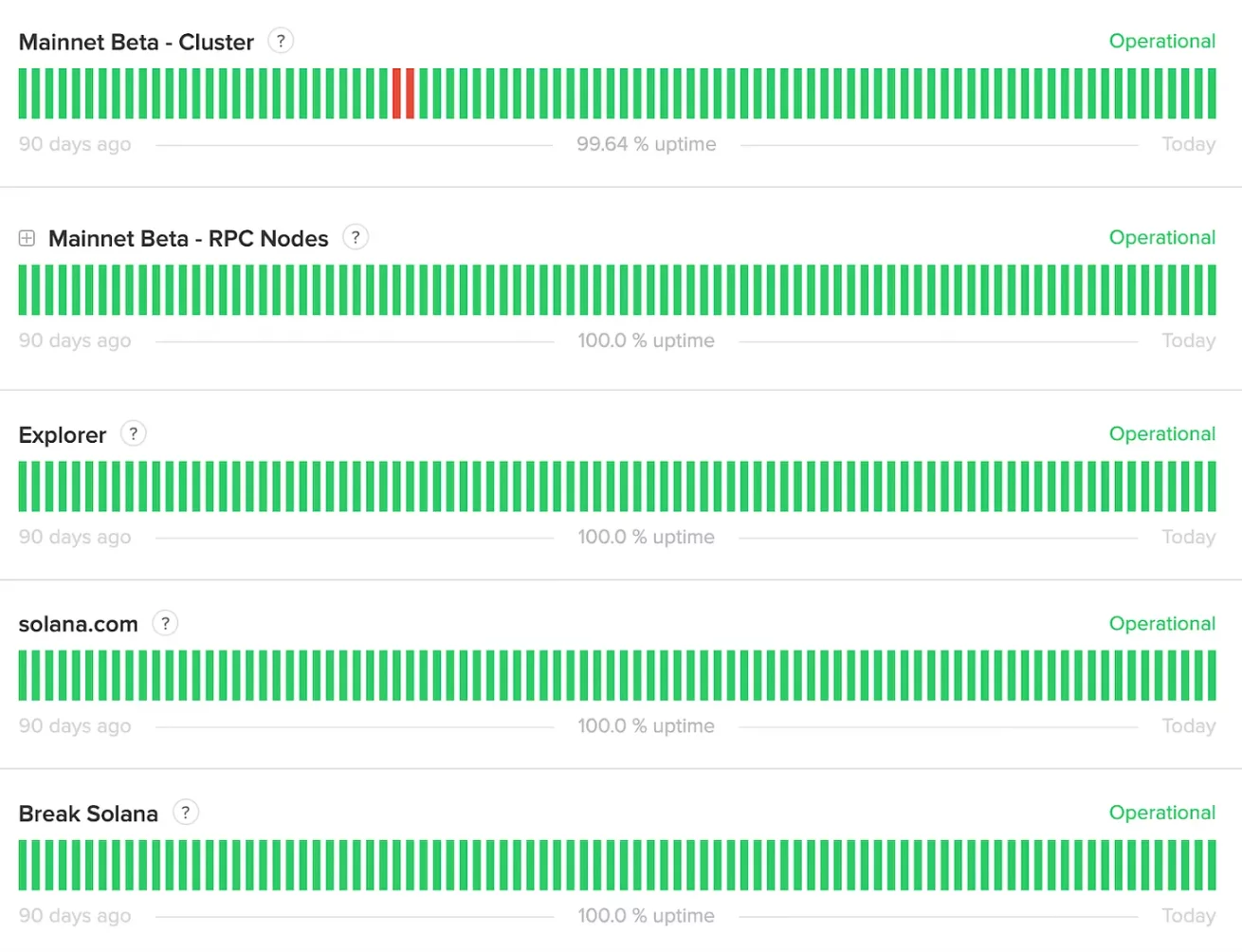
Solana 90-Day Uptime - Source: Solana Status

这些升级似乎正在产生影响,因为在整个危机期间,Solana 没有经历任何停机或性能下降。

无论如何,100% 的活跃度是对区块链应有的期望。但鉴于其历史和危机的严重程度,Solana 在此期间的表现值得关注,这是一个令人鼓舞的迹象,表明该网络正在变得更有弹性。

Solana DeFi

流动性紧缩

Solana 在 FTX 崩盘后出现了一次重大的流动性紧缩。
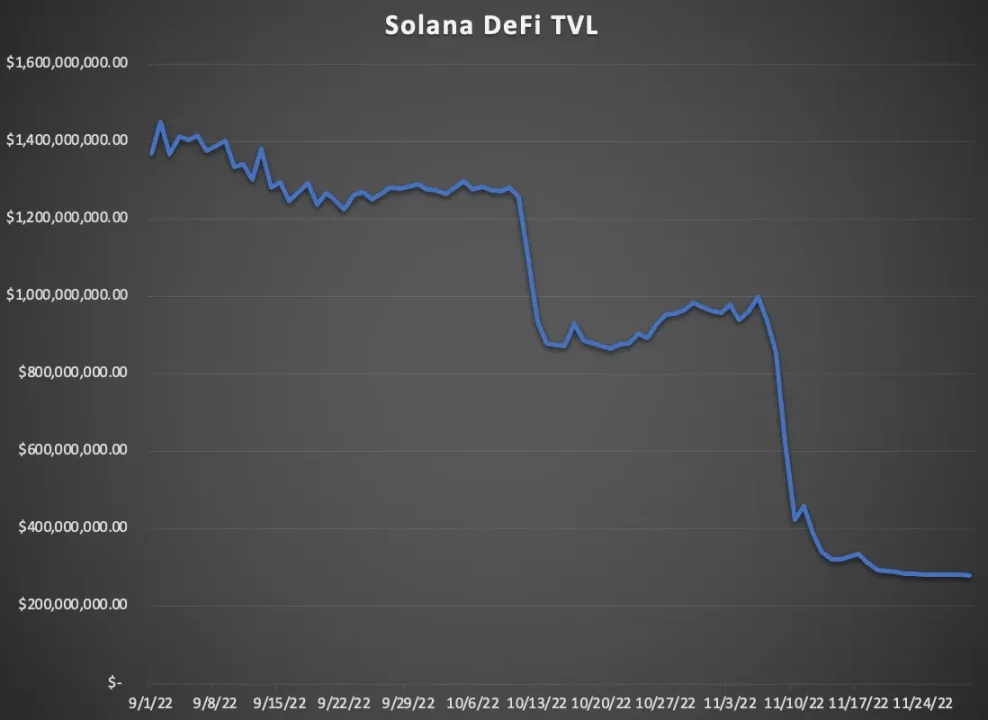
Solana DeFi TVL (USD) - Source: Artemis

该网络以美元计价的 DeFi TVL 从 11 月 6 日的 10 亿美元下降至 2.783 亿美元,跌幅达 72.1%。因为许多存入 DeFi 协议(如 SOL、ETH 和 BTC)的资产都是具有高波动性和相关性的,因此,TVL 下降并不一定表明用户正在将资金撤出 Solana DeFi。
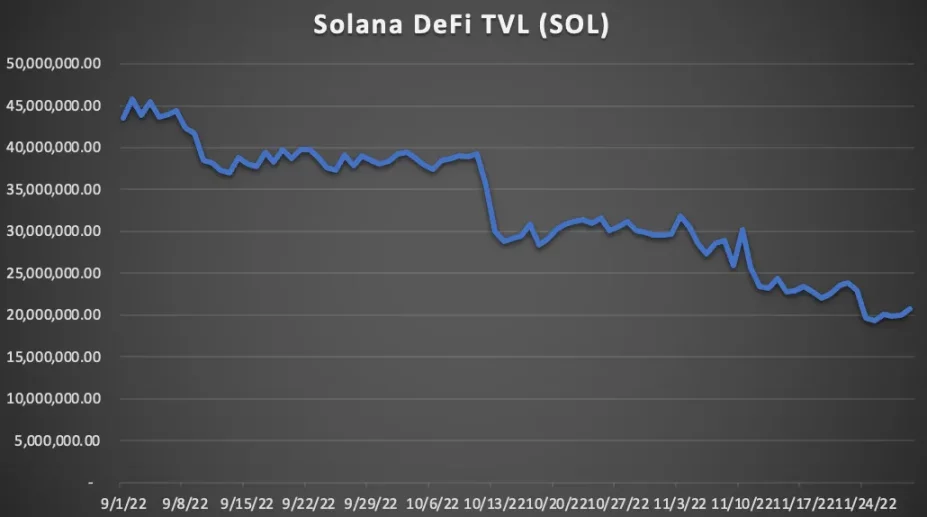
Solana DeFi TVL - Source: Artemis

然而以 SOL 计价的 TVL 则不同,自 11 月 6 日以来已从 2720 万下降 至 1970 万,跌幅达 27.5%。这表明以美元计价的 TVL 下降可能不仅仅是价格下跌的结果,而是因为用户撤出了他们的 DeFi 中的资产。

最近几周,Solana 上的稳定币供应量也大幅减少。
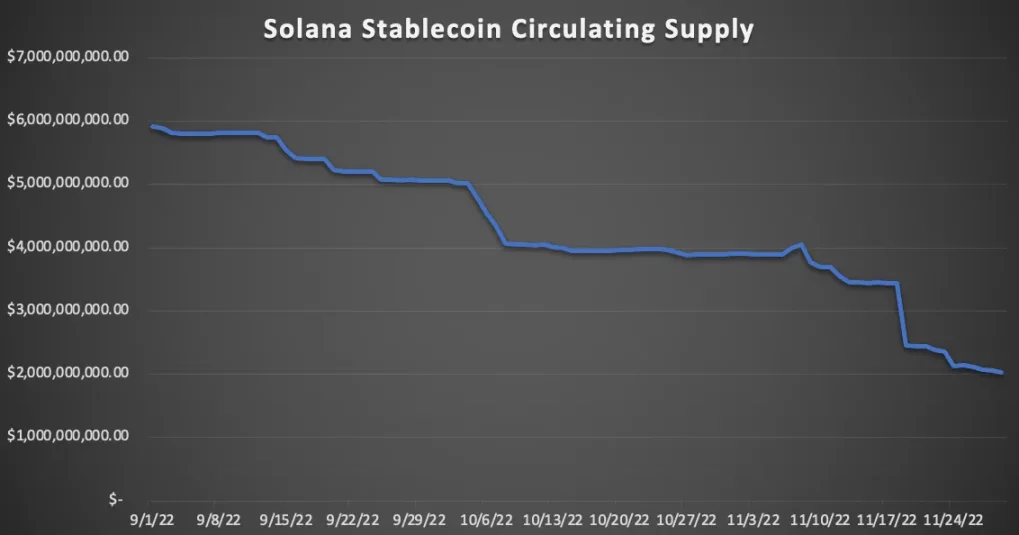
Solana Stablecoin Circulating Supply - Source: Artemis

自 11 月 6 日以来,该网络的稳定币市值已缩水 46.1%,从 39 亿美元降至 21 亿美元。这种下降在很大程度上是由 Tether 的「链转移」推动的,例如 USDT 发行人于 11 月 18 日将 10 亿美元的供应从 Solana 转移到以太坊,该交易占危机以来稳定币总流出量的 55.5%。

大面积清算

许多 DeFi 协议在 FTX 之后遭受了严重的打击,与 Alameda 有密切联系的项目受到的打击尤为严重。

其中最引人注目的是 Serum,一种基于订单簿的 DEX。它的治理代币 SRM,已成为「低浮动、高 FDV」代币设计的典型代表。通过这种设计,公司能够以代币为抵押获得大笔贷款,但会出现估值过高的情况。

即使在过去三周半,价格下跌 69.2% 之后,SRM 的市场价格仍拥有 24 亿美元 FDV。

Serum 也是 Solana DeFi 中的核心协议之一,Raydium、Zeta Markets、PsyOptions 等协议都建立在该协议之上。如果 Serum 的合约是不可变的,尽管其治理代币崩溃,该协议仍能毫无问题地运行。

但是,Serum 的合约由 FTX 持有的管理密钥控制,这使 Serum 以及 Solana 的生态系统处于危险之中,因为 Serum 如果停止运行可能导致灾难性的传导效应。
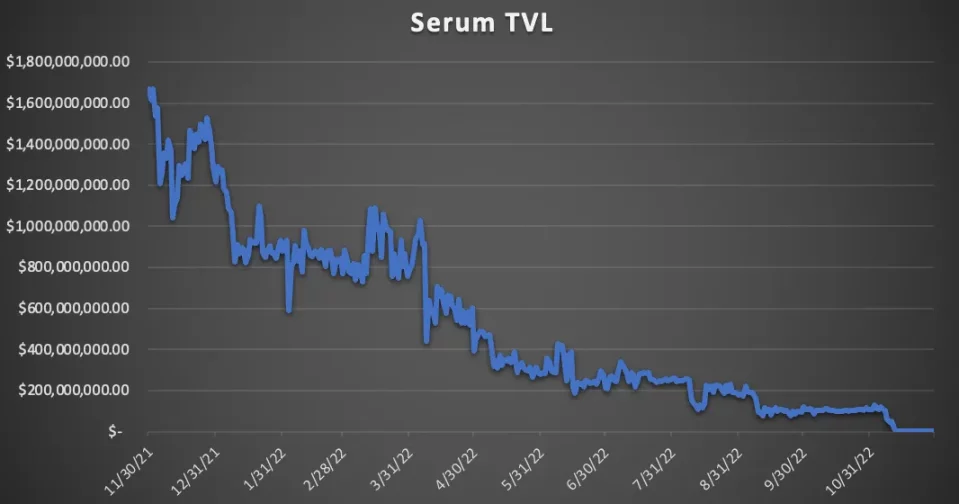
Serum USD TVL - Source: DeFi Llama

迄今为止,尽管 Serum 的 TVL 从危机前的 1.217 亿美元下降至仅 43.4 万美元了 ,跌幅达 99.6% ,Raydium 暂停了 DEX 的做市,Zeta Options 停止了存款,但在很大程度上避免了更坏的局面。

Solana DeFi 社区还部署了一个 Serum 分叉 OpenBook,它已经吸引了 150 万美元的 TVL。该分叉能否存活还有待观察,但它可能会在此期间为被清算的项目提供一个临时解决方案,作为比其母协议风险更低的流动性场所。

痛苦,而非死亡

正如我们所看到的,Solana 正在遭受痛苦,而非死亡。

尽管 SOL 的价格比几周前出现了大幅下跌,但 Solana 网络的弹性一直非常出色,在极端波动事件期间并没有停机或性能下降。到目前为止,该网络还经受住了很大一部分质押流出的影响。

虽然这更多是区块链网络应该满足的预期,而不是一些重大成就,但考虑到 Solana 不稳定和中断的历史,这是值得注意的。在这个动荡的时期顺利运行应该有助于在网络向前发展时获得更多的信任。

但这并不是说 Solana 前进道路上都是晴朗的天空。

Solana DeFi 遭受了重大打击,流动性大量外流,与 FTX 和 Alameda 密切相关的项目,如 Serum,受到的打击尤其严重。

许多人将 FTX 视为其加密生态的关键盟友,所以 Solana 需要时间来摆脱 FTX 暴雷的影响。此外,目前尚不清楚已申请第 11 章破产保护的 Alameda 持有多少 SOL,他们肯定会在诉讼期间清算账簿上剩余的任何东西。

围绕 Solana 在技术层面的长期竞争力的担忧也依然存在,因为他们很可能不得不接受模块化而不是坚持单一架构。从未经历过 95% 以上缩水的开发人员和社区成员是否会在未来几个月和几年内坚持下去。
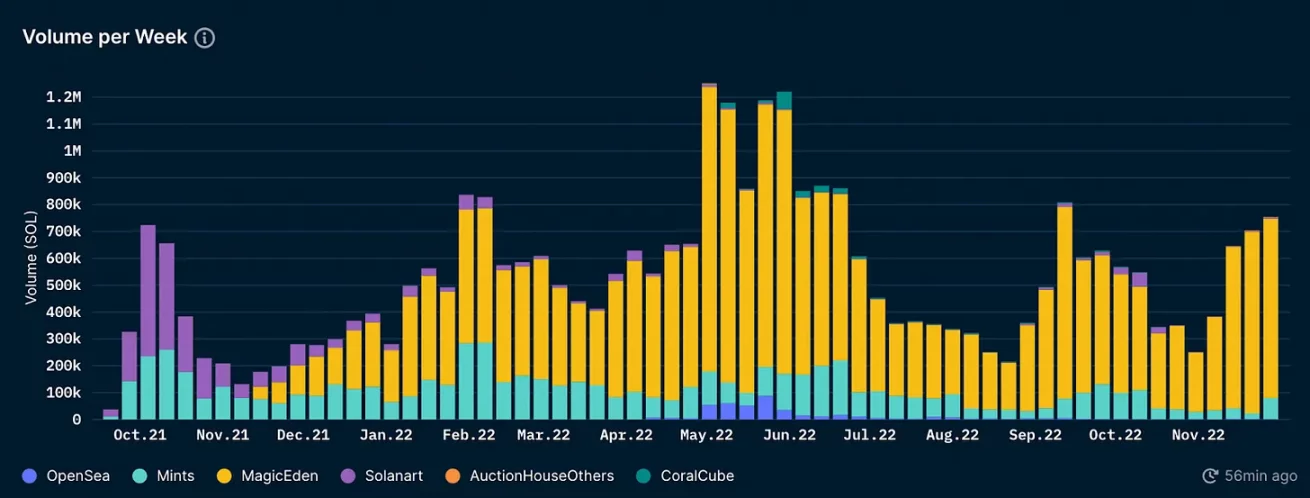
Solana Weekly NFT Volume - Source: Nansen

话虽如此,加密原住民知道 Solana 不仅仅是一个 SBF 宠物项目,而且即使在熊市期间也见证了网络的用户粘性。 加密行业最近的黑客马拉松有 750 份提交,而以 SOL 计价的 NFT 数量增长了 102% 。

从长远来看,FTX 和 Alameda 影响很可能是减法和加法,因为生态系统不会受到其掠夺性商业实践和代币设计的影响,Solana 可能会成为一个更加去中心化和公平的地方。

Solana 正在经历艰难时刻,但毫无疑问关于它死亡的报道被严重夸大了。

Trending Cryptos

Related Reads

This Investor Day, SanDisk's 'Stunning Numbers' Shook the Market

SanDisk's Investor Day Shocks Market with "Explosive" Long-Term Targets SanDisk stunned the market at its 2026 Investor Day by unveiling an extremely aggressive long-term financial model. The company targets **mid-to-high double-digit revenue growth** for fiscal years 2028-2030. More impressively, it forecasts non-GAAP gross margins of approximately **80%** and operating margins around **75%** during that period, with an adjusted free cash flow margin of about 50%. A key strategic shift is SanDisk's focus on profitability over sheer output volume. The company clarified it will **flexibly adjust salable bit output based on profit optimization needs**, not simply chase bit shipment growth. This approach aims to avoid oversupply, especially during technology node transitions. SanDisk also committed to returning **100% of excess cash to shareholders** after funding business growth. Confidence in these targets is bolstered by new business model (NBM) agreements with eight major clients, covering roughly **50% of FY2027 and two-thirds of FY2028 bit shipments**, aiming to reduce cyclical volatility. The company sees massive tailwinds from AI, particularly the shift from training to inference, which is reshaping data center memory hierarchies. It estimates the enterprise flash TAM could reach **1.2 zettabytes by 2030**. SanDisk is advancing technologies like its CMOS Bonded Array (CBA) strategy and High Bandwidth Flash (HBF) for AI inference workloads. The announcement triggered a sharp rally, with SanDisk's stock soaring nearly 18% intraday and lifting the broader storage sector.

marsbit2m ago

This Investor Day, SanDisk's 'Stunning Numbers' Shook the Market

marsbit2m ago

Bitwise Chief Investment Officer: Revenue Reigns Supreme, The Valuation Logic for Crypto is Being Rewritten

The valuation logic of crypto assets is shifting from speculative models to a focus on real revenue and earnings, according to Bitwise CIO Matt Hougan. For years, a key criticism was that crypto tokens lacked fundamental value as they didn't generate cash flows for holders, partly due to a restrictive regulatory environment. This changed following the 2023 Ripple lawsuit and subsequent regulatory shifts, allowing projects to direct protocol revenues to token holders. Hyperliquid pioneered this model, using ~99% of its fee revenue to buy back and burn its HYPE token, creating a direct link between network activity and token value. Its success has inspired widespread adoption. Uniswap now uses all fee revenue to burn UNI, Aave has implemented automated buybacks, and new platforms like shturl.c and Lighter have built revenue-sharing mechanisms from inception. Even layer-1 blockchains like Solana and Aptos are adjusting fee models to benefit token holders. Hougan draws a parallel to early internet companies that eventually monetized their user bases. He argues that top crypto platforms possess significant pricing power and that the market undervalues them because many investors, both inside and outside crypto, have not yet recognized this fundamental shift. While tokens carry different risks than equities (e.g., governance-based revenue rights), the growing alignment of revenue with token value could lead to a significant re-rating of crypto asset valuations in the coming 12-24 months.

marsbit9m ago

Bitwise Chief Investment Officer: Revenue Reigns Supreme, The Valuation Logic for Crypto is Being Rewritten

marsbit9m ago

Shanghai Automotive Chip 'Little Giant' to IPO, Aiming to Raise 3.489 Billion Yuan

"Shanghai-based auto chip 'Little Giant' Gatsland Aims for IPO, Seeking to Raise 3.489 Billion CNY" Gatsland Microelectronics, a Shanghai-based automotive-grade millimeter-wave radar and ultra-wideband (UWB) chip company recognized as a national-level "Little Giant" specializing in core technologies, has filed for an IPO on Shanghai's STAR Market. Founded in 2014, the company is a key player in China's automotive semiconductor sector. It achieved a milestone in 2017 by mass-producing the world's first automotive-grade 77GHz mmWave radar RF front-end single-chip using CMOS process technology, breaking the industry's reliance on GaAs and SiGe multi-chip solutions. Gatsland claims to be the fourth-largest global and second-largest domestic supplier of automotive mmWave radar chips, and a leader in CMOS-based solutions. Financially, Gatsland has shown strong revenue growth, with figures rising from 206 million CNY in 2023 to 632 million CNY in 2025. However, the company remains unprofitable, reporting net losses for the reported periods, including a loss of 193 million CNY in 2025. Despite this, it maintains high gross margins, averaging around 47%, which are notably above industry peers. Over 97% of its recent revenue comes from automotive mmWave radar chips. The company's products, including its Alps and Kunlun platform chips, are used in advanced driver assistance systems (ADAS), autonomous driving, and in-cabin sensing. Its chips have been adopted by major Chinese automakers like BYD, Geely, and NIO, and it has begun supplying European Tier 1 suppliers and international OEMs including Volvo and Rivian. Gatsland's customer base is highly concentrated, with its top five direct clients accounting for over 99% of sales in recent periods. Its supply chain also relies significantly on overseas partners for wafer fabrication, packaging, and EDA tools. Notably, the National Integrated Circuit Industry Investment Fund Phase II ("Big Fund II") is among its shareholders. The management team, including founder and CEO Chen Jiashu, holds strong academic and industry backgrounds from institutions like UC Berkeley and companies such as Texas Instruments. For its IPO, Gatsland plans to raise approximately 3.489 billion CNY to fund R&D and production projects for next-generation mmWave radar and high-precision UWB chips, as well as a new innovation center. The company operates in a highly competitive landscape dominated by international giants like Infineon, NXP, and TI. While it has gained significant market share in China, Gatsland acknowledges it still faces gaps in comprehensive R&D strength and global customer reach compared to these established players.

marsbit11m ago

Shanghai Automotive Chip 'Little Giant' to IPO, Aiming to Raise 3.489 Billion Yuan

marsbit11m ago

Tether Finally Gets Audited by a Big Four Firm, But USDT's Transparency Issues Are Far From Over

Tether announced that KPMG U.S. has completed its first independent audit of Tether International's financial statements as of December 31, 2025, issuing an unqualified opinion—the highest level of assurance. The audit confirms Tether's assets exceeded liabilities by $6.814 billion at that date, with physical verification of gold bars and examination of underlying records. This represents a significant step beyond the quarterly reserve attestations Tether previously received, moving to a full financial statement audit that examines internal controls, transaction sampling, and accounting policies. However, the article highlights several ongoing transparency questions. The full KPMG audit report has not been publicly released, preventing independent verification of details like asset classification or related-party transactions. The audit covers a specific entity, "Tether International, S.A. de C.V.," leaving the scope concerning Tether's complex corporate structure unclear. Furthermore, the $6.8 billion excess reserves confirmed for end-2025 had shrunk to approximately $4.1 billion by Q2 2026. Risks within the reserve composition, particularly concerning secured loans, persist even with an audit. The audit's data is also already 8 months old, while USDT's circulation has grown rapidly. Strategically, the audit is seen as a move to bolster Tether's position amid U.S. regulatory developments like the GENIUS Act, which mandates audits for stablecoin issuers but leaves a path for foreign entities like Tether. While the KPMG opinion is a strong credibility signal, the article concludes that full transparency and regulatory compliance require further steps, starting with the publication of the complete audit report.

marsbit41m ago

Tether Finally Gets Audited by a Big Four Firm, But USDT's Transparency Issues Are Far From Over

marsbit41m ago

Trading

Spot

Hot Articles

How to Buy NFT

Welcome to HTX.com! We've made purchasing AINFT (NFT) simple and convenient. Follow our step-by-step guide to embark on your crypto journey.Step 1: Create Your HTX AccountUse your email or phone number to sign up for a free account on HTX. Experience a hassle-free registration journey and unlock all features.Get My AccountStep 2: Go to Buy Crypto and Choose Your Payment MethodCredit/Debit Card: Use your Visa or Mastercard to buy AINFT (NFT) instantly.Balance: Use funds from your HTX account balance to trade seamlessly.Third Parties: We've added popular payment methods such as Google Pay and Apple Pay to enhance convenience.P2P: Trade directly with other users on HTX.Over-the-Counter (OTC): We offer tailor-made services and competitive exchange rates for traders.Step 3: Store Your AINFT (NFT)After purchasing your AINFT (NFT), store it in your HTX account. Alternatively, you can send it elsewhere via blockchain transfer or use it to trade other cryptocurrencies.Step 4: Trade AINFT (NFT)Easily trade AINFT (NFT) on HTX's spot market. Simply access your account, select your trading pair, execute your trades, and monitor in real-time. We offer a user-friendly experience for both beginners and seasoned traders.

8.0k Total ViewsPublished 2024.03.29Updated 2026.06.02

How to Buy NFT

What is Altura NFT?

Altura: Providing One-Stop NFT Solutions for Game Developers

56.4k Total ViewsPublished 2024.06.12Updated 2024.06.12

What is Altura NFT?

What is AINFT

EternaFi Agents and $AINFT: A Comprehensive Analysis of AI-Powered NFT Infrastructure in the Web3 Ecosystem The intersection of artificial intelligence (AI) and blockchain technology is rapidly evolving, establishing innovative platforms that redefine ownership models and economic participation. EternaFi Agents, along with its native token $AINFT, exemplifies a groundbreaking approach to the tokenization of AI infrastructures through the means of non-fungible tokens (NFTs). Launched in July 2025 by the development team at Nova Club, EternaFi merges the advancements of AI with the decentralized financial mechanisms of blockchain, presenting a unique investment opportunity for participants within the web3 ecosystem. This article aims to provide an in-depth assessment of EternaFi Agents, covering its core components, functionality, and significance within the crypto landscape. Introduction and Project Overview EternaFi Agents stands as a salient example of how blockchain technology can democratize access to advanced AI capabilities. The project endeavors to reshape the paradigm of AI ownership by diversifying economic participation, making sophisticated AI systems accessible to a larger pool of stakeholders. At its core, the project tokenizes a proprietary large language model (LLM) developed by Nova Club, allowing NFT holders to gain fractional exposure to the model's economic performance. By utilizing NFTs representing stakes in the LLM, EternaFi Agents fosters a model wherein stakeholders not only participate in AI service consumption but also enjoy sharing in the economic rewards generated by the platform. This transformative approach enables the development of sustainable revenue models for AI services, all the while promoting broad community engagement and facilitating transparent governance. What is EternaFi Agents? EternaFi Agents represents an AI-NFT infrastructure project that aims to blend the capabilities of AI with blockchain technology in a coherent ecosystem. The essential feature of this project is the creation of NFTs that serve as financial instruments, representing fractions of ownership in Nova Club's proprietary AI infrastructure. Each NFT symbolizes direct exposure to the economic performance of the underlying AI system, providing a lucrative opportunity for investors. The project operates on the Base blockchain, known for its scalability and efficiency, thus ensuring manageable transaction costs while facilitating a seamless operational experience. One of the notable features includes a revenue-sharing mechanism, wherein NFT holders can receive portions of subscription income generated by the AI services provided on the platform. This innovative approach establishes a connection between the success of the AI services and the economic dividends distributed among the holders, thus ensuring an alignment of interests across the community. Who is the Creator of EternaFi Agents? The creative force behind EternaFi Agents is Nova Club, a development team based in Singapore proficient in the amalgamation of AI and blockchain technology. Their prior experience in AI development and cryptocurrency analysis gives credence to the project, contributing a breadth of expertise to the creation of EternaFi Agents. Nova Club’s mission centers on democratizing access to cutting-edge AI technologies while building sustainable economic models that benefit users alongside developers. Their commitment to transparency, community governance, and innovation is reflected in the design and implementation of the EternaFi platform, aiming to establish a unique ecosystem that fosters positive engagement and long-term value creation. Who are the Investors of EternaFi Agents? The specific details concerning investors or investment organizations backing EternaFi Agents are not publicly available. However, EternaFi has adopted an inclusive approach to funding its development through the sale of NFTs to the public, allowing a wide array of participants to invest in the ecosystem. The project’s architecture ensures that core infrastructure is funded responsibly while allowing community members to partake in the ownership and economic returns generated from the AI services. This model emphasizes community engagement by aligning the interests of investors and project developers, creating a collaborative environment where long-term participation is incentivized. How Does EternaFi Agents Work? EternaFi Agents operates through a multifaceted ecosystem where NFTs serve as a primary means of ownership representation within the project. Each NFT holder is entitled to a share of the monthly subscription income produced by the underlying AI-powered platform, thereby positioning NFT ownership as a lucrative investment vehicle. Revenue Generation Mechanism The primary source of revenue generation for the EternaFi platform stems from subscription fees related to the AI services provided. Users can access various tiered services, ranging from basic market analysis tools to comprehensive AI-assisted trading solutions. These services are monetized and form the basis for the revenue-sharing framework, which distributes profits to NFT holders through automated smart contracts. An innovative feature of the EternaFi ecosystem is the revenue-sharing mechanism that operates transparently, ensuring that rewards are allocated based on verifiable metrics from the AI platform's operations. This creates a direct link between the performance of AI services and the returns available to community investors, establishing a sustainable economic model. Staking and Vesting Mechanisms Participants within EternaFi can engage in staking their NFTs to unlock additional economic benefits. The vesting schedule is designed to promote long-term commitment among participants, rewarding those who exhibit ongoing support for the project. This ensures a robust alignment of interests and fosters a sense of community engagement essential for achieving the project's long-term goals. Transparent Governance EternaFi Agents embraces decentralized governance, allowing NFT holders to play an active role in decision-making regarding the platform's development and future directions. The governing structure includes community voting mechanisms, providing NFT holders with the opportunity to influence significant decisions and contributing to a collaborative approach to project growth. Timeline of EternaFi Agents The development trajectory of EternaFi Agents showcases a systematic approach toward building a sustainable AI infrastructure while meeting the needs of community participants. Below is a timeline of important milestones in the project’s history: July 2025: Launch of EternaFi Agents, including the public sale of NFTs and deployment of the $AINFT token on the Base blockchain. Q4 2025: Establishment of market infrastructure including liquidity pools and launch of staking dashboards for NFT holders. 2026: Initiation of community engagement programs, expanding AI capabilities, and integration with cross-chain technologies. Q4 2026: Implementation of the dividend distribution system, allowing NFT holders to reap economic benefits from their investments. These milestones signify the focus on establishing a functional and participative ecosystem while ensuring continuous evolution to meet market demands. Technological Infrastructure and Blockchain Integration EternaFi Agents is anchored in an advanced technological framework combining AI systems with blockchain capabilities. Operating on the Base blockchain, the project leverages the advantages of scalability and low transaction costs. The underlying smart contract architecture governs the NFT ownership, revenue sharing, and community management features, ensuring efficiency and transparency. AI System Development The proprietary large language model underpinning EternaFi Agents has been independently developed and designed to cater to revenue-generating applications without reliance on proprietary external frameworks. This endeavor reflects a commitment to creating a versatile and adaptable AI infrastructure capable of delivering meaningful services to users, thus generating economic value for investors. Security Measures The robustness of EternaFi’s security infrastructure is paramount. Regular audits and stringent security measures ensure the integrity of the AI systems and blockchain mechanisms, safeguarding against potential vulnerabilities while fostering confidence among participants. Conclusion EternaFi Agents signifies a landmark innovation within the realm of artificial intelligence and blockchain technology, opening avenues for community ownership and economic participation in advanced AI capabilities. The project’s comprehensive strategy to tokenize AI infrastructure via NFTs establishes a precedent for future decentralized ecosystems. By harmonizing technical sophistication with user-centric economic models, EternaFi not only fosters engagement but also generates a sustainable revenue-sharing framework for community participants. The significance of EternaFi extends well beyond its operational success as it exemplifies how blockchain can democratize cutting-edge AI technologies, paving the way for future ventures in this intersectional space. The evolution of EternaFi Agents may herald a new era of AI development characterized by participant-driven governance, sustainable economic models, and transparent verification, ultimately contributing to the broader democratization of AI and technology accessibility across industries.

5.3k Total ViewsPublished 2025.08.14Updated 2025.08.14

What is AINFT

Discussions

Welcome to the HTX Community. Here, you can stay informed about the latest platform developments and gain access to professional market insights. Users' opinions on the price of NFT (NFT) are presented below.

活动图片