
Onchain Analysis Verifies the Number of BTC Held by Grayscale’s Bitcoin Trust

newsbtcPublished on 2022-11-25Last updated on 2022-11-25

Abstract

After Grayscale Investments shared information concerning the company’s product holdings.

Onchain Analysis Verifies the Number of BTC Held by Grayscale’s Bitcoin Trust

After Grayscale Investments shared information concerning the company’s product holdings, people questioned why the firm wouldn’t share the public addresses associated with the crypto assets it holds. However, on Nov. 23, OXT researcher Ergo published a Twitter thread featuring onchain forensics that confirm Coinbase Custody holds a balance of 633K bitcoin that likely belongs to the Grayscale Bitcoin Trust (GBTC).

OXT Researcher Verifies Grayscale’s Bitcoin Holdings

Five days ago, Bitcoin.com News reported on Grayscale disclosing information tied to the safety and security of the company’s digital assets. Grayscale’s statements were meant to assure the public that the company’s cryptocurrencies are “safe and secure” after the FTX collapse.

The digital asset fund manager detailed that all of the company’s digital assets are stored with Coinbase Custody Trust Company. On the Grayscale website, the firm says Coinbase Custody is a qualified custodian under New York banking laws and the funds are kept in “cold storage.”

The one thing Grayscale did not disclose is the company’s digital asset addresses and it did mention why it chose not to share the wallets. Grayscale explained that it has never publicly disclosed onchain addresses to the general public “due to security concerns.” The claim was criticized and mocked, but Grayscale said that it understood the non-disclosure would be “a disappointment to some.”

Despite Grayscale’s non-disclosure, the OXT researcher (oxt.me) Ergo explained that it started a community-led effort to create transparency around GBTC holdings. “We have taken steps to ID likely GBTC addresses and balances based on public info and blockchain forensics,” Ergo said on Nov. 20.
Onchain Analysis Verifies the Number of BTC Held by Grayscale’s Bitcoin Trust

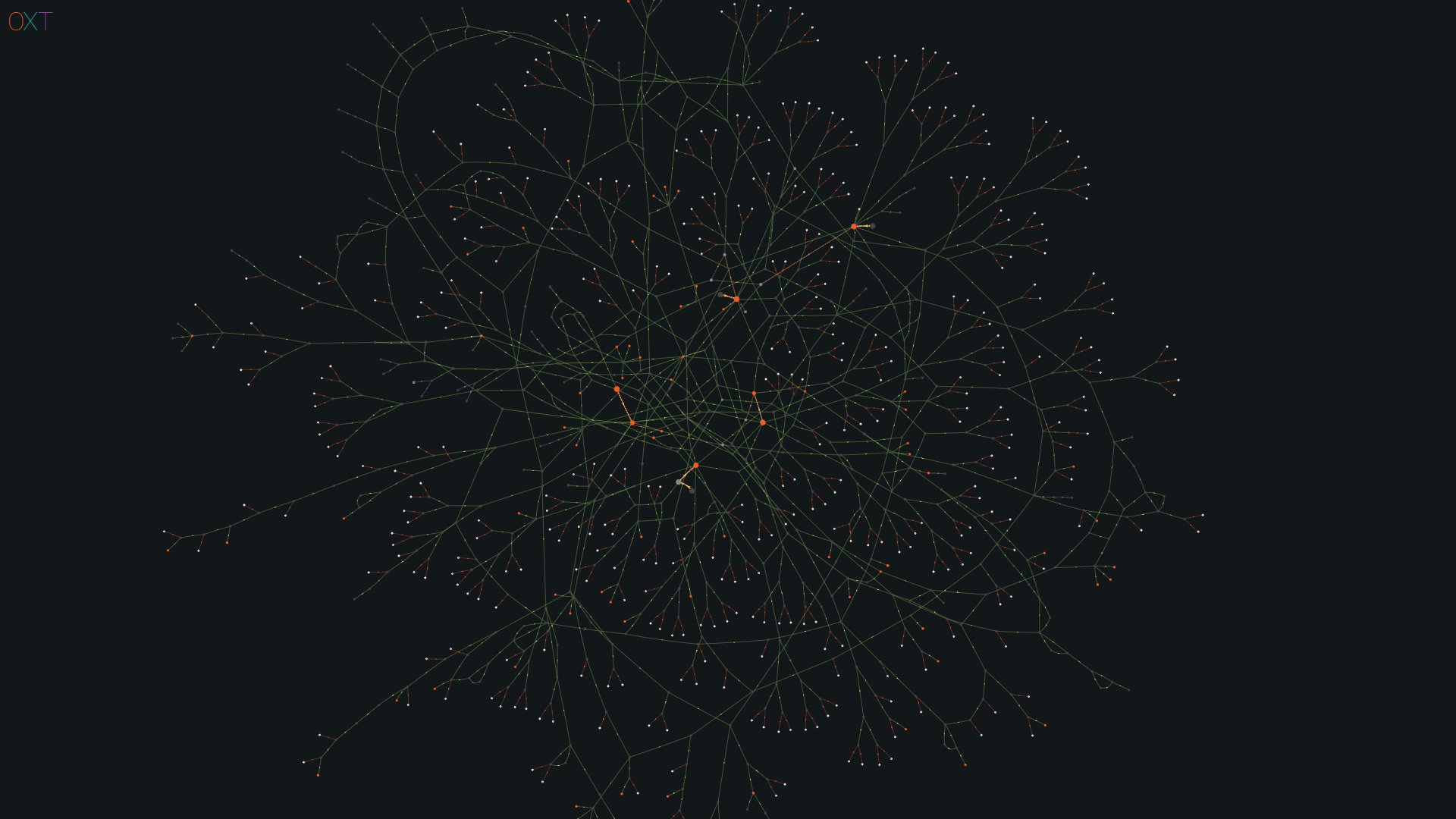
Ergo said the team of researchers “scanned the blockchain,” leveraged heuristics, and connected publicly known bitcoin addresses.

Leveraging an article from Coindesk, heuristics, and publicly known bitcoin addresses associated with the custodian Xapo, that day, Ergo “attributed 432 addresses holding 317,705 BTC to likely GBTC custody activity.”

The researcher discovered at least 50% of the GBTC holdings and added: “additional work is necessary to ID the remaining addresses.” By 2:49 p.m. (ET) on Nov. 23, Ergo said the additional work was finished in a Twitter thread called: “The Grayscale G(BTC) Coins Part 2” Ergo tweeted:

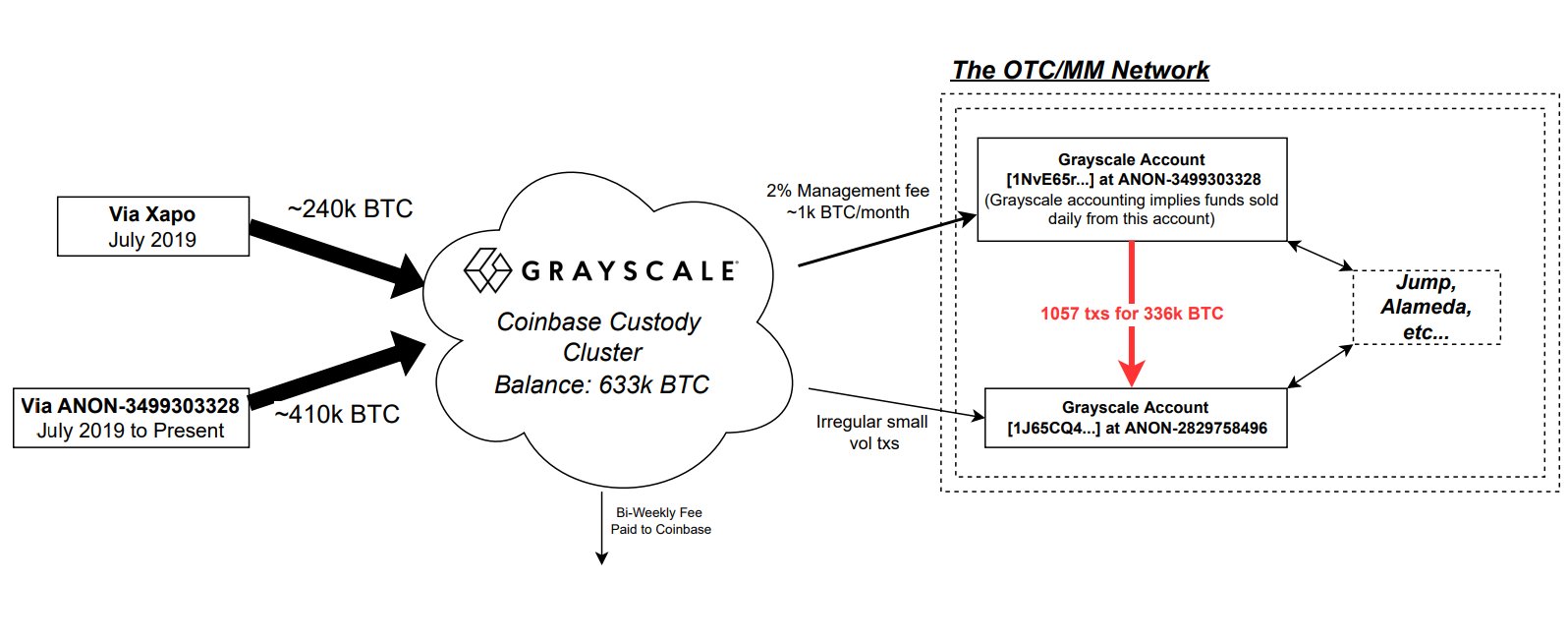
In this analysis, we use additional [onchain] forensics to CONFIRM the approximate 633K BTC balance held by G(BTC) at Coinbase Custody.

Ergo’s summary notes that after discovering the first 50% of bitcoins associated with Grayscale’s BTC, the team had to ‘scan the blockchain’ for additional addresses fitting the profile of those found in Part 1.
Onchain Analysis Verifies the Number of BTC Held by Grayscale’s Bitcoin Trust

Ergo further leaves independent analysts with information on the heuristics used and the bitcoin addresses compiled for the search. “Obviously no heuristic or set of heuristics are perfect, and this analysis certainly includes false positives and negatives,” Ergo remarked. “But our result is almost identical to the G(BTC) self-reported holdings.”

In the Twitter thread, Ergo says that it doesn’t know why Grayscale decided not to share the company’s BTC addresses. Ergo said the team originally thought Coinbase Custody may have a non-disclosure policy. But after reading some information published by Coinbase, Ergo said “it seems clear that Coinbase Custody is willing to disclose addresses.”

A number of people complimented Ergo’s Twitter thread and analysis of the GBTC coins. Furthermore, the news follows Coinbase CEO Brian Armstrong explaining that as of Sept. 30, Coinbase holds 2 million bitcoin.


Trending Cryptos

Related Reads

Second Half of U.S. Crypto Policy: The Clarity Act Aims for 60 Votes, CFTC's "One-Person Commission" Becomes Biggest Variable

In a pivotal year for US crypto policy, the "CLARITY Act" is advancing in the Senate but faces a high hurdle, needing 60 votes to pass. Key challenges include bridging partisan divides on ethics and swaying undecided Republican senators within a tight legislative calendar of only about 40 working days. The policy "second half" involves intense negotiations on a broader framework for Web3 and DeFi, including crypto tax reforms and the Blockchain Regulatory Certainty Act. A significant uncertainty is the understaffed CFTC, operating with four commissioner vacancies, which complicates regulatory clarity. Meanwhile, the departure of key "crypto champions"—SEC Commissioner Hester Peirce and Senator Cynthia Lummis—will impact ongoing policy efforts. Industry experts are cautiously optimistic but realistic. Sara K. Weed notes that while progress is being made, CLARITY is unlikely to pass this Congress, pushing agencies like the SEC and CFTC to provide more guidance. Sulolit Mukherjee suggests meaningful crypto tax legislation is more likely to be attached to larger must-pass bills. Rashan Colbert discusses the jurisdictional debate over prediction markets, emphasizing the need for a regulatory framework that fosters their development as financial tools rather than treating them broadly as gambling. The clock is ticking, but opportunities remain for substantive progress through continued bipartisan dialogue and pragmatic efforts.

marsbit2h ago

Second Half of U.S. Crypto Policy: The Clarity Act Aims for 60 Votes, CFTC's "One-Person Commission" Becomes Biggest Variable

marsbit2h ago

Research Report Analysis: Morgan Stanley Details SanDisk SNDK, The Truth About Cloud Data Center Pricing Power and AI Inference Benefits

Morgan Stanley raised its price target for SanDisk (SNDK) from $1100 to $1750 on June 22, maintaining an Overweight rating. The upgrade is driven by AI inference demand reshaping the NAND market, particularly for KV Cache and context window storage in cloud data centers. These cloud clients exhibit price inelasticity and sign long-term contracts, granting SanDisk significant pricing power. SanDisk's New Business Model (NBM) agreements, covering over one-third of FY27 bit shipments with 3-5 year terms and fixed price/price collar structures, are crucial. They are projected to sustain gross margins around 80% even at floor prices, providing a buffer against cyclical downturns. Morgan Stanley forecasts gross margins to surge from 30.3% in FY25 to 86.7% in FY27e. With NAND supply expected to remain tight into 2026/2027 and cloud/data centers becoming the largest end-market, SanDisk holds supply-side pricing power. The company targets 15-19% bit growth via technology transitions, not capacity expansion. Revenue is projected to grow ~6.6x from FY25 to FY27, with EPS rising from $2.74 to $14.73, driven by high-margin cloud business. Key upside catalysts include faster enterprise SSD adoption and edge AI growth. Downside risks involve slower industry growth, competitor capex increases, market share loss, and competition from Chinese players like YMTC. The investment thesis rests on AI-driven structural demand, NBM's margin protection, and sustained supply tightness. The $1750 target implies ~28x FY27e P/E.

marsbit3h ago

Research Report Analysis: Morgan Stanley Details SanDisk SNDK, The Truth About Cloud Data Center Pricing Power and AI Inference Benefits

marsbit3h ago

Trading

Spot
Futures

Hot Articles

What is $BITCOIN

DIGITAL GOLD ($BITCOIN): A Comprehensive Analysis Introduction to DIGITAL GOLD ($BITCOIN) DIGITAL GOLD ($BITCOIN) is a blockchain-based project operating on the Solana network, which aims to combine the characteristics of traditional precious metals with the innovation of decentralized technologies. While it shares a name with Bitcoin, often referred to as “digital gold” due to its perception as a store of value, DIGITAL GOLD is a separate token designed to create a unique ecosystem within the Web3 landscape. Its goal is to position itself as a viable alternative digital asset, although specifics regarding its applications and functionalities are still developing. What is DIGITAL GOLD ($BITCOIN)? DIGITAL GOLD ($BITCOIN) is a cryptocurrency token explicitly designed for use on the Solana blockchain. In contrast to Bitcoin, which provides a widely recognized value storage role, this token appears to focus on broader applications and characteristics. Notable aspects include: Blockchain Infrastructure: The token is built on the Solana blockchain, known for its capacity to handle high-speed and low-cost transactions. Supply Dynamics: DIGITAL GOLD has a maximum supply capped at 100 quadrillion tokens (100P $BITCOIN), although details regarding its circulating supply are currently undisclosed. Utility: While precise functionalities are not explicitly outlined, there are indications that the token could be utilized for various applications, potentially involving decentralized applications (dApps) or asset tokenization strategies. Who is the Creator of DIGITAL GOLD ($BITCOIN)? At present, the identity of the creators and development team behind DIGITAL GOLD ($BITCOIN) remains unknown. This situation is typical among many innovative projects within the blockchain space, particularly those aligning with decentralized finance and meme coin phenomena. While such anonymity may foster a community-driven culture, it intensifies concerns about governance and accountability. Who are the Investors of DIGITAL GOLD ($BITCOIN)? The available information indicates that DIGITAL GOLD ($BITCOIN) does not have any known institutional backers or prominent venture capital investments. The project seems to operate on a peer-to-peer model focused on community support and adoption rather than traditional funding routes. Its activity and liquidity are primarily situated on decentralized exchanges (DEXs), such as PumpSwap, rather than established centralized trading platforms, further highlighting its grassroots approach. How DIGITAL GOLD ($BITCOIN) Works The operational mechanics of DIGITAL GOLD ($BITCOIN) can be elaborated on based on its blockchain design and network attributes: Consensus Mechanism: By leveraging Solana’s unique proof-of-history (PoH) combined with a proof-of-stake (PoS) model, the project ensures efficient transaction validation contributing to the network's high performance. Tokenomics: While specific deflationary mechanisms have not been extensively detailed, the vast maximum token supply implies that it may cater to microtransactions or niche use cases that are still to be defined. Interoperability: There exists the potential for integration with Solana’s broader ecosystem, including various decentralized finance (DeFi) platforms. However, the details regarding specific integrations remain unspecified. Timeline of Key Events Here is a timeline that highlights significant milestones concerning DIGITAL GOLD ($BITCOIN): 2023: The initial deployment of the token occurs on the Solana blockchain, marked by its contract address. 2024: DIGITAL GOLD gains visibility as it becomes available for trading on decentralized exchanges like PumpSwap, allowing users to trade it against SOL. 2025: The project witnesses sporadic trading activity and potential interest in community-led engagements, although no noteworthy partnerships or technical advancements have been documented as of yet. Critical Analysis Strengths Scalability: The underlying Solana infrastructure supports high transaction volumes, which could enhance the utility of $BITCOIN in various transaction scenarios. Accessibility: The potential low trading price per token could attract retail investors, facilitating wider participation due to fractional ownership opportunities. Risks Lack of Transparency: The absence of publicly known backers, developers, or an audit process may yield skepticism regarding the project's sustainability and trustworthiness. Market Volatility: The trading activity is heavily reliant on speculative behavior, which can result in significant price volatility and uncertainty for investors. Conclusion DIGITAL GOLD ($BITCOIN) emerges as an intriguing yet ambiguous project within the rapidly evolving Solana ecosystem. While it attempts to leverage the “digital gold” narrative, its departure from Bitcoin's established role as a store of value underscores the need for a clearer differentiation of its intended utility and governance structure. Future acceptance and adoption will likely depend on addressing the current opacity and defining its operational and economic strategies more explicitly. Note: This report encompasses synthesised information available as of October 2023, and developments may have transpired beyond the research period.

433 Total ViewsPublished 2025.05.13Updated 2025.05.13

What is $BITCOIN

Discussions

Welcome to the HTX Community. Here, you can stay informed about the latest platform developments and gain access to professional market insights. Users' opinions on the price of BTC (BTC) are presented below.

活动图片