曾经被视为「牛市制造机」们的机构巨鲸,如今都怎么了?

白话区块链Published on 2022-11-23Last updated on 2022-11-23

Abstract

对于仍处于高速发展的行业而言,破除对巨鲸布局的执念,祛魅机构,或许会是这个特别的周期中,行业收获的最大经验之一。

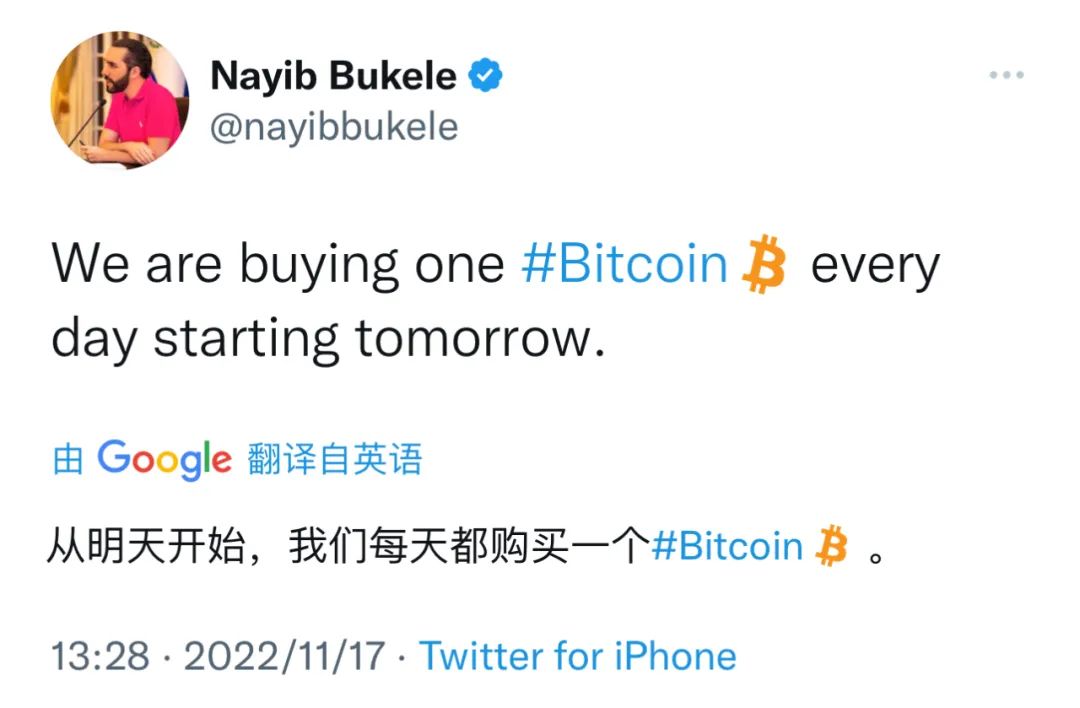
11 月 17 日,萨尔瓦多总统 Nayib Bukele 表示,「从明天开始,我们将每天购买一个比特币」,直接开始了国家级别的比特币定投之旅。

相信不少朋友也都有印象,几乎每一次加密市场大幅下跌之际,萨尔瓦多总统都会出来给大家注射强心剂,宣布萨尔瓦多又购买了 xxx 枚比特币。
但作为 2021 年之前一举一动都备受行业瞩目的老牌机构,近来包括萨尔瓦多、灰度、 Microstrategy 等在内的机构巨鲸老面孔却声量渐小,甚至于对市场的影响愈发可以忽略不计,那这批曾经的风云机构与巨鲸们都怎么了?

风起于「机构巨鲸」

从某种程度上讲,2020 年前所未有的机构入场步伐,让至今的这轮牛熊周期从一开始就充满了「机构牛」的属性。

灰度:机构先行者,加密貔貅

作为数字货币集团 DCG(Digital Currency Group)于 2013 年专门设立的子公司,灰度从诞生之日起便是加密世界举足轻重的机构代表,也是最大最早的加密「明牌巨鲸」之一,多年来一直以信托基金的方式为投资者提供合规的加密货币投资渠道。
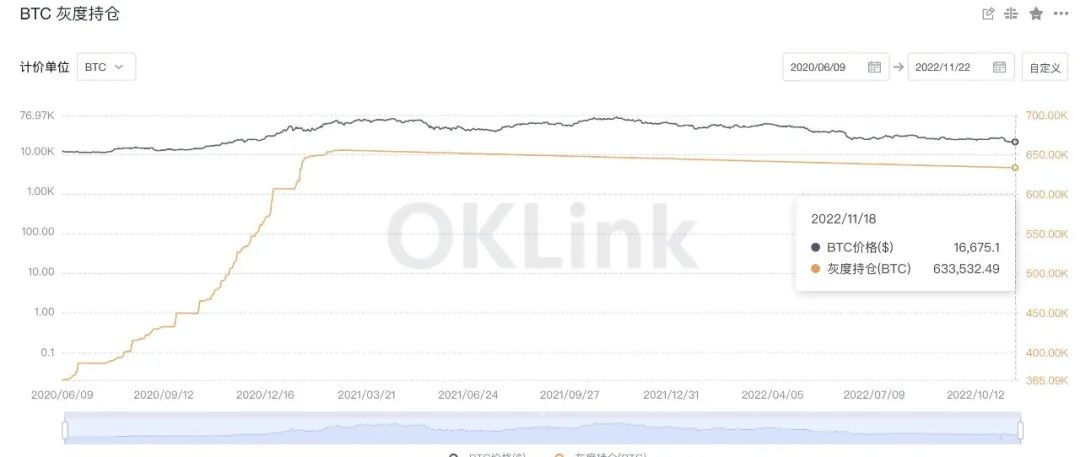
截至 11 月 18 日灰度仅比特币信托的管理规模(AUM)就超过 63.35 万枚(约 102 亿美元),仍是最大的加密货币托管机构之一,且除比特币外,目前的单一信托基金还包含 ETH、BCH、LTC、XLM、ETC、ZEC、ZEN、SOL、BAT 等,总持仓价值超 147 亿美元。

但最新数据显示,灰度比特币、以太坊等信托产品负溢价几乎处于历史新低,其中,灰度比特币信托负溢价最低达 45.2%(木头姐旗下ARK基金近期增持数百万美元gbtc,反弹至42.62%),以太坊信托为 44.65%,ETC 信托的负溢价更是达到了离谱的 66.99%,均处于历史最低位。
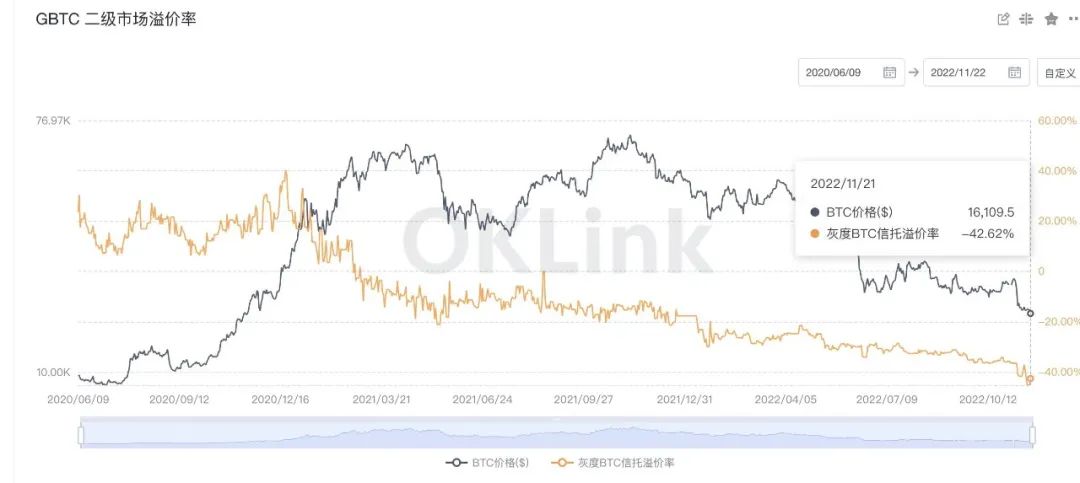
从负溢价的角度看,这对曾经在一级市场以现金或是 BTC、ETH 的方式参与 GBTC、ETHE 信托的私募的投资者伤害很大,因为目前的灰度加密货币信托并不能直接赎回其标的资产——尚没有明确的退出机制,暂时不存在「赎回」或「减持」。

那等这些投资者过 6 或 12 个月后(GBTC、ETHE 的解锁期),手中解锁的 BTCG、ETHE 份额在美股二级市场出售,按目前的负溢价只能是亏损。

不过其实负溢价对灰度而言,仍算是稳赚不赔的买卖,因为灰度的收入只来自于托管费用:其中 BTC 信托的费率最低,为每年 2%,其他单币种加密货币信托产品的管理费为每年 2.5%。按照此比例,在如今上百亿美元的资产规模下,单管理费这一项的收入都数亿美元。

此前,有人透露灰度母公司通过一张此前未披露的、对潜在投资者隐藏的本票,对子公司 Genesis 欠款超 11 亿美元,并要求不要披露。有知情人士表示,Genesis紧急融资目标已从10亿降至5亿美元,同时,Coinbase披露灰度持仓数据,共持有超63.5万枚BTC和300万枚ETH。今日,据Coinbase发布的灰度持有资产报告显示,Genesis资产负债表上有28亿美元未偿贷款,约30%发放给母公司DCG等关联方。

萨尔瓦多:举国之力,买买买

2021 年 9 月 7 日,萨尔瓦多正式将比特币定为法定货币,具体内容包括推出电子钱包 Chivo 并为下载钱包的居民各预存 30 美元的比特币。

在一轮又一轮的「抄底」加持之下,萨尔瓦多截至目前已经累计储备了 2381 枚 BTC,平均购买价格在 4.5 万美元上下,按当前 16200 美元的价格当前浮亏约 65%,亏损金额约 6857 万美元左右。

不过萨尔瓦多财政部长此前就表示「不会出售购买的比特币」,前两天还称比特币崩盘带来的财政风险极小。

MicroStrategy:场外举债,豪赌比特币

抛开作为托管方的交易平台,当前持有比特币数量超过 10 万枚的公司主体,除了 Block.one 和早已倒闭的 Mt.Gox,排名第三位的就是 MicroStrategy 了。

根据本月初其披露的第三季度财报,MicroStrategy 目前持有约 13 万枚比特币(约占流通中比特币总量的 0.615%),价值约 21 亿美元,平均成本为 30640 美元,按目前 16200 美元的价格计算,持仓浮亏约 18.7 亿美元。
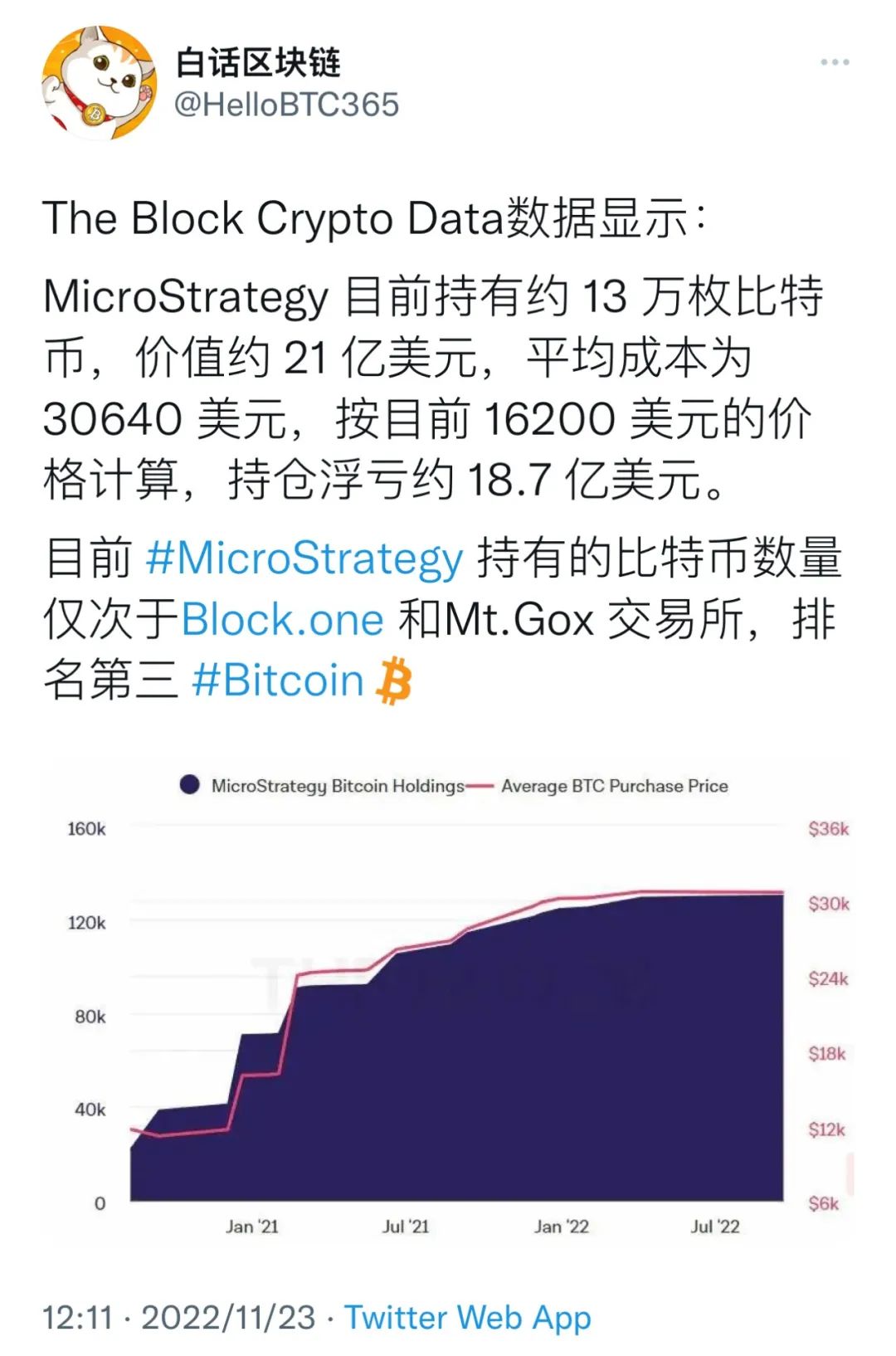
作为比特币的老屯家,MicroStrategy 对比特币的买买买早已是大手笔的明牌策略,它公开买入比特币的消息,最早可以追溯到 2020 年 8 月 11 日:

依据其 2020 年第二季度财报中制定的资产配置策略,花费 2.5 亿美元购买了 21454 枚比特,这也就意味着它的首次买入成本约为每枚比特币 11652 美元。

随后在 2020 年 9 月中旬,它便宣布再次以 1.75 亿美元购入 16796 枚比特币,并表示会将比特币作为主要的储备资产,自此 MicroStrategy 便开始了一发不可收拾的增持之路。

而 MicroStrategy 公开的最后一次买入则为今年 8 月 2 日至 2022 年 9 月 19 日期间,以约 600 万美元现金收购了约 301 枚比特币,单枚平均价格为 19851 美元。

不过虽然目前的二级市场价格远远跌破了它的成本价,但根据 MicroStrategy 首席执行官 Michael Saylor 在 5 月份披露的信息,MicroStrategy 有 2.05 亿美元的定期贷款,需要维持 4.1 亿美元作为抵押品,而它有 115109 枚 BTC 可以质押,所以只有当比特币的价格低于 3562 美元,MicroStrategy 的比特币才可能面临清算。

Multicoin:加密娇子的陨落

在本轮牛市周期中涌出的新秀们,像 Three Arrows Capita、Multicoin、Alameda,都在潮水退去时回归了最初的样子。

其中 Multicoin Capital 更是从加密神坛跌落,此前就有消息人士透露,因 FTX 破产事件,Multicoin 在大约两周内资产规模下跌约 55%。

「成也 Solana,败也 Solana」,此前 Multicoin 近乎奇迹般的超高回报率得益于对 Solana 等大胆押注的成功,如今也正是导致其崩溃的主因——除了 9.7% 的资产由 FTX 托管,损失还包括其长期看涨 Solana 以及 Solana 生态资产,比如 Mango、持有 FTX.US 股权和未完成的衍生品合约。

本轮周期的机构祛魅

如今回头看,灰度买入、Microstrategy 买买买,这些曾经在 2020 年曾被当作拉动场外增量资金的「牛市发动机」,在如今的大环境之下,不仅不再奏效,甚至成了一颗颗随时可能引发行业海啸的潜在风险点。

本轮 FTX 事件的发酵,在某种程度上,为加密行业与 Web3 世界的机构进行了一次彻底的祛魅——毕竟一直鼓吹合规的 FTX,最终却因为挪用客户资产及关联机构 Alameda 的财务问题,造成百亿美元级别的窟窿,无疑是对「机构」二字最大的讽刺。

而从后续的影响来看,无论是 Multicoin 单月净值下跌过半的「加密 VC 神话」的破灭,还是新加坡国资委淡马锡(2.75 亿美元)、Paradigm(2.9 亿美元)、红杉资本的数亿美元投资减记,都在加速这一进程。

曾经似乎对加密行业发展拥有举足轻重的影响力与推动力的机构巨鲸们,本质上也只是顺风时的积极因素被放大,而那些凭风而起的新秀机构与「New Money」们,只有退潮时的表现才是真实的实力与姿态。

其实早在之前就曾现出端倪,7 月 8 日,DeFi 巨鲸「0xb1」突然发推自述,称自己及背后的团队曾在 2020 至 2021 年间参与管理 Celsius 的近 20 亿美元客户资产,但 Celsius 并未按 KeyFi 的策略进行对冲并导致损失,且归咎于 KeyFi 操作不当,一直拖欠 KeyFi 的资管费用至今,故向 Celsius 提起诉讼。

而在 Alameda 爆雷之前,加密经纪商 Voyager Digital 申请破产时,破产申请文件就披露 Alameda 竟然有向 Voyager Digital 借款,达 3.76 亿美元,数目仅次于 Three Arrows Capital。

当时币安创始人 CZ 就对此发起抨击,称破产前 Alamema 才向 Voyager 提供借代额度以舒缓流动性危机,这等于 SBF 是先投资 Voyager,然后再从它那里再借钱,而根据公开可查的记录,其最初的投资额肯定是远远不到 3.76 美元的后续借款额。
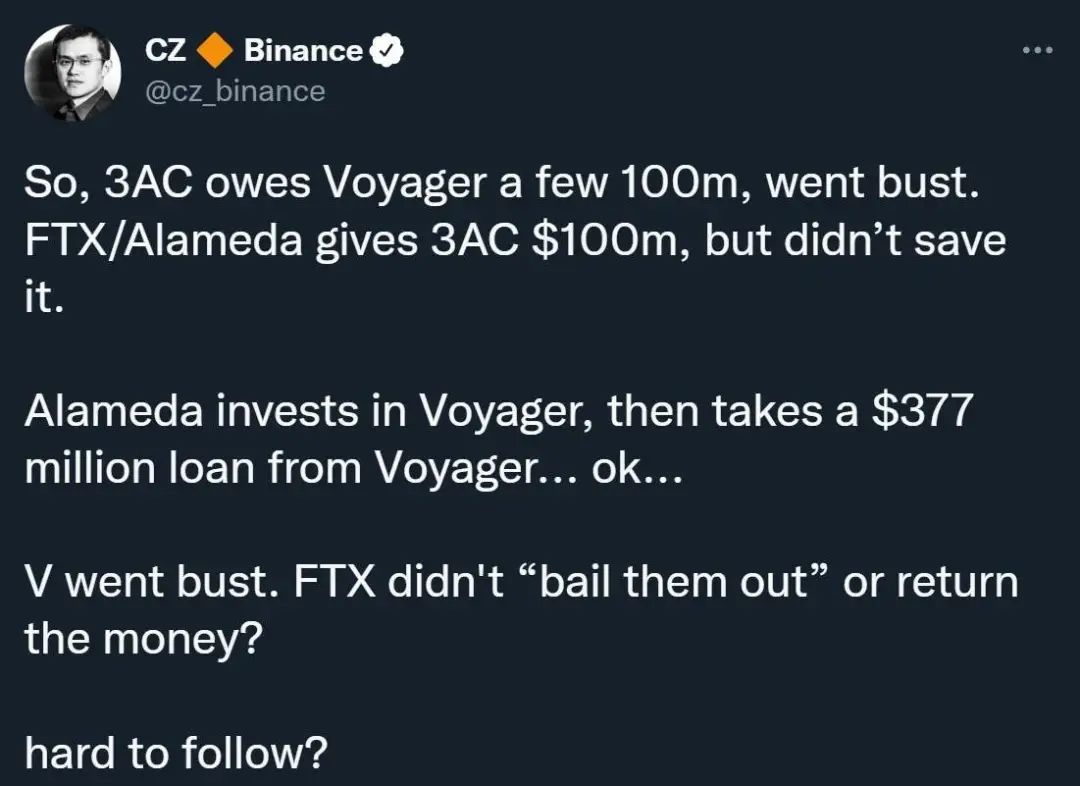
如今事后回看,诛心点讲,这的确很容易让我们联想到 SBF 最初投资 Voyager 的动机,甚至不排除通过投资获得话语权,继而为自己的大笔借代开启方便之门(所谓的控股后掏空资产)。

包括最新的 BlockFi 也是同样的套路,其员工透露「FTX 救助 BlockFi 的唯一条件是将我们的用户资金放到他们的平台上,用于他们的空壳游戏,他们施加了巨大的压力,让 BlockFi 资金转移到 FTX 托管,高管告诉员工不要问关于这一举动的问题」。

这种左手转右手滚雪球挪用用户资产的玩法,真是让人瞠目结舌。此前《FTX 不是第一个也不会是最后一个,加密史上 6 大暴雷事件盘点》一文中我们说太阳底下没有新鲜事,DeFi 世界没有神话,其实 CeFi 机构也是如此,甚至满眼污糟。

一轮周期结束,如今潮水退去,我们才慢慢发现,曾经看似举足轻重的巨鲸与机构背后,究竟有着怎样不为人知的牵扯,又是怎样的血腥。

小结

对于仍处于高速发展的行业而言,破除对巨鲸布局的执念,祛魅机构,或许会是这个特别的周期中,行业收获的最大经验之一。

Trending Cryptos

Related Reads

Uniswap v4 Hook Analysis: Architecture Design, Common Vulnerabilities, and Protection Practices

Uniswap v4's Hook mechanism is a major innovation, enabling custom logic injection into liquidity pool lifecycle events like swaps and liquidity provisioning. This transforms the AMM into programmable infrastructure, shifting the security model from protocol-level to pool-level, as each pool's safety now depends on its bound Hook contract. The core architecture revolves around the singleton PoolManager contract, which manages all pools via a flash accounting system. State changes are tracked in transient storage and must be settled by the end of a transaction. Hook contracts are permanently bound to pools via a PoolKey, with their permissions encoded directly into their address via specific low-order bits. This design introduces unique security considerations and challenges for future upgrades. Key vulnerabilities and best practices identified include: - **Access Control Gaps:** Early versions of the BaseHook abstract contract only protect `unlockCallback()`, leaving other lifecycle functions (`beforeSwap`, `afterSwap`, etc.) exposed unless explicitly secured by developers. - **Unrestricted Pool Binding:** The `initialize()` function does not validate if a Hook "consents" to a new pool. Hooks must implement their own whitelisting in `beforeInitialize` to prevent unauthorized pool creation. - **Async/Custom Curve Hooks:** These high-risk Hooks can completely replace Uniswap's swap logic. Their security depends entirely on their own implementation, as they operate outside the native protocol's pricing safeguards. - **Delta Accounting Risks:** The system ensures final balance (NonzeroDeltaCount == 0) but cannot guarantee the *correctness* of intermediate delta states, which attackers could manipulate. - **Token Confusion:** Protocols must implement semantic validation for tokens in user-created markets, not just interface checks, to prevent cross-market confusion attacks. The article emphasizes that Hook auditing requires a "sub-protocol" approach due to extended interaction chains, highlighting a significant shift in security methodology for the v4 ecosystem.

marsbit52m ago

Uniswap v4 Hook Analysis: Architecture Design, Common Vulnerabilities, and Protection Practices

marsbit52m ago

Chips, Open-Source Models, and $50 Trillion: Joe Tsai Reassesses Alibaba Once Again

Alibaba Executive Chairman Joe Tsai recently outlined the company's comprehensive AI strategy in a public discussion. He believes AI represents a massive opportunity, estimating its potential economic impact at up to $50 trillion, stemming from the automation of human intelligence and productivity. Tsai detailed Alibaba's four-layer investment approach across the AI stack: starting from the chip level, moving to cloud infrastructure (Alibaba Cloud), then the model layer with its open-source Qwen model, and finally applications within its vast digital ecosystem (e-commerce, logistics, etc.). The company avoids the energy layer due to China's efficient infrastructure. This broad strategy is designed to ensure Alibaba captures value regardless of where it ultimately concentrates in the AI value chain. He dismissed concerns about an AI investment bubble, pointing to the enormous $50 trillion opportunity. While acknowledging U.S. cloud giants' higher capital expenditure, he argued Chinese firms, including Alibaba (funded by its cash-generative e-commerce core), need to invest more in AI infrastructure. A key theme was technological sovereignty. Tsai positioned open-source models like Qwen as a solution for companies, especially in Europe, seeking independence from proprietary U.S. models and greater data privacy control. He contrasted this with the trend of U.S. giants keeping their models closed-source. Tsai highlighted Alibaba's collaborations with European manufacturers like Bosch and Siemens, using AI for design and quality control. He concluded with an optimistic vision of AI agents enhancing productivity, ultimately freeing up human time for leisure, family, and experiences like live entertainment.

marsbit1h ago

Chips, Open-Source Models, and $50 Trillion: Joe Tsai Reassesses Alibaba Once Again

marsbit1h ago

Trading

Spot
Futures

Hot Articles

What is $BITCOIN

DIGITAL GOLD ($BITCOIN): A Comprehensive Analysis Introduction to DIGITAL GOLD ($BITCOIN) DIGITAL GOLD ($BITCOIN) is a blockchain-based project operating on the Solana network, which aims to combine the characteristics of traditional precious metals with the innovation of decentralized technologies. While it shares a name with Bitcoin, often referred to as “digital gold” due to its perception as a store of value, DIGITAL GOLD is a separate token designed to create a unique ecosystem within the Web3 landscape. Its goal is to position itself as a viable alternative digital asset, although specifics regarding its applications and functionalities are still developing. What is DIGITAL GOLD ($BITCOIN)? DIGITAL GOLD ($BITCOIN) is a cryptocurrency token explicitly designed for use on the Solana blockchain. In contrast to Bitcoin, which provides a widely recognized value storage role, this token appears to focus on broader applications and characteristics. Notable aspects include: Blockchain Infrastructure: The token is built on the Solana blockchain, known for its capacity to handle high-speed and low-cost transactions. Supply Dynamics: DIGITAL GOLD has a maximum supply capped at 100 quadrillion tokens (100P $BITCOIN), although details regarding its circulating supply are currently undisclosed. Utility: While precise functionalities are not explicitly outlined, there are indications that the token could be utilized for various applications, potentially involving decentralized applications (dApps) or asset tokenization strategies. Who is the Creator of DIGITAL GOLD ($BITCOIN)? At present, the identity of the creators and development team behind DIGITAL GOLD ($BITCOIN) remains unknown. This situation is typical among many innovative projects within the blockchain space, particularly those aligning with decentralized finance and meme coin phenomena. While such anonymity may foster a community-driven culture, it intensifies concerns about governance and accountability. Who are the Investors of DIGITAL GOLD ($BITCOIN)? The available information indicates that DIGITAL GOLD ($BITCOIN) does not have any known institutional backers or prominent venture capital investments. The project seems to operate on a peer-to-peer model focused on community support and adoption rather than traditional funding routes. Its activity and liquidity are primarily situated on decentralized exchanges (DEXs), such as PumpSwap, rather than established centralized trading platforms, further highlighting its grassroots approach. How DIGITAL GOLD ($BITCOIN) Works The operational mechanics of DIGITAL GOLD ($BITCOIN) can be elaborated on based on its blockchain design and network attributes: Consensus Mechanism: By leveraging Solana’s unique proof-of-history (PoH) combined with a proof-of-stake (PoS) model, the project ensures efficient transaction validation contributing to the network's high performance. Tokenomics: While specific deflationary mechanisms have not been extensively detailed, the vast maximum token supply implies that it may cater to microtransactions or niche use cases that are still to be defined. Interoperability: There exists the potential for integration with Solana’s broader ecosystem, including various decentralized finance (DeFi) platforms. However, the details regarding specific integrations remain unspecified. Timeline of Key Events Here is a timeline that highlights significant milestones concerning DIGITAL GOLD ($BITCOIN): 2023: The initial deployment of the token occurs on the Solana blockchain, marked by its contract address. 2024: DIGITAL GOLD gains visibility as it becomes available for trading on decentralized exchanges like PumpSwap, allowing users to trade it against SOL. 2025: The project witnesses sporadic trading activity and potential interest in community-led engagements, although no noteworthy partnerships or technical advancements have been documented as of yet. Critical Analysis Strengths Scalability: The underlying Solana infrastructure supports high transaction volumes, which could enhance the utility of $BITCOIN in various transaction scenarios. Accessibility: The potential low trading price per token could attract retail investors, facilitating wider participation due to fractional ownership opportunities. Risks Lack of Transparency: The absence of publicly known backers, developers, or an audit process may yield skepticism regarding the project's sustainability and trustworthiness. Market Volatility: The trading activity is heavily reliant on speculative behavior, which can result in significant price volatility and uncertainty for investors. Conclusion DIGITAL GOLD ($BITCOIN) emerges as an intriguing yet ambiguous project within the rapidly evolving Solana ecosystem. While it attempts to leverage the “digital gold” narrative, its departure from Bitcoin's established role as a store of value underscores the need for a clearer differentiation of its intended utility and governance structure. Future acceptance and adoption will likely depend on addressing the current opacity and defining its operational and economic strategies more explicitly. Note: This report encompasses synthesised information available as of October 2023, and developments may have transpired beyond the research period.

417 Total ViewsPublished 2025.05.13Updated 2025.05.13

What is $BITCOIN

Discussions

Welcome to the HTX Community. Here, you can stay informed about the latest platform developments and gain access to professional market insights. Users' opinions on the price of BTC (BTC) are presented below.

活动图片