昔日DeFi黑马现卷入FTX风暴,Ren Protocol的“跨链之路”该怎么走?

Odaily星球日报Published on 2022-11-22Last updated on 2022-11-22

Abstract

renBTC 是链上常用的众多封装 BTC 之一。近日来,Ren Protocol 则成为了受 FTX 崩塌事件最深的跨链基础设施。

renBTC 是链上常用的众多封装 BTC 之一。近日来,Ren Protocol 则成为了受 FTX 崩塌事件最深的跨链基础设施。

“FTX 黑客” 事件之后,黑客不惜面临滑点损失也要将 ETH 抛售换取 renBTC,如此操作令这一老牌项目再次回到加密世界的集体注视之中。通过 renBTC 将资金桥接至比特币网络,目前该地址拥有约 2444 枚比特币(约 4040 万美元)。

除了黑客的操作让 renBTC 在新闻中频频出现。Ren Protocol 自身也受到 Alameda“拖累",因为缺乏运营资金,Ren Protocol 面临着关停的风险。近日,Ren 团队透露,该项目的剩余资金约为 16 万美元,这些资金只够维持开发至第四季度结束。

今日, Ren Protocol 官方发文表示:由于 Ren 1.0 网络将在 30 天内关闭,我们强烈建议用户尽快将他们的 Ren 资产(例如 renBTC)桥接回其原生链。同时,Ren 团队希望推出最新版本的协议 Ren 2.0。

目前,团队正与社区成员讨论,试图探索出一条自救之路。

被Alameda收购,Ren Protocol做了什么?

Ren Protocol 的核心技术围绕着 RenVM 构建。RenVM 是由该团队开发的跨链加密资产托管网络,该网络由 Darknodes 节点维护安全。其主要使命正如 RenVM 官网所醒目标明的:一个无缝连接不同链的 Layer 0。

与 wBTC 类似,每个 renBTC 均由 BTC 提供 1:1 支持。而与 wBTC 不同的点则在于,这是一个去中心化的协议,无需中心机构进行托管,且任何人都可无需许可的进行 renBTC 的铸造、销毁。

作为发展成熟的老牌跨链基础设施,目前 Ren Protocol 已经支持 BTC、BCH、DASH、DOGE、ZEC 等多条非 EVM 链的资产在以太坊、BSC、Fantom、Polygon 等多个 EVM 链上进行封装。而与当下更为主流桥仅支持 EVM 链之间互跨相比,这无异是一个功能上极大的差异。

根据 OkLink 数据,目前 renBTC 是流通量约 3242 BTC,为市场上第三大的 BTC 锚定币。但份额却并不突出,约占 BTC 锚定币总流通量的 0.01%。与此同时,wBTC 流通量约为 23.5 万枚,HBTC 流通量约为 1.3 万枚。

但在 2020 年秋季时,renBTC 的流通量曾一度突破 2.6 万枚,占据了约 20% 的市场份额。
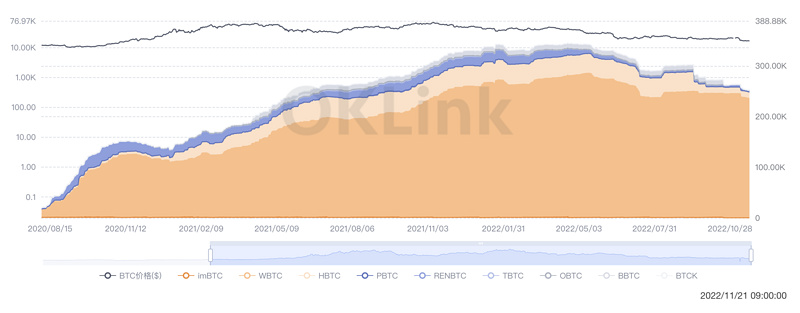
截止至今,RenVM 已经处理了约130亿美元的跨链交易,且未曾发生过黑客攻击事件。

FTX爆雷如何牵连Ren Protocol?

2021 年,Alameda Research 宣布收购 Ren Protocol,收购后开发团队将在其 RenVM 协议中添加对 Solana 的支持。当时,SBF 曾盛赞 Ren Protocol: “我们认为他们将继续制作出优秀的项目。”

根据协议,Alameda Research 将为 Ren Protocol 提供每季度 70 万美元的运营资金。而在 Alameda 破产之后,Ren Protocol 自然也陷入了资金短缺的困境。上周五,Ren Protocol 官方发表声明,该团队目前仅剩 16 万美元运营资金,这一数量仅够维持其项目运转至四季度结束。

而更为糟糕的是,作为 Alameda Research 投资组合的一部分,Ren 开发团队认为这一项目或已需要重建。他们在公开信中表示,“为了确保 Ren 1.0 生态系统的安全和完整,最好提前推出 Ren 2.0。尽管 Ren 1.0 网络仍然完全安全运行,但结束 Ren 1.0 标志着 Alameda Research 停止参与,这保护了 Ren 生态系统的声誉、完整性和长远前景。”

Ren Protocol的未来走向何方?

目前,Ren Protocol 团队尚未发起正式治理提案,关于协议今后的走向仍在磋商之中。但在公告中,团队表示了融资的意向,同时也考虑将其完全去中心化、社区所有。

Ren 虽然和用户基础上有所积累,但在玩家众多的跨链赛道,它似乎在“讲故事” 商很难有所创新,在不断追逐热点、创造新叙事的加密世界,已经步入平稳发展的老项目缺乏炒作的空间。在流动性匮乏的熊市之中,投资者更加珍惜“子弹”,老项目与新项目的竞争更是各有短长。对于 Ren Protocol 来说,其重新融资是否顺利仍未可知。

按照原定计划,Ren 2.0 本应于今年四季度上线。但考虑到 Alameda 拥有 Ren 1.0 的知识产权,因此将加速向 Ren 2.0 的过渡。

而对 Ren 1.0 版本的处理团队现已确认:Ren Protocol 将禁用 Ren 1.0 的 mint 功能,停止创建新的锚定资产。30 天后,正式关闭 Ren1.0。

在 Ren 2.0 阶段,Ren Protocol 将启用一个基于 Geth 的新架构,它支持在 Ren 上部署基于 EVM 的应用程序,支持所有与 Ren 集成的区块链,并支持 Ren 1.0 提供的所有桥接功能。最终得以建立一个完全开源、社区运营、拥有自己独立激励结构的跨链网络。Ren 团队将持续与社区保持讨论。

对于社区来说,这不失为一个正面消息。团队做出了积极的表态,也承诺将会持续推出治理提案直到社区满意并被通过为止。而对用户来说,Ren Protocol 和 Alameda 的牵连是否会带来负面影响?

Ren Protocol 也在公告中试图打消用户的顾虑。与中心化的机构不同,作为一个跨链网络,协议所铸造的资产在链上均可查。团队认为 Alameda 并不会影响到 ren 锚定资产的安全。并豪言 Ren Protocol 可做到“100% 的安全”。

作为 FTX 爆雷事件的被波及者,命途多舛的 Ren Protocol 又将走向何方?

Trending Cryptos

Related Reads

Research Report Analysis: Is Intel Making a Comeback with Apple? Bernstein's Calculations Show the Right Direction, but the Price Is Already Overvalued

Bernstein analyst Stacy A. Rasgon published a report on June 18 regarding Intel, assessing the potential impact of recent political support for a US-based PC chip design and manufacturing collaboration between Apple and Intel. The report views this as a significant signal for the foundry landscape shift but concludes the initial financial contribution would be minimal. Key conclusions: 1) An Apple deal is seen as a small-scale "proof of concept." Even if Intel wins 40% of Apple's premium notebook chip orders (~5 million units/year), Bernstein estimates it would generate only about $500M in annual revenue and ~$0.03 EPS, negligible against Intel's ~$55B revenue. 2) Political encouragement is not equivalent to enforceable mandates. Winning orders ultimately depends on Intel demonstrating competitive technology (like its 18A node), cost, and reliable supply. 3) The path from validation to large-scale production involves significant challenges, capital investment, and time. Due to these uncertainties, Bernstein maintains a Market-Perform (Hold) rating with a $100 price target, implying potential downside from the ~$121.10 price at the report date. The analysis highlights the tension between near-term validation value—serving as a crucial trust signal for Intel's foundry ambitions and US supply chain resilience—and the long-term opportunity to attract larger cloud and AI chip customers. The investment thesis hinges on successful 18A execution and sustained policy support, not on immediate financial gains from Apple.

marsbit26m ago

Research Report Analysis: Is Intel Making a Comeback with Apple? Bernstein's Calculations Show the Right Direction, but the Price Is Already Overvalued

marsbit26m ago

27-Year Reign Ends: SK Hynix Market Cap Surpasses Samsung for First Time, an AI-Driven Reshuffle of Korean Chip Power

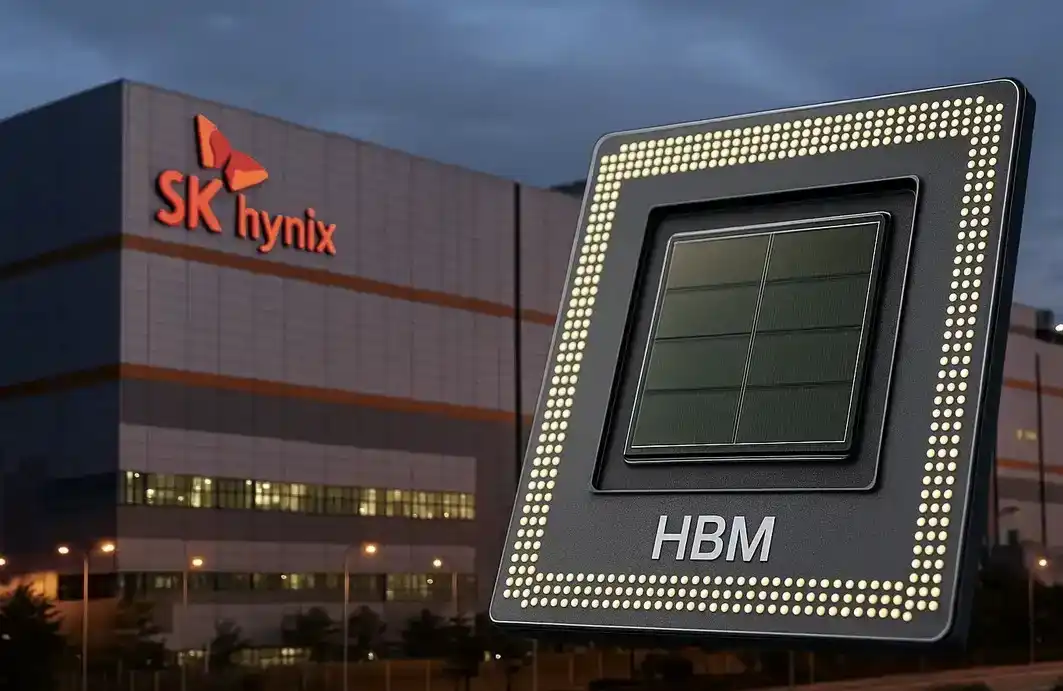
On June 22, 2026, SK Hynix made history by surpassing Samsung Electronics in market capitalization, ending Samsung's 27-year reign as South Korea's most valuable company. This dramatic reversal is powered by the AI boom and SK Hynix's dominant position in High Bandwidth Memory (HBM), a critical component for AI model training. Once a heavily indebted firm on the brink of bankruptcy, SK Hynix bet early on HBM, which has evolved from a niche product to essential AI infrastructure. It now commands a 59% share of the global HBM market. Its financial performance is staggering, with Q1 2026 net profit soaring nearly fourfold year-over-year to KRW 40.35 trillion, translating to over 2 billion RMB in daily net profit. HBM now drives roughly 40% of its revenue with exceptionally high margins. In contrast, Samsung, with its broad portfolio spanning memory chips, smartphones, and foundry services, has lagged in the HBM race while facing headwinds in other divisions. This shift signifies a deeper restructuring of South Korea's economy, moving from consumer electronics to AI-driven growth. However, the future remains competitive. With major capacity expansions planned industry-wide by 2028 and Samsung aiming to catch up in HBM technology, the new market leader cannot afford complacency. This event marks a pivotal moment in the global semiconductor industry's ongoing power realignment.

marsbit38m ago

27-Year Reign Ends: SK Hynix Market Cap Surpasses Samsung for First Time, an AI-Driven Reshuffle of Korean Chip Power

marsbit38m ago

Why Does 'AGI Godfather' Ben Goertzel Believe the Future of AI Relies on Blockchain?

Ben Goertzel, known as the "AGI Godfather," argues that the future of Artificial General Intelligence (AGI) must be built on blockchain to prevent its control by a few corporations or venture capital firms. He believes the core AGI code should be free and open-source, but that this alone is insufficient without a decentralized infrastructure to run it affordably. His blockchain project, SingularityNET, and the broader Artificial Superintelligence Alliance aim to create a user-owned, decentralized network for hosting and deploying AGI, contrasting with the closed models of companies like OpenAI and Anthropic. Goertzel criticizes the shift of other labs from open to closed development. He argues that while a closed path is simpler, an open, decentralized model—akin to Linux and the internet—is both possible and ultimately better for humanity. He envisions an "Agent economy" where individuals orchestrate teams of AI agents to perform tasks, including transactions, on an open network rather than corporate clouds. While his current model relies on cryptocurrency, plans include offering paid AI services to businesses with the decentralized blockchain as the backend. Goertzel predicts human-level AGI could arrive by 2029 and warns that a gap in understanding and access to AGI could drastically worsen inequality. The first test of his decentralized approach will be the upcoming release of the Agent Omega Claw.

Foresight News1h ago

Why Does 'AGI Godfather' Ben Goertzel Believe the Future of AI Relies on Blockchain?

Foresight News1h ago

Trading

Spot
Futures

Hot Articles

What is $BITCOIN

DIGITAL GOLD ($BITCOIN): A Comprehensive Analysis Introduction to DIGITAL GOLD ($BITCOIN) DIGITAL GOLD ($BITCOIN) is a blockchain-based project operating on the Solana network, which aims to combine the characteristics of traditional precious metals with the innovation of decentralized technologies. While it shares a name with Bitcoin, often referred to as “digital gold” due to its perception as a store of value, DIGITAL GOLD is a separate token designed to create a unique ecosystem within the Web3 landscape. Its goal is to position itself as a viable alternative digital asset, although specifics regarding its applications and functionalities are still developing. What is DIGITAL GOLD ($BITCOIN)? DIGITAL GOLD ($BITCOIN) is a cryptocurrency token explicitly designed for use on the Solana blockchain. In contrast to Bitcoin, which provides a widely recognized value storage role, this token appears to focus on broader applications and characteristics. Notable aspects include: Blockchain Infrastructure: The token is built on the Solana blockchain, known for its capacity to handle high-speed and low-cost transactions. Supply Dynamics: DIGITAL GOLD has a maximum supply capped at 100 quadrillion tokens (100P $BITCOIN), although details regarding its circulating supply are currently undisclosed. Utility: While precise functionalities are not explicitly outlined, there are indications that the token could be utilized for various applications, potentially involving decentralized applications (dApps) or asset tokenization strategies. Who is the Creator of DIGITAL GOLD ($BITCOIN)? At present, the identity of the creators and development team behind DIGITAL GOLD ($BITCOIN) remains unknown. This situation is typical among many innovative projects within the blockchain space, particularly those aligning with decentralized finance and meme coin phenomena. While such anonymity may foster a community-driven culture, it intensifies concerns about governance and accountability. Who are the Investors of DIGITAL GOLD ($BITCOIN)? The available information indicates that DIGITAL GOLD ($BITCOIN) does not have any known institutional backers or prominent venture capital investments. The project seems to operate on a peer-to-peer model focused on community support and adoption rather than traditional funding routes. Its activity and liquidity are primarily situated on decentralized exchanges (DEXs), such as PumpSwap, rather than established centralized trading platforms, further highlighting its grassroots approach. How DIGITAL GOLD ($BITCOIN) Works The operational mechanics of DIGITAL GOLD ($BITCOIN) can be elaborated on based on its blockchain design and network attributes: Consensus Mechanism: By leveraging Solana’s unique proof-of-history (PoH) combined with a proof-of-stake (PoS) model, the project ensures efficient transaction validation contributing to the network's high performance. Tokenomics: While specific deflationary mechanisms have not been extensively detailed, the vast maximum token supply implies that it may cater to microtransactions or niche use cases that are still to be defined. Interoperability: There exists the potential for integration with Solana’s broader ecosystem, including various decentralized finance (DeFi) platforms. However, the details regarding specific integrations remain unspecified. Timeline of Key Events Here is a timeline that highlights significant milestones concerning DIGITAL GOLD ($BITCOIN): 2023: The initial deployment of the token occurs on the Solana blockchain, marked by its contract address. 2024: DIGITAL GOLD gains visibility as it becomes available for trading on decentralized exchanges like PumpSwap, allowing users to trade it against SOL. 2025: The project witnesses sporadic trading activity and potential interest in community-led engagements, although no noteworthy partnerships or technical advancements have been documented as of yet. Critical Analysis Strengths Scalability: The underlying Solana infrastructure supports high transaction volumes, which could enhance the utility of $BITCOIN in various transaction scenarios. Accessibility: The potential low trading price per token could attract retail investors, facilitating wider participation due to fractional ownership opportunities. Risks Lack of Transparency: The absence of publicly known backers, developers, or an audit process may yield skepticism regarding the project's sustainability and trustworthiness. Market Volatility: The trading activity is heavily reliant on speculative behavior, which can result in significant price volatility and uncertainty for investors. Conclusion DIGITAL GOLD ($BITCOIN) emerges as an intriguing yet ambiguous project within the rapidly evolving Solana ecosystem. While it attempts to leverage the “digital gold” narrative, its departure from Bitcoin's established role as a store of value underscores the need for a clearer differentiation of its intended utility and governance structure. Future acceptance and adoption will likely depend on addressing the current opacity and defining its operational and economic strategies more explicitly. Note: This report encompasses synthesised information available as of October 2023, and developments may have transpired beyond the research period.

421 Total ViewsPublished 2025.05.13Updated 2025.05.13

What is $BITCOIN

Discussions

Welcome to the HTX Community. Here, you can stay informed about the latest platform developments and gain access to professional market insights. Users' opinions on the price of BTC (BTC) are presented below.

活动图片