Rollup二层网络的三个阶段:从临时辅助轮到最小化信任网络

VitalikPublished on 2022-11-05Last updated on 2022-11-05

Abstract

目前 Rollup 项目共有的一个模式是使用了临时辅助轮。

目前有大量的(optimistic 和 ZK)rollup 项目,它们处于不同的发展阶段。 这些项目共有的一个模式是使用了临时辅助轮:虽然项目的技术仍然不成熟,但为了发展生态的目的,便选择了提前启动,而不是完全依赖其欺诈证明或 ZK 证明,然后有某种多重签名能够在代码中存在漏洞的情况下强制执行特定结果。

L2beat 的风险分析页面,显示了有关各种 rollup 项目的大量统计信息,包括它们的辅助轮状态:
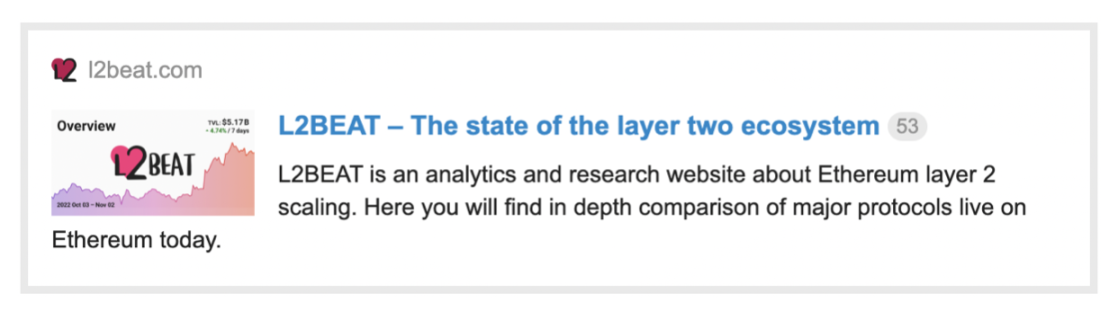
然而,截至今天,这些信息还没有很好地被标准化,这使得用户很难理解特定 rollup 所使用的特定信任模型。 Rollup 团队甚至可能有动力对他们当前的信任模型保持沉默,而是将讨论重点放在完全无需信任的未来。

这篇文章提出了一个简单的基于里程碑的模式,来帮助我们将 Rollup 分为三个不同的阶段(具体取决于它们对辅助轮的依赖程度),这样做是为了实现以下几个目标:

让用户更容易识别特定 Rollup 在多大程度上依赖于「对特定人群的信任」以及「对代码的信任」;

激励 Rollup 项目方改进他们的信任模型,降低信任最小化被取消优先级的风险;

给生态一些精确的里程碑来协调和庆祝,让我们说「The Surge」何时完成一半或完全完成,这与「The Merge」是类似的。

此模式并非旨在暗示一种道德判断,即尽快实现代码信任最大化是唯一正确的行动方案。 Rollup 绝对应该有一个明确的摘掉辅助轮的路线图,但只有在准备好后才应该摘掉辅助轮。

概要

阶段 0:完整的辅助轮

要求:

该项目应该称自己为 Rollup。

所有 Rollup 交易都应该上链。

应该存在一个「rollup 全节点」:一个可独立运行的软件包,它可读取 L1 链,提取和 rollup 链,并计算 rollup 链的当前状态。 如果它不同意发布到合约中的 Rollup 状态根,它应该发出警报。

应该有一种机制允许用户发布 Rollup 交易,或者至少确保在没有运营商合作的情况下提取他们的资产。 即运营商不能通过对用户的审查来冻结或窃取用户的资产;他们这样做的唯一可能工具,必须是发布虚假状态根。

如果发布新状态根的链上机制只是一个多重签名,其中没有任何有效的欺诈证明或有效性证明,那也没关系。

阶段 1 :有限的辅助轮

要求:

必须有一个正在运行的欺诈证明或有效性证明方案,它具有接受或拒绝哪些状态根被 Rollup 合约接受的实际权限。

可以存在基于多重签名的覆盖机制(「安全委员会」),它可以覆盖欺诈证明或有效性证明系统的输出并发布状态根,以防万一证明系统代码被利用。然而:

1)多重签名必须是 6 of 8 或更严格的(即 >= 8 个参与者并且签名阈值 >= 75%)

2)至少有一个仲裁阻止组(即有足够多的参与者来阻止多重签名)必须在运行 Rollup 的组织之外。

可以存在一种升级机制,但如果其阈值低于多重签名,则升级必须具有至少 7 天的强制激活延迟或防欺诈游戏的最长时长(以较长者为准)。这条规则的目标是确保升级机制不能被用来介入实时纠纷。

第 2 阶段:摘除辅助轮

要求:

如果代码没有漏洞,则不得有任何一组参与者(甚至是集体)可发布除代码输出之外的状态根。

这样做(「如果代码没有错误,那么没有人可以覆盖它」)的目的,是摆脱对安全委员会的过度依赖,后者只有在发生明显错误的情况下才能使用,例如:

Rollup 使用其状态转换功能的两个或多个独立实现(例如,两个不同的欺诈证明者,两个不同的有效性证明者,或每一个),只有当他们不同意时,安全理事会才能做出裁决——这只会在有一个漏洞时发生。

如果有人在处理相同的数据后,提交包含两个不同状态根的两个有效证明的交易或一系列交易(即「证明者不同意自己」),控制权暂时移交给安全理事会。

如果 >= 7 天没有提交有效证明(即「证明者被卡住」),控制权暂时移交给安全理事会。

允许升级,但必须延迟 >= 30 天。

Trending Cryptos

Related Reads

With Labour Changing Leaders, Is the Long-Suppressed UK Crypto Market About to Turn Around?

Labour leader change: Hope for UK crypto market? With Keir Starmer's resignation as Prime Minister and Labour leader, a leadership contest has begun. Andy Burnham, the former Mayor of Greater Manchester and now the overwhelming favourite to succeed, has sparked cautious optimism within the UK cryptocurrency industry. Industry figures hope Burnham, seen as more receptive to digital assets than much of the Labour establishment, could shift the party's traditionally harder line. The leadership transition is expected to be swift, with prediction markets like Polymarket assigning a 97% probability to Burnham becoming the next Prime Minister. However, this political shift comes as a comprehensive regulatory framework for crypto, established by law earlier this year, is in its final implementation phase. The Financial Conduct Authority (FCA) is finalizing detailed rules covering trading, custody, stablecoins, and market abuse, with the full regime set to go live in October 2027. While a new Prime Minister can reshuffle ministers and adjust policy priorities, the core regulatory architecture is now law and unlikely to be fundamentally overturned without significant, deliberate government intervention. The main industry hope is that a Burnham government, focusing on economic growth, will ensure the FCA's implementation is pragmatic and growth-oriented. Industry advocates seek proportionate capital requirements, a streamlined licensing process, and clear rules for staking and stablecoins. They argue that embracing the crypto sector could attract investment and listings to London's struggling markets. Despite the optimism, concerns remain that regulatory implementation may still be influenced by more sceptical factions within the Labour party.

Foresight News29m ago

With Labour Changing Leaders, Is the Long-Suppressed UK Crypto Market About to Turn Around?

Foresight News29m ago

A 60-Day Window Depresses Oil Prices, So Why Is the Market Falling Instead?

International oil prices continued to decline on June 23, extending significant losses from the previous session. The market shifted focus from Middle East military risks to actual supply changes following a temporary U.S.-Iran arrangement. The immediate trigger was the resumption of traffic through the Strait of Hormuz, a critical oil shipping chokepoint, with two tankers passing through, signaling eased near-term supply disruption fears. Prices retreated as the "worst-case scenario" was temporarily averted. A reported 60-day window in a U.S.-Iran understanding allows Iran to sell oil during this period, further dampening supply concerns. However, this arrangement is temporary, linked to nuclear talks, and does not guarantee a long-term solution. Market sentiment remains cautious because the deal could still unravel, potentially reinstating sanctions or disrupting shipping. While these developments have lowered immediate risk premiums, prices have not fully returned to pre-conflict levels. Geopolitical news, particularly regarding the stability of the Strait of Hormuz or the progress of negotiations, could quickly reverse the price drop. Additionally, low U.S. strategic petroleum reserves limit the emergency buffer available if supply shocks reemerge. Therefore, the current price decline reflects a reduction in near-term panic, not a complete elimination of Middle East supply risks.

marsbit44m ago

A 60-Day Window Depresses Oil Prices, So Why Is the Market Falling Instead?

marsbit44m ago

SK Hynix Market Cap Exceeds Samsung for First Time in 26 Years, Korean Broker Calls for 50% More Upside

SK Hynix's market capitalization surpassed Samsung Electronics for the first time in 26 years on June 22, reaching 208.1 trillion won. The shift reflects a market trend where companies directly benefiting from AI infrastructure, like SK Hynix, are receiving higher valuation premiums than diversified giants. The surge is driven by AI-driven demand for High Bandwidth Memory (HBM), where SK Hynix holds a dominant 70-80% market share. Its Q1 2026 revenue exceeded 50 trillion won for the first time, with an operating profit margin of 72%. Hanwha Investment & Securities significantly raised its price target for SK Hynix to 430,000 won, the highest among Korean brokerages. The key rationale is that Long-Term Supply Agreements (LTAs) and robust HBM demand have fundamentally reduced the company's historical profit volatility. Several other brokers have also raised targets, arguing the valuation framework for memory semiconductors is being rewritten, moving away from a cyclical model. Despite the bullish outlook, the stock experienced a pullback of over 5% in regular trading on June 23 after briefly surpassing 3 million won pre-market, amid broader tech sector weakness. Some analysts caution that the市值 overtaking Samsung, whose profit scale and growth forecasts remain higher, could signal short-term overheating. However, high-return investors viewed the dip as a buying opportunity.

marsbit1h ago

SK Hynix Market Cap Exceeds Samsung for First Time in 26 Years, Korean Broker Calls for 50% More Upside

marsbit1h ago

GPU Rental Prices Drop 30% in Three Weeks: AI Value Chain Migrating from Nvidia to Memory Chips

GPU rental prices for Nvidia's flagship B200 chip have fallen by approximately 30% over three weeks, dropping from a high of $6.11/hour to $4.22/hour. This decline signals a potential easing of the "compute scarcity" narrative that has long supported AI hardware valuations. Concurrently, the semiconductor market is witnessing a significant divergence: while the VanEck Semiconductor ETF (SMH) has risen 15% in the past month, with memory giants Micron and SanDisk each surging nearly 60%, Nvidia's stock has declined about 3% over the same period. Analysts suggest this shift indicates that the AI value chain's bottleneck and profits are migrating from compute (GPUs) to memory. Demand for high-bandwidth memory (HBM) remains intensely strong, with contract prices soaring over 100% in H1 2026, granting memory manufacturers significant pricing power. In contrast, increased B200 supply from improved manufacturing yields and competitive pressure from new cloud providers are softening GPU rental rates. While long-term contracts, like SpaceX's $30 billion deal with Google, show sustained large-scale demand for Nvidia hardware, the softening spot prices pressure the margins of cloud providers and could eventually impact Nvidia's order flow if chip prices don't adjust. The key takeaway for investors is not a weakening AI thesis, but a recalibration within the sector: pricing power appears to be strengthening for memory chipmakers while showing signs of strain for leading GPU suppliers.

marsbit1h ago

GPU Rental Prices Drop 30% in Three Weeks: AI Value Chain Migrating from Nvidia to Memory Chips

marsbit1h ago

Trading

Spot
Futures

Hot Articles

Discussions

Welcome to the HTX Community. Here, you can stay informed about the latest platform developments and gain access to professional market insights. Users' opinions on the price of ETH (ETH) are presented below.

活动图片