
数据分析:合并后的以太坊状态

去中心化金融社区Published on 2022-11-04Last updated on 2022-11-04

Abstract

合并已经过去了近两个月,这是以太坊历史上最大的升级。

合并已经过去了近两个月,这是以太坊历史上最大的升级。在数据深度挖掘中,我们研究了市场是如何受到影响的,网络的关键基本面是如何发展的,到目前为止ETH发行的变化,以及与以太坊质押收益相关的图表。

市场影响

合并的结果是一个“谣言买入,消息卖出”类型的事件,由于预期升级,价格上涨到近2000美元,但在9月15日合并前后跌至1250美元。尽管如此,这个最受欢迎的智能合约区块链的原生代币已经反弹,在最近几周回升到1500美元以上。

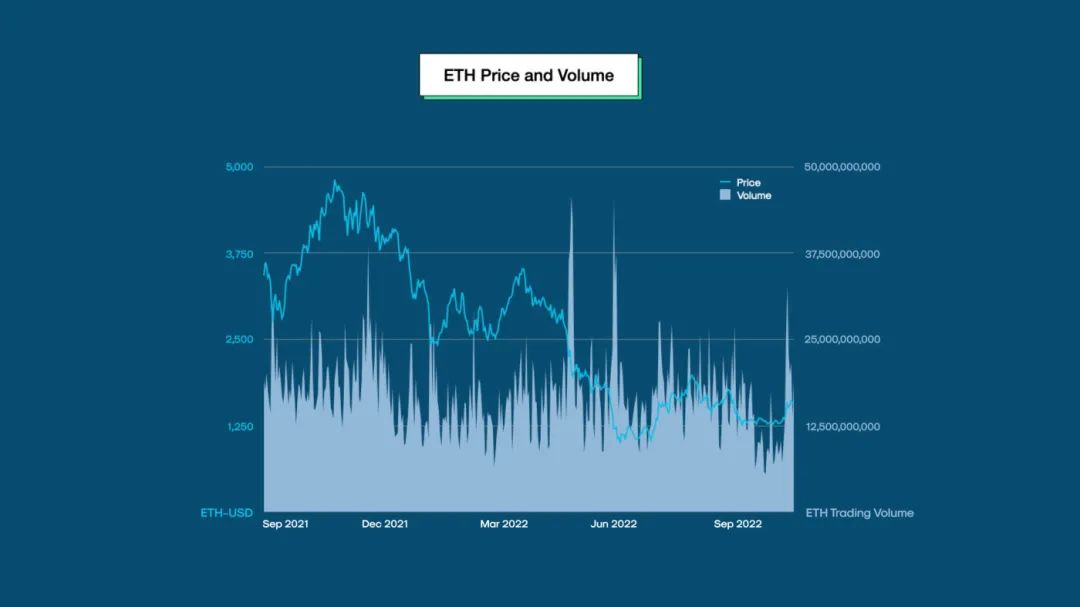
下图显示了合并前一年以来ETH的价格和交易量。ETH的交易量在合并后降至年度低点,但随后有所回升,10 月份交易量升至市场触底 880 美元左右以来的最高点。
资料来源:Santiment

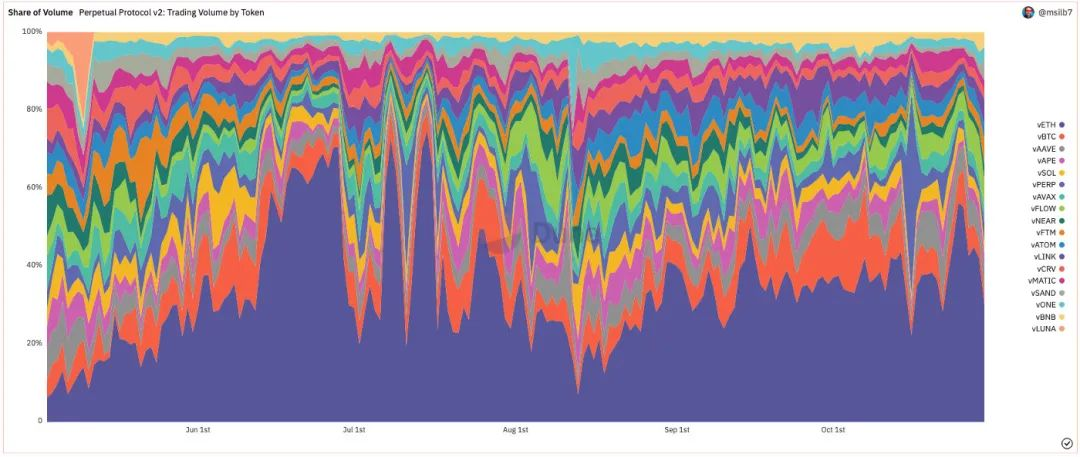
最近交易量的上升对ETH来说是一个积极的信号。随着市场的广泛趋势,ETH-USD市场在Perp v2上的交易量份额持续上升,从8月份的不到20%上升到10月26日的三个月高点56%。
资料来源:沙丘分析

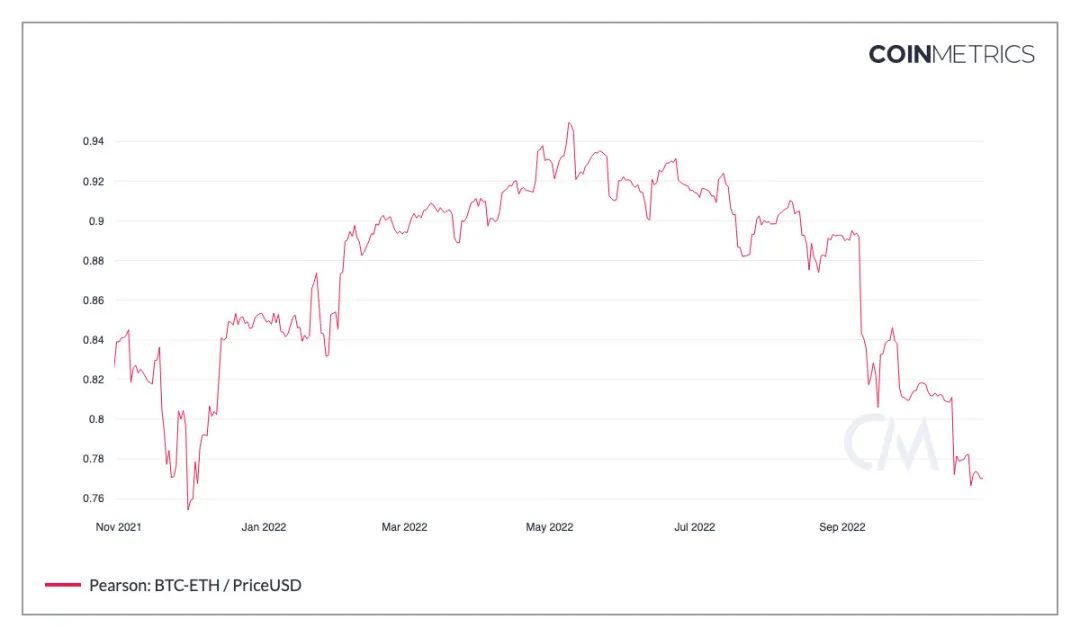
除了ETH价格的回升,另一个积极的迹象是,过去60天内与BTC的相关性达到了2021年12月以来的最低值,触及了+0.77的低点。然而,ETH与BTC在短期内保持着很大的正相关关系,30日指标目前接近+0.90。
资料来源:CoinMetrics

ETH交易者可能不会再受股市的左右

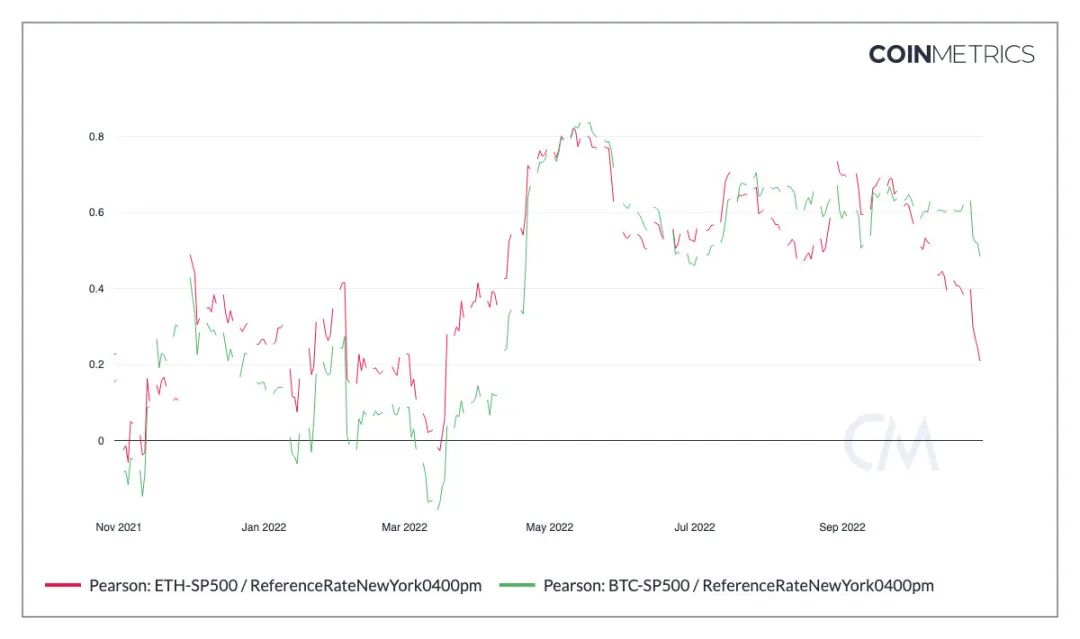
ETH和标准普尔500指数之间的30天相关性最近达到7个月以来的最低点,从5月份的+0.82下降到10月28日的+0.20。比特币和以太坊都没有表现出与标准普尔500指数同步的趋势,但以太坊的这种短期脱钩要明显和迅速得多。
资料来源:CoinMetrics

从现在开始关注这些相关性趋势,寻找加密货币将再次独立于传统市场进行交易的任何迹象。随着ETH逐渐接近“超稳健货币”的状态,这一关键叙事的实现可能会在未来几周或几个月加速进一步脱钩,并在中期成为代币价格的积极迹象。

以太坊的基本面表现如何?

通过观察以太坊的链上数据,一个明显的主要变化是区块时间现在更加一致了。在工作量证明方法下,以太坊的区块时间经常变化很大,因为挖矿遵循泊松过程。

但自从9月15日向权益证明过渡以来,区块时间的波动性大大降低,稳定在12秒左右。以太坊的链内部使用slot和epoch来测量时间,而不是用区块,其中每个slot是12秒,每个epoch是32个slot。有时区块时间为24或36秒,这是验证者错过slot时的情况。
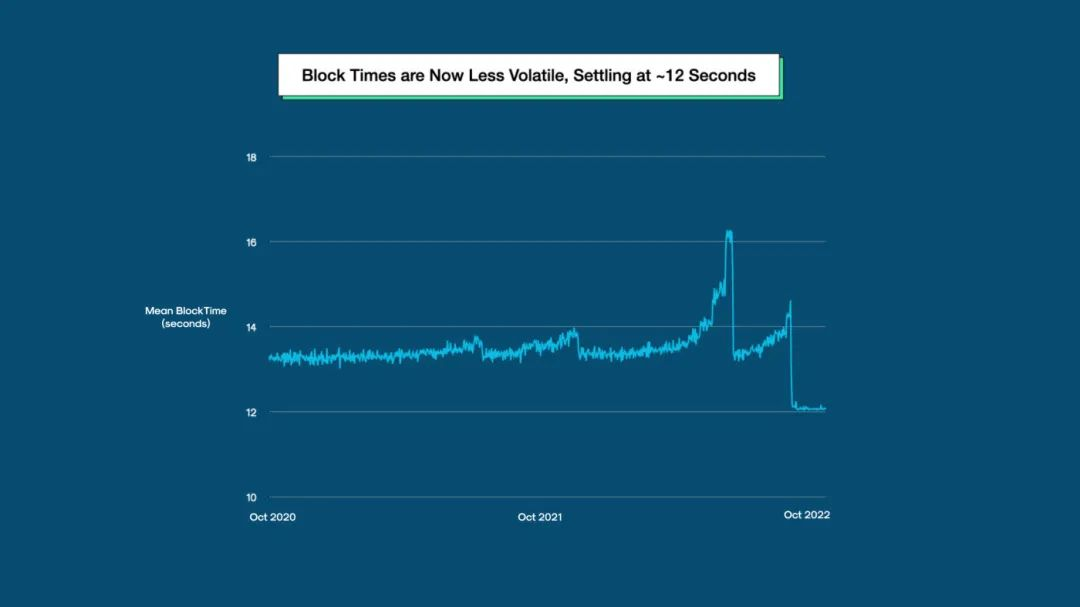
资料来源:Glassnode

另一个相关数据点是存放到信标链的代币数量。如下图所示,10月最后一周新增存款接近25万个ETH,这是自4月以来的最大流入。在合并后的几周内,近45万个ETH被存入到质押合约,这代表超过有2700个新储户。
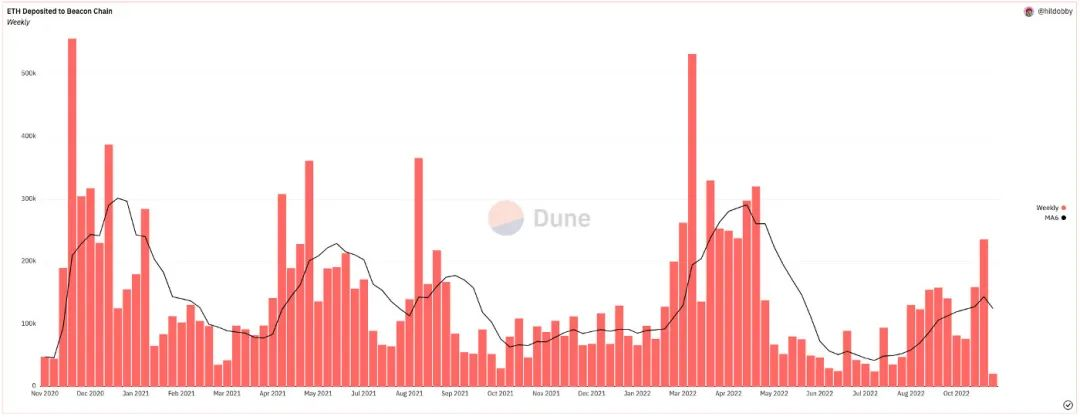
资料来源:沙丘分析

在更多的代币被质押和新储户涌入之前,以太坊见证了有史以来第四大日交易高峰,涉及已休眠两年或两年以上的代币:在保持不活跃至少两年之后,共有108万个ETH移动到链上。这是自2021年11月15日以来此类代币的最大移动,在2021年11月15日,随着价格从历史高点下降,共移动了210万枚。

被转移的休眠 ETH 很可能是来自为预期合并的“出售新闻”所影响的卖家和存入信标链以作为验证者赚取收益的投资者。如下图所示,两年休眠流通的峰值通常与市场的主要转折点相对应。
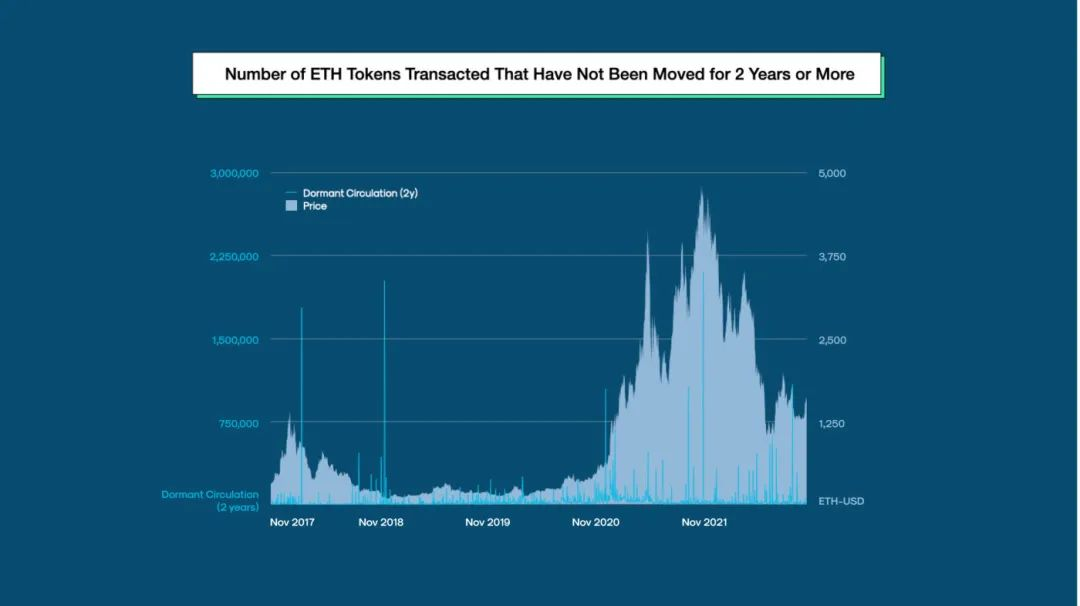
资料来源:Santiment

例如,当ETH在6月中旬的880美元左右触底时,休眠代币的数量出现了很大的峰值。考虑到不断改善的供应动态,休眠代币变得活跃的数量大量增加可能标志着ETH新的看涨阶段的开始。

对ETH发行的影响

ETH正处于成为通缩资产和实现“超稳健货币”叙事的边缘。

在工作量证明下,每年ETH的发行估计在500万左右。在合并之后,发行现在取决于信标链的存款总额,如以下公式所示:

166 * 12 (total_deposits)

目前信标链的总存款约为1466万个ETH,将该值代入上述公式,我们就可以估算出权益证明下的年发行量:每年约63.6万个ETH。然而,由于存款可能随着时间的推移而变化,很难预测ETH每年发行的确切数字。

然而,如果以太坊继续使用工作量证明,过去48天的发行将几乎与权益证明下的全年发行相当,合并以来的总供应量增加了近2600个额外的ETH单位。下图显示了ETH供应的变化率,其中新发行的代币的增长率目前为每年0.016%(相比之下,比特币为1.716%,如果以太坊继续使用权益证明,则为3.607%)。
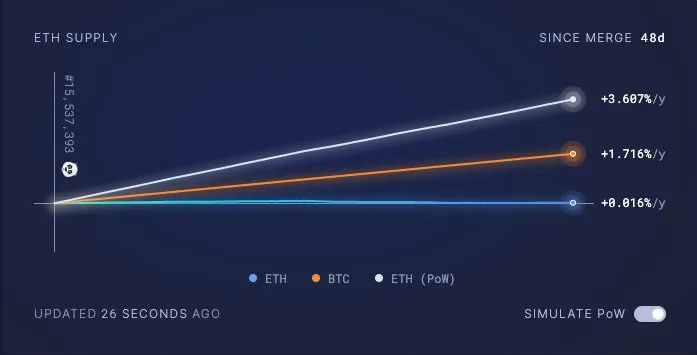
资料来源: ultrasound.money

虽然合并减少了发行,但EIP-1559是ETH变得通货紧缩的主要决定因素,因为当以太坊的区块空间需求增加时,费用的销毁显著的减少了供应。因此,随着需求的增加,平均gas价格上升到15.5 Gwei的“超声波”阈值以上,消耗的ETH将比通过验证者奖励发放的更多。

由于信标链的提款还没有启动,验证者获得的所有质押奖励基本上都是锁定的,直到上海升级发生。其影响之一是:自合并以来,ETH的自由流通供应量下降,自9月14日以来下降了170,000代币。

自由流通供应量反映了流动性市场,不包括已销毁、可证明丢失、在信标链中质押的代币数量等。随着自由流通供应量的持续下降,随着时间的推移,这可能有利于ETH的价格,因为更多的代币通过销毁的交易费用和信标链的存款退出流通。
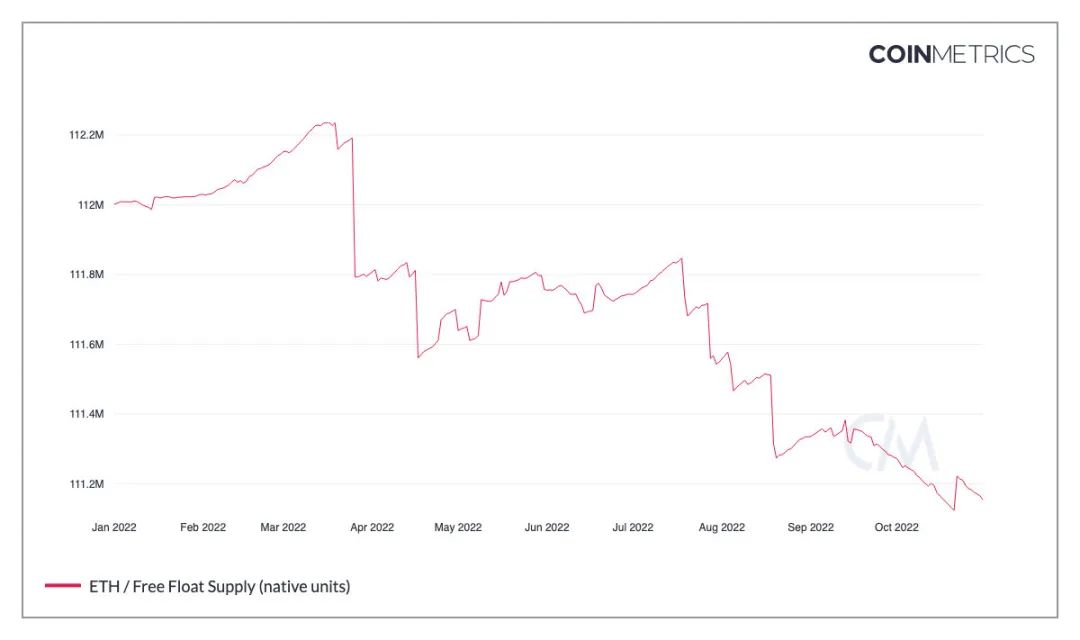
资料来源:CoinMetrics

质押收益

与ETH的发行一样,验证者的收益也取决于有多少代币被存入并锁定到信标链中。目前约有 12% 的供应被质押,这一数字最近超过了 1450 万个 ETH 大关。

在合并之前,矿工以以下形式获得奖励:每个新区块的发行,希望交易更快被包含的用户的优先级小费和MEV(最大可提取值)。随着以太坊转向权益证明,验证者现在获得了这些以前分配给矿工的奖励。

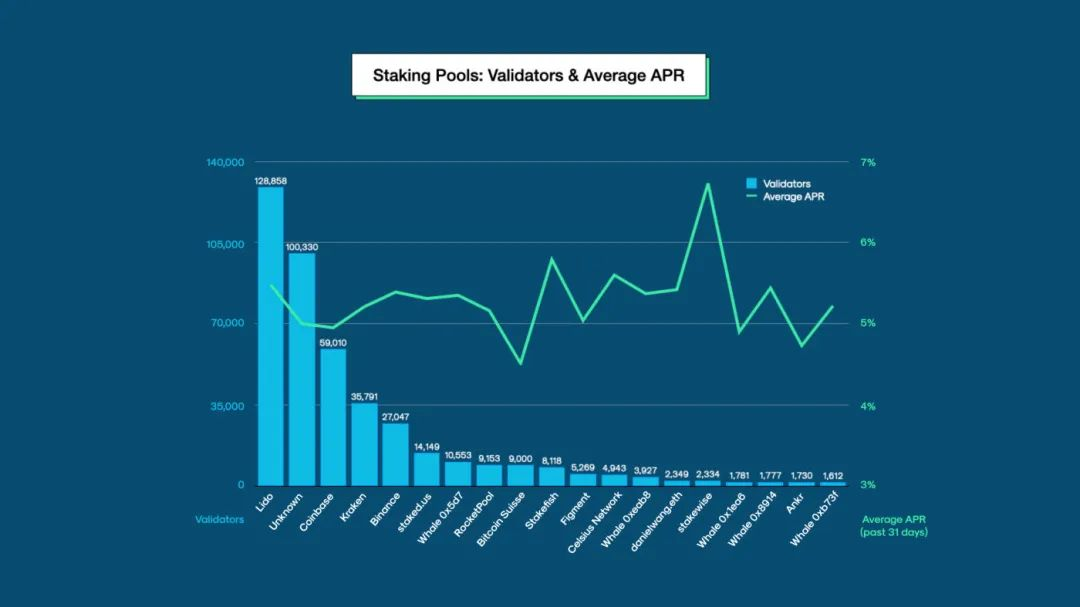
因此,通过包含优先级小费和MEV,它提高了以太坊验证者的质押收益率。下图使用的数据来自beaconcha.in,前20个权益池在过去31天的平均收益率在4.5%-6.7%之间。
以太坊的下一个升级,上海升级,可能会允许部分和全部退出信标链。因此,流动性质押衍生品(以下简称lsd)已成为质押ETH的流行机制,因为验证者从这些产品中受益。

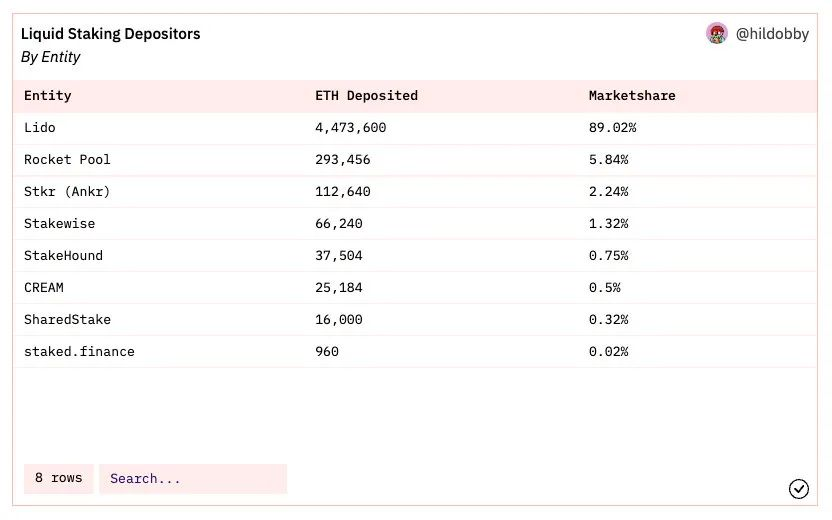
Lido的stETH仍然是最主要的LSD,质押份额约为30%,LSD市场份额接近90%,其次是RocketPool。除了保持其作为LSD领导者的地位,stETH还通过在以太坊最受欢迎的第2层建立业务而扩展了自己的影响力。
资料来源:沙丘分析

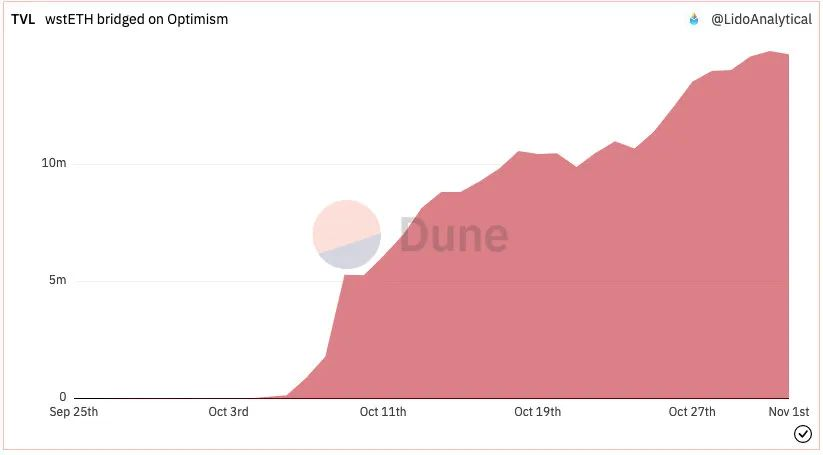
自从在Optimism上发布以来,已经有超过8600个wstETH被桥接,总锁定价值(TVL)接近1500万美元。尽管在现有的所有 stETH 中只占很小的一部分,但随着第 2 层和 ETH 质押获得更多动力,我们预计 stETH 将继续增长。
资料来源:沙丘分析

由于向 LP 分配了 LDO 代币,目前 Optimism 上超过 50% 的 stETH 的 TVL 归功于两个稳定的池,它们目前提供约 8-9% 的 APR:

质押大战正在升温。

DeFi的伟大之处在于它具有高度的竞争力,为用户提供了一系列的选择和更好的产品。虽然Lido仍然是LSD领域的领头羊,但在10月份,我们看到了一个新的市场进入者:Frax Finance。

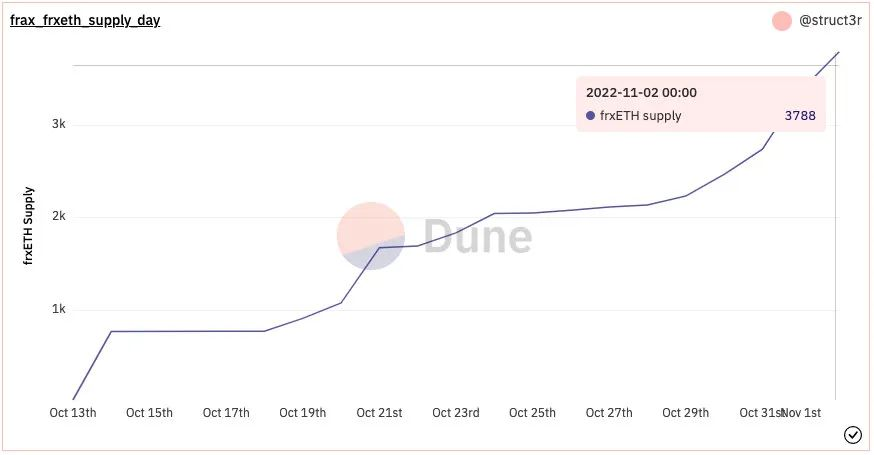
Frax自己的LSD (frxETH)有望成为收益率最高的LSD,因为它也集成到Fraxlend、Curve 和 Fraxswap中。下图显示,frxETH的供应量在短短几周内从0上升到3788,其中77%的代币由近100个验证者质押。
资料来源:沙丘分析

与stETH等重基代币不同,Frax利用了一个双代币模型:

frxETH:一种非收益的ERC-20代币,与ETH挂钩,旨在用于DeFi。持有者可以向ETH/FrxETH的Curve池提供流动性以获得CRV、CVX和FXS,或质押FrxETH以获得sFrxETH。

sFrxETH:一个ERC-4626质押金库,从新发行、小费和MEV提升中收集所有质押奖励。

因此,FrxETH持有者必须二选一,或者在ETH/FrxETH的Curve池中当LP,或者进行质押以获得验证者奖励,因此并非所有FrxETH都将被质押。由于Frax的验证者将继续获得奖励,那些质押和持有sFrxETH的人应该比其他LSD获得更高的收益。

除了Frax等新进者之外,其他协议也在帮助减少以太坊的权益集中化,如IndexCoop即将推出的meta-LSD,即多元化权益ETH指数(dsETH)。诸如IndexCoop的dsETH指数等产品将有助于促进DeFi协议在流动性质押市场上的竞争。

另一个这样的协议是Gravity,它以无息和资本高效的方式促进ETH和LSD的借款。用户可以借入Gravity的稳定币,以零利息抵押ETH、stETH、rETH等资产。它希望对抗以太坊的集中化风险的方式是,通过在整个流动质押领域共享杠杆和流动性,为这些持有者提供效用,从而促进小型LSD的增长。

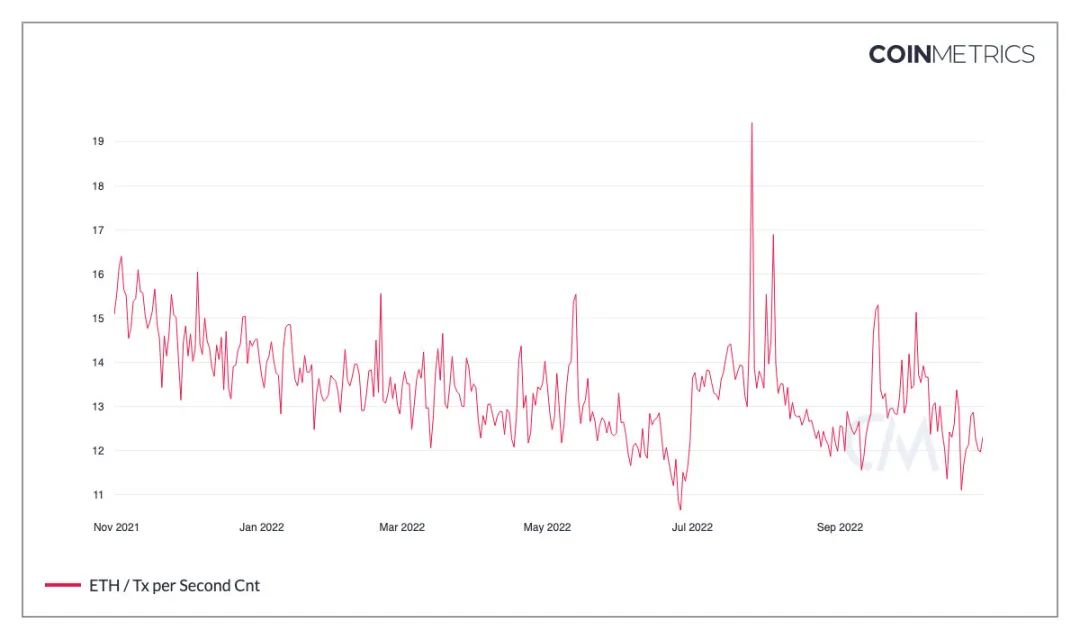
虽然合并为减少ETH发行、提高区块时间稳定性和更环保的区块链奠定了基础,但它实际上并没有带来任何可扩展性方面的收益,目前由Layer 2处理。
资料来源:CoinMetrics

对于以太坊来说,最大的可扩展性收益在于“Surge”的未来道路上,其中分片的引入将大幅增加每秒可以处理的交易数量。一旦Surge完成,以太坊将在交易吞吐量方面与MasterCard和Visa等最中心化和最成熟的支付网络竞争。


Trending Cryptos

Related Reads

Deep Insight: Decentralized Inference is Not Hype, but a Key Track for AI to Break Through Centralized Monopoly

Decentralized Reasoning: Beyond the Hype, a Key to Breaking AI's Centralized Monopoly A future scenario where a powerful AI model is banned by a major government illustrates the core value proposition of decentralized AI: resistance to censorship. The core bet of decentralized inference networks is mitigating this risk, with other benefits like cost being secondary. The path is extremely difficult, involving four key challenges: 1. **Running Massive Models:** Distributing a single model across a decentralized GPU swarm requires sophisticated techniques like pipeline and speculative decoding to overcome crippling network latency, aiming for usable speeds (e.g., 30-40 tokens/second). 2. **Proving Model Integrity:** Verifying that a node runs the correct model is critical. Solutions range from cryptographically secure but slow ZKML to faster, economically-secure methods like statistical fingerprints, deterministic re-execution, or live-weight proofs, each involving trade-offs between integrity, latency, and cost. 3. **Ensuring Prompt Privacy:** Simply sharding a model does not protect user inputs from nodes. Robust solutions currently require trusted hardware (TEEs) or advanced cryptography (FHE), which are not yet widely deployed in consumer swarms. 4. **Building a Real Market:** Identifying the ideal customer is tough. Beyond speculative AI agents, the viable market currently consists of startups embedding AI and projects needing batch processing (e.g., synthetic data generation), where decentralized aggregation can be an advantage over low-latency needs. The article analyzes several projects tackling these problems, such as Dolphin Network (live-weight proofs), Inference.net (statistical verification), Morpheus (TEE-based), and Darkbloom (Apple Secure Enclave). It provides a framework: decentralization is a "tax" for latency-sensitive applications (e.g., chat) but a potential supply-side advantage for throughput-oriented tasks (e.g., batch processing). The long-term vision is a closed data loop where decentralized inference generates valuable data (traces, preferences) to feed decentralized training networks, which in turn produce better open-weight models for the inference networks. A due diligence checklist advises focusing on projects that: are truly decentralized at specific layers; have a credible integrity method; offer real cost benefits; ensure genuine privacy; handle node reliability; have paying users; and are built by teams with deep AI expertise. The ultimate goal should be products that appeal beyond the crypto-native audience, using crypto mechanisms invisibly to deliver better cost, performance, or privacy.

Foresight News14m ago

Deep Insight: Decentralized Inference is Not Hype, but a Key Track for AI to Break Through Centralized Monopoly

Foresight News14m ago

The Final Piece of Franklin Templeton's Crypto Ambition

Franklin Templeton Completes Crypto Ambition with Acquisition of 250 Digital On June 22, Franklin Templeton announced the acquisition of 250 Digital and established Franklin Crypto, a new division focused on actively managed cryptocurrency strategies for institutional investors. The unit is led by Christopher Perkins and Seth Ginns. This acquisition marks a key piece in Franklin Templeton's multi-year crypto strategy, which began in 2018 with a digital assets team. The firm's crypto product suite now spans three layers: tokenized funds like the blockchain-based money market fund BENJI (~$831M AUM); a series of passive ETFs including Bitcoin (EZBC, ~$368M), Ethereum (EZET), XRP (XRPZ, ~$252M), Solana (SOEZ), and a multi-crypto index fund (EZPZ); and the newly added active management strategies from Franklin Crypto. The company has also expanded its crypto ecosystem through investments in projects like Ethena and Crossmint, and collaborations with blockchains such as Aptos and Sui. With approximately $18B in digital asset AUM and a total firm AUM of ~$1.78T, Franklin Templeton is positioning itself as a comprehensive crypto asset manager for pensions and sovereign wealth funds. In contrast, competitor Fidelity Investments has taken a different path, focusing early on building its own custody and trading infrastructure. Fidelity's Bitcoin ETF (FBTC) holds over $11B, significantly larger than Franklin Templeton's equivalent offering. Both giants' moves underscore the deepening trend of traditional finance entering the crypto space.

Foresight News37m ago

The Final Piece of Franklin Templeton's Crypto Ambition

Foresight News37m ago

Trading

Spot
Futures

Hot Articles

What is $BITCOIN

DIGITAL GOLD ($BITCOIN): A Comprehensive Analysis Introduction to DIGITAL GOLD ($BITCOIN) DIGITAL GOLD ($BITCOIN) is a blockchain-based project operating on the Solana network, which aims to combine the characteristics of traditional precious metals with the innovation of decentralized technologies. While it shares a name with Bitcoin, often referred to as “digital gold” due to its perception as a store of value, DIGITAL GOLD is a separate token designed to create a unique ecosystem within the Web3 landscape. Its goal is to position itself as a viable alternative digital asset, although specifics regarding its applications and functionalities are still developing. What is DIGITAL GOLD ($BITCOIN)? DIGITAL GOLD ($BITCOIN) is a cryptocurrency token explicitly designed for use on the Solana blockchain. In contrast to Bitcoin, which provides a widely recognized value storage role, this token appears to focus on broader applications and characteristics. Notable aspects include: Blockchain Infrastructure: The token is built on the Solana blockchain, known for its capacity to handle high-speed and low-cost transactions. Supply Dynamics: DIGITAL GOLD has a maximum supply capped at 100 quadrillion tokens (100P $BITCOIN), although details regarding its circulating supply are currently undisclosed. Utility: While precise functionalities are not explicitly outlined, there are indications that the token could be utilized for various applications, potentially involving decentralized applications (dApps) or asset tokenization strategies. Who is the Creator of DIGITAL GOLD ($BITCOIN)? At present, the identity of the creators and development team behind DIGITAL GOLD ($BITCOIN) remains unknown. This situation is typical among many innovative projects within the blockchain space, particularly those aligning with decentralized finance and meme coin phenomena. While such anonymity may foster a community-driven culture, it intensifies concerns about governance and accountability. Who are the Investors of DIGITAL GOLD ($BITCOIN)? The available information indicates that DIGITAL GOLD ($BITCOIN) does not have any known institutional backers or prominent venture capital investments. The project seems to operate on a peer-to-peer model focused on community support and adoption rather than traditional funding routes. Its activity and liquidity are primarily situated on decentralized exchanges (DEXs), such as PumpSwap, rather than established centralized trading platforms, further highlighting its grassroots approach. How DIGITAL GOLD ($BITCOIN) Works The operational mechanics of DIGITAL GOLD ($BITCOIN) can be elaborated on based on its blockchain design and network attributes: Consensus Mechanism: By leveraging Solana’s unique proof-of-history (PoH) combined with a proof-of-stake (PoS) model, the project ensures efficient transaction validation contributing to the network's high performance. Tokenomics: While specific deflationary mechanisms have not been extensively detailed, the vast maximum token supply implies that it may cater to microtransactions or niche use cases that are still to be defined. Interoperability: There exists the potential for integration with Solana’s broader ecosystem, including various decentralized finance (DeFi) platforms. However, the details regarding specific integrations remain unspecified. Timeline of Key Events Here is a timeline that highlights significant milestones concerning DIGITAL GOLD ($BITCOIN): 2023: The initial deployment of the token occurs on the Solana blockchain, marked by its contract address. 2024: DIGITAL GOLD gains visibility as it becomes available for trading on decentralized exchanges like PumpSwap, allowing users to trade it against SOL. 2025: The project witnesses sporadic trading activity and potential interest in community-led engagements, although no noteworthy partnerships or technical advancements have been documented as of yet. Critical Analysis Strengths Scalability: The underlying Solana infrastructure supports high transaction volumes, which could enhance the utility of $BITCOIN in various transaction scenarios. Accessibility: The potential low trading price per token could attract retail investors, facilitating wider participation due to fractional ownership opportunities. Risks Lack of Transparency: The absence of publicly known backers, developers, or an audit process may yield skepticism regarding the project's sustainability and trustworthiness. Market Volatility: The trading activity is heavily reliant on speculative behavior, which can result in significant price volatility and uncertainty for investors. Conclusion DIGITAL GOLD ($BITCOIN) emerges as an intriguing yet ambiguous project within the rapidly evolving Solana ecosystem. While it attempts to leverage the “digital gold” narrative, its departure from Bitcoin's established role as a store of value underscores the need for a clearer differentiation of its intended utility and governance structure. Future acceptance and adoption will likely depend on addressing the current opacity and defining its operational and economic strategies more explicitly. Note: This report encompasses synthesised information available as of October 2023, and developments may have transpired beyond the research period.

431 Total ViewsPublished 2025.05.13Updated 2025.05.13

What is $BITCOIN

Discussions

Welcome to the HTX Community. Here, you can stay informed about the latest platform developments and gain access to professional market insights. Users' opinions on the price of BTC (BTC) are presented below.

活动图片