zkSync 2.0 主网即将上线,带来了连V神都在期待的东西

白话区块链Published on 2022-10-28Last updated on 2022-10-28

Abstract

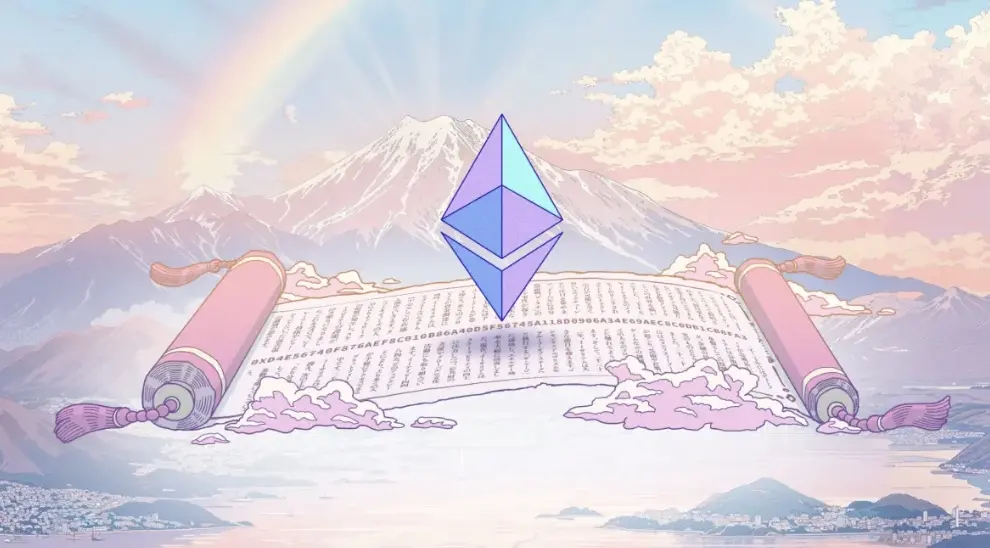
不出意外的话,以太坊 Layer 2 扩容解决方案 zkSync 将于今日正式上线 2.0 主网(主要是做压力测试和安全工作)。

不出意外的话,以太坊 Layer 2 扩容解决方案 zkSync 将于今日正式上线 2.0 主网(主要是做压力测试和安全工作)。

作为 zkEVM 兼容(一种兼容 EVM 同时又对零知识证明友好的虚拟机)的 L2 区块链,此次升级或将成为整个 Layer2 尤其是 zkEVM 试金的开端。

01

zkSync:以太坊基金会青睐的 ZK-Rollups 方案

作为 Matter Labs 开发的基于 ZK-Rollups 架构的以太坊扩容方案,可谓是含着金汤匙出生:2019 年 3 月便获得以太坊基金会第五波赠款计划的资助,用于支持其在零知识证明的 L2 扩展方面的工作。

随即半年后的 2019 年 9 月份便获得 Placeholder VC 领投的 200 万元种子轮融资,彼时正处于加密市场的上一轮寒冬底部,此后 zkSync 更是受到资本青睐:

2021 年 3 月完成 5000 万美元 A 轮融资,Union Square Ventures 领投,其他投资方包括 Placeholder、1kx 和 Dragonfly 等

今年 1 月 Matter Labs 也成立价值 2 亿美元的 DAO 组织,由 BitDAO 支持,计划通过公共产品、基础设施、安全框架、研发资助以及对其他加密组织的投资来帮助扩展 zkSync 生态系统

总的来看,虽然 zkSync 总融资金额在一众 Layer2 天王中算不上特别出彩,但在创立初期能获得以太坊基金会的认可,以及加密寒冬中仍能收获资本支持,足见成色。

而项目进展方面,zkSync 最早于 2020 年 6 月上线 1.0 主网,主要聚焦于支付目的,也即只支持链上 Layer2 转账(相信不少小伙伴都有过在 Gitcoin 上使用 zkSync 进行转账赠款的经历),不支持智能合约部署,这也限制了其 DApp 生态的发展。

随后 2020 年 10 月 Matter Labs 推出 zkSync 智能合约测试网 Zinc Alef,Curve 为首个部署 DApp,但并没有兼容 EVM,走的是定制路线。
而其完全兼容 EVM 的通用 2.0 测试网,直到今年 2 月份才推出——发布了面向开发人员和用户的工具 Portal,包含钱包、Token桥、请求测试 ETH 的水龙头等。

而此次 2.0 主网的启动,也意味着作为与 EVM 兼容的 ZK-Rollup,zkSync 走在了一众 Layer2 擂台赛的前列。

02

zksync 生态

根据 zkSync 官网生态全景,zkSync 生态目前共有 160 多个项目,涵盖钱包、DeFi、基础设施、支付网关、公共产品、社交、隐私、NFT 等多元化赛道。

不过这 160 个项目包含已支持或即将支持的 DApp,且大部分为尚未支持,目前已集成 zkSync 的项目仅有 20 个左右,且钱包(4 个)和 DeFi(8 个)加起来就已过半,实际生态仍比较单一。

这主要是因为 zkSync 1.0 尚不兼容 EVM,导致 zkSync 上实际可用的原生 DApp 较为单薄,因此本次 zkSync 2.0 正式上线才会如此引人注目——预计 zkSync 2.0 正式上线后才会在 DeFi 和 NFT 等其它领域推动生态发展。
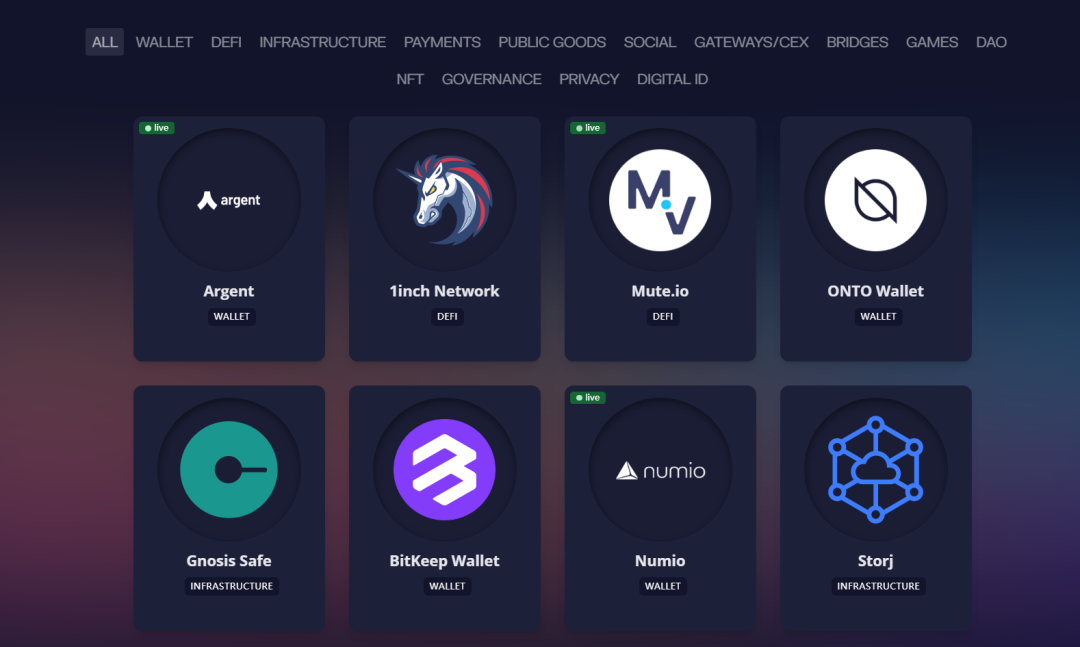
因此 ,简单盘点几个已上线的原生 DApp 应用:

1)Orbiter Finance

Orbiter Finance 是一个Layer2 跨 Rollup 桥,目前支持在以太坊、zkSync、Arbitrum、Polygon、Optimism 之间转移 ETH 和 USDC,不少用户也将其作为主要的 zkSync 体验(刷空投)途径之一。

2)ZigZag

ZigZag Exchange 是一个基于 ZK-Rollup 的订单簿 DEX,支持以太坊和 zkSync 的资产兑换。此前在 Terra 崩盘中由于 ZigZag 与 UST 的深度绑定而备受冲击,至今尚有缓不过来的迹象,前阵子称将在 zkSync 2.0 主网上线后启动 ZigZag DAO。

3)Argent

此前 Argent 全面开放 Layer2 账户注册,现在任何人都可以访问其以太坊 zkSync 网络钱包。

4)Numio

Numio 是一个基于以太坊和 zkSync 的 Layer2 移动钱包应用,该应用还集成了加密资产购买和兑换功能。根据路线图,Numio 之后会集成其他 Layer2 解决方案,以及整合 NFT、DeFi 功能,包括挖矿和借代等。

5)zkSync:zkEVM 的「优等生」

前不久的韩国区块链周上,Vitalik 又双叒叕一次重申了在 Layer 2 大战中对 ZK -Rollup 的看好:

仍然相信今天的一些 Optimistic Rollup 项目会成功,但预计今天致力于扩展以太坊的一些 Optimistic Rollup 项目将转向拥抱 ZK-Rollups,因为 ZK-Rollups 具有「基本优势」,甚至直言「ZK-Rollup 很可能是以太坊的顶级 Layer2 扩展武器」。

一般来说,ZK-Rollup 的工作方式是在链下执行批量交易,并定期在 L1 上发布证明,以证明这些交易的有效性。而 zkEVM 通过使用证明电路来生成证明,以验证 EVM 执行的程序的正确性,从而将这个概念向前推进了一步。

因此对于许多人来说,zkEVM 被视为扩展以太坊的「终局」——zkEVM 是第一个与以太坊完全兼容的 ZK 扩容解决方案,它使开发人员可以非常轻松地从与 EVM 兼容的链中迁移他们的 DApp。
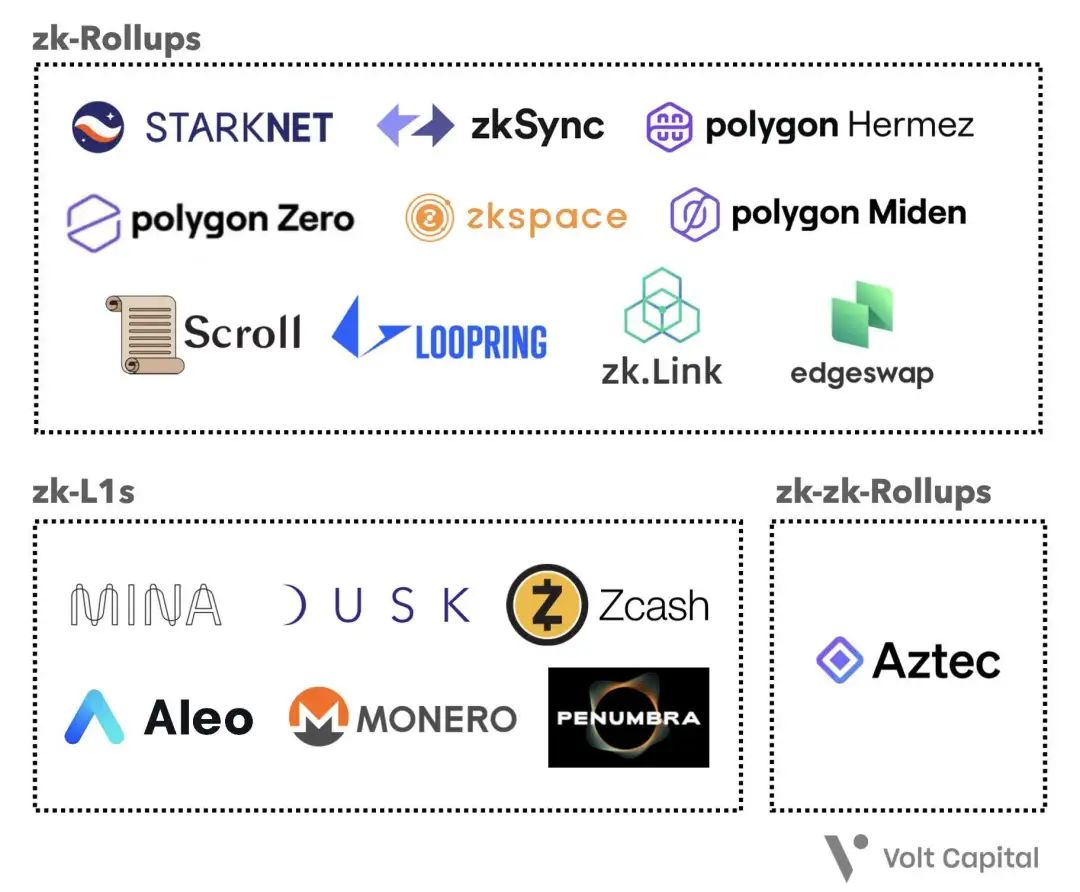
目前有许多团队在推动 zkEVM 的研发,包括:

Polygon zkEVM、Scroll,它们更关注 EVM 等效性

zkSync、StarkWare(StarkNet),它们更注重更注重证明速度

其中 zkSync 正处于发布 zkSync 2.0 的风口浪尖,按照他们自己的说法:「这将是第一个优化后的端到端 zkEVM」。

根据前不久公布的路线图,zkSync 2.0 主网 10 月 28 日上线后 1 个月内,除了 Matter Labs 团队外,其他人无法使用。

而在初步测试后,四季度开发人员可以在主网上进行移植和开发;今年年底前一旦所有安全检查都通过,将向外部用户开放(当然关于其Token的相关消息也开始逐步在坊间流传)。

这也意味着 zkSync 官网那 100 多个处于等待行列的 DeFi、NFT 等其它领域的 DApp,将逐步完成迁移,从而助推目前数目多的 zkEVM 生态逐步成型。

04

小结

如今在以太坊合并已经完成一个半月的当下,尤其是在当下加密市场情绪低迷的背景下,Layer2 尤其是 zkEVM 在接下来整个以太坊生态的所扮演的角色尤其吃重(毕竟 OP Rollup 的生态已经成型,只是效果不尽如人意):

能否带来新的叙事空间,能否直接获得以太坊的网络效应,从而兼顾生态与可扩展性权衡?

叫嚷了两年的 Layer2 盛夏,到了最终试金验收的时刻。

Trending Cryptos

Related Reads

Foundation Steps Back, Ethlabs Steps Forward: Ethereum Undergoes Its Largest Restructuring in History

On June 23rd, the Ethereum ecosystem witnessed two major shifts, signaling a significant governance realignment. First, former Ethereum Foundation researchers established Ethlabs, a new independent non-profit. Backed by major ETH holders like Bitmine and SharpLink, Ethlabs aims to address practical needs for institutional adoption, including faster settlement, native asset issuance, cross-chain transactions, and mainnet scaling. Secondly, the Ethereum Foundation announced a major restructuring, laying off 54 employees (20% of its staff) to become a leaner entity focused on protocol governance and maintenance rather than being the primary builder. This move represents a pivotal correction. Criticisms had mounted over the Foundation's perceived slowness, lack of clear strategy, and over-reliance on Vitalik Buterin's influence. Ethlabs emerges as a more execution-oriented, "industrialized" layer focused on market adoption—bridging the gap between research and real-world use. Notably, Vitalik Buterin is absent from its list of supporters, interpreted as an intentional step to avoid excessive personal endorsement and allow the organization to build independent credibility. The Ethereum Foundation's downsizing and redefinition mark a retreat from its former central coordinating role. It now aims to share the "privilege of stewarding Ethereum" with other emerging groups like Ethlabs, the Ethereum Applications Guild, and The Ethereum Economic Zone. Analysts frame this dual shift as the Foundation ensuring Ethereum remains "correct" (credibly neutral), while Ethlabs must prove it remains "effective" (competitive and attractive for capital and adoption). This addresses community "shareholder-like anxiety" about ETH's market performance. While risks exist—such as concerns over shifting from Foundation centrality to large-holder influence—the consensus is that the greater risk for Ethereum was inaction, caught between technical idealism and organizational inertia. These steps aim to create a more multi-stakeholder, execution-driven future for the network.

链捕手1h ago

Foundation Steps Back, Ethlabs Steps Forward: Ethereum Undergoes Its Largest Restructuring in History

链捕手1h ago

Second Half of U.S. Crypto Policy: The Clarity Act Aims for 60 Votes, CFTC's "One-Person Commission" Becomes Biggest Variable

In a pivotal year for US crypto policy, the "CLARITY Act" is advancing in the Senate but faces a high hurdle, needing 60 votes to pass. Key challenges include bridging partisan divides on ethics and swaying undecided Republican senators within a tight legislative calendar of only about 40 working days. The policy "second half" involves intense negotiations on a broader framework for Web3 and DeFi, including crypto tax reforms and the Blockchain Regulatory Certainty Act. A significant uncertainty is the understaffed CFTC, operating with four commissioner vacancies, which complicates regulatory clarity. Meanwhile, the departure of key "crypto champions"—SEC Commissioner Hester Peirce and Senator Cynthia Lummis—will impact ongoing policy efforts. Industry experts are cautiously optimistic but realistic. Sara K. Weed notes that while progress is being made, CLARITY is unlikely to pass this Congress, pushing agencies like the SEC and CFTC to provide more guidance. Sulolit Mukherjee suggests meaningful crypto tax legislation is more likely to be attached to larger must-pass bills. Rashan Colbert discusses the jurisdictional debate over prediction markets, emphasizing the need for a regulatory framework that fosters their development as financial tools rather than treating them broadly as gambling. The clock is ticking, but opportunities remain for substantive progress through continued bipartisan dialogue and pragmatic efforts.

marsbit4h ago

Second Half of U.S. Crypto Policy: The Clarity Act Aims for 60 Votes, CFTC's "One-Person Commission" Becomes Biggest Variable

marsbit4h ago

Research Report Analysis: Morgan Stanley Details SanDisk SNDK, The Truth About Cloud Data Center Pricing Power and AI Inference Benefits

Morgan Stanley raised its price target for SanDisk (SNDK) from $1100 to $1750 on June 22, maintaining an Overweight rating. The upgrade is driven by AI inference demand reshaping the NAND market, particularly for KV Cache and context window storage in cloud data centers. These cloud clients exhibit price inelasticity and sign long-term contracts, granting SanDisk significant pricing power. SanDisk's New Business Model (NBM) agreements, covering over one-third of FY27 bit shipments with 3-5 year terms and fixed price/price collar structures, are crucial. They are projected to sustain gross margins around 80% even at floor prices, providing a buffer against cyclical downturns. Morgan Stanley forecasts gross margins to surge from 30.3% in FY25 to 86.7% in FY27e. With NAND supply expected to remain tight into 2026/2027 and cloud/data centers becoming the largest end-market, SanDisk holds supply-side pricing power. The company targets 15-19% bit growth via technology transitions, not capacity expansion. Revenue is projected to grow ~6.6x from FY25 to FY27, with EPS rising from $2.74 to $14.73, driven by high-margin cloud business. Key upside catalysts include faster enterprise SSD adoption and edge AI growth. Downside risks involve slower industry growth, competitor capex increases, market share loss, and competition from Chinese players like YMTC. The investment thesis rests on AI-driven structural demand, NBM's margin protection, and sustained supply tightness. The $1750 target implies ~28x FY27e P/E.

marsbit5h ago

Research Report Analysis: Morgan Stanley Details SanDisk SNDK, The Truth About Cloud Data Center Pricing Power and AI Inference Benefits

marsbit5h ago

Trading

Spot
Futures

Hot Articles

How to Buy NFT

Welcome to HTX.com! We've made purchasing AINFT (NFT) simple and convenient. Follow our step-by-step guide to embark on your crypto journey.Step 1: Create Your HTX AccountUse your email or phone number to sign up for a free account on HTX. Experience a hassle-free registration journey and unlock all features.Get My AccountStep 2: Go to Buy Crypto and Choose Your Payment MethodCredit/Debit Card: Use your Visa or Mastercard to buy AINFT (NFT) instantly.Balance: Use funds from your HTX account balance to trade seamlessly.Third Parties: We've added popular payment methods such as Google Pay and Apple Pay to enhance convenience.P2P: Trade directly with other users on HTX.Over-the-Counter (OTC): We offer tailor-made services and competitive exchange rates for traders.Step 3: Store Your AINFT (NFT)After purchasing your AINFT (NFT), store it in your HTX account. Alternatively, you can send it elsewhere via blockchain transfer or use it to trade other cryptocurrencies.Step 4: Trade AINFT (NFT)Easily trade AINFT (NFT) on HTX's spot market. Simply access your account, select your trading pair, execute your trades, and monitor in real-time. We offer a user-friendly experience for both beginners and seasoned traders.

7.1k Total ViewsPublished 2024.03.29Updated 2026.06.02

How to Buy NFT

What is Altura NFT?

Altura: Providing One-Stop NFT Solutions for Game Developers

56.0k Total ViewsPublished 2024.06.12Updated 2024.06.12

What is Altura NFT?

What is AINFT

EternaFi Agents and $AINFT: A Comprehensive Analysis of AI-Powered NFT Infrastructure in the Web3 Ecosystem The intersection of artificial intelligence (AI) and blockchain technology is rapidly evolving, establishing innovative platforms that redefine ownership models and economic participation. EternaFi Agents, along with its native token $AINFT, exemplifies a groundbreaking approach to the tokenization of AI infrastructures through the means of non-fungible tokens (NFTs). Launched in July 2025 by the development team at Nova Club, EternaFi merges the advancements of AI with the decentralized financial mechanisms of blockchain, presenting a unique investment opportunity for participants within the web3 ecosystem. This article aims to provide an in-depth assessment of EternaFi Agents, covering its core components, functionality, and significance within the crypto landscape. Introduction and Project Overview EternaFi Agents stands as a salient example of how blockchain technology can democratize access to advanced AI capabilities. The project endeavors to reshape the paradigm of AI ownership by diversifying economic participation, making sophisticated AI systems accessible to a larger pool of stakeholders. At its core, the project tokenizes a proprietary large language model (LLM) developed by Nova Club, allowing NFT holders to gain fractional exposure to the model's economic performance. By utilizing NFTs representing stakes in the LLM, EternaFi Agents fosters a model wherein stakeholders not only participate in AI service consumption but also enjoy sharing in the economic rewards generated by the platform. This transformative approach enables the development of sustainable revenue models for AI services, all the while promoting broad community engagement and facilitating transparent governance. What is EternaFi Agents? EternaFi Agents represents an AI-NFT infrastructure project that aims to blend the capabilities of AI with blockchain technology in a coherent ecosystem. The essential feature of this project is the creation of NFTs that serve as financial instruments, representing fractions of ownership in Nova Club's proprietary AI infrastructure. Each NFT symbolizes direct exposure to the economic performance of the underlying AI system, providing a lucrative opportunity for investors. The project operates on the Base blockchain, known for its scalability and efficiency, thus ensuring manageable transaction costs while facilitating a seamless operational experience. One of the notable features includes a revenue-sharing mechanism, wherein NFT holders can receive portions of subscription income generated by the AI services provided on the platform. This innovative approach establishes a connection between the success of the AI services and the economic dividends distributed among the holders, thus ensuring an alignment of interests across the community. Who is the Creator of EternaFi Agents? The creative force behind EternaFi Agents is Nova Club, a development team based in Singapore proficient in the amalgamation of AI and blockchain technology. Their prior experience in AI development and cryptocurrency analysis gives credence to the project, contributing a breadth of expertise to the creation of EternaFi Agents. Nova Club’s mission centers on democratizing access to cutting-edge AI technologies while building sustainable economic models that benefit users alongside developers. Their commitment to transparency, community governance, and innovation is reflected in the design and implementation of the EternaFi platform, aiming to establish a unique ecosystem that fosters positive engagement and long-term value creation. Who are the Investors of EternaFi Agents? The specific details concerning investors or investment organizations backing EternaFi Agents are not publicly available. However, EternaFi has adopted an inclusive approach to funding its development through the sale of NFTs to the public, allowing a wide array of participants to invest in the ecosystem. The project’s architecture ensures that core infrastructure is funded responsibly while allowing community members to partake in the ownership and economic returns generated from the AI services. This model emphasizes community engagement by aligning the interests of investors and project developers, creating a collaborative environment where long-term participation is incentivized. How Does EternaFi Agents Work? EternaFi Agents operates through a multifaceted ecosystem where NFTs serve as a primary means of ownership representation within the project. Each NFT holder is entitled to a share of the monthly subscription income produced by the underlying AI-powered platform, thereby positioning NFT ownership as a lucrative investment vehicle. Revenue Generation Mechanism The primary source of revenue generation for the EternaFi platform stems from subscription fees related to the AI services provided. Users can access various tiered services, ranging from basic market analysis tools to comprehensive AI-assisted trading solutions. These services are monetized and form the basis for the revenue-sharing framework, which distributes profits to NFT holders through automated smart contracts. An innovative feature of the EternaFi ecosystem is the revenue-sharing mechanism that operates transparently, ensuring that rewards are allocated based on verifiable metrics from the AI platform's operations. This creates a direct link between the performance of AI services and the returns available to community investors, establishing a sustainable economic model. Staking and Vesting Mechanisms Participants within EternaFi can engage in staking their NFTs to unlock additional economic benefits. The vesting schedule is designed to promote long-term commitment among participants, rewarding those who exhibit ongoing support for the project. This ensures a robust alignment of interests and fosters a sense of community engagement essential for achieving the project's long-term goals. Transparent Governance EternaFi Agents embraces decentralized governance, allowing NFT holders to play an active role in decision-making regarding the platform's development and future directions. The governing structure includes community voting mechanisms, providing NFT holders with the opportunity to influence significant decisions and contributing to a collaborative approach to project growth. Timeline of EternaFi Agents The development trajectory of EternaFi Agents showcases a systematic approach toward building a sustainable AI infrastructure while meeting the needs of community participants. Below is a timeline of important milestones in the project’s history: July 2025: Launch of EternaFi Agents, including the public sale of NFTs and deployment of the $AINFT token on the Base blockchain. Q4 2025: Establishment of market infrastructure including liquidity pools and launch of staking dashboards for NFT holders. 2026: Initiation of community engagement programs, expanding AI capabilities, and integration with cross-chain technologies. Q4 2026: Implementation of the dividend distribution system, allowing NFT holders to reap economic benefits from their investments. These milestones signify the focus on establishing a functional and participative ecosystem while ensuring continuous evolution to meet market demands. Technological Infrastructure and Blockchain Integration EternaFi Agents is anchored in an advanced technological framework combining AI systems with blockchain capabilities. Operating on the Base blockchain, the project leverages the advantages of scalability and low transaction costs. The underlying smart contract architecture governs the NFT ownership, revenue sharing, and community management features, ensuring efficiency and transparency. AI System Development The proprietary large language model underpinning EternaFi Agents has been independently developed and designed to cater to revenue-generating applications without reliance on proprietary external frameworks. This endeavor reflects a commitment to creating a versatile and adaptable AI infrastructure capable of delivering meaningful services to users, thus generating economic value for investors. Security Measures The robustness of EternaFi’s security infrastructure is paramount. Regular audits and stringent security measures ensure the integrity of the AI systems and blockchain mechanisms, safeguarding against potential vulnerabilities while fostering confidence among participants. Conclusion EternaFi Agents signifies a landmark innovation within the realm of artificial intelligence and blockchain technology, opening avenues for community ownership and economic participation in advanced AI capabilities. The project’s comprehensive strategy to tokenize AI infrastructure via NFTs establishes a precedent for future decentralized ecosystems. By harmonizing technical sophistication with user-centric economic models, EternaFi not only fosters engagement but also generates a sustainable revenue-sharing framework for community participants. The significance of EternaFi extends well beyond its operational success as it exemplifies how blockchain can democratize cutting-edge AI technologies, paving the way for future ventures in this intersectional space. The evolution of EternaFi Agents may herald a new era of AI development characterized by participant-driven governance, sustainable economic models, and transparent verification, ultimately contributing to the broader democratization of AI and technology accessibility across industries.

4.1k Total ViewsPublished 2025.08.14Updated 2025.08.14

What is AINFT

Discussions

Welcome to the HTX Community. Here, you can stay informed about the latest platform developments and gain access to professional market insights. Users' opinions on the price of NFT (NFT) are presented below.

活动图片