数读NFT借贷市场:累计总借款规模4.6亿美元,独立地址数超2万个

PanewsPublished on 2022-10-09Last updated on 2022-10-09

Abstract

借贷一直是DeFi的重要组成部分。根据其运行机制,可以大致分为两类,一类是抵押借贷(Lending),即抵押资产借出资产,另一类是抵押铸币(CDP)。

借贷一直是DeFi的重要组成部分。根据其运行机制,可以大致分为两类,一类是抵押借贷(Lending),即抵押资产借出资产,另一类是抵押铸币(CDP),即抵押资产铸造稳定币。早前,CDP的代表协议Maker DAO一直在DeFi市场中充当“央行”的角色,后来,Lending的代表协议Compound率先发行治理代币,直接点燃了“DeFi Summer”。可以说,借贷对盘活市场流动性,推动DeFi发展起着至关重要的作用。

如今,急需加强流动性的NFT市场也迎来了多个借贷项目,这些项目使得NFT可以成为抵押资产借出其他资产。其意义不言而喻,除了促进NFT本身的流动性以外,NFT借贷还有机会将NFT与广泛的DeFi市场相联系以获得更大的流动性。因此,在发展初期对NFT借贷进行观察就显得十分重要。

NFT借贷的发展现状如何?用户和借贷资产规模分别有多大?借贷成本有多高?PANews旗下数据新闻专栏PAData分析了NFTfi、Bend DAO、Arcade、JPEGD、Arcade和Pine这6大借贷平台截至9月底的数据后发现:

6大NFT借贷平台的累计借款总额达到了4.595亿美元,9月的增幅为6.81%,三季度的增幅27.64%。9月末出现短期活跃期。NFTfi和Bend是借款规模最大的两个平台。与DeFi借贷相比,NFT当前的累计借贷规模大约是DeFi的1.14%。

6大NFT借贷平台的累计可借贷NFT数量达到了1039个,9月增长了6.78%,三季度增长了28.90%。4月至今的日均新增可借贷NFT约为2.64个。Mutant Ape Yacht Club、Fat Cats Genesis、Azuki和The Sandbox也是比较主要的NFT来源。

今年NFTfi上已发生的3916笔借贷交易的平均预期年化借款利率/收益为60%。高于ETH流动性质押服务4.35%的预期年化收益,高于Binance提供的USDT活期理财8%的预期年化收益,也高于Aave借贷DAI 10.83%的预期年化利率/收益。

但NFT借贷受到不同借款资产、不同借款周期和不同抵押资产的影响。总的来说,借贷ETH的利率/收益高于借贷DAI的,借贷周期短的利率/收益高于借贷周期长的。一些二级市场中交易价格较高的知名项目在借贷市场中的预期预期年化利率/收益都低于整体均值,比如Bored Ape Yacht Club、Doodles、Mutant Ape Yacht Club。

6大NFT借贷平台的累计独立地址数量已经达到了20826个,9月增长了12.24%,三季度增长了50.73%。4月以来至今日均新增独立地址总数约为84个。

6个NFT借贷平台之间有一些重叠用户,其中NFTfi和Bend之间的重叠地址有51个。

累计总借款规模约4.6亿美元,可借贷NFT数超1000个

截至9月30日,6大NFT借贷平台的累计借款总额达到了4.595亿美元,9月的增幅为6.81%,三季度的增幅则达到了27.64%。从每日借款总额的变化来看,NFT借贷平台在5月初曾迎来集中快速增长期,但此后每日借款额保持了日均100万美元左右的相对稳定的规模,而累计借款总额也保持了平稳增长态势。值得关注的是,9月末,每日借款总额出现一个连续3天超过200万美元的短期活跃期,这还是5月初后的首次。
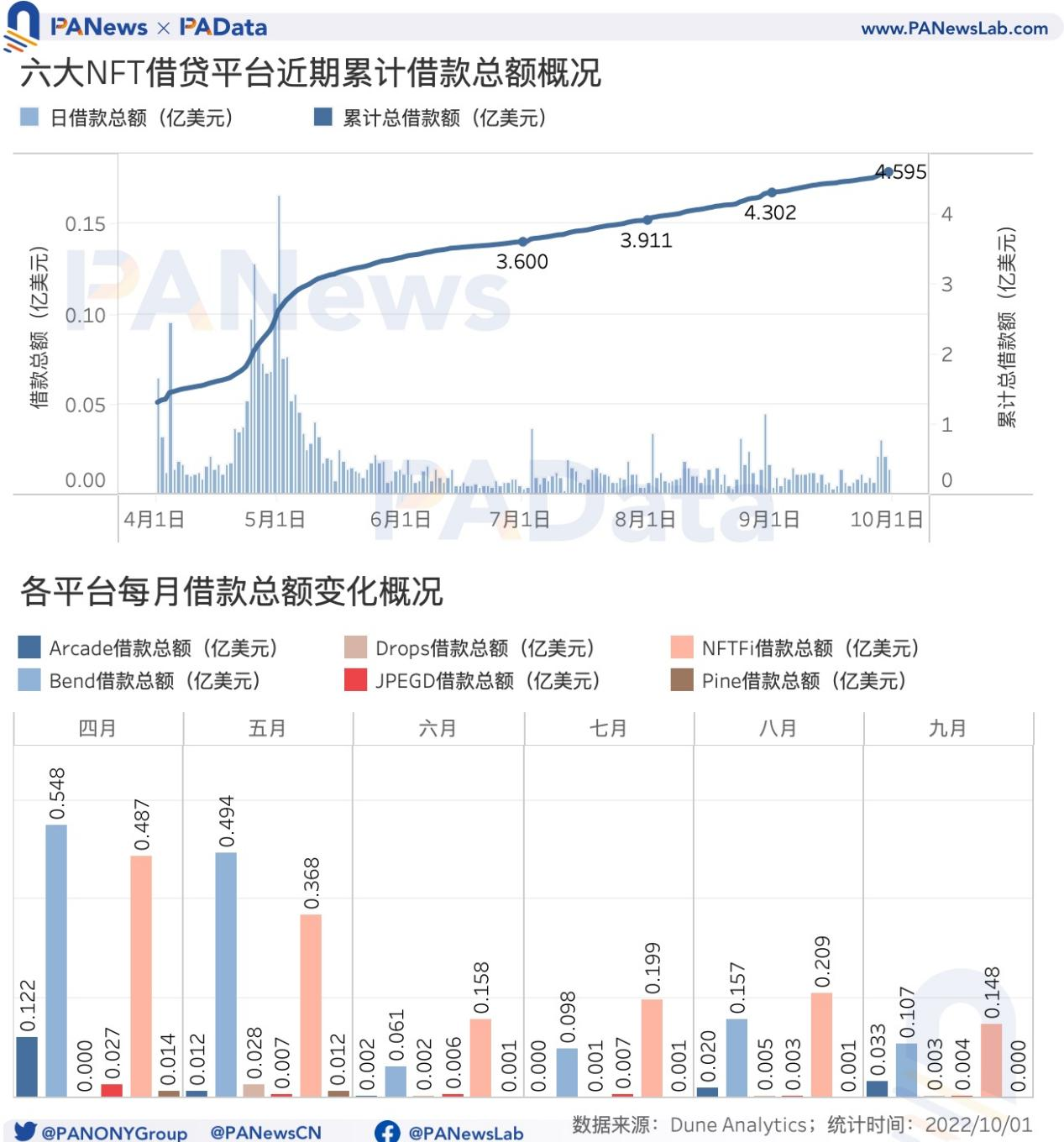
当前,NFTfi是借款规模最大的一个平台,9月的借款总额约为1480万美元,占比约为50%,其次是Bend,9月的借款总额约为1070万美元,占比约为36%。但自4月以来,各个平台每月的借款总额排序也有一些交替。在4月和5月,Bend是借款规模最大的平台,月借款总额在5000万左右,6月以后,NFTfi则成为借款规模最大的平台,月借款规模保持在1500-2000万左右。除此之外,其他4个平台之间的借款规模都还尚小,大多月借款额不足百万美元。但比较值得关注的是Arcade,其借款总额9月环比增长了65%,且与NFTfi和Bend的差距分别环比缩小了40%和46%。

不过,若将现在的NFT借贷与DeFi借贷相比,则仍然是一个规模很小的细分领域。根据Dune Analytics(@drethereum / Lending Analysis)的数据,截至9月30日,Aave、Compound、MakerDAO和IronBank的累计借款总额约为402.6亿美元,大约是同期6个NFT借贷平台累计借款总额的87倍。

从流动性来看,截至9月22日,6大NFT借贷平台的累计可借贷NFT数量达到了1039个,9月增长了6.78%,三季度增长了28.90%。4月至今的日均新增可借贷NFT约为2.64个。并且,新增借贷资产的日分布表现出锯齿状的形态,即可借贷资产的增量通常不具有阶段持续性,而是在几天内快速增加,然后又快速跌落。
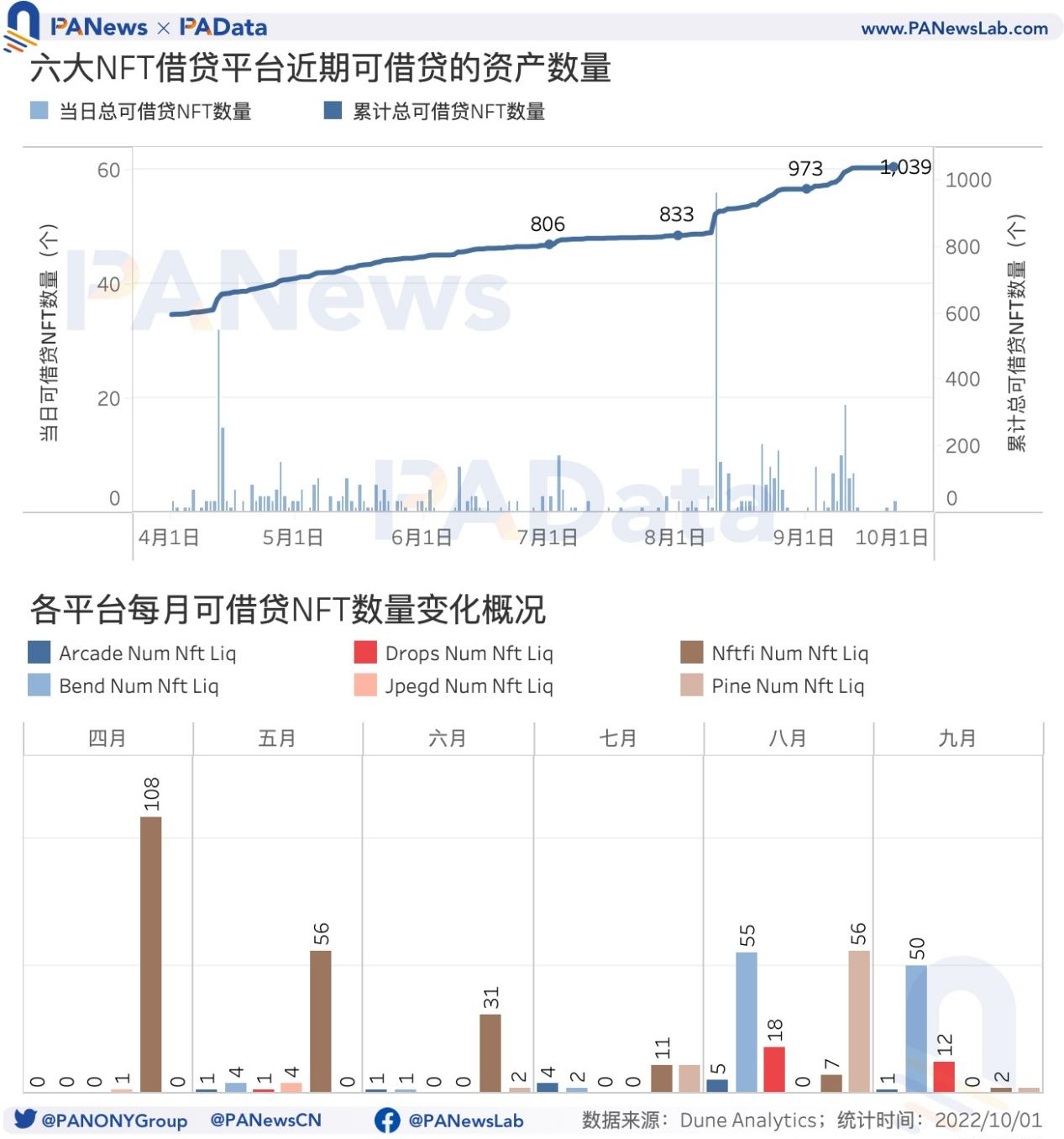
本月,新增可借贷NFT最多的平台是Bend,达到了50个,其次是Drops,新增了12个。从趋势来看,在4月至7月,每月新增可借贷NFT数量最多的都是NFTfi,最高一度月新增108个,但同期其他平台的流动性几乎没有变化。8月至9月,除了NFTfi以外的各个平台的流动性则都有所增加。从数据上看,NFT借贷市场每月的新增流动性规模是基本稳定的,但不同平台能分得的蛋糕大小却不一样,对各个平台而言,这更像是存量博弈游戏。

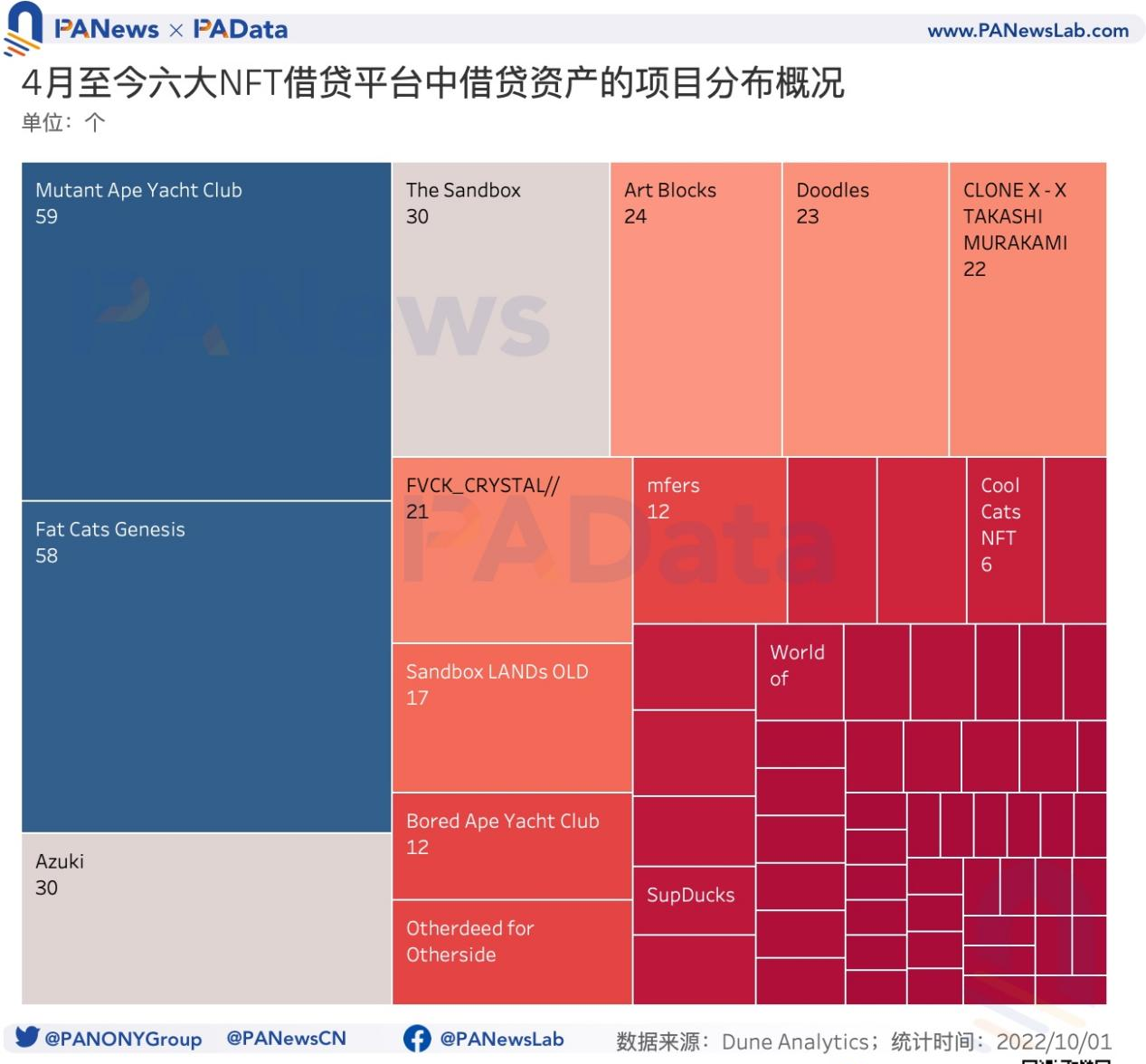
借贷市场上的NFT主要来自哪些项目呢?根据统计,今年4月至今,Mutant Ape Yacht Club和Fat Cats Genesis是最主要的借贷资产来源,分别共有59个和58个NFT出现在借贷市场中。其次,Azuki和The Sandbox也是比较主要的来源,分别各有30个NFT出现在市场中。另外,Art Blocks、Doodles、CLONEX-X-TAKASHI MURAKAMI、FVCK_CRYSTAL也各有超过20个NFT成为借贷资产。Sandbox LANDs OLD、Bored Ape Yacht Club和Otherdeed for Otherside也有超过10个NFT成为借贷资产。其他NFT项目中用于借贷的资产数量都不多。
不过与借款规模一样,NFT借贷市场的流动性规模较DeFi借贷市场来说也很小。按照NonFungible给出的最近一个月平均每个NFT的成交价为391美元来估算,当前6个平台的流动性只相当于40.63万美元。而Lending和CDP在9月30日时的锁仓量分别有147.7亿美元和97.5亿美元。如果同样按照成交均价估计,那么NFT借贷的流动性规模要达到Lending的锁仓规模,则可借贷的NFT数量至少需要达到3700万个。
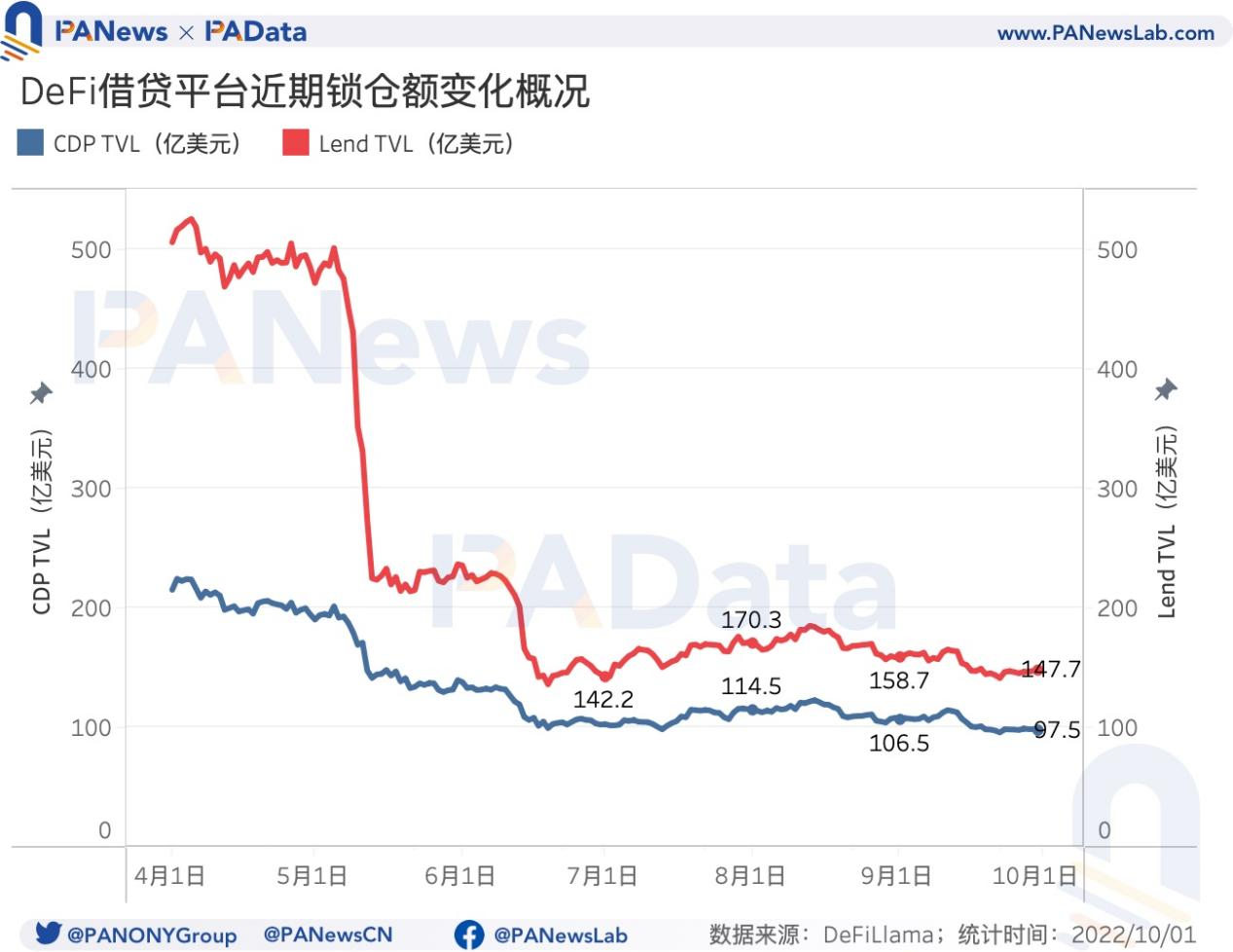
但是,需要指出的是,NFT的交易缺少一套客观的定价机制,NFT借贷的模式通常是点对点的交易,只要借款双方能就一个NFT达成一定价值共识,理论上借款规模可以是任意的,因此按照市场成交均价来估算流动性只有十分有限的参考意义,不过,无论按照什么价格估计NFT借贷的流动性,其当前可借贷资产规模的有限性决定了整体流动性的规模较DeFi更小。

NFTfi今年平均借贷预期年化利率约60%,30天借贷期最常见

抵押NFT的借贷利率有多少?或者将资金借给NFT抵押者的年化收益有多少?以目前最大的NFT借贷平台NFTfi为例,今年已发生的3916笔借贷交易中,有2660笔交易的借贷周期为30天,占比约为68%,另外有543笔交易的借贷周期为14天,538笔交易的借贷周期为90天,占比分别都约为14%。从借款周期来看,30天是主流周期。从资产来看,3204笔交易的借款ETH,712笔交易的借款为DAI,占比基本大约是二八开。

3916笔借贷交易的平均(中位数,下同)预期年化借款利率/收益为60%。但不同借款资产、不同借款周期和不同抵押资产的预期年化利率/收益均有不同。首先,从不同借款资产和不同借款周期来看,通常而言,同样的借款周期,借贷ETH的平均预期年化利率/收益要高于借贷DAI的,比如同样借贷30天,借贷DAI的平均预期年化利率/收益约为29.44%,借贷ETH的则约为60.49%。而同样的借款资产,借款周期越短,平均预期年化利率/收益越高,比如同样借贷ETH,7天的平均预期年化利率/收益约为70%,90天的约为45%。
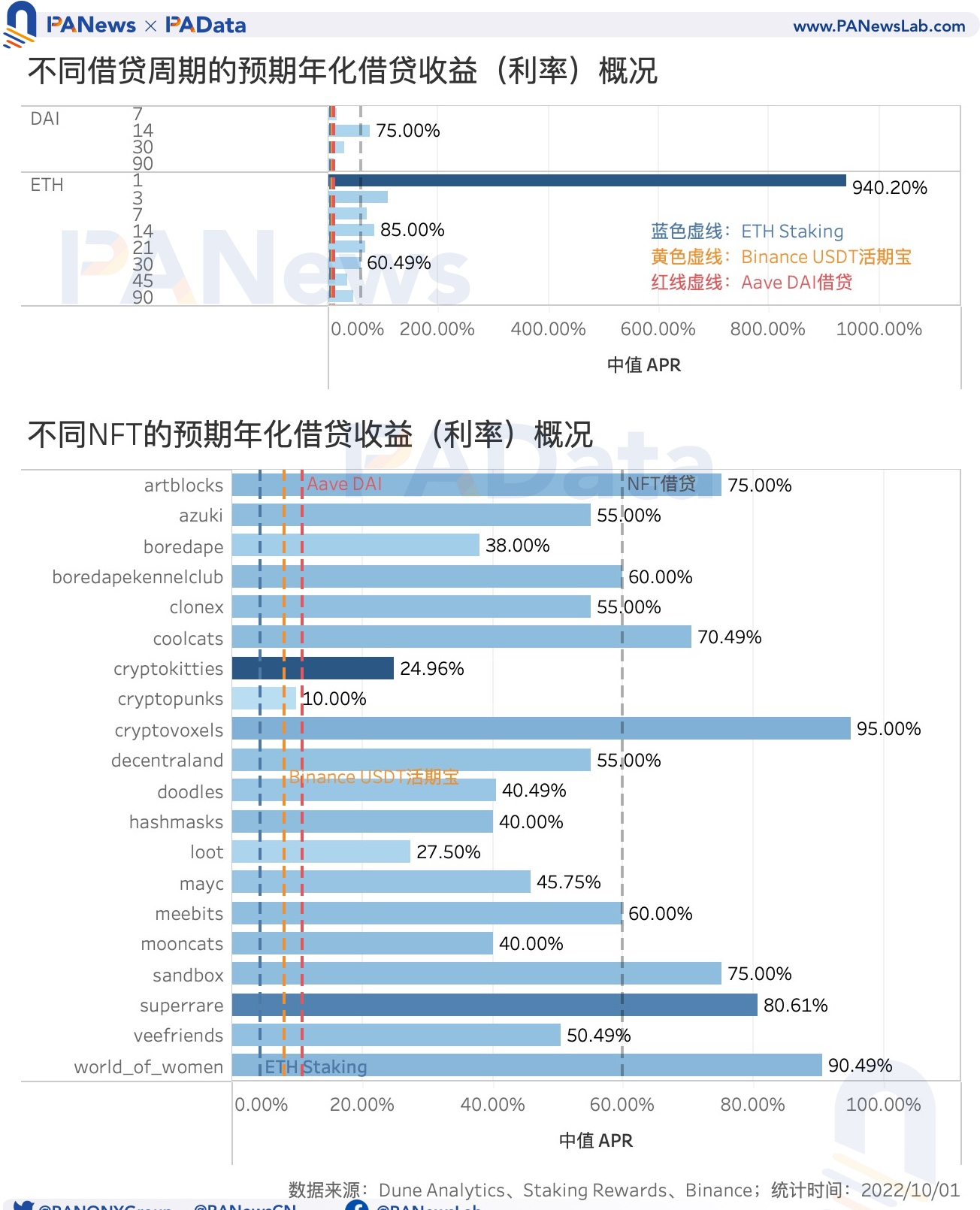
其次,从不同抵押资产来看,平均预期年化利率/收益最高的是Crypto Voxels和World of Women,分别达到了95%和91%。另外,超过整体平均水平的项目还有Art Blocks、Cool Cats、The Sandbox和SuperRare。相反,一些二级市场中交易价格较高的知名项目在借贷市场中的预期预期年化利率/收益都低于整体均值。比如Bored Ape Yacht Club只有38%、Doodles只有41%、Mutant Ape Yacht Club只有46%、Cryptopunks只有10%。

NFT借贷的预期年化借款利率/收益在市场中处于较高的水平。从横向比较来看,根据Staking Rewards显示的ETH流动性质押服务的预期年化收益约为4.35%,Binance提供的USDT活期理财的预期年化收益约为8%,Aave借贷DAI的预期年化利率/收益约为10.83%,而今年NFT借贷的平均预期年化利率/收益则有60%。总的来说,NFT的借贷成本比较高,同时,向NFT提供借贷资金(放贷)的收益也比较高。

累计独立地址数超2万,NFTfi和BendDAO重叠用户较多

截至9月30日,6大NFT借贷平台的累计独立地址数量已经达到了20826个,9月增长了12.24%,三季度增长了50.73%。4月以来至今日均新增独立地址总数约为84个,三季度日均新增独立地址总数约为77个,总体上除了5月初以外,其他时间的日均新增独立地址数量都基本保持稳定。与DeFi借贷的用户规模相比,NFT借贷的独立地址数量还很少。根据Dune Analytics(@rchen8 / DeFi users over time)的统计,Aave、Maker DAO和Compound三个DeFi借贷平台当前的地址总数大约是543454个,是NFT借贷平台的26倍左右。
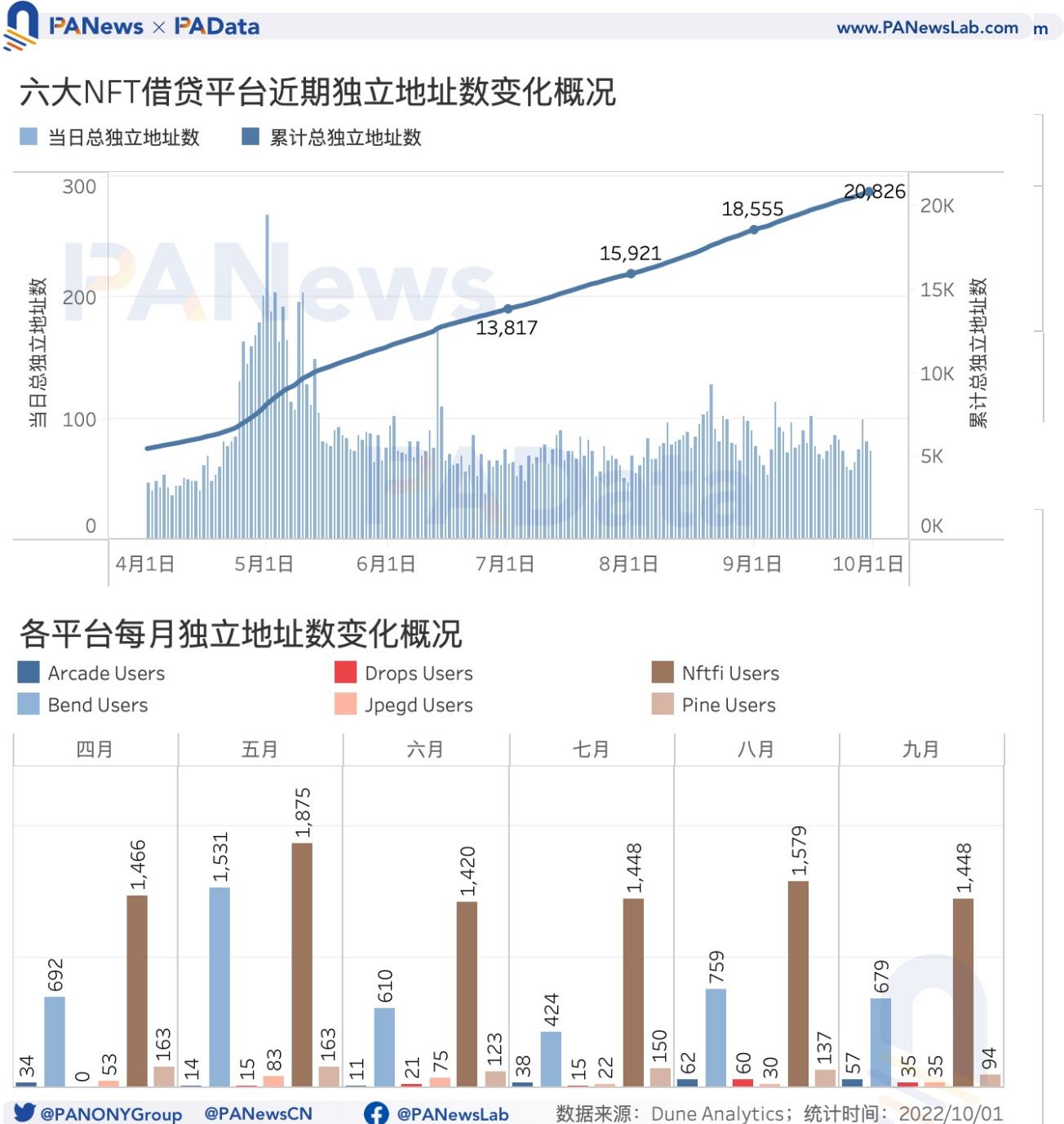
从不同平台来看,9月,新增独立地址数量最多的是NFTfi,达到了1448个,其次是Bend,达到了679个,其他四个平台的新增数量都不足100个。这一格局在过去半年内基本没有变化。4月至9月期间,NFTfi每月新增独立地址数量都超过了1400个,最高一度超过1800个。其次,Bend每月新增独立地址数量基本都在600个以上,最高一度超过了1500个。而其他四个平台每月新增独立地址数量远远少于这两个平台,其中只有Pine的月新增独立地址数量超过100个。

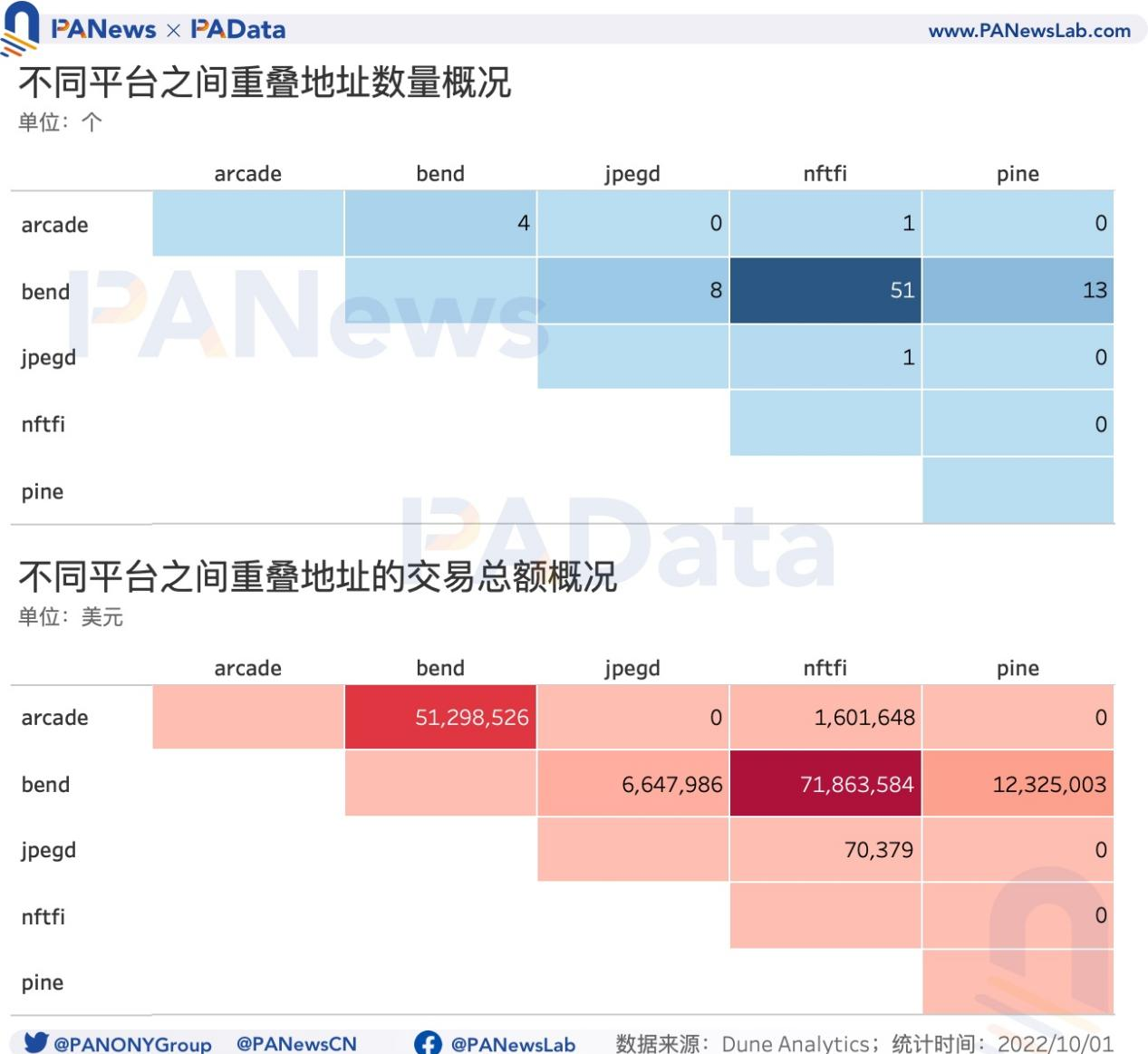
目前,6个NFT借贷平台有一些重叠用户,这也为NFT的可组合性提供了一些想象空间。根据统计,目前使用过3个平台的地址只有2个,使用过2个平台的地址有72个。其中,NFTfi和Bend之间的重叠地址有51个,这些地址的累计交易超过了7100万美元。其次,Pine和Bend之间也存在比较强的联系,重叠地址有13个,累计交易超过了1200万美元。另外,Bend和Arcade、Bend和JPEGD之间也存在一定的联系,但相较而言,联系不强。总的来说,Bend是这6个NFT借贷平台的交汇中心,其他平台都不同程度与之有联系。
Trending Cryptos

Related Reads

DRAM ETF Issuer: Samsung, SK Hynix, Micron All Surpass $1 Trillion, the AI Era of Memory Chips Has Only Just Begun

Authors: Dave Mazza, Thomas DiFazio | Source: Deep Tide TechFlow The article, written by Roundhill Investments (issuer of the DRAM ETF), responds to Morningstar's caution about investing in memory chip stocks. Morningstar warns of the sector's history of boom-bust cycles, a lack of economic moats, and potential momentum-driven overvaluation. Roundhill argues the current situation is structurally different due to AI. Key points in Roundhill's rebuttal include: * **Changed Demand & Supply Dynamics:** AI infrastructure, not consumer electronics, is now the primary growth driver for memory demand. New, strict long-term supply agreements with hyperscalers reflect the high capital intensity of advanced manufacturing. * **Existence of a Moat:** High-Bandwidth Memory (HBM), essential for AI, has extremely high manufacturing barriers. The market is dominated by Samsung, SK Hynix, and Micron, with new entrants blocked by technological complexity and long lead times for equipment like ASML's EUV machines. * **Strong Fundamental Outlook:** Analyst consensus projects the three companies will rank among the world's most profitable by 2027, with combined profits of $704 billion on over $1 trillion in revenue. Their operating margins have already reached record highs. * **Valuation Re-rating:** Despite significant stock price gains, memory stocks trade at attractive valuations (e.g., a median NTM P/E of 8.37x for the DRAM ETF) relative to projected explosive EPS growth. Roundhill suggests historical valuation frameworks may no longer apply given the new profitability paradigm. Conclusion: Roundhill contends the rally is justified by fundamentals, marking a structural shift for the memory industry into a new era of sustained, AI-driven demand against constrained supply, rather than a repeat of past cycles.

marsbit10m ago

DRAM ETF Issuer: Samsung, SK Hynix, Micron All Surpass $1 Trillion, the AI Era of Memory Chips Has Only Just Begun

marsbit10m ago

EF's Epic Reorganization: 20% Layoffs, Budget Halved, Is Ethereum Gearing Up for a Leaner Future?

The Ethereum Foundation (EF) has announced a major organizational restructuring, involving a 20% staff reduction (approx. 54 employees) and a division into functional clusters like Protocol, Access, User, Community, and Institutional layers. Co-founder Vitalik Buterin further revealed plans to cut the EF's budget by around 40% over the coming years, aiming to reduce its annual spending rate from about 15% to roughly 5% by 2030, transitioning to an endowment-driven model. This overhaul is seen as a long-overdue correction to the EF's ambiguous role. As Ethereum grew, the foundation faced persistent criticism over ETH sales, perceived lack of execution, and unclear strategy, often becoming a focal point for community frustration amid ETH's price stagnation. The reform aims to redefine the EF's boundaries, narrowing its focus to core protocol research, public goods funding, and ecosystem coordination, while offloading more applied development work to the broader market. Concurrently, ecosystem forces like the newly formed Ethlabs (founded by ex-EF researchers) and other independent groups are stepping in to fill the space, signaling a shift from a centralized model to a more distributed, collaborative ecosystem structure. The move was notably praised by Solana co-founder toly, who viewed a "leaner" EF as potentially more decisive and agile.

Odaily星球日报51m ago

EF's Epic Reorganization: 20% Layoffs, Budget Halved, Is Ethereum Gearing Up for a Leaner Future?

Odaily星球日报51m ago

Dragonfly Partner Haseeb: The Fastest-Growing Companies of the Future May All Get Stuck at 149 Employees

Dragonfly partner Haseeb explores the distorted economics of AI model pricing, drawing parallels to tax policy. He notes that startups and small teams (under 150 users) enjoy heavily subsidized, fixed-price AI subscriptions (like Claude Code), where the marginal cost of an additional token is effectively zero. This creates a powerful incentive for them to maximize token usage ("token-maxxing") and innovate aggressively with AI automation. In contrast, large enterprises (over 150 users) are forced onto "Enterprise" plans, paying per-token API fees with high (~75%) markups. This acts like a steep "tax" on AI-powered labor, disincentivizing marginal automation and experimental use, and encouraging them to retain more human workers. Haseeb argues this pricing creates a "150-person cliff," a regulatory notch similar to labor laws in France that discourage firms from growing past 50 employees. He predicts the fastest-growing future companies may deliberately cap their headcount at 149 to avoid the punitive enterprise pricing. This would foster an "AI-first" management philosophy obsessed with automation and outsourcing to stay lean. While not intentionally designed, this bifurcated pricing could become one of the most influential de facto tax policies, shaping how AI replaces labor—not through mass layoffs at big firms, but through agile, AI-native startups outcompeting them.

marsbit1h ago

Dragonfly Partner Haseeb: The Fastest-Growing Companies of the Future May All Get Stuck at 149 Employees

marsbit1h ago

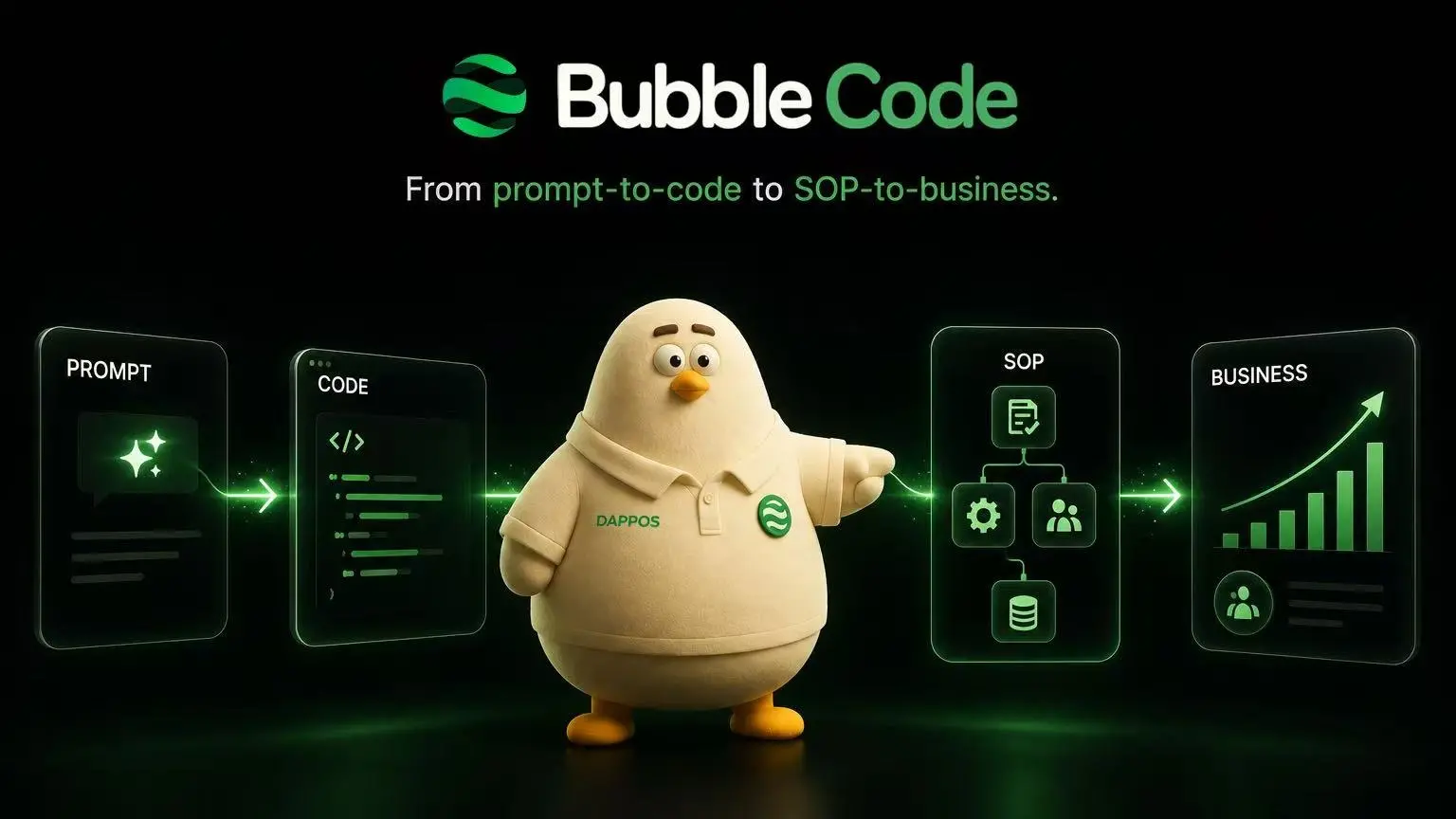
How xBubble Breaks Through in the VC-Heavily-Backed OPC Economy

xBubble: Addressing the Structural Gap in the VC-Backed OPC Economy The concept of OPC (One Person Company) is evolving from a buzzword to a significant AI-driven market. While AI coding tools like Replit and Lovable have validated demand from non-technical users wanting to build applications, a key gap remains: the leap from creating a demo to running a stable, evolving business. These tools still require users to manage the development process, including technical judgments for integrations, modifications, and deployments—a major hurdle for OPCs. xBubble, by DAPPOS, tackles this by shifting from "Prompt-to-Code" to "SOP-to-Business." Instead of generating code from instructions, its core is a system of pre-organized SOPs (Standard Operating Procedures) that translate business goals—like "sell World Cup merchandise"—into complete, executable workflows. This includes generating cohesive assets, pages, payment systems, and backend logic. The platform is augmented by a network of third-party service providers who handle infrastructure (hosting, domains, payment setup), acting like "on-site service engineers." Users can pay for these services directly with xBubble credits, simplifying onboarding. This ecosystem aims to deliver not just an app, but a complete, modifiable business launch path. xBubble targets a clear OPC segment: small commercial nodes (e.g., creators, merchants) with existing products, customers, or channels, but for whom a full tech team is unjustifiable. Its potential lies in SOPs accumulating expertise from real cases, improving reliability and reducing delivery costs over time. Additionally, its native support for crypto payments caters to global or digital-native OPCs. In summary, as AI democratizes software creation, xBubble's opportunity is to prove that "SOP-to-Business" provides more immediate value for launching a real, operational business than a powerful but unstructured AI coding tool.

链捕手1h ago

How xBubble Breaks Through in the VC-Heavily-Backed OPC Economy

链捕手1h ago

Trading

Spot
Futures

Hot Articles

How to Buy NFT

Welcome to HTX.com! We've made purchasing AINFT (NFT) simple and convenient. Follow our step-by-step guide to embark on your crypto journey.Step 1: Create Your HTX AccountUse your email or phone number to sign up for a free account on HTX. Experience a hassle-free registration journey and unlock all features.Get My AccountStep 2: Go to Buy Crypto and Choose Your Payment MethodCredit/Debit Card: Use your Visa or Mastercard to buy AINFT (NFT) instantly.Balance: Use funds from your HTX account balance to trade seamlessly.Third Parties: We've added popular payment methods such as Google Pay and Apple Pay to enhance convenience.P2P: Trade directly with other users on HTX.Over-the-Counter (OTC): We offer tailor-made services and competitive exchange rates for traders.Step 3: Store Your AINFT (NFT)After purchasing your AINFT (NFT), store it in your HTX account. Alternatively, you can send it elsewhere via blockchain transfer or use it to trade other cryptocurrencies.Step 4: Trade AINFT (NFT)Easily trade AINFT (NFT) on HTX's spot market. Simply access your account, select your trading pair, execute your trades, and monitor in real-time. We offer a user-friendly experience for both beginners and seasoned traders.

7.1k Total ViewsPublished 2024.03.29Updated 2026.06.02

How to Buy NFT

What is Altura NFT?

Altura: Providing One-Stop NFT Solutions for Game Developers

56.0k Total ViewsPublished 2024.06.12Updated 2024.06.12

What is Altura NFT?

What is AINFT

EternaFi Agents and $AINFT: A Comprehensive Analysis of AI-Powered NFT Infrastructure in the Web3 Ecosystem The intersection of artificial intelligence (AI) and blockchain technology is rapidly evolving, establishing innovative platforms that redefine ownership models and economic participation. EternaFi Agents, along with its native token $AINFT, exemplifies a groundbreaking approach to the tokenization of AI infrastructures through the means of non-fungible tokens (NFTs). Launched in July 2025 by the development team at Nova Club, EternaFi merges the advancements of AI with the decentralized financial mechanisms of blockchain, presenting a unique investment opportunity for participants within the web3 ecosystem. This article aims to provide an in-depth assessment of EternaFi Agents, covering its core components, functionality, and significance within the crypto landscape. Introduction and Project Overview EternaFi Agents stands as a salient example of how blockchain technology can democratize access to advanced AI capabilities. The project endeavors to reshape the paradigm of AI ownership by diversifying economic participation, making sophisticated AI systems accessible to a larger pool of stakeholders. At its core, the project tokenizes a proprietary large language model (LLM) developed by Nova Club, allowing NFT holders to gain fractional exposure to the model's economic performance. By utilizing NFTs representing stakes in the LLM, EternaFi Agents fosters a model wherein stakeholders not only participate in AI service consumption but also enjoy sharing in the economic rewards generated by the platform. This transformative approach enables the development of sustainable revenue models for AI services, all the while promoting broad community engagement and facilitating transparent governance. What is EternaFi Agents? EternaFi Agents represents an AI-NFT infrastructure project that aims to blend the capabilities of AI with blockchain technology in a coherent ecosystem. The essential feature of this project is the creation of NFTs that serve as financial instruments, representing fractions of ownership in Nova Club's proprietary AI infrastructure. Each NFT symbolizes direct exposure to the economic performance of the underlying AI system, providing a lucrative opportunity for investors. The project operates on the Base blockchain, known for its scalability and efficiency, thus ensuring manageable transaction costs while facilitating a seamless operational experience. One of the notable features includes a revenue-sharing mechanism, wherein NFT holders can receive portions of subscription income generated by the AI services provided on the platform. This innovative approach establishes a connection between the success of the AI services and the economic dividends distributed among the holders, thus ensuring an alignment of interests across the community. Who is the Creator of EternaFi Agents? The creative force behind EternaFi Agents is Nova Club, a development team based in Singapore proficient in the amalgamation of AI and blockchain technology. Their prior experience in AI development and cryptocurrency analysis gives credence to the project, contributing a breadth of expertise to the creation of EternaFi Agents. Nova Club’s mission centers on democratizing access to cutting-edge AI technologies while building sustainable economic models that benefit users alongside developers. Their commitment to transparency, community governance, and innovation is reflected in the design and implementation of the EternaFi platform, aiming to establish a unique ecosystem that fosters positive engagement and long-term value creation. Who are the Investors of EternaFi Agents? The specific details concerning investors or investment organizations backing EternaFi Agents are not publicly available. However, EternaFi has adopted an inclusive approach to funding its development through the sale of NFTs to the public, allowing a wide array of participants to invest in the ecosystem. The project’s architecture ensures that core infrastructure is funded responsibly while allowing community members to partake in the ownership and economic returns generated from the AI services. This model emphasizes community engagement by aligning the interests of investors and project developers, creating a collaborative environment where long-term participation is incentivized. How Does EternaFi Agents Work? EternaFi Agents operates through a multifaceted ecosystem where NFTs serve as a primary means of ownership representation within the project. Each NFT holder is entitled to a share of the monthly subscription income produced by the underlying AI-powered platform, thereby positioning NFT ownership as a lucrative investment vehicle. Revenue Generation Mechanism The primary source of revenue generation for the EternaFi platform stems from subscription fees related to the AI services provided. Users can access various tiered services, ranging from basic market analysis tools to comprehensive AI-assisted trading solutions. These services are monetized and form the basis for the revenue-sharing framework, which distributes profits to NFT holders through automated smart contracts. An innovative feature of the EternaFi ecosystem is the revenue-sharing mechanism that operates transparently, ensuring that rewards are allocated based on verifiable metrics from the AI platform's operations. This creates a direct link between the performance of AI services and the returns available to community investors, establishing a sustainable economic model. Staking and Vesting Mechanisms Participants within EternaFi can engage in staking their NFTs to unlock additional economic benefits. The vesting schedule is designed to promote long-term commitment among participants, rewarding those who exhibit ongoing support for the project. This ensures a robust alignment of interests and fosters a sense of community engagement essential for achieving the project's long-term goals. Transparent Governance EternaFi Agents embraces decentralized governance, allowing NFT holders to play an active role in decision-making regarding the platform's development and future directions. The governing structure includes community voting mechanisms, providing NFT holders with the opportunity to influence significant decisions and contributing to a collaborative approach to project growth. Timeline of EternaFi Agents The development trajectory of EternaFi Agents showcases a systematic approach toward building a sustainable AI infrastructure while meeting the needs of community participants. Below is a timeline of important milestones in the project’s history: July 2025: Launch of EternaFi Agents, including the public sale of NFTs and deployment of the $AINFT token on the Base blockchain. Q4 2025: Establishment of market infrastructure including liquidity pools and launch of staking dashboards for NFT holders. 2026: Initiation of community engagement programs, expanding AI capabilities, and integration with cross-chain technologies. Q4 2026: Implementation of the dividend distribution system, allowing NFT holders to reap economic benefits from their investments. These milestones signify the focus on establishing a functional and participative ecosystem while ensuring continuous evolution to meet market demands. Technological Infrastructure and Blockchain Integration EternaFi Agents is anchored in an advanced technological framework combining AI systems with blockchain capabilities. Operating on the Base blockchain, the project leverages the advantages of scalability and low transaction costs. The underlying smart contract architecture governs the NFT ownership, revenue sharing, and community management features, ensuring efficiency and transparency. AI System Development The proprietary large language model underpinning EternaFi Agents has been independently developed and designed to cater to revenue-generating applications without reliance on proprietary external frameworks. This endeavor reflects a commitment to creating a versatile and adaptable AI infrastructure capable of delivering meaningful services to users, thus generating economic value for investors. Security Measures The robustness of EternaFi’s security infrastructure is paramount. Regular audits and stringent security measures ensure the integrity of the AI systems and blockchain mechanisms, safeguarding against potential vulnerabilities while fostering confidence among participants. Conclusion EternaFi Agents signifies a landmark innovation within the realm of artificial intelligence and blockchain technology, opening avenues for community ownership and economic participation in advanced AI capabilities. The project’s comprehensive strategy to tokenize AI infrastructure via NFTs establishes a precedent for future decentralized ecosystems. By harmonizing technical sophistication with user-centric economic models, EternaFi not only fosters engagement but also generates a sustainable revenue-sharing framework for community participants. The significance of EternaFi extends well beyond its operational success as it exemplifies how blockchain can democratize cutting-edge AI technologies, paving the way for future ventures in this intersectional space. The evolution of EternaFi Agents may herald a new era of AI development characterized by participant-driven governance, sustainable economic models, and transparent verification, ultimately contributing to the broader democratization of AI and technology accessibility across industries.

4.1k Total ViewsPublished 2025.08.14Updated 2025.08.14

What is AINFT

Discussions

Welcome to the HTX Community. Here, you can stay informed about the latest platform developments and gain access to professional market insights. Users' opinions on the price of NFT (NFT) are presented below.

活动图片