金融“新贵”比特币升值背后的“推手”

火必研究院Published on 2022-02-18Last updated on 2022-02-18

Abstract

比特币近期因价格持续上涨再度成为市场关注焦点,作为金融市场“后起之秀”,比特币从诞生至今只有12年,市值却超越了强生、VISA和沃尔玛等全球知名公司,随着华尔街投资机构纷纷入场将比特币纳入投资组合,比特币逐渐成为主流资产类别。比特币当前发生的现象是经久不衰还是昙花一现?推动比特币升值的背后因素有哪些?本文从比特币设计机制、比特币和宏观经济、比特币市场走势等维度来探讨。

一、比特币设计机制:工作量证明和供给恒定

比特币源于中本聪在2018年发表的白皮书《比特币:一种点对点的电子现金系统》 ,白皮书对比特币设计思想的核心技术架构,日后被人们抽象为区块链技术 ,比特币网络依靠区块链技术完整运行十几年而未发生一起网络攻击事件,成为区块链技术落地的第一个案例。比特币作为一种加密资产,关于它的发行、流通和交易等都完整地记录在如图1所示的区块链上。
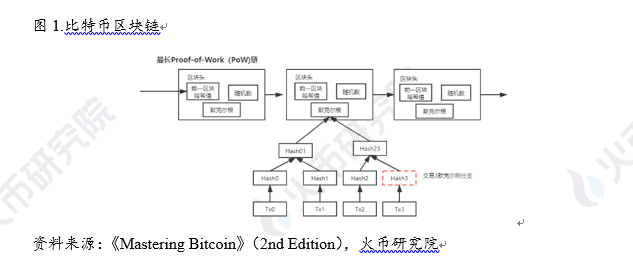
比特币系统的精妙之处是它的工作量证明(Proof of Work, PoW)机制,通过靠每个节点的算力PK来竞争出块的权利,并打包生成新的区块,获得出块权利的节点将能获得系统的BTC奖励,这个过程我们通常叫做“挖矿”。挖矿获得的奖励其实就是比特币的发行机制。该挖矿奖励大约每4年减半一次,现在已经历了3次减半,从当初的50个比特币降低到了6.25个比特币。如上图1展示的那样,具体来说,比特币PoW的过程是计算机通过暴力计算得到每个区块头的随机数,再将一组交易打包,并根据上一个区块的哈希值去生成新区块,通过这样的方式组成一个个区块相连的区块链。

PoW机制是保障比特币网络安全运行的核心基础,所以通过比特币区块链去完成交易转账离不开运行PoW机制算法的节点,比特币世界称这些节点为「矿工」。比特币区块链在奖励矿工同时完成新的比特币发行,因为每个矿工需要付出算力资源完成计算任务才有机会赢得奖励,网络大部分诚实节点都积极通过「挖矿」出块来维护比特币区块链,截止到2021年1月26日,比特币日平均算力达到160 EH/s 以上,相比2017年增长了50多倍。

PoW工作量证明机制是比特币系统建立的基石,经济模型却是比特币持续运行的源动力,比特币能进入主流世界,吸引资本涌入,源于其真正分布式的网络,也源于其经济模型的吸引力。随着比特币价格水涨船高,比特币挖矿跨越了CPU/GPU挖矿年代成为了资本密集型产业,算力也呈现集中化,衍生出各类ASIC矿机,挖矿效率更高,门槛也变得更高,但算力集中并没有给网络带来毁灭性的攻击问题,比特币通过它的难度调整算法和固定在代码中的经济规则,驱动着网络算力的提高,而随着网络整体算力的提高,不仅攻破网络的难度更大,无形的手也在背后驱动参与者不会主动去破坏比特币网络。

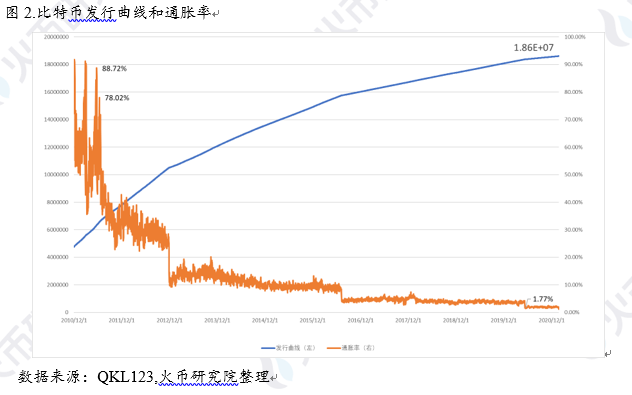
比特币发行总量固定为2100万,每4年奖励减半,固定10分钟左右出一个区块并释放挖矿奖励。图2是比特币的发行曲线和通胀率,比特币经历三次减半目前区块奖励已经降至6.25枚,发行通胀率也由80%左右的高通胀水平降至2%以下,进入低通胀时代,目前美联储的通胀率目标就定为2%。比特币供给固定的经济模型经常引起争议,比如一种观点说比特币是通缩模型,会引发“通缩螺旋”问题,用户储存比特币而避免消费导致商品价格下跌。从图2数据可以看出,比特币发行采用的是一种相对通缩模型。
二、比特币稀缺性评估

比特币供给总量恒定,目前已经有超过1860万枚比特币被挖出。随着全网算力的变化,比特币的挖矿难度也在不断上升,目前比特币挖矿难度已经达到20.82T ,创下历史新高。在量化评估比特币稀缺性方面,由Medium平台用户Plan B发布的存量流量模型(stock to flow,S2F)提供一定参考价值,通过以下公式计算:

比特币目前减半后奖励6.25枚,下一次减半奖励进一步降至3.125枚,在下次减半前每年挖矿产生的新比特币数量大致为328500(365*144*6.25),目前比特币市场总供应量已经达到1860万,但是比特币在发展过程很多数量丢失,据数据公司Chainalysis研究预测将近400万个BTC处于永久丢失状态。所以计算比特币存量需要考虑丢失的比特币数量,这样大致算出比特币的S2F值为44,而黄金这一指标大致为60左右 ,S2F稀缺性数值目前黄金仍然大于比特币,但比特币完成下一次减半后稀缺性将超过黄金。

三、比特币活跃用户地址数和链上交易数量

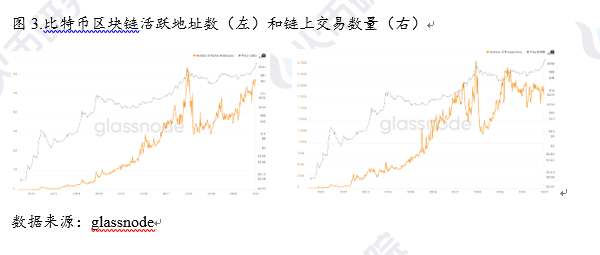
比特币网络目前在全球运行着上万个节点,节点通过点对点连接方式组成分布式网络,比特币的网络效应在不断提升,根据图3链上数据分析平台glassnode数据显示,截止到2020年12月20日,比特币活跃地址数达到5671990个,链上交易数量超过200万笔,通过追踪历史数据变化,比特币的价值增长趋势和这两项指标正相关,不断增加的活跃地址和链上交易数量代表网络经济活跃度,支撑着比特币的网络价值。
四、比特币与其他金融资产表现比较

比特币阶段性表现其他资产属性,但过去十年整体和其他资产相关性较低。

比特币一直被看成是“数字黄金”,总量恒定且具有稀缺性,和黄金一样有抗通胀预期,从比特币的历史数据看,它的短期波动也易受全球宏观政策消息的影响,尤其是全球央行的货币政策,比如当全球经济增长疲软,央行增加新的法币供给,往往会刺激比特币、黄金等资产价格上涨;反之,当预期通胀抬头,各国央行收紧QE,或者开始加息缩表,比特币价格一般会回落。

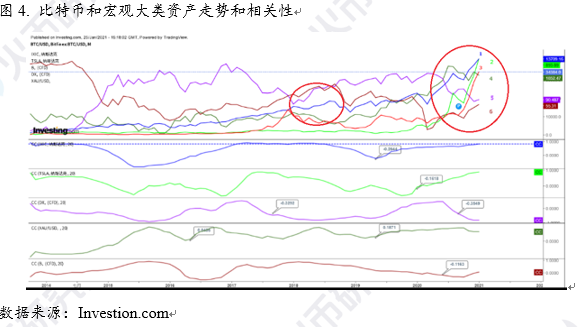
和全球其他大类资产相比,比特币同时表现出大宗商品和股票两类资产属性但整体和传统资产关联度不高表现出一定独立性,如图4将比特币(3)和纳斯达克指数(1)、特斯拉股票(2)、黄金(4)、美元(5)和原油(6)等资产进行对比,从历史价格走势和相关系数看,比特币阶段性地表现出其他资产属性,例如2020年比特币和美股走势比较接近,相关系数不断提高,最高接近0.8-1之间,虽然比特币也联动黄金走势,但并不持续,黄金和比特币在2020年Q4出现价格背离,黄金11月份后走弱和美元指数反弹相关,但美元指数对比特币的影响却存在滞后性,比特币Q4继续联动科技股,黄金和比特币在2019年下半年也发生过背离。整体看2020年全球宏观经济备受疫情打击,美联储4月推出2.3万亿贷款计划来刺激经济,各国央行开始“放水”,全球资产上演“上涨潮”,在低利率、流动性宽松市场环境下,比特币叠加抗通胀预期,但其价格波动率大于黄金,和股票等风险资产更接近。

从图4也可以看出比特币和其他资产的相关性并不高,价格变动也不完全同步,这也是比特币被主流机构配置的核心原因,此前机构多发布负面看法,称比特币为一个高度投机的工具,不会将资产投入其中,但在2020年,机构对比特币的看法发生了巨大的改变,由于比特币与传统类资产的相关度很低,成为机构宏观资产配置的组成部分,全球的金融支付巨头也分分布局加密货币,提供相关服务,比如JP Morgan将主要的加密货币交易所Coinbase和Gemini添加为银行客户,新加坡星展银行宣布计划推出加密货币交易所,Paypal宣布加密货币买卖服务,MicroStrategy也在持续加仓比特币,这些也给比特币的价格提供了有力的支撑。

有趣而且巧合的现象是比特币在2017年和2020年发生的两次大涨都伴随着美元指数走弱,而且都处在于比特币两次减半之后。虽然美元指数走弱不一定就是导致比特币价格上涨的直接因素,但另外一个时间点2018年之后的原油价格上涨,通胀预期上升,美联储加息导致美元走强,而黄金、比特币和股票资产也同步进入调整,但黄金和比特币调整提前股票等风险资产反应。
五、总结

比特币对于金融的主要创新在于开创了一套基于区块链技术的记账方法,并通过经济模型激励让记账体系运转起来。比特币作为“数字黄金”的共识得到增强,本质是由于其经济模型建立的稀缺性及抗通胀预期。比特币短期价格波动会受到宏观政策经济层面尤其是央行货币政策的影响,但是中长期看,影响比特币的价值因素还包括比特币的价值传递效用获得的市场溢价、比特币网络活跃地址数和链上交易量增长的网络价值,比特币不应该被狭隘地定义成数字投机商品。价格方面,比特币除了联动黄金这类避险资产,也表现出股票这类风险资产的特征,但近十年整体相关性和传统资产较低。


Trending Cryptos

Related Reads

Why Is the World Nervous About Japan Raising Interest Rates?

In June 2026, the Bank of Japan raised its policy rate to 1%, marking its first hike to this level since 1995. While this rate remains low compared to global peers like the US and Europe, the move signals a profound shift for a nation that has been a global source of ultra-cheap funding for decades. Japan's long-standing near-zero or negative interest rates had facilitated massive "yen carry trades," where international investors borrowed low-cost yen to invest in higher-yielding assets worldwide, such as US tech stocks and emerging market bonds. This made Japan a critical, often overlooked, source of global liquidity. Japan's ultra-loose policy stemmed from structural challenges post-1990s asset bubble: aging demographics, chronic low inflation/deflation, and high public debt. Recent shifts, including sustained wage growth (exceeding 5% in recent years) and inflation consistently above the 2% target, have created a "wage-price spiral" possibility, prompting the policy normalization. The global market's concern lies not in the absolute rate but in the potential unwinding of the yen carry trade. As Japanese borrowing costs rise, the economics of these leveraged global investments change, potentially triggering deleveraging and capital outflows from risk assets. Market anxiety focuses on the end of a thirty-year consensus that Japan would perpetually provide cheap funding. Ultimately, the global impact will depend on the interplay with US monetary policy. While Japan is tightening, the significant interest rate differential with the US remains. The key future dynamic is whether simultaneous Japanese hikes and eventual US rate cuts will narrow this gap, forcing a major recalibration of global capital flows and asset pricing built on an era of abundant, cheap yen liquidity.

marsbit2h ago

Why Is the World Nervous About Japan Raising Interest Rates?

marsbit2h ago

Research Report Analysis: MRVL's Optical AI Booming, Why High Valuation Keeps Morgan Stanley's Star Analyst Sidelined?

Report Recap: MRVL Optical AI Boom - Why High Valuation Led Morgan Stanley's Star Analyst to Stay Neutral? Morgan Stanley analyst Joseph Moore maintained an "Equal-weight" (Neutral) rating on Marvell Technology (MRVL) on May 28, raising the price target from $172 to $195, below the trading price. This stance comes despite Marvell reporting a record quarter and significantly raising its full-year outlook (FY27 revenue ~$11.5B, up ~40%). Moore's neutral view is based on valuation. The $195 target implies ~40x CY2027 P/E. He contrasts MRVL with NVDA: both trade near ~$200, but Nvidia's forward EPS is more than double Marvell's. For MRVL's valuation to hold, it needs consistent earnings upgrades, proof of networking market share gains, or certainty on large-scale custom AI chip shipments—none of which are confirmed yet. Growth is driven by two pillars: **1) Optical Interconnect** (the faster runner): Moore raised FY27 growth expectations to >70%, with the optical module product line nearing a $1B annualized run rate. **2) Custom AI Chips** (the climber): Confidence in FY28 is growing, but a major new customer project only ramps in FY28, with no current revenue visibility. Key risks are the underperforming Storage, Enterprise, and legacy Networking segments. Moore acknowledges the real AI opportunity but believes the current price already reflects it. For the stock to work from here, investors need to see the optical business hit its targets, custom chips ramp as planned, and a recovery in the weaker business units.

marsbit3h ago

Research Report Analysis: MRVL's Optical AI Booming, Why High Valuation Keeps Morgan Stanley's Star Analyst Sidelined?

marsbit3h ago

Trading

Spot
Futures

Hot Articles

What is $BITCOIN

DIGITAL GOLD ($BITCOIN): A Comprehensive Analysis Introduction to DIGITAL GOLD ($BITCOIN) DIGITAL GOLD ($BITCOIN) is a blockchain-based project operating on the Solana network, which aims to combine the characteristics of traditional precious metals with the innovation of decentralized technologies. While it shares a name with Bitcoin, often referred to as “digital gold” due to its perception as a store of value, DIGITAL GOLD is a separate token designed to create a unique ecosystem within the Web3 landscape. Its goal is to position itself as a viable alternative digital asset, although specifics regarding its applications and functionalities are still developing. What is DIGITAL GOLD ($BITCOIN)? DIGITAL GOLD ($BITCOIN) is a cryptocurrency token explicitly designed for use on the Solana blockchain. In contrast to Bitcoin, which provides a widely recognized value storage role, this token appears to focus on broader applications and characteristics. Notable aspects include: Blockchain Infrastructure: The token is built on the Solana blockchain, known for its capacity to handle high-speed and low-cost transactions. Supply Dynamics: DIGITAL GOLD has a maximum supply capped at 100 quadrillion tokens (100P $BITCOIN), although details regarding its circulating supply are currently undisclosed. Utility: While precise functionalities are not explicitly outlined, there are indications that the token could be utilized for various applications, potentially involving decentralized applications (dApps) or asset tokenization strategies. Who is the Creator of DIGITAL GOLD ($BITCOIN)? At present, the identity of the creators and development team behind DIGITAL GOLD ($BITCOIN) remains unknown. This situation is typical among many innovative projects within the blockchain space, particularly those aligning with decentralized finance and meme coin phenomena. While such anonymity may foster a community-driven culture, it intensifies concerns about governance and accountability. Who are the Investors of DIGITAL GOLD ($BITCOIN)? The available information indicates that DIGITAL GOLD ($BITCOIN) does not have any known institutional backers or prominent venture capital investments. The project seems to operate on a peer-to-peer model focused on community support and adoption rather than traditional funding routes. Its activity and liquidity are primarily situated on decentralized exchanges (DEXs), such as PumpSwap, rather than established centralized trading platforms, further highlighting its grassroots approach. How DIGITAL GOLD ($BITCOIN) Works The operational mechanics of DIGITAL GOLD ($BITCOIN) can be elaborated on based on its blockchain design and network attributes: Consensus Mechanism: By leveraging Solana’s unique proof-of-history (PoH) combined with a proof-of-stake (PoS) model, the project ensures efficient transaction validation contributing to the network's high performance. Tokenomics: While specific deflationary mechanisms have not been extensively detailed, the vast maximum token supply implies that it may cater to microtransactions or niche use cases that are still to be defined. Interoperability: There exists the potential for integration with Solana’s broader ecosystem, including various decentralized finance (DeFi) platforms. However, the details regarding specific integrations remain unspecified. Timeline of Key Events Here is a timeline that highlights significant milestones concerning DIGITAL GOLD ($BITCOIN): 2023: The initial deployment of the token occurs on the Solana blockchain, marked by its contract address. 2024: DIGITAL GOLD gains visibility as it becomes available for trading on decentralized exchanges like PumpSwap, allowing users to trade it against SOL. 2025: The project witnesses sporadic trading activity and potential interest in community-led engagements, although no noteworthy partnerships or technical advancements have been documented as of yet. Critical Analysis Strengths Scalability: The underlying Solana infrastructure supports high transaction volumes, which could enhance the utility of $BITCOIN in various transaction scenarios. Accessibility: The potential low trading price per token could attract retail investors, facilitating wider participation due to fractional ownership opportunities. Risks Lack of Transparency: The absence of publicly known backers, developers, or an audit process may yield skepticism regarding the project's sustainability and trustworthiness. Market Volatility: The trading activity is heavily reliant on speculative behavior, which can result in significant price volatility and uncertainty for investors. Conclusion DIGITAL GOLD ($BITCOIN) emerges as an intriguing yet ambiguous project within the rapidly evolving Solana ecosystem. While it attempts to leverage the “digital gold” narrative, its departure from Bitcoin's established role as a store of value underscores the need for a clearer differentiation of its intended utility and governance structure. Future acceptance and adoption will likely depend on addressing the current opacity and defining its operational and economic strategies more explicitly. Note: This report encompasses synthesised information available as of October 2023, and developments may have transpired beyond the research period.

382 Total ViewsPublished 2025.05.13Updated 2025.05.13

What is $BITCOIN

Discussions

Welcome to the HTX Community. Here, you can stay informed about the latest platform developments and gain access to professional market insights. Users' opinions on the price of BTC (BTC) are presented below.

活动图片