Fed Rate Hike: Cryptos Hammered As Central Bank Pumps Interest Rates By 0.75 Points

BitcoinistPublished on 2022-09-22Last updated on 2022-09-22

Abstract

The much-anticipated Fed rate hike is now out and, as expected, dealt a heavy blow to the broader crypto market...

The much-anticipated Fed rate hike is now out and, as expected, dealt a heavy blow to the broader crypto market on Wednesday.
The U.S. Federal Reserve increased its policy interest rate by three-quarters of a percentage point, extending it to a range of 3 to 3.25 percent.
This number represents a huge increase from March, when the federal funds rate was near zero, and the subsequent increases represent the central bank’s quickest policy shift since the 1980s.
Bitcoin (BTC) fluctuated in value in the hours following the news, before falling in tandem with U.S. stocks in the afternoon.
Bitcoin Takes A Beating, Loses $19,000 Handle
As of this writing, Bitcoin is trading at $18,730, down 1.5% in the 24 hours, data from Coingecko show. As recently as last week, the largest cryptocurrency had traded above $22,000.
Ethereum’s decline was not as severe, but still more than $50 lower. After the Fed rate hike’s statement, prices fell by more than 4 percent in both cases.

Bitcoin (BTC) price as the Federal Reserve announced its latest rate increase. Image: CoinGecko
Recently, the price of Ether was approximately $1,250, a 5.5% decrease from the previous day. The price of the second-largest cryptocurrency by market capitalization has been falling since last week’s Merge.
Broader Crypto Market Hates Fed Rate Hike 
Members of the Federal Open Market Committee (FOMC) have hiked interest rates by 75 basis points three times in a row, indicating how severe inflationary pressures have become in America. Clearly, the broader cryptocurrency market dislikes it.
Since inflation is causing the Fed to raise interest rates, inflation-related economic data has been very significant for the cryptocurrency market.
As a result, cryptocurrencies have recently responded badly to the Fed rate hike report. For instance, after the U.S. Bureau of Labor Statistics reported August inflation data, Bitcoin prices fell 5% and Ethereum prices plunged 7% over the subsequent 24 hours.
“We have got to get inflation behind us,” Powell said in quotes by The New York Times during his post-meeting news conference. “I wish there were a painless way to do that, but there isn’t.”
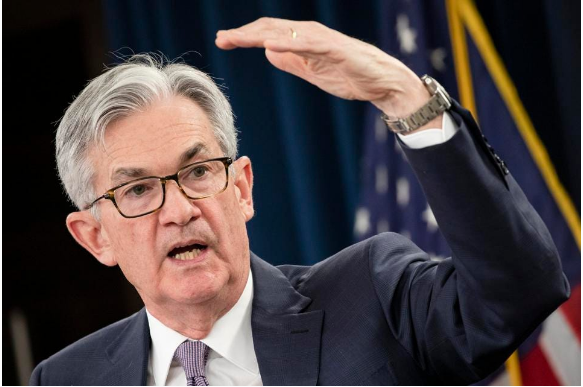
Federal Reserve Chair Jerome Powell. Image: Getty Images
Powell’s words highlight a difficult situation for the central bank. The inflation rate has remained persistently high, and it is proving tough to rein it in.
However, the extent to which crypto values can fall this year is still uncertain. Even in the absence of adverse news from inflation and the Fed rate hike, some experts believe Bitcoin is still headed for a big decline to the $10,000 region this year.
“I don’t foresee crypto, especially BTC and ETH, bucking the Fed’s influence any time soon,” Riyad Carey, a research analyst at crypto data firm Kaiko, said, adding this is yet another reminder that “crypto moves at the whims of the Fed.”
Meanwhile, Michael Saylor, chairman and co-founder of MicroStrategy, stated that Bitcoin might return to its November high of $68,990 “sometime in the next four years” and reach $500,000 in the following decade if its market capitalization matches that of gold.

BTC total market cap at $356 billion on the daily chart | Source: TradingView.com Featured image from The Crypto Basics, Chart: TradingView.com


Trending Cryptos

Related Reads

TechFlow Intelligence Bureau: Anthropic IPO Odds Exceed 80%, Iran Closes Strait of Hormuz Again, Triggering Oil Price Volatility

**Market Digest** **AI & Tech:** Anthropic is widely expected to announce an IPO before November 2026, raising questions about balancing its trillion-dollar valuation ambitions with its core "AI safety" mission. Brands are increasingly adopting AI-generated virtual influencers for marketing. Cloudflare introduced temporary accounts for AI agents to ease automation workflows. **Infrastructure & Hardware:** Google's IPv6 traffic surpassed 50%, marking a major internet milestone. Goldman Sachs warned that massive projected AI capital expenditure ($5.3T) is approaching credit saturation limits, potentially curbing the "AI arms race." **Space & Robotics:** SpaceX's IPO saw a historic $370M retail buying frenzy in three days. Hyundai Motor Group plans to acquire full ownership of Boston Dynamics. Elon Musk speculated about future "septillion-dollar" investments in antimatter for interstellar travel. **Energy & Geopolitics:** Iran's military announced another closure of the strategic Strait of Hormuz, accusing Israel of violating a ceasefire, causing oil market volatility. However, ship-tracking data indicated some traffic continued. Concurrently, Iran resumed crude loadings at Kharg Island, potentially releasing up to 20 million barrels to the market. **Finance & Macro:** A European CLO (collateralized loan obligation) experienced its first post-2008-crisis-era equity tranche default, raising alarms in credit markets. Nomura warned that new Federal Reserve Chair Wash's perceived hawkish debut speech could signal a significant policy shift. **The Undercurrent:** Seemingly disparate events—the Strait of Hormuz tension, the European CLO default, and warnings on AI spending—point to a tightening of global liquidity and rising marginal costs across energy, credit, and tech investment. Meanwhile, capital continues chasing grand narratives like space exploration and advanced AI, highlighting a divergence where old-world leverage frays as new-world stories grow more ambitious.

marsbit9h ago

TechFlow Intelligence Bureau: Anthropic IPO Odds Exceed 80%, Iran Closes Strait of Hormuz Again, Triggering Oil Price Volatility

marsbit9h ago

Trading

Spot
Futures

Hot Articles

What is $BITCOIN

DIGITAL GOLD ($BITCOIN): A Comprehensive Analysis Introduction to DIGITAL GOLD ($BITCOIN) DIGITAL GOLD ($BITCOIN) is a blockchain-based project operating on the Solana network, which aims to combine the characteristics of traditional precious metals with the innovation of decentralized technologies. While it shares a name with Bitcoin, often referred to as “digital gold” due to its perception as a store of value, DIGITAL GOLD is a separate token designed to create a unique ecosystem within the Web3 landscape. Its goal is to position itself as a viable alternative digital asset, although specifics regarding its applications and functionalities are still developing. What is DIGITAL GOLD ($BITCOIN)? DIGITAL GOLD ($BITCOIN) is a cryptocurrency token explicitly designed for use on the Solana blockchain. In contrast to Bitcoin, which provides a widely recognized value storage role, this token appears to focus on broader applications and characteristics. Notable aspects include: Blockchain Infrastructure: The token is built on the Solana blockchain, known for its capacity to handle high-speed and low-cost transactions. Supply Dynamics: DIGITAL GOLD has a maximum supply capped at 100 quadrillion tokens (100P $BITCOIN), although details regarding its circulating supply are currently undisclosed. Utility: While precise functionalities are not explicitly outlined, there are indications that the token could be utilized for various applications, potentially involving decentralized applications (dApps) or asset tokenization strategies. Who is the Creator of DIGITAL GOLD ($BITCOIN)? At present, the identity of the creators and development team behind DIGITAL GOLD ($BITCOIN) remains unknown. This situation is typical among many innovative projects within the blockchain space, particularly those aligning with decentralized finance and meme coin phenomena. While such anonymity may foster a community-driven culture, it intensifies concerns about governance and accountability. Who are the Investors of DIGITAL GOLD ($BITCOIN)? The available information indicates that DIGITAL GOLD ($BITCOIN) does not have any known institutional backers or prominent venture capital investments. The project seems to operate on a peer-to-peer model focused on community support and adoption rather than traditional funding routes. Its activity and liquidity are primarily situated on decentralized exchanges (DEXs), such as PumpSwap, rather than established centralized trading platforms, further highlighting its grassroots approach. How DIGITAL GOLD ($BITCOIN) Works The operational mechanics of DIGITAL GOLD ($BITCOIN) can be elaborated on based on its blockchain design and network attributes: Consensus Mechanism: By leveraging Solana’s unique proof-of-history (PoH) combined with a proof-of-stake (PoS) model, the project ensures efficient transaction validation contributing to the network's high performance. Tokenomics: While specific deflationary mechanisms have not been extensively detailed, the vast maximum token supply implies that it may cater to microtransactions or niche use cases that are still to be defined. Interoperability: There exists the potential for integration with Solana’s broader ecosystem, including various decentralized finance (DeFi) platforms. However, the details regarding specific integrations remain unspecified. Timeline of Key Events Here is a timeline that highlights significant milestones concerning DIGITAL GOLD ($BITCOIN): 2023: The initial deployment of the token occurs on the Solana blockchain, marked by its contract address. 2024: DIGITAL GOLD gains visibility as it becomes available for trading on decentralized exchanges like PumpSwap, allowing users to trade it against SOL. 2025: The project witnesses sporadic trading activity and potential interest in community-led engagements, although no noteworthy partnerships or technical advancements have been documented as of yet. Critical Analysis Strengths Scalability: The underlying Solana infrastructure supports high transaction volumes, which could enhance the utility of $BITCOIN in various transaction scenarios. Accessibility: The potential low trading price per token could attract retail investors, facilitating wider participation due to fractional ownership opportunities. Risks Lack of Transparency: The absence of publicly known backers, developers, or an audit process may yield skepticism regarding the project's sustainability and trustworthiness. Market Volatility: The trading activity is heavily reliant on speculative behavior, which can result in significant price volatility and uncertainty for investors. Conclusion DIGITAL GOLD ($BITCOIN) emerges as an intriguing yet ambiguous project within the rapidly evolving Solana ecosystem. While it attempts to leverage the “digital gold” narrative, its departure from Bitcoin's established role as a store of value underscores the need for a clearer differentiation of its intended utility and governance structure. Future acceptance and adoption will likely depend on addressing the current opacity and defining its operational and economic strategies more explicitly. Note: This report encompasses synthesised information available as of October 2023, and developments may have transpired beyond the research period.

414 Total ViewsPublished 2025.05.13Updated 2025.05.13

What is $BITCOIN

Discussions

Welcome to the HTX Community. Here, you can stay informed about the latest platform developments and gain access to professional market insights. Users' opinions on the price of BTC (BTC) are presented below.

活动图片