以太坊上的“欺骗性”(Spoof)代币

去中心化金融社区Published on 2022-03-14Last updated on 2022-03-14

Abstract

虚假或“spoof”的ERC-20代币转账在以太坊并不是什么新鲜事。然而,去年区块链的广泛采用导致了这些案例的急剧上升。现在越来越多的问题和最近一个备受瞩目的案例需要更深入的研究。

虚假或“spoof”的ERC-20代币转账在以太坊并不是什么新鲜事。然而,去年区块链的广泛采用导致了这些案例的急剧上升。现在越来越多的问题和最近一个备受瞩目的案例需要更深入的研究。

在本文中,我们会介绍:

这是什么“spoof”

如何检测它

如何避免

想象一下,听到一个被大肆宣传的DeFi产品即将进行代币空投的传言。作为一个完美的交易者,我们会搜索所有关于这一切的线索。

我们会注意到一个与这个DeFi产品的名称和符号非常相似的代币是新铸造的。更重要的是,我们会看到它被发送到一个我们私下标记为属于一个人脉广泛的鲸鱼/网红的地址。

我们想要领先于其他人了解这个代币,我们从一个刚刚创建的Uniswap V2流动性池中购买许多代币。一个小时后,LP耗尽了所有ETH,我们意识到自己被耍了。

到底是哪里出了错?
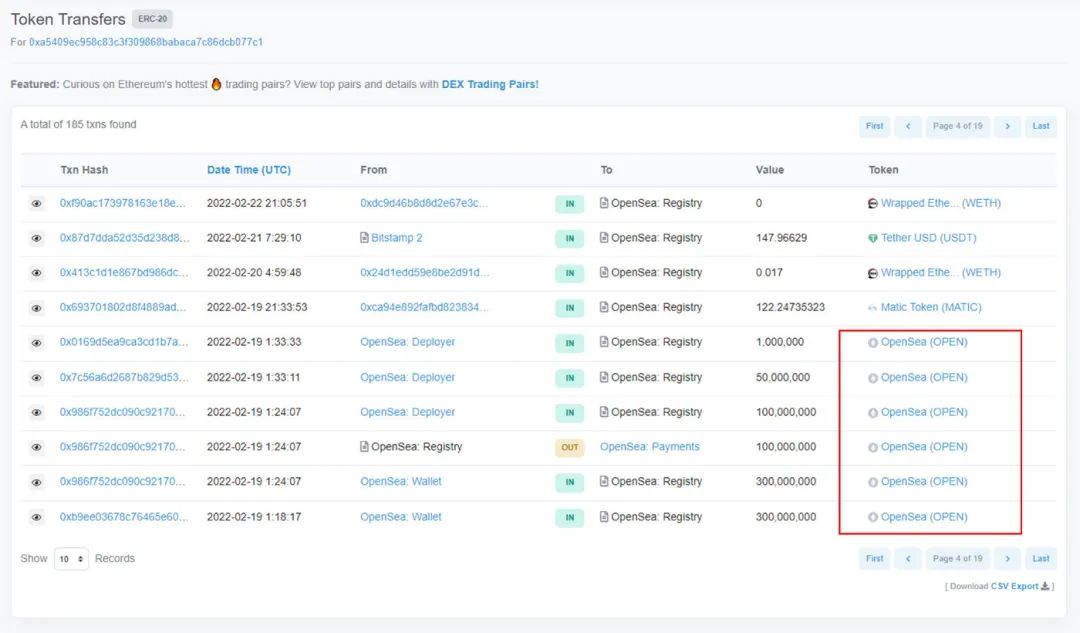
这些真实的 OpenSea 代币也不是由OpenSea: Registry地址转移的。

我们所犯的错误是认为代币转移实际上是由影响者地址进行的。这种“spoof”通过利用以下两点来欺骗毫无戒心的用户:

ERC-20标准设计

区块浏览器的透明数据显示

ERC-20标准的transfer和transferFrom函数可以修改,可以允许任何任意地址作为代币的发送方,只要在智能合约中进行指定,这会导致代币从不同于发起地址的地址进行转账交易。

通常“spoof”代币合约不会在Etherscan上进行验证,因为这有助于掩盖合约的内部工作原理。

对于ERC-20代币转账,Etherscan 等区块浏览器会显示传输代币的地址,而不是发起者地址。由于区块浏览器的性质,默认情况下不会审查区块浏览器的数据。

在大多数情况下,伤害程度仅限于持有零值的代币。但更危险的情况也可能存在,比如带有恢复错误消息的代币指向窃取用户私钥的钓鱼网站。ERC-721和ERC-1155代币(NFT)也可能遇到同样的问题。
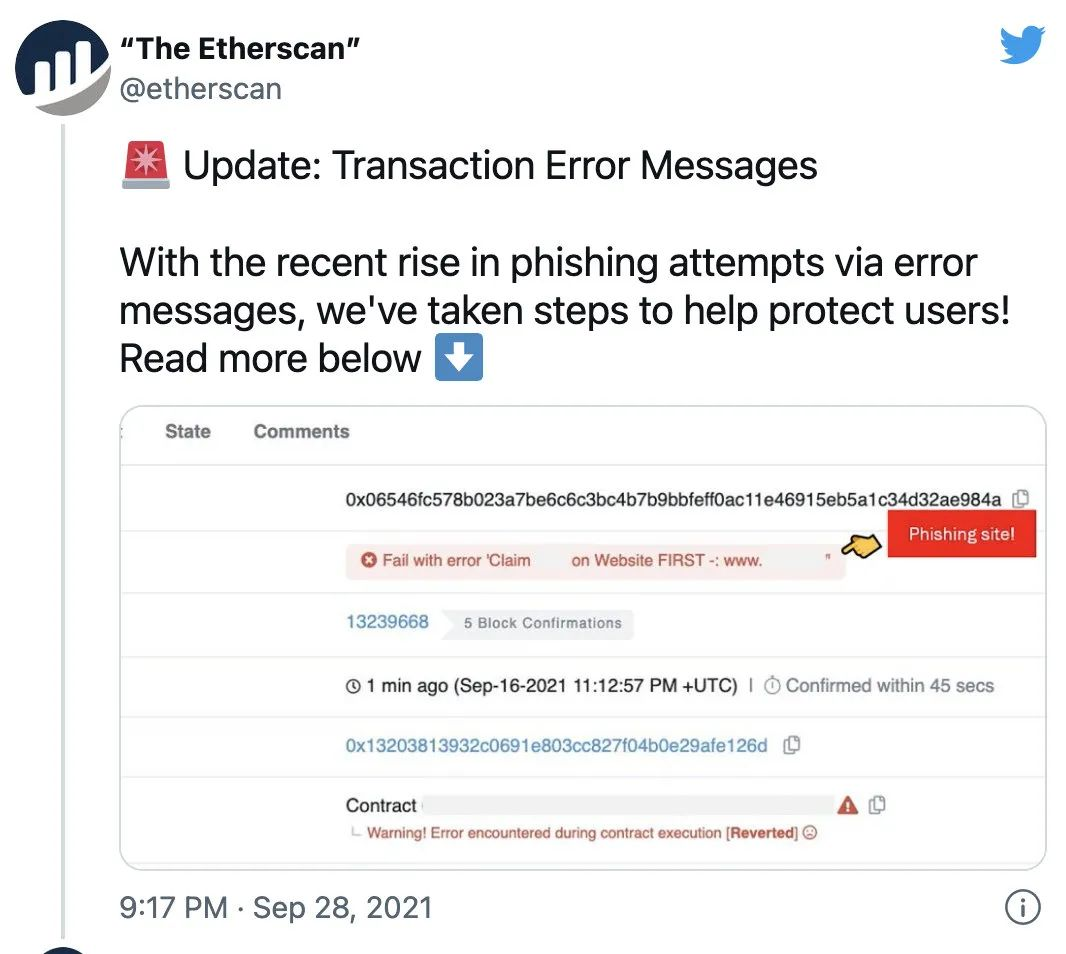
人们怎样才能发现这一点呢?

答案相当简单。对于任何这些代币传输,单击确切的交易哈希并检查其详细信息。发起交易的From地址显然与代币转移的From地址不相同。

要深入挖掘,请在交易输入数据或合约源代码中查找“欺骗性”的 From地址。它通常包含在任一位置中。如果合约没有被验证,这个步骤会进行的更困难,但同时它会自动地使该代币看起来更加可疑。
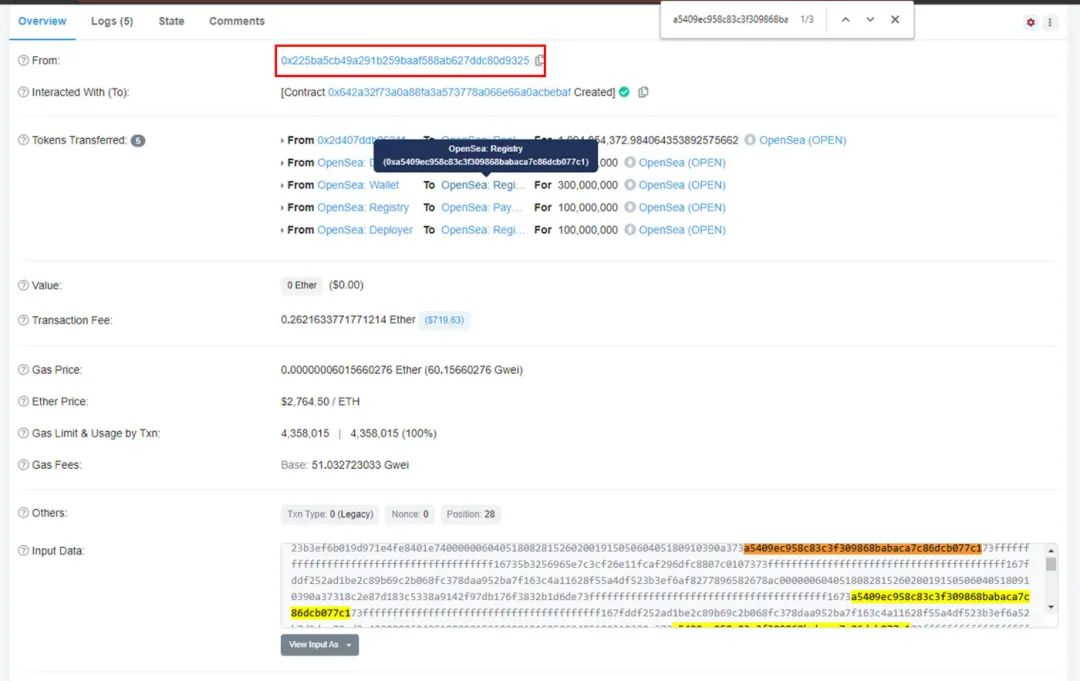
伪造的 OpenSea 代币看起来好像是由 OpenSea: Registry 在此交易中转账的。

一个关键的警告。并非所有由不同地址发起的代币转账都是假的或有欺骗性的。一个常见的例子是dApp批量发送多个代币转账。这些通常有一个由Etherscan添加的公共名称标签。
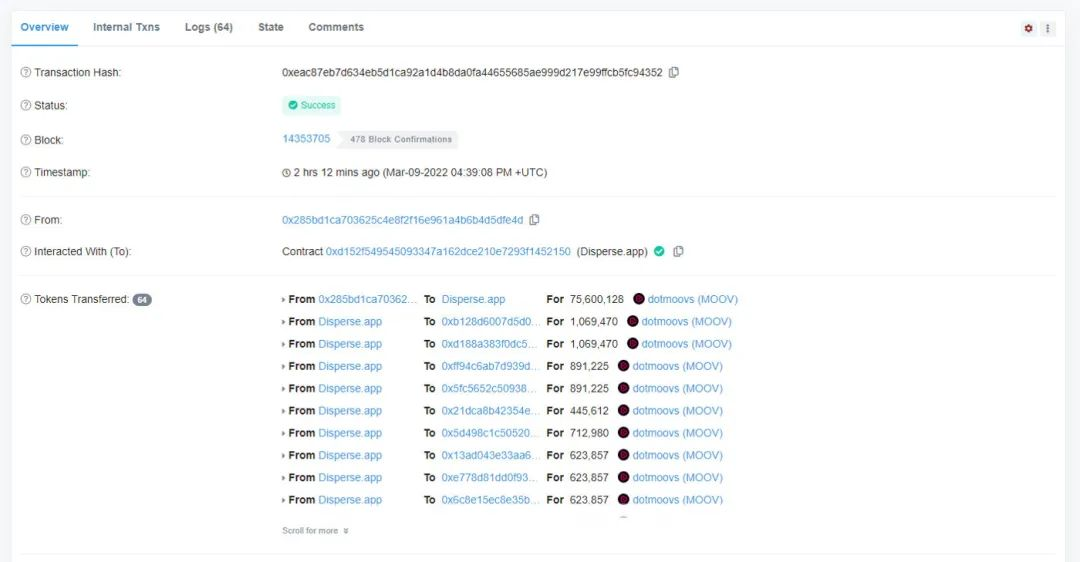
批量发送代币的交易。

spoof的“近亲”是垃圾邮件代币。虽然这些不是假装是由有影响力的人的地址发送的,但它们是一起发送到该地址,并使阅读地址的代币标签成为一个痛苦的体验。
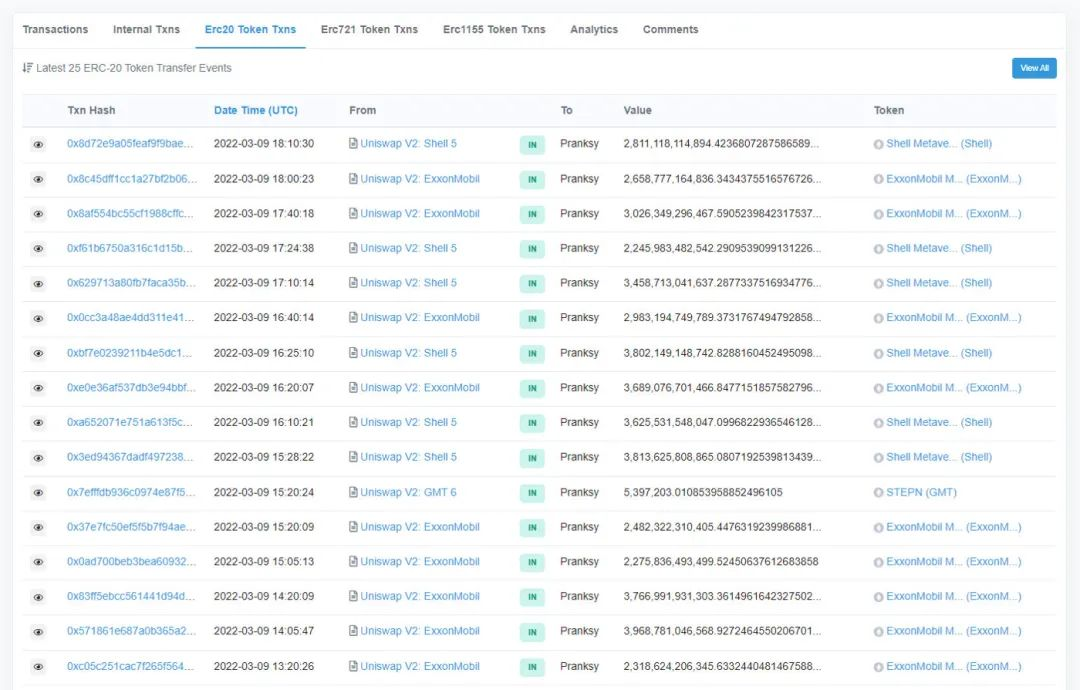
我们可以做些什么来避免这种情况呢?

对于一般的用户,不需要做任何事情,因为这个问题不太可能影响我们。

Etherscan默认不审查数据,但正在探索帮助缓解这个问题的方法。第一步是扩展代币忽略列表的功能。特性:

自动隐藏ERC-20、ERC-721和ERC-1155标签中的代币转账,并在地址余额和代币持有中隐藏它们。

包括一个简单的选项,让用户选择忽略所有被Etherscan标记为可疑或糟糕的代币。

我们希望这个功能扩展将有助于保护用户免受欺骗,同时在网站上享受一个更干净的用户体验。

Source:https://medium.com/etherscan-blog/spoof-tokens-on-ethereum-c2ad882d9cf6

Trending Cryptos

Related Reads

Argentine Banking Groups Quietly Develop Peso-Pegged Stablecoins for the Institutional Market

Argentine banking groups are quietly developing peso-pegged stablecoins for the institutional market. While US dollar-linked stablecoins like USDC and USDT are popular in Argentina, fintech companies are now focusing on local alternatives. Two major initiatives are underway. The BIND Group, through its virtual asset service provider BEN, is developing a peso stablecoin and has partnered with Circle to offer institutional clients payment and treasury use cases. Separately, the Petersen Group is developing a stablecoin called DIPE via a subsidiary, supported by crypto-as-a-service company Lirium. Both projects are being advanced by entities backed by banking conglomerates, not the banks themselves, due to a Central Bank of Argentina ban from May 2022 prohibiting private banks from offering crypto services to clients. The primary target is the institutional sector, which could benefit from the programmable features of a digital peso for treasury management, event-triggered blockchain payments, and collateralized lending management. These initiatives could expand to private banks in the future if the central bank lifts its crypto ban. This development comes as regulators scrutinize existing crypto offerings; in March, the national securities regulator highlighted that the "argt peso" stablecoin was being offered as a security without proper compliance.

cryptonews.ru7m ago

Argentine Banking Groups Quietly Develop Peso-Pegged Stablecoins for the Institutional Market

cryptonews.ru7m ago

Pi Network Price Forecast: Can a $12 Million Robotics Bet Save PI From a New All-Time Low?

Pi Network (PI) price faces intense pressure, dropping to $0.07286 on July 28th (-5.60%). It is testing key technical support at the lower Bollinger Band ($0.07003), just above its all-time low. A close below this level would signal a likely plunge into uncharted territory with no established historical support underneath. The sell-off is fueled by viral market criticism regarding unclear tokenomics. An analysis by Mahidhar Crypto highlighted unanswered questions about Pi's total supply of 100 billion tokens, with only 16.8% currently minted/mainnet. This lack of clarity on the remaining ~83.2B tokens and the absence of a burn mechanism have created uncertainty, pressuring marginal holders to sell. Amidst the bearish sentiment, Pi Network Ventures participated in a $12M seed round for physical AI robotics startup Axis Robotics. While this signals ecosystem expansion beyond crypto, its direct impact on the PI token price is considered indirect at best against the dominant supply-side concerns. **Price Forecast Scenarios:** * **Bull Case:** PI holds above $0.07003, and the Pi Core Team addresses tokenomics concerns, shifting narrative to ecosystem growth. A recovery toward the Bollinger Band middle line at $0.08614 is possible. * **Bear Case:** PI breaks below $0.07003 support. Continued silence from the core team allows supply fears to persist, accelerating selling into price discovery with no floor below.

cryptonews.ru11m ago

Pi Network Price Forecast: Can a $12 Million Robotics Bet Save PI From a New All-Time Low?

cryptonews.ru11m ago

Trump's AI Plan Could Replace 50 State AI Laws With One Set of Rules

The Trump administration is reportedly close to establishing a national framework for regulating artificial intelligence. According to The Information, this initiative aims to replace the patchwork of approximately 50 differing state-level AI laws with a single, federal standard. The core proposal, outlined in the White House's National AI Policy Framework, would centralize AI policymaking in Washington, D.C., offering developers more consistent and transparent rules on issues like child safety, AI-generated deepfakes, and the use of regulatory sandboxes. This move addresses growing concerns that the current fragmented regulatory landscape, with states like Colorado, Texas, and California enacting their own rules, creates a compliance burden for AI companies. A unified federal system is intended to streamline regulations, allowing businesses to spend less time adapting to state laws and more time on innovation. The administration's strategy also includes an executive order signed by President Trump in June 2026, which focuses on enhancing cybersecurity for advanced AI systems. A major unresolved question in the proposal, however, is how to regulate open-source AI models. The framework does not clearly define an approach, despite expert warnings that such models pose unique governance challenges due to their free modification and distribution. While the fate of the legislative proposal in Congress remains uncertain, its existence signals Washington's intent to become the primary authority governing AI technology, a move that would have significant global implications given the dominance of U.S. firms in the AI sector.

cryptonews.ru11m ago

Trump's AI Plan Could Replace 50 State AI Laws With One Set of Rules

cryptonews.ru11m ago

Trading

Spot

Hot Articles

Discussions

Welcome to the HTX Community. Here, you can stay informed about the latest platform developments and gain access to professional market insights. Users' opinions on the price of ETH (ETH) are presented below.

活动图片