Solana bắt đầu các cuộc bỏ phiếu về đề xuất hiến pháp, lạm phát và phí giao dịch

cryptonews.ruPublished on 2026-08-24Last updated on 2026-08-24

Abstract

Mạng lưới Solana đã bắt đầu ba cuộc bỏ phiếu về các đề xuất quản trị quan trọng liên quan đến hiến pháp, lạm phát và cấu trúc phí giao dịch. Đề xuất SGP-0001 (Hiến pháp Solana) đề nghị thông qua một bản hiến pháp làm văn bản quản trị cơ bản, đồng thời kích hoạt hệ thống quản trị on-chain svmgov. Nó cũng thiết lập hai loại đề xuất: SIMD cho thay đổi kỹ thuật và SGP cho các quyết định về kinh tế và kiến trúc. SGP-0002 (Giảm phát gấp đôi) nhằm tăng gấp đôi tốc độ giảm lạm phát hàng năm của SOL từ 15% lên 30%, giúp rút ngắn một nửa thời gian để đạt đến tỷ lệ lạm phát cuối cùng là 1,5%. Ước tính, điều này sẽ giảm lượng phát hành khoảng 18,9 triệu SOL trong sáu năm. SGP-0003 (Phí Tài nguyên và Đưa vào Khối) đề xuất cải cách phí cơ bản. Thay vì mức phí cố định 5000 lamports, nó sẽ được chia thành phí cố định 2500 lamports để đưa giao dịch vào khối (thuộc về người tạo khối) và một phí biến đổi dựa trên mức độ sử dụng tài nguyên của giao dịch. Các giao dịch "nhẹ" sẽ rẻ hơn, trong khi giao dịch "nặng" sẽ đắt hơn. Lượng SOL bị đốt hàng ngày dự kiến có thể tăng từ khoảng 650 SOL lên 1500-9000 SOL. Một trình xác thực hàng đầu là DFDV đã bày tỏ sự ủng hộ đối với cả ba đề xuất. Các cuộc bỏ phiếu này diễn ra sau khi các nhà phát triển Solana gần đây đã kích hoạt việc giảm thời gian tạo khối trung bình từ 400 ms xuống 350 ms.

Mạng Solana đã khởi động ba cuộc bỏ phiếu về các đề xuất liên quan đến quản trị, giảm lạm phát $SOL và cấu trúc lại phí cơ bản.
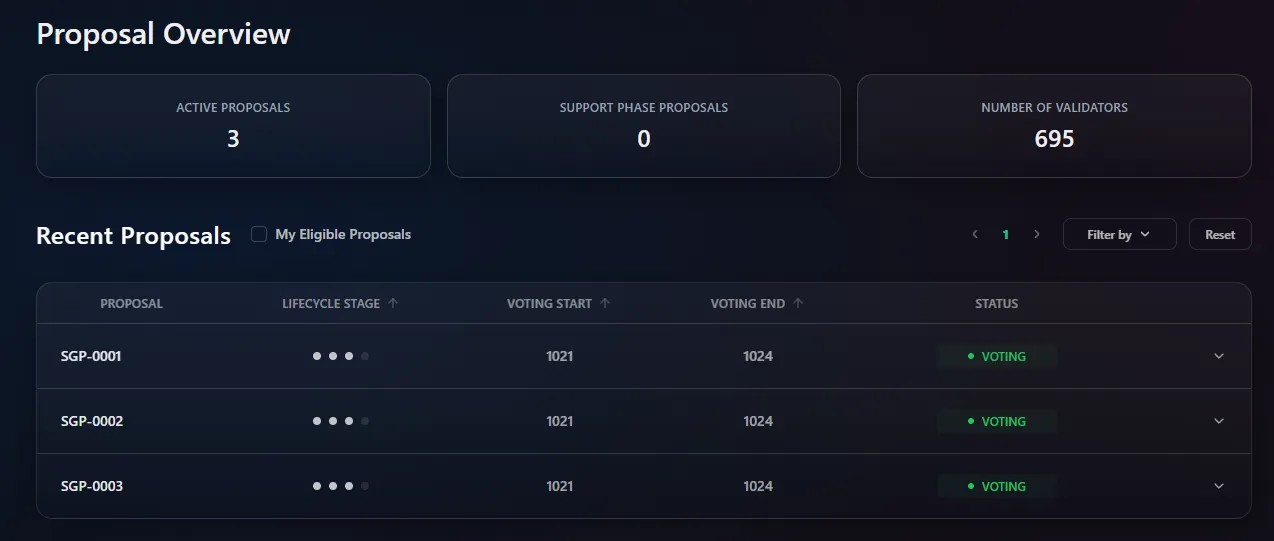
Nguồn: Solana Governance.

SGP-0001 (Hiến pháp Solana) đề xuất phê chuẩn "hiến pháp" như một tài liệu quản trị cơ bản cho blockchain. Nếu được thông qua, hệ thống svmgov đã được triển khai trên chuỗi sẽ được kích hoạt.

Sáng kiến này cũng sẽ củng cố hai loại đề xuất: SIMD cho các thay đổi kỹ thuật và SGP cho các quyết định về kinh tế và kiến trúc.

Ngưỡng hỗ trợ cho đề xuất là 15% số coin bị khóa trong staking. Tỷ lệ tối thiểu của trình xác thực khởi xướng là 100.000 $SOL, và đạt quorum cần 1/3 lượng stake. Thời gian bỏ phiếu sẽ kéo dài ba kỷ nguyên, và những người ủy quyền có thể ghi đè phiếu bầu của trình xác thực.

SGP-0002 (Double Disinflation) đề xuất tăng tốc độ giảm lạm phát $SOL, tăng tỷ lệ giảm phát hàng năm từ 15% lên 30%. Điều này sẽ rút ngắn một nửa thời gian để đạt được tỷ lệ lạm phát cuối cùng là 1,5%.

Theo ước tính của các tác giả, nếu đề xuất được thông qua, lượng phát hành sẽ giảm khoảng 18,9 triệu $SOL trong sáu năm.

SGP-0003 (Phí Tài nguyên và Đưa vào Khối) đề xuất cấu trúc lại phí cơ bản. Thay vì mức phẳng 5000 lamports, họ muốn chia nó thành một khoản phí cố định 2500 lamports để đưa giao dịch vào khối (người tạo khối nhận toàn bộ) và một khoản phí tài nguyên riêng biệt, phụ thuộc vào tải của giao dịch.

Theo ý tưởng, các hoạt động "nhẹ" sẽ có chi phí thấp hơn mức phí cố định hiện tại, còn các hoạt động tốn nhiều tài nguyên sẽ cao hơn. Các tác giả ước tính rằng khối lượng coin bị đốt có thể tăng từ khoảng 650 $SOL lên 1500-9000 $SOL mỗi ngày.

Một trong những trình xác thực hàng đầu của mạng — DFDV — đã ủng hộ cả ba ứng dụng này.

$DFDV là trình xác thực hàng đầu bỏ phiếu ủng hộ SIMD SGP-0001, SGP-0002 và SGP-0003

Mong chờ phần còn lại của cộng đồng lên tiếng và bỏ phiếu của họ pic.twitter.com/z26s88m11x

— Parker (@TheOtherParker_) 23 tháng 8, 2026

Nhắc lại, vào ngày 21 tháng 8, các nhà phát triển Solana đã kích hoạt giai đoạn đầu tiên của việc rút ngắn thời gian slot trung bình — từ 400 ms xuống 350 ms — trong mạng devnet như một phần của việc triển khai đề xuất cải tiến SIMD-0525.


Trending Cryptos

Related Questions

QSolana đang bắt đầu các cuộc bỏ phiếu về những đề xuất chính nào?

AMạng Solana đang bắt đầu ba cuộc bỏ phiếu về các đề xuất: SGP-0001 (Hiến pháp Solana), SGP-0002 (Giảm lạm phát kép) và SGP-0003 (Phí tài nguyên và đưa vào khối).

QĐề xuất SGP-0001 (The Solana Constitution) nhằm mục đích gì?

ASGP-0001 đề xuất phê chuẩn một 'hiến pháp' làm tài liệu quản trị cơ bản cho blockchain Solana. Nếu được thông qua, hệ thống quản trị trên chuỗi svmgov sẽ được kích hoạt và thiết lập hai loại đề xuất: SIMD cho các thay đổi kỹ thuật và SGP cho các quyết định về kinh tế và kiến trúc.

QĐề xuất SGP-0002 sẽ thay đổi tỷ lệ lạm phát của SOL như thế nào?

ASGP-0002 đề xuất tăng tốc độ giảm lạm phát hàng năm của SOL từ 15% lên 30%. Điều này sẽ rút ngắn một nửa thời gian để đạt đến tỷ lệ lạm phát cuối cùng là 1,5%, và theo ước tính, sẽ giảm tổng cung phát hành khoảng 18,9 triệu SOL trong sáu năm.

QThay đổi chính trong cấu trúc phí cơ bản theo đề xuất SGP-0003 là gì?

ASGP-0003 đề xuất thay đổi cấu trúc phí cơ bản từ mức phí phẳng 5000 lamport thành hai phần: một khoản phí cố định 2500 lamport để đưa giao dịch vào khối (toàn bộ thuộc về người tạo khối) và một khoản phí tài nguyên riêng biệt, phụ thuộc vào tải tài nguyên của giao dịch. Các giao dịch 'nhẹ' sẽ rẻ hơn, trong khi các giao dịch sử dụng nhiều tài nguyên sẽ đắt hơn.

QMột trình xác thực hàng đầu nào đã bày tỏ sự ủng hộ đối với cả ba đề xuất này?

ATrình xác thực hàng đầu DFDV (có tài khoản X là @TheOtherParker_) đã công khai bỏ phiếu ủng hộ cả ba đề xuất SIMD SGP-0001, SGP-0002 và SGP-0003.

Related Reads

Altcoin Hacked, Leading to Sharp Price Drop! Also Listed on Major Exchanges!

The price of the NES token plummeted significantly following suspicious activity and large sell-offs detected on the network. Blockchain observers suggested that one wallet minted approximately $55 million worth of NES tokens and began selling them on decentralized exchanges. This selling pressure caused the price of NES to drop by up to 40%. According to the data, the address in question still holds around $18 million worth of NES, indicating that market sell-off pressure may continue. Prior to the incident, it was reported that about $12.35 million worth (62.9 million NES tokens) were transferred to the Ethereum mainnet in the morning (Turkish time), with claims that liquidity was withdrawn and tokens were sold on the market later that evening. However, data regarding the $55 million token mint and the transfer of 62.9 million NES tokens has not been independently confirmed. The NESA team confirmed in a statement that they detected malicious activity exploiting a vulnerability in their Layer 1 network originating from Cosmos EVM. They stated they are working to contain the impact, responded promptly, and will restore services after implementing a software patch and additional measures to ensure secure network operation. Nesa also notified all cryptocurrency exchanges and stated deposit operations will resume after necessary work is completed. The article includes a chart showing the NES price decline following the exploit and concludes with a standard disclaimer that this is not investment advice.

cryptonews.ru8m ago

Altcoin Hacked, Leading to Sharp Price Drop! Also Listed on Major Exchanges!

cryptonews.ru8m ago

PeaqOS and World ID Integrate ZK Proofs into Autonomous Robots

The integration of PeaqOS and World ID now allows autonomous machines to verify they are interacting with real, unique individuals without collecting names, photos, or other personal data. This update, available via robotic.sh, enables connected devices to directly request and verify World ID proofs. The system leverages zero-knowledge technology, letting a person prove they are human while maintaining the privacy of their identity. This addresses a key challenge for operators of delivery robots, shared machines, and autonomous systems: how to authenticate a user as genuine without relying on insecure PINs, pickup codes, or traditional identity checks that require personal data collection. Instead of obtaining identifying information, a device receives a cryptographic proof that the user is a real person. PeaqOS acts as a coordination layer, allowing devices to utilize World ID via decentralized identifiers and a device marketplace. A robot can request verification, receive a zero-knowledge proof, and register an auditable record of the interaction—all without exposing underlying personal data. The system also supports uniqueness verification, enabling machines to enforce rules like "one item per person" without maintaining user identity databases. A demonstrated use case involves autonomous medicine delivery: a patient verifies via the World App when placing an order, a pharmacist verifies before loading the medication, and the patient verifies again upon delivery so the robot can confirm the recipient is linked to the order before unlocking the compartment. Similarly, promotional robots could ensure one item per person, and shared vending machines could grant access to verified individuals without requiring accounts or personal data. This integration for PeaqOS-powered robots and devices minimizes the identity information collected or stored while allowing autonomous systems to confirm they are interacting with real humans.

cryptonews.ru1h ago

PeaqOS and World ID Integrate ZK Proofs into Autonomous Robots

cryptonews.ru1h ago

Trading

Spot

Hot Articles

Discussions

Welcome to the HTX Community. Here, you can stay informed about the latest platform developments and gain access to professional market insights. Users' opinions on the price of SOL (SOL) are presented below.

活动图片