De carteras de Bitcoin inactivas, inactivas durante 11 años, se transfirieron 1.214 BTC por valor de 86 millones de dólares en 24 horas

cryptonews.ruPublished on 2026-08-20Last updated on 2026-08-20

Abstract

A lo largo de 24 horas, 28 carteras de Bitcoin inactivas durante más de una década transfirieron 1.214,42 BTC, valorados en 86 millones de dólares. La gran mayoría (92,4%) provino de direcciones creadas en 2014. Destacan 21 transacciones coordinadas de exactamente 50 BTC cada una, movidas desde carteras antiguas (P2PKH) hacia direcciones más modernas y seguras (P2WPKH). Los fondos no muestran signos inmediatos de dirigirse a exchanges. Un análisis de privacidad calificó algunas de estas transferencias como de "baja" confidencialidad, debido a patrones repetitivos. Los titulares, probablemente uno o dos grandes inversores ("ballenas") que acumularon durante el mercado bajista de 2014/2015, han obtenido una ganancia estimada del 16.645%, demostrando una tenacidad excepcional ("manos de diamante"). Estos movimientos parecen ser una consolidación de fondos a largo plazo en lugar de una preparación para la venta.

Agosto ya promete convertirse en un mes récord en términos de gastos procedentes de carteras de Bitcoin inactivas. Comenzó con el incidente de Coldcard, durante el cual casi 2.000 $BTC fueron robados de carteras hardware con firmware defectuoso. Sin embargo, la última ola de bitcoins 'dormidos' no está relacionada con fondos robados, sino que es más probable que refleje cómo los poseedores de la vieja escuela están moviendo sus monedas silenciosamente a lugares más seguros. La blockchain registra cada movimiento, pero nunca revela los motivos detrás de ellos.

Carteras de Bitcoin de 2014 de repente cobraron vida

A medida que los precios de Bitcoin subían en las últimas 24 horas, datos de btcparser.com muestran que 28 carteras inactivas durante mucho tiempo de repente despertaron entre el 19 y el 20 de agosto después de años de inactividad. Desde estas carteras se transfirieron a nuevas direcciones un total de 1.314,41 $BTC por valor de 94,03 millones de dólares, siendo asombroso que el 92,4% de estos bitcoins procediera de direcciones creadas por primera vez en 2014. Aún más sorprendente es que 21 de las 28 transacciones consistieron en paquetes ordenados de 50 $BTC, transferidos desde carteras de 2014 creadas en noviembre o diciembre de ese año.

El propietario transfirió las monedas desde carteras antiguas P2PKH (Pay-to-Public-Key-Hash) y las consolidó en direcciones más nuevas P2WPKH (Pay-to-Witness-Public-Key-Hash). Varias transferencias llegaron a los mismos bloques, incluido el bloque de altura 963203, lo que sugiere que estos movimientos fueron coordinados y no aleatorios. Las direcciones de destino no tienen ningún indicador de exploradores como Arkham Intelligence y, al menos por ahora, no muestran signos claros de estar destinadas a un intercambio.

Problemas de privacidad en la redistribución coordinada de 50 $BTC

La herramienta de evaluación de privacidad de Blockchair.com asignó a varias de las 21 transferencias consolidadas de 50 $BTC una puntuación 'baja', obteniendo solo 22 puntos de 100 en aproximadamente cuatro criterios de privacidad, incluida la aparición repetida de la misma dirección entre las direcciones de entrada. Pero este probablemente único 'ballena' de 2014 difícilmente estuvo solo, ya que otras carteras del mismo grupo de 2014 también 'despertaron' súbitamente después de más de una década en la sombra.
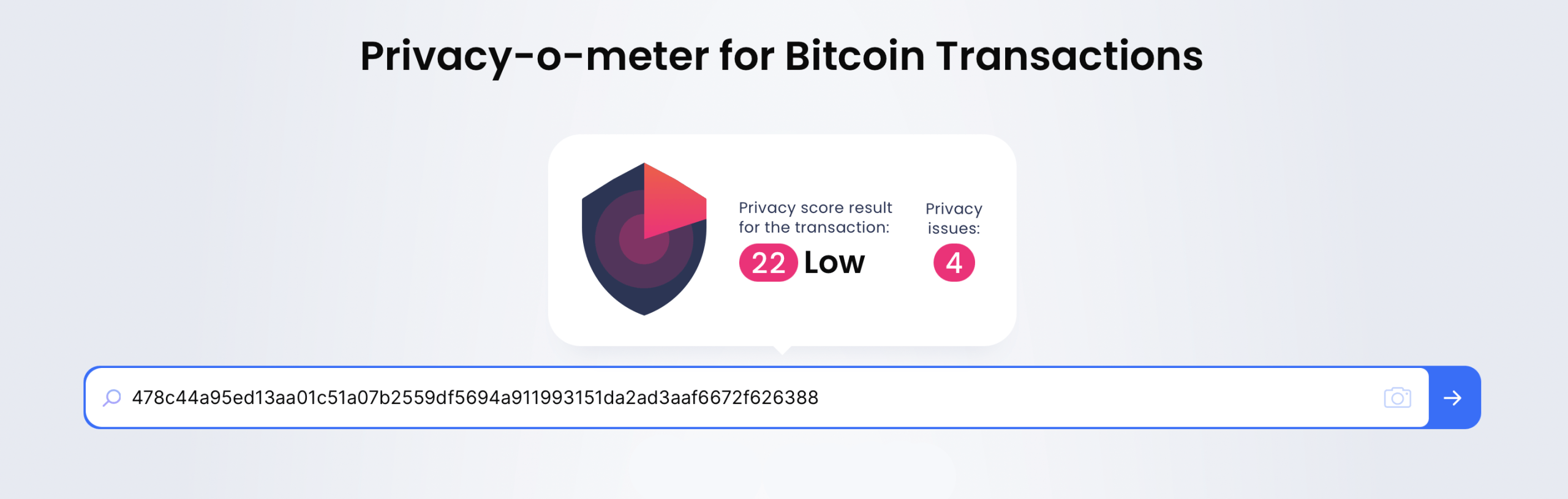
Captura de pantalla del indicador de privacidad de Blockchair y resumen de tres transacciones de 50 $BTC realizadas en 2014.

El jueves, otra cartera de 2014, vista por primera vez el 26 de diciembre de ese año, transfirió repentinamente 150 $BTC por valor de 10,73 millones de dólares al tipo de cambio actual. Estas monedas también se movieron desde una antigua dirección P2PKH a una nueva cartera P2WPKH, sin etiquetas de indicadores.
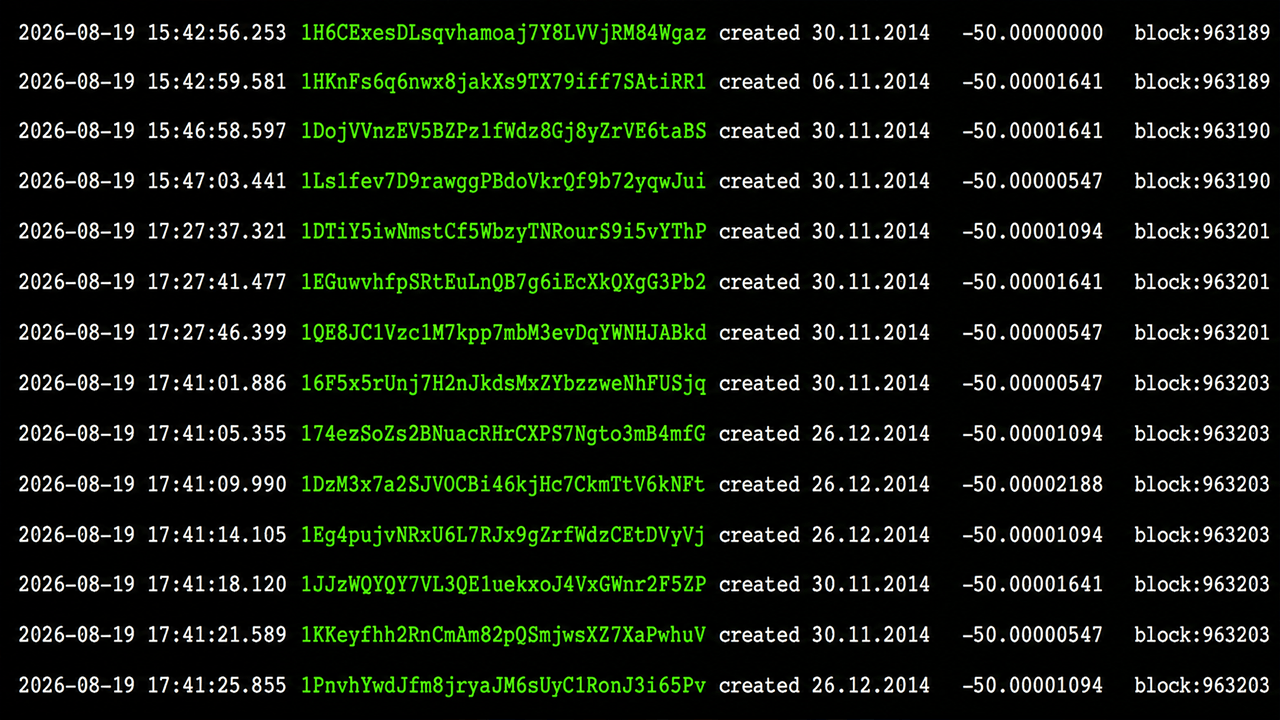
Captura de pantalla de 14 de las 21 transacciones desde carteras de Bitcoin, enviando 50 $BTC cada una desde carteras creadas en 2014. Fuente de datos: btcparser.com.

Mientras tanto, lo que aparentemente es solo uno o dos propietarios, transfirió desde carteras creadas en 2014 un total de 1.214,42 $BTC por valor de 86 millones de dólares. Los analistas de blockchain también encontraron tres carteras de 2016, desde las cuales se transfirieron 79,99 $BTC, y dos direcciones creadas en 2017, desde las cuales se transfirieron otros 20 $BTC en el mismo periodo. Todos estos poseedores han demostrado resiliencia y firmeza de convicción.

Una década de 'diamond hands' generó una ganancia del 16,645%

El grupo de poseedores de 2014 obtuvo el mayor beneficio, ya que Bitcoin ($BTC) cotizaba aproximadamente entre 310 y 427 dólares durante noviembre y diciembre de 2014. Bitcoin quedó atrapado en uno de sus primeros y más brutales mercados bajistas, y a mediados de enero de 2015 los precios se desplomaron aproximadamente a 152-170 dólares por moneda. Incluso tomando el extremo superior de ese rango de 2014, para el jueves estas carteras habían generado un enorme beneficio de al menos 16,645%.


Trending Cryptos

Related Questions

Q¿Qué cantidad de BTC y qué valor en dólares se transfirió desde carteras inactivas de Bitcoin durante un período de 24 horas según el artículo?

ASe transfirió un total de 1.214 BTC, con un valor de 86 millones de dólares.

Q¿De qué año procedían principalmente las carteras Bitcoin que se reactivaron y cuánto tiempo habían estado inactivas?

AEl 92,4% de los bitcoins procedían de carteras creadas por primera vez en 2014, que habían estado inactivas durante aproximadamente 11 años.

Q¿Qué patrón se observó en las transacciones de las carteras de 2014 y qué sugiere este patrón?

A21 de las 28 transacciones consistían en paquetes ordenados de exactamente 50 BTC cada uno. Este patrón, junto con el hecho de que varias transferencias llegaron a los mismos bloques, sugiere que los movimientos fueron coordinados y no aleatorios.

Q¿A qué tipo de nuevas carteras se consolidaron los fondos y cuál es una característica de seguridad de estas nuevas carteras mencionada en el texto?

ALos fondos se consolidaron en carteras más nuevas del tipo P2WPKH (Pay-to-Witness-Public-Key-Hash). Una característica mencionada es que las direcciones de destino no tienen banderas de alerta de exploradores como Arkham Intelligence y, por el momento, no muestran signos claros de ser enviadas a un exchange.

Q¿Cuál fue el porcentaje aproximado de ganancia para los poseedores de las carteras de 2014, tomando como referencia el precio de Bitcoin a finales de ese año?

ALos poseedores de las carteras de 2014 obtuvieron una ganancia de al menos 16.645%.

Related Reads

Kaito Reboots 'Talk-to-Earn Economy', but Many Are Hesitant to Install the New Plugin

Kaito AI has launched a new browser extension called Kaito Pulse, aiming to revitalize what the community terms the "talk-to-earn" or "social-fi" economy on X (formerly Twitter). The plugin displays users' on-chain trading activity, such as positions from platforms like Polymarket, directly within the X timeline. This aims to create a new "attention + behavior verification" system, shifting focus from who generates the most discussion to whose discussions are backed by credible, verifiable actions. However, the launch quickly sparked significant privacy concerns within the crypto community. Critics, led by an analysis from user "Ultra," allege the extension's code enables deep data collection. This includes potential device fingerprinting (using GPU, hardware, and audio data), tracking of X user behavior (browsing paths, clicks, engagement), and verification processes that could access sensitive data from third-party accounts like ChatGPT, Claude, and trading platforms. The debate centers on whether such extensive verification is necessary to combat fake engagement and AI-generated content, or if it constitutes an unacceptable privacy sacrifice. In response, Kaito founder Yu Hu stated the design follows data minimization principles. He claimed Kaito Pulse does not collect or store users' raw data but instead uses verification techniques, including zkTLS, to generate proofs of identity or behavior without exposing the underlying information. Yu Hu acknowledged that some permission descriptions could be misleading and promised improvements in future versions. The controversy highlights a core dilemma for social-fi projects: platforms need more user data to distinguish real influence from artificial hype, but users must decide how much privacy they are willing to trade for potential rewards and ranking within these new incentive systems.

Odaily星球日报10m ago

Kaito Reboots 'Talk-to-Earn Economy', but Many Are Hesitant to Install the New Plugin

Odaily星球日报10m ago

After Two and a Half Years of Entrepreneurship and Full AI Adoption, the Company Has Actually Become More 'Traditional'

"After 2.5 years of running my company, achieving near 100% AI adoption with Agents in roles like finance, HR, and operations, we've paradoxically become more 'traditional.' We learned that establishing a thick AI middle layer creates bottlenecks. Instead, we advocate for a 'thin platform, thick frontline' model, empowering employees closest to problems to use AI tools themselves, fostering ownership and initiative. The true foundation isn't the AI models, but the unique data and context a company accumulates—our most vital, irreplaceable asset, requiring diligent governance. As AI handles repetitive, describable tasks, human roles revert to their core: building genuine relationships, trust, and brand reputation through authentic communication, which AI cannot accelerate. A critical question is where the time saved by AI goes. It must be returned—to clients, to creative work, to employees' own lives—rather than just fueling higher output demands. For managers, AI strips away execution-focused busywork, exposing the necessity to define clear goals, make tough judgments, and take ultimate responsibility. Onboarding newcomers presents a challenge: while AI can generate 80% solutions instantly, we must deliberately design paths for them to develop judgment, understand context, and safely learn from mistakes. Ultimately, AI's organizational value isn't about replacing people but removing unnecessary friction, allowing more meaningful human connection. The real test of an 'AI-era' company isn't its tech stack, but how it treats people: delegating creative power, returning saved time, fostering growth, and upholding accountability. The core luxury and purpose of our work remains authentic human relationships."

marsbit19m ago

After Two and a Half Years of Entrepreneurship and Full AI Adoption, the Company Has Actually Become More 'Traditional'

marsbit19m ago

US Stock Market Trends (August 21): Long-Term Bond Repo Fails, Walmart's Warning Drags Dow Down 700 Points

**U.S. Market Trends (Aug 21): Long-Term Bond Relief Fizzles, Walmart Drags Dow Down 700 Points** U.S. stocks fell sharply, with the Dow plunging over 700 points, as relief from the Treasury's long-term bond buyback plan proved fleeting. Major indexes declined as long-end Treasury yields and oil prices resumed their upward climb, reigniting inflation fears and pressure on high-valuation assets. The key catalyst was the rapid reversal in the bond market. The Treasury's expanded buyback program briefly calmed markets, but 30-year yields quickly rebounded near 5.26%, approaching recent 20-year highs. This signaled that liquidity interventions cannot overcome structural pressures from massive U.S. debt, fiscal deficits, and competing capital demands from AI infrastructure spending. Simultaneously, rising oil prices (WTI +2.3%) on geopolitical tensions renewed inflation concerns, squeezing consumer spending power. This pressure was highlighted by Walmart's 9% stock plunge. Despite beating earnings estimates, its weak U.S. same-store sales growth and lowered annual guidance exposed caution among lower-income consumers. Tech stocks faced broad pressure. The "Magnificent Seven" giants broadly declined, with Moderna crashing over 23% a day after a massive rally on vaccine trial news, exemplifying swift profit-taking. However, select semiconductor names (e.g., Marvell, Micron) gained on specific AI-related catalysts, indicating a more discerning market moving beyond hype to scrutinize real cash flows and capital expenditure sustainability. Bitcoin surged past $72,000, while gold seesawed near $4,500/oz. Alibaba's earnings showed strong AI cloud revenue growth but significant cash outflow due to infrastructure investments. The market's core takeaway is that Treasury actions provide only temporary relief, not a trend reversal. Focus now shifts to whether long-term yields can stabilize below 5.3% and to upcoming Federal Reserve commentary for clues on the rate path. Sustainable equity recovery hinges on the bond market calming and major tech stocks showing concurrent strength.

marsbit20m ago

US Stock Market Trends (August 21): Long-Term Bond Repo Fails, Walmart's Warning Drags Dow Down 700 Points

marsbit20m ago

547 Million OP Tokens Transferred from User Airdrop to Ecosystem Fund: DAO Voting Becoming Sham Democracy

An Optimism governance vote approved the controversial transfer of 546.9 million OP tokens (12.7% of total supply, ~24% of circulating supply) from the remaining "User Airdrop" allocation to the Foundation-controlled "Strategic Ecosystem Fund." The vote passed with a decisive 849,000 OP vote from "Test in Prod," a core development team fully funded by the Optimism Collective, cast just 17 minutes before the deadline. The Foundation argued that broad user airdrops are ineffective for the current institutional expansion phase and that the funds are needed as a flexible "war chest" to secure enterprise clients like Bitpanda and Dunamu. Critics, including L2BEAT and researcher Polynya, opposed the move. They cited the Foundation's overly broad mandate, a lack of clear link to token holder interests, insufficient assessment of past ecosystem fund expenditures (~686M OP spent), and the rewriting of the original distribution promise made to users. The incident highlights deeper governance concerns beyond low voter turnout. It raises questions about the independence of votes from entities financially dependent on the Foundation and the ethical limits of DAO governance—specifically, whether a majority vote can legitimately redefine foundational promises and minority expectations. The move signals a shift from community-focused airdrops to enterprise-driven strategy, eroding user trust amid OP's significant price decline.

marsbit40m ago

547 Million OP Tokens Transferred from User Airdrop to Ecosystem Fund: DAO Voting Becoming Sham Democracy

marsbit40m ago

Trading

Spot

Hot Articles

What is $BITCOIN

DIGITAL GOLD ($BITCOIN): A Comprehensive Analysis Introduction to DIGITAL GOLD ($BITCOIN) DIGITAL GOLD ($BITCOIN) is a blockchain-based project operating on the Solana network, which aims to combine the characteristics of traditional precious metals with the innovation of decentralized technologies. While it shares a name with Bitcoin, often referred to as “digital gold” due to its perception as a store of value, DIGITAL GOLD is a separate token designed to create a unique ecosystem within the Web3 landscape. Its goal is to position itself as a viable alternative digital asset, although specifics regarding its applications and functionalities are still developing. What is DIGITAL GOLD ($BITCOIN)? DIGITAL GOLD ($BITCOIN) is a cryptocurrency token explicitly designed for use on the Solana blockchain. In contrast to Bitcoin, which provides a widely recognized value storage role, this token appears to focus on broader applications and characteristics. Notable aspects include: Blockchain Infrastructure: The token is built on the Solana blockchain, known for its capacity to handle high-speed and low-cost transactions. Supply Dynamics: DIGITAL GOLD has a maximum supply capped at 100 quadrillion tokens (100P $BITCOIN), although details regarding its circulating supply are currently undisclosed. Utility: While precise functionalities are not explicitly outlined, there are indications that the token could be utilized for various applications, potentially involving decentralized applications (dApps) or asset tokenization strategies. Who is the Creator of DIGITAL GOLD ($BITCOIN)? At present, the identity of the creators and development team behind DIGITAL GOLD ($BITCOIN) remains unknown. This situation is typical among many innovative projects within the blockchain space, particularly those aligning with decentralized finance and meme coin phenomena. While such anonymity may foster a community-driven culture, it intensifies concerns about governance and accountability. Who are the Investors of DIGITAL GOLD ($BITCOIN)? The available information indicates that DIGITAL GOLD ($BITCOIN) does not have any known institutional backers or prominent venture capital investments. The project seems to operate on a peer-to-peer model focused on community support and adoption rather than traditional funding routes. Its activity and liquidity are primarily situated on decentralized exchanges (DEXs), such as PumpSwap, rather than established centralized trading platforms, further highlighting its grassroots approach. How DIGITAL GOLD ($BITCOIN) Works The operational mechanics of DIGITAL GOLD ($BITCOIN) can be elaborated on based on its blockchain design and network attributes: Consensus Mechanism: By leveraging Solana’s unique proof-of-history (PoH) combined with a proof-of-stake (PoS) model, the project ensures efficient transaction validation contributing to the network's high performance. Tokenomics: While specific deflationary mechanisms have not been extensively detailed, the vast maximum token supply implies that it may cater to microtransactions or niche use cases that are still to be defined. Interoperability: There exists the potential for integration with Solana’s broader ecosystem, including various decentralized finance (DeFi) platforms. However, the details regarding specific integrations remain unspecified. Timeline of Key Events Here is a timeline that highlights significant milestones concerning DIGITAL GOLD ($BITCOIN): 2023: The initial deployment of the token occurs on the Solana blockchain, marked by its contract address. 2024: DIGITAL GOLD gains visibility as it becomes available for trading on decentralized exchanges like PumpSwap, allowing users to trade it against SOL. 2025: The project witnesses sporadic trading activity and potential interest in community-led engagements, although no noteworthy partnerships or technical advancements have been documented as of yet. Critical Analysis Strengths Scalability: The underlying Solana infrastructure supports high transaction volumes, which could enhance the utility of $BITCOIN in various transaction scenarios. Accessibility: The potential low trading price per token could attract retail investors, facilitating wider participation due to fractional ownership opportunities. Risks Lack of Transparency: The absence of publicly known backers, developers, or an audit process may yield skepticism regarding the project's sustainability and trustworthiness. Market Volatility: The trading activity is heavily reliant on speculative behavior, which can result in significant price volatility and uncertainty for investors. Conclusion DIGITAL GOLD ($BITCOIN) emerges as an intriguing yet ambiguous project within the rapidly evolving Solana ecosystem. While it attempts to leverage the “digital gold” narrative, its departure from Bitcoin's established role as a store of value underscores the need for a clearer differentiation of its intended utility and governance structure. Future acceptance and adoption will likely depend on addressing the current opacity and defining its operational and economic strategies more explicitly. Note: This report encompasses synthesised information available as of October 2023, and developments may have transpired beyond the research period.

2.0k Total ViewsPublished 2025.05.13Updated 2025.05.13

What is $BITCOIN

Discussions

Welcome to the HTX Community. Here, you can stay informed about the latest platform developments and gain access to professional market insights. Users' opinions on the price of BTC (BTC) are presented below.

活动图片