Ứng dụng Cash App thêm XRP, SOL và ETH thông qua Moonpay cho 59 triệu người dùng

cryptonews.ruPublished on 2026-08-19Last updated on 2026-08-19

Abstract

Ứng dụng Cash App đã tích hợp Cash App Pay làm phương thức thanh toán trên Moonpay, cho phép người dùng đủ điều kiện tại Mỹ mua XRP, Solana, Ether và USDT trực tiếp từ số dư trong ứng dụng. Điểm đáng chú ý là Block, công ty mẹ của Cash App, chưa từng niêm yết trực tiếp các token này; Moonpay xử lý giao dịch và có thể gửi tài sản đến ví bên ngoài do người dùng chọn. Việc tích hợp này giúp Cash App cung cấp đa dạng token hơn mà không cần xây dựng cơ sở hạ tầng lưu trữ riêng. Cash App Pay trở thành phương thức thanh toán chính thứ ba được Moonpay hỗ trợ, cùng với PayPal và Venmo. Sau khi mua, token có thể được chuyển đến nhiều ví ngoại vi như Trust Wallet, Metamask, Ledger... Với 59 triệu người dùng tích cực, đây là kênh tiếp cận người dùng hàng loạt lớn cho Moonpay. Đây cũng là bước mở rộng mới nhất cho XRP vào các ứng dụng tài chính phổ thông trong năm 2026, sau các tích hợp tương tự tại SoFi và Rakuten Wallet.

Ứng dụng Cash App đã tích hợp Cash App Pay như một phương thức thanh toán vào hệ thống Moonpay, cho phép người dùng đủ điều kiện ở Mỹ mua $XRP, Solana, Ether và USDT bằng cách chuyển khoản thanh toán trực tiếp từ số dư trong ứng dụng Cash App của họ.

Bước đi này đáng chú ý vì Block, công ty mẹ của Cash App, chưa bao giờ đưa các token này trực tiếp vào ứng dụng của mình; thay vào đó, MoonPay xử lý việc mua và có thể gửi tài sản đến ví bên ngoài do người dùng lựa chọn. Do đó, khách hàng của Cash App giờ đây có thể tiếp cận các token mà chính nền tảng này chưa từng hỗ trợ.
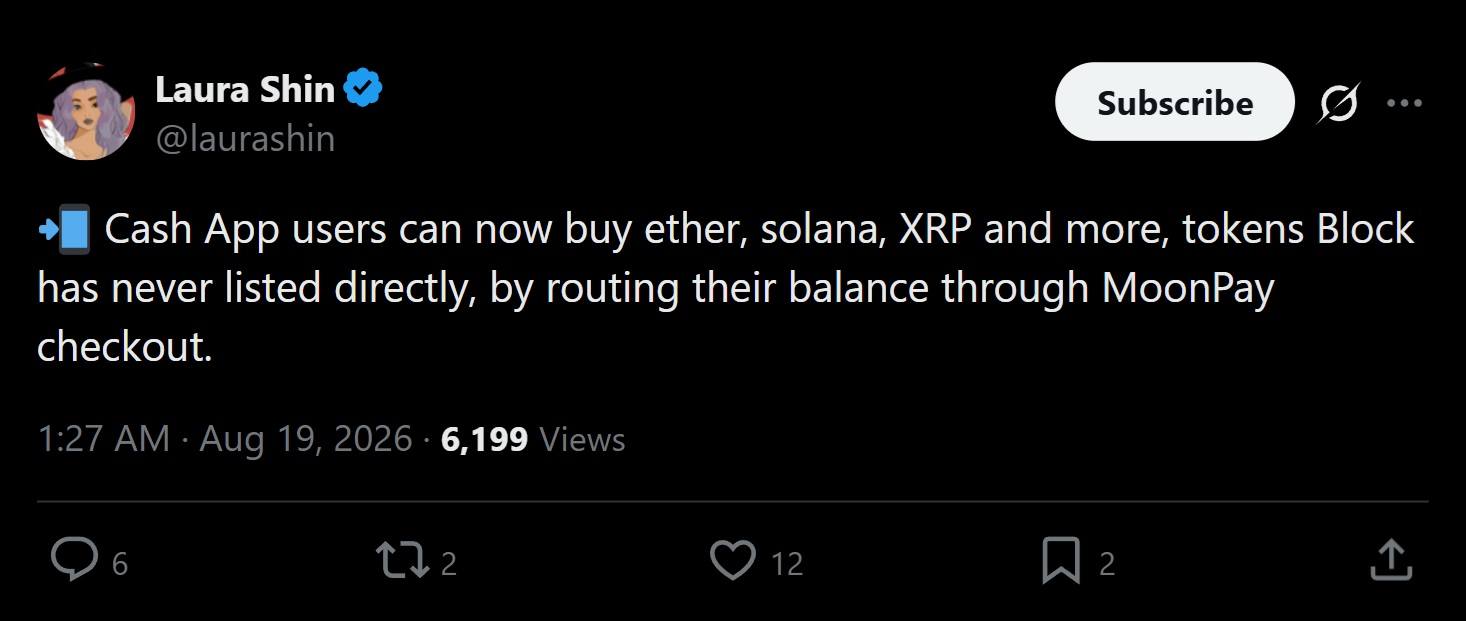
Nguồn hình ảnh: X

Bitcoin.com News trong nhiều năm qua đã theo dõi sát sao các tính năng tiền điện tử của Cash App – từ việc ra mắt tính năng chuyển đổi tiền lương “Paid in Bitcoin” cho đến các công cụ làm tròn số tiền thành BTC và nhận thanh toán qua Lightning Network. Tuy nhiên, cho đến nay, việc mua tiền điện tử trực tiếp trong Cash App chỉ giới hạn ở Bitcoin, còn USDC mới chỉ được bổ sung vào đầu năm nay.

Do đó, việc tích hợp với Moonpay thực chất cho phép Cash App cung cấp một danh mục token đa dạng hơn nhiều mà không cần phải xây dựng cơ sở hạ tầng riêng để niêm yết và lưu trữ từng loại tài sản.

Cash App Pay bổ sung vào danh sách ngày càng nhiều các phương thức nạp tiền

Cash App Pay giờ đây là phương thức thanh toán chính thứ ba được Moonpay hỗ trợ để cấp vốn cho các giao dịch mua tiền điện tử, cùng với PayPal được thêm vào năm 2024 và Venmo. Sau khi giao dịch mua hoàn tất, Moonpay có thể chuyển token đến một loạt ví bên ngoài, bao gồm Trust Wallet, Bitcoin.com, Metamask, Moonshot, Ledger, Bitpay, Uniswap, Tangem, LOBSTR và Edge, cung cấp cho hàng chục triệu người dùng Cash App quyền truy cập trực tiếp vào các ví tự lưu trữ, thay vì giữ tiền trong chính ứng dụng Cash App.

Đồng sáng lập kiêm Giám đốc điều hành của Moonpay, Ivan Soto-Wright, gọi sự tích hợp này không chỉ đơn thuần là một bản cập nhật sản phẩm mà là một bước mở rộng thị trường, đồng thời nói thêm:

“Cash App là ứng dụng nơi hàng chục triệu người Mỹ đã quản lý tiền của họ. Sự tích hợp này có nghĩa là những người dùng này sẽ có quyền truy cập vào hệ sinh thái tài sản kỹ thuật số, nạp tiền ngay lập tức từ ứng dụng mà họ đã biết và tin tưởng.”

Xét đến việc tính đến tháng 6, Cash App có 59 triệu người dùng hoạt động, việc tích hợp này cung cấp cho Moonpay một trong những cơ sở người dùng ngành fintech lớn nhất quốc gia như một kênh để mua tiền điện tử.

Danh sách ngày càng nhiều các kênh chính để tiếp cận $XRP

Đổi mới này cũng là ví dụ mới nhất về việc mở rộng sự hiện diện của $XRP trong các ứng dụng tài chính đại chúng vào năm 2026. Đầu năm nay, SoFi đã thêm hỗ trợ gửi tiền vào $XRP, với việc Ripple định vị bước đi này như một phần của nỗ lực rộng lớn hơn nhằm cung cấp cho nhiều người dùng hơn quyền truy cập trực tiếp và giá trị thực tiễn.

$XRP cũng đã xuất hiện trong Rakuten Wallet, giúp nó có thể tiếp cận hơn 5 triệu nhà bán lẻ ở Nhật Bản thông qua tích hợp này. Mỗi kênh tiếp cận mới bổ sung thêm một kênh phân phối đại chúng độc lập với một sàn giao dịch tiền điện tử riêng lẻ – xu hướng này, bắt đầu với việc tích hợp Moonpay vào Cash App, giờ đây đang lan rộng đến một trong những ứng dụng thanh toán ngang hàng lớn nhất ở Mỹ.

Cuối cùng, cần lưu ý rằng sự mở rộng này diễn ra sau một giai đoạn không mấy suôn sẻ đối với Cash App về mặt tuân thủ quy định tiền điện tử. Cho đến thời điểm này, công ty Block đã bị cơ quan quản lý New York phạt 40 triệu đô la vì các vi phạm liên quan đến việc giám sát giao dịch Bitcoin và tiền pháp định trong Cash App, bao gồm cả việc báo cáo rằng công ty đã bỏ qua khoảng 169.000 cảnh báo về vi phạm.


Trending Cryptos

Related Questions

QCái gì đã được Cash App tích hợp để cho phép người dùng mua $XRP, Solana, Ether và USDT?

ACash App đã tích hợp Cash App Pay như một phương thức thanh toán trong hệ thống Moonpay.

QMoonpay có thể chuyển các token mua được vào những ví ngoài nào được liệt kê trong bài?

AMoonpay có thể chuyển token vào các ví ngoài như: Trust Wallet, Bitcoin.com, Metamask, Moonshot, Ledger, Bitpay, Uniswap, Tangem, LOBSTR và Edge.

QTại sao việc hợp tác với Moonpay là một bước đáng chú ý đối với Cash App?

AVì nền tảng Cash App của Block trước đây chưa bao giờ trực tiếp liệt kê các token này. Moonpay xử lý việc mua và gửi tài sản, cho phép người dùng Cash App tiếp cận các token mà chính ứng dụng chưa từng hỗ trợ.

QTheo bài viết, đồng tiền mã hóa nào đã mở rộng sự hiện diện trong các ứng dụng tài chính phổ thông vào năm 2026?

AĐồng $XRP (XRP) đã mở rộng sự hiện diện trong các ứng dụng tài chính phổ thông vào năm 2026.

QTrước khi tích hợp với Moonpay, Cash App đã bị phạt vì lý do gì?

ACông ty mẹ Block của Cash App đã bị cơ quan quản lý New York phạt 40 triệu USD vì các vi phạm liên quan đến giám sát giao dịch Bitcoin và tiền pháp định, bao gồm việc bỏ qua khoảng 169.000 cảnh báo về vi phạm.

Related Reads

White House Crypto Summit Full Breakdown: Trump Pushes for On-Chain Exchanges to Enter the U.S., September 15 Crypto Regulation Vote is the Real Deadline

White House Crypto Summit: Trump Backs On-Chain Exchange Entry, September 15th Vote is the Deadline On August 19th, former President Trump convened crypto and Wall Street executives at the White House, declaring an end to the "crypto war." He urged Congress to pass a "fair version" of the CLARITY Act by the September 15th deadline, hinted at potential further U.S. Bitcoin purchases, and announced CFTC efforts to bring the decentralized exchange Hyperliquid into the U.S. compliantly. The summit was preceded by an SEC proposal creating new exemptions for crypto asset fundraising and followed the next day by CFTC Chair Selig's stark warning. Selig stated that if Congress fails to pass the CLARITY Act by September 15th, the CFTC will independently write rules to allow registered and some unregistered platforms to offer leveraged trading under its oversight. Trump's endorsement of Hyperliquid triggered a significant market reaction, boosting its token and related stock prices. However, its path to U.S. compliance remains uncertain, potentially involving a hybrid structure with licensed brokers handling front-end operations. The primary hurdle for the CLARITY Act is not its crypto provisions but attached ethics clauses aimed at restricting federal officials, including the President, from profiting from crypto businesses. Industry leaders like Coinbase's Brian Armstrong view the September 15th vote as critical for establishing durable regulatory certainty, while Selig framed congressional action as the only sure defense against future regulatory overreach.

marsbit5m ago

White House Crypto Summit Full Breakdown: Trump Pushes for On-Chain Exchanges to Enter the U.S., September 15 Crypto Regulation Vote is the Real Deadline

marsbit5m ago

Is Poland Still a Low-Cost Gateway to the EU CASP Market?

Is Poland still a low-cost gateway to the EU’s Crypto-Asset Service Provider (CASP) regime? As of mid-2026, the answer has fundamentally changed. Poland’s previous light-touch VASP registration system, once an attractive EU entry point, is no longer valid for providing MiCA-regulated services after its transition period ended on July 1, 2026. Furthermore, Poland's domestic legislation implementing MiCA is still undergoing final adjustments, creating uncertainty for direct CASP authorization. This shift means the old logic—choosing Poland primarily for low registration and operational costs—is no longer viable. Under MiCA, a CASP license is no longer a "light" registration, and Poland's current regulatory limbo adds unpredictable delays and risks. For projects seeking EU market access, a more practical strategy is emerging: obtain a MiCA CASP authorization in another EU member state with a stable regulatory framework (e.g., Lithuania, Malta), then use MiCA's passporting rights to serve the Polish market. This approach prioritizes regulatory certainty and EU-wide access over marginal cost savings. Poland remains a significant EU market. It is a viable CASP home country only for projects with a genuine, long-term operational presence there. For others, especially those with teams and clients across Europe, starting the CASP process elsewhere in the EU is now the more efficient and reliable path. The era of using a Polish entity as a cheap, quick EU regulatory foothold is over.

marsbit5m ago

Is Poland Still a Low-Cost Gateway to the EU CASP Market?

marsbit5m ago

Trading

Spot

Hot Articles

What is XRP 2.0

XRP 2.0: A New Frontier in the Cryptocurrency Landscape Introduction to XRP 2.0 In the ever-evolving realm of cryptocurrency, new projects continuously emerge, vying for attention and adoption. One such promising initiative is XRP 2.0, a novel cryptocurrency project designed to leverage advanced blockchain technology and robust encryption methodologies. While the name draws parallels with Ripple’s XRP, it’s crucial to note that XRP 2.0 operates independently, focusing on enhancing transaction security, privacy, and scalability. As the digital financial landscape increasingly embraces decentralized solutions, XRP 2.0 aims to contribute meaningfully to web3 and the overall expansion of crypto projects. What is XRP 2.0? At its core, XRP 2.0 is a cryptocurrency project that aims to create a secure and decentralized digital currency ecosystem. Its foundational technology integrates sophisticated blockchain principles with cutting-edge encryption techniques. The overarching goal of XRP 2.0 is to establish itself as a reliable and efficient platform enabling swift transaction execution while prioritizing enhanced privacy protections for its users. The project is promoted as a solution to many limitations faced by existing cryptocurrencies, proposing a system that can handle a higher volume of transactions with improved speed and privacy. This versatility positions XRP 2.0 as a significant contender in a marketplace riddled with various digital currencies. Who is the Creator of XRP 2.0? The identity of the creator behind XRP 2.0 has been flagged as ‘Wilbur.’ However, comprehensive details regarding Wilbur or their associated entity remain elusive. The anonymity of many cryptocurrency creators is not an uncommon phenomenon in the industry, often designed to maintain a degree of privacy and security. Who are the Investors of XRP 2.0? As of now, specific information related to the investment foundations or organizations supporting XRP 2.0 is not publicly available. In the cryptocurrency sector, the backing by reputed investors can significantly influence a project's credibility and success, yet the transparency regarding the financial supporters of XRP 2.0 has not been established. How Does XRP 2.0 Work? XRP 2.0 stands out by employing a combination of blockchain technology and advanced encryption algorithms that ensures secure and decentralized transactions. Its innovative structure includes unique features designed to foster user engagement and broaden functionalities beyond conventional cryptocurrency transactions. Among these features, XRP 2.0 incorporates AI-powered capabilities, such as text-to-image and text-to-speech functionalities. These additions are designed to enhance the interactive experience for users, promoting broader applicability across various sectors. By bridging technological advancements with user-centered design, XRP 2.0 aims to capture the attention of a diverse range of individuals and enterprises looking to integrate cryptocurrency solutions into their operational frameworks. Timeline of XRP 2.0 Understanding XRP 2.0 requires examining the milestones that have defined its journey thus far: July 23, 2023: XRP 2.0 is introduced as a novel cryptocurrency project, aiming to revolutionize secure and decentralized transaction capabilities in the blockchain domain. September 8, 2023: The launching of another project, XRP20, occurs, marking the emergence of an ERC-20 token on the Ethereum blockchain that remains unrelated to XRP 2.0. November 13, 2023: The XRP Ledger undergoes a significant update with the release of rippled server software version 2.0.0. It is essential to note that this development is disconnected from the XRP 2.0 cryptocurrency project. Key Points About XRP 2.0 To distill the essence of XRP 2.0, several critical factors emerge: Unique Features: The inclusion of features like AI-powered text-to-image and text-to-speech further diversifies the potential applications of XRP 2.0. Blockchain Technology: The framework utilizes advanced blockchain mechanisms and encryption protocols, ensuring a secure and decentralized environment for transactions. Scalability and Privacy: XRP 2.0 prioritizes enhanced privacy protections in transaction processes and the scalability necessary to accommodate a growing user base. No Affiliation with Ripple: Importantly, despite its name, XRP 2.0 does not have any allegiance or collaboration with Ripple’s XRP, distinguishing its operational framework and objectives within the cryptocurrency ecosystem. Conclusion XRP 2.0 represents an ambitious venture into the cryptocurrency sphere, aiming to offer a combination of security, privacy, and efficiency in digital transactions. By integrating sophisticated technologies and user-friendly features, the project sets out to broaden the horizons of what cryptocurrency can achieve in today's digital economy. While the anonymity of its creator and lack of disclosed investors might raise questions for some, XRP 2.0's focus on advanced functionalities and decentralisation enhances its appeal amidst an increasingly crowded crypto market. As the cryptocurrency landscape continues to evolve, XRP 2.0 may yet emerge as a pivotal player in the expansion of secure and scalable blockchain solutions.

1.6k Total ViewsPublished 2024.04.01Updated 2024.12.03

What is XRP 2.0

Discussions

Welcome to the HTX Community. Here, you can stay informed about the latest platform developments and gain access to professional market insights. Users' opinions on the price of XRP (XRP) are presented below.

活动图片