Ethereum Foundation Warns of Potential Cryptocurrency Wallet Disruptions

cryptonews.ruPublished on 2026-08-18Last updated on 2026-08-18

Abstract

The Ethereum Foundation (EF) has warned of potential disruptions to crypto wallets and related software due to the upcoming "Glamsterdam" network upgrade, which will change Ethereum's gas fee model. In an August 17 announcement, developers cautioned that wallets, indexers, and fee estimation tools, particularly those with hardcoded maximum gas limits, risk breaking and will require updates. The issue stems from EIP-8037, introducing a new "state-gas" dimension for operations that create new state, such as sending ETH to a new address. While a standard transfer to an existing address will remain 21,000 gas, sending to a new address will incur an additional cost. Developers urged a review of smart contracts and code that assume 21,000 gas covers any ETH transfer or that calculate fees based solely on gas quantity. Developers are advised to test their systems on the public testnet "Plataberget," launched on August 13, 2026, where the Glamsterdam activation is scheduled for August 20. A one-month feedback and client software update phase will precede testing on the Sepolia and Holesky testnets before the mainnet launch.

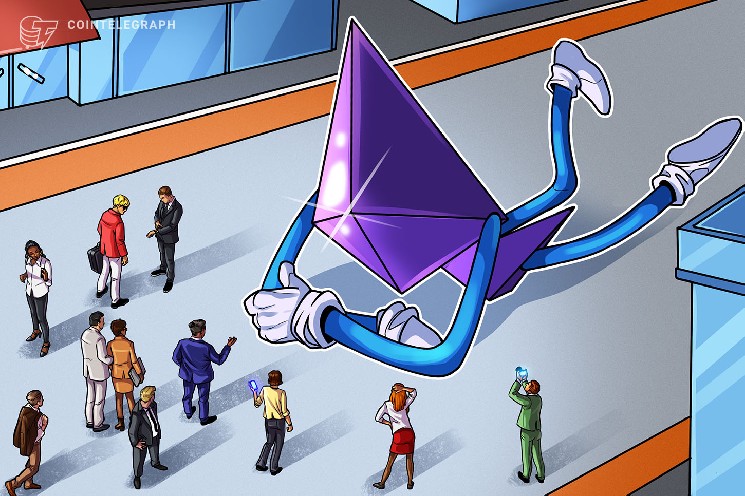
The upcoming Glamsterdam upgrade will change the gas model, and some software risks malfunctioning. The Ethereum Foundation (EF) team warned about this on August 17.

According to the developers, wallets, indexers, and fee estimation tools could be at risk. Programmers were advised to test their systems on the public testnet Plataberget.

The EF emphasized tools with a "hard-coded maximum gas limit": such solutions, they stated, will stop working and require an update.

The issue is related to EIP-8037. The proposal adds a separate state-gas dimension for operations that create new state. A regular $ETH transfer to an existing address will keep its cost at 21,000 units, but sending coins to a new address will incur an additional charge.

Developers urged a review of smart contracts that assume the logic that 21,000 units covers any $ETH transfer, as well as code that calculates fees based solely on gas quantity.

According to Forkcast, Plataberget was launched on August 13, 2026. The activation of Glamsterdam on this testnet is scheduled for August 20. Before the mainnet launch, there will be a feedback and client software update phase, estimated to last one month, followed by testing on Sepolia and Hoodi.
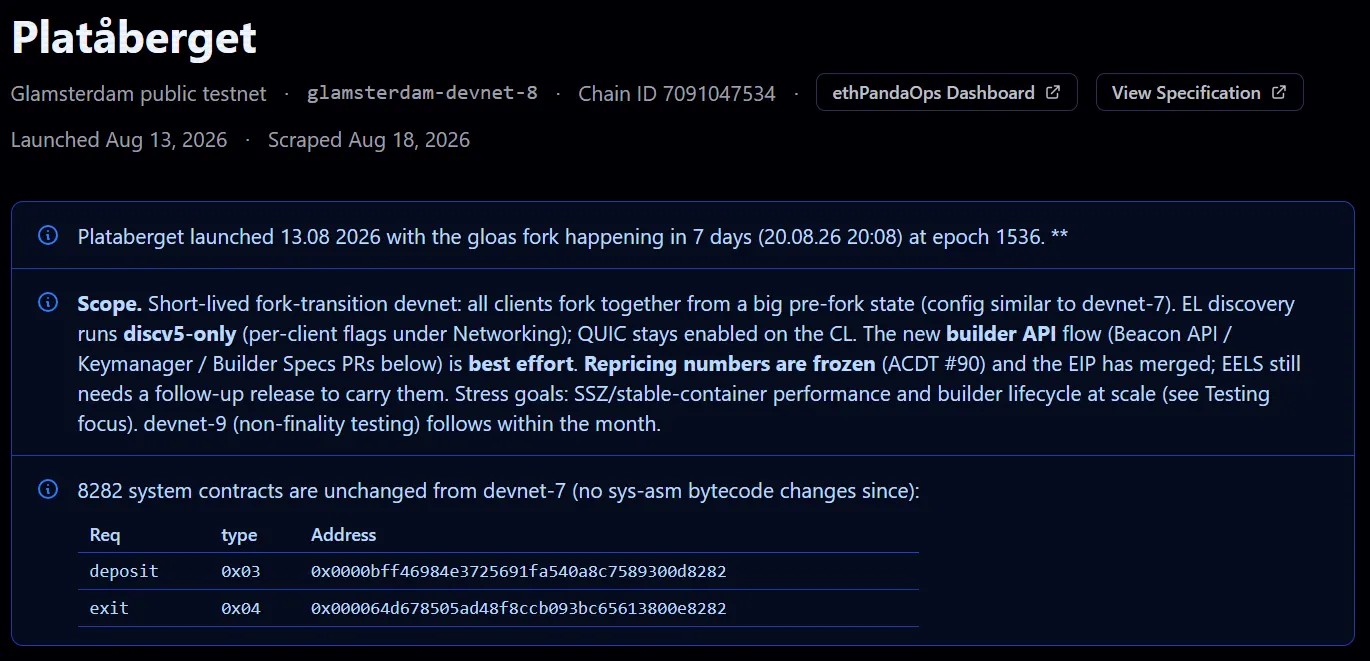
Source: Forkcast.

Recall that in August, Buterin named quantum resistance and AI as priorities for Ethereum.

The Quiet Evolution: Why Whales Are Accumulating Ethereum in Anticipation of Glamsterdam and Hegota
end-content

Trending Cryptos

Related Questions

QWhat upcoming Ethereum update has the Ethereum Foundation warned might cause wallet and software failures?

AThe upcoming Ethereum update named 'Glamsterdam'.

QAccording to the Ethereum Foundation, which specific types of software tools are most at risk from the Glamsterdam update?

AWallets, indexers, and fee estimation tools, especially those with a 'rigidly set maximum gas limit', are at risk.

QWhat key change does the EIP-8037 proposal introduce that necessitates updates to some software?

AEIP-8037 introduces a separate 'state-gas' dimension for operations that create new state, meaning sending ETH to a new address will incur an additional charge beyond the standard 21,000-unit base cost.

QOn what date was the Plataberget testnet, where developers are urged to test their systems, launched?

AThe Plataberget testnet was launched on August 13, 2026.

QWhat are the two priorities for Ethereum that Vitalik Buterin named in August, as mentioned in the article?

AVitalik Buterin named quantum resistance and AI as priorities for Ethereum.

Related Reads

The Trap of AI Payments: On-Chain Transactions Do Not Equal Purchase of Real Services

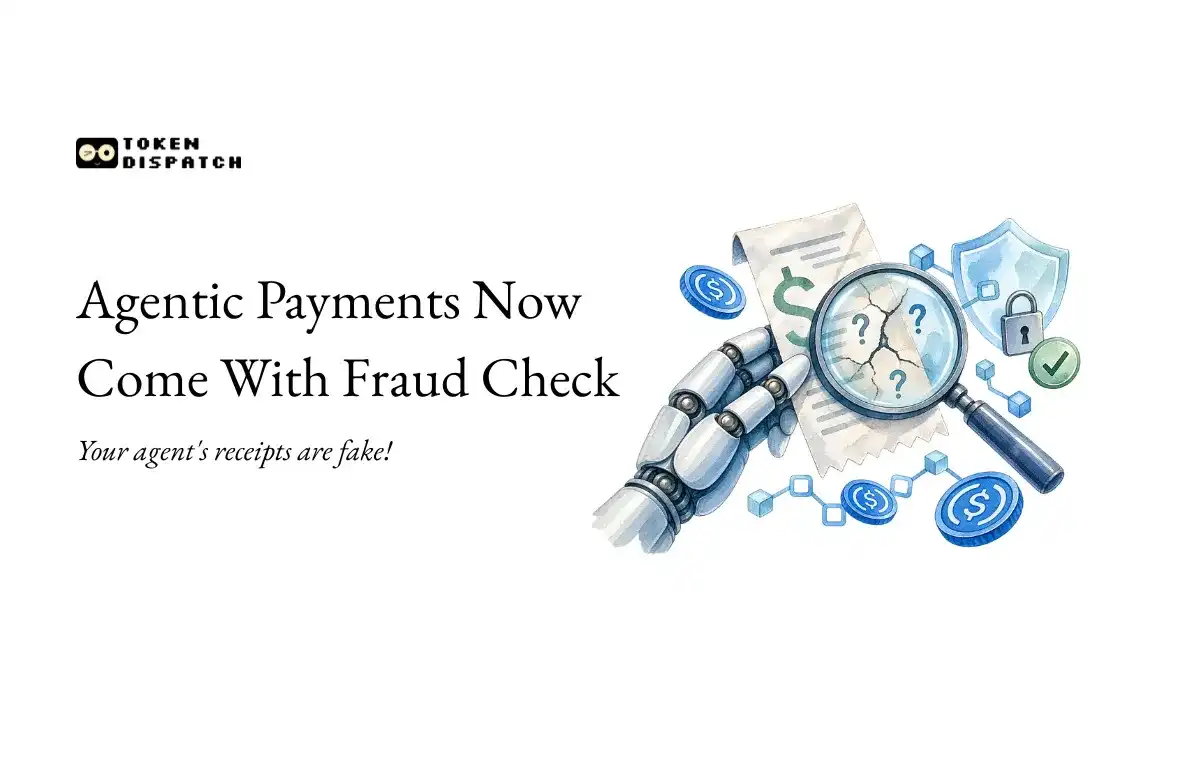
The Rise of AI Agent Payments and the Verification Gap AI agents are now autonomously purchasing services, such as API access or compute power, via on-chain payments. This raises a critical question: how do we verify what the agent actually bought? A proposed fraud-check mechanism involves cross-referencing three data points: the agent's reported purchase, an independently generated application receipt, and the blockchain settlement record. However, this system has a fundamental weakness. Unlike traditional three-way matching in corporate accounting—which involves independent parties (buyer, receiver, supplier)—two of the three verification sources in this model come from the same software system. The only truly independent record is the blockchain transaction, which only confirms a transfer of funds between addresses, not the quality or nature of the service delivered. Consequently, a merchant could receive payment for a promised service (e.g., a risk report) but deliver AI-generated gibberish, and the verification would still pass. This creates a market failure: AI agents, lacking human judgment, cannot assess service quality or shop around. The market could thus gravitate towards the lowest-cost, lowest-quality providers. The problem is compounded as tools for generating fake receipts evolve faster than fraud detection tools. While startups are emerging with solutions like "Know Your Agent" protocols and behavioral risk analysis, most current fraud detection focuses on the agent's behavior. The real economic incentive for fraud lies with merchants exploiting automated buyers that cannot evaluate what they receive. The core challenge remains: proving that a chain-based payment resulted in a legitimate service, not just a fund transfer.

marsbit4m ago

The Trap of AI Payments: On-Chain Transactions Do Not Equal Purchase of Real Services

marsbit4m ago

GnosisDAO Approved Transition of Gnosis Chain to Ethereum Economic Zone

GnosisDAO has approved a proposal (GIP-153) for Gnosis Chain to transition from an independent Layer 1 blockchain into a zk-rollup within the Ethereum Economic Zone (EEZ). The move, supported by a significant majority of $GNO token holders, will see the network's validator set dissolved, with transaction computation and security ultimately relying on Ethereum. The upgrade is slated for late 2026 or early 2027, pending EEZ technology readiness. This migration will make Gnosis Chain the first deployed implementation of the EEZ framework, a project developed by Gnosis and ZisK with Ethereum Foundation backing. The core goal of EEZ is to unify Ethereum's fragmented Layer 2 ecosystem by enabling synchronous operations and direct contract calls between different rollups, eliminating the need for vulnerable cross-chain bridges. This aims to preserve liquidity and improve user experience while addressing scalability trade-offs. The change will allow native Gnosis Chain smart contracts to interact directly with Ethereum's mainnet within a single transaction, accessing its assets and liquidity. Analysts, including from Standard Chartered, suggest EEZ could reduce reliance on hack-prone bridges and increase asset composability, potentially boosting overall activity within the Ethereum ecosystem. The existing Gnosis Chain applications, user balances, and xDAI gas token will be maintained throughout the transition.

cryptonews.ru21m ago

GnosisDAO Approved Transition of Gnosis Chain to Ethereum Economic Zone

cryptonews.ru21m ago

Trading

Spot

Hot Articles

Discussions

Welcome to the HTX Community. Here, you can stay informed about the latest platform developments and gain access to professional market insights. Users' opinions on the price of ETH (ETH) are presented below.

活动图片