La dueña más misteriosa: funda un fondo de capital riesgo

marsbitPublished on 2026-08-17Last updated on 2026-08-17

Abstract

"¿Conoces el fondo de la esposa del presidente de Zhongji Innolight? Necesito contactarlo". Recientemente, en conversaciones con inversores, un nombre aparece con frecuencia: XINHE Capital, respaldado por la inversora Yang Jingting. Su esposo es Liu Sheng, presidente de Zhongji Innolight, empresa que superó el billón de RMB en valor de mercado este año. Yang Jingting, extremadamente discreta, apareció públicamente por primera vez en una ceremonia de donación a la Universidad de Tsinghua en abril. A través de Tianyancha se descubre que Yang está vinculada a casi 20 empresas: realiza inversiones directas, actúa como LP en fondos de capital de riesgo y gestiona activamente su propio fondo, XINHE Capital. El administrador del fondo es Hainan Xinhe, donde Yang posee el 90%. Su trayectoria profesional en inversiones comenzó en 2014. Su estrategia de inversión es multifacética: * **Inversión directa:** En empresas como Suzhou Suna Optoelectronics, que inició su proceso de IPO. * **Como LP:** En fondos subsidiarios de Yongxin Fangzhou y Qianrong Holdings. * **A través de XINHE Capital:** Su vehículo principal, enfocado en **semiconductores fotónicos, materiales, chips, componentes y equipos** en eslabones clave de la cadena de suministro. Desde 2021, el fondo ha invertido en empresas como Mingga Semiconductor, Jiusi Electronics, Zonghui Chip, Guanglian Xinke, Xizhi Technology, Qinghe Jingyuan y JBD. Este caso refleja una tendencia más amplia: empresarios chinos que acumular...

"¿Conoces el fondo de la esposa del dueño de Zhongji Innolight? Necesito contactarlo."

Recientemente, al conversar con inversores, un nombre surgía con frecuencia: Xinhe Capital, respaldado por una inversora: Yang Jingting.

Quizás el público no esté familiarizado con este nombre, pero al mencionar a su esposo, Liu Sheng, presidente de Zhongji Innolight, todos lo conocen. En abril de este año, la pareja apareció juntos en una ceremonia de donación en la Universidad de Tsinghua, y fue entonces cuando Yang Jingting entró por primera vez en el campo de visión público.

Pero, en realidad, todos estos años, ella ha dirigido discretamente Xinhe Capital y ya ha creado un mapa de inversión secreto.

La esposa del dueño de Zhongji Innolight, al mando de un fondo de capital riesgo

Desenredando la madeja, partamos de una donación.

En abril de este año, la Schwarzman College de la Universidad de Tsinghua anunció una donación: el exalumno de la promoción 1989, Liu Sheng, presidente de Zhongji Innolight, y su esposa Yang Jingting donaron a la Universidad de Tsinghua para apoyar la construcción y desarrollo del Schwarzman College. En la foto del acto, estaban presentes la pareja Liu Sheng y Yang Jingting, Stephen A. Schwarzman de Blackstone y otras figuras clave.
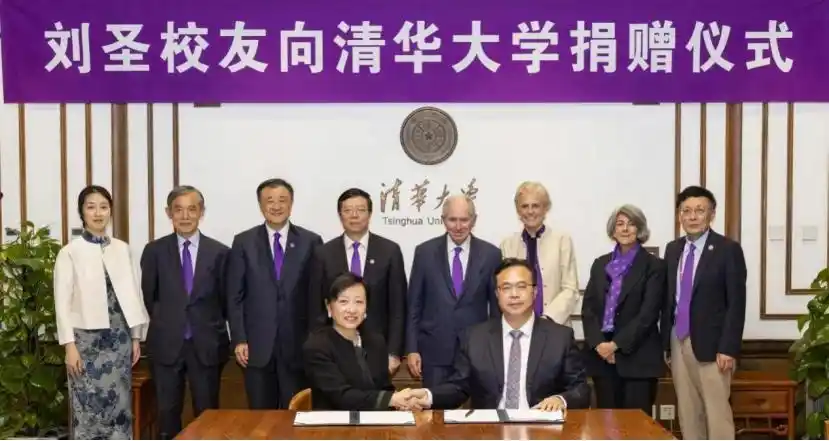
Fuente de la imagen

Liu Sheng no es un desconocido para el público. Según el prospecto de H-shares de Zhongji Innolight, Liu Sheng se graduó en 1994 del Departamento de Ingeniería Mecánica de la Universidad de Tsinghua y luego ingresó al Instituto de Automatización de la Academia China de Ciencias para obtener una maestría en Automatización Industrial. La empresa que dirige, Zhongji Innolight, alcanzó este año una capitalización de mercado de más de un billón de yuanes.

Su cónyuge, Yang Jingting, es extremadamente discreta; casi no hay información sobre su pasado en Internet. Esta donación a Tsinghua probablemente sea la primera vez que el público la ve abiertamente.

Tianyancha muestra que Yang Jingting está asociada a casi 20 empresas: tiene inversiones directas en proyectos individuales, participaciones como LP en fondos de capital riesgo y también un fondo que opera personalmente: Xinhe Capital.

El gestor de fondos privados de Xinhe Capital es Hainan Xinhe Private Equity Fund Management Partnership (Limited) (en adelante, Hainan Xinhe). Según la información de la Asociación de Fondos de China, el socio gestor de Hainan Xinhe es Zhu Rui, con una participación del 10%, y Yang Jingting posee el 90%. Zhu Rui anteriormente fue director de inversiones en el departamento de inversiones de Zhongji Innolight.
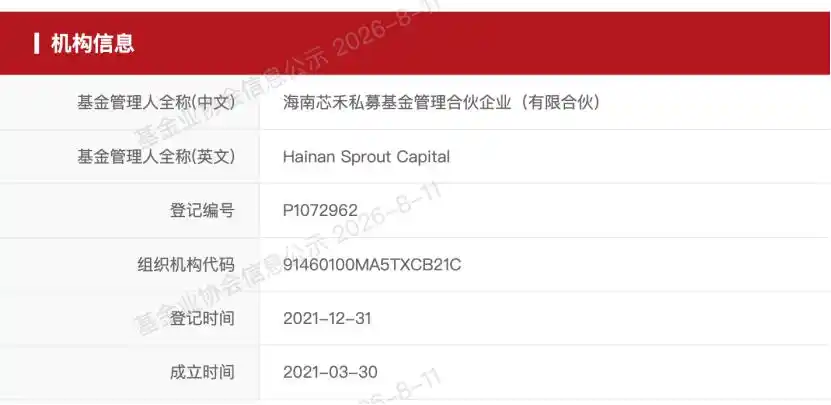
El historial de Yang Jingting también emerge. Según la información de la Asociación de Fondos, de julio de 2009 a junio de 2013, trabajó como asistente del presidente en la Oficina del Presidente de Shanghai New Sun Real Estate Co., Ltd.

A partir de febrero de 2014, comenzó oficialmente su carrera como inversora profesional, trabajando sucesivamente en Suzhou Garden Construction Industry Equity Co., Ltd., Changzhou Qizhi Investment Management Co., Ltd., Suzhou Industrial Park Jimu Growth Investment Management Partnership (Limited), Changzhou Naxin Venture Capital Partnership (Limited), ocupando cargos como subdirectora de marketing, responsable de control de riesgos, asesora principal y miembro del comité de decisiones de inversión.

En marzo de 2021, se registró Hainan Xinhe, con un tipo de institución de gestor de fondos de capital privado, capital riesgo y capital semilla, y un tamaño de gestión de 1-2 mil millones de yuanes. En agosto del mismo año, Yang Jingting se unió, ocupando el cargo de socia, responsable de información y subdirectora general en la Oficina General de Hainan Xinhe.
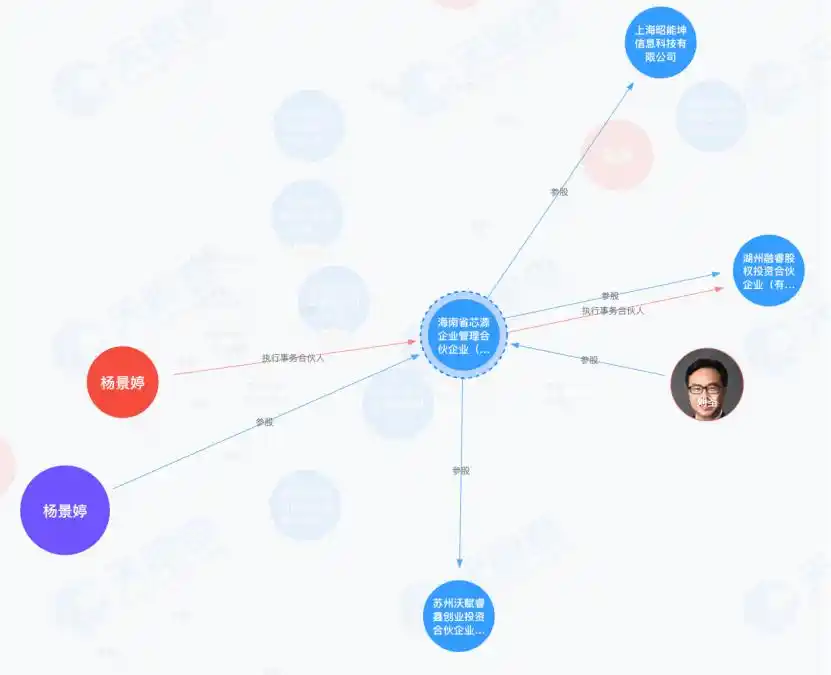
En general, Yang Jingting y su esposo Liu Sheng no tienen muchas conexiones comerciales directas, solo son copropietarios de dos empresas: Hainan Province Xinyuan Enterprise Management Partnership (Limited) y Shanghai Changge Enterprise Management Co., Ltd., ambas con Yang Jingting poseyendo el 51% y Liu Sheng el 49%. La primera de ellas invirtió en un subfondo del fondo Wofu Chuangtou.

Desvelando el mapa de inversiones

A través de capas de análisis, emerge gradualmente un mapa de inversiones secreto.

Primero, las inversiones directas. Yang Jingting invirtió directamente en Suzhou Suna Optoelectronics Co., Ltd. Esta empresa fue fundada en 2014 por personal científico y tecnológico de la Universidad de Tsinghua y la Academia China de Ciencias, se especializa en el campo de los chips de comunicación óptica y sensores ópticos, y cuenta con el respaldo de inversores como SDIC Capital, Furuí Fund, Yongxin Fangzhou, Wofu Chuangtou, etc. Actualmente, Suna Optoelectronics ha iniciado el proceso de IPO.

En cuanto a LP, Yang Jingting invirtió en el subfondo de Yongxin Fangzhou "Suzhou Yongxin Ronghui Venture Capital Partnership (Limited)", así como en dos subfondos de Qianrong Holdings.

Recordemos que en abril de este año, Wei Yong, socio gestor de Yongxin Fangzhou, nos contó sobre su relación con Zhongji Innolight: ya en 2016, Yongxin Fangzhou invirtió en Zhongji Innolight, fue el primer proyecto que Wei Yong realizó después de fundar su fondo, con una inversión única de más de 180 millones de yuanes.

Pero la plataforma de inversión más central de Yang Jingting sigue siendo Xinhe Capital.

Esta institución se enfoca en materiales de fotoelectrónica y semiconductores, componentes de chips y equipos en los eslabones clave de la cadena industrial, dirigiendo sus inversiones principalmente a centros de datos, terminales inteligentes, automóviles inteligentes y otras áreas de vanguardia. Desde su fundación en 2021, Xinhe Capital no ha realizado muchas inversiones, pero este año ha sido especialmente activa, invirtiendo en alrededor de 13 proyectos desde principios de año, el doble que el año pasado.

En julio de 2026, Mingjia Semiconductor, una empresa de semiconductores de cuarta generación, completó una ronda de financiación Pre-B de más de 150 millones de yuanes, con la participación de Xinhe Capital. En el mismo mes, Hefei Jiusi Electronics completó una ronda de financiación A+, liderada por Xinhe Capital. Anteriormente, Xinhe Capital también invirtió en empresas de semiconductores como Vertilite.

En el campo de la interconexión óptica y fotoelectrónica, Xinhe Capital participó en junio en la ronda A de financiación de casi 500 millones de yuanes de Guanglian Xinke; en el campo de los semiconductores de potencia, acaba de invertir en Xizhi Technology, especializada en módulos de potencia y energía para automoción. Además, Xinhe Capital también invirtió en empresas tecnológicas como Qinghe Jingyuan y JBD, y el año pasado firmó un acuerdo con Huaian para establecer el fondo Xinhe Ningrui, promoviendo la mejora industrial regional y la llegada de proyectos de fabricación avanzada.
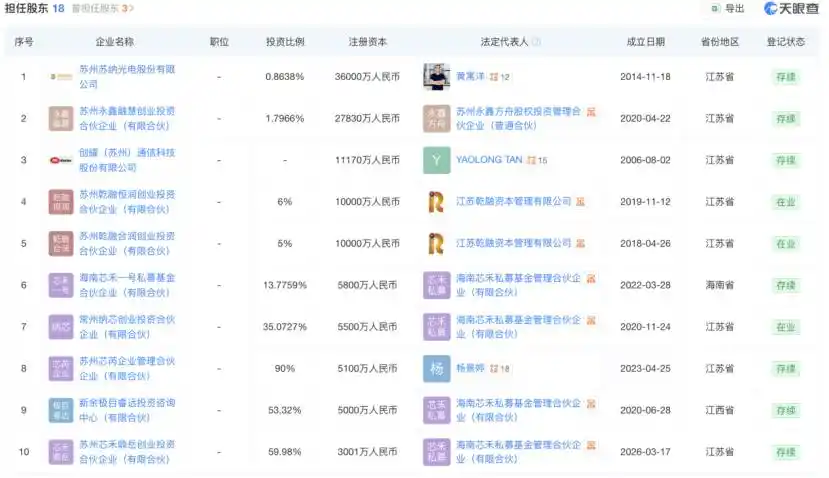
Desde materiales semiconductores hasta interconexión óptica, desde dispositivos de potencia hasta componentes de equipos, el camino de Xinhe Capital es claro: realizar un posicionamiento sistemático en los nodos clave de la cadena industrial de fotoelectrónica y semiconductores.

Apostando por el próximo futuro

Desde esta perspectiva, una tendencia se vuelve cada vez más clara: los magnates chinos que hicieron fortuna en la industria están dirigiendo colectivamente su mirada hacia el sector tecnológico. Ya no se conforman con ser solo LP, sino que participan personalmente, utilizando oficinas familiares o fondos propios, para apostar por la próxima generación de tecnología.

Al analizar un grupo de empresas estrella de IA este año, detrás de ellas aparece frecuentemente la figura de Lens Technology. Detrás está una líder femenina, Zhou Qunfei, quien escribió una leyenda de superación empresarial con un trozo de vidrio, convirtiéndose en la "Reina del Vidrio" que dirige una empresa con una capitalización de mercado de cientos de miles de millones. En los últimos años, ella y Lens Technology comenzaron a aparecer en el círculo de VC, invirtiendo en un grupo de empresas estrella como BrainCo, Xinghaitú, Qingtianzu, Kuawei Intelligence, Zhuji Dynamics, Gestalt Technology, etc.

Zhu Xingming, presidente de Inovance Technology, que dirige una empresa con una capitalización de mercado de cientos de miles de millones, utiliza su oficina familiar "Minghui Investment" para invertir en tecnología de vanguardia, principalmente en interfaces cerebro-computadora, computación de IA, etc., y a principios de este año invirtió en el unicornio de billones de yuanes Qianxun Intelligence. Luxshare Precision, con una capitalización de mercado cercana a los 500 mil millones, también estableció una oficina familiar, el fondo Liling, invirtiendo en empresas tecnológicas como Winano, SMIC Integration, Xinhua Three, etc.

Hace poco, en la primera ronda de financiación de DeepSeek, apareció inesperadamente la figura de iHealth. Su líder, Liu Yi, construyó desde cero iHealth, con una capitalización de mercado de 30 mil millones. Después de alcanzar la libertad financiera, extendió su influencia al círculo de capital riesgo: actuando como LP invirtiendo en fondos como MiraclePlus, 9F Capital, etc., y también invirtiendo directamente en proyectos estrella como Moonshot AI (Kimi), StepFun, Zhiyuan Robot, Zhibian Robot, etc.

En resumen, lo que estos empresarios tienen en común es: haber acumulado un profundo conocimiento industrial y una gran riqueza en el sector industrial, y ahora utilizar ese conocimiento y riqueza para definir la próxima generación de tecnología. En comparación con la inversión financiera, no solo aportan dinero, sino también pedidos, escenarios y sinergias en la cadena industrial.

El flujo del dinero siempre tiene un impacto profundo.

Durante mucho tiempo, el dinero de los magnates chinos solía fluir hacia bienes raíces y la manufactura tradicional. Ahora la marea está cambiando, grandes cantidades de capital se están dirigiendo colectivamente hacia áreas de tecnología dura de vanguardia como IA, semiconductores, inteligencia incorporada, interfaces cerebro-computadora, fusión nuclear controlada, etc. Después de todo, esta es la dirección del futuro, quedarse atrás significa quedar fuera.

Este artículo proviene del WeChat público "投资界" (ID: pedaily2012), autor: Zhou Jiali

Trending Cryptos

Related Questions

Q¿Quién es Yang Jingting y cuál es su relación con Liu Sheng?

AYang Jingting es la cónyuge de Liu Sheng, presidente de Zhongji Innolight. Es una inversora discreta que dirige Xinge Capital. Su primera aparición pública fue en abril en una ceremonia de donación a la Universidad de Tsinghua junto a su marido.

Q¿Cuál es el enfoque principal de inversión de Xinge Capital?

AXinge Capital se centra en los eslabones clave de la cadena industrial de semiconductores fotónicos, incluyendo materiales, chips, componentes y equipos. Invierte principalmente en áreas como centros de datos, terminales inteligentes y vehículos inteligentes.

Q¿Qué tipos de actividades de inversión lleva a cabo Yang Jingting además de dirigir Xinge Capital?

AAdemás de dirigir Xinge Capital, Yang Jingting realiza inversiones directas en proyectos (como Suna Optoelectronic), actúa como socia limitada (LP) en fondos de capital riesgo (como los de Yongxin Fangzhou y Qianrong Holdings) y posee empresas conjuntas con su marido.

QSegún el artículo, ¿qué tendencia muestran los empresarios chinos que hicieron fortuna en sectores industriales tradicionales?

ALos empresarios chinos que acumularon riqueza en sectores industriales tradicionales están desviando su capital y atención hacia áreas de tecnología avanzada, como IA, semiconductores, robótica e inteligencia corporizada. Ya no se limitan a ser LPs, sino que invierten directamente a través de oficinas familiares o fondos propios, aportando no solo dinero sino también conocimiento industrial, pedidos y sinergias.

Q¿Qué empresas tecnológicas destacadas han recibido inversión de familias empresariales mencionadas en el artículo, aparte de la de Yang Jingting?

AOtras familias empresariales mencionadas han invertido en empresas como: Lens Technology (Zhou Qunfei) en BrainCo, Xinghaitu, Qiantingzu, etc.; la oficina familiar de Hui Chuan Technology (Zhu Xingming) en Qianxun Intelligent; LiXun Precision a través de su fondo familiar en Weina Hexin, Zhongxin Integration, etc.; y Jiuan Medical (Liu Yi) en Moon Dark Side (Kimi), StepFun, Zhiyuan Robotics, entre otras.

Related Reads

Trading

Spot

Hot Articles

What is SONIC

Sonic: Pioneering the Future of Gaming in Web3 Introduction to Sonic In the ever-evolving landscape of Web3, the gaming industry stands out as one of the most dynamic and promising sectors. At the forefront of this revolution is Sonic, a project designed to amplify the gaming ecosystem on the Solana blockchain. Leveraging cutting-edge technology, Sonic aims to deliver an unparalleled gaming experience by efficiently processing millions of requests per second, ensuring that players enjoy seamless gameplay while maintaining low transaction costs. This article delves into the intricate details of Sonic, exploring its creators, funding sources, operational mechanics, and the timeline of significant events that have shaped its journey. What is Sonic? Sonic is an innovative layer-2 network that operates atop the Solana blockchain, specifically tailored to enhance the existing Solana gaming ecosystem. It accomplishes this through a customised, VM-agnostic game engine paired with a HyperGrid interpreter, facilitating sovereign game economies that roll up back to the Solana platform. The primary goals of Sonic include: Enhanced Gaming Experiences: Sonic is committed to offering lightning-fast on-chain gameplay, allowing players and developers to engage with games at previously unattainable speeds. Atomic Interoperability: This feature enables transactions to be executed within Sonic without the need to redeploy Solana programmes and accounts. This makes the process more efficient and directly benefits from Solana Layer1 services and liquidity. Seamless Deployment: Sonic allows developers to write for Ethereum Virtual Machine (EVM) based systems and execute them on Solana’s SVM infrastructure. This interoperability is crucial for attracting a broader range of dApps and decentralised applications to the platform. Support for Developers: By offering native composable gaming primitives and extensible data types - dining within the Entity-Component-System (ECS) framework - game creators can craft intricate business logic with ease. Overall, Sonic's unique approach not only caters to players but also provides an accessible and low-cost environment for developers to innovate and thrive. Creator of Sonic The information regarding the creator of Sonic is somewhat ambiguous. However, it is known that Sonic's SVM is owned by the company Mirror World. The absence of detailed information about the individuals behind Sonic reflects a common trend in several Web3 projects, where collective efforts and partnerships often overshadow individual contributions. Investors of Sonic Sonic has garnered considerable attention and support from various investors within the crypto and gaming sectors. Notably, the project raised an impressive $12 million during its Series A funding round. The round was led by BITKRAFT Ventures, with other notable investors including Galaxy, Okx Ventures, Interactive, Big Brain Holdings, and Mirana. This financial backing signifies the confidence that investment foundations have in Sonic’s potential to revolutionise the Web3 gaming landscape, further validating its innovative approaches and technologies. How Does Sonic Work? Sonic utilises the HyperGrid framework, a sophisticated parallel processing mechanism that enhances its scalability and customisability. Here are the core features that set Sonic apart: Lightning Speed at Low Costs: Sonic offers one of the fastest on-chain gaming experiences compared to other Layer-1 solutions, powered by the scalability of Solana’s virtual machine (SVM). Atomic Interoperability: Sonic enables transaction execution without redeployment of Solana programmes and accounts, effectively streamlining the interaction between users and the blockchain. EVM Compatibility: Developers can effortlessly migrate decentralised applications from EVM chains to the Solana environment using Sonic’s HyperGrid interpreter, increasing the accessibility and integration of various dApps. Ecosystem Support for Developers: By exposing native composable gaming primitives, Sonic facilitates a sandbox-like environment where developers can experiment and implement business logic, greatly enhancing the overall development experience. Monetisation Infrastructure: Sonic natively supports growth and monetisation efforts, providing frameworks for traffic generation, payments, and settlements, thereby ensuring that gaming projects are not only viable but also sustainable financially. Timeline of Sonic The evolution of Sonic has been marked by several key milestones. Below is a brief timeline highlighting critical events in the project's history: 2022: The Sonic cryptocurrency was officially launched, marking the beginning of its journey in the Web3 gaming arena. 2024: June: Sonic SVM successfully raised $12 million in a Series A funding round. This investment allowed Sonic to further develop its platform and expand its offerings. August: The launch of the Sonic Odyssey testnet provided users with the first opportunity to engage with the platform, offering interactive activities such as collecting rings—a nod to gaming nostalgia. October: SonicX, an innovative crypto game integrated with Solana, made its debut on TikTok, capturing the attention of over 120,000 users within a short span. This integration illustrated Sonic’s commitment to reaching a broader, global audience and showcased the potential of blockchain gaming. Key Points Sonic SVM is a revolutionary layer-2 network on Solana explicitly designed to enhance the GameFi landscape, demonstrating great potential for future development. HyperGrid Framework empowers Sonic by introducing horizontal scaling capabilities, ensuring that the network can handle the demands of Web3 gaming. Integration with Social Platforms: The successful launch of SonicX on TikTok displays Sonic’s strategy to leverage social media platforms to engage users, exponentially increasing the exposure and reach of its projects. Investment Confidence: The substantial funding from BITKRAFT Ventures, among others, emphasizes the robust backing Sonic has, paving the way for its ambitious future. In conclusion, Sonic encapsulates the essence of Web3 gaming innovation, striking a balance between cutting-edge technology, developer-centric tools, and community engagement. As the project continues to evolve, it is poised to redefine the gaming landscape, making it a notable entity for gamers and developers alike. As Sonic moves forward, it will undoubtedly attract greater interest and participation, solidifying its place within the broader narrative of blockchain gaming.

2.4k Total ViewsPublished 2024.04.04Updated 2024.12.03

What is SONIC

What is $S$

Understanding SPERO: A Comprehensive Overview Introduction to SPERO As the landscape of innovation continues to evolve, the emergence of web3 technologies and cryptocurrency projects plays a pivotal role in shaping the digital future. One project that has garnered attention in this dynamic field is SPERO, denoted as SPERO,$$s$. This article aims to gather and present detailed information about SPERO, to help enthusiasts and investors understand its foundations, objectives, and innovations within the web3 and crypto domains. What is SPERO,$$s$? SPERO,$$s$ is a unique project within the crypto space that seeks to leverage the principles of decentralisation and blockchain technology to create an ecosystem that promotes engagement, utility, and financial inclusion. The project is tailored to facilitate peer-to-peer interactions in new ways, providing users with innovative financial solutions and services. At its core, SPERO,$$s$ aims to empower individuals by providing tools and platforms that enhance user experience in the cryptocurrency space. This includes enabling more flexible transaction methods, fostering community-driven initiatives, and creating pathways for financial opportunities through decentralised applications (dApps). The underlying vision of SPERO,$$s$ revolves around inclusiveness, aiming to bridge gaps within traditional finance while harnessing the benefits of blockchain technology. Who is the Creator of SPERO,$$s$? The identity of the creator of SPERO,$$s$ remains somewhat obscure, as there are limited publicly available resources providing detailed background information on its founder(s). This lack of transparency can stem from the project's commitment to decentralisation—an ethos that many web3 projects share, prioritising collective contributions over individual recognition. By centring discussions around the community and its collective goals, SPERO,$$s$ embodies the essence of empowerment without singling out specific individuals. As such, understanding the ethos and mission of SPERO remains more important than identifying a singular creator. Who are the Investors of SPERO,$$s$? SPERO,$$s$ is supported by a diverse array of investors ranging from venture capitalists to angel investors dedicated to fostering innovation in the crypto sector. The focus of these investors generally aligns with SPERO's mission—prioritising projects that promise societal technological advancement, financial inclusivity, and decentralised governance. These investor foundations are typically interested in projects that not only offer innovative products but also contribute positively to the blockchain community and its ecosystems. The backing from these investors reinforces SPERO,$$s$ as a noteworthy contender in the rapidly evolving domain of crypto projects. How Does SPERO,$$s$ Work? SPERO,$$s$ employs a multi-faceted framework that distinguishes it from conventional cryptocurrency projects. Here are some of the key features that underline its uniqueness and innovation: Decentralised Governance: SPERO,$$s$ integrates decentralised governance models, empowering users to participate actively in decision-making processes regarding the project’s future. This approach fosters a sense of ownership and accountability among community members. Token Utility: SPERO,$$s$ utilises its own cryptocurrency token, designed to serve various functions within the ecosystem. These tokens enable transactions, rewards, and the facilitation of services offered on the platform, enhancing overall engagement and utility. Layered Architecture: The technical architecture of SPERO,$$s$ supports modularity and scalability, allowing for seamless integration of additional features and applications as the project evolves. This adaptability is paramount for sustaining relevance in the ever-changing crypto landscape. Community Engagement: The project emphasises community-driven initiatives, employing mechanisms that incentivise collaboration and feedback. By nurturing a strong community, SPERO,$$s$ can better address user needs and adapt to market trends. Focus on Inclusion: By offering low transaction fees and user-friendly interfaces, SPERO,$$s$ aims to attract a diverse user base, including individuals who may not previously have engaged in the crypto space. This commitment to inclusion aligns with its overarching mission of empowerment through accessibility. Timeline of SPERO,$$s$ Understanding a project's history provides crucial insights into its development trajectory and milestones. Below is a suggested timeline mapping significant events in the evolution of SPERO,$$s$: Conceptualisation and Ideation Phase: The initial ideas forming the basis of SPERO,$$s$ were conceived, aligning closely with the principles of decentralisation and community focus within the blockchain industry. Launch of Project Whitepaper: Following the conceptual phase, a comprehensive whitepaper detailing the vision, goals, and technological infrastructure of SPERO,$$s$ was released to garner community interest and feedback. Community Building and Early Engagements: Active outreach efforts were made to build a community of early adopters and potential investors, facilitating discussions around the project’s goals and garnering support. Token Generation Event: SPERO,$$s$ conducted a token generation event (TGE) to distribute its native tokens to early supporters and establish initial liquidity within the ecosystem. Launch of Initial dApp: The first decentralised application (dApp) associated with SPERO,$$s$ went live, allowing users to engage with the platform's core functionalities. Ongoing Development and Partnerships: Continuous updates and enhancements to the project's offerings, including strategic partnerships with other players in the blockchain space, have shaped SPERO,$$s$ into a competitive and evolving player in the crypto market. Conclusion SPERO,$$s$ stands as a testament to the potential of web3 and cryptocurrency to revolutionise financial systems and empower individuals. With a commitment to decentralised governance, community engagement, and innovatively designed functionalities, it paves the way toward a more inclusive financial landscape. As with any investment in the rapidly evolving crypto space, potential investors and users are encouraged to research thoroughly and engage thoughtfully with the ongoing developments within SPERO,$$s$. The project showcases the innovative spirit of the crypto industry, inviting further exploration into its myriad possibilities. While the journey of SPERO,$$s$ is still unfolding, its foundational principles may indeed influence the future of how we interact with technology, finance, and each other in interconnected digital ecosystems.

411 Total ViewsPublished 2024.12.17Updated 2024.12.17

What is $S$

What is AGENT S

Agent S: The Future of Autonomous Interaction in Web3 Introduction In the ever-evolving landscape of Web3 and cryptocurrency, innovations are constantly redefining how individuals interact with digital platforms. One such pioneering project, Agent S, promises to revolutionise human-computer interaction through its open agentic framework. By paving the way for autonomous interactions, Agent S aims to simplify complex tasks, offering transformative applications in artificial intelligence (AI). This detailed exploration will delve into the project's intricacies, its unique features, and the implications for the cryptocurrency domain. What is Agent S? Agent S stands as a groundbreaking open agentic framework, specifically designed to tackle three fundamental challenges in the automation of computer tasks: Acquiring Domain-Specific Knowledge: The framework intelligently learns from various external knowledge sources and internal experiences. This dual approach empowers it to build a rich repository of domain-specific knowledge, enhancing its performance in task execution. Planning Over Long Task Horizons: Agent S employs experience-augmented hierarchical planning, a strategic approach that facilitates efficient breakdown and execution of intricate tasks. This feature significantly enhances its ability to manage multiple subtasks efficiently and effectively. Handling Dynamic, Non-Uniform Interfaces: The project introduces the Agent-Computer Interface (ACI), an innovative solution that enhances the interaction between agents and users. Utilizing Multimodal Large Language Models (MLLMs), Agent S can navigate and manipulate diverse graphical user interfaces seamlessly. Through these pioneering features, Agent S provides a robust framework that addresses the complexities involved in automating human interaction with machines, setting the stage for myriad applications in AI and beyond. Who is the Creator of Agent S? While the concept of Agent S is fundamentally innovative, specific information about its creator remains elusive. The creator is currently unknown, which highlights either the nascent stage of the project or the strategic choice to keep founding members under wraps. Regardless of anonymity, the focus remains on the framework's capabilities and potential. Who are the Investors of Agent S? As Agent S is relatively new in the cryptographic ecosystem, detailed information regarding its investors and financial backers is not explicitly documented. The lack of publicly available insights into the investment foundations or organisations supporting the project raises questions about its funding structure and development roadmap. Understanding the backing is crucial for gauging the project's sustainability and potential market impact. How Does Agent S Work? At the core of Agent S lies cutting-edge technology that enables it to function effectively in diverse settings. Its operational model is built around several key features: Human-like Computer Interaction: The framework offers advanced AI planning, striving to make interactions with computers more intuitive. By mimicking human behaviour in tasks execution, it promises to elevate user experiences. Narrative Memory: Employed to leverage high-level experiences, Agent S utilises narrative memory to keep track of task histories, thereby enhancing its decision-making processes. Episodic Memory: This feature provides users with step-by-step guidance, allowing the framework to offer contextual support as tasks unfold. Support for OpenACI: With the ability to run locally, Agent S allows users to maintain control over their interactions and workflows, aligning with the decentralised ethos of Web3. Easy Integration with External APIs: Its versatility and compatibility with various AI platforms ensure that Agent S can fit seamlessly into existing technological ecosystems, making it an appealing choice for developers and organisations. These functionalities collectively contribute to Agent S's unique position within the crypto space, as it automates complex, multi-step tasks with minimal human intervention. As the project evolves, its potential applications in Web3 could redefine how digital interactions unfold. Timeline of Agent S The development and milestones of Agent S can be encapsulated in a timeline that highlights its significant events: September 27, 2024: The concept of Agent S was launched in a comprehensive research paper titled “An Open Agentic Framework that Uses Computers Like a Human,” showcasing the groundwork for the project. October 10, 2024: The research paper was made publicly available on arXiv, offering an in-depth exploration of the framework and its performance evaluation based on the OSWorld benchmark. October 12, 2024: A video presentation was released, providing a visual insight into the capabilities and features of Agent S, further engaging potential users and investors. These markers in the timeline not only illustrate the progress of Agent S but also indicate its commitment to transparency and community engagement. Key Points About Agent S As the Agent S framework continues to evolve, several key attributes stand out, underscoring its innovative nature and potential: Innovative Framework: Designed to provide an intuitive use of computers akin to human interaction, Agent S brings a novel approach to task automation. Autonomous Interaction: The ability to interact autonomously with computers through GUI signifies a leap towards more intelligent and efficient computing solutions. Complex Task Automation: With its robust methodology, it can automate complex, multi-step tasks, making processes faster and less error-prone. Continuous Improvement: The learning mechanisms enable Agent S to improve from past experiences, continually enhancing its performance and efficacy. Versatility: Its adaptability across different operating environments like OSWorld and WindowsAgentArena ensures that it can serve a broad range of applications. As Agent S positions itself in the Web3 and crypto landscape, its potential to enhance interaction capabilities and automate processes signifies a significant advancement in AI technologies. Through its innovative framework, Agent S exemplifies the future of digital interactions, promising a more seamless and efficient experience for users across various industries. Conclusion Agent S represents a bold leap forward in the marriage of AI and Web3, with the capacity to redefine how we interact with technology. While still in its early stages, the possibilities for its application are vast and compelling. Through its comprehensive framework addressing critical challenges, Agent S aims to bring autonomous interactions to the forefront of the digital experience. As we move deeper into the realms of cryptocurrency and decentralisation, projects like Agent S will undoubtedly play a crucial role in shaping the future of technology and human-computer collaboration.

1.1k Total ViewsPublished 2025.01.14Updated 2025.01.14

What is AGENT S

Discussions

Welcome to the HTX Community. Here, you can stay informed about the latest platform developments and gain access to professional market insights. Users' opinions on the price of S (S) are presented below.

活动图片