La plus grande banque d'Israël s'associe à Galaxy pour proposer le trading de Bitcoin, Ethereum et Solana

cointelegraphPublished on 2026-08-14Last updated on 2026-08-14

Abstract

La plus grande banque d'Israël, Bank Leumi, s'est associée à Galaxy Digital pour permettre à ses clients de négocier des cryptomonnaies. Dès début 2027, via l'application Leumi Trade, les clients pourront acheter, détenir et vendre du Bitcoin (BTC), de l'Ether (ETH) et du Solana (SOL). Ce partenariat fera de Leumi la première banque israélienne à proposer de tels services. La banque utilisera les plateformes GalaxyOne Institutional pour le trading et GK8 (de Galaxy) pour la garde des actifs. Ce développement survient malgré une perte nette de 85 millions de dollars rapportée par Galaxy au deuxième trimestre, bien que son activité d'actifs numériques ait généré un bénéfice brut ajusté en hausse de 34%. Les actions de Galaxy Digital, cotées au Nasdaq sous le symbole GLXY, ont légèrement progressé ce jour-là mais affichent une baisse d'environ 25% sur un an.

La Bank Leumi en Israël s'est associée à Galaxy Digital pour permettre à ses clients de trader du Bitcoin (BTC), de l'Ethereum (ETH) et du Solana (SOL) via la plateforme d'investissement de la banque, le service devant être lancé début 2027.

Les entreprises ont déclaré vendredi que les clients de Leumi et de Pepper, sa filiale de banque mobile, pourront acheter, détenir et vendre les trois cryptomonnaies via une section dédiée de l'application Leumi Trade. Leumi et Galaxy ont indiqué que ce déploiement fera de Leumi la première banque israélienne à proposer des services de trading d'actifs numériques à ses clients.

Leumi utilisera GalaxyOne Institutional pour le trading et les services associés, tandis que la plateforme d'infrastructure de garde de Galaxy, anciennement connue sous le nom de GK8, soutiendra l'infrastructure d'actifs numériques de la banque.

Selon Leumi, la banque sert des millions de clients dans ses opérations de détail et commerciales.

Ce partenariat intervient après que Galaxy a rapporté une perte nette de 85 millions de dollars au deuxième trimestre, qu'elle attribue en grande partie à la baisse des prix des actifs numériques. Malgré cette perte, son activité d'actifs numériques a généré 66 millions de dollars de bénéfice brut ajusté, en hausse de 34% par rapport au trimestre précédent.

Galaxy Digital, fondée et dirigée par Mike Novogratz, a commencé à être cotée au Nasdaq sous le symbole GLXY en mai 2025. Ses actions se négociaient à 21,38$ vendredi matin, en hausse d'environ 2% sur la journée mais en baisse d'environ 25% sur la dernière année, selon les données de Yahoo Finance.

Magazine : La refonte des frais de Solana augmente la destruction et fait payer les gros consommateurs de ressources


Trending Cryptos

Related Questions

QQuelle est la principale annonce concernant la Bank Leumi et Galaxy Digital ?

ALa Bank Leumi s'est associée à Galaxy Digital pour permettre à ses clients d'acheter, de détenir et de vendre du Bitcoin (BTC), de l'Ether (ETH) et du Solana (SOL) via son application Leumi Trade.

QQuand le service de trading de crypto-monnaies de la Bank Leumi devrait-il être lancé ?

ALe service de trading de crypto-monnaies devrait être lancé début 2027.

QComment la banque Leumi compte-t-elle gérer la sécurité et l'infrastructure pour ces actifs numériques ?

ALa banque Leumi utilisera la plateforme de garde (custody) de Galaxy, anciennement connue sous le nom de GK8, pour supporter son infrastructure d'actifs numériques.

QQuel a été le résultat financier de Galaxy Digital au deuxième trimestre, et comment l'entreprise l'explique-t-elle ?

AGalaxy Digital a déclaré une perte nette de 85 millions de dollars au deuxième trimestre, qu'elle attribue en grande partie à la baisse des prix des actifs numériques.

QQuelle est la signification de cette mise en service pour la Bank Leumi dans le paysage bancaire israélien ?

AAvec ce lancement, la Bank Leumi deviendra la première banque israélienne à proposer des services de trading d'actifs numériques à ses clients.

Related Reads

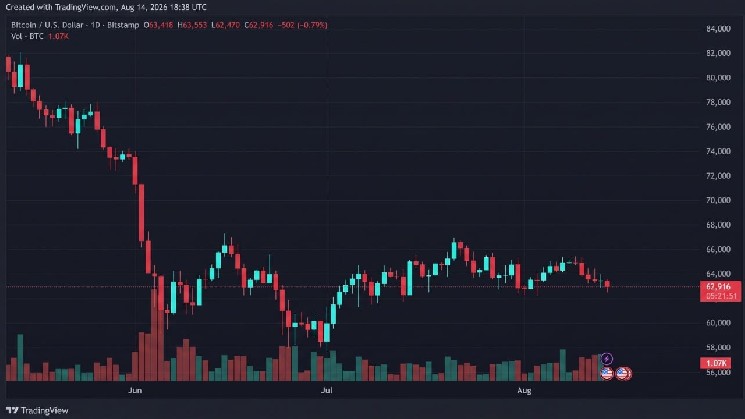
Bitcoin Price Drops to $62,470 as Sellers Retest $63,000 Support Level

Bitcoin's price fell below $63,000 for a second consecutive day on Friday, hitting an intraday low of $62,470. The cryptocurrency later recovered to trade just above $63,000, leaving it nearly flat for the past 24 hours and for August overall, with a weekly loss of 2.6%. The volatility triggered significant liquidations, with $26 million of leveraged long Bitcoin positions liquidated over 24 hours. Market sentiment was further dampened by data showing over $131 million in outflows from spot Bitcoin ETFs for a second straight day, signaling a potential pullback by institutional investors. Adding to the negative pressure, index provider MSCI has proposed new criteria for "non-operating companies" in its global indexes, which could lead to the exclusion of firms holding significant digital assets like Bitcoin on their balance sheets. Companies such as Strategy and Metaplanet could be affected, potentially forcing index-tracking funds to sell their shares. Strategy publicly criticized the proposal, arguing digital assets are legitimate assets and index providers should not dictate what companies can own. Public consultations on MSCI's proposal end September 30, with a final decision expected by October 16. If approved, exclusions could begin in November, potentially triggering sustained institutional selling and damaging a key bridge for Bitcoin adoption in the corporate sector.

cryptonews.ru37m ago

Bitcoin Price Drops to $62,470 as Sellers Retest $63,000 Support Level

cryptonews.ru37m ago

Trading

Spot

Hot Articles

What is $BITCOIN

DIGITAL GOLD ($BITCOIN): A Comprehensive Analysis Introduction to DIGITAL GOLD ($BITCOIN) DIGITAL GOLD ($BITCOIN) is a blockchain-based project operating on the Solana network, which aims to combine the characteristics of traditional precious metals with the innovation of decentralized technologies. While it shares a name with Bitcoin, often referred to as “digital gold” due to its perception as a store of value, DIGITAL GOLD is a separate token designed to create a unique ecosystem within the Web3 landscape. Its goal is to position itself as a viable alternative digital asset, although specifics regarding its applications and functionalities are still developing. What is DIGITAL GOLD ($BITCOIN)? DIGITAL GOLD ($BITCOIN) is a cryptocurrency token explicitly designed for use on the Solana blockchain. In contrast to Bitcoin, which provides a widely recognized value storage role, this token appears to focus on broader applications and characteristics. Notable aspects include: Blockchain Infrastructure: The token is built on the Solana blockchain, known for its capacity to handle high-speed and low-cost transactions. Supply Dynamics: DIGITAL GOLD has a maximum supply capped at 100 quadrillion tokens (100P $BITCOIN), although details regarding its circulating supply are currently undisclosed. Utility: While precise functionalities are not explicitly outlined, there are indications that the token could be utilized for various applications, potentially involving decentralized applications (dApps) or asset tokenization strategies. Who is the Creator of DIGITAL GOLD ($BITCOIN)? At present, the identity of the creators and development team behind DIGITAL GOLD ($BITCOIN) remains unknown. This situation is typical among many innovative projects within the blockchain space, particularly those aligning with decentralized finance and meme coin phenomena. While such anonymity may foster a community-driven culture, it intensifies concerns about governance and accountability. Who are the Investors of DIGITAL GOLD ($BITCOIN)? The available information indicates that DIGITAL GOLD ($BITCOIN) does not have any known institutional backers or prominent venture capital investments. The project seems to operate on a peer-to-peer model focused on community support and adoption rather than traditional funding routes. Its activity and liquidity are primarily situated on decentralized exchanges (DEXs), such as PumpSwap, rather than established centralized trading platforms, further highlighting its grassroots approach. How DIGITAL GOLD ($BITCOIN) Works The operational mechanics of DIGITAL GOLD ($BITCOIN) can be elaborated on based on its blockchain design and network attributes: Consensus Mechanism: By leveraging Solana’s unique proof-of-history (PoH) combined with a proof-of-stake (PoS) model, the project ensures efficient transaction validation contributing to the network's high performance. Tokenomics: While specific deflationary mechanisms have not been extensively detailed, the vast maximum token supply implies that it may cater to microtransactions or niche use cases that are still to be defined. Interoperability: There exists the potential for integration with Solana’s broader ecosystem, including various decentralized finance (DeFi) platforms. However, the details regarding specific integrations remain unspecified. Timeline of Key Events Here is a timeline that highlights significant milestones concerning DIGITAL GOLD ($BITCOIN): 2023: The initial deployment of the token occurs on the Solana blockchain, marked by its contract address. 2024: DIGITAL GOLD gains visibility as it becomes available for trading on decentralized exchanges like PumpSwap, allowing users to trade it against SOL. 2025: The project witnesses sporadic trading activity and potential interest in community-led engagements, although no noteworthy partnerships or technical advancements have been documented as of yet. Critical Analysis Strengths Scalability: The underlying Solana infrastructure supports high transaction volumes, which could enhance the utility of $BITCOIN in various transaction scenarios. Accessibility: The potential low trading price per token could attract retail investors, facilitating wider participation due to fractional ownership opportunities. Risks Lack of Transparency: The absence of publicly known backers, developers, or an audit process may yield skepticism regarding the project's sustainability and trustworthiness. Market Volatility: The trading activity is heavily reliant on speculative behavior, which can result in significant price volatility and uncertainty for investors. Conclusion DIGITAL GOLD ($BITCOIN) emerges as an intriguing yet ambiguous project within the rapidly evolving Solana ecosystem. While it attempts to leverage the “digital gold” narrative, its departure from Bitcoin's established role as a store of value underscores the need for a clearer differentiation of its intended utility and governance structure. Future acceptance and adoption will likely depend on addressing the current opacity and defining its operational and economic strategies more explicitly. Note: This report encompasses synthesised information available as of October 2023, and developments may have transpired beyond the research period.

1.9k Total ViewsPublished 2025.05.13Updated 2025.05.13

What is $BITCOIN

Discussions

Welcome to the HTX Community. Here, you can stay informed about the latest platform developments and gain access to professional market insights. Users' opinions on the price of BTC (BTC) are presented below.

活动图片