XRP Price Changes Impact Evernorth Shares Ahead of Nasdaq Debut

cryptonews.ruPublished on 2026-08-14Last updated on 2026-08-14

Abstract

The price of XRP will determine the number of Evernorth shares distributed to private investors upon the closing of its deal to list on Nasdaq, according to revised agreements. As of August 13, the lower XRP price is expected to result in fewer shares being issued. This would give each public share of the merging SPAC, Armada II, a larger proportional claim on Evernorth's XRP treasury. Evernorth's founder stated the change aligns investor interests with the company's long-term strategy of providing institutional access to the XRP ecosystem. Over 95% of committed investors, including major firms like Arrington Capital and Ripple, approved the amendment. The final share count will be based on a volume-weighted average price of XRP at closing, replacing an initial $2.36 benchmark. The sponsor also adjusted its founder shares proportionally. Evernorth's strategy remains focused on growing XRP per share through capital allocation and participation in the XRP Ledger ecosystem. The merger, pending SEC approval and standard closing conditions, is anticipated for late Q3 or early Q4 2026.

The market price of $XRP at closing will determine how many shares Evernorth distributes to investors under revised private placement agreements, the company said in an Aug. 13 press release outlining the amendments. Based on the Aug. 13 price of $XRP, this formula is expected to reduce the number of shares issued at deal closing, giving each Armada II public share a more significant stake in Evernorth's $XRP treasury.

Evernorth founder and CEO Ashish Birla commented on the revised deal terms:

"We are aligning investor interests while supporting our long-term strategy to provide institutional access to the $XRP ecosystem. The fact that our entire pre-funding group supports this strategy under current conditions demonstrates their unwavering confidence in our strategy and the opportunities ahead."

According to Evernorth's amended S-4 form, the applicable value of $XRP is calculated based on a volume-weighted average price, not the original benchmark of $2.36. The formula works both ways, allowing the token's level at deal completion to influence the number of common shares distributed to participating investors. As of Aug. 13, the price of $XRP is around $1.006.

Public Shareholders and Treasury Shares

According to Evernorth's initial registration statement, investors participating in the private placement subscribed at $10 per share, with most contributing funds in advance and the rest agreeing to deferred payments. This statement calculated equity based on a $XRP benchmark price of $2.36, leaving the final ownership structure exposed to potential price mismatch risk before deal completion.

A smaller number of newly issued shares would result in the company's net asset value being distributed over a smaller equity base, increasing the portion of treasury shares attributable to each outstanding Armada II share. Companies holding treasury shares use per-share asset metrics and net asset value to indicate whether a new issuance enhances or dilutes each owner's claim on underlying assets.

Private Investors and Sponsor Alignment

According to Evernorth, investors representing over 95% of the committed capital supported this change, with all investors providing upfront funding joining the approval. The investor group notably includes Arrington Capital, SBI Group, Ripple, Pantera Capital, Kraken, and GSR. An earlier piece covering Evernorth's April filing presented the $XRP pricing benchmarks, cash commitments, and ownership share calculations that preceded the latest reassessment.

Armada II's sponsor also consented to a proportional adjustment of founder shares, spreading the impact between sponsor and investor interests. In Evernorth's planned board composition, Ripple Chief Legal Officer Stuart Alderoty is among the expected directors post-deal closure, alongside executives with backgrounds in finance, risk management, and digital assets.

Remaining Steps Before Nasdaq Debut

Evernorth's assets and strategy remain unchanged, with the company aiming to increase $XRP per share through disciplined capital allocation, ecosystem participation, treasury operations, and yield-enhancing strategies. The $XRP Ledger (XRPL) underpins Evernorth's ecosystem strategy, serving as the network where $XRP functions as the native asset for transactions and liquidity provisioning.

Armada II already uses XRPN as its stock ticker on the Nasdaq following an October 2025 symbol change that linked the SPAC to the proposed $XRP treasury deal. The business combination awaits SEC review and the satisfaction of standard closing conditions; completion is expected in late Q3 or early Q4 2026.

end-content

Trending Cryptos

Related Questions

QWhat determines the number of shares Evernorth will distribute to private placement investors according to the revised agreements?

AThe market price of XRP at the closing of the transaction determines the number of shares Evernorth will distribute to investors.

QWho is the founder and CEO of Evernorth, and what did he say about the revised deal terms?

AThe founder and CEO of Evernorth is Ashish Birla. He stated that the revisions align investor interests while supporting the company's long-term strategy of providing institutional access to the XRP ecosystem, and that the full pre-funding group's support demonstrates their confidence.

QAccording to the article, how is the applicable value of XRP now calculated for the deal, and what was the original benchmark price?

AThe applicable value of XRP is now calculated based on the volume-weighted average price. The original benchmark price was $2.36.

QName at least three major investors in Evernorth's private placement mentioned in the article.

AMajor investors mentioned include Arrington Capital, SBI Group, Ripple, Pantera Capital, Kraken, and GSR.

QWhat is the expected timeline for the completion of the deal and Evernorth's debut on Nasdaq?

AThe completion of the deal is expected in late Q3 or early Q4 of 2026, pending SEC review and satisfaction of customary closing conditions.

Related Reads

The Bear Market Has Ended, A New Bull Cycle Has Begun

**Title: Bear Market Over, New Bull Cycle Begins** Bitcoin surged over 20% in just three days, from a low of $64,100 on August 19th to a high of $79,500 by August 21st, marking a dramatic shift in market sentiment. This rapid rise triggered massive liquidations exceeding $4 billion, with short positions accounting for $3.7 billion—the largest short squeeze since 2021. The rally was fueled by several key factors. Macroeconomic conditions improved as the US Treasury doubled its long-term bond buyback size, easing pressure. Significant regulatory developments included a White House meeting where former President Trump urged Senate action on the CLARITY Act and hinted at potential US Bitcoin reserves, followed by the CFTC Chairman stating the agency would establish crypto market rules if the bill stalls. On-chain data revealed a fierce battle: large whales faced substantial liquidations on short positions, while others took profits or doubled down on longs. Major altcoins like ETH and XRP also saw impressive gains. Analysts are divided but increasingly bullish. Many, including CryptoQuant's founder, declare the bear market over and a new bull cycle begun. Price targets range from $100k by year-end to ambitious long-term projections of $200k. However, some caution against immediate chasing, noting overbought conditions and viewing the move as a potential "trap" ahead of the crucial September 15th Senate vote on the CLARITY Act. The market's next test is sustaining the momentum with real buying pressure, holding above key resistance near $78k-$80k, and watching ETF inflows and the upcoming regulatory vote.

marsbit2m ago

The Bear Market Has Ended, A New Bull Cycle Has Begun

marsbit2m ago

Xiaomi Defended Its Smartphone Gross Margin, Yet to Find a Profit Successor

Xiaomi's Q2 2026 financial report reveals a company navigating a complex transition. While smartphone gross margin held steady at 8.5% through strategic product mix and a record-high average selling price (ASP), this came at the cost of a 26.5% year-over-year decline in global shipments, pressuring its core user acquisition engine. This illustrates Xiaomi's central challenge: managing the "timing gap" between its established and emerging growth engines. Its smartphone business is pivoting from scale to premiumization, but it's unclear if high-end models can fully offset the volume loss from more price-sensitive segments, especially in markets like India and Africa. Meanwhile, the electric vehicle segment has become a significant revenue contributor, delivering 104,200 units and generating ¥23.9 billion. However, its profit contribution remains unclear as it, along with AI investments, is still in a scaling and investment phase. The AI and humanoid robot initiatives, though strategically prioritized and tested in Xiaomi's own factories, are in early-stage validation with no near-term commercialization timeline. Financially, the company remains stable, supported by a robust cash position and its high-margin internet services business, which hit a new high in monthly active users. Management emphasized continued heavy investment in AI, chips, and robotics to fuel the next growth cycle. The key question is whether these new engines—cars, AI, robotics—can achieve commercial scale and profitability before the smartphone engine's growth slows further.

marsbit3m ago

Xiaomi Defended Its Smartphone Gross Margin, Yet to Find a Profit Successor

marsbit3m ago

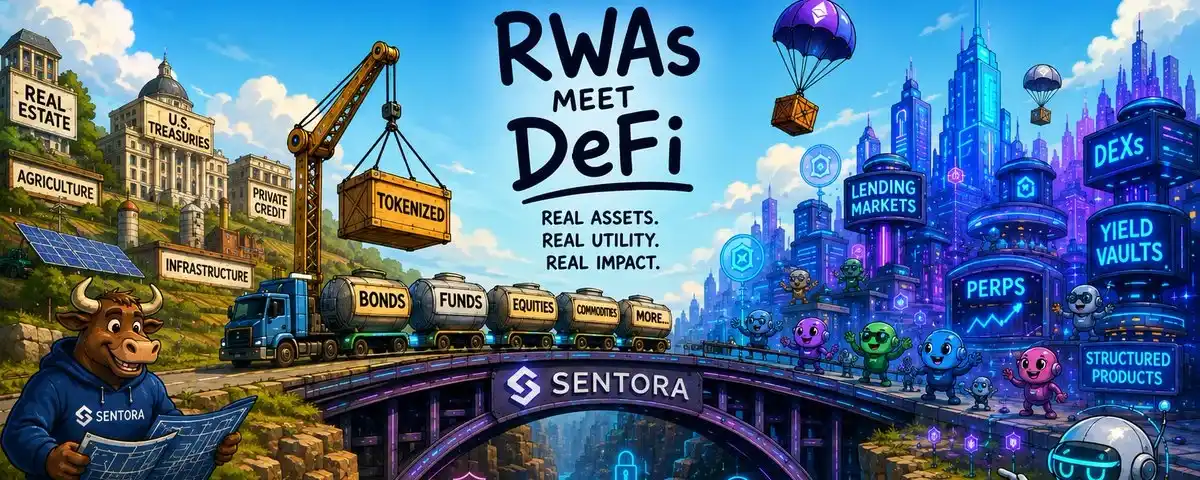
Is RWA Still Meaningful Without DeFi?

The article "Would RWA Still Matter Without DeFi?" argues that tokenizing real-world assets (RWA) alone, like putting a barcode on a container, is not transformative. True value emerges when these tokenized assets are integrated into decentralized finance (DeFi) ecosystems, enabling valuation, financing, hedging, trading, and loss management in a programmable, automated manner. Tokenization provides digital representation, but DeFi provides utility through leverage, liquidity, and composability. The core challenge lies in aligning the different "time clocks" of blockchain (fast, 24/7), traditional markets (limited hours), and asset redemption (slow processes), which creates liquidation risks and gaps. Effective RWA integration requires more than a token; it needs a full stack: legally enforceable rights, reliable data oracles, clear transfer rules, executable secondary liquidity, appropriate collateral parameters, and credible loss resolution paths. Liquidity is defined not by total value locked (TVL) but by the ability to exit a position under stress within a required timeframe. Risk management for RWAs must be modeled as a dependency graph, monitoring interconnected nodes like issuers, custodians, oracles, and liquidity pools for early warning signs beyond just price data. While tokenized government bonds serve as an initial "ping test," the future lies in more complex assets like computing power and energy, which require bespoke risk models. Tokenized stocks paired with perpetual futures present a major test, combining global equity ownership with crypto-native leverage, necessitating robust architectural safeguards like isolation and dynamic collateral rules. The conclusion is that without DeFi, RWA tokenization offers limited value—improving distribution and transparency. The significant opportunity arises when tokenized assets become functional components within open, programmable capital markets, where they can be used as collateral and facilitate complex financial strategies. The token is merely the barcode; the market operating system is the real machine.

marsbit24m ago

Is RWA Still Meaningful Without DeFi?

marsbit24m ago

Government Intervention in the Bond Market: What Does It Mean?

On August 19, 2026, the U.S. Treasury unexpectedly announced it would at least double the size of its long-term Treasury buyback operations, starting September 9. The move triggered an immediate market reaction, with the 30-year yield falling 9 basis points. This intervention came against a backdrop of the 30-year yield hitting a 19-year high of 5.34% the previous day, driven by persistent inflation, high oil prices, deteriorating U.S. fiscal health with public debt surpassing $40 trillion, and a global "buyers' strike" for long-dated bonds. Treasury buybacks involve the government repurchasing older, less liquid bonds from the market via reverse auctions to improve market functioning, not to reduce overall debt. While the action provided tactical relief and signaled the Treasury's willingness to intervene, analysts caution it does not address core structural issues: massive fiscal deficits, high borrowing needs, and fading demand from traditional buyers like foreign central banks. For investors, the announcement offered short-term support for long-duration bond ETFs and boosted assets like gold, which rose 2.7%. However, it's unlikely to significantly lower mortgage rates or alter the challenging environment for long-term bonds. The key takeaway is the distinction between a tactical market operation and the unresolved structural pressures that continue to push yields higher, requiring close monitoring of upcoming economic data, Treasury auctions, and potential signals of more aggressive policy measures.

marsbit28m ago

Government Intervention in the Bond Market: What Does It Mean?

marsbit28m ago

After 'Bessent Put', How Far Is the U.S. from Restarting QE?

Following an unscheduled announcement from the U.S. Treasury Department on August 19th, investor discussions have intensified regarding the potential for future policy interventions in long-term bond markets. The Treasury increased the maximum size of its regular buyback operations for 10-to-30 year bonds from $2 billion to $4 billion, citing a desire to improve liquidity. This move came shortly after a surge in long-term yields, with the 30-year Treasury yield briefly touching 5.34%. Market analysts, rather than focusing on the modest operational size, have interpreted the timing—outside the normal quarterly communication window—as a significant signal. The move has been dubbed the "Bessent Put," implying the market's growing expectation that Treasury officials, led by Deputy Secretary Josh Bessent, may act to prevent a disorderly rise in long-term borrowing costs. This perception represents a potential shift in the market's view of the government's "policy reaction function." The underlying pressures on long-term bonds are multifaceted, including large fiscal deficits, increased Treasury supply, a rise in corporate debt issuance for AI infrastructure (creating a "crowding out" effect), and uncertainty around foreign holdings, particularly from Japan. Geopolitical risks in the Middle East further complicate the policy landscape, potentially creating conflicting pressures between fighting inflation and managing financing costs. However, the article clarifies that this Treasury buyback program is distinct from Quantitative Easing (QE). It is a debt management operation, not a Federal Reserve balance sheet expansion. While the announcement opens the door for market speculation about more forceful tools like Yield Curve Control (YCC) or a return to QE, analysts note that conditions would need to deteriorate significantly for such measures to be implemented. For now, the "Bessent Put" reflects a change in market expectations about possible policy boundaries, not an imminent launch of new monetary stimulus.

marsbit29m ago

After 'Bessent Put', How Far Is the U.S. from Restarting QE?

marsbit29m ago

Trading

Spot

Hot Articles

What is XRP 2.0

XRP 2.0: A New Frontier in the Cryptocurrency Landscape Introduction to XRP 2.0 In the ever-evolving realm of cryptocurrency, new projects continuously emerge, vying for attention and adoption. One such promising initiative is XRP 2.0, a novel cryptocurrency project designed to leverage advanced blockchain technology and robust encryption methodologies. While the name draws parallels with Ripple’s XRP, it’s crucial to note that XRP 2.0 operates independently, focusing on enhancing transaction security, privacy, and scalability. As the digital financial landscape increasingly embraces decentralized solutions, XRP 2.0 aims to contribute meaningfully to web3 and the overall expansion of crypto projects. What is XRP 2.0? At its core, XRP 2.0 is a cryptocurrency project that aims to create a secure and decentralized digital currency ecosystem. Its foundational technology integrates sophisticated blockchain principles with cutting-edge encryption techniques. The overarching goal of XRP 2.0 is to establish itself as a reliable and efficient platform enabling swift transaction execution while prioritizing enhanced privacy protections for its users. The project is promoted as a solution to many limitations faced by existing cryptocurrencies, proposing a system that can handle a higher volume of transactions with improved speed and privacy. This versatility positions XRP 2.0 as a significant contender in a marketplace riddled with various digital currencies. Who is the Creator of XRP 2.0? The identity of the creator behind XRP 2.0 has been flagged as ‘Wilbur.’ However, comprehensive details regarding Wilbur or their associated entity remain elusive. The anonymity of many cryptocurrency creators is not an uncommon phenomenon in the industry, often designed to maintain a degree of privacy and security. Who are the Investors of XRP 2.0? As of now, specific information related to the investment foundations or organizations supporting XRP 2.0 is not publicly available. In the cryptocurrency sector, the backing by reputed investors can significantly influence a project's credibility and success, yet the transparency regarding the financial supporters of XRP 2.0 has not been established. How Does XRP 2.0 Work? XRP 2.0 stands out by employing a combination of blockchain technology and advanced encryption algorithms that ensures secure and decentralized transactions. Its innovative structure includes unique features designed to foster user engagement and broaden functionalities beyond conventional cryptocurrency transactions. Among these features, XRP 2.0 incorporates AI-powered capabilities, such as text-to-image and text-to-speech functionalities. These additions are designed to enhance the interactive experience for users, promoting broader applicability across various sectors. By bridging technological advancements with user-centered design, XRP 2.0 aims to capture the attention of a diverse range of individuals and enterprises looking to integrate cryptocurrency solutions into their operational frameworks. Timeline of XRP 2.0 Understanding XRP 2.0 requires examining the milestones that have defined its journey thus far: July 23, 2023: XRP 2.0 is introduced as a novel cryptocurrency project, aiming to revolutionize secure and decentralized transaction capabilities in the blockchain domain. September 8, 2023: The launching of another project, XRP20, occurs, marking the emergence of an ERC-20 token on the Ethereum blockchain that remains unrelated to XRP 2.0. November 13, 2023: The XRP Ledger undergoes a significant update with the release of rippled server software version 2.0.0. It is essential to note that this development is disconnected from the XRP 2.0 cryptocurrency project. Key Points About XRP 2.0 To distill the essence of XRP 2.0, several critical factors emerge: Unique Features: The inclusion of features like AI-powered text-to-image and text-to-speech further diversifies the potential applications of XRP 2.0. Blockchain Technology: The framework utilizes advanced blockchain mechanisms and encryption protocols, ensuring a secure and decentralized environment for transactions. Scalability and Privacy: XRP 2.0 prioritizes enhanced privacy protections in transaction processes and the scalability necessary to accommodate a growing user base. No Affiliation with Ripple: Importantly, despite its name, XRP 2.0 does not have any allegiance or collaboration with Ripple’s XRP, distinguishing its operational framework and objectives within the cryptocurrency ecosystem. Conclusion XRP 2.0 represents an ambitious venture into the cryptocurrency sphere, aiming to offer a combination of security, privacy, and efficiency in digital transactions. By integrating sophisticated technologies and user-friendly features, the project sets out to broaden the horizons of what cryptocurrency can achieve in today's digital economy. While the anonymity of its creator and lack of disclosed investors might raise questions for some, XRP 2.0's focus on advanced functionalities and decentralisation enhances its appeal amidst an increasingly crowded crypto market. As the cryptocurrency landscape continues to evolve, XRP 2.0 may yet emerge as a pivotal player in the expansion of secure and scalable blockchain solutions.

1.6k Total ViewsPublished 2024.04.01Updated 2024.12.03

What is XRP 2.0

Discussions

Welcome to the HTX Community. Here, you can stay informed about the latest platform developments and gain access to professional market insights. Users' opinions on the price of XRP (XRP) are presented below.

活动图片