Pump.fun chiếm 98% doanh thu Launchpad khi khối lượng giao dịch hàng ngày đạt 542 triệu đô la

cryptonews.ruPublished on 2026-08-11Last updated on 2026-08-11

Abstract

Pump.fun hiện chiếm 98% doanh thu trong thị trường launchpad, với khối lượng giao dịch hàng ngày lên tới 542 triệu USD. Sự bùng nổ của meme coin đã thúc đẩy hoạt động này, khi hơn 587.000 token được tạo ra trên các nền tảng launchpad trong tuần trước. Vào ngày 9/8, Pump.fun thu về 1,118 triệu USD, trong khi tổng doanh thu của tất cả các đối thủ còn lại chỉ là 22.642 USD. Nền tảng trên Solana này cũng xử lý 542,17 triệu USD trong tổng khối lượng 649,61 triệu USD của toàn ngành. Trong ngày, 37.966 token được khởi chạy trên Pump.fun, với 127 token đạt vốn hóa thị trường trên 1 triệu USD. Dù mạng Robinhood Chain mới xuất hiện đã đạt khối lượng 28,39 triệu USD, Solana vẫn thống trị với 546,35 triệu USD. Sự phục hồi bắt đầu từ cuối tháng 7, được củng cố bởi các bản cập nhật sản phẩm của Pump.fun như giao dịch xã hội, giao dịch không phí và hoán đổi đa chuỗi. Nền tảng này cũng tích cực chiêu mộ người dùng từ các đối thủ và tiếp tục chương trình mua lại token PUMP. Tuy nhiên, doanh thu hàng ngày 1,14 triệu USD của toàn ngành hiện thấp hơn nhiều so với mức đỉnh 4-5,6 triệu USD vào năm 2024-2025. Sự thống trị 98% của Pump.fun phản ánh cả sự tăng trưởng của họ và sự thu hẹp của thị trường chung, cho thấy sự tập trung hơn là một sự phục hồi thực sự của lĩnh vực launchpad.

Đã có một đợt bùng nổ hoạt động đáng chú ý trong lĩnh vực memecoin trong vài tuần gần đây, và điều này trở nên rõ ràng khi xem xét các số liệu từ các nền tảng launchpad. Trên thực tế, Blockworks chỉ ra rằng hơn 587,000 token đã được tạo ra trên các launchpad vào tuần trước, con số cao nhất từ trước đến nay trong một tuần. Tuy nhiên, một launchpad gần đây đã thu hút tất cả sự chú ý và cho thấy các số liệu cao nhất.

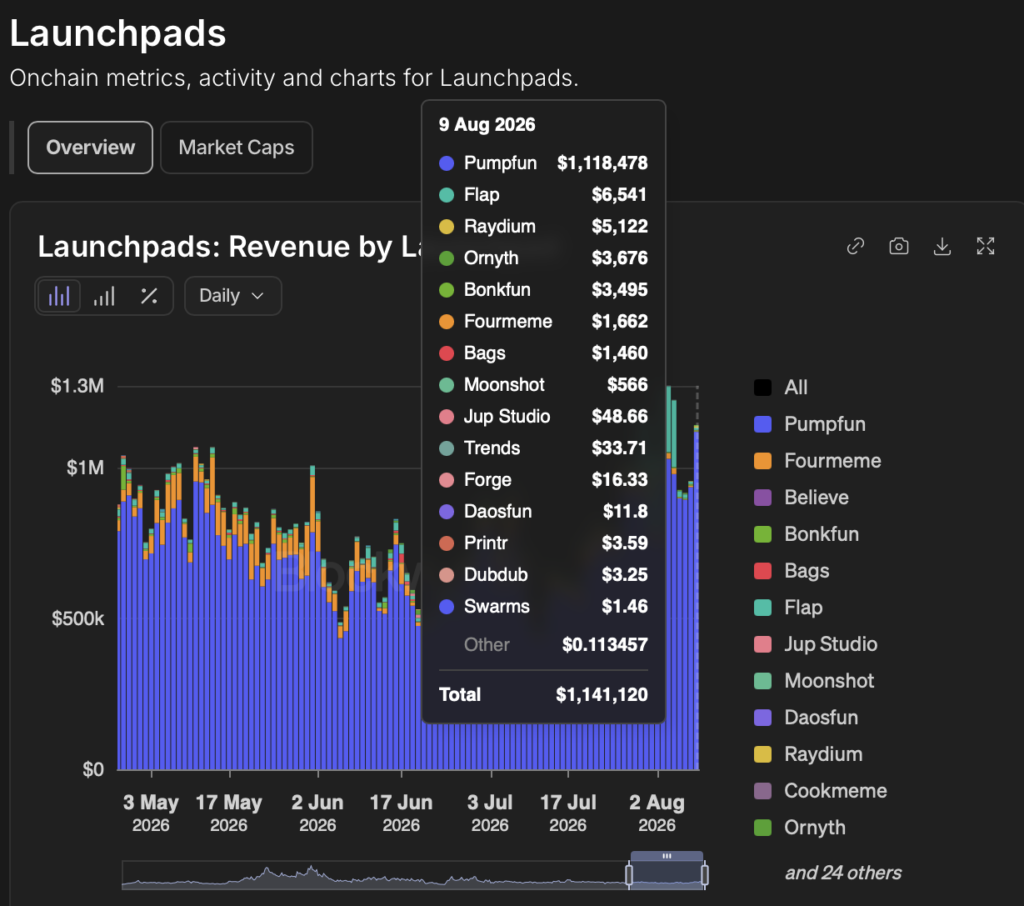
Vào ngày 9 tháng 8, Pump.fun đã kiếm được 1,118,478 đô la. Cùng lúc đó, tổng doanh thu của tất cả các nền tảng launchpad khác là 22,642 đô la. Như vậy, nền tảng Solana này đã chiếm 98% trong tổng số 1,141,120 đô la mà toàn bộ danh mục kiếm được trong ngày hôm đó. Điều này khiến thị trường trở nên mất cân bằng nhất kể từ tháng 4/2025, khi có ít dự án hơn nhiều.
Nguồn: Blockworks

Doanh thu 1.1 triệu đô la một ngày của Pump.fun cũng là mức cao kỷ lục kể từ tháng 3, hoàn thành sự phục hồi đã tích tụ trong vài tuần. Khối lượng giao dịch cũng theo xu hướng tương tự. Trong tổng số 649.61 triệu đô la được giao dịch ngày hôm qua trên tất cả các nền tảng, 542.17 triệu đô la đã đi qua Pump.fun.

Tổng cộng có 37,966 token được launch trên nền tảng Pump.fun trong ngày, và 127 trong số đó đã vượt qua vốn hóa thị trường 1 triệu đô la, tương đương khoảng 1 trên mỗi 300 token.

Robinhood Chain xuất hiện, Solana vẫn bán hết hàng

Nhìn vào các con số, sự cạnh tranh có vẻ khá gay gắt. Flap kiếm được 6,541 đô la trong ngày, đứng thứ hai sau Pump.fun. Raydium launchpad mang về 5,122 đô la, và BONKfun, từng được coi là đối thủ cạnh tranh nghiêm túc, đặc biệt vào tháng 7 năm ngoái, kiếm được 3,495 đô la.

Mạng Robinhood Chain đã tham gia cuộc chơi, và điều này đáng được theo dõi chặt chẽ. Khối lượng giao dịch trên các nền tảng của mạng này là 28.39 triệu đô la, chiếm khoảng 4% tổng khối lượng giao dịch trong ngày. Điều này đáng khen ngợi, khi chỉ hơn một tháng kể từ khi mạng ra mắt. Tuy nhiên, Solana vẫn dẫn đầu với khoảng cách lớn. Mạng này chiếm 546.35 triệu đô la trong tổng khối lượng giao dịch hàng ngày trên các launchpad, so với 74.87 triệu đô la của BNB Chain, và gần như mỗi đô la liên quan đến Solana đều có thể được truy vết về một nền tảng cụ thể.

Phân khúc launchpad đã tồn tại hơn hai năm, và trong thời gian đó, các mạng mới và dự án mới đã xuất hiện. Trên thực tế, dữ liệu hiện tại cho thấy tiền một lần nữa đang tập trung vào một nơi.

Khối lượng này thực sự đến từ đâu

Không có điều gì trong số này xảy ra một cách thụ động. Sự đảo chiều bắt đầu vào cuối tháng 7, khi các cặp giao dịch memecoin một lần nữa đạt 29% khối lượng giao dịch spot trên các sàn giao dịch phi tập trung (DEX) của Solana, mức cao nhất kể từ tháng 8/2025, và Pump.fun trở thành nền tảng chính hấp thụ hoạt động này. Tiếp theo đó là một loạt thay đổi về sản phẩm và động lực khuyến khích.

Vào ngày 7 tháng 8, Pump.fun đã phát hành bản cập nhật giao dịch xã hội, bổ sung cảnh báo giao dịch, giao dịch không mất phí và hoán đổi xuyên chuỗi với $USDC, đưa sản phẩm tiến gần hơn đến một terminal giao dịch hơn là một nhà máy tạo token.

Giao dịch xã hội trên ứng dụng Pumpfun đã lên một tầm cao mới!

– Callout token, thông báo cho MỖI người theo dõi
– Giao dịch không mất phí
– Giao dịch xuyên chuỗi liền mạch với $USDC.

Tăng số lượng người theo dõi của bạn ngay bây giờ 👇 pic.twitter.com/lZGWozPCEY

— Pump.fun (@Pumpfun) Ngày 7 tháng 8 năm 2026

Việc thu hút người dùng cũng rất quyết liệt. FOMO — một nền tảng giao dịch cạnh tranh trên Solana, và Pump.fun ngay lập tức đề nghị người dùng của mình một khoản tiền thưởng đăng ký trị giá 20,000 đô la, cộng với 30,000 đô la mỗi tháng để chuyển đổi nền tảng. Việc trả tiền cho luồng lệnh không phải là điều mới trong tiền điện tử, nhưng quy mô của các khoản thanh toán này so với doanh thu của ngành thật ấn tượng. Pump.fun đã chi gần như toàn bộ doanh thu hàng tháng của các đối thủ cạnh tranh chỉ để lôi kéo người dùng của họ.

Về token, chương trình mua lại vẫn tiếp tục. Một nửa doanh thu của nền tảng vẫn được dùng để mua PUMP, với 3.73 triệu đô la token được mua lại chỉ trong một tuần. BOOST, cơ chế đưa thanh khoản thu được từ việc di chuyển token trở lại các đợt launch mới, đang được quảng bá như một cơ chế launch mặc định, chứ không phải là một tùy chọn ẩn trong cài đặt.

Mỗi yếu tố này tự nó đều là một sự thay đổi dần dần. Cộng lại, trong vài tuần, chúng giải thích tại sao khoảng cách về khối lượng lại tăng lên, chứ không thu hẹp.

98% của một thị trường nhỏ hơn nhiều

Cần có bối cảnh để hiểu chỉ số thống lĩnh này. Với doanh thu 1.14 triệu đô la mỗi ngày, tổng doanh thu của phân khúc launchpad chỉ là một phần nhỏ so với thời kỳ đỉnh cao của memecoin vào năm 2024 và đầu năm 2025, khi phân khúc này thường xuyên kiếm được từ 4 đến 5.6 triệu đô la mỗi ngày.

Doanh thu của Pump.fun ngày nay không khác nhiều so với mức trung bình hàng ngày của toàn ngành 18 tháng trước. Thị phần 98% của nó phản ánh cả sự thu hẹp của các đối thủ và sự tăng trưởng. Danh mục đã thu hẹp lại, và một nền tảng đã hấp thụ phần lớn thị trường còn lại.

Sự khác biệt này rất quan trọng đối với bất kỳ ai diễn giải những con số này như một tín hiệu về sự quan tâm từ các nhà đầu tư bán lẻ. Sự tập trung không giống như sự phục hồi. Các đợt phát hành token vẫn diễn ra trên quy mô lớn, gần 38,000 token mỗi ngày, nhưng doanh thu mà chúng tạo ra đã giảm mạnh.

end-content

Trending Cryptos

Related Questions

QDữ liệu nào cho thấy Pump.fun chiếm ưu thế tuyệt đối trên thị trường launchpad vào ngày 9 tháng 8?

AVào ngày 9 tháng 8, Pump.fun kiếm được 1.118.478 USD trong khi tổng doanh thu của tất cả các launchpad còn lại chỉ là 22.642 USD. Điều này có nghĩa là nền tảng này đã thu về 98% tổng doanh thu 1.141.120 USD của toàn bộ danh mục launchpad trong ngày đó.

QKhối lượng giao dịch hàng ngày trên Pump.fun là bao nhiêu và nó so sánh với toàn thị trường như thế nào?

AKhối lượng giao dịch hàng ngày trên Pump.fun là 542,17 triệu USD. Con số này chiếm phần lớn trong tổng khối lượng giao dịch 649,61 triệu USD trên tất cả các nền tảng launchpad cùng ngày.

QNgoài Pump.fun, các nền tảng launchpad nào khác được đề cập và doanh thu của họ là bao nhiêu?

ACác nền tảng launchpad khác được đề cập và doanh thu của họ trong ngày là: Flap (6.541 USD), Raydium (5.122 USD) và BONKfun (3.495 USD).

QNhững thay đổi sản phẩm nào Pump.fun thực hiện vào đầu tháng 8 để thúc đẩy hoạt động?

AVào ngày 7 tháng 8, Pump.fun đã phát hành bản cập nhật giao dịch xã hội (social trading) bao gồm: cảnh báo giao dịch (callout tokens), giao dịch không mất phí (no-fee trading) và khả năng hoán đổi xuyên chuỗi (cross-chain swaps) với USDC. Những thay đổi này biến nền tảng trở nên giống một thiết bị đầu cuối giao dịch hơn là một 'nhà máy' tạo token.

QTại sao bài báo lại nói rằng việc Pump.fun chiếm 98% thị phần không nhất thiết phản ánh sự phục hồi thực sự của thị trường?

ABài báo giải thích rằng mặc dù Pump.fun chiếm 98% thị phần, nhưng tổng doanh thu hàng ngày của toàn bộ danh mục launchpad (1,14 triệu USD) hiện nay chỉ bằng một phần nhỏ so với thời kỳ đỉnh cao năm 2024-2025 (4-5,6 triệu USD/ngày). Sự tập trung này phản ánh việc thị trường đã thu hẹp và các đối thủ cạnh tranh giảm đi, hơn là một sự phục hồi quy mô lớn về hứng thú từ các nhà đầu tư bán lẻ. Số lượng token được tạo ra vẫn cao (gần 38.000/ngày) nhưng doanh thu mà chúng tạo ra đã giảm mạnh.

Related Reads

Elon Musk Building Terafab: The Largest Chip Factory for AI, Robots, and Space Data Centers

Elon Musk's SpaceX and Tesla have launched the Terafab project to build a massive semiconductor facility in Grimes County, Texas. The plant, exceeding 9.3 million square meters, aims to integrate logic chip manufacturing, memory production, advanced packaging, and testing. The initial phase requires $16.8 billion in capital investment, with a long-term goal of producing over 1 terawatt of computing power annually. This capacity will support Tesla's Optimus robots and Cybercab autonomous vehicles, as well as SpaceX's orbital data centers. Texas Governor Greg Abbott confirmed the project's start in August 2026, highlighting 3,000 new jobs and a $30 million state grant. Elon Musk emphasized the strategic advantage of combining logic, memory, and packaging under one roof. Musk called the future complex the "largest and most valuable building on Earth," with an area roughly 50 times that of the Pentagon. Intel is the key technology partner, with plans to use its 14A process node for chip production. This partnership aims to diversify supply chains currently dominated by TSMC. The project aligns with the U.S. Pax Silica initiative to secure semiconductor supply chains. An AI analysis notes the project's scale and potential challenges, comparing it to delays seen in other U.S. megafab projects like Intel's Ohio facility. It questions whether Terafab can avoid similar pitfalls related to timelines, budgets, workforce, and supply chain stability. The facility's success could significantly shift the global semiconductor balance and strengthen the U.S. position in the tech race.

cryptonews.ru1h ago

Elon Musk Building Terafab: The Largest Chip Factory for AI, Robots, and Space Data Centers

cryptonews.ru1h ago

Elon Musk is Building Terafab: The Largest Chip Plant for AI, Robots, and Space Data Centers

Elon Musk's SpaceX and Tesla have launched the massive Terafab project to build a semiconductor plant in Grimes County, Texas. Spanning over 9.3 million square meters, the facility will integrate logic chip and memory production, advanced packaging, and testing. The initial phase requires $16.8 billion in capital investment, with a long-term goal of producing over 1 terawatt of computing power annually. This output is intended to supply Tesla's Optimus robots and Cybercab autonomous vehicles, as well as SpaceX's orbital data centers. Texas Governor Greg Abbott confirmed the project's start on August 6, 2026, highlighting the creation of 3,000 jobs and a $30 million grant from the Texas Enterprise Fund. Musk emphasized the strategic advantage of combining chip design, memory production, and packaging under one roof to accelerate hardware development. He stated the fully built complex would be "the largest and most valuable building on Earth," about 50 times larger than the Pentagon. An estimated 25% of production is earmarked for Tesla's robotics, with 75% for SpaceX's space-based AI systems. Earlier tax documents suggested a total project cost of up to $119 billion, but this has not been officially confirmed. Intel is the key technology partner, with plans to use its 14A process node for chip manufacturing. This partnership aims to diversify supply chains and reduce dependence on dominant foundries like TSMC. The initiative aligns with the broader U.S. Pax Silica program, which seeks to build secure international semiconductor supply chains with allied nations. An AI-driven analysis notes that megafab projects, such as Intel's delayed Ohio facility, often face schedule and budget overruns. While Terafab represents a significant step toward U.S. semiconductor self-sufficiency and could shift the global tech balance, its success will depend on factors like skilled labor availability, energy supply, and supply chain stability. The final outcome may not be clear until the late 2030s.

cryptonews.ru1h ago

Elon Musk is Building Terafab: The Largest Chip Plant for AI, Robots, and Space Data Centers

cryptonews.ru1h ago

"AI God of Stocks" Blowup Dragged Down, Jane Street Suffered Massive 15 Billion Loss in July, First Monthly Loss in a Decade

Jane Street, a major proprietary trading firm, suffered an estimated $15 billion loss in July, marking its first monthly loss in about a decade. The loss was primarily triggered by the blow-up of the AI-focused hedge fund Situational Awareness, which faced massive margin calls amid a sharp sell-off in AI and semiconductor stocks in July. Jane Street, an investor in the fund, was significantly impacted. Compounding the loss were substantial declines in Jane Street's own Asian non-AI equity long positions, which had performed well earlier in the year. The firm described the losses as a concentrated reversal of previously successful trading strategies in AI and tech sectors. Despite the historic monthly loss, Jane Street's net trading income for the year to date remains strong at over $40 billion. In response, the firm stated it has become more selective in risk-taking, closing specific losing exposures and reducing risk in other strategies. Coinciding with the loss, Jane Street is undergoing a major debt refinancing of approximately $14.6 billion, led by JPMorgan. The move aims to shift more debt from public markets to private investors like Pimco and Fidelity, accepting higher costs for greater flexibility and less public disclosure. The Situational Awareness incident highlights systemic risks in the prime brokerage ecosystem, where leveraged bets on crowded AI trades can lead to forced liquidations and market volatility. Jane Street's subsequent risk reduction and debt restructuring are seen as key responses to this costly lesson.

marsbit1h ago

"AI God of Stocks" Blowup Dragged Down, Jane Street Suffered Massive 15 Billion Loss in July, First Monthly Loss in a Decade

marsbit1h ago

Trading

Spot

Hot Articles

What is USDC(WORMHOLE)

USD Coin (Wormhole): A Comprehensive Overview Introduction In the rapidly evolving world of cryptocurrencies, USD Coin (Wormhole), referred to as $USDC(Wormhole), stands out as a pioneering solution within the DeFi (Decentralized Finance) landscape. Operating on several blockchain platforms, including Solana, USD Coin (Wormhole) is more than just a digital representation of the United States dollar. It embodies the innovative spirit of modern finance, enabling seamless cross-chain transactions and enhanced interoperability among diverse blockchain ecosystems through the advanced Wormhole protocol. What is USD Coin (Wormhole)? USD Coin (Wormhole) is a tokenized version of the US dollar designed to facilitate frictionless transactions across different blockchain networks. Its primary aim is to bolster liquidity and enhance the functionality of the DeFi ecosystem. By leveraging the Wormhole protocol, which establishes a robust cross-chain communication network, users can effortlessly transfer USDC tokens across various platforms. This cross-chain capability marks a significant advancement in cryptocurrency use, promoting a more interconnected and efficient ecosystem where assets can flow freely between different blockchains. The value proposition of USD Coin (Wormhole) lies not only in its stability, being pegged to the US dollar, but also in its ability to bridge gaps between disparate blockchain environments. This innovative approach fosters a greater level of participation among users and developers, paving the way for new and exciting applications within decentralized finance. Who is the creator of USD Coin (Wormhole)? The origins of USD Coin (Wormhole) are intricately tied to the Wormhole network, which was developed by Jump Crypto. While specific individual creators are not prominently documented, Jump Crypto is notable for its involvement in advancing blockchain technology and supporting its applications in finance. By creating the Wormhole network, Jump Crypto has played a vital role in promoting cross-chain asset transfers, enhancing the efficiency and diversity of cryptocurrency usage. Who are the investors of USD Coin (Wormhole)? The success of USD Coin (Wormhole) is supported by investments from several notable funds and organizations within the cryptocurrency realm. Key investors include: Coinbase Ventures: A prominent venture capital arm backed by one of the leading cryptocurrency exchanges in the industry, Coinbase Ventures provides essential capital and strategic support to promising blockchain projects. Arrington XRP Capital: Specializing in digital assets, Arrington XRP Capital recognizes the potential of innovative projects like USD Coin (Wormhole) and has invested accordingly to back its development. Jump Trading: As the parent organization of Jump Crypto, Jump Trading brings not only investment but a wealth of expertise in trading technology and market dynamics to bolster the Wormhole project. How Does USD Coin (Wormhole) Work? The operational framework of USD Coin (Wormhole) is intricately designed to facilitate effective cross-chain transactions, maximizing security and efficiency. Here’s a simplified overview of how it functions: Asset Locking: When a user wishes to transfer USDC from one blockchain to another, they first lock their tokens on the source blockchain. This process ensures that the assets are secure and are set to be either burned or moved later. Token Minting: After the tokens are locked, an equivalent amount of USDC is minted on the destination blockchain. This provides the user with access to their funds on a new platform, reflecting the flexibility that the Wormhole protocol enables. Cross-Chain Transfer: The Wormhole protocol efficiently facilitates the entire transfer process. It ensures that once the USDC is minted on the destination chain, the equivalent tokens are burned on the source chain. The result is a seamless transfer of value between two distinct blockchain environments. This cross-chain methodology ensures that transactions remain secure and transparent, significantly enhancing liquidity within the different DeFi ecosystems. Timeline of USD Coin (Wormhole) Understanding the evolution of USD Coin (Wormhole) provides vital context for its significance in the cryptocurrency arena. Here’s a timeline highlighting important milestones in the project’s history: 2021: The Wormhole project is launched, establishing a framework for cross-chain asset transfers and setting the stage for the development of USD Coin (Wormhole). 2022: The Wormhole network experiences a significant challenge with a security breach that results in a $325 million theft. However, the incident is later addressed and refunded by Jump Crypto, showcasing the project’s commitment to security and transparency. 2023: USD Coin (Wormhole) integrates with Circle’s Cross-Chain Transfer Protocol (CCTP), enhancing its capabilities for cross-chain transfers and further solidifying its place within the DeFi ecosystem. 2024: Ongoing development and expansion of the Wormhole network continue, aimed at increasing the utility and reach of USD Coin (Wormhole) as well as enhancing its operational framework. Key Features The success of USD Coin (Wormhole) can be attributed to several key features that differentiate it from other cryptocurrency offerings: Cross-Chain Interoperability At the core of USD Coin (Wormhole) is its ability to facilitate seamless transfers across multiple blockchain networks. This interoperability serves as a cornerstone for decentralized finance, allowing various platforms to interact with each other, thereby accelerating the evolution of financial services. Security Wormhole employs a well-designed Guardian Network comprised of node validators that ensure secure cross-chain transactions. This collective oversight minimizes the risk of fraud and provides users with confidence that their assets are protected during cross-chain transfers. Liquidity Enhancement By enabling USDC to circulate freely across different blockchains, USD Coin (Wormhole) enhances liquidity in the DeFi ecosystem. This increased liquidity can foster more efficient trading, contribute to better pricing strategies, and improve the overall market dynamics encompassing various digital assets. Conclusion USD Coin (Wormhole) is a pivotal innovation in the blockchain space, reinforcing the capabilities of decentralized finance (DeFi) and establishing a more connected financial ecosystem. With its robust framework for cross-chain transactions, security features, and strong backing from reputable investors, USD Coin (Wormhole) is positioned to play a key role in the future of cryptocurrency. As the digital finance landscape continues to evolve, USD Coin (Wormhole) not only embraces the future of interconnectivity among blockchain networks but also reaffirms the power of tokenization and blockchain technology in transforming how we perceive and utilize value in a digital world. By navigating the complexities of cross-chain functionality, it demonstrates a sophisticated approach to enabling financial inclusivity and innovation in the world of cryptocurrencies.

1.8k Total ViewsPublished 2024.04.01Updated 2024.12.03

What is USDC(WORMHOLE)

What is W$C

World$tateCoin ($W$C): A Comprehensive Exploration of the Emerging Cryptocurrency Project Introduction In the ever-evolving landscape of cryptocurrencies, World$tateCoin ($W$C) has emerged as a project that aims to harness the power of web3 technologies to create a distinctive digital ecosystem. As traditional models of online interaction undergo significant transformation, World$tateCoin seeks to establish itself in this budding third generation of the internet. This article will delve into the intricacies of World$tateCoin, providing an overview of the project, its objectives, and its potential impact on the web3 space. What is World$tateCoin ($W$C)? World$tateCoin ($W$C) is designed as a cryptocurrency that facilitates seamless transactions within a web3 environment. Aimed at creating a decentralized platform where users can interact with various web3 applications, $W$C intends to streamline user experience and enhance accessibility to digital services. While the project aspires to become an integral part of the web3 landscape, detailed insights into its specific objectives and use cases remain limited, raising questions regarding its potential role and utility in a rapidly advancing digital context. The essence of web3 revolves around decentralization and empowering users with greater control over their interactions online. World$tateCoin intends to align with these principles, although specific applications and functionalities of the currency are still under discussion within the community. Who is the Creator of World$tateCoin ($W$C)? In exploring the origins of World$tateCoin, information regarding its creator remains elusive. As of now, there is no publicly available data identifying the individuals or organizations behind the project. This obscurity may cast a shadow of uncertainty over the project’s credibility, but the commitment to innovation within the cryptocurrency framework could be a driving force for its adoption in the future. The lack of identifiable leadership may result in hurdles related to trust and transparency—elements that are crucial for establishing a strong community in the crypto space. Who are the Investors of World$tateCoin ($W$C)? Current research does not reveal any specific investors or backing organizations involved with World$tateCoin. It is not uncommon for emerging cryptocurrency projects to either attract discreet investments or operate in a minimalist financial structure during their initial phase. The ambiguity surrounding investment supports and funding methodologies could affect the project’s sustainability and growth prospects. When assessing new projects within the cryptocurrency domain, investors generally look for transparency regarding financial backing and support from established entities. The absence of this information might necessitate a cautious approach for potential users and stakeholders interested in the future of World$tateCoin. How Does World$tateCoin ($W$C) Work? The operational mechanics of World$tateCoin are grounded in the principles of decentralization, a hallmark of web3 technologies. By facilitating transactions directly between users without the intervention of intermediaries, $W$C is designed to enhance trust and efficiency. However, comprehensive documentation detailing the unique features and operational framework that distinguish World$tateCoin from other cryptocurrencies is markedly sparse. This lack of information complicates the understanding of how $W$C functions within the broader web3 ecosystem and what unique propositions it brings to users and developers alike. Nevertheless, the fundamental goal of allowing for decentralized transactions holds the promise of a more liberated financial landscape, should the project deliver on its aspirations of implementing robust mechanisms and user-friendly interfaces. Timeline of World$tateCoin ($W$C) Constructing a timeline that encapsulates the historical progression of World$tateCoin poses challenges due to an absence of significant documentation on key events and milestones. Nevertheless, an approximate sequence of hypothetical phases can be envisaged, constituting a path forward for the project: Initial Concept (Date Unknown): Conceptualization of the World$tateCoin framework in the broader context of web3 technologies. Development Phase (Date Unknown): Commencement of technical development and coding processes. Community Engagement (Date Unknown): Outreach to potential users and stakeholders to foster community interest in the project. Launch Target (Date Unknown): Announcing an expected launch date, contingent on the progress of development and testing phases. Due to the lack of substantiated dates and details surrounding these phases, stakeholders will need to remain vigilant and engaged with the project's communications for updates regarding its trajectory. Key Topics About World$tateCoin ($W$C) As the project unfolds, certain key subjects arise that embody the potential and aspirations of World$tateCoin: Decentralization: The core philosophy driving the project, aimed at fostering direct user interactions. Web3 Integration: The goal of mirroring web3 principles and enabling seamless user access to an array of digital services. Digital Currency: Positioned as a currency to facilitate internet-based transactions, World$tateCoin aims to inject additional liquidity into the web3 market. Challenge of Information Scarcity: The notable absence of detailed information regarding the project's foundations, creators, and operational methods, necessitating increased transparency from developers to build community trust. Conclusion World$tateCoin ($W$C) is positioned within an exciting yet uncertain terrain of cryptocurrency and web3 integration. While it aims to cultivate a decentralized environment, the limited availability of information regarding its creators, investors, and specific functionalities presents challenges for potential stakeholders and users. In the dynamic world of cryptocurrencies, transparency, engagement, and well-structured communication are vital for the success of projects such as World$tateCoin. As the landscape continues to evolve, stakeholders will be eager to see how the project can solidify its place within the web3 narrative and contribute to the ongoing transformation of the digital ecosystem.

1.5k Total ViewsPublished 2024.04.01Updated 2024.12.03

What is W$C

How to Buy W

Welcome to HTX.com! We've made purchasing Wormhole (W) simple and convenient. Follow our step-by-step guide to embark on your crypto journey.Step 1: Create Your HTX AccountUse your email or phone number to sign up for a free account on HTX. Experience a hassle-free registration journey and unlock all features.Get My AccountStep 2: Go to Buy Crypto and Choose Your Payment MethodCredit/Debit Card: Use your Visa or Mastercard to buy Wormhole (W) instantly.Balance: Use funds from your HTX account balance to trade seamlessly.Third Parties: We've added popular payment methods such as Google Pay and Apple Pay to enhance convenience.P2P: Trade directly with other users on HTX.Over-the-Counter (OTC): We offer tailor-made services and competitive exchange rates for traders.Step 3: Store Your Wormhole (W)After purchasing your Wormhole (W), store it in your HTX account. Alternatively, you can send it elsewhere via blockchain transfer or use it to trade other cryptocurrencies.Step 4: Trade Wormhole (W)Easily trade Wormhole (W) on HTX's spot market. Simply access your account, select your trading pair, execute your trades, and monitor in real-time. We offer a user-friendly experience for both beginners and seasoned traders.

6.7k Total ViewsPublished 2024.04.02Updated 2026.06.02

How to Buy W

Discussions

Welcome to the HTX Community. Here, you can stay informed about the latest platform developments and gain access to professional market insights. Users' opinions on the price of W (W) are presented below.

活动图片