Quand « Odysseus » rencontre l'algorithme

marsbitPublished on 2026-08-10Last updated on 2026-08-10

Abstract

La sortie mondiale en juillet 2026 de *The Odyssey* de Christopher Nolan, un film au budget de 250 millions de dollars tourné en IMAX sur pellicule, contraste avec la production pour 50 000 dollars par le studio Fountain0 d'un long métrage de 135 minutes généré intégralement par IA, *Odysseus: The Fall*. Le film de Nolan, réalisé à travers six pays avec des effets pratiques monumentaux, a engrangé plus d'un milliard de dollars de recettes, dopant les actions IMAX. Il incarne un modèle économique fondé sur la rareté, l'expérience en salle et des droits de propriété intellectuelle solides. À l'inverse, le film IA, bien que techniquement réalisable, reste une démonstration au modèle commercial incertain, confronté à des limites techniques (incohérences visuelles, manque de stabilité) et à l'absence de rareté et de protection copyright forte. L'analyse souligne que l'IA ne remplacera pas la création cinématographique traditionnelle de haut de gamme, mais transformera les étapes intermédiaires de production (prévisualisation, effets). Son vrai risque est d'assécher le financement des films à budget moyen, terrain d'apprentissage des futurs réalisateurs. Paradoxalement, la prolifération de contenus IA pourrait renforcer la valeur perçue du "réel" et du "fait-main" propre au cinéma traditionnel. Le duel oppose une logique d'efficacité algorithmique, visant l'optimal, à une logique d'expérience unique et scénique, recherchant l'exceptionnel. Le marché récompense, pour l'instant, ce...

Par | Wan Dian Research

La chouette d'Athéna prend son envol au crépuscule, tandis que la caméra de Nolan rugit en plein midi.

Le 17 juillet 2026, « L'Odyssée » de Christopher Nolan est sortie dans les salles du monde entier. Au 9 août, ce film épique de 172 minutes, produit avec un budget de 250 millions de dollars, avait dépassé 1,008 milliard de dollars de recettes mondiales, devenant ainsi la deuxième œuvre la plus rentable de la carrière du réalisateur, juste après « The Dark Knight Rises ». Le box-office mondial de son premier week-end s'est élevé à 264 millions de dollars, battant le record personnel de Nolan. Le film a obtenu un score de 98% sur le Tomatometer et un indice Popcorn de 99% sur Rotten Tomatoes, établissant les meilleures critiques de sa carrière de réalisateur. En Chine continentale, où le film n'est pas encore sorti officiellement (sortie prévue le 14 août), il avait déjà généré plus de 60 millions de yuans grâce aux avant-premières et aux préventes – les séances d'avant-première, avec seulement 0,4% des séances programmées, ont représenté plus de 17% du box-office, avec un taux de remplissage de 94% pour les séances IMAX dans les grandes villes. Le secteur estime que le box-office final se situera entre 1,2 et 1,5 milliard de dollars.
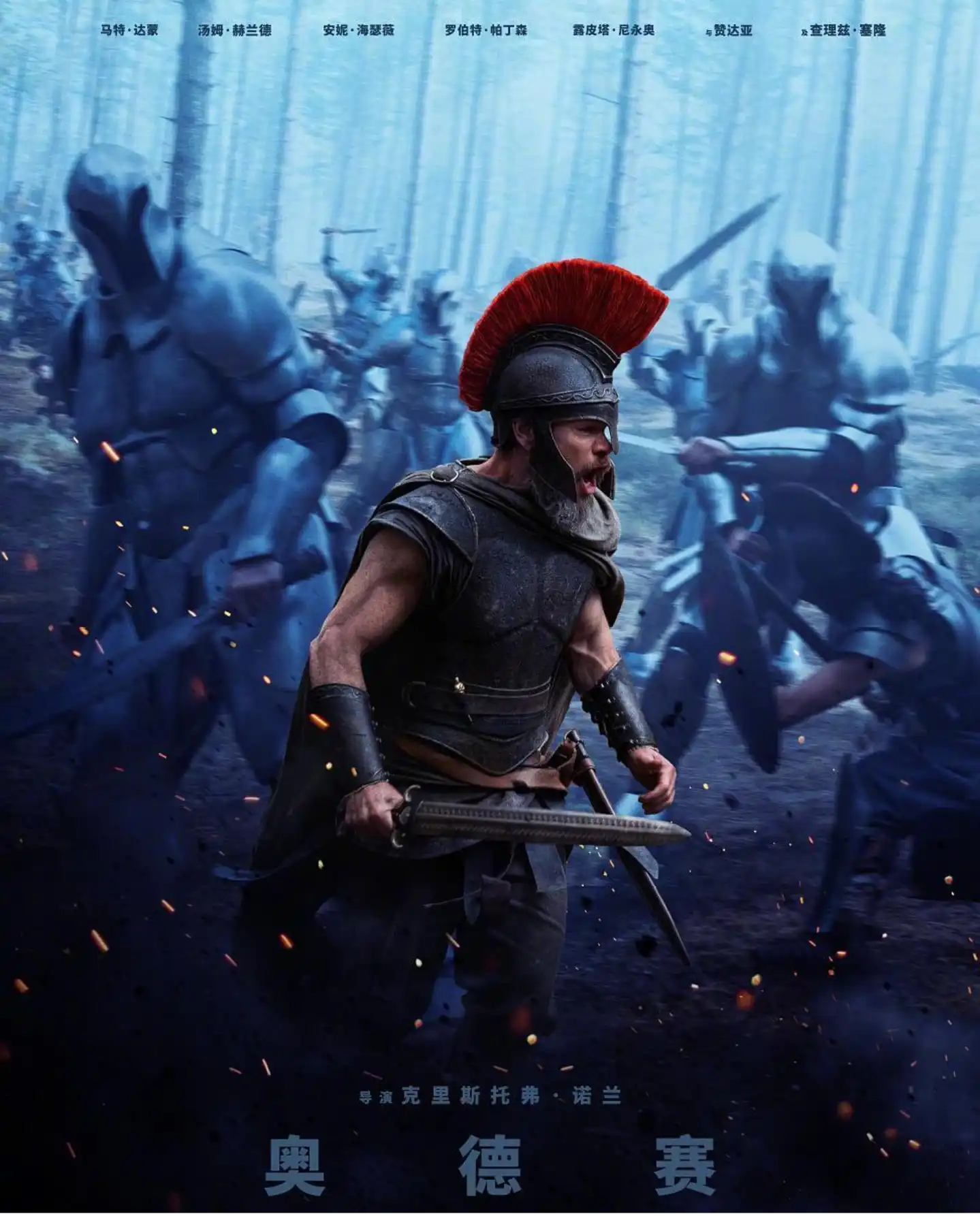
Parallèlement, une autre version d'Ulysse s'apprêtait discrètement à lever l'ancre dans le monde numérique. Le studio indépendant Fountain0 a sorti un long métrage de 135 minutes, entièrement généré par intelligence artificielle, pour un coût total de seulement 50 000 dollars : « Odysseus: The Fall ». Une équipe de 12 personnes, un cycle de production de trois mois, zéro tournage réel, zéro studio, zéro grande équipe de tournage. Presque au même moment, Elon Musk a annoncé sur la plateforme X que son plateforme d'IA Grok Imagine produirait d'ici la fin de l'année une version longue de « L'Odyssée » générée par IA et « fidèle à l'œuvre originale d'Homère ».

Un écart de coût de 5000 fois, le même sujet, la même période de sortie. Ce n'est pas seulement une collision de courants artistiques, c'est une divergence de croyance industrielle. Mais si l'on examine de près les comptes d'Hollywood, les 250 millions de dollars de Christopher Nolan ne sont pas des « dépenses » consommables, mais un « levier d'investissement » qui actionne l'ensemble – ils ont permis d'obtenir des accords d'exclusivité avec les cinémas IMAX, des droits résiduels sur le marché des collections Blu-ray, et la valeur du catalogue de droits pour le demi-siècle à venir.

En revanche, si les 50 000 dollars de l'IA sont bon marché, leur jeu de données d'entraînement existe lui-même dans une zone juridique grise, et les images générées ne peuvent bénéficier d'une protection solide du droit d'auteur. Un « faible coût » sans barrière de propriété intellectuelle est, aux yeux du marché financier, précisément un actif négatif dépourvu de fossé protecteur.

La méthode de tournage de Nolan est presque une provocation délibérée envers les adeptes de l'efficacité à tout prix.

Une période de tournage de 91 jours, s'étendant sur six pays : Maroc, Grèce, Italie, Islande, Écosse et États-Unis. Le film a utilisé plus de 640 kilomètres (plus de 2,1 millions de pieds) de pellicule IMAX, une longueur suffisante pour relier Toronto à New York, et 5300 costumes ont été fabriqués. Pour tourner ce film, la société IMAX a passé deux ans à développer son premier nouveau modèle de caméra argentique en 25 ans, baptisée « Kelly » en hommage à David Kelly, son ancien responsable qualité en chef décédé, et à son épouse. Cette caméra utilise des pièces en fibre de carbone (provenant de la Formule 1) et permet pour la première fois de tourner des dialogues et des gros plans en pellicule IMAX – auparavant, le bruit considérable des caméras IMAX rendait toute scène de dialogue impossible.

La scène du Cyclope n'a pas été générée en images de synthèse. L'équipe a construit une marionnette mécanique réelle de 60 pieds de haut dans la grotte de Psychro en Crète, combinant des effets mécaniques et des techniques de marionnettes à fils. La scène du monstre à six têtes Scylla et du gigantesque tourbillon Charybde a également été tournée en prise de vue réelle – des pilotes sur des bateaux rapides tournaient en cercle pour créer un tourbillon physique, fournissant ainsi une référence dynamique en temps réel à l'équipe des effets visuels. Les acteurs, vêtus d'armures de bronze, trempaient dans une eau de mer à 9°C. Comme l'a dit Matt Damon : « C'est absolument le plus grand film que j'ai jamais tourné dans ma carrière. Il a été fait comme il y a 100 ans, sauf qu'ici on utilise l'IMAX. »

La méthode de travail du studio indépendant Fountain0 appartient à une autre civilisation.

Un scénario généré par un grand modèle de langage, des images rendues par un modèle de diffusion vidéo, des algorithmes remplaçant le réalisateur, le directeur de la photographie, le chef décorateur, l'éclairagiste et même toute l'équipe de post-production. Pas de réunions matinales, pas de retard dû à la météo, pas de conflit d'emploi du temps des acteurs, pas d'assurance accident du travail. Le coût total de 50 000 dollars équivaut à peu près au budget nourriture d'une seule journée sur le plateau de Nolan. La location unique du film coûte 9,99 dollars. Il prouve pour la première fois qu'il est techniquement possible de générer un long métrage narratif avec l'IA.

Le marché financier a déjà rendu son vote provisoire.

Le box-office IMAX de la version Nolan de « L'Odyssée » a atteint 257 millions de dollars, soit près d'un quart du box-office mondial total. Le cours de l'action IMAX a bondi de 6,61% le 3 août, franchissant pour la première fois la barre des 50 dollars pour atteindre un plus haut historique ; depuis le début de l'année, l'action a progressé de 37,99% et a doublé au cours des 12 derniers mois. Universal Pictures est devenue, grâce à ce film, le premier studio à dépasser les 4 milliards de dollars de recettes mondiales en 2026. Nolan lui-même, avec une avance de 20 millions de dollars plus 20% des recettes du box-office, devrait empocher entre 75 et 100 millions de dollars.

Quant au long métrage d'IA de Fountain0, après sa mise en ligne sur une plateforme de streaming, il a enregistré environ 1,2 million de vues la première semaine. Converti en modèle d'abonnement, les revenus directs sont inférieurs au million de dollars. La version de Grok Imagine de Musk n'est pas encore sortie, et le marché financier y a réagi de manière neutre – le cours de l'action Tesla n'a pas connu de fluctuation notable, et la valorisation de xAI n'a pas été réévaluée pour autant.

Le marché privilégie les récits prévisibles.

Nolan a construit, en vingt ans, avec une dizaine d'œuvres et un cumul mondial de plus de 6 milliards de dollars de recettes, une marque que les investisseurs peuvent anticiper. Obtenir un contrat hollywoodien de premier plan de type « 20 millions d'avance plus 20% du box-office » en tant que réalisateur est extrêmement rare dans l'histoire de l'industrie. Et le cinéma d'IA n'a encore trouvé aucun modèle commercial durable. Pas de prime de marque réalisateur, pas de fenêtre d'exploitation en salles, pas de part des recettes IMAX exclusive, pas de chaîne de produits dérivés. Il se situe encore dans cette zone floue entre la « démonstration technologique » et le « produit fini ». Plus crucial encore, cette approche apparemment « peu efficace » de tournage en prise de vue réelle de Nolan est, en essence, une « garantie de bonne exécution physique » remise aux investisseurs. Face au taux d'échec très élevé d'Hollywood, une pellicule tournée est un actif physique acquis ; tandis que la génération d'un plan parfait par l'IA dépend d'un tirage probabiliste, et cette opacité incontrôlable serait perçue dans un audit de production comme un trou noir budgétaire potentiel et une bombe à retardement de retard.

La réponse la plus honnête à la question de savoir si l'IA peut remplacer le cinéma traditionnel est pour l'instant : cela dépend de la définition du mot « remplacer ».

Examinons d'abord les limites de l'IA. En analysant image par image le film final de Fountain0, on constate qu'aucun plan ne dure plus de trois secondes. Ces coupures fréquentes ne relèvent pas d'un style de montage avant-gardiste, mais d'un compromis technique imposé – les principaux modèles vidéo d'IA actuels ne peuvent soutenir la génération de plans uniques longs et stables ; plus un plan dure, plus les détails de l'image perdent en fidélité. La cohérence des personnages d'une scène à l'autre n'est pas garantie ; un même personnage peut présenter des traits du visage différents d'un plan à l'autre. La simulation physique reste superficielle, les mouvements des membres sont raides et saccadés, manquant de logique d'effort et de naturel. Derrière cela se cache une contrainte plus profonde liée à « l'entropie visuelle » : le cerveau humain est extrêmement sensible aux changements instantanés des micro-expressions, et les grandes performances d'acteur sont souvent des écarts extrêmes par rapport à la randomisation biologique. Mais les modèles de diffusion actuels sont, par nature, des « calculateurs de probabilité moyenne » ; pour garantir la stabilité, les algorithmes éviteront automatiquement ces instants brillants mais de faible probabilité – ce qui condamne l'IA, dans le domaine essentiel du gros plan émotionnel, à rester longtemps au-dessus d'une moyenne médiocre. Ce sont des problèmes structurels qui pourraient être résolus par itérations dans les trois à cinq prochaines années.

Mais le défi plus profond réside dans l'expérience de consommation. Toutes les séances en pellicule 70 mm du cinéma BFI IMAX de Londres étaient complètes jusqu'au 10 septembre. Certains ont traversé la moitié du globe depuis Atlanta, d'autres ont conduit 12 heures pour ne voir qu'une séance de fin de nuit, avant de reprendre un vol tôt le matin pour rentrer. Richard Gelfond, PDG d'IMAX, a déclaré : « À New York, il faut attendre septembre pour obtenir un billet pour une séance en 70 mm, c'est presque devenu un produit de luxe. » Ce que les gens paient, ce n'est pas seulement le prix du billet, mais aussi le temps, le voyage et l'attention. Ces investissements constituent eux-mêmes une partie de l'expérience – la rareté crée un sentiment de rituel, et le rituel crée une prime de valeur. Ce n'est pas qu'une question de rituel. À l'ère de l'offre illimitée du streaming, « l'engagement physique et présent du corps » est en train de devenir un nouveau marqueur de distinction sociale. Cette « cognition incarnée » générée par la présence physique est une mémoire physiologique qu'aucun algorithme numérique ne peut encoder – la valeur de partage social qu'elle produit dépasse depuis longtemps le simple prix affiché du billet de cinéma.

Le contenu généré par l'IA est, par nature, une offre infinie. Tant que les serveurs ne sont pas éteints, il peut générer indéfiniment Ulysse, le Cyclope, n'importe quel plan. Mais une offre infinie détruit la rareté, et la rareté est précisément la base de la prime de valeur dans l'industrie du divertissement. Lorsque l'algorithme rend les images aussi gratuites et infinies que l'air, les gens sont paradoxalement prêts à payer davantage pour un écran réel.

Cela ne signifie pas que l'IA n'aura aucun rôle à jouer. Au contraire, ses avantages en termes d'efficacité transformeront profondément les étapes intermédiaires et finales de la chaîne de production audiovisuelle.

La prévisualisation (Previs) utilise déjà l'IA pour générer des storyboards et des aperçus dynamiques ; dans les effets visuels de post-production, le remplissage d'arrière-plan, l'extension de décors et la correction dynamique sont de plus en plus confiés aux algorithmes ; la technologie de production virtuelle combinant moteurs de jeu et IA, déjà utilisée dans des séries comme « The Mandalorian », a considérablement réduit les coûts de tournage en extérieur. Ces applications ne rivalisent pas pour le titre de « réalisateur », mais elles grignotent l'espace de profit des étapes répétitives et à forte intensité de main-d'œuvre dans l'industrie cinématographique traditionnelle.

L'économiste d'Oxford, Carl Benedikt Frey, a un jugement pertinent : le remplacement par la technologie n'est jamais total ou nul, il tend à remplacer « les tâches qui peuvent être normalisées », et non une profession entière.

L'IA peut remplacer les peintres qui dessinent les arrière-plans, mais elle aura du mal à remplacer la personne qui décide « pourquoi filmer ce plan ». Elle peut optimiser la structure des coûts de production, mais elle aura du mal à créer un nouveau paradigme narratif. Le choix de Nolan de filmer les scènes de dialogue en pellicule IMAX – qui du point de vue de l'efficacité semble absurde – est précisément ce choix « non rationnel » qui crée une valeur distincte du contenu des plateformes de streaming. Dans un marché du contenu dominé par les recommandations algorithmiques et le format court, cette distinction devient elle-même une ressource rare.

Mais il faut ajouter une remarque plus froide : l'IA ne remplacera pas Nolan au bout du chemin, mais elle bloquera l'accès aux apprentis de Nolan à la source. Lorsque les studios pourront utiliser l'IA pour générer des aperçus « suffisamment bons » de films à budget moyen, les jeunes réalisateurs qui accumulaient autrefois de l'expérience sur des projets de tournage réel de 50 à 100 millions de dollars auront extrêmement du mal à obtenir un budget pour tourner avec des fonds verts. L'IA ne remplace pas les maîtres à l'arrivée, elle assèche le terreau de croissance des nouveaux maîtres à la source. Si à l'avenir il ne reste que le « luxe artisanal » de Nolan et la « consommation rapide infinie » de l'IA, la zone médiane du cinéma en tant qu'art populaire sera gravement érodée.

Il est intéressant de noter que l'IA pourrait, dans une autre dimension, renforcer la valeur des Nolan et consorts.

Lorsque la génération de longs métrages par IA deviendra bon marché et courante, le « tournage en prise de vue réelle » lui-même pourrait acquérir une étiquette de prime de valeur, comme le « fait main ». Tout comme après la révolution industrielle, les objets artisanaux n'ont pas disparu, mais ont trouvé une nouvelle position sur le marché sous l'appellation « artisan ». Les éléments qui ne peuvent être reproduits par un algorithme – le regard d'un acteur, la lumière d'un lieu réel, les imprévus créés collectivement par un groupe de personnes dans un même espace – pourraient devenir plus précieux à mesure que les images générées par l'IA se multiplient.

Ulysse a erré dix ans en mer avant de rentrer chez lui ; aujourd'hui, l'industrie audiovisuelle erre elle aussi.

Une voie mène à la commodité infinie de la génération algorithmique, l'autre à la rareté limitée de l'écran géant en pellicule. Nolan a choisi la seconde, et le marché a répondu par un milliard de dollars de validation. Mais ce n'est pas la fin de l'histoire. Les modèles vidéo d'IA évoluent au rythme mensuel – peut-être que dans trois ans, l'Ulysse généré par l'IA aura des traits cohérents, une physique réaliste et une narration en plan unique de deux heures. À ce moment-là, l'épopée sur pellicule à la Nolan deviendra-t-elle plus chère en raison de sa plus grande rareté, ou se réduira-t-elle à une nostalgie coûteuse ?

Si nous sommes honnêtes, nous devons admettre que l'essence de cette confrontation est l'incommensurabilité entre la « logique de l'efficacité » et la « logique de l'expérience ». L'algorithme recherche la « solution optimale » – produire, avec le minimum de puissance de calcul, le stimulus visuel le plus conforme aux attentes du public ; tandis que Nolan recherche « l'unique solution » – cette vibration de l'âme qui ne peut naître que sur cet écran, à cet instant, avec cette granulation de pellicule.

Tandis que le capital industriel poursuit frénétiquement la certitude de l'algorithme, il ignore un fait cruel : les humains sont prêts à payer un prix exorbitant pour « l'inattendu qui dépasse les attentes », mais ne paieront qu'un modeste abonnement pour « la précision conforme aux attentes ». Ulysse a refusé l'immortalité et le confort offerts par Calypso, choisissant résolument les épines et les risques du chemin du retour, ce qui est peut-être la métaphore la plus ancienne du dilemme audiovisuel actuel : notre choix final se portera toujours vers ces routes maritimes difficiles qui nous font sentir « vivants », et non vers les autoroutes algorithmiques menant au néant.


Trending Cryptos

Related Questions

QQuels sont les principaux écarts de coût entre la version de 'Odyssée' réalisée par Christopher Nolan et celle générée par l'IA ?

ALa version de Christopher Nolan a coûté 2,5 milliards de dollars, tandis que le film généré par l'IA de Fountain0 n'a coûté que 50 000 dollars, soit une différence de 5000 fois.

QComment le marché a-t-il réagi aux deux versions de 'Odyssée' en termes de performances financières ?

ALa version de Nolan a rapporté plus de 1 milliard de dollars au box-office mondial, faisant monter les actions IMAX de 6,61% et permettant à Universal de franchir la barre des 4 milliards de dollars de recettes en 2026. La version IA de Fountain0 a généré moins d'un million de dollars de revenus directs lors de sa première semaine.

QQuelles sont les principales limitations actuelles des films générés par l'IA, selon l'article ?

ALes limitations incluent l'incapacité à maintenir des plans de plus de trois secondes sans distorsion, l'incohérence des personnages entre les scènes, des animations physiques rigides et l'incapacité à capturer la subtilité des micro-expressions et des performances émotionnelles profondes.

QPourquoi l'article suggère-t-il que la rareté physique peut créer une valeur supérieure à l'abondance numérique ?

AParce que l'expérience physique (comme assister à une projection IMAX en 70 mm) implique un investissement en temps, en déplacement et en attention, créant ainsi un sentiment de rareté et de rituel qui génère une prime de valeur et une mémoire physiologique que le contenu numérique infini ne peut pas reproduire.

QQuel est, selon l'article, l'impact potentiel le plus inquiétant de l'IA sur l'industrie cinématographique traditionnelle ?

AL'IA risque de ne pas remplacer les grands réalisateurs comme Nolan, mais de priver les jeunes réalisateurs en herbe de budgets pour des tournages réels, en permettant aux studios de produire des films 'suffisamment bons' à moindre coût avec l'IA, asséchant ainsi le terrain d'apprentissage nécessaire à l'émergence de nouveaux maîtres du cinéma.

Related Reads

A 25% Weekly Surge: Bitcoin Breaks $79,000 Amid Mass Short Liquidation

Bitcoin surged above $79,000 on August 21, marking a 25% weekly gain. This rally was accompanied by massive liquidations of short positions exceeding $1.2 billion in 24 hours, catching bearish traders off guard. Several analysts provided technical perspectives. Crypto Candy noted Bitcoin quickly hit targets of $70,700 and $75,000 after breaking consolidation. While a short-term pullback is possible, maintaining momentum above $70,000 could drive prices toward $77,000 and $83,000. Trader Roman confirmed a prior forecast for a $75,000 move, citing bullish signals and a decade-long uptrend, though a minor correction is possible. Daan Crypto Trades highlighted Bitcoin's attempt to hold above key support and the weekly 200EMA. He emphasized the $73,000-$74,000 resistance zone; a sustained break above it would boost confidence for a move toward May's highs, pending a weekly close at or above current levels. Key levels identified are: $70,000 (bullish scenario support), $73,000-$74,000 (critical resistance), $79,000 (current peak), and $83,000 (next target). Analysts agree the $73K-$74K zone is crucial for further upside toward $80K-$83K, acknowledging potential for a short-term correction but noting the overall chart structure remains bullish. An AI-driven analysis compares the current surge to past events, suggesting such short-squeeze rallies can be short-lived impulses rather than definitive trend reversals. It questions whether the move reflects genuine spot demand or a cascade of derivative liquidations, with sustainability to be tested after the weekly close.

cryptonews.ru2m ago

A 25% Weekly Surge: Bitcoin Breaks $79,000 Amid Mass Short Liquidation

cryptonews.ru2m ago

Bitcoin, Ethereum, and Solana Rise as Another $1 Billion Short Position is Liquidated

Bitcoin, Ethereum, and Solana have seen significant gains as over $1 billion in short positions were liquidated. Bitcoin surged past $76,000, rising over 9% in 24 hours and 21% for the week, after trading around $64,100 just days prior. Short sellers incurred major losses, with roughly $1.2 billion in short positions liquidated over the past day, contributing to a two-day total exceeding $4 billion. This followed a record $3 billion in liquidations on Thursday, the largest single-day amount since 2021. The liquidations, triggered when leveraged bets move against traders, force buybacks that propel prices upward in a cascading effect. This rally distinguishes between demand-driven growth and mechanics-driven volatility, as forced buying does not reflect a belief in higher intrinsic value. Other major cryptocurrencies also advanced. Ethereum rose nearly 5% to $2,350, Solana gained over 5% to just under $90, and Dogecoin increased almost 9%. The rally was spurred by the U.S. Treasury doubling its long-term bond buyback to $4 billion, easing conditions in the $30 trillion Treasury market and boosting risk appetite. Additionally, Bitcoin broke past key resistance around $66,600, setting $76,000 as the next target. Political support also played a role, with President Trump urging Congress to advance the Digital Asset Market Clarity Act at a White House event attended by crypto industry leaders. Bitcoin's market cap now stands at $1.5 trillion, still about 40% below its October all-time high of over $126,000.

cryptonews.ru32m ago

Bitcoin, Ethereum, and Solana Rise as Another $1 Billion Short Position is Liquidated

cryptonews.ru32m ago

Trading

Spot

Hot Articles

What is SONIC

Sonic: Pioneering the Future of Gaming in Web3 Introduction to Sonic In the ever-evolving landscape of Web3, the gaming industry stands out as one of the most dynamic and promising sectors. At the forefront of this revolution is Sonic, a project designed to amplify the gaming ecosystem on the Solana blockchain. Leveraging cutting-edge technology, Sonic aims to deliver an unparalleled gaming experience by efficiently processing millions of requests per second, ensuring that players enjoy seamless gameplay while maintaining low transaction costs. This article delves into the intricate details of Sonic, exploring its creators, funding sources, operational mechanics, and the timeline of significant events that have shaped its journey. What is Sonic? Sonic is an innovative layer-2 network that operates atop the Solana blockchain, specifically tailored to enhance the existing Solana gaming ecosystem. It accomplishes this through a customised, VM-agnostic game engine paired with a HyperGrid interpreter, facilitating sovereign game economies that roll up back to the Solana platform. The primary goals of Sonic include: Enhanced Gaming Experiences: Sonic is committed to offering lightning-fast on-chain gameplay, allowing players and developers to engage with games at previously unattainable speeds. Atomic Interoperability: This feature enables transactions to be executed within Sonic without the need to redeploy Solana programmes and accounts. This makes the process more efficient and directly benefits from Solana Layer1 services and liquidity. Seamless Deployment: Sonic allows developers to write for Ethereum Virtual Machine (EVM) based systems and execute them on Solana’s SVM infrastructure. This interoperability is crucial for attracting a broader range of dApps and decentralised applications to the platform. Support for Developers: By offering native composable gaming primitives and extensible data types - dining within the Entity-Component-System (ECS) framework - game creators can craft intricate business logic with ease. Overall, Sonic's unique approach not only caters to players but also provides an accessible and low-cost environment for developers to innovate and thrive. Creator of Sonic The information regarding the creator of Sonic is somewhat ambiguous. However, it is known that Sonic's SVM is owned by the company Mirror World. The absence of detailed information about the individuals behind Sonic reflects a common trend in several Web3 projects, where collective efforts and partnerships often overshadow individual contributions. Investors of Sonic Sonic has garnered considerable attention and support from various investors within the crypto and gaming sectors. Notably, the project raised an impressive $12 million during its Series A funding round. The round was led by BITKRAFT Ventures, with other notable investors including Galaxy, Okx Ventures, Interactive, Big Brain Holdings, and Mirana. This financial backing signifies the confidence that investment foundations have in Sonic’s potential to revolutionise the Web3 gaming landscape, further validating its innovative approaches and technologies. How Does Sonic Work? Sonic utilises the HyperGrid framework, a sophisticated parallel processing mechanism that enhances its scalability and customisability. Here are the core features that set Sonic apart: Lightning Speed at Low Costs: Sonic offers one of the fastest on-chain gaming experiences compared to other Layer-1 solutions, powered by the scalability of Solana’s virtual machine (SVM). Atomic Interoperability: Sonic enables transaction execution without redeployment of Solana programmes and accounts, effectively streamlining the interaction between users and the blockchain. EVM Compatibility: Developers can effortlessly migrate decentralised applications from EVM chains to the Solana environment using Sonic’s HyperGrid interpreter, increasing the accessibility and integration of various dApps. Ecosystem Support for Developers: By exposing native composable gaming primitives, Sonic facilitates a sandbox-like environment where developers can experiment and implement business logic, greatly enhancing the overall development experience. Monetisation Infrastructure: Sonic natively supports growth and monetisation efforts, providing frameworks for traffic generation, payments, and settlements, thereby ensuring that gaming projects are not only viable but also sustainable financially. Timeline of Sonic The evolution of Sonic has been marked by several key milestones. Below is a brief timeline highlighting critical events in the project's history: 2022: The Sonic cryptocurrency was officially launched, marking the beginning of its journey in the Web3 gaming arena. 2024: June: Sonic SVM successfully raised $12 million in a Series A funding round. This investment allowed Sonic to further develop its platform and expand its offerings. August: The launch of the Sonic Odyssey testnet provided users with the first opportunity to engage with the platform, offering interactive activities such as collecting rings—a nod to gaming nostalgia. October: SonicX, an innovative crypto game integrated with Solana, made its debut on TikTok, capturing the attention of over 120,000 users within a short span. This integration illustrated Sonic’s commitment to reaching a broader, global audience and showcased the potential of blockchain gaming. Key Points Sonic SVM is a revolutionary layer-2 network on Solana explicitly designed to enhance the GameFi landscape, demonstrating great potential for future development. HyperGrid Framework empowers Sonic by introducing horizontal scaling capabilities, ensuring that the network can handle the demands of Web3 gaming. Integration with Social Platforms: The successful launch of SonicX on TikTok displays Sonic’s strategy to leverage social media platforms to engage users, exponentially increasing the exposure and reach of its projects. Investment Confidence: The substantial funding from BITKRAFT Ventures, among others, emphasizes the robust backing Sonic has, paving the way for its ambitious future. In conclusion, Sonic encapsulates the essence of Web3 gaming innovation, striking a balance between cutting-edge technology, developer-centric tools, and community engagement. As the project continues to evolve, it is poised to redefine the gaming landscape, making it a notable entity for gamers and developers alike. As Sonic moves forward, it will undoubtedly attract greater interest and participation, solidifying its place within the broader narrative of blockchain gaming.

2.4k Total ViewsPublished 2024.04.04Updated 2024.12.03

What is SONIC

What is $S$

Understanding SPERO: A Comprehensive Overview Introduction to SPERO As the landscape of innovation continues to evolve, the emergence of web3 technologies and cryptocurrency projects plays a pivotal role in shaping the digital future. One project that has garnered attention in this dynamic field is SPERO, denoted as SPERO,$$s$. This article aims to gather and present detailed information about SPERO, to help enthusiasts and investors understand its foundations, objectives, and innovations within the web3 and crypto domains. What is SPERO,$$s$? SPERO,$$s$ is a unique project within the crypto space that seeks to leverage the principles of decentralisation and blockchain technology to create an ecosystem that promotes engagement, utility, and financial inclusion. The project is tailored to facilitate peer-to-peer interactions in new ways, providing users with innovative financial solutions and services. At its core, SPERO,$$s$ aims to empower individuals by providing tools and platforms that enhance user experience in the cryptocurrency space. This includes enabling more flexible transaction methods, fostering community-driven initiatives, and creating pathways for financial opportunities through decentralised applications (dApps). The underlying vision of SPERO,$$s$ revolves around inclusiveness, aiming to bridge gaps within traditional finance while harnessing the benefits of blockchain technology. Who is the Creator of SPERO,$$s$? The identity of the creator of SPERO,$$s$ remains somewhat obscure, as there are limited publicly available resources providing detailed background information on its founder(s). This lack of transparency can stem from the project's commitment to decentralisation—an ethos that many web3 projects share, prioritising collective contributions over individual recognition. By centring discussions around the community and its collective goals, SPERO,$$s$ embodies the essence of empowerment without singling out specific individuals. As such, understanding the ethos and mission of SPERO remains more important than identifying a singular creator. Who are the Investors of SPERO,$$s$? SPERO,$$s$ is supported by a diverse array of investors ranging from venture capitalists to angel investors dedicated to fostering innovation in the crypto sector. The focus of these investors generally aligns with SPERO's mission—prioritising projects that promise societal technological advancement, financial inclusivity, and decentralised governance. These investor foundations are typically interested in projects that not only offer innovative products but also contribute positively to the blockchain community and its ecosystems. The backing from these investors reinforces SPERO,$$s$ as a noteworthy contender in the rapidly evolving domain of crypto projects. How Does SPERO,$$s$ Work? SPERO,$$s$ employs a multi-faceted framework that distinguishes it from conventional cryptocurrency projects. Here are some of the key features that underline its uniqueness and innovation: Decentralised Governance: SPERO,$$s$ integrates decentralised governance models, empowering users to participate actively in decision-making processes regarding the project’s future. This approach fosters a sense of ownership and accountability among community members. Token Utility: SPERO,$$s$ utilises its own cryptocurrency token, designed to serve various functions within the ecosystem. These tokens enable transactions, rewards, and the facilitation of services offered on the platform, enhancing overall engagement and utility. Layered Architecture: The technical architecture of SPERO,$$s$ supports modularity and scalability, allowing for seamless integration of additional features and applications as the project evolves. This adaptability is paramount for sustaining relevance in the ever-changing crypto landscape. Community Engagement: The project emphasises community-driven initiatives, employing mechanisms that incentivise collaboration and feedback. By nurturing a strong community, SPERO,$$s$ can better address user needs and adapt to market trends. Focus on Inclusion: By offering low transaction fees and user-friendly interfaces, SPERO,$$s$ aims to attract a diverse user base, including individuals who may not previously have engaged in the crypto space. This commitment to inclusion aligns with its overarching mission of empowerment through accessibility. Timeline of SPERO,$$s$ Understanding a project's history provides crucial insights into its development trajectory and milestones. Below is a suggested timeline mapping significant events in the evolution of SPERO,$$s$: Conceptualisation and Ideation Phase: The initial ideas forming the basis of SPERO,$$s$ were conceived, aligning closely with the principles of decentralisation and community focus within the blockchain industry. Launch of Project Whitepaper: Following the conceptual phase, a comprehensive whitepaper detailing the vision, goals, and technological infrastructure of SPERO,$$s$ was released to garner community interest and feedback. Community Building and Early Engagements: Active outreach efforts were made to build a community of early adopters and potential investors, facilitating discussions around the project’s goals and garnering support. Token Generation Event: SPERO,$$s$ conducted a token generation event (TGE) to distribute its native tokens to early supporters and establish initial liquidity within the ecosystem. Launch of Initial dApp: The first decentralised application (dApp) associated with SPERO,$$s$ went live, allowing users to engage with the platform's core functionalities. Ongoing Development and Partnerships: Continuous updates and enhancements to the project's offerings, including strategic partnerships with other players in the blockchain space, have shaped SPERO,$$s$ into a competitive and evolving player in the crypto market. Conclusion SPERO,$$s$ stands as a testament to the potential of web3 and cryptocurrency to revolutionise financial systems and empower individuals. With a commitment to decentralised governance, community engagement, and innovatively designed functionalities, it paves the way toward a more inclusive financial landscape. As with any investment in the rapidly evolving crypto space, potential investors and users are encouraged to research thoroughly and engage thoughtfully with the ongoing developments within SPERO,$$s$. The project showcases the innovative spirit of the crypto industry, inviting further exploration into its myriad possibilities. While the journey of SPERO,$$s$ is still unfolding, its foundational principles may indeed influence the future of how we interact with technology, finance, and each other in interconnected digital ecosystems.

429 Total ViewsPublished 2024.12.17Updated 2024.12.17

What is $S$

What is AGENT S

Agent S: The Future of Autonomous Interaction in Web3 Introduction In the ever-evolving landscape of Web3 and cryptocurrency, innovations are constantly redefining how individuals interact with digital platforms. One such pioneering project, Agent S, promises to revolutionise human-computer interaction through its open agentic framework. By paving the way for autonomous interactions, Agent S aims to simplify complex tasks, offering transformative applications in artificial intelligence (AI). This detailed exploration will delve into the project's intricacies, its unique features, and the implications for the cryptocurrency domain. What is Agent S? Agent S stands as a groundbreaking open agentic framework, specifically designed to tackle three fundamental challenges in the automation of computer tasks: Acquiring Domain-Specific Knowledge: The framework intelligently learns from various external knowledge sources and internal experiences. This dual approach empowers it to build a rich repository of domain-specific knowledge, enhancing its performance in task execution. Planning Over Long Task Horizons: Agent S employs experience-augmented hierarchical planning, a strategic approach that facilitates efficient breakdown and execution of intricate tasks. This feature significantly enhances its ability to manage multiple subtasks efficiently and effectively. Handling Dynamic, Non-Uniform Interfaces: The project introduces the Agent-Computer Interface (ACI), an innovative solution that enhances the interaction between agents and users. Utilizing Multimodal Large Language Models (MLLMs), Agent S can navigate and manipulate diverse graphical user interfaces seamlessly. Through these pioneering features, Agent S provides a robust framework that addresses the complexities involved in automating human interaction with machines, setting the stage for myriad applications in AI and beyond. Who is the Creator of Agent S? While the concept of Agent S is fundamentally innovative, specific information about its creator remains elusive. The creator is currently unknown, which highlights either the nascent stage of the project or the strategic choice to keep founding members under wraps. Regardless of anonymity, the focus remains on the framework's capabilities and potential. Who are the Investors of Agent S? As Agent S is relatively new in the cryptographic ecosystem, detailed information regarding its investors and financial backers is not explicitly documented. The lack of publicly available insights into the investment foundations or organisations supporting the project raises questions about its funding structure and development roadmap. Understanding the backing is crucial for gauging the project's sustainability and potential market impact. How Does Agent S Work? At the core of Agent S lies cutting-edge technology that enables it to function effectively in diverse settings. Its operational model is built around several key features: Human-like Computer Interaction: The framework offers advanced AI planning, striving to make interactions with computers more intuitive. By mimicking human behaviour in tasks execution, it promises to elevate user experiences. Narrative Memory: Employed to leverage high-level experiences, Agent S utilises narrative memory to keep track of task histories, thereby enhancing its decision-making processes. Episodic Memory: This feature provides users with step-by-step guidance, allowing the framework to offer contextual support as tasks unfold. Support for OpenACI: With the ability to run locally, Agent S allows users to maintain control over their interactions and workflows, aligning with the decentralised ethos of Web3. Easy Integration with External APIs: Its versatility and compatibility with various AI platforms ensure that Agent S can fit seamlessly into existing technological ecosystems, making it an appealing choice for developers and organisations. These functionalities collectively contribute to Agent S's unique position within the crypto space, as it automates complex, multi-step tasks with minimal human intervention. As the project evolves, its potential applications in Web3 could redefine how digital interactions unfold. Timeline of Agent S The development and milestones of Agent S can be encapsulated in a timeline that highlights its significant events: September 27, 2024: The concept of Agent S was launched in a comprehensive research paper titled “An Open Agentic Framework that Uses Computers Like a Human,” showcasing the groundwork for the project. October 10, 2024: The research paper was made publicly available on arXiv, offering an in-depth exploration of the framework and its performance evaluation based on the OSWorld benchmark. October 12, 2024: A video presentation was released, providing a visual insight into the capabilities and features of Agent S, further engaging potential users and investors. These markers in the timeline not only illustrate the progress of Agent S but also indicate its commitment to transparency and community engagement. Key Points About Agent S As the Agent S framework continues to evolve, several key attributes stand out, underscoring its innovative nature and potential: Innovative Framework: Designed to provide an intuitive use of computers akin to human interaction, Agent S brings a novel approach to task automation. Autonomous Interaction: The ability to interact autonomously with computers through GUI signifies a leap towards more intelligent and efficient computing solutions. Complex Task Automation: With its robust methodology, it can automate complex, multi-step tasks, making processes faster and less error-prone. Continuous Improvement: The learning mechanisms enable Agent S to improve from past experiences, continually enhancing its performance and efficacy. Versatility: Its adaptability across different operating environments like OSWorld and WindowsAgentArena ensures that it can serve a broad range of applications. As Agent S positions itself in the Web3 and crypto landscape, its potential to enhance interaction capabilities and automate processes signifies a significant advancement in AI technologies. Through its innovative framework, Agent S exemplifies the future of digital interactions, promising a more seamless and efficient experience for users across various industries. Conclusion Agent S represents a bold leap forward in the marriage of AI and Web3, with the capacity to redefine how we interact with technology. While still in its early stages, the possibilities for its application are vast and compelling. Through its comprehensive framework addressing critical challenges, Agent S aims to bring autonomous interactions to the forefront of the digital experience. As we move deeper into the realms of cryptocurrency and decentralisation, projects like Agent S will undoubtedly play a crucial role in shaping the future of technology and human-computer collaboration.

1.1k Total ViewsPublished 2025.01.14Updated 2025.01.14

What is AGENT S

Discussions

Welcome to the HTX Community. Here, you can stay informed about the latest platform developments and gain access to professional market insights. Users' opinions on the price of S (S) are presented below.

活动图片