Analyse de la note de Bank of America : L'indicateur Bull & Bear grimpe à 9.7, le filet de sécurité de liquidité et les élections de mi-mandat forment la contradiction centrale du marché

marsbitPublished on 2026-08-10Last updated on 2026-08-10

Abstract

L'indicateur Bull & Bear de Bank of America est monté à 9.7, son plus haut depuis 2021, signalant un extrême d'optimisme et approchant un signal de vente. La semaine dernière, les flux ont été importants : 529 milliards de dollars vers le cash, 329 milliards vers les actions et 231 milliards vers les obligations. La banque identifie une contradiction centrale sur le marché : l'intention des autorités de soutenir les conditions financières (comme l'a montré une intervention concertée sur les devises) contraste avec les risques politiques et les signaux de surchauffe. Les flux sont divergents. Si les entrées dans les actions et les obligations restent fortes, les secteurs technologiques et semi-conducteurs ont enregistré leurs premières sorties hebdomadaires depuis six semaines. Face à cette situation, la stratégie recommandée par Bank of America est un "repli ou une rotation" estival : se retirer des actifs risqués ou se tourner vers des secteurs défensifs (consommation de base), des actifs de duration (REITs, petites capitalisations) et le dollar américain. Le rapport souligne que l'élection de mi-mandat aux États-Unis constitue la plus grande variable macroéconomique du second semestre, pouvant remodeler le récit de marché. Parallèlement, l'écart de crédit (credit spread) des hyperscalers de l'IA continue de s'élargir, nécessitant une vigilance. Bien que le filet de sécurité de la liquidité limite les baisses, l'indicateur Bull & Bear à 9.7 suggère que le potentiel de haus...

Auteur : Rita

L'indicateur Bull & Bear de Bank of America est passé à 9.7, son plus haut niveau depuis 2021, à un pas seulement du signal de "vente". La semaine dernière, 529 milliards de dollars sont entrés dans les liquidités, 329 milliards dans les actions, et 231 milliards dans les obligations. Dans son rapport Flow Show publié le 6 août, Bank of America souligne que l'intention des autorités de constituer un filet de sécurité pour les conditions financières est claire, intervention conjointe sur les taux de change de la semaine dernière en témoigne. Bank of America qualifie cette intervention de "LTCM du pauvre", évoquant en filigrane l'intervention de la Fed lors de l'effondrement du fonds Long-Term Capital Management en 1998. Cependant, la montée de Bull & Bear en zone extrême, l'élargissement continu des écarts de crédit des hyperscalers de l'IA, et l'accumulation des incertitudes liées aux élections de mi-mandat constituent la contradiction centrale actuelle du marché. La recommandation de Bank of America est de "se retirer ou de tourner", c'est-à-dire de sortir des actifs risqués ou de se déplacer vers des secteurs défensifs, des actifs à durée et le dollar.

Divergence des flux de capitaux : des entrées record en actions mais premières sorties pour la tech

Les flux de capitaux de la semaine dernière ont montré une divergence marquée. Les fonds actions ont vu des entrées de 329 milliards de dollars, ce qui, annualisé, représenterait 6520 milliards de dollars pour l'année 2026, un record historique. Les fonds obligataires ont reçu 231 milliards de dollars, avec des entrées continues pendant 18 semaines pour les obligations de qualité, atteignant annualisées 5270 milliards de dollars, également un record. Les fonds monétaires (cash) ont reçu 537 milliards de dollars. Les métaux précieux ont connu des entrées pendant 5 semaines consécutives, et les cryptomonnaies 6 milliards de dollars.

Le secteur technologique a enregistré ses premières sorties depuis six semaines, à hauteur de 7 milliards de dollars. Les ETF sur les semi-conducteurs ont subi des sorties de 24 milliards de dollars, également pour la première fois en six semaines. Cependant, les entrées annualisées dans les fonds tech restent élevées à 2170 milliards de dollars, un record historique. Les infrastructures ont vu des sorties de 3 milliards de dollars, les plus importantes depuis mars. Du côté des clients privés, l'AUM s'élève à 4.5 billions de dollars, avec une allocation de 65.7% en actions, 17.4% en obligations et 9.6% en cash. Les clients privés reviennent aux T-bills (plus fortes entrées depuis avril), tout en vendant des T-notes, et restent des acheteurs nets d'actions.

L'indicateur Bull & Bear de Bank of America est passé de 9.4 à 9.7, son plus haut niveau depuis 2021, déclenchant un signal de "vente". Cette hausse est principalement motivée par de fortes entrées sur les obligations à haut rendement, le rétrécissement des écarts (spreads) sur les obligations risquées mondiales (high yield et AT1), et l'amélioration de l'étendue (breadth) des indices actions mondiaux. Bank of America précise que la lecture de l'ancien indicateur Bull & Bear était de 7.8.

Jugement stratégique : se retirer ou tourner, filet de sécurité de liquidité mais risque politique en hausse

Le jugement stratégique de Bank of America est un "repli ou rotation estival", et non un "rechargement". Il est recommandé de sortir des actifs risqués, ou de se tourner vers des secteurs défensifs (consommation de base), des actifs à durée (REITs, petites capitalisations, biotechnologie) et le dollar américain. Ces actifs offrent une couverture contre un resserrement des conditions financières et sont défensifs face au consensus attendu de "pas d'atterrissage économique brutal, pas de hausse des taux par la Fed, pas de réduction des dépenses en capital liées à l'IA, pas de balayage électoral des démocrates aux élections de mi-mandat".

Bank of America estime que les autorités considèrent le marché actions comme "trop gros pour faire faillite". L'économie dépend de l'effet de richesse (les actions détenues par les ménages ont augmenté de 7 billions de dollars cette année, et devraient augmenter de 9 billions de dollars supplémentaires en 2024 et 2025) et de l'essor des dépenses en capital liées aux centres de données de l'IA. La logique d'une fin de l'euphorie et de la bulle obligataire reste valable, mais cette fin nécessiterait un événement de type "vigilante des obligations" (bond vigilantes) combinant "rendements plus élevés - dollar plus faible" pour forcer un changement de politique budgétaire, ainsi qu'un réallocation des actifs des actions vers les obligations. Une situation de "rendements en hausse, banques en baisse" serait le canari dans la mine de charbon.

L'intervention conjointe sur les taux de change de la semaine dernière confirme la volonté des autorités de constituer un filet de sécurité pour les conditions financières. Bank of America pense qu'un contrôle de la courbe des rendements (yield curve control) est un outil de réserve. Si les conditions financières se resserrent au-delà des prévisions, les autorités pourraient utiliser cet outil. Les investisseurs obligataires sont actuellement le groupe ayant l'appétit pour le risque directionnel le plus fort.

Les élections de mi-mandat sont la plus grande variable macroéconomique du second semestre

Bank of America estime que le populisme politique des années 2020 = excès budgétaire = prospérité du PIB nominal. Le PIB nominal américain est passé de 20 à 32 billions de dollars au cours des 6 dernières années, soit une augmentation de 63%. Mais les élections de mi-mandat constituent un référendum sur les capitalistes populistes. Le maintien de la majorité républicaine au Sénat serait une bonne nouvelle pour les marchés. L'analyse de fréquence des mots clés sur les réseaux sociaux concernant les priorités politiques de Trump montre une montée en 2026 des termes "Iran" et "impôts", tandis que "frontière", "énergie", "économie" reculent. Bank of America recommande d'être acheteur d'actions de consommation, secteur qui bénéficierait le mieux du virage de Trump vers "l'accessibilité financière" (affordability). Elle recommande également d'être acheteur d'or, pour se couvrir contre le jugement électoral de type "C'est l'économie, stupide!" que pourraient rendre les électeurs de l'économie en K lors des élections de mi-mandat, ce qui pourrait provoquer une baisse des rendements, du dollar et des actions en fin d'année.

Les écarts de crédit des hyperscalers de l'IA continuent de s'élargir, et Bank of America estime que l'indice Mag 7 doit revenir au-dessus de 50 pour éliminer la menace d'une "fin de l'euphorie des dépenses en capital liées à l'IA due à la puissance de calcul bon marché chinoise". L'optimisme actuel sur les bénéfices par action (EPS) est élevé, avec une hausse de 33% des EPS prévisionnels sur 12 mois, bénéficiant des remboursements de droits de douane de 350 milliards de dollars au cours des 3 derniers mois, inversant le choc tarifaire de 750 milliards de dollars sur les EPS survenu de mai à juillet 2025. L'emploi est corrélé positivement aux profits, et les données sur l'emploi non agricole de juillet seront une variable clé. Si l'emploi est robuste (NFP supérieur à 125 000, taux de chômage inférieur à 4.1%), Warsh pourrait revenir à une posture plus hawkish lors du symposium de Jackson Hole le 28 août ; si l'emploi est faible (NFP inférieur à 50 000, taux de chômage supérieur à 4.3%), cela constituerait une opportunité inverse pour être acheteur d'actifs à durée et défensifs. Les élections de mi-mandat sont en train de remodeler le récit macroéconomique, le filet de sécurité de liquidité offrant une protection à la baisse pour le marché, mais la montée de l'indicateur Bull & Bear à 9.7 indique que le potentiel de hausse est déjà pleinement intégré dans les prix.
Avertissement

Cet article est une compilation et une interprétation par ChaoXiang Research d'un rapport de recherche d'une tierce partie (Bank of America Securities, 6 août 2026), combinée à des informations de marché publiques. Les notations, prix cibles, prévisions de bénéfices et jugements associés cités dans le texte sont les opinions de l'analyste de cette société de bourse, représentant uniquement la position de son institution, et ne représentent pas les points de vue de ChaoXiang Research, ni ne constituent une recommandation d'investissement.

Le marché comporte des risques, les décisions doivent être prises de manière indépendante. Cet article ne doit pas être considéré comme une *base* pour l'achat ou la vente de titres quelconques.


Trending Cryptos

Related Questions

QQu'est-ce que l'indicateur Bull & Bear de Bank of America et à quel niveau s'élève-t-il dans cet article ?

ADans l'article, l'indicateur Bull & Bear de Bank of America est une mesure du sentiment du marché. Il est signalé comme étant monté à 9.7, son niveau le plus élevé depuis 2021, et se trouve à un pas d'un signal de "vendre".

QQuelle est la recommandation de stratégie principale de Bank of America face aux conditions de marché décrites ?

ALa recommandation stratégique principale de Bank of America est un "repli estival ou une rotation". Elle conseille de se retirer des actifs risqués ou de procéder à une rotation vers des secteurs défensifs (comme la consommation de base), des actifs de duration (comme les REITs, les petites capitalisations, la biotechnologie) et le dollar américain.

QQuel est le principal risque macroéconomique identifié par Bank of America pour le second semestre ?

ABank of America identifie les élections de mi-mandat (Midterm elections) comme la plus grande variable macroéconomique pour le second semestre. Elles représentent un référendum sur le capitalisme populiste et pourraient remodeler le récit macroéconomique.

QQuels flux de capitaux spécifiques ont été observés dans le secteur technologique au cours de la semaine passée selon le rapport ?

ASelon le rapport, le secteur technologique a connu des sorties de capitaux de 7 milliards de dollars, une première en six semaines. Les ETF de semi-conducteurs ont également enregistré des sorties de 24 milliards de dollars, également une première en six semaines.

QQuelle intervention des autorités est citée comme preuve de leur volonté de soutenir les conditions financières ?

AL'article cite l'intervention conjointe sur les taux de change de la semaine passée comme une validation de la volonté des autorités de soutenir (ou de "mettre un plancher" sous) les conditions financières. Bank of America compare cette intervention au "LTCM du pauvre", en référence au sauvetage de 1998.

Related Reads

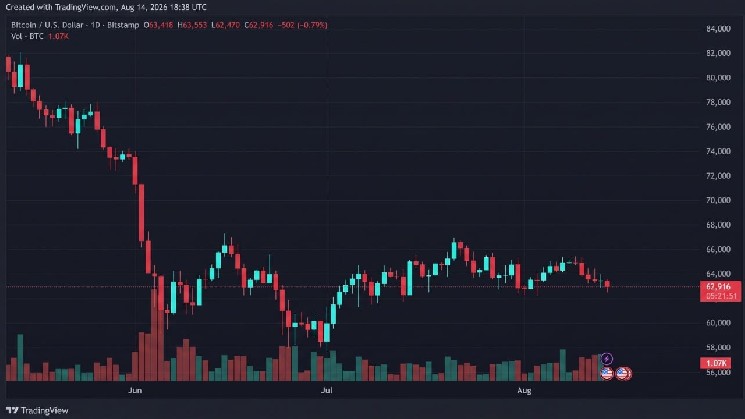
Bitcoin Price Drops to $62,470 as Sellers Retest $63,000 Support Level

Bitcoin's price fell below $63,000 for a second consecutive day on Friday, hitting an intraday low of $62,470. The cryptocurrency later recovered to trade just above $63,000, leaving it nearly flat for the past 24 hours and for August overall, with a weekly loss of 2.6%. The volatility triggered significant liquidations, with $26 million of leveraged long Bitcoin positions liquidated over 24 hours. Market sentiment was further dampened by data showing over $131 million in outflows from spot Bitcoin ETFs for a second straight day, signaling a potential pullback by institutional investors. Adding to the negative pressure, index provider MSCI has proposed new criteria for "non-operating companies" in its global indexes, which could lead to the exclusion of firms holding significant digital assets like Bitcoin on their balance sheets. Companies such as Strategy and Metaplanet could be affected, potentially forcing index-tracking funds to sell their shares. Strategy publicly criticized the proposal, arguing digital assets are legitimate assets and index providers should not dictate what companies can own. Public consultations on MSCI's proposal end September 30, with a final decision expected by October 16. If approved, exclusions could begin in November, potentially triggering sustained institutional selling and damaging a key bridge for Bitcoin adoption in the corporate sector.

cryptonews.ru2h ago

Bitcoin Price Drops to $62,470 as Sellers Retest $63,000 Support Level

cryptonews.ru2h ago

Trading

Spot

Hot Articles

What is SONIC

Sonic: Pioneering the Future of Gaming in Web3 Introduction to Sonic In the ever-evolving landscape of Web3, the gaming industry stands out as one of the most dynamic and promising sectors. At the forefront of this revolution is Sonic, a project designed to amplify the gaming ecosystem on the Solana blockchain. Leveraging cutting-edge technology, Sonic aims to deliver an unparalleled gaming experience by efficiently processing millions of requests per second, ensuring that players enjoy seamless gameplay while maintaining low transaction costs. This article delves into the intricate details of Sonic, exploring its creators, funding sources, operational mechanics, and the timeline of significant events that have shaped its journey. What is Sonic? Sonic is an innovative layer-2 network that operates atop the Solana blockchain, specifically tailored to enhance the existing Solana gaming ecosystem. It accomplishes this through a customised, VM-agnostic game engine paired with a HyperGrid interpreter, facilitating sovereign game economies that roll up back to the Solana platform. The primary goals of Sonic include: Enhanced Gaming Experiences: Sonic is committed to offering lightning-fast on-chain gameplay, allowing players and developers to engage with games at previously unattainable speeds. Atomic Interoperability: This feature enables transactions to be executed within Sonic without the need to redeploy Solana programmes and accounts. This makes the process more efficient and directly benefits from Solana Layer1 services and liquidity. Seamless Deployment: Sonic allows developers to write for Ethereum Virtual Machine (EVM) based systems and execute them on Solana’s SVM infrastructure. This interoperability is crucial for attracting a broader range of dApps and decentralised applications to the platform. Support for Developers: By offering native composable gaming primitives and extensible data types - dining within the Entity-Component-System (ECS) framework - game creators can craft intricate business logic with ease. Overall, Sonic's unique approach not only caters to players but also provides an accessible and low-cost environment for developers to innovate and thrive. Creator of Sonic The information regarding the creator of Sonic is somewhat ambiguous. However, it is known that Sonic's SVM is owned by the company Mirror World. The absence of detailed information about the individuals behind Sonic reflects a common trend in several Web3 projects, where collective efforts and partnerships often overshadow individual contributions. Investors of Sonic Sonic has garnered considerable attention and support from various investors within the crypto and gaming sectors. Notably, the project raised an impressive $12 million during its Series A funding round. The round was led by BITKRAFT Ventures, with other notable investors including Galaxy, Okx Ventures, Interactive, Big Brain Holdings, and Mirana. This financial backing signifies the confidence that investment foundations have in Sonic’s potential to revolutionise the Web3 gaming landscape, further validating its innovative approaches and technologies. How Does Sonic Work? Sonic utilises the HyperGrid framework, a sophisticated parallel processing mechanism that enhances its scalability and customisability. Here are the core features that set Sonic apart: Lightning Speed at Low Costs: Sonic offers one of the fastest on-chain gaming experiences compared to other Layer-1 solutions, powered by the scalability of Solana’s virtual machine (SVM). Atomic Interoperability: Sonic enables transaction execution without redeployment of Solana programmes and accounts, effectively streamlining the interaction between users and the blockchain. EVM Compatibility: Developers can effortlessly migrate decentralised applications from EVM chains to the Solana environment using Sonic’s HyperGrid interpreter, increasing the accessibility and integration of various dApps. Ecosystem Support for Developers: By exposing native composable gaming primitives, Sonic facilitates a sandbox-like environment where developers can experiment and implement business logic, greatly enhancing the overall development experience. Monetisation Infrastructure: Sonic natively supports growth and monetisation efforts, providing frameworks for traffic generation, payments, and settlements, thereby ensuring that gaming projects are not only viable but also sustainable financially. Timeline of Sonic The evolution of Sonic has been marked by several key milestones. Below is a brief timeline highlighting critical events in the project's history: 2022: The Sonic cryptocurrency was officially launched, marking the beginning of its journey in the Web3 gaming arena. 2024: June: Sonic SVM successfully raised $12 million in a Series A funding round. This investment allowed Sonic to further develop its platform and expand its offerings. August: The launch of the Sonic Odyssey testnet provided users with the first opportunity to engage with the platform, offering interactive activities such as collecting rings—a nod to gaming nostalgia. October: SonicX, an innovative crypto game integrated with Solana, made its debut on TikTok, capturing the attention of over 120,000 users within a short span. This integration illustrated Sonic’s commitment to reaching a broader, global audience and showcased the potential of blockchain gaming. Key Points Sonic SVM is a revolutionary layer-2 network on Solana explicitly designed to enhance the GameFi landscape, demonstrating great potential for future development. HyperGrid Framework empowers Sonic by introducing horizontal scaling capabilities, ensuring that the network can handle the demands of Web3 gaming. Integration with Social Platforms: The successful launch of SonicX on TikTok displays Sonic’s strategy to leverage social media platforms to engage users, exponentially increasing the exposure and reach of its projects. Investment Confidence: The substantial funding from BITKRAFT Ventures, among others, emphasizes the robust backing Sonic has, paving the way for its ambitious future. In conclusion, Sonic encapsulates the essence of Web3 gaming innovation, striking a balance between cutting-edge technology, developer-centric tools, and community engagement. As the project continues to evolve, it is poised to redefine the gaming landscape, making it a notable entity for gamers and developers alike. As Sonic moves forward, it will undoubtedly attract greater interest and participation, solidifying its place within the broader narrative of blockchain gaming.

2.3k Total ViewsPublished 2024.04.04Updated 2024.12.03

What is SONIC

What is $S$

Understanding SPERO: A Comprehensive Overview Introduction to SPERO As the landscape of innovation continues to evolve, the emergence of web3 technologies and cryptocurrency projects plays a pivotal role in shaping the digital future. One project that has garnered attention in this dynamic field is SPERO, denoted as SPERO,$$s$. This article aims to gather and present detailed information about SPERO, to help enthusiasts and investors understand its foundations, objectives, and innovations within the web3 and crypto domains. What is SPERO,$$s$? SPERO,$$s$ is a unique project within the crypto space that seeks to leverage the principles of decentralisation and blockchain technology to create an ecosystem that promotes engagement, utility, and financial inclusion. The project is tailored to facilitate peer-to-peer interactions in new ways, providing users with innovative financial solutions and services. At its core, SPERO,$$s$ aims to empower individuals by providing tools and platforms that enhance user experience in the cryptocurrency space. This includes enabling more flexible transaction methods, fostering community-driven initiatives, and creating pathways for financial opportunities through decentralised applications (dApps). The underlying vision of SPERO,$$s$ revolves around inclusiveness, aiming to bridge gaps within traditional finance while harnessing the benefits of blockchain technology. Who is the Creator of SPERO,$$s$? The identity of the creator of SPERO,$$s$ remains somewhat obscure, as there are limited publicly available resources providing detailed background information on its founder(s). This lack of transparency can stem from the project's commitment to decentralisation—an ethos that many web3 projects share, prioritising collective contributions over individual recognition. By centring discussions around the community and its collective goals, SPERO,$$s$ embodies the essence of empowerment without singling out specific individuals. As such, understanding the ethos and mission of SPERO remains more important than identifying a singular creator. Who are the Investors of SPERO,$$s$? SPERO,$$s$ is supported by a diverse array of investors ranging from venture capitalists to angel investors dedicated to fostering innovation in the crypto sector. The focus of these investors generally aligns with SPERO's mission—prioritising projects that promise societal technological advancement, financial inclusivity, and decentralised governance. These investor foundations are typically interested in projects that not only offer innovative products but also contribute positively to the blockchain community and its ecosystems. The backing from these investors reinforces SPERO,$$s$ as a noteworthy contender in the rapidly evolving domain of crypto projects. How Does SPERO,$$s$ Work? SPERO,$$s$ employs a multi-faceted framework that distinguishes it from conventional cryptocurrency projects. Here are some of the key features that underline its uniqueness and innovation: Decentralised Governance: SPERO,$$s$ integrates decentralised governance models, empowering users to participate actively in decision-making processes regarding the project’s future. This approach fosters a sense of ownership and accountability among community members. Token Utility: SPERO,$$s$ utilises its own cryptocurrency token, designed to serve various functions within the ecosystem. These tokens enable transactions, rewards, and the facilitation of services offered on the platform, enhancing overall engagement and utility. Layered Architecture: The technical architecture of SPERO,$$s$ supports modularity and scalability, allowing for seamless integration of additional features and applications as the project evolves. This adaptability is paramount for sustaining relevance in the ever-changing crypto landscape. Community Engagement: The project emphasises community-driven initiatives, employing mechanisms that incentivise collaboration and feedback. By nurturing a strong community, SPERO,$$s$ can better address user needs and adapt to market trends. Focus on Inclusion: By offering low transaction fees and user-friendly interfaces, SPERO,$$s$ aims to attract a diverse user base, including individuals who may not previously have engaged in the crypto space. This commitment to inclusion aligns with its overarching mission of empowerment through accessibility. Timeline of SPERO,$$s$ Understanding a project's history provides crucial insights into its development trajectory and milestones. Below is a suggested timeline mapping significant events in the evolution of SPERO,$$s$: Conceptualisation and Ideation Phase: The initial ideas forming the basis of SPERO,$$s$ were conceived, aligning closely with the principles of decentralisation and community focus within the blockchain industry. Launch of Project Whitepaper: Following the conceptual phase, a comprehensive whitepaper detailing the vision, goals, and technological infrastructure of SPERO,$$s$ was released to garner community interest and feedback. Community Building and Early Engagements: Active outreach efforts were made to build a community of early adopters and potential investors, facilitating discussions around the project’s goals and garnering support. Token Generation Event: SPERO,$$s$ conducted a token generation event (TGE) to distribute its native tokens to early supporters and establish initial liquidity within the ecosystem. Launch of Initial dApp: The first decentralised application (dApp) associated with SPERO,$$s$ went live, allowing users to engage with the platform's core functionalities. Ongoing Development and Partnerships: Continuous updates and enhancements to the project's offerings, including strategic partnerships with other players in the blockchain space, have shaped SPERO,$$s$ into a competitive and evolving player in the crypto market. Conclusion SPERO,$$s$ stands as a testament to the potential of web3 and cryptocurrency to revolutionise financial systems and empower individuals. With a commitment to decentralised governance, community engagement, and innovatively designed functionalities, it paves the way toward a more inclusive financial landscape. As with any investment in the rapidly evolving crypto space, potential investors and users are encouraged to research thoroughly and engage thoughtfully with the ongoing developments within SPERO,$$s$. The project showcases the innovative spirit of the crypto industry, inviting further exploration into its myriad possibilities. While the journey of SPERO,$$s$ is still unfolding, its foundational principles may indeed influence the future of how we interact with technology, finance, and each other in interconnected digital ecosystems.

369 Total ViewsPublished 2024.12.17Updated 2024.12.17

What is $S$

What is AGENT S

Agent S: The Future of Autonomous Interaction in Web3 Introduction In the ever-evolving landscape of Web3 and cryptocurrency, innovations are constantly redefining how individuals interact with digital platforms. One such pioneering project, Agent S, promises to revolutionise human-computer interaction through its open agentic framework. By paving the way for autonomous interactions, Agent S aims to simplify complex tasks, offering transformative applications in artificial intelligence (AI). This detailed exploration will delve into the project's intricacies, its unique features, and the implications for the cryptocurrency domain. What is Agent S? Agent S stands as a groundbreaking open agentic framework, specifically designed to tackle three fundamental challenges in the automation of computer tasks: Acquiring Domain-Specific Knowledge: The framework intelligently learns from various external knowledge sources and internal experiences. This dual approach empowers it to build a rich repository of domain-specific knowledge, enhancing its performance in task execution. Planning Over Long Task Horizons: Agent S employs experience-augmented hierarchical planning, a strategic approach that facilitates efficient breakdown and execution of intricate tasks. This feature significantly enhances its ability to manage multiple subtasks efficiently and effectively. Handling Dynamic, Non-Uniform Interfaces: The project introduces the Agent-Computer Interface (ACI), an innovative solution that enhances the interaction between agents and users. Utilizing Multimodal Large Language Models (MLLMs), Agent S can navigate and manipulate diverse graphical user interfaces seamlessly. Through these pioneering features, Agent S provides a robust framework that addresses the complexities involved in automating human interaction with machines, setting the stage for myriad applications in AI and beyond. Who is the Creator of Agent S? While the concept of Agent S is fundamentally innovative, specific information about its creator remains elusive. The creator is currently unknown, which highlights either the nascent stage of the project or the strategic choice to keep founding members under wraps. Regardless of anonymity, the focus remains on the framework's capabilities and potential. Who are the Investors of Agent S? As Agent S is relatively new in the cryptographic ecosystem, detailed information regarding its investors and financial backers is not explicitly documented. The lack of publicly available insights into the investment foundations or organisations supporting the project raises questions about its funding structure and development roadmap. Understanding the backing is crucial for gauging the project's sustainability and potential market impact. How Does Agent S Work? At the core of Agent S lies cutting-edge technology that enables it to function effectively in diverse settings. Its operational model is built around several key features: Human-like Computer Interaction: The framework offers advanced AI planning, striving to make interactions with computers more intuitive. By mimicking human behaviour in tasks execution, it promises to elevate user experiences. Narrative Memory: Employed to leverage high-level experiences, Agent S utilises narrative memory to keep track of task histories, thereby enhancing its decision-making processes. Episodic Memory: This feature provides users with step-by-step guidance, allowing the framework to offer contextual support as tasks unfold. Support for OpenACI: With the ability to run locally, Agent S allows users to maintain control over their interactions and workflows, aligning with the decentralised ethos of Web3. Easy Integration with External APIs: Its versatility and compatibility with various AI platforms ensure that Agent S can fit seamlessly into existing technological ecosystems, making it an appealing choice for developers and organisations. These functionalities collectively contribute to Agent S's unique position within the crypto space, as it automates complex, multi-step tasks with minimal human intervention. As the project evolves, its potential applications in Web3 could redefine how digital interactions unfold. Timeline of Agent S The development and milestones of Agent S can be encapsulated in a timeline that highlights its significant events: September 27, 2024: The concept of Agent S was launched in a comprehensive research paper titled “An Open Agentic Framework that Uses Computers Like a Human,” showcasing the groundwork for the project. October 10, 2024: The research paper was made publicly available on arXiv, offering an in-depth exploration of the framework and its performance evaluation based on the OSWorld benchmark. October 12, 2024: A video presentation was released, providing a visual insight into the capabilities and features of Agent S, further engaging potential users and investors. These markers in the timeline not only illustrate the progress of Agent S but also indicate its commitment to transparency and community engagement. Key Points About Agent S As the Agent S framework continues to evolve, several key attributes stand out, underscoring its innovative nature and potential: Innovative Framework: Designed to provide an intuitive use of computers akin to human interaction, Agent S brings a novel approach to task automation. Autonomous Interaction: The ability to interact autonomously with computers through GUI signifies a leap towards more intelligent and efficient computing solutions. Complex Task Automation: With its robust methodology, it can automate complex, multi-step tasks, making processes faster and less error-prone. Continuous Improvement: The learning mechanisms enable Agent S to improve from past experiences, continually enhancing its performance and efficacy. Versatility: Its adaptability across different operating environments like OSWorld and WindowsAgentArena ensures that it can serve a broad range of applications. As Agent S positions itself in the Web3 and crypto landscape, its potential to enhance interaction capabilities and automate processes signifies a significant advancement in AI technologies. Through its innovative framework, Agent S exemplifies the future of digital interactions, promising a more seamless and efficient experience for users across various industries. Conclusion Agent S represents a bold leap forward in the marriage of AI and Web3, with the capacity to redefine how we interact with technology. While still in its early stages, the possibilities for its application are vast and compelling. Through its comprehensive framework addressing critical challenges, Agent S aims to bring autonomous interactions to the forefront of the digital experience. As we move deeper into the realms of cryptocurrency and decentralisation, projects like Agent S will undoubtedly play a crucial role in shaping the future of technology and human-computer collaboration.

1.0k Total ViewsPublished 2025.01.14Updated 2025.01.14

What is AGENT S

Discussions

Welcome to the HTX Community. Here, you can stay informed about the latest platform developments and gain access to professional market insights. Users' opinions on the price of S (S) are presented below.

活动图片