Lahirnya "DeepSeek Biologi" Versi China, 4 Lulusan Oxford, Serahkan Ilmu Kehidupan ke AI

marsbitPublished on 2026-08-04Last updated on 2026-08-04

Abstract

DeepSeek-V4 Flash baru saja menggemparkan dunia model umum global, dan tak lama kemudian muncul versi DeepSeek untuk ilmu kehidupan dari China. Baru-baru ini, GeneLLM, model besar multi-omics untuk ilmu kehidupan yang dikembangkan secara mandiri oleh **Jindu Life Sciences** (didirikan oleh 4 alumnus Universitas Oxford), telah berhasil diterbitkan di jurnal akademik top dunia: *Nature Communications* dan *Advanced Science*. Sebagai **model besar multi-omics pertama di dunia yang dilatih langsung dengan data mentah omik**, GeneLLM mengisi kekosongan model dasar ilmu kehidupan China dan disebut sebagai DeepSeek versi ilmu kehidupan China. Dengan menggunakan empat basa RNA (A, U, G, C) sebagai "token" dasarnya, model ini mempelajari hukum kehidupan langsung dari data mentah seperti RNA, protein, dan metabolom, memprediksi basa berikutnya layaknya model bahasa memprediksi token berikutnya. Model ini telah menyelesaikan pelatihan pra-model dengan **1,5 miliar parameter dan 3,5 triliun urutan basa**. Versi XLarge mencapai **30 miliar parameter**. Berbeda dengan metode bioinformatika tradisional yang bergantung pada anotasi gen dan label buatan, pendekatan GeneLLM memungkinkan AI belajar langsung dari sinyal kehidupan mentah, menemukan pola terkait penyakit secara mandiri. Keunggulan lain terletak pada efisiensi biaya. Sementara metode tradisional membutuhkan sekuensing dalam 6Gb, **GeneLLM dapat mempertahankan AUC > 0,8 hanya dengan 1Gb sekuensing dangkal**, mengurangi biaya hin...

DeepSeek -V4-Flash versi resmi baru saja mengguncang lingkaran model besar umum global, DeepSeek versi ilmu kehidupan China pun segera menyusul.

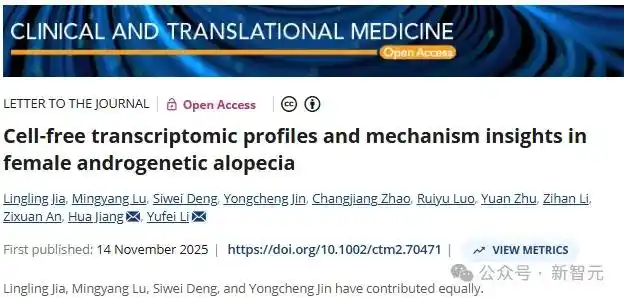
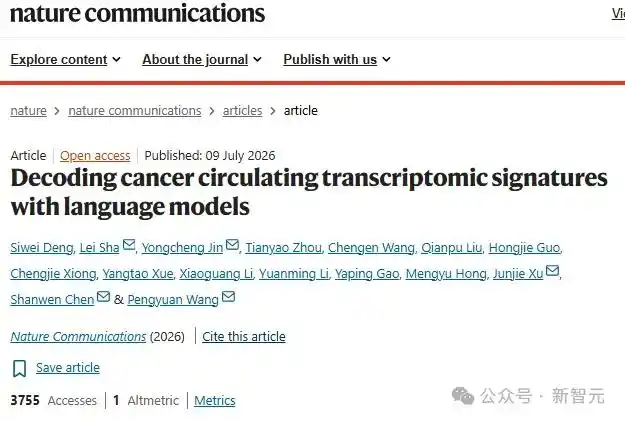
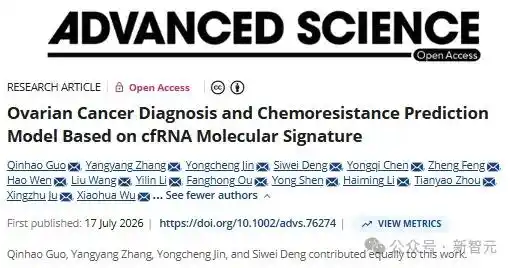
Baru-baru ini, GeneLLM, model besar multi-omics vertikal ilmu kehidupan yang dikembangkan secara independen oleh Jindu Shengke (didirikan oleh 4 lulusan Oxford yang pulang ke China), secara berturut-turut dipublikasikan di jurnal akademik top internasional—"Nature Communications" dan "Advanced Science".

Sebagai model besar multi-omics pertama di dunia yang dilatih pra secara langsung menggunakan data mentah omics, GeneLLM adalah model penting lainnya setelah AlphaFold milik Google dan EVO 2 dari Stanford University, mengisi kekosongan model dasar ilmu kehidupan China, layak disebut DeepSeek versi ilmu kehidupan China, memungkinkan AI mulai memahami berbagai 'bahasa' dan seluruh 'sistem' kehidupan.
Seperti Memprediksi Token Berikutnya, Memprediksi Informasi Kehidupan Berikutnya

Identifikasi penyakit hanyalah salah satu skenario penerapan GeneLLM, apa yang benar-benar ingin dilakukan Jindu Shengke adalah menciptakan "Claude Code" di bidang ilmu kehidupan.

Inti dari model bahasa besar seperti ChatGPT, Claude, DeepSeek, adalah prediksi token berikutnya.

Pemikiran GeneLLM serupa, tetapi yang diprediksinya bukanlah kata, melainkan informasi kehidupan.

Empat basa dalam urutan RNA—adenin (A), urasil (U), guanin (G), sitosin (C)—menjadi Token dasar bagi GeneLLM untuk memahami bahasa kehidupan.

Analisis bioinformatika tradisional biasanya bergantung pada anotasi gen, penyelarasan urutan, dan label yang ditentukan secara manual. Meskipun metode ini akurat, namun akan membatasi cakupan kognitif model lebih awal, dan juga mungkin kehilangan banyak sinyal biologis yang tidak diketahui yang tersembunyi dalam data mentah.

GeneLLM mengambil pendekatan berbeda, belajar secara langsung dari data sekuensing mentah yang belum diolah.

Model ini menggunakan data mentah multi-omics seperti data transkriptomik (RNA-seq), proteomik, metabolomik, dll. sebagai data pelatihan, memungkinkan model menemukan pola terkait penyakit secara mandiri.

Saat ini, GeneLLM telah menyelesaikan pelatihan pra-model dengan 1,5 miliar parameter dan 3,5 triliun urutan basa, versi XLarge mencapai pelatihan pra-model 30 miliar parameter, terus memperluas hambatan teknologi.

Sebagai model besar multi-omics pertama di dunia yang dilatih pra berdasarkan data sekuensing mentah, GeneLLM mencakup dua tahap utama:

(1) Pelatihan Pra Tanpa Pengawasan dan Penambangan Prototipe

(2) Penyempurnaan Penyakit Tingkat Pasien (Disease Tuning)

Pertama-tama, GeneLLM perlu menyelesaikan satu masalah:

Bagaimana mengubah data kehidupan yang kompleks menjadi bahasa yang dapat dipahami AI?

Dalam pemrosesan bahasa alami, algoritma BPE memotong kalimat menjadi Token; sedangkan GeneLLM memotong fragmen sekuensing RNA dengan panjang sekitar 150 bp menjadi Token kehidupan melalui jendela geser (7-mer) yang terdiri dari 7 basa.

Selanjutnya, model menggunakan arsitektur Transformer, tanpa anotasi gen dan label buatan manusia, untuk langsung memprediksi basa berikutnya.

Ini berarti AI tidak terlebih dahulu melihat "kamus" yang disusun manusia, tetapi belajar langsung dari sinyal mentah kehidupan.

Dalam proses pelatihan, GeneLLM memproses puluhan triliun RNA reads, dilatih pada kluster ratusan kartu GPU NVIDIA A100.

Hingga saat ini, kemampuan generalisasi dan lainnya dari GeneLLM mulai "muncul".

Sebagai terobosan inovasi besar di bidang ilmu kehidupan, model ilmu kehidupan domestik ini dapat diterapkan dalam berbagai bidang seperti pengembangan obat baru, pengobatan presisi, biologi sintetis, pemantauan lingkungan, mikroba dan pertanian biologis, desain protein dan molekul, dll., merupakan model besar yang jarang diimplementasikan di skenario nyata secara global.
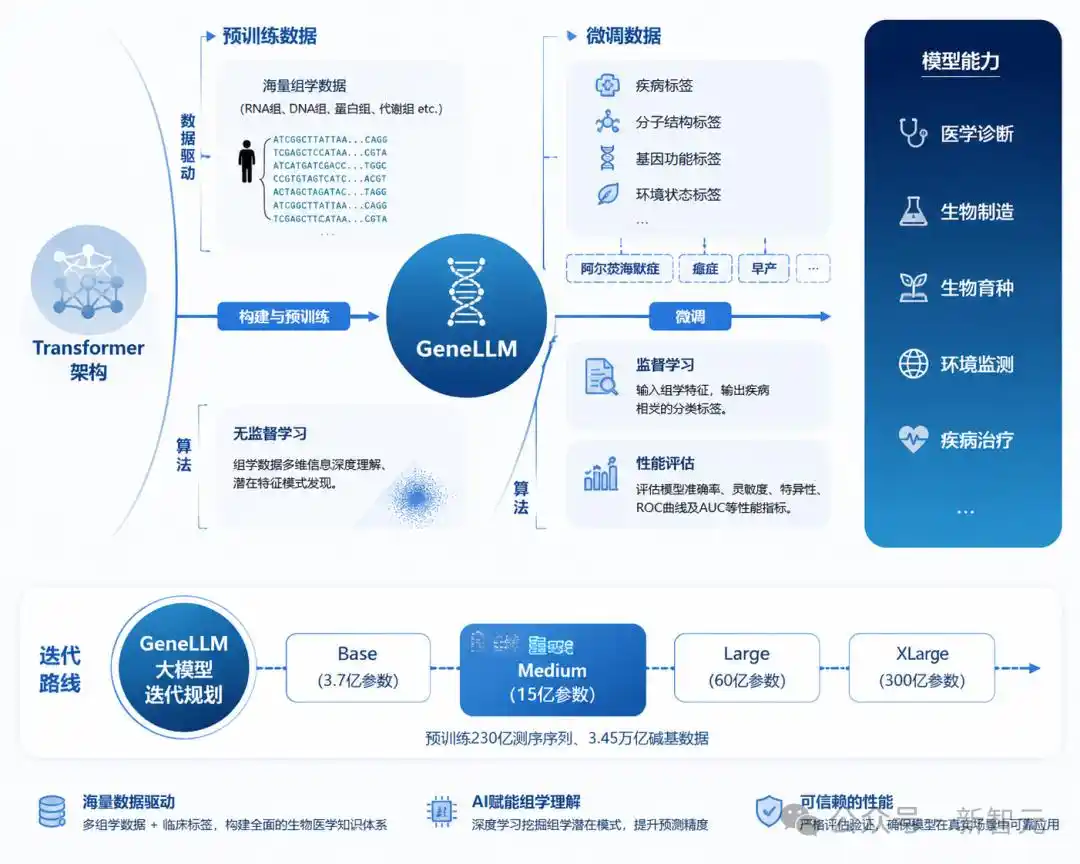
Setelah kita memeriksa inovasi mendasar GeneLLM dalam "data, arsitektur, pelatihan", barulah kita dapat benar-benar memahami: mengapa ia mewakili "DeepSeek versi biologi" China.

Silicon Valley menumpuk puluhan ribu H100 untuk parameter triliunan, DeepSeek meningkatkan efisiensi komputasi dengan inovasi algoritma, GeneLLM juga menggunakan sedikit kekuatan untuk menggerakkan data ilmu kehidupan miliaran.

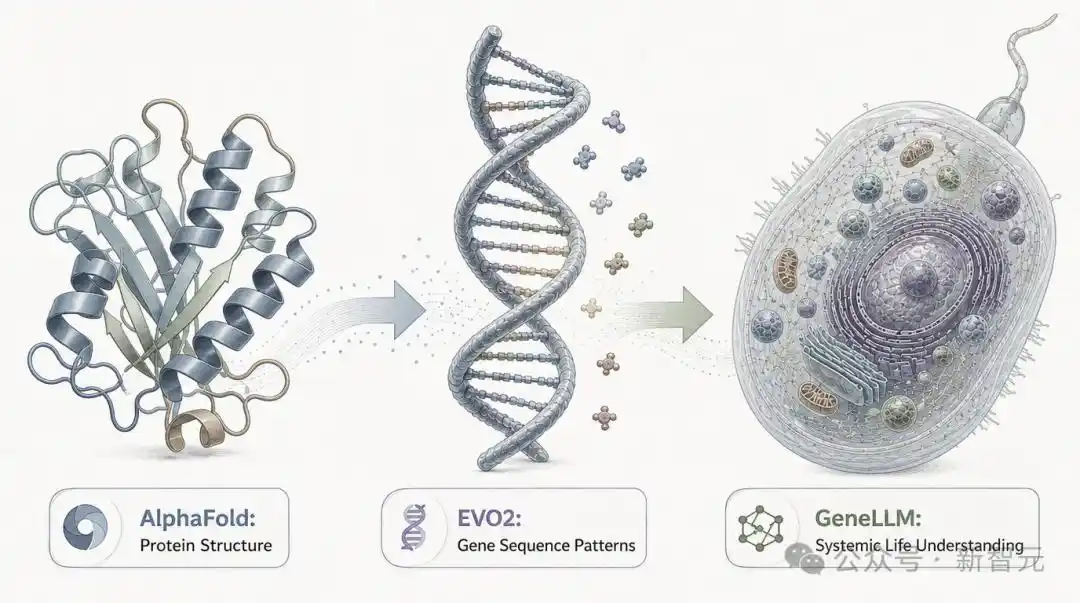
Jika dikatakan AlphaFold membuat AI pertama kali melihat "struktur" kehidupan, EVO2 membuat AI mulai memahami "kode" kehidupan, maka GeneLLM mencoba memahami "sistem" kehidupan lebih lanjut.
Yang lebih hebat adalah efisiensinya. Metode tradisional bergantung pada sekuensing dalam 6Gb, biaya tinggi, sulit diimplementasikan. GeneLLM pada kedalaman sangat dangkal 1Gb (biaya berkurang 83%) tetap mempertahankan AUC > 0.8.

Ini berarti benar-benar berharap dapat mewujudkan pengobatan presisi yang terjangkau.

Sebuah paradigma penelitian baru mulai muncul: biarkan AI belajar dari data kehidupan, membawa ilmu kehidupan memasuki tahap baru yang dapat diprediksi, dapat dihitung, dan dapat dieksplorasi secara terukur.

Bukan Hanya Model, Tetapi Juga Infrastruktur Cerdas "Kilometer Terakhir"

Namun tata letak Jindu Shengke tidak hanya pada model dasar.

Dengan model besar multi-omics GeneLLM sebagai landasan kognisi kehidupan, Jindu Shengke lebih lanjut membangun sistem eksekusi yang menghubungkan kecerdasan AI dengan dunia fisik, melalui lapisan eksekusi eksperimen cerdas Harness dan lingkaran data DBTL (Design-Build-Test-Learn), mencapai AI for Science yang lengkap dari pemahaman hukum kehidupan, generasi hipotesis ilmiah, hingga verifikasi eksperimen otomatis dan optimalisasi iterasi berkelanjutan.

Seperti yang dikatakan mantan Wakil Presiden OpenAI, kepala pelatihan selanjutnya Liam Fedus, LLM saat ini telah menghabiskan teks dan kode terbatas di internet, kemajuan besar penemuan ilmiah selanjutnya harus bergantung pada iterasi eksperimen.
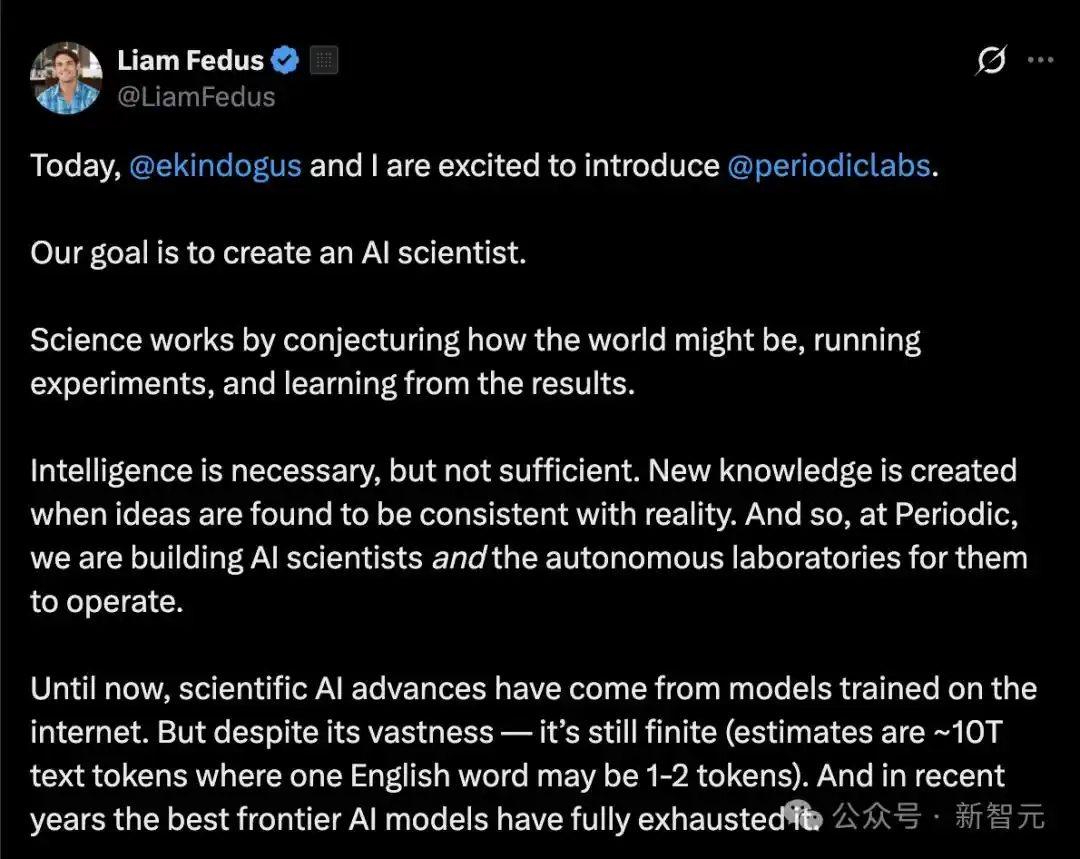
Artinya, tidak bisa hanya mengandalkan membaca konten yang telah ditulis manusia untuk menemukan pengetahuan baru, AI harus melakukan eksperimen sendiri.

Tapi masalahnya muncul—

Layanan internet secara alami memiliki API, informasi jaringan secara alami digital, tetapi peralatan penelitian berasal dari produsen yang berbeda, protokol berbeda-beda, kompleks dan mahal, tidak ada yang dapat meruntuhkan dan membangun kembali dalam beberapa bulan.

Laboratorium hari ini, dirancang khusus untuk manusia: panel instrumen, gerakan pipet, status sampel, penilaian di tempat, sebagian besar tidak menjadi sinyal yang dapat dipahami mesin.

AI masuk ke laboratorium, saat ini bukan hanya masalah kemampuan model, tetapi juga memerlukan infrastruktur baru.

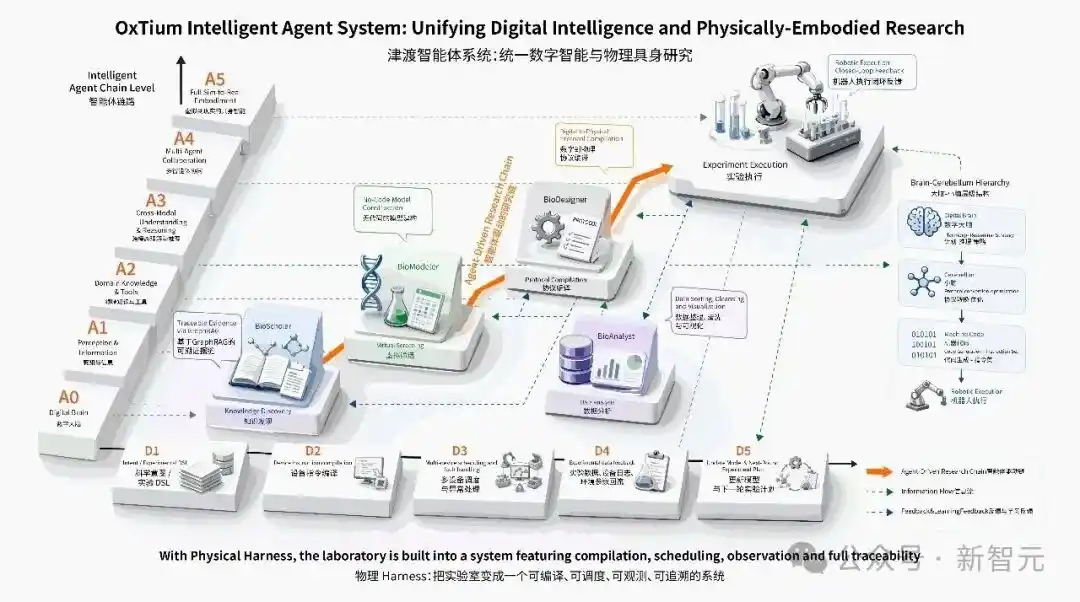
Oleh karena itu, AI masuk ke laboratorium, saat ini bukan hanya masalah kemampuan model, tetapi juga memerlukan Harness fisik: mengubah laboratorium menjadi sistem yang dapat dikompilasi, dapat dijadwalkan, dapat diamati, dapat dilacak.

Inilah kilometer terakhir yang sebenarnya dari AI4S.

BioFord Harness, Biarkan Laboratorium Mulai "Bergerak Sendiri"

Untuk itu, Jindu mengembangkan sistem bernama BioFord Harness.

Ini adalah infrastruktur yang menghubungkan AI dan laboratorium fisik.

Mereka tidak membuat lengan robot meniru tangan manusia, tetapi mengubah laboratorium menjadi sistem yang dapat dikompilasi, dapat dijadwalkan, dapat diamati, dapat dilacak.

Dalam proses ini, Harness fisik setidaknya harus menyelesaikan tiga hal:

1. Mengkompilasi maksud ilmiah atau DSL eksperimen menjadi instruksi yang dapat dieksekusi oleh perangkat yang berbeda;

2. Menyelesaikan penjadwalan, manajemen kendala sumber daya dan keamanan di antara banyak perangkat, dan menangani pengecualian;

3. Membuat hasil eksperimen, log perangkat, dan parameter lingkungan mengalir kembali, menjadi input untuk model dan desain eksperimen berikutnya.

Masalah ilmiah → Pemahaman AI → Rencana eksperimen → Penjadwalan perangkat → Eksekusi → Aliran balik data → Optimalisasi model → Putaran berikutnya.

Roda terbang data eksperimen ilmiah, dimulai seperti ini.
Lima Agen Cerdas, Mengubah Alur Kerja Penelitian Menjadi "Lini Produksi"

Platform penelitian kecerdasan berwujud BioFord Agent, di bawahnya terhubung ke lapisan fisik laboratorium, di atasnya menanggung lapisan kognitif ilmuwan, di tengah menggunakan AI fisik untuk menghubungkan penalaran dan eksekusi.

Di lapisan kognitif, BioFord Agent memiliki lima agen cerdas yang membentuk jaringan kolaboratif, menghubungkan seluruh alur penelitian ilmu kehidupan, dapat meningkatkan efisiensi penelitian beberapa kali lipat.

Agen Pencarian Literatur

Agen Desain Eksperimen

Agen Ilmiah

Agen Penjadwalan Eksperimen

Agen Analisis Data

Sebagai contoh, agen pencarian literatur dapat dengan cepat membantu Anda mencari dan membaca literatur dalam jumlah besar, menyelesaikan tinjauan literatur dan membantu mengajukan hipotesis.
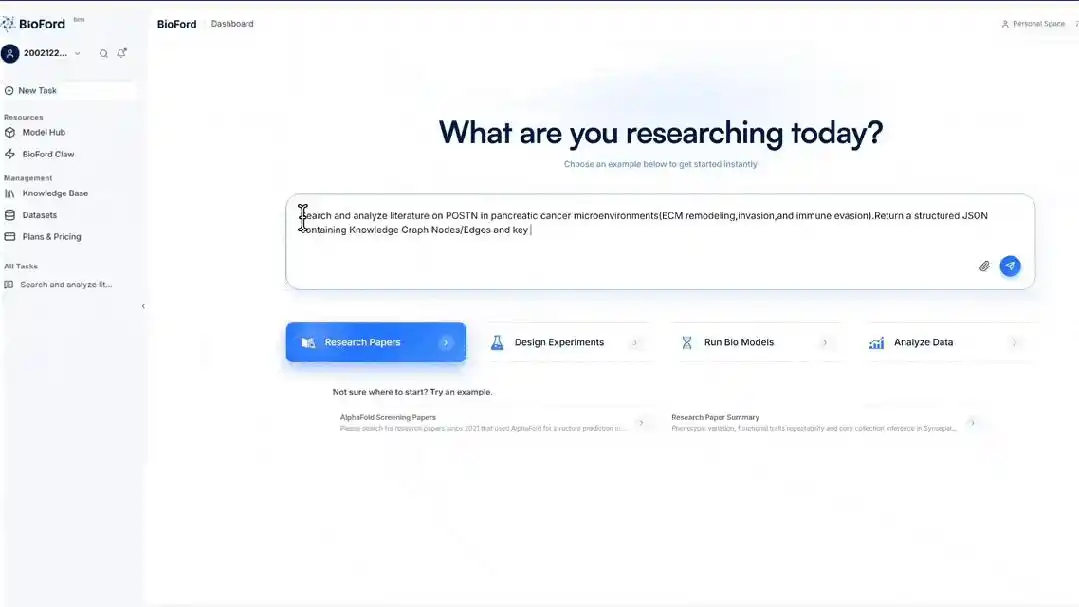
Agen desain eksperimen memungkinkan tim penelitian memperpendek siklus desain eksperimen yang sebelumnya berbulan-bulan menjadi satu minggu.

Sedangkan agen penjadwalan eksperimen yang diluncurkan oleh Jindu Shengke, mengandalkan lapisan abstraksi instrumen universal (Universal Instrument Abstraction Layer), menghancurkan hambatan protokol antara berbagai jenis perangkat heterogen.

Baik itu mesin PCR, pembaca mikroplat (plate reader), flow cytometer, atau stasiun kerja pipet otomatis, semuanya dapat dikelola secara terpadu dan dijadwalkan secara terpadu. Sistem dilengkapi dengan algoritma penjadwalan dinamis, dapat secara otomatis menjadwalkan batch, menghindari konflik real-time, dan mencatat parameter eksperimen secara keseluruhan, membentuk rantai audit yang dapat dilacak.
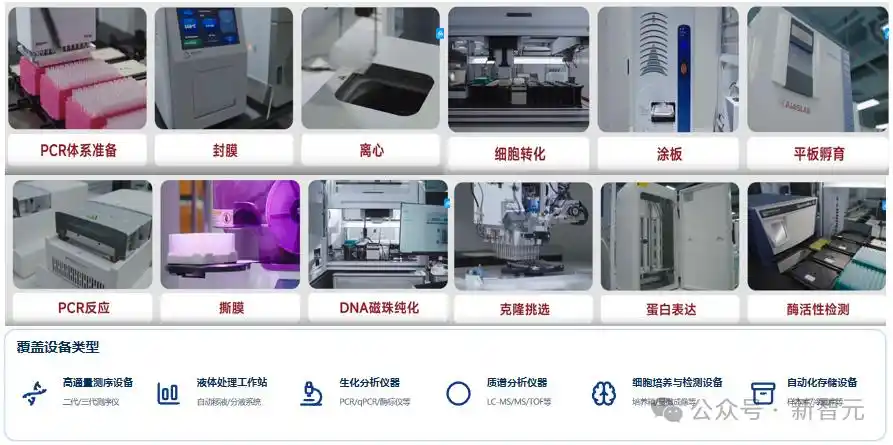
Ini berarti, AI tidak lagi berhenti pada tahap "memberikan saran", tetapi benar-benar masuk ke laboratorium, mengoperasikan perangkat, melaksanakan tugas, menjadi "asisten penelitian" yang dapat dipercaya.

Data Kegagalan, Mungkin Lebih Berharga Daripada Data Keberhasilan

Nilai yang lebih dalam yang diselesaikan sistem ini adalah: membuat setiap eksperimen—baik yang berhasil maupun gagal—menjadi data yang dapat dicerna oleh sistem.

Di laboratorium tradisional, satu catatan kegagalan mungkin hanya satu baris "hasil tidak sesuai harapan", pengalaman ada di kepala orang, jika orang pergi, pengalaman juga hilang.

Dalam sistem BioFord, setiap kegagalan adalah data pelatihan yang berharga—logika pemilihan parameter, catatan kondisi lingkungan, bukti jalur yang salah... semuanya mengendap, menjadi bagian dari "pengalaman" sistem.

Kali berikutnya, AI tahu: jalur ini tidak bisa dilalui.

Yang menarik adalah, di lintasan ini, yang menang bukan yang kekuatan komputasinya terkuat, juga bukan yang modelnya terbesar.

Kekuatan komputasi bisa dibeli, tetapi data penelitian tidak bisa dibeli.

Pendiri & CEO Jindu Shengke, Jin Yongcheng, mengatakan: "Dalam proses pengembangan, kami secara bertahap menemukan bahwa AI for BioScience bukan sekadar menumpuk model, menumpuk data. Bagi orang yang melakukan eksperimen, yang akhirnya harus diselesaikan tetap adalah kebingungan setelah menghitung tidak bisa melakukan, setelah melakukan tidak benar."

Inilah parit pertahanan yang paling penting dan paling sulit untuk direplikasi di lintasan AI4S.

Empat Orang Oxford, Salah Satunya Senior Seangkatan Luo Fuli

Tahun 2022, saat Jin Yongcheng mendapatkan gelar doktor teknik biologi dari University of Oxford, dia menghadapi sebuah pilihan.

Pembimbingnya adalah anggota Royal Society Inggris, pendiri raksasa sekuensing generasi ketiga perusahaan publik Inggris Oxford Nanopore, Hagan Bayley, laboratorium memiliki tradisi "implementasi hasil" yang mendalam. Tinggal di Inggris adalah jalan yang jelas dan mulus.

Namun dia memilih jalan lain—membawa satu "teknologi prototipe" dari laboratorium ke dalam koper, pulang ke China. Yang ikut bersamanya, ada tiga alumni Oxford: doktor biologi Deng Siwei, peneliti asosiasi fakultas ilmu komputer Sha Lei (doktor ilmu komputer Universitas Peking, senior seangkatan kepala model besar Xiaomi Luo Fuli), dan Zhou Tianyao yang pandai mengimplementasikan produk. Keempat orang memiliki latar belakang pengetahuan terkait seperti teknik biologi, kecerdasan buatan, biologi komputasi, operasi bisnis, tidak ada yang kurang. Mereka pernah membentuk tim untuk melaksanakan proyek penelitian bersama, mencapai prediksi dan deteksi penyakit dengan menggabungkan AI dan teknologi transkriptomik. Keempat orang seperti potongan puzzle yang saling melengkapi, dapat menyelesaikan penelitian disiplin ilmu yang sangat lintas.

Nama perusahaan "Jindu Shengke", "Jin" diambil dari Oxford, melambangkan mereka memulai dari laboratorium terkemuka Oxford dan puncak akademik lainnya, "Du" bermaksud menyeberangkan orang, itulah tujuan yang mereka yakini harus dicapai oleh AI for Science.

Saat ini, platform penelitian AI fisik BioFord Agent Jindu Shengke telah diimplementasikan di beberapa universitas terkenal di China, dengan hasil yang signifikan, memperpendek siklus penelitian dari sebelumnya beberapa bulan menjadi satu minggu.

Angin Mulai Berhembus: 4 Putaran Pendanaan dalam 1 Tahun, Panggung "Sangat Menarik" Modal

Namun, berjalan di jalan yang "belum pernah ada sebelumnya", pasti disertai kesendirian.

Awal merintis, kesulitan bertumpuk. Saat itu kewirausahaan AI sedang marak, tetapi percobaan "AI+" di bidang ilmu kehidupan sangat sedikit. "Yang paham AI belum tentu paham ilmu kehidupan, yang paham ilmu kehidupan sebagian besar tidak paham AI."

Jin Yongcheng mengakui: "Investor pernah tidak bisa memahami apa yang kami lakukan."

Tim memilih jalan "paling sulit": memulai dari model dasar biologi, perusahaan yang melakukan arah ini secara global dapat dihitung dengan jari.

Tahun 2025, perubahan terjadi.

Saat itu, Dewan Negara mengeluarkan "Opini tentang Implementasi Mendalam Aksi 'AI+'", AI for Science termasuk di dalamnya, lintasan mulai berhembus angin.

Jindu Shengke menciptakan prestasi "menyelesaikan 4 putaran pendanaan dalam satu tahun". Garis waktu pendanaan utama perusahaan layak menjadi tolok ukur industri.

Putaran Angel+: Dipimpin oleh Sequoia Capital China Seed Fund;

Putaran Pre-A+: Dipimpin oleh investasi puluhan juta yuan dari Chuangdongfang Investment;

Putaran Pre-A+: Dipimpin oleh investasi puluhan juta yuan dari Nanshan Zhanxintou;

Putaran A: Dipimpin oleh investasi hampir 100 juta yuan dari Gaotejia Investment.

Partner Eksekutif Gaotejia Investment, Teng Yuhang, mengatakan: "Jindu Shengke mengubah penelitian dasar ilmu kehidupan menjadi infrastruktur 'kekuatan komputasi + eksperimen' yang dapat dilanggan, dapat diperluas."

Dan tujuan Jin Yongcheng lebih jauh: "Kami tidak puas hanya menjual perangkat lunak, ingin membangun sistem operasi cerdas di bidang ilmu kehidupan. Seperti Intel yang mendefinisikan kekuatan komputasi di era PC, kami berharap mendefinisikan paradigma penelitian baru ilmu kehidupan di era AI."

Dari laboratorium Oxford ke Shenzhen, dari tidak dipahami hingga mendapatkan investasi besar dari modal garis depan, kisah empat orang Oxford, bukan hanya legenda kewirausahaan, tetapi juga pertanyaan jiwa tentang "apa yang bisa kami lakukan untuk manusia".

Saat AI belajar "begadang" melakukan penelitian sendiri, penemuan ilmiah mungkin tidak lagi bergantung pada inspirasi kebetulan dari jenius, tetapi menjadi keharusan yang dapat diharapkan. Jalan ini, mereka baru saja memulainya.

Peta Industri: Jindu Mengambil Jalan AI Fisik Ringan

Dalam peta AI for BioScience yang lebih besar, Jindu tidak sendirian, tetapi titik masuknya sangat berbeda.

Kategori pertama, adalah ilmuwan AI di sisi digital.

Biomni yang diinkubasi Stanford (telah dikomersialkan menjadi Phylo) memiliki lebih dari 150 alat profesional, dapat secara otomatis melakukan tinjauan literatur, generasi hipotesis, dan analisis bioinformatika.

FutureHouse yang didukung Eric Schmidt, berkomitmen untuk membangun ilmuwan AI yang dapat menghasilkan hipotesis secara mandiri, menulis makalah.

Namun, meskipun kuat, mereka masih terbatas di dunia digital.

Kategori kedua, adalah jalur mandiri penuh (full-stack autonomous).

Jingtai Technology menggunakan "AI + robot" untuk mengerahkan lebih dari 300 stasiun kerja secara global.

Lila Sciences yang diinkubasi Flagship Pioneering, dengan pendanaan 550 juta dolar AS, mencoba membuat AI sepenuhnya mengambil alih desain, eksekusi, dan desain ulang eksperimen, tujuannya adalah "kecerdasan super ilmiah".

Tetapi semua ini terlalu mahal.

Kategori ketiga, adalah jalur pipeline ujung ke ujung (end-to-end).

Insilico Medicine secara langsung mendorong AI ke pipeline obat inovatif milik sendiri, obat pertama AI telah memasuki uji klinis fase III, tetapi mereka adalah "pembuat mobil" bukan "pembuat jalan".

Sedangkan pilihan Jindu Shengke adalah: fokus membangun Harness fisik, menjadi infrastruktur "kilometer terakhir" antara model dan sistem eksperimen fisik.

Tidak bersaing di landasan dasar (foundation model), tidak melakukan pipeline ujung ke ujung, tidak menjadi ilmuwan AI dunia digital murni. Hanya melakukan kilometer terakhir itu, tanpa diragukan lagi adalah pendekatan yang lebih ringan.

Jin Yongcheng menyampaikan penilaian ini dengan sangat jelas: "Garis pemisah sebenarnya dari AI for Science, bukan seberapa mirip jawaban model dengan ilmuwan, tetapi apakah laboratorium dapat mulai seperti sistem yang terus belajar."

Dan, di bidang AI for Science global, Jindu tidak sekadar "hanya melakukan kilometer terakhir".

Lebih tepatnya, ia menggunakan kilometer terakhir sebagai pintu masuk, memperebutkan hak pengaturan (orchestration) seluruh alur kerja penelitian.

Dibandingkan dengan ilmuwan AI digital murni, ia dapat menyentuh dunia fisik; dibandingkan dengan membangun pabrik ilmiah aset berat sendiri, ia memiliki kesempatan untuk mengambil alih laboratorium yang sudah dimiliki klien; dibandingkan dengan perusahaan farmasi AI ujung ke ujung, ia tidak perlu mempertaruhkan nasib pada satu pipeline klinis tertentu.
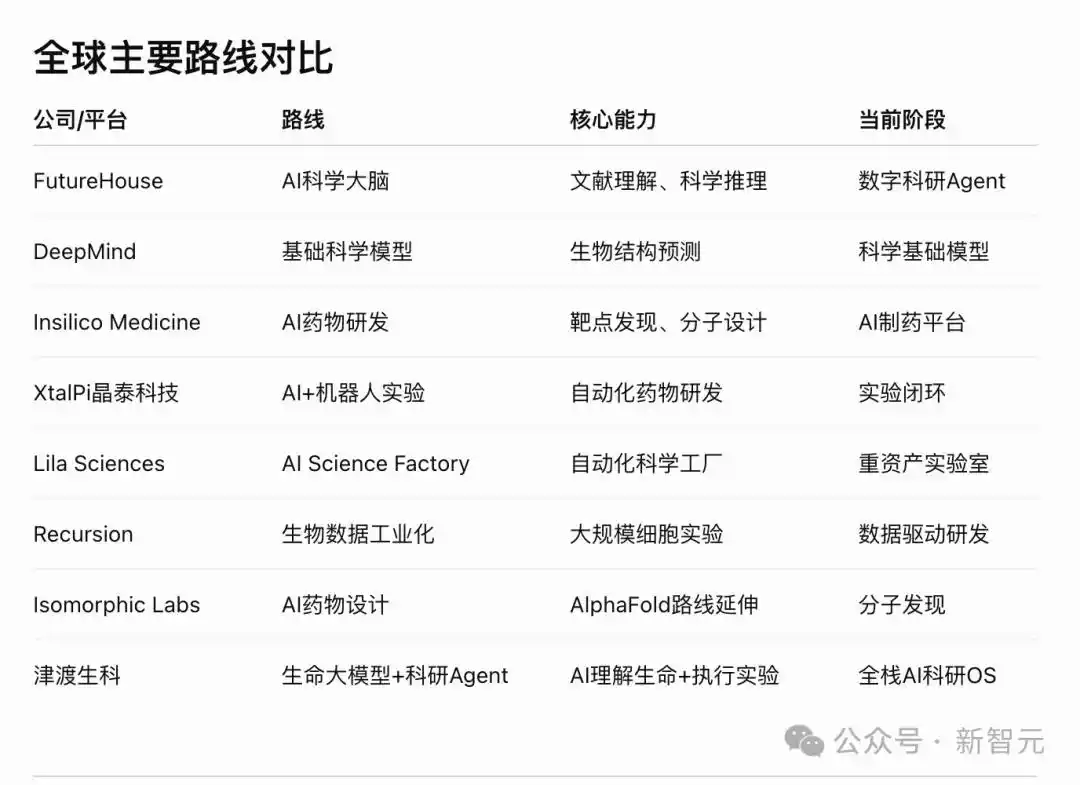
Parit pertahanan sebenarnya, bukanlah jumlah parameter, tetapi jejak eksperimen, antarmuka perangkat, pengalaman kegagalan, dan jaringan eksekusi lintas laboratorium yang terus terakumulasi.

Seperti yang dikatakan Jin Yongcheng, ribuan jalur sinyal dalam tubuh biologis dan mekanisme reaksi yang penuh dengan ketidakpastian sangat memikat. "Seberapa kaya biologi, seberapa indah prospek AI for Science."

Dengan kecerdasan AI menjelajahi misteri kehidupan, lautan bintang sekelompok lulusan Oxford ini, baru saja membuka tirai.

Artikel ini berasal dari akun WeChat "Xin Zhi Yuan", penulis: Xin Zhi Yuan; editor: Aeneas KingHZ


Trending Cryptos

Related Questions

QApa itu GeneLLM dan mengapa disebut sebagai 'DeepSeek versi biologi' Tiongkok?

AGeneLLM adalah model dasar multi-omics untuk ilmu kehidupan yang dikembangkan oleh Jindu Bioscience. Disebut sebagai 'DeepSeek versi biologi' Tiongkok karena merupakan model multi-omics pertama di dunia yang dilatih menggunakan data omik mentah, mengisi kekosongan model dasar ilmu kehidupan di Tiongkok. Mirip dengan cara DeepSeek memahami bahasa manusia, GeneLLM memahami 'bahasa' kehidupan seperti urutan RNA.

QBagaimana cara kerja GeneLLM dalam menganalisis data biologi?

AGeneLLM bekerja dengan mengubah data biologis kompleks menjadi 'token' yang dapat dipahami AI. Ia memotong fragmen RNA berukuran sekitar 150 bp menjadi token kehidupan menggunakan jendela geser 7-mer (7 basa). Kemudian, menggunakan arsitektur Transformer, model ini memprediksi basa berikutnya langsung dari sinyal mentah kehidupan, tanpa bergantung pada anotasi gen atau label buatan manusia, sehingga belajar langsung dari data asli.

QApa itu BioFord Harness dan bagaimana perannya dalam platform penelitian AI for Science dari Jindu?

ABioFord Harness adalah infrastruktur yang menghubungkan AI dengan laboratorium fisik. Sistem ini mengubah laboratorium menjadi sistem yang dapat dikompilasi, dijadwalkan, diamati, dan dilacak. Perannya adalah menjembatani kesenjangan antara pemahaman AI dan eksekusi fisik dalam penelitian, dengan mengkompilasi niat ilmiah menjadi instruksi untuk peralatan, mengelola penjadwalan multi-perangkat, dan memastikan data hasil eksperimen mengalir kembali untuk mengoptimasi model.

QSiapa pendiri Jindu Bioscience dan latar belakang mereka?

AJindu Bioscience didirikan oleh empat alumni Universitas Oxford: Jin Yongcheng (Ph.D. Teknik Biologi), Deng Siwei (Ph.D. Biologi), Sha Lei (Peneliti Asosiasi Ilmu Komputer, juga senior seangkatan Luo Fuli dari Xiaomi), dan Zhou Tianyao (ahli komersialisasi produk). Keempatnya memiliki latar belakang pelengkap dalam teknik biologi, kecerdasan buatan, biologi komputasi, dan operasi bisnis.

QApa strategi dan posisi unik Jindu Bioscience di peta industri AI for BioScience?

AStrategi Jindu Bioscience adalah fokus membangun 'infrastruktur kilometer terakhir' yang menghubungkan model AI dengan sistem eksperimen fisik, alih-alih bersaing di model dasar, pipa end-to-end, atau menjadi ilmuwan AI dunia digital murni. Posisi uniknya adalah menawarkan pendekatan yang lebih ringan dengan membangun BioFord Harness untuk mengatur alur kerja penelitian, menyentuh dunia fisik, dan berpotensi mengambil alih laboratorium yang sudah ada, berbeda dengan perusahaan yang membangun pabrik sains berat atau mempertaruhkan nasib pada pipa klinis tertentu.

Related Reads

Robotic GPT-3 Moment Shakes Silicon Valley: Zero Lines of Code, Learns Instantly, with Investments from Jensen Huang and Fei-Fei Li

Generalist AI's newly released robot foundation model GEN-1.5 is being hailed as the "GPT-3 moment" for embodied AI. The model demonstrates remarkable one-shot and few-shot learning capabilities in physical manipulation tasks. By watching a single 3-12 second demonstration video (physical prompting) without any training or code, the robot can attempt the task with a 59% average success rate across 10 tasks. With just 5 minutes of demonstration data and minimal fine-tuning (10 gradient steps), the success rate jumps to 83%. The most significant breakthrough is the emergence of spontaneous, improvisational problem-solving abilities not present in the training data. For instance, after learning to sweep blocks with a brush, the robot can adapt to use a banana similarly or switch to a completely new "scoop-and-pour" strategy when given a dustpan. Other emergent behaviors include removing obstacles, correcting errors, and spontaneously sorting objects. These capabilities stem from over 8 months of large-scale pre-training on physical interaction data, suggesting the existence of a Scaling Law for embodied intelligence—where model generalization improves with more data and training time. This approach drastically reduces the cost and expertise needed to teach robots new skills, potentially democratizing robot programming. The release coincides with a surge in the humanoid robotics sector, marked by events like the World Robot Conference and significant investments. While the demonstrated tasks are still relatively simple, the scaling trend and emergent behaviors point toward a future where general-purpose robot "brains" could be easily adapted to various hardware "bodies," reshaping the industry's competitive landscape.

marsbit1h ago

Robotic GPT-3 Moment Shakes Silicon Valley: Zero Lines of Code, Learns Instantly, with Investments from Jensen Huang and Fei-Fei Li

marsbit1h ago

Trading

Spot

Hot Articles

What is SONIC

Sonic: Pioneering the Future of Gaming in Web3 Introduction to Sonic In the ever-evolving landscape of Web3, the gaming industry stands out as one of the most dynamic and promising sectors. At the forefront of this revolution is Sonic, a project designed to amplify the gaming ecosystem on the Solana blockchain. Leveraging cutting-edge technology, Sonic aims to deliver an unparalleled gaming experience by efficiently processing millions of requests per second, ensuring that players enjoy seamless gameplay while maintaining low transaction costs. This article delves into the intricate details of Sonic, exploring its creators, funding sources, operational mechanics, and the timeline of significant events that have shaped its journey. What is Sonic? Sonic is an innovative layer-2 network that operates atop the Solana blockchain, specifically tailored to enhance the existing Solana gaming ecosystem. It accomplishes this through a customised, VM-agnostic game engine paired with a HyperGrid interpreter, facilitating sovereign game economies that roll up back to the Solana platform. The primary goals of Sonic include: Enhanced Gaming Experiences: Sonic is committed to offering lightning-fast on-chain gameplay, allowing players and developers to engage with games at previously unattainable speeds. Atomic Interoperability: This feature enables transactions to be executed within Sonic without the need to redeploy Solana programmes and accounts. This makes the process more efficient and directly benefits from Solana Layer1 services and liquidity. Seamless Deployment: Sonic allows developers to write for Ethereum Virtual Machine (EVM) based systems and execute them on Solana’s SVM infrastructure. This interoperability is crucial for attracting a broader range of dApps and decentralised applications to the platform. Support for Developers: By offering native composable gaming primitives and extensible data types - dining within the Entity-Component-System (ECS) framework - game creators can craft intricate business logic with ease. Overall, Sonic's unique approach not only caters to players but also provides an accessible and low-cost environment for developers to innovate and thrive. Creator of Sonic The information regarding the creator of Sonic is somewhat ambiguous. However, it is known that Sonic's SVM is owned by the company Mirror World. The absence of detailed information about the individuals behind Sonic reflects a common trend in several Web3 projects, where collective efforts and partnerships often overshadow individual contributions. Investors of Sonic Sonic has garnered considerable attention and support from various investors within the crypto and gaming sectors. Notably, the project raised an impressive $12 million during its Series A funding round. The round was led by BITKRAFT Ventures, with other notable investors including Galaxy, Okx Ventures, Interactive, Big Brain Holdings, and Mirana. This financial backing signifies the confidence that investment foundations have in Sonic’s potential to revolutionise the Web3 gaming landscape, further validating its innovative approaches and technologies. How Does Sonic Work? Sonic utilises the HyperGrid framework, a sophisticated parallel processing mechanism that enhances its scalability and customisability. Here are the core features that set Sonic apart: Lightning Speed at Low Costs: Sonic offers one of the fastest on-chain gaming experiences compared to other Layer-1 solutions, powered by the scalability of Solana’s virtual machine (SVM). Atomic Interoperability: Sonic enables transaction execution without redeployment of Solana programmes and accounts, effectively streamlining the interaction between users and the blockchain. EVM Compatibility: Developers can effortlessly migrate decentralised applications from EVM chains to the Solana environment using Sonic’s HyperGrid interpreter, increasing the accessibility and integration of various dApps. Ecosystem Support for Developers: By exposing native composable gaming primitives, Sonic facilitates a sandbox-like environment where developers can experiment and implement business logic, greatly enhancing the overall development experience. Monetisation Infrastructure: Sonic natively supports growth and monetisation efforts, providing frameworks for traffic generation, payments, and settlements, thereby ensuring that gaming projects are not only viable but also sustainable financially. Timeline of Sonic The evolution of Sonic has been marked by several key milestones. Below is a brief timeline highlighting critical events in the project's history: 2022: The Sonic cryptocurrency was officially launched, marking the beginning of its journey in the Web3 gaming arena. 2024: June: Sonic SVM successfully raised $12 million in a Series A funding round. This investment allowed Sonic to further develop its platform and expand its offerings. August: The launch of the Sonic Odyssey testnet provided users with the first opportunity to engage with the platform, offering interactive activities such as collecting rings—a nod to gaming nostalgia. October: SonicX, an innovative crypto game integrated with Solana, made its debut on TikTok, capturing the attention of over 120,000 users within a short span. This integration illustrated Sonic’s commitment to reaching a broader, global audience and showcased the potential of blockchain gaming. Key Points Sonic SVM is a revolutionary layer-2 network on Solana explicitly designed to enhance the GameFi landscape, demonstrating great potential for future development. HyperGrid Framework empowers Sonic by introducing horizontal scaling capabilities, ensuring that the network can handle the demands of Web3 gaming. Integration with Social Platforms: The successful launch of SonicX on TikTok displays Sonic’s strategy to leverage social media platforms to engage users, exponentially increasing the exposure and reach of its projects. Investment Confidence: The substantial funding from BITKRAFT Ventures, among others, emphasizes the robust backing Sonic has, paving the way for its ambitious future. In conclusion, Sonic encapsulates the essence of Web3 gaming innovation, striking a balance between cutting-edge technology, developer-centric tools, and community engagement. As the project continues to evolve, it is poised to redefine the gaming landscape, making it a notable entity for gamers and developers alike. As Sonic moves forward, it will undoubtedly attract greater interest and participation, solidifying its place within the broader narrative of blockchain gaming.

2.4k Total ViewsPublished 2024.04.04Updated 2024.12.03

What is SONIC

What is $S$

Understanding SPERO: A Comprehensive Overview Introduction to SPERO As the landscape of innovation continues to evolve, the emergence of web3 technologies and cryptocurrency projects plays a pivotal role in shaping the digital future. One project that has garnered attention in this dynamic field is SPERO, denoted as SPERO,$$s$. This article aims to gather and present detailed information about SPERO, to help enthusiasts and investors understand its foundations, objectives, and innovations within the web3 and crypto domains. What is SPERO,$$s$? SPERO,$$s$ is a unique project within the crypto space that seeks to leverage the principles of decentralisation and blockchain technology to create an ecosystem that promotes engagement, utility, and financial inclusion. The project is tailored to facilitate peer-to-peer interactions in new ways, providing users with innovative financial solutions and services. At its core, SPERO,$$s$ aims to empower individuals by providing tools and platforms that enhance user experience in the cryptocurrency space. This includes enabling more flexible transaction methods, fostering community-driven initiatives, and creating pathways for financial opportunities through decentralised applications (dApps). The underlying vision of SPERO,$$s$ revolves around inclusiveness, aiming to bridge gaps within traditional finance while harnessing the benefits of blockchain technology. Who is the Creator of SPERO,$$s$? The identity of the creator of SPERO,$$s$ remains somewhat obscure, as there are limited publicly available resources providing detailed background information on its founder(s). This lack of transparency can stem from the project's commitment to decentralisation—an ethos that many web3 projects share, prioritising collective contributions over individual recognition. By centring discussions around the community and its collective goals, SPERO,$$s$ embodies the essence of empowerment without singling out specific individuals. As such, understanding the ethos and mission of SPERO remains more important than identifying a singular creator. Who are the Investors of SPERO,$$s$? SPERO,$$s$ is supported by a diverse array of investors ranging from venture capitalists to angel investors dedicated to fostering innovation in the crypto sector. The focus of these investors generally aligns with SPERO's mission—prioritising projects that promise societal technological advancement, financial inclusivity, and decentralised governance. These investor foundations are typically interested in projects that not only offer innovative products but also contribute positively to the blockchain community and its ecosystems. The backing from these investors reinforces SPERO,$$s$ as a noteworthy contender in the rapidly evolving domain of crypto projects. How Does SPERO,$$s$ Work? SPERO,$$s$ employs a multi-faceted framework that distinguishes it from conventional cryptocurrency projects. Here are some of the key features that underline its uniqueness and innovation: Decentralised Governance: SPERO,$$s$ integrates decentralised governance models, empowering users to participate actively in decision-making processes regarding the project’s future. This approach fosters a sense of ownership and accountability among community members. Token Utility: SPERO,$$s$ utilises its own cryptocurrency token, designed to serve various functions within the ecosystem. These tokens enable transactions, rewards, and the facilitation of services offered on the platform, enhancing overall engagement and utility. Layered Architecture: The technical architecture of SPERO,$$s$ supports modularity and scalability, allowing for seamless integration of additional features and applications as the project evolves. This adaptability is paramount for sustaining relevance in the ever-changing crypto landscape. Community Engagement: The project emphasises community-driven initiatives, employing mechanisms that incentivise collaboration and feedback. By nurturing a strong community, SPERO,$$s$ can better address user needs and adapt to market trends. Focus on Inclusion: By offering low transaction fees and user-friendly interfaces, SPERO,$$s$ aims to attract a diverse user base, including individuals who may not previously have engaged in the crypto space. This commitment to inclusion aligns with its overarching mission of empowerment through accessibility. Timeline of SPERO,$$s$ Understanding a project's history provides crucial insights into its development trajectory and milestones. Below is a suggested timeline mapping significant events in the evolution of SPERO,$$s$: Conceptualisation and Ideation Phase: The initial ideas forming the basis of SPERO,$$s$ were conceived, aligning closely with the principles of decentralisation and community focus within the blockchain industry. Launch of Project Whitepaper: Following the conceptual phase, a comprehensive whitepaper detailing the vision, goals, and technological infrastructure of SPERO,$$s$ was released to garner community interest and feedback. Community Building and Early Engagements: Active outreach efforts were made to build a community of early adopters and potential investors, facilitating discussions around the project’s goals and garnering support. Token Generation Event: SPERO,$$s$ conducted a token generation event (TGE) to distribute its native tokens to early supporters and establish initial liquidity within the ecosystem. Launch of Initial dApp: The first decentralised application (dApp) associated with SPERO,$$s$ went live, allowing users to engage with the platform's core functionalities. Ongoing Development and Partnerships: Continuous updates and enhancements to the project's offerings, including strategic partnerships with other players in the blockchain space, have shaped SPERO,$$s$ into a competitive and evolving player in the crypto market. Conclusion SPERO,$$s$ stands as a testament to the potential of web3 and cryptocurrency to revolutionise financial systems and empower individuals. With a commitment to decentralised governance, community engagement, and innovatively designed functionalities, it paves the way toward a more inclusive financial landscape. As with any investment in the rapidly evolving crypto space, potential investors and users are encouraged to research thoroughly and engage thoughtfully with the ongoing developments within SPERO,$$s$. The project showcases the innovative spirit of the crypto industry, inviting further exploration into its myriad possibilities. While the journey of SPERO,$$s$ is still unfolding, its foundational principles may indeed influence the future of how we interact with technology, finance, and each other in interconnected digital ecosystems.

429 Total ViewsPublished 2024.12.17Updated 2024.12.17

What is $S$

What is AGENT S

Agent S: The Future of Autonomous Interaction in Web3 Introduction In the ever-evolving landscape of Web3 and cryptocurrency, innovations are constantly redefining how individuals interact with digital platforms. One such pioneering project, Agent S, promises to revolutionise human-computer interaction through its open agentic framework. By paving the way for autonomous interactions, Agent S aims to simplify complex tasks, offering transformative applications in artificial intelligence (AI). This detailed exploration will delve into the project's intricacies, its unique features, and the implications for the cryptocurrency domain. What is Agent S? Agent S stands as a groundbreaking open agentic framework, specifically designed to tackle three fundamental challenges in the automation of computer tasks: Acquiring Domain-Specific Knowledge: The framework intelligently learns from various external knowledge sources and internal experiences. This dual approach empowers it to build a rich repository of domain-specific knowledge, enhancing its performance in task execution. Planning Over Long Task Horizons: Agent S employs experience-augmented hierarchical planning, a strategic approach that facilitates efficient breakdown and execution of intricate tasks. This feature significantly enhances its ability to manage multiple subtasks efficiently and effectively. Handling Dynamic, Non-Uniform Interfaces: The project introduces the Agent-Computer Interface (ACI), an innovative solution that enhances the interaction between agents and users. Utilizing Multimodal Large Language Models (MLLMs), Agent S can navigate and manipulate diverse graphical user interfaces seamlessly. Through these pioneering features, Agent S provides a robust framework that addresses the complexities involved in automating human interaction with machines, setting the stage for myriad applications in AI and beyond. Who is the Creator of Agent S? While the concept of Agent S is fundamentally innovative, specific information about its creator remains elusive. The creator is currently unknown, which highlights either the nascent stage of the project or the strategic choice to keep founding members under wraps. Regardless of anonymity, the focus remains on the framework's capabilities and potential. Who are the Investors of Agent S? As Agent S is relatively new in the cryptographic ecosystem, detailed information regarding its investors and financial backers is not explicitly documented. The lack of publicly available insights into the investment foundations or organisations supporting the project raises questions about its funding structure and development roadmap. Understanding the backing is crucial for gauging the project's sustainability and potential market impact. How Does Agent S Work? At the core of Agent S lies cutting-edge technology that enables it to function effectively in diverse settings. Its operational model is built around several key features: Human-like Computer Interaction: The framework offers advanced AI planning, striving to make interactions with computers more intuitive. By mimicking human behaviour in tasks execution, it promises to elevate user experiences. Narrative Memory: Employed to leverage high-level experiences, Agent S utilises narrative memory to keep track of task histories, thereby enhancing its decision-making processes. Episodic Memory: This feature provides users with step-by-step guidance, allowing the framework to offer contextual support as tasks unfold. Support for OpenACI: With the ability to run locally, Agent S allows users to maintain control over their interactions and workflows, aligning with the decentralised ethos of Web3. Easy Integration with External APIs: Its versatility and compatibility with various AI platforms ensure that Agent S can fit seamlessly into existing technological ecosystems, making it an appealing choice for developers and organisations. These functionalities collectively contribute to Agent S's unique position within the crypto space, as it automates complex, multi-step tasks with minimal human intervention. As the project evolves, its potential applications in Web3 could redefine how digital interactions unfold. Timeline of Agent S The development and milestones of Agent S can be encapsulated in a timeline that highlights its significant events: September 27, 2024: The concept of Agent S was launched in a comprehensive research paper titled “An Open Agentic Framework that Uses Computers Like a Human,” showcasing the groundwork for the project. October 10, 2024: The research paper was made publicly available on arXiv, offering an in-depth exploration of the framework and its performance evaluation based on the OSWorld benchmark. October 12, 2024: A video presentation was released, providing a visual insight into the capabilities and features of Agent S, further engaging potential users and investors. These markers in the timeline not only illustrate the progress of Agent S but also indicate its commitment to transparency and community engagement. Key Points About Agent S As the Agent S framework continues to evolve, several key attributes stand out, underscoring its innovative nature and potential: Innovative Framework: Designed to provide an intuitive use of computers akin to human interaction, Agent S brings a novel approach to task automation. Autonomous Interaction: The ability to interact autonomously with computers through GUI signifies a leap towards more intelligent and efficient computing solutions. Complex Task Automation: With its robust methodology, it can automate complex, multi-step tasks, making processes faster and less error-prone. Continuous Improvement: The learning mechanisms enable Agent S to improve from past experiences, continually enhancing its performance and efficacy. Versatility: Its adaptability across different operating environments like OSWorld and WindowsAgentArena ensures that it can serve a broad range of applications. As Agent S positions itself in the Web3 and crypto landscape, its potential to enhance interaction capabilities and automate processes signifies a significant advancement in AI technologies. Through its innovative framework, Agent S exemplifies the future of digital interactions, promising a more seamless and efficient experience for users across various industries. Conclusion Agent S represents a bold leap forward in the marriage of AI and Web3, with the capacity to redefine how we interact with technology. While still in its early stages, the possibilities for its application are vast and compelling. Through its comprehensive framework addressing critical challenges, Agent S aims to bring autonomous interactions to the forefront of the digital experience. As we move deeper into the realms of cryptocurrency and decentralisation, projects like Agent S will undoubtedly play a crucial role in shaping the future of technology and human-computer collaboration.

1.1k Total ViewsPublished 2025.01.14Updated 2025.01.14

What is AGENT S

Discussions

Welcome to the HTX Community. Here, you can stay informed about the latest platform developments and gain access to professional market insights. Users' opinions on the price of S (S) are presented below.

活动图片