El Banco de Italia no ve ventajas sistémicas de los stablecoins en las transferencias

cryptonews.ruPublished on 2026-08-02Last updated on 2026-08-02

Abstract

Un estudio del Banco de Italia concluye que los stablecoins no ofrecen ventajas sistémicas claras en las transferencias internacionales en cuanto a coste y velocidad. El análisis de 10 corredores bilaterales con envíos de 200 USDC revela que los beneficios potenciales se ven erosionados por las comisiones para convertir a fiat y por la eficiencia de las infraestructuras locales de pago. Los costes de las transferencias con stablecoins variaron entre un 0,3% y casi un 9%, siendo a menudo inferiores a la media mundial del 6,65%. Sin embargo, solo en tres de siete rutas fueron más baratas que el servicio Wise. La velocidad dependió de la infraestructura local: menos de 20 minutos con sistemas de pago instantáneo y hasta uno o dos días hábiles sin ellos. Los principales cuellos de botella fueron los procesos de cambio de divisa y la calidad de los sistemas de pago locales, no las comisiones de la blockchain. Los investigadores sugieren que la utilidad de los stablecoins sería mayor si pudieran usarse directamente para pagos sin necesidad de reconversión. También advierten que una regulación excesivamente restrictiva, en lugar de eliminar la demanda, podría dificultar su uso para los clientes minoristas.

Una investigación del Banco de Italia ha revelado que los stablecoins no ofrecen una ventaja sostenible en cuanto a precio y velocidad en las transferencias monetarias. Todas las ventajas se pierden en las comisiones por entrada y salida a fiat y en los procesos de funcionamiento de las infraestructuras de pago locales.

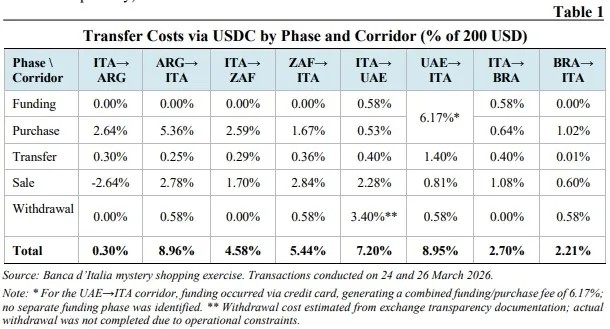
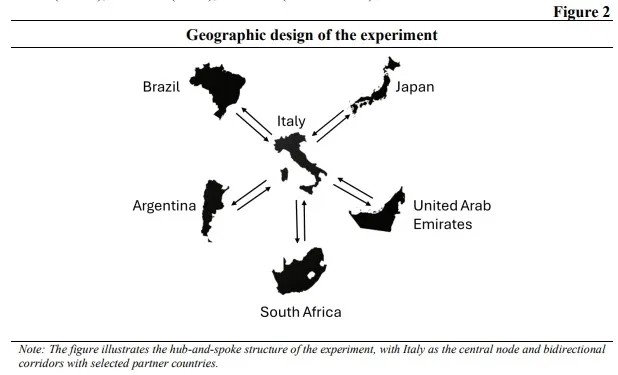
Los autores compararon transferencias de 200 USDC en 10 corredores bilaterales entre Italia y Brasil, Argentina, Japón, Emiratos Árabes Unidos y Sudáfrica. Las métricas fueron el coste total y los plazos de liquidación en comparación con los servicios monetarios estándar.

Fuente: Banco de Italia.

El precio final de las transferencias con stablecoins osciló entre el 0,3% y casi el 9%, dependiendo de la ruta. En los corredores donde operaban sistemas de pago instantáneos, las liquidaciones tomaban menos de 20 minutos. Donde no existía dicha infraestructura, los plazos se extendían a uno o dos días laborables.

Fuente: Banco de Italia.

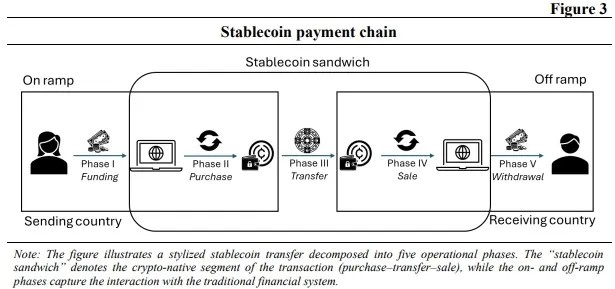
Los investigadores atribuyeron los principales costes y retrasos al intercambio y conversión de divisas, así como a la calidad de la infraestructura local. Las comisiones de la cadena de bloques, según su evaluación, no fueron el factor principal.

Fuente: Banco de Italia.

El coste medio mundial de las remesas, según datos del Banco Mundial, es del 6,65%. En la mayoría de los corredores estudiados, los stablecoins resultaron más baratos que este nivel, pero en comparación con Wise, la ventaja se dio solo en tres de las siete rutas comparables.

Los autores consideran que el efecto sería más notable si los stablecoins pudieran gastarse directamente en bienes y servicios sin necesidad de reconvertirlos a la moneda local.

También señalaron que los regímenes regulatorios prohibitivos no eliminan la demanda de "monedas estables", y que unas normas demasiado estrictas complican el uso de estas herramientas por parte de los clientes minoristas.

Recordemos que en julio, la capitalización bursátil total de los stablecoins se redujo en más de 10.000 millones de dólares respecto al pico de mayo, hasta unos 310.000 millones de dólares. Esta salida fue la mayor caída mensual desde el colapso de Terra en mayo de 2022.

end-content

Trending Cryptos

Related Questions

Q¿Qué concluyó el estudio del Banco de Italia sobre las ventajas de los stablecoins en las transferencias?

AEl estudio del Banco de Italia concluyó que los stablecoins no ofrecen una ventaja sostenida en precio y velocidad en las transferencias de dinero, ya que todas las ventajas potenciales se pierden en las comisiones por conversión a fiat y en los procesos de las infraestructuras de pago locales.

Q¿Cuáles fueron los costos finales de las transferencias con stablecoins en los corredores estudiados?

AEl precio final de las transferencias con stablecoins en los 10 corredores bilaterales estudiados osciló entre el 0.3% y casi el 9%, dependiendo de la ruta de envío.

Q¿Qué factores principales identificaron los investigadores como causantes de los costos y retrasos en las transferencias con stablecoins?

ALos investigadores identificaron que los costos y retrasos clave estaban asociados al intercambio y conversión de divisas, así como a la calidad de la infraestructura local de pagos, no siendo las comisiones de la blockchain el factor principal.

Q¿En cuántos de los siete corredores comparables las transferencias con stablecoins fueron más baratas que las realizadas a través de Wise?

ALas transferencias con stablecoins resultaron más baratas que las realizadas a través de Wise solo en tres de los siete corredores comparables analizados en el estudio.

QSegún los autores del estudio, ¿qué podría hacer que las ventajas de los stablecoins fueran más notables en las transferencias?

ALos autores creen que las ventajas de los stablecoins serían más notables si estas monedas se pudieran gastar directamente en bienes y servicios sin necesidad de convertirlas nuevamente a la moneda local.

Related Reads

Dan Koe: The Counterintuitive Truth—You Don't Need to Remember Everything You Read

Dan Koe: The Counterintuitive Truth — You Don't Need to Remember Everything You Read The central idea is that deliberately trying to remember information is often misguided. True learning isn't about memorizing facts but about having important knowledge surface naturally when needed through use. Most forgetting is normal, not a failure. The article reframes learning using a control theory framework—a four-step feedback loop: having a clear Goal, accurately Sensing your current state, Comparing the gap, and Acting to close it. Most learning stalls because people only do step 2 (blind input) without a goal to create the necessary "error signal" for focused action. The most effective method is to start with output, not input. Begin a meaningful personal project first, and learn only what's necessary to complete it. This project-driven, "just-in-time" learning ensures knowledge is contextual and retained. The concept of a "Second Brain" often fails because it becomes a digital graveyard—over-collected and under-utilized. The goal should be building a "Second Subconscious"—a dynamic system that proactively surfaces relevant ideas during creation, not a static storage vault. Tools like Obsidian+Claude or Eden can help by automating organization and enabling semantic search, but their value depends on linking knowledge to active projects. Ultimately, what matters is not what you store, but what you filter and internalize. Focus on ideas that shape your worldview, use projects as filters, and transform collected material through writing and sharing. AI should be used to reduce friction in research and editing, not to formulate your core views. In conclusion, remembering is a byproduct, not the goal. Knowledge that sticks comes from pursuing personal goals, applying it in real projects, and digesting it through creation. The tools are merely aids; the crucial step is to start doing meaningful work and let the necessary knowledge find you.

marsbit1m ago

Dan Koe: The Counterintuitive Truth—You Don't Need to Remember Everything You Read

marsbit1m ago

A New Era: The Fundamental Transformation of China's Entrepreneurs

A profound generational shift is underway among Chinese entrepreneurs. The wealth and influence once dominated by real estate and internet giants is now being claimed by a new wave of founders driving breakthroughs in AI, semiconductors, and robotics. This change is vividly reflected in 2026's wealth rankings. Figures like Zhang Yiming (ByteDance), Liang Wenfeng (DeepSeek), Chen Tianshi (Cambricon), and Wang Xingxing (Unitree Robotics) are ascending. Their wealth stems not from traditional business models but from market expectations for future technological competitiveness, with AI, chips, and smart hardware becoming the primary engines of wealth creation. Their common trait is a foundational focus on technology, often starting from the laboratory rather than a business plan. Examples include Chen Tianshi's decade-long push in AI chips, Liang Wenfeng's core algorithmic innovations at DeepSeek with a compact team, and Zhu Yiming's "no salary until profitable" 9-year journey to build Changxin Memory into a global DRAM player. This transition marks a fundamental shift in China's economic imperative: from commercial expansion and learning to indigenous innovation and deep industrial capability. While the previous generation built the foundational market and infrastructure, this new cohort is tasked with achieving global leadership in core technologies, moving China from "keeping pace" to pioneering original, breakthrough innovations that are industrialized at scale. The baton is being passed to those competing on the world stage through technological originality.

marsbit1m ago

A New Era: The Fundamental Transformation of China's Entrepreneurs

marsbit1m ago

Once-Popular Web3 Enters Wave of Layoffs

The once-hot Web3 industry is experiencing a severe wave of layoffs. While many companies attribute job cuts to AI-driven restructuring, the primary reason is often financial pressure. The Web3 sector, at the intersection of tech and finance, has been hit particularly hard. Employees at major cryptocurrency exchanges report sudden, impersonal layoffs—often with system access revoked overnight—and minimal or no severance. Common tactics include setting impossible performance targets or terminating employees for minor policy violations. The working atmosphere has become toxic, marked by intense monitoring, excessive meetings, and management obsessed with control and internal politics rather than product innovation. The industry's core business model is collapsing. Exchange revenue from trading fees and listing charges has plummeted due to a decline in quality projects and retail investor exodus. Events like the massive forced liquidation on October 10th further shattered confidence. Competition from on-chain derivatives platforms and prediction markets is intensifying the downturn. As layoffs continue, displaced workers struggle to find new opportunities. Many transition to the AI sector, but face significant bias from traditional finance and even some AI firms, which view crypto industry experience with suspicion. The current downturn appears more structural than cyclical, driven by unsustainable practices, internal strife, and a failure to innovate, raising questions about the industry's future trajectory.

marsbit1h ago

Once-Popular Web3 Enters Wave of Layoffs

marsbit1h ago

Trading

Spot

Hot Articles

What is $BANK

Bank AI: A Revolutionary Step in the Future of Banking Introduction In an era marked by rapid advancements in technology, Bank AI stands at the intersection of artificial intelligence (AI) and banking services. This innovative project seeks to redefine the financial landscape, enhancing operational efficiency, security measures, and customer experiences through the power of AI. As we embark on this exploration of Bank AI, we will delve into what the project entails, its operational dynamics, its historical context, and significant milestones. What is Bank AI? At its core, Bank AI represents a transformative initiative aimed at integrating artificial intelligence into various banking operations. This project harnesses the capabilities of AI to automate processes, improve risk management protocols, and enhance customer interaction through personalised services. The primary objectives of Bank AI include: Automation of Banking Functions: By leveraging AI technologies, Bank AI aims to automate routine tasks, reducing the burden on human resources and enhancing efficiency. Enhanced Risk Management: The project utilises AI algorithms to predict and identify risks, thereby fortifying security measures against fraud and other threats. Personalisation of Banking Services: Bank AI focuses on offering tailored financial products and services by analysing customer data and behaviours. Improving Customer Experience: The implementation of AI-driven solutions, such as chatbots and virtual assistants, aims to provide users with more human-like interactions, revolutionising the way customers engage with banks. With these goals, Bank AI positions itself as a crucial player in rendering banking more efficient, secure, and user-centric. Who is the Creator of Bank AI? Details regarding the creator of Bank AI remain unknown. As such, no specific individual or organisation has been identified in the available information. The anonymity surrounding the project's inception raises questions but does not detract from its ambitious vision and objectives. Who are the Investors of Bank AI? Similar to the project's creator, specific information regarding the investors or supporting organisations of Bank AI has not been disclosed. Without this information, it is challenging to outline the financial backing and institutional support that might be propelling the project forward. Nevertheless, the importance of having a robust investment foundation is pivotal for sustaining development in such an innovative field. How Does Bank AI Work? Bank AI operates on several innovative fronts, focusing on unique factors that differentiate it from traditional banking frameworks. Below are key operational features: Automation: By applying machine learning algorithms, Bank AI automates various manual processes within banks. This results in reduced operational costs and allows human workers to redirect their efforts towards more strategic activities. Advanced Risk Management: The integration of AI into risk management practices equips banks with tools to accurately predict potential threats such as fraud, ensuring that customer information and assets remain secure. Tailored Financial Recommendations: Through continuous learning from customer interactions, the AI systems develop a nuanced understanding of user needs, enabling them to offer tailored advice on financial decisions. Enhanced Customer Interactions: Utilizing chatbots and virtual assistants powered by AI, Bank AI enables a more engaging customer experience, allowing users to have their queries resolved quickly, thus reducing wait times and improving satisfaction levels. Together, these operational features position Bank AI as a pioneer in the banking sector, establishing new benchmarks for service delivery and operational excellence. Timeline of Bank AI Understanding the trajectory of Bank AI requires a look at its historical context. Below is a timeline highlighting important milestones and developments: Early 2010s: The conceptualisation of AI integration into banking services began to gain attention as banking institutions recognised the potential benefits. 2018: A marked increase in the implementation of AI technologies occurred when banks started using AI tools like chatbots for basic customer service and risk management systems for improved security handling. 2023: The sophistication of AI continued to advance, with generative AI being introduced for more complex tasks such as document processing and real-time investment analysis. This year marked a significant leap in the capabilities afforded to banks by AI technology. 2024-Current Status: As of this year, Bank AI is on an upward trajectory, with ongoing research and developments poised to further enhance capabilities in banking operations. Continued exploration of AI applications hints at exciting developments yet to come. Key Points About Bank AI Integration of AI in Banking: Bank AI focuses on adopting artificial intelligence to streamline banking processes and improve user experiences. Automation and Risk Management Focus: The project strongly emphasises these areas, aiming to shift the burden of routine tasks while enhancing security frameworks through predictive analytics. Personalised Banking Solutions: By harnessing customer data, Bank AI enables tailored banking services that cater to individual user needs. Commitment to Development: Bank AI remains committed to ongoing research and development efforts, ensuring its adaptability and ongoing relevance as technology continues to evolve. Conclusion In summary, Bank AI exemplifies a crucial step forward in the banking industry, leveraging artificial intelligence to reshape operational paradigms, enhance security, and promote customer satisfaction. Despite gaps in information surrounding the creator and investors, the clear objectives and functional mechanisms of Bank AI provide a strong foundation for its ongoing evolution. As AI technology continues to advance and merge with the banking sector, Bank AI is well-positioned to significantly impact the future of financial services, enhancing the way we understand and interact with banking.

266 Total ViewsPublished 2024.04.06Updated 2024.12.03
What is $BANK

Discussions

Welcome to the HTX Community. Here, you can stay informed about the latest platform developments and gain access to professional market insights. Users' opinions on the price of BANK (BANK) are presented below.

活动图片