Unexpected Interest Rate Forecast from $67 Billion Asset Management Firm Citadel! Is Bitcoin Under Threat?

cryptonews.ruPublished on 2026-07-29Last updated on 2026-07-29

Abstract

As markets await the Federal Reserve's rate decision, views are diverging. While most analysts expect rates to hold steady, Citadel Securities, a $67 billion asset manager, predicts the Fed could surprise with a 25 basis point hike. According to CME's FedWatchTool, the market currently sees a 68.5% chance of no change and a 31.5% chance of an increase. Citadel's Head of Macro Strategy, Frank Flight, told CoinDesk that Fed Chair Kevin Warsh might raise rates unexpectedly at this meeting to reinforce the central bank's commitment to fighting inflation. Flight argues such a move would mark a shift from the Fed's long-standing practice of signaling policy changes in advance, thereby strengthening its perceived independence and credibility on inflation. He contends a hike this week would have a stronger impact than waiting until September. An unexpected increase could boost confidence in the Fed's inflation fight, influence corporate pricing and wage expectations, and potentially avert the need for more aggressive tightening later. Flight noted that such a surprise hike could apply short-term pressure to risk assets, including Bitcoin, if it leads to higher Treasury yields. (Disclaimer: This is not investment advice.)

The tense anticipation of the Fed's decision continues in the Bitcoin and altcoin markets. Currently, market opinion has diverged more sharply ahead of today's Federal Reserve interest rate decision.

At present, Citadel Securities, a US giant managing $67 billion in assets, asserts that the Fed will surprise markets by raising interest rates by 25 basis points, while most analysts expect rates to remain unchanged.

Although the consensus leans towards no change, the market is not completely ruling out a rate hike. According to the CME FedWatchTool, the probability that the Fed will keep rates unchanged in July is estimated at 68.5%, while the probability of a 25 basis point increase is 31.5%.

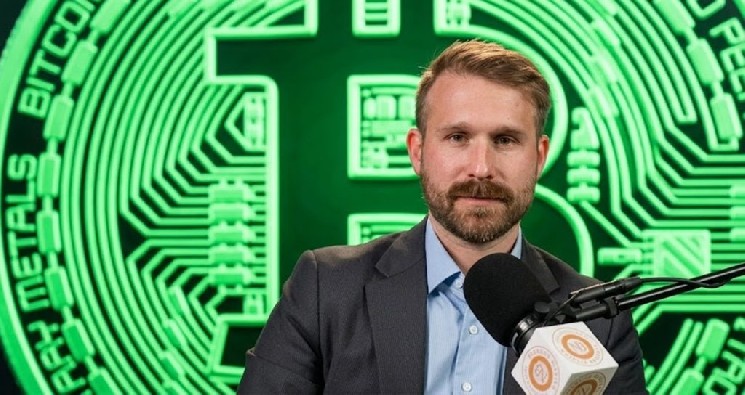
In an interview with Coindesk, Frank Flight, Head of Macro Strategy at Citadel Securities, stated that Fed Chairman Kevin Warsh might unexpectedly raise the interest rate at this meeting to demonstrate his commitment to fighting inflation.

In Flight's view, such a move would mark the end of the Fed's long-standing practice of signaling policy changes in advance and would strengthen the central bank's independence. It could also boost confidence in the Fed's fight against inflation.

Flight also argued that the Fed's decision to raise interest rates this week would have a stronger impact than waiting until September. According to Flight, an unexpected rate hike could enhance confidence in the Fed's commitment to curbing inflation and also influence corporate pricing behavior and employee wage expectations, thereby preventing more significant monetary tightening in the long term.

Flight added that an unexpected Fed rate hike could put short-term pressure on risky assets, including Bitcoin, if it leads to an increase in Treasury yields.

*This is not investment advice.

Trending Cryptos

Related Questions

QAccording to the article, what is the unexpected forecast from Citadel Securities regarding the Federal Reserve's interest rate decision?

ACitadel Securities forecasts that the Federal Reserve will surprise markets by raising interest rates by 25 basis points, contrary to the majority of analysts who expect rates to remain unchanged.

QWhat are the current market probabilities for the Fed's July decision according to the CME FedWatchTool mentioned in the article?

AAccording to the CME FedWatchTool, the probability of the Fed keeping rates unchanged in July is 68.5%, while the probability of a 25 basis point increase is 31.5%.

QWhat reason does Citadel's Frank Flight give for the Fed potentially raising rates unexpectedly?

AFrank Flight states that Fed Chair Kevin Warsh might raise the rate unexpectedly at this meeting to demonstrate the central bank's commitment to fighting inflation. He argues this would mark the end of the Fed's long-standing practice of signaling policy changes and strengthen its independence.

QWhat potential impact could an unexpected Fed rate hike have on Bitcoin and other risky assets, as per Frank Flight's comments?

AFrank Flight suggests that an unexpected Fed rate hike could put short-term pressure on risky assets, including Bitcoin, if it leads to an increase in Treasury yields.

QWhy does Flight argue that a rate hike this week would have a stronger impact than waiting until September?

AFlight argues that an unexpected rate hike this week could boost confidence in the Fed's commitment to fighting inflation and influence corporate pricing behavior and employee wage expectations, thereby preventing more severe monetary tightening in the long term.

Related Reads

A Brief History of the Lithography Machine: How a Beam of Light Walked Sixty-Nine Years

A Brief History of Lithography: 69 Years of Light In July 2026, reports of a Chinese state-backed company producing five immersion DUV lithography machines sent shockwaves through Wall Street, wiping roughly $44 billion from ASML's market cap in a single day. This event signaled a crack in the long-held assumption of Western monopoly over advanced chipmaking equipment. The journey began in 1957 when Jay Lathrop coined the term "photolithography." Early contact aligners (1960s) gave way to PerkinElmer's revolutionary projection aligners in 1973, boosting yields dramatically. GCA's step-and-repeat system (1978) established the modern stepper blueprint. However, within a decade, Japanese firms like Nikon and Canon, supported by a strong domestic market, captured nearly 90% of the global market from American pioneers, who ultimately exited the business. ASML, founded in a leaky shed in 1984, rose to dominance through key strategic moves: the TWINSCAN dual-stage platform (2001) and the acquisition of SVG, gaining access to Intel. A pivotal moment came in the early 2000s with the industry at a 193nm wavelength impasse. While most invested in the costly 157nm path, TSMC's Burn Lin proposed immersion lithography—using water between the lens and wafer. ASML bet on this simpler idea and, with Zeiss, delivered the first commercial immersion tool in 2004, effectively ending the 157nm roadmap and leaving competitors behind. The subsequent push for Extreme Ultraviolet (EUV) lithography was an even greater marathon. Deemed the least promising option in 1997, EUV's development, led by ASML, required vacuum chambers, reflective optics, and a complex tin-droplet laser plasma source. Critical to its eventual success (first high-volume manufacturing in 2018) was the 2012 "Customer Co-Investment Program," where Intel, TSMC, and Samsung provided upfront funding and equity, sharing the immense risk and cost. Today, ASML holds a near-total monopoly in EUV and immersion DUV. The core lesson of this 69-year history is not merely one of technological invention but of sustained partnership. Successive leaders—PerkinElmer, GCA, Nikon—were not ultimately defeated by superior technology but by losing the vital connection to customers willing to tolerate years of iteration, fund long-term R&D, and integrate early, imperfect tools into their production lines. The "light" that completed the journey was always carried by those patient, invested partners.

marsbit1h ago

A Brief History of the Lithography Machine: How a Beam of Light Walked Sixty-Nine Years

marsbit1h ago

Trading

Spot

Hot Articles

What is $BITCOIN

DIGITAL GOLD ($BITCOIN): A Comprehensive Analysis Introduction to DIGITAL GOLD ($BITCOIN) DIGITAL GOLD ($BITCOIN) is a blockchain-based project operating on the Solana network, which aims to combine the characteristics of traditional precious metals with the innovation of decentralized technologies. While it shares a name with Bitcoin, often referred to as “digital gold” due to its perception as a store of value, DIGITAL GOLD is a separate token designed to create a unique ecosystem within the Web3 landscape. Its goal is to position itself as a viable alternative digital asset, although specifics regarding its applications and functionalities are still developing. What is DIGITAL GOLD ($BITCOIN)? DIGITAL GOLD ($BITCOIN) is a cryptocurrency token explicitly designed for use on the Solana blockchain. In contrast to Bitcoin, which provides a widely recognized value storage role, this token appears to focus on broader applications and characteristics. Notable aspects include: Blockchain Infrastructure: The token is built on the Solana blockchain, known for its capacity to handle high-speed and low-cost transactions. Supply Dynamics: DIGITAL GOLD has a maximum supply capped at 100 quadrillion tokens (100P $BITCOIN), although details regarding its circulating supply are currently undisclosed. Utility: While precise functionalities are not explicitly outlined, there are indications that the token could be utilized for various applications, potentially involving decentralized applications (dApps) or asset tokenization strategies. Who is the Creator of DIGITAL GOLD ($BITCOIN)? At present, the identity of the creators and development team behind DIGITAL GOLD ($BITCOIN) remains unknown. This situation is typical among many innovative projects within the blockchain space, particularly those aligning with decentralized finance and meme coin phenomena. While such anonymity may foster a community-driven culture, it intensifies concerns about governance and accountability. Who are the Investors of DIGITAL GOLD ($BITCOIN)? The available information indicates that DIGITAL GOLD ($BITCOIN) does not have any known institutional backers or prominent venture capital investments. The project seems to operate on a peer-to-peer model focused on community support and adoption rather than traditional funding routes. Its activity and liquidity are primarily situated on decentralized exchanges (DEXs), such as PumpSwap, rather than established centralized trading platforms, further highlighting its grassroots approach. How DIGITAL GOLD ($BITCOIN) Works The operational mechanics of DIGITAL GOLD ($BITCOIN) can be elaborated on based on its blockchain design and network attributes: Consensus Mechanism: By leveraging Solana’s unique proof-of-history (PoH) combined with a proof-of-stake (PoS) model, the project ensures efficient transaction validation contributing to the network's high performance. Tokenomics: While specific deflationary mechanisms have not been extensively detailed, the vast maximum token supply implies that it may cater to microtransactions or niche use cases that are still to be defined. Interoperability: There exists the potential for integration with Solana’s broader ecosystem, including various decentralized finance (DeFi) platforms. However, the details regarding specific integrations remain unspecified. Timeline of Key Events Here is a timeline that highlights significant milestones concerning DIGITAL GOLD ($BITCOIN): 2023: The initial deployment of the token occurs on the Solana blockchain, marked by its contract address. 2024: DIGITAL GOLD gains visibility as it becomes available for trading on decentralized exchanges like PumpSwap, allowing users to trade it against SOL. 2025: The project witnesses sporadic trading activity and potential interest in community-led engagements, although no noteworthy partnerships or technical advancements have been documented as of yet. Critical Analysis Strengths Scalability: The underlying Solana infrastructure supports high transaction volumes, which could enhance the utility of $BITCOIN in various transaction scenarios. Accessibility: The potential low trading price per token could attract retail investors, facilitating wider participation due to fractional ownership opportunities. Risks Lack of Transparency: The absence of publicly known backers, developers, or an audit process may yield skepticism regarding the project's sustainability and trustworthiness. Market Volatility: The trading activity is heavily reliant on speculative behavior, which can result in significant price volatility and uncertainty for investors. Conclusion DIGITAL GOLD ($BITCOIN) emerges as an intriguing yet ambiguous project within the rapidly evolving Solana ecosystem. While it attempts to leverage the “digital gold” narrative, its departure from Bitcoin's established role as a store of value underscores the need for a clearer differentiation of its intended utility and governance structure. Future acceptance and adoption will likely depend on addressing the current opacity and defining its operational and economic strategies more explicitly. Note: This report encompasses synthesised information available as of October 2023, and developments may have transpired beyond the research period.

1.1k Total ViewsPublished 2025.05.13Updated 2025.05.13

What is $BITCOIN

Discussions

Welcome to the HTX Community. Here, you can stay informed about the latest platform developments and gain access to professional market insights. Users' opinions on the price of BTC (BTC) are presented below.

活动图片