Dari OpenSea ke OpenRouter: Alex Atallah Mengulangi Skenario "Keluar di Puncak"?

链捕手Published on 2026-07-24Last updated on 2026-07-24

Abstract

Menurut laporan *Wall Street Journal*, raksasa pembayaran Stripe sedang dalam pembicaraan untuk mengakuisisi platform agregasi model AI, OpenRouter, dengan valuasi potensial mendekati $10 miliar. OpenRouter, didirikan oleh Alex Atallah (co-founder OpenSea), telah tumbuh pesat menjadi platform agregasi model AI terbesar dengan lebih dari 400 model, 10 juta pengguna, dan memproses lebih dari 200 triliun token per bulan. Ini bukan kali pertama Atallah membangun perusahaan bernilai miliaran dolar. Ia sebelumnya meninggalkan OpenSea di puncak gelembung NFT sebelum pasar mereda. Kini, di tengah ledakan AI, ia kembali mempertimbangkan "exit" strategis dengan menjual OpenRouter. Alasan di balik penjualan ini terkait sifat bisnis OpenRouter sebagai platform perantara dengan margin terbatas (biaya platform ~5-5.5%), meski volumenya besar. Pendapatan tahunannya sekitar $50 juta. Persaingan yang semakin ketat dan tekanan pada ruang margin membuat IPO kurang menarik. Namun, nilai utama OpenRouter bagi pembeli seperti Stripe terletak pada data penggunaan AI dunia nyata yang sangat berharga yang telah dikumpulkannya dari jutaan pengguna, yang sulit direplikasi dalam waktu singkat. Potensi akuisisi ini memicu pertanyaan: apakah ini puncak siklus AI baru atau validasi nilai infrastruktur AI?

Penulis: Nancy, PANews

Lebih dari empat tahun lalu, Alex Atallah keluar dari pasar tepat sebelum puncak gelembung NFT; kini, dia kembali mencapai momen puncak dalam gelombang AI dan bersiap menjual platform agregator model AI yang didirikannya, OpenRouter, dengan harga tinggi.

23 Juli, dilaporkan oleh Wall Street Journal, raksasa pembayaran Stripe sedang bernegosiasi untuk mengakuisisi OpenRouter, dengan valuasi transaksi yang mungkin mendekati 100 miliar dolar AS. Jika transaksi akhirnya terlaksana, ini akan menjadi keberhasilan Alex Atallah dalam membangun perusahaan bernilai miliaran dolar lagi, setelah platform NFT OpenSea.

Stripe Berencana Akuisisi OpenRouter, Valuasi Mungkin Tembus 100 Miliar Dolar AS

Desas-desus "penjualan" OpenRouter telah berlangsung cukup lama.

Minggu lalu, The Information, Jawl, dan beberapa media asing lainnya melaporkan bahwa OpenRouter telah menerima minat akuisisi dari beberapa perusahaan teknologi besar dan membahas penjualan, dengan skala transaksi potensial mencapai miliaran dolar AS.
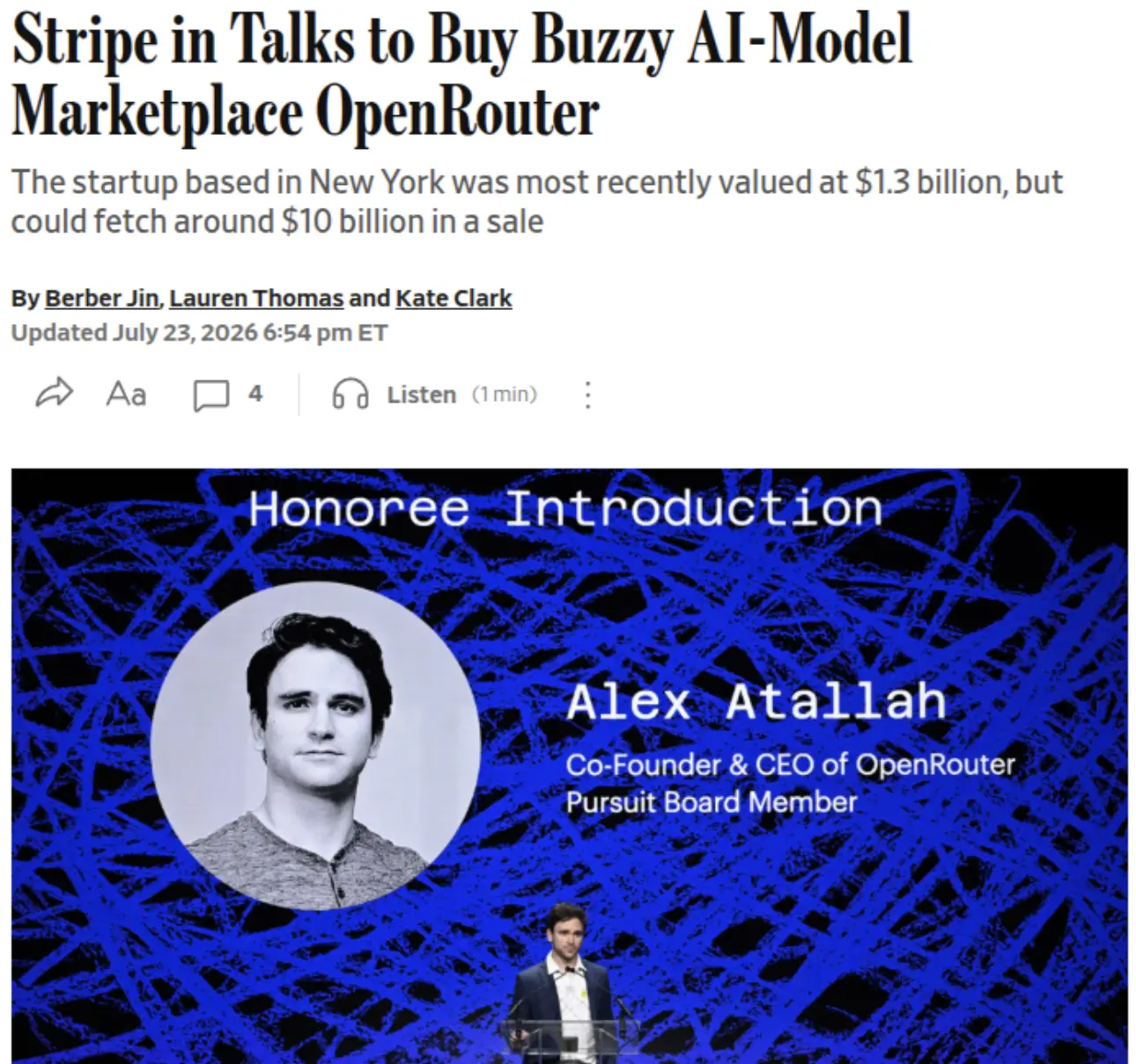
Menurut laporan terbaru Wall Street Journal, Stripe sedang mempertimbangkan untuk mengakuisisi platform agregator model AI terbesar di dunia ini. Sumber yang mengetahui masalah ini mengungkapkan, negosiasi transaksi kedua belah pihak mungkin akan segera diumumkan, tetapi saat ini masih ada kemungkinan perubahan, tidak menutup kemungkinan negosiasi gagal atau pembeli potensial lain bergabung dalam tawaran.

Menariknya, Alex Atallah pernah menggambarkan OpenRouter sebagai "Stripe di bidang AI". Baginya, seperti Stripe membantu pelanggan menangani berbagai pembayaran melalui satu pintu masuk terpadu, OpenRouter berharap menjadi pintu masuk terpadu bagi perusahaan untuk mengakses berbagai model AI, mengurangi biaya perusahaan dalam beralih di antara beberapa pemasok AI, sekaligus menghindari "penguncian" oleh pemasok model tunggal.

Faktanya, OpenRouter dan Stripe telah menjalin hubungan kerja sama. Transaksi potensial kedua belah pihak kali ini,juga dipandang sebagai perluasan penting raksasa infrastruktur pembayaran ke bidang infrastruktur AI. Perlu dicatat, ini mungkin merupakan langkah akuisisi besar lainnya Stripe baru-baru ini, sebelumnya pasar telah menyebarkan rencananya untuk mengakuisisi PayPal.

Saat ini, kedua belah pihak belum mengungkapkan jumlah transaksi spesifik. Namun, menurut sumber yang mengetahui, jika transaksi akhirnya tercapai, valuasi OpenRouter pada saat penjualan mungkin mendekati 100 miliar dolar AS.

Angka ini jauh melebihi valuasi OpenRouter sebelumnya saat pendanaan. Didirikan hanya lebih dari tiga tahun, perusahaan infrastruktur AI ini telah mencapai pertumbuhan tinggi didorong oleh gelombang model besar.
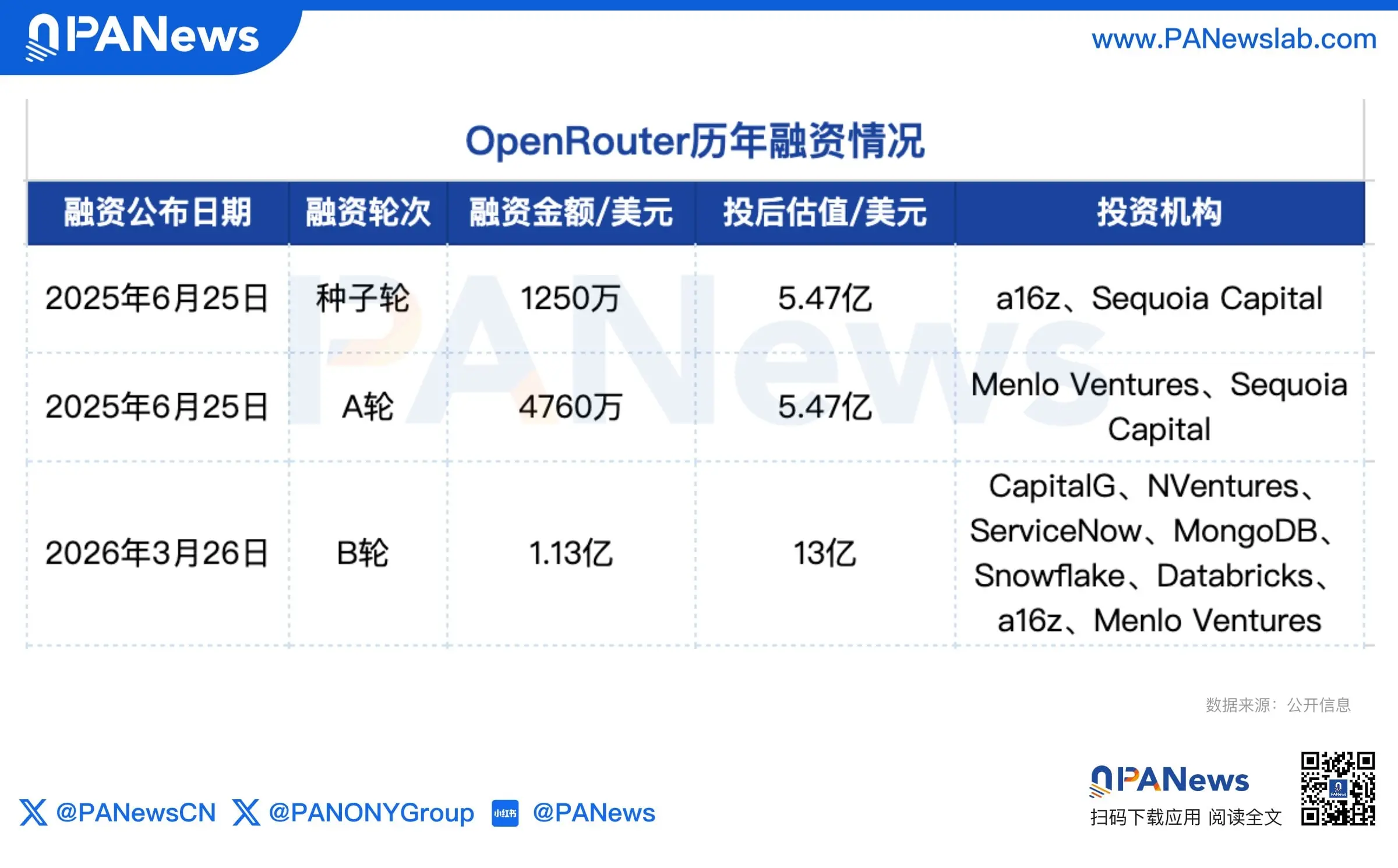
Data publik menunjukkan, OpenRouter telah menyelesaikan tiga putaran pendanaan, mengumpulkan lebih dari 150 juta dolar AS. Juni 2025, OpenRouter mengumumkan penyelesaian pendanaan seed round dan Seri A sebesar 40 juta dolar AS, dengan valuasi pasca-investasi saat itu sekitar 547 juta dolar AS; 26 Maret 2026, OpenRouter mengumumkan penyelesaian pendanaan Seri B sebesar 113 juta dolar AS, dengan valuasi pasca-investasi sekitar 1,3 miliar dolar AS.

Jika transaksi ini akhirnya terlaksana, berarti valuasi OpenRouter mungkin meningkat hampir sepuluh kali lipat dalam beberapa bulan, dan bergabung dengan klub unicorn bernilai miliaran dolar.

Di balik peningkatan nilai OpenRouter, tidak hanya berasal dari ledakan permintaan yang dibawa oleh ekspansi cepat model besar, tetapi juga berkat perhatian lebih dari pasar modal terhadap sektor infrastruktur AI.

Mengulangi Skenario Keluar OpenSea? Mengapa OpenRouter Memilih "Dijual"

Ini bukan pertama kalinya Alex Atallah membangun perusahaan bernilai miliaran dolar.

Sebelumnya, pengusaha serial ini pernah mendirikan bersama OpenSea, membawa NFT dari lingkaran kecil ke pandangan publik. Di era paling panas NFT, OpenSea tumbuh dari platform yang jarang diketahui menjadi pasar perdagangan NFT terbesar di dunia, valuasi pernah melebihi 13 miliar dolar AS, dan kekayaan dua pendiri pernah mencapai sekitar 2,2 miliar dolar AS.

Namun, sebelum pasar NFT mulai turun drastis pada 2022, Alex Atallah memilih meninggalkan OpenSea. Setelah itu, seiring dengan gelembung industri yang menghilang, valuasi OpenSea menyusut tajam, dan mantan pemimpin NFT secara bertahap kehilangan kilau masa puncaknya. Keluar awal Alex Atallah juga pernah dipandang pasar sebagai sinyal puncak yang penting.

Kemudian, Alex Atallah mengalihkan pandangannya ke infrastruktur AI, OpenRouter yang didirikannya menjadi stasiun transit terbesar di era AI.
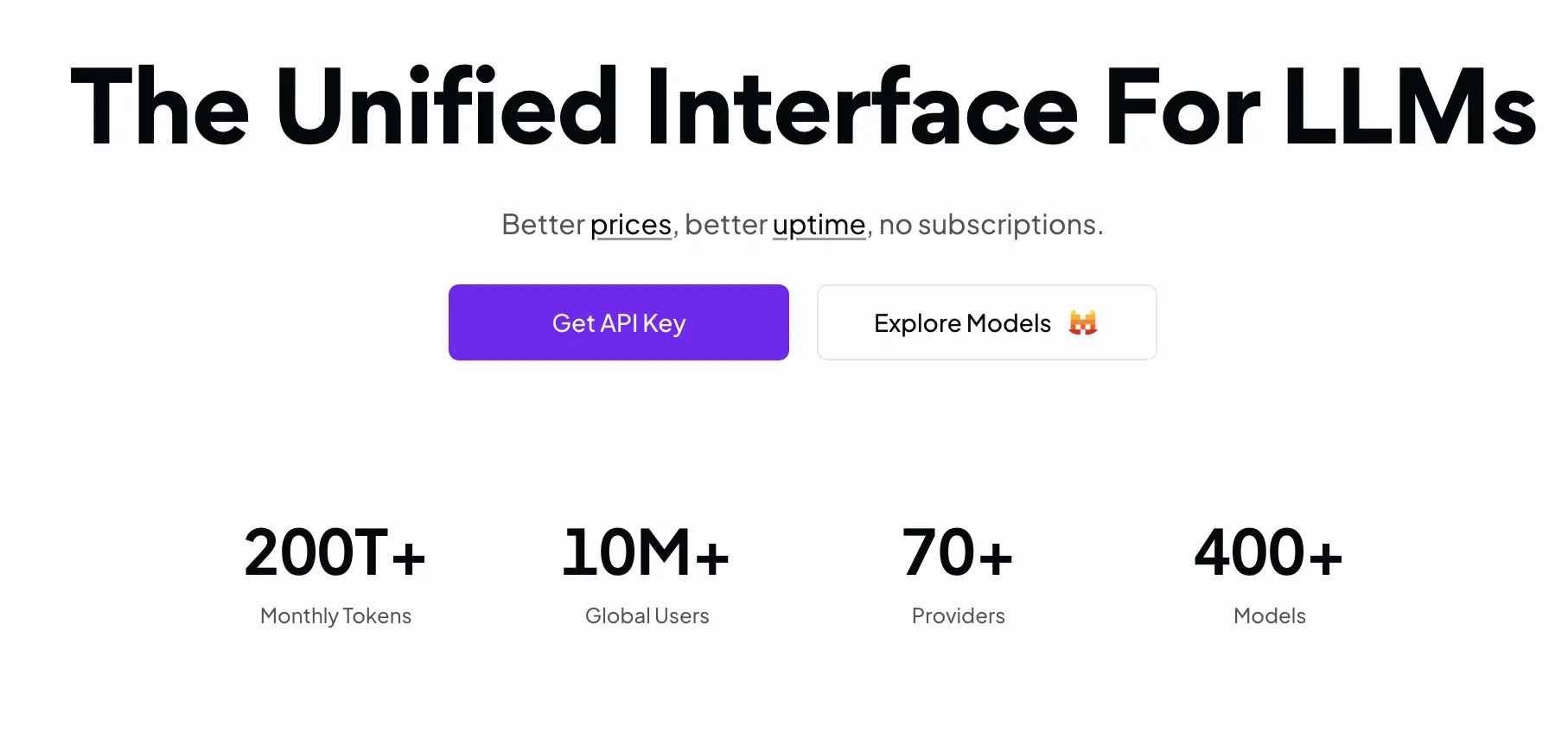
Saat ini, OpenRouter telah mengintegrasikan lebih dari 400 model AI, memiliki sekitar 10 juta pengguna, dan memproses lebih dari 200 triliun token per bulan. Sejak awal tahun ini, jumlah token yang diproses melalui API-nya tumbuh sekitar 10 kali lipat.

Namun patut diperhatikan, sambil bisnis tumbuh tinggi, OpenRouter tidak memilih IPO, melainkan menuju jalan penjualan potensial. Alasannya, ini adalah bisnis saluran yang skalanya besar, tetapi margin keuntungannya terbatas.

Saat ini, OpenRouter terutama menghasilkan keuntungan melalui biaya layanan platform yang dikenakan saat pengembang memanggil model AI, dengan persentase potongan sekitar 5%-5,5%. Meskipun skala konsumsi inferensi AI yang dianggarkan tahunan telah mencapai ratusan juta dolar AS, hingga April 2026, pendapatan tahunan perusahaan sekitar 50 juta dolar AS.

Dengan kata lain, OpenRouter menghubungkan pasar kebutuhan AI yang besar, tetapi tidak sepenuhnya menguasai rantai nilai hulu. Seiring dengan standarisasi kemampuan model, platform mudah terpengaruh oleh bangkitnya model open-source, pengikatan ekosistem vendor cloud, serta penurunan harga langsung oleh pemasok model, ruang keuntungan mungkin terus tertekan.OpenRouter sulit menceritakan kisah pertumbuhan eksponensial dan keuntungan super tinggi di pasar modal.

Di saat yang sama, persaingan di jalur agregasi model AI juga sedang meningkat. Misalnya, inkubator AI internal Meta di luar negeri sedang mengembangkan layanan penjadwalan yang setara dengan OpenRouter, untuk mengurangi biaya komputasi pengembangan kode; di dalam negeri juga muncul platform agregator model besar termasuk EasyRouter dari Cheetah Mobile, ThinkFlow dari NetEase Youdao, dll.

Oleh karena itu, valuasi tinggi yang diberikan pasar kepada OpenRouter saat ini lebih pada penetapan harga ruang imajinasi masa depannya, bukan kemampuan profitabilitas saat ini.

Namun, bagi calon pembeli, aset yang benar-benar menarik dari OpenRouter mungkin bukan skala pendapatan saat ini, melainkan data penggunaan AI nyata yang terakumulasi dalam jangka panjang.

Dengan menghubungkan ratusan model dan jutaan pengguna, OpenRouter mengendapkan sejumlah besar data panggilan dari lingkungan produksi nyata, termasuk perbedaan kinerja model yang berbeda dalam tugas nyata, preferensi pengembang, sensitivitas harga, serta hubungan substitusi antara model open-source dan closed-source. Dibandingkan dengan data pengujian laboratorium, data penggunaan AI dari dunia nyata ini lebih dekat dengan kebutuhan pasar, dan juga lebih sulit direplikasi dengan cepat melalui investasi jangka pendek. Ini mungkin juga alasan penting perusahaan teknologi besar bersedia membayar premium tinggi untuk OpenRouter.

Dari NFT ke AI, Alex Atallah dua kali menginjak puncak tren zaman. Jika OpenRouter akhirnya dijual dengan valuasi miliaran dolar, apakah ini berarti penetapan ulang nilai infrastruktur AI, atau sinyal puncak siklus lain? Jawabannya, mungkin masih perlu waktu untuk memberikan verifikasi.


Trending Cryptos

Related Questions

QApakah Stripe benar-benar akan mengakuisisi OpenRouter, dan berapa perkiraan valuasinya?

AYa, menurut laporan Wall Street Journal, raksasa pembayaran Stripe sedang dalam pembicaraan untuk mengakuisisi OpenRouter. Perkiraan valuasi transaksi ini mendekati 100 miliar dolar AS, meskipun transaksi belum final dan masih ada kemungkinan perubahan atau penawar lain.

QSiapa pendiri OpenRouter dan apa hubungannya dengan OpenSea?

APendiri OpenRouter adalah Alex Atallah, yang juga merupakan salah satu pendiri bersama platform NFT OpenSea. Dia meninggalkan OpenSea sebelum gelembung NFT pecah, dan sekarang berhasil membangun OpenRouter, platform agregator model AI, yang mungkin akan dijual dengan valuasi tinggi.

QMengapa OpenRouter memilih untuk dijual daripada melakukan IPO, meskipun bisnisnya tumbuh pesat?

AOpenRouter memilih potensi penjualan karena bisnisnya meskipun memiliki skala besar, memiliki margin keuntungan yang terbatas. Platform ini menghasilkan pendapatan dengan mengambil komisi sekitar 5%-5.5% dari pemanggilan model AI, dan pendapatan tahunannya sekitar 50 juta dolar AS pada April 2026. Model bisnis ini rentan terhadap tekanan persaingan, seperti munculnya model open-source dan penurunan harga dari pemasok, sehingga sulit menceritakan kisah pertumbuhan eksponensial di pasar modal.

QApa yang membuat OpenRouter berharga bagi calon pembeli seperti Stripe?

AAset paling berharga dari OpenRouter bagi calon pembeli adalah data penggunaan AI dunia nyata yang telah dikumpulkan dari waktu ke waktu. Platform ini terhubung ke ratusan model dan jutaan pengguna, mengumpulkan data tentang kinerja model dalam tugas nyata, preferensi pengembang, sensitivitas harga, dan hubungan substitusi antara model open-source dan tertutup. Data ini sulit direplikasi dalam waktu singkat dan memberikan wawasan berharga tentang kebutuhan pasar.

QApa tantangan utama yang dihadapi OpenRouter di pasar agregator model AI?

ATantangan utama OpenRouter termasuk persaingan yang semakin ketat, seperti pengembangan layanan penjadwalan serupa oleh inkubator AI internal Meta (seperti EasyRouter) dan pesaing domestik lainnya. Selain itu, margin keuntungannya terbatas dan rentan terhadap faktor-faktor seperti munculnya model open-source, pengikatan ekosistem penyedia cloud, dan penurunan harga langsung dari pemasok model, yang dapat terus memberi tekanan pada ruang keuntungannya.

Related Reads

On the Eve of Circle's Earnings Report, Wall Street Shows Major Divergence in CRCL Valuation

On the eve of Circle (CRCL) releasing its quarterly earnings report, Wall Street analysts are deeply divided over the company's valuation. Morgan Stanley downgraded Circle from "Equal Weight" to "Underweight," slashing its price target from $106 to $38. Analyst James Faucette argues the market overestimates the growth potential of Circle's core USDC stablecoin, noting its circulation hasn't increased since Q3 2025 and new use cases beyond remittances and card spending are limited. He warns that slowing USDC growth could pressure the crucial "reserve income" and shift revenue toward lower-margin transaction fees. In stark contrast, TD Cowen initiated coverage with a "Buy" rating and an $82 price target. Analyst Bryan Bergin believes the market underestimates Circle's potential to evolve from a stablecoin issuer into a broader digital financial infrastructure platform. He forecasts a ~31% annual growth rate for USDC through 2030 and expects faster growth in fee-based revenue from services like payments, RWA tokenization, and its Arc network. A key external factor adding uncertainty is the stalled progress of the CLARITY Act in the US Senate, whose delay could dampen institutional adoption expectations for stablecoins. The core disagreement lies in whether Circle's future hinges on USDC circulation growth or a successful platform-based transformation. The upcoming earnings report is keenly awaited for insights into reserve income trends and the progress of newer business verticals.

marsbit5m ago

On the Eve of Circle's Earnings Report, Wall Street Shows Major Divergence in CRCL Valuation

marsbit5m ago

Hong Kong Stock Market in July: Super IPOs Coexist with Wave of Breakings, Hard Tech Still the Main Theme

The Hong Kong IPO market in July presented a "two-tiered" scenario characterized by both a mega-IPO and a significant wave of new stock listings falling below their issue price ("breaking issue"). The highlight was Zhongji Innolight's (stock code: 03308.HK) listing on July 30, which raised approximately HK$53.41 billion. This marked the largest IPO on the Hong Kong exchange in nearly seven years since Alibaba's secondary listing. A prominent trend was the continued dominance of A+H listings, with companies like Luxshare (02475.HK) and others contributing significantly to the total monthly fundraising of around HK$116 billion. In stark contrast, the market saw a sharp rise in "broken issues." Out of 17 new listings for the month, 7 broke issue on their debut, with the rate climbing to 47% by month-end. Factors contributing to this included an intense concentration of listings (15 in one week), profit-taking by investors, and a market reassessment of valuations, particularly for companies with unclear commercial prospects. Despite the sell-off, hard tech remained the core theme, accounting for over 70% of July's listings. Key sectors were semiconductors and AI/autonomous driving. However, market enthusiasm became highly selective, with extreme over-subscription for certain niche players while others were heavily sold off. This signals a shift from speculative fervor towards a more value-driven assessment. Looking ahead, recent listing reforms by the Hong Kong Exchanges are expected to attract more tech firms. With a large pipeline of over 350 companies awaiting listing, including potential large offerings like SHEIN, the market is poised for continued activity. Analysts view July's correction not as a downturn but as a healthy valuation reset, emphasizing the need for investors to carefully discern company fundamentals.

marsbit7m ago

Hong Kong Stock Market in July: Super IPOs Coexist with Wave of Breakings, Hard Tech Still the Main Theme

marsbit7m ago

Wall Street Shows Sharp Divergence in CRCL Valuation on the Eve of Circle's Earnings Report

On the eve of its earnings report on August 5th, significant divergence emerged on Wall Street regarding the valuation of Circle (CRCL). Morgan Stanley downgraded Circle from "Equal Weight" to "Underweight," slashing its target price from $106 to $38. Analyst James Faucette argues that the market has overestimated the growth potential of USDC, noting stagnant circulation since Q3 2025 and a lack of major new use cases beyond remittances and card spending. He warns that slower USDC growth could pressure Circle's core "reserve income" and shift its revenue mix toward lower-margin transaction fees, making current valuations excessive. In contrast, TD Cowen initiated coverage with a "Buy" rating and an $82 target price. Analyst Bryan Bergin believes the market underestimates Circle's potential to evolve from a stablecoin issuer into a broader digital financial infrastructure platform. He focuses on future services like payments, asset management, RWA tokenization, and blockchain infrastructure, forecasting a ~31% CAGR for USDC circulation through 2030 and faster growth in fee-based revenues. A key external variable is the delayed progress of the CLARITY Act, whose uncertainty may pressure market sentiment by slowing regulatory clarity for stablecoins. Ultimately, the split centers on whether Circle's value hinges on USDC growth or its platform transformation. The upcoming earnings report will be scrutinized for details on reserve income, payment services, and RWA initiatives.

Odaily星球日报11m ago

Wall Street Shows Sharp Divergence in CRCL Valuation on the Eve of Circle's Earnings Report

Odaily星球日报11m ago

July Security Report: Total Losses Approximately $97 Million, Cross-Chain Bridge Attacks Concentrated with Over $35 Million

In July 2026, the cryptocurrency sector suffered total losses of approximately $97 million, with hacker attacks and contract vulnerabilities accounting for about $94 million. A significant trend was the shift in attack vectors from smart contract code to off-chain infrastructure, signature key leaks, and governance manipulation. Major incidents included: * **Ostium ($23.75M loss):** An attacker gained access to its off-chain price oracle signing system, manipulated BTC prices, and drained funds. * **AFX Trade Bridge ($24.15M loss):** The private validator key for its cross-chain bridge was compromised, allowing unauthorized withdrawals. * **BonkDAO ($20M loss):** An attacker acquired enough tokens to pass a malicious governance proposal and drain the treasury, exploiting low voting thresholds. * **Bonzo Lend ($9.05M loss):** A third-party oracle provider's signature verification was exploited to inject manipulated token prices. * **Verus Bridge ($7.55M loss):** A repeat attack exploiting the same unpatched bridge vulnerability. * **B2 Network ($3.86M loss):** An attacker seized the upgrade authority for a staking contract. Cross-chain bridges remained a prime target, with concentrated attacks causing over $35 million in losses. Phishing scams resulted in roughly $3 million in losses, employing sophisticated methods like fake mobile apps and physical counterfeit letters targeting Ledger users. Key takeaways are the acceleration of attacks on off-chain infrastructure, the persistent vulnerability of cross-chain bridges, and the rising prominence of governance-layer exploits. Recommendations include enhancing off-chain key management with multi-sig security, implementing stricter governance controls, and increasing user vigilance against phishing.

marsbit45m ago

July Security Report: Total Losses Approximately $97 Million, Cross-Chain Bridge Attacks Concentrated with Over $35 Million

marsbit45m ago

Trading

Spot

Hot Articles

What is ₿O₿

Bitcoin Bob ($₿o₿): Pioneering Bitcoin-Centric DeFi Through Hybrid Layer-2 Innovation In an era where the digital economy is rapidly evolving, Bitcoin Bob ($₿o₿) emerges as a revolutionary project aiming to enhance Bitcoin's utility in the decentralized finance (DeFi) sector. Officially launched in May 2024, Bitcoin Bob, also known as Build on Bitcoin (BOB), represents a hybrid Layer-2 blockchain solution that melds Bitcoin’s renowned security and immutability with Ethereum's programmability. This initiative seeks to fill a crucial gap in the Bitcoin ecosystem by facilitating the integration of smart contracts and decentralized applications while maintaining the core principles of trust and security inherent to Bitcoin. With significant backing from prominent venture capitalists, Bitcoin Bob is positioned to redefine the role of Bitcoin in the DeFi landscape, making it a cornerstone of decentralized financial operations globally. What Is Bitcoin Bob, $₿o₿? At its core, Bitcoin Bob is a hybrid blockchain solution designed to enhance the functionality of Bitcoin. The main objective of the project is to enable decentralized finance on Bitcoin, facilitating swift and seamless transactions while ensuring high levels of security. Bitcoin Bob employs advanced technology, specifically a hybrid layer-2 architecture that combines Bitcoin's security attributes with the programmability and flexibility of the Ethereum Virtual Machine (EVM). This pragmatic approach allows the project to operate effectively without compromising the fundamental values of Bitcoin, making it a monumental step in bridging the gap between traditional Bitcoin holders and the emerging DeFi ecosystem. One of the standout features of Bitcoin Bob is its role in providing a trust-minimized environment through innovative mechanisms, such as optimistic rollups initially relying on Ethereum, transitioning eventually to full Bitcoin integration. This hybrid system is designed to ensure that the vast liquidity present in Bitcoin is not only preserved but also utilized effectively in various DeFi protocols. Who Is the Creator of Bitcoin Bob, $₿o₿? The creative force behind Bitcoin Bob is co-founder and CEO Alexei Zamyatin, who brings a wealth of experience and knowledge from his extensive background in the cryptocurrency space. Zamyatin holds a PhD in Computer Science and has been actively involved in Bitcoin development since 2015. His deep understanding of both Bitcoin and Ethereum ecosystems plays a crucial role in shaping Bitcoin Bob’s vision and technological underpinnings. Alongside Zamyatin is co-founder Dominik Harz, who serves as the Chief Technology Officer (CTO). Together, the duo has cultivated a team of talented individuals with a shared passion for pushing the boundaries of blockchain technology, ensuring Bitcoin Bob's innovative stature in the market. Who Are the Investors of Bitcoin Bob, $₿o₿? Bitcoin Bob has successfully garnered support from a range of prominent investors and venture capital firms that recognize its potential to transform the Bitcoin landscape. In March 2024, the project completed a robust $10 million seed funding round, led by Castle Island Ventures, with notable participation from firms like Coinbase Ventures and Bankless Ventures. Shortly afterward, in July 2024, Bitcoin Bob secured an additional $1.6 million in strategic funding. This round was co-led by Ledger Ventures and featured angels from various prominent firms such as BlackRock, Aave, and Curve. The strong financial backing reflects an industry-wide recognition of Bitcoin Bob’s innovative approach to unlocking Bitcoin’s potential in the DeFi space. This funding is crucial not only for the project’s continued development but also for establishing an incubator to foster Bitcoin-native decentralized applications (dApps) aimed specifically at meeting the needs of a growing user base. How Does Bitcoin Bob, $₿o₿ Work? The operational mechanics of Bitcoin Bob are rooted in its hybrid rollup architecture, which is designed to combine the benefits of Bitcoin's security with the versatility of Ethereum’s EVM. The project employs a phased security model that outlines its interaction with users and developers in the following manner: Phase 1 – The initial phase operates as an optimistic rollup on Ethereum, wherein transactions are processed with a promising expectation of validity, paving the way for future developments on Bitcoin. Phase 2 – As the project transitions, it will integrate Bitcoin finality through Bitcoin Staking, leveraging the Babylon Network to enhance security. This mechanism requires validators to lock up Bitcoin, thus verifying BOB transactions, which not only enhances security but also creates yield prospects for participants. Phase 3 – The forward-looking vision for Bitcoin Bob is to fully integrate with Bitcoin, using innovative technologies such as BitVM and zero-knowledge proofs to facilitate off-chain computation while retaining the security integrity of Bitcoin. Key innovations such as BitVM2, a trust-minimized bridge protocol co-authored by Zamyatin, are critical to the project's functionality, allowing for Bitcoin deposits and withdrawals without the need for extensive network reliance. This enables the ecosystem to efficiently connect with Ethereum and other compatible chains, creating a streamlined and effective interaction model for users and developers. Timeline of Bitcoin Bob, $₿o₿ Understanding the evolution of Bitcoin Bob involves tracking its important milestones: 2019: Alexei Zamyatin and Dominik Harz establish a research firm focused on blockchain solutions, laying the groundwork for future projects. March 2024: Bitcoin Bob successfully raises $10 million in a seed funding round, marking its entrance into the competitive blockchain landscape. May 1, 2024: The official mainnet launch occurs, showcasing the project’s capabilities with significant user adoption and total value locked (TVL). July 2024: The project attracts an additional $1.6 million in strategic funding for establishing its incubator, aimed at fostering Bitcoin-driven innovations. October 2024: Bitcoin Bob releases a “Vision Paper,” detailing its hybrid layer-2 design and forward-looking strategies. 2025: Expected rollout of Phase 2 features, focusing on Bitcoin finality and BitVM bridges aimed at enhancing overall functionality. Conclusion: Redefining Bitcoin’s Role in Decentralized Finance Bitcoin Bob ($₿o₿) is not just another blockchain project; it represents a paradigm shift in the way Bitcoin can interact with broader financial applications. By meticulously combining Bitcoin's security with Ethereum's flexibility, Bitcoin Bob aims to reshape the DeFi landscape, bridging the gap between digital currency and decentralized applications. With a robust technological framework, strong leadership, and strategic funding, Bitcoin Bob is well-positioned to establish itself as a fundamental player in the cryptocurrency ecosystem, unlocking new dimensions of liquidity and utility for Bitcoin. As the project continues to evolve and expand, it promises to usher in a new era of innovation, proving that Bitcoin's potential extends far beyond being a mere store of value, but rather as a cornerstone of the future financial landscape. As the project advances through its anticipated phases, all eyes will be on Bitcoin Bob, particularly regarding its commitment to incorporating decentralized principles and ensuring that users can enjoy the full benefits of DeFi anchored by Bitcoin.

124 Total ViewsPublished 2025.06.30Updated 2025.06.30

What is ₿O₿

Discussions

Welcome to the HTX Community. Here, you can stay informed about the latest platform developments and gain access to professional market insights. Users' opinions on the price of O (O) are presented below.

活动图片