Momen Perdagangan BIT: BTC Masih Tertekan oleh EMA 200 Mingguan, Setelah Ditolak Mungkin Kembali Turun, Saham Penyimpanan dan Semikonduktor yang Melonjak Malam Kemudian Mulai Anjlok di Pasar Malam

marsbitPublished on 2026-07-22Last updated on 2026-07-22

Abstract

**PASAR KRIPTO & SAHAM: BTC Hadapi Resistensi, Saham Semikonduktor Turun di Perdagangan Malam** Pasar kripto melanjutkan pemulihan, dengan harga Bitcoin bertahan di sekitar $66,000 setelah rebound lebih dari 15% dari titik terendah Juli. Namun, BTC menghadapi **tembok resistensi kuat di dekat $68,000**, yang bertepatan dengan biaya rata-rata investor selama lima bulan terakhir dan titik gagalnya rebound pertengahan Juni. Secara teknis, perhatian tertuju pada **200 EMA mingguan (~$68,328) sebagai level kunci**. Jika BTC ditolak di level ini, potensi penurunan menuju support $63,000 terbuka. Analis menyoroti volume rendah dan penurunan open interest futures di CME, menandakan rebound ini lebih dipicu likuiditas rendah musim panas daripada awal bull run penuh. Di pasar saham AS, **indeks futures utama turang** setelah sesi kemarin yang kuat. Sektor semikonduktor dan penyimpanan (storage), yang melonjak pada hari Selasa (contoh: Micron +12%), **mengalami koreksi di perdagangan malam (night trading)**. ETF semikonduktor turun 2,22% dan saham Micron turun 2,29%. Meski begitu, ada sorotan positif seperti **Super Micro Computer (SMCI)** yang naik lebih dari 15% setelah melaporkan pandangan pendapatan yang kuat dan pesanan baru yang sangat besar, mengonfirmasi permintaan server AI tetap solid. Kekhawatiran makro muncul dari **kenaikan harga minyak mentah (di atas $91)** akibat ketegangan geopolitik dan **lonjakan imbal hasil (yield) obligasi pemerintah AS**, dengan imbal hasil 10-t...

Artikel ini diproduksi bersama oleh PANews dan BIT AS, BIT AS menyediakan 10.000+ saham dan ETF papan utama AS, mendukung deposit/penarikan dengan stablecoin dan transfer kawat dolar tradisional, menikmati hak pemegang saham lengkap termasuk dividen dan hak suara.

Bitcoin Berhadapan Langsung dengan Dinding Resistensi $68K, Tetapi Masih Bertahan di Atas Rata-Rata Bergerak 200 Mingguan

Pasar kripto melanjutkan pemulihan, harga Bitcoin bertahan di sekitar $66.000, sempat menembus $66.900 dalam sesi, pulih lebih dari 15% dari titik terendah Juli. CoinDesk menyebutkan, Bitcoin saat ini lebih seperti mengikuti saham chip dan selera risiko makro, daripada memperdagangkan narasi "emas digital" secara terpisah.

Saat ini, zona tekanan di atas Bitcoin terkonsentrasi di $67.000, $67.300, $67.900, dan $68.000. Analis Bitfinex percaya, sekitar $68.000 tidak hanya mendekati rata-rata biaya investor selama lima bulan terakhir, tetapi juga sesuai dengan titik kegagalan pemulihan pertengahan Juni. Sejumlah besar dana yang terperangkap mungkin akan dijual setelah impas, sehingga uji pertama dapat memicu volatilitas tinggi.

Dari sisi teknis, trader memperhatikan level MA 200 mingguan BTC sekitar $63.333, serta level EMA 200 mingguan sekitar $68.328. Daan Crypto Trades menunjukkan, Bitcoin terjepit di antara MA 200 mingguan, EMA 200 mingguan, dan pita dukungan bull, dengan harga saat ini berada di tengah-tengah moving average kunci ini. Ke depan, perlu penutupan mingguan di bawah $55.000 atau di atas $70.000 untuk mengkonfirmasi arah terobosan level besar. Jika menembus $68.000, Bitcoin berpeluang membuka ruang untuk kenaikan lebih lanjut; jika gagal, mungkin menguji kembali support di sekitar $63.000.

Namun, pasar masih dalam tahap pemulihan hati-hati. Kepala Penelitian K33 Vetle Lunde menunjukkan, open interest futures Bitcoin CME telah turun ke level terendah sejak 2023, volume perdagangan spot juga lemah secara signifikan. Kondisi saat ini lebih mirip "pemulihan likuiditas rendah musim panas", daripada peluncuran bull run penuh.

Poin Penting Hari Ini:

  • MBG akan membuka kunci sekitar 27,15 juta token pada 22 Juli, bernilai sekitar $3,3 juta

  • SOON (SOON) akan membuka kunci sekitar 20,24 juta token pada 23 Juli, bernilai sekitar $3,3 juta

  • Token Unlock · 08:00

  • aPriori (APR) akan membuka kunci sekitar 31,88 juta token pada 23 Juli, bernilai sekitar $6,8 juta

  • Perdagangan 24 Jam Upbit Ranking: BTC, XRP, ETH, ERA, ONDO

  • ETF Spot Bitcoin: +$203 juta, aliran masuk bersih berlanjut selama 6 hari

  • ETF Spot Ethereum: +$37,471 juta, aliran masuk bersih berlanjut selama 3 hari
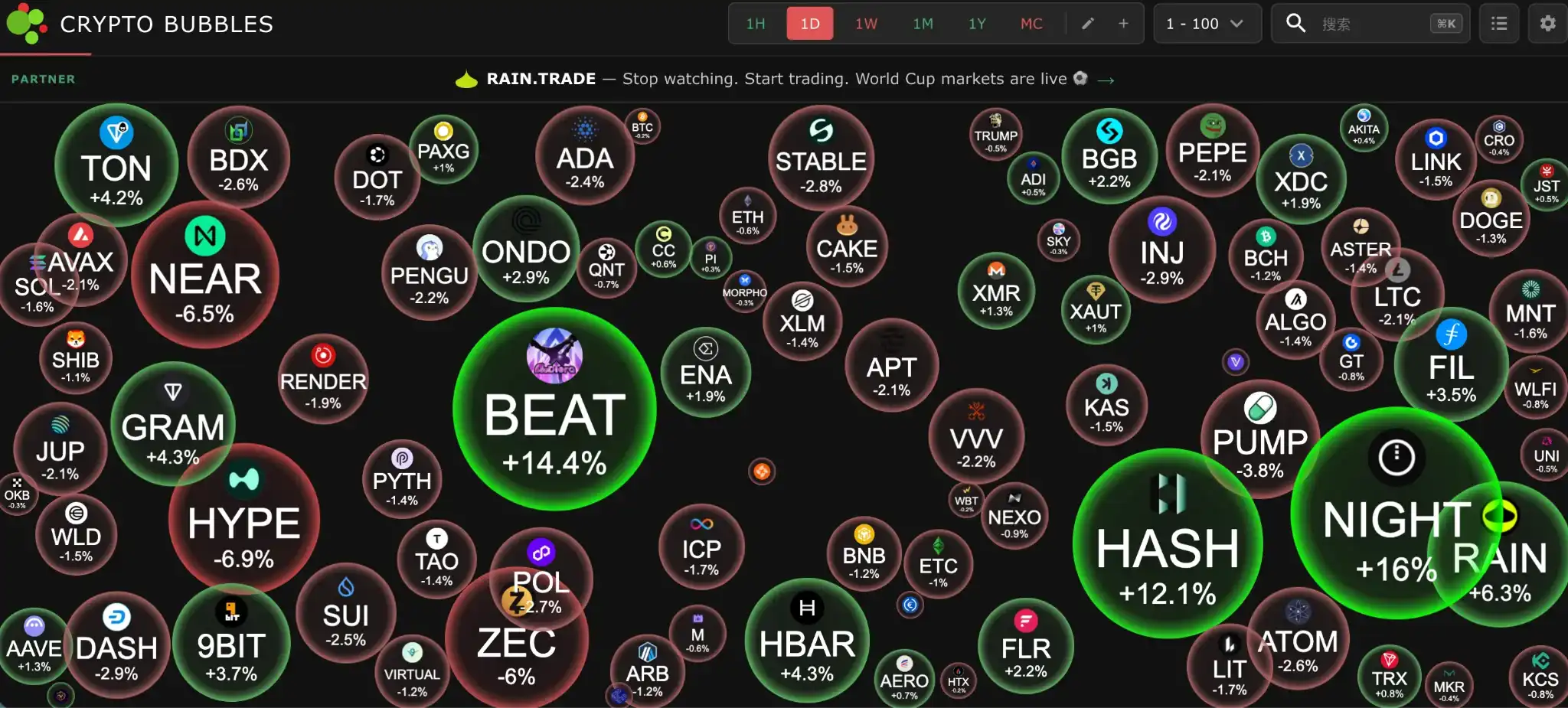
Kenaikan Maksimum 100 Koin Top Hari Ini: NIGHT naik 16%, BEAT naik 14,4%, HASH naik 12,1%, RAIN naik 6,3%, GRAM naik 4,3%.

Futures Tiga Indeks Besar AS Turun, Saham yang Melonjak Drastis Semalam Mulai Anjlok di Pasar Malam
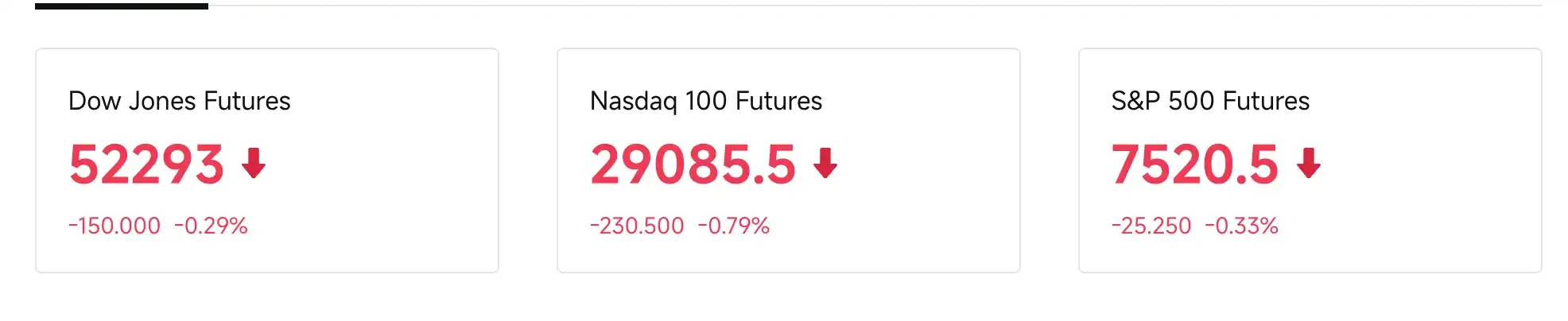
Futures tiga indeks utama AS turun serentak, futures Nasdaq 100 turun 0,79%, futures Dow turun 0,29%, futures S&P 500 turun 0,33%.
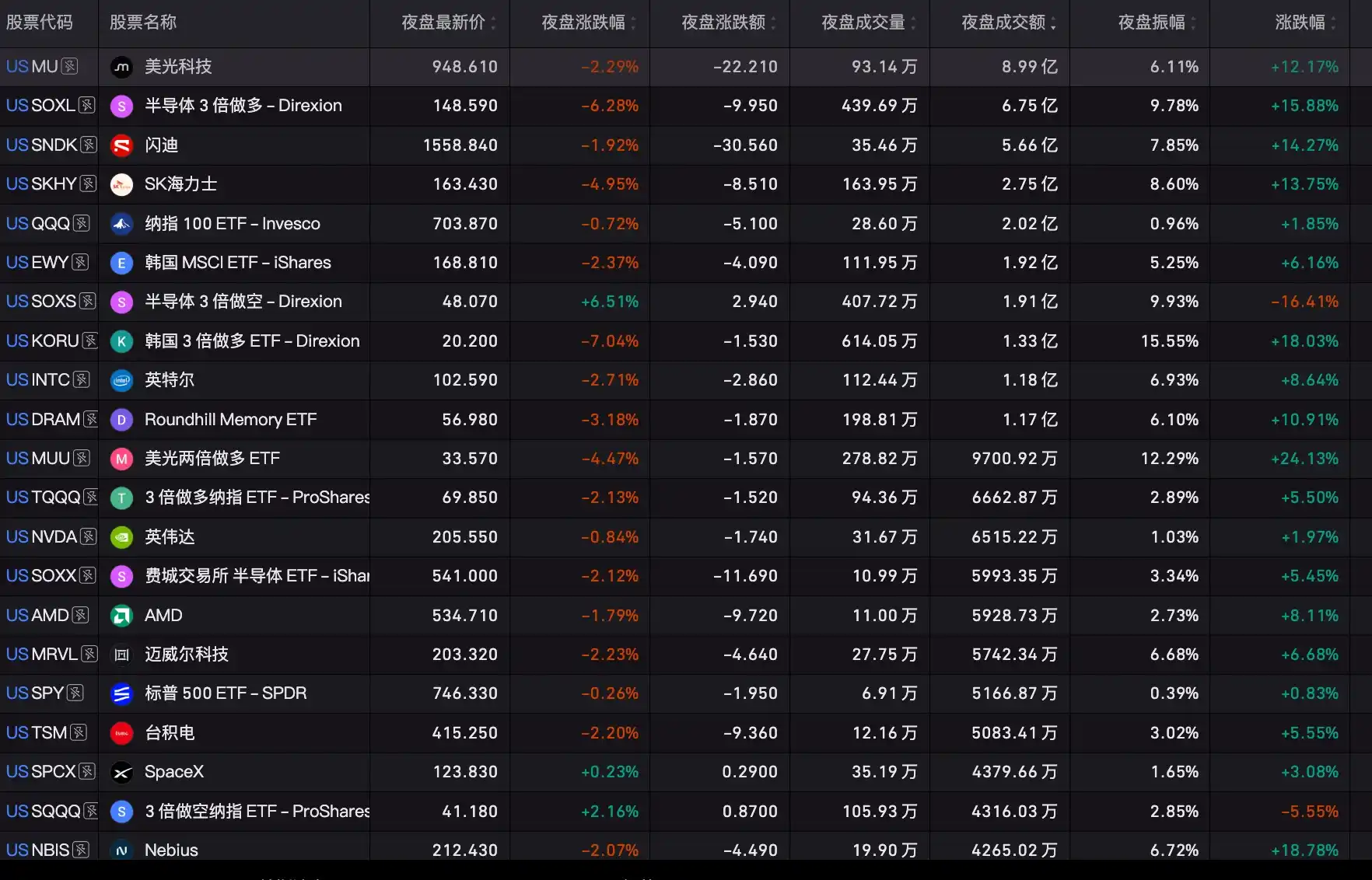
Data pasar malam BIT menunjukkan, di pasar malam AS, saham semikonduktor dan penyimpanan yang melonjak drastis semalam mulai turun. ETF semikonduktor turun 2,22%, ETF 3x Long Semikonduktor turun 6,28%, Intel turun 2,7%. Saham penyimpanan Micron yang naik lebih dari 10% semalam turun 2,29%, SanDisk turun 1,92%, SK Hynix turun 4,95%, ETF penyimpanan DRAM turun 3,18%.

  • Yang paling mencolok di after-hours dan pasar malam Selasa adalah Super Micro Computer SMCI, naik lebih dari 20% setelah jam pasar, naik 15,8% di pasar malam. Perusahaan memperkirakan pendapatan kuartal keempat mendekati ujung rendah panduan $11-12,5 miliar, tetapi margin kotor meningkat tajam menjadi 15-17%, jauh di atas ekspektasi sebelumnya 8,2-8,4%. Lebih krusial, perusahaan menyebut pesanan baru kuartal melebihi $60 miliar, backlog mencapai rekor tertinggi, langsung memperkuat penilaian bahwa permintaan server AI masih kuat.

  • Rocket Lab naik lebih dari 7% after-hours, naik 4% di pasar malam, perusahaan mendapat kontrak $266 juta dari Angkatan Udara AS untuk melaksanakan misi peluncuran roket suborbital.

  • Oklo naik lebih dari 6,6% after-hours, X-Energy naik lebih dari 8,6% after-hours, juga naik lebih dari 3% di pasar malam. Kedua perusahaan secara resmi bergabung dengan rencana pembangunan reaktor nuklir baru yang didorong pemerintahan Trump, pasar terus memperdagangkan "setelah daya komputasi AI adalah daya listrik" sebagai lapisan infrastruktur baru.

  • SpaceX mengakhiri penurunan 7 hari berturut-turut dengan naik 3,08% semalam, terus naik 0,23% di pasar malam. Pasar menunggu laporan kuartal pertama setelah IPO pada 4 Agustus; sekaligus, sebelum pembukaan kunci besar-besaran pada 6 Agustus, tarik-menarik antara short dan long sedang memanas. S3 Partners memperkirakan, saat ini sekitar 206 juta saham SpaceX dibuka pendek, sekitar 32% dari saham beredar, posisi pendek nominal sekitar $25 miliar.

Saham AS Naik Kuat Semalam, Tetapi Minyak dan Surat Utang AS Memberi Peringatan
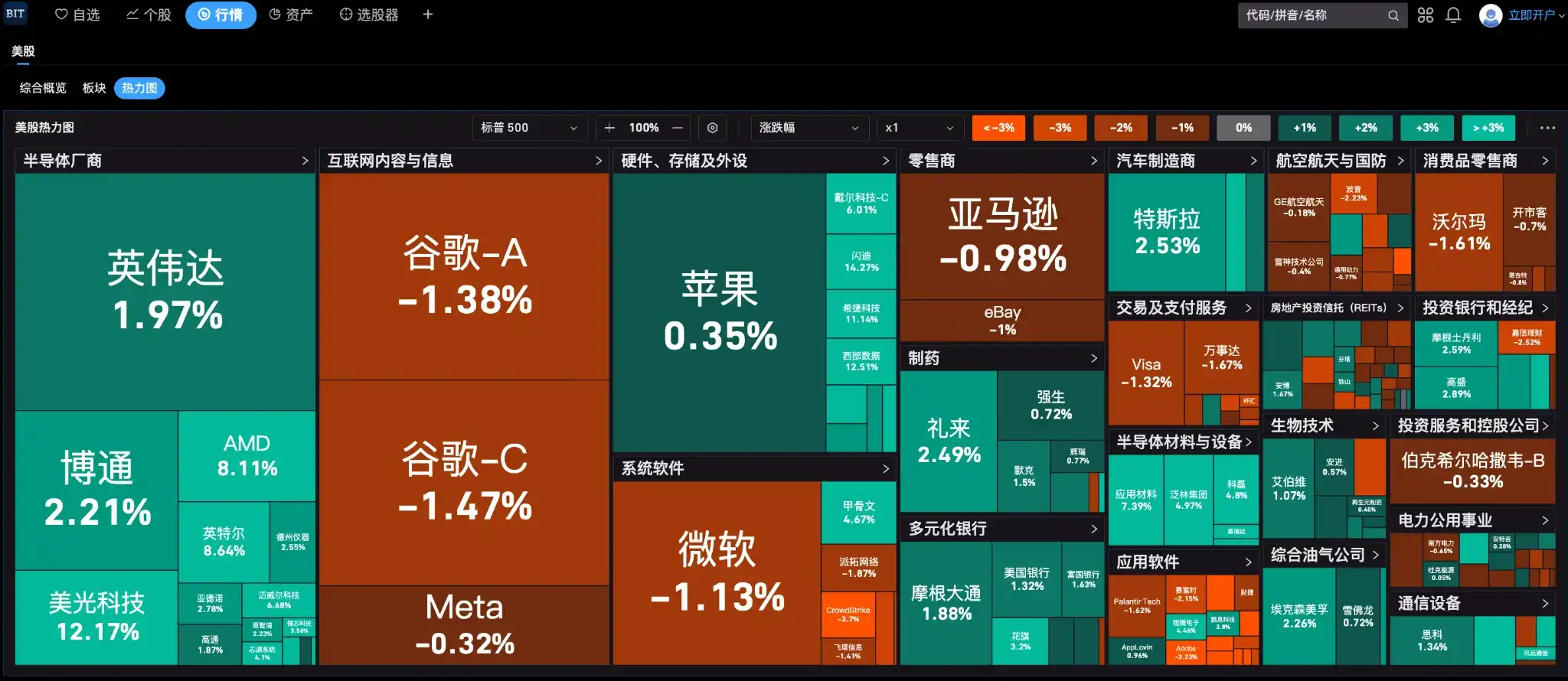
Tiga indeks utama AS ditutup naik secara kolektif pada Selasa, mengakhiri tiga hari penurunan. Indeks Semikonduktor Philadelphia melonjak 5,21%, mencatat performa satu hari terbaik dalam enam minggu. Sektor penyimpanan melonjak, Micron naik 12,17%, SanDisk naik 14,27%, Western Digital naik 12,51%, Seagate naik 11,14%, SK Hynix AS naik 13,75%. Pasar kembali percaya, penyebaran model AI akan membawa lebih banyak permintaan penyimpanan, daya komputasi, dan server.

Bank of America berpendapat, model open-source seperti Kimi K3 tidak akan melemahkan permintaan hardware, justru akan meningkatkan permintaan HBM, DRAM, dan NAND karena deployment lokal dan pelatihan privatisasi. UBS juga menyatakan, raksasa teknologi melihat AI sebagai kompetisi "pemenang mengambil segalanya", meski pengembalian jangka pendek tidak tinggi, mereka akan terus membeli hardware.

Nvidia naik 1,97%, perusahaan mengungkap platform Vera Rubin memasuki fase produksi massal, Google Cloud, Microsoft Azure, Oracle Cloud, dan CoreWeave telah mulai melakukan deployment. AMD naik 8,11%, pasar membayar di muka acara AI-nya. Intel naik 8,64%, karena rebound sektor semikonduktor dan unit foundry mendapatkan pesanan dari Fortinet.

Analis tamu bisnis BIT AS Jun sebelumnya menunjukkan, kunci pasar saham AS baru-baru ini ada di dua jalur: pertama, apakah laporan keuangan dapat memvalidasi profit; kedua, apakah posisi infrastruktur AI dan semikonduktor stabil. Saham infrastruktur AI sebelumnya sempat tertekan karena rencana penyewaan daya komputasi Meta, penurunan tajam SK Hynix, dll., tetapi rebound ini menunjukkan pasar sedang menilai ulang permintaan hardware AI.

Namun, pasar saham AS tidak ringan. Minyak mentah Brent naik di atas $91, konflik AS-Iran terus meningkat, AS menyerang target Iran untuk malam ke-11 berturut-turut, pengiriman Laut Merah juga terancam oleh Houthi. Kenaikan harga minyak membuat kekhawatiran inflasi kembali.

Surat utang AS juga memberi peringatan, imbal hasil surat utang 10 tahun naik ke sekitar 4,64%, menembus level kunci 4,60%; obligasi Treasury terlindungi inflasi 30 tahun naik ke 2,95%, tertinggi sejak 2008. Strategis suku bunga RBC Izaac Brook menyatakan, kenaikan harga energi adalah penyebab utama kenaikan suku bunga. Kepala Ekonom AS Natixis Christopher Hodge berpendapat, Fed harus lebih memperhatikan guncangan harga energi yang telah terjadi.
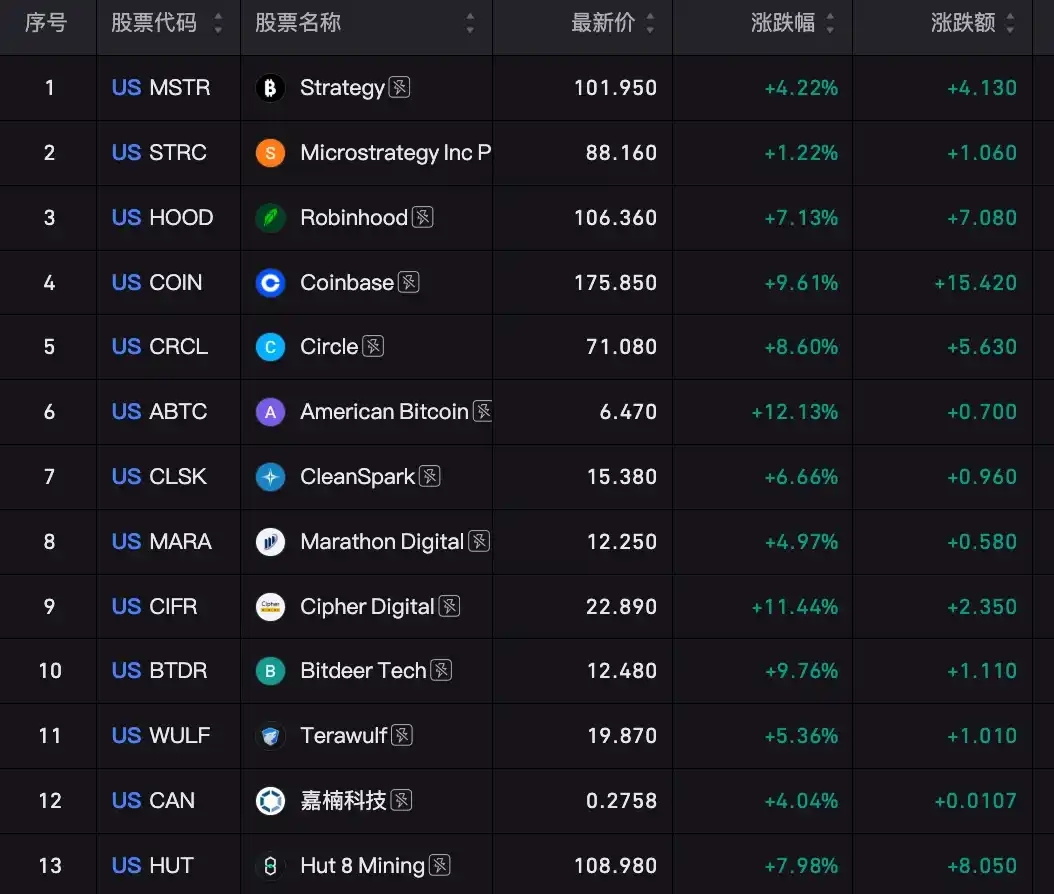
Menurut data BIT AS, saham konsep kripto menunjukkan kinerja kuat, Coinbase naik sekitar 9,6%, Robinhood naik 7,11%, Strategy naik 4,22%. Penyebab utamanya adalah RUU CLARITY AS yang bergerak maju, pasar menilai regulasi kripto semakin jelas. Circle akan merilis laporan keuangan pada 5 Agustus, pasar akan fokus melihat skala USDC dan pendapatan cadangan. Perusahaan penambangan juga menguat, American Bitcoin naik 12,13%, Cipher Digital naik 11,44%, Hut 8 naik 7,98%, Bitdeer naik 9,76%, sekaligus didorong oleh rebound Bitcoin dan narasi transformasi daya komputasi AI.

Semikonduktor Korea Pulih, Risiko Yen Jepang Meningkat

Pasar Asia secara keseluruhan mengikuti perbaikan saham teknologi AS, tetapi pergerakannya tidak stabil. Rebound hardware AI mendorong rantai teknologi Korea dan Jepang menguat, tetapi Yen melemah di bawah 163, kenaikan harga minyak dan imbal hasil surat utang AS yang tinggi, juga membuat pasar tetap waspada.

Indeks KOSPI Korea sempat naik lebih dari 6% di sesi pagi, akhirnya ditutup naik 0,74%. Penyebab kenaikan terutama karena pelunasan leverage sebelumnya mendekati akhir, pasar beralih dari panic selling ke perbaikan. Strategis JP Morgan Mixo Das menyatakan, deleverage ETF leverage Korea mungkin telah selesai sekitar 75%.

Saham semikonduktor Korea naik lalu turun, SK Hynix sempat naik lebih dari 9% di sesi pagi, akhirnya turun 0,32%; Samsung Electronics naik 0,57%. SK Hynix dikabarkan sedang merundingkan akuisisi kampus Ohio Intel, berencana memproduksi chip memori di AS, tetapi berita selanjutnya tidak jelas, menyebabkan fluktuasi harga saham. Pemerintah Korea juga mendiskusikan stabilitas nilai tukar dengan perusahaan ekspor seperti Samsung Electronics, SK Hynix, Hyundai Motor, Kia, dll., memperkirakan ekspor semikonduktor yang membaik di paruh kedua akan meningkatkan pasokan dan permintaan valas.

Di Jepang, Indeks Nikkei 225 ditutup turun 0,18%. Ekspor Jepang Juni tumbuh 19,3% yoy, impor tumbuh 25,4% yoy, defisit perdagangan 4.069 miliar yen. Depresiasi Yen menguntungkan konversi pendapatan perusahaan ekspor, tetapi juga meningkatkan biaya energi dan impor.

Risiko terbesar masih nilai tukar, Yen mencapai level terendah sejak 1986. Mantan anggota kebijakan BoJ Sayuri Shirai memperingatkan, jika Fed terus menaikkan suku bunga, USD/JPY mungkin menuju 165. Pasar mulai khawatir intervensi pemerintah Jepang di pasar valas. Begitu intervensi terjadi, dapat memicu pelunasan carry trade global, mempengaruhi saham teknologi dan aset berisiko.

Selanjutnya yang Perlu Diperhatikan:

22 Juli (Rabu) (Hari Super Teknologi)

  • 21:00 Konferensi peluncuran produk global Samsung Galaxy berlangsung, pasar memperhatikan apakah perangkat baru dilengkapi lebih banyak fungsi AI on-device.

  • 22-23 Juli Acara AI AMD: pasar melihat apakah AMD dapat memberikan peta jalan server AI dan pesanan pelanggan yang lebih jelas, menentukan apakah rebound hardware AI dapat menyebar.

  • Google, Tesla, IBM, Texas Instruments, dan ServiceNow akan merilis laporan keuangan setelah jam pasar: Laporan keuangan Alphabet fokus pada Google Cloud, iklan, belanja modal AI. Jika pertumbuhan cloud kuat, rantai hardware AI mendapat dukungan; jika pengeluaran tinggi tetapi pengembalian lemah, saham teknologi mungkin tertekan; Laporan keuangan Tesla fokus pada margin kotor mobil, penyimpanan energi, FSD, dan Robotaxi.

23 Juli (Kamis)

  • 20:15 Keputusan suku bunga ECB dan konferensi pers Lagarde: pasar mengharapkan tidak ada perubahan, tetapi pernyataan tentang inflasi dan penarikan likuiditas akan memicu fluktuasi Euro dan pasar obligasi global.

  • 20:30 Klaim pengangguran awal AS mingguan: pasar mengharapkan sekitar 214.000. Jika klaim awal secara signifikan di bawah ekspektasi, menunjukkan pasar tenaga kerja masih ketat, Fed lebih sulit beralih ke longgar; jika klaim awal meningkat, akan memperkuat perdagangan perlambatan pertumbuhan, menguntungkan surat utang AS, menekan saham bank dan siklus.

  • Intel merilis laporan keuangan setelah jam pasar, merupakan ujian transformasi paling kritis setelah pasar bear semikonduktor. Pada hari yang sama, Nokia, Lockheed Martin, RTX, Blackstone, American Airlines, Newmont, Honeywell, SAP, Digital Realty, T-Mobile, dll., merilis laporan keuangan.


Trending Cryptos

Related Questions

QApa yang menjadi hambatan utama bagi Bitcoin saat ini, dan apa kemungkinan pergerakannya jika tidak dapat menembus hambatan tersebut?

AHambatan utama Bitcoin saat ini berada di area $68,000, yang dianggap sebagai zona resistance kritis karena merupakan rata-rata biaya investor dalam lima bulan terakhir dan titik kegagalan rally Juni. Jika Bitcoin ditolak di level ini, kemungkinan besar akan kembali menguji level support di sekitar $63,000 (200MA mingguan).

QBagaimana kinerja pasar saham AS di sesi malam (night trading) berdasarkan artikel, terutama untuk sektor semikonduktor dan penyimpanan?

ADi pasar malam AS, sektor semikonduktor dan penyimpanan yang melonjak pada hari sebelumnya mulai mengalami penurunan. ETF semikonduktor turun 2,22%, Micron turun 2,29%, dan SK Hynix turun 4,95%. Namun, saham Super Micro Computer (SMCI) tetap menjadi sorotan dengan kenaikan lebih dari 15% karena peningkatan pesanan dan margin.

QFaktor risiko apa saja yang disebutkan dalam artikel yang dapat membebani pasar saham AS meskipun ada sentimen positif dari perusahaan teknologi?

ADua faktor risiko utama yang disebutkan adalah kenaikan harga minyak mentah (Brent di atas $91) yang meningkatkan kekhawatiran inflasi, dan kenaikan imbal hasil obligasi pemerintah AS (10-year Treasury yield di atas 4,60%). Kedua faktor ini dapat membatasi kenaikan pasar saham.

QApa yang menyebabkan kinerja kuat saham-saham terkait kripto seperti Coinbase dan Robinhood pada hari Selasa?

ASaham-saham terkait kripto seperti Coinbase (naik ~9,6%) dan Robinhood (naik 7,11%) menguat terutama karena kemajuan dalam RUU regulasi kripto AS (CLARITY Act), yang membuat pasar percaya bahwa kerangka regulasi kripto semakin jelas.

QAcara dan laporan keuangan penting apa saja yang perlu diperhatikan pada tanggal 22 dan 23 Juli menurut artikel?

APada 22 Juli: Acara AI AMD, peluncuran produk Samsung Galaxy, dan laporan keuangan dari Google (Alphabet), Tesla, IBM, Texas Instruments, dan ServiceNow. Pada 23 Juli: Keputusan suku bunga ECB, data klaim pengangguran AS, dan laporan keuangan Intel setelah penutupan pasar.

Related Reads

After Three Consecutive Quarters of Decline, Can the Crypto Market Find a Window for Stabilization in Q3?

The cryptocurrency market has just concluded its worst-performing quarter since 2022, with total capitalization dropping 12.6% to $2.1 trillion. All core metrics indicate capital is leaving the sector, not just rotating within it. Bitcoin fell 14.2% and Ethereum dropped 25.4% in Q2, breaking their previous correlation with US tech stocks. A key driver is the reversal in US spot Bitcoin ETF flows, which saw a net outflow of approximately $4.67 billion in Q2, including a record monthly outflow near $4.5 billion in June. While recent data suggests long-term holders are accumulating again, sustained ETF outflows mean continued selling pressure. Market focus is now singularly on the Federal Reserve. The upcoming July FOMC meeting is seen as the most critical event for Q3. A dovish signal could support Bitcoin reclaiming a $68,000-$84,000 range, while a hawkish stance might establish a new trading band around $50,000-$56,000. Additionally, regulatory uncertainty persists, with the progress of the crucial *CLARITY Act* stalling in the Senate, reducing its perceived 2026 passage probability to 40-45%. Despite the broad downturn, a few sectors showed growth. Prediction markets saw nominal volume surge 48.7% year-over-year to $113.8 billion, and tokenized collectibles transaction volume rose 143% quarterly to $1.4 billion. The Real-World Asset (RWA) tokenization sector also continued steady growth, now representing ~$28.1 billion in on-chain value. The market's foundation for an extreme crash appears limited, with Bitcoin price hovering near its 200-week moving average. However, the trading paradigm has shifted from narrative-driven speculation to decisions based on price action, policy developments, and interest rate expectations, making a broad sentiment-driven rally unlikely in the near term.

marsbit6h ago

After Three Consecutive Quarters of Decline, Can the Crypto Market Find a Window for Stabilization in Q3?

marsbit6h ago

BIT Trading Moment: BTC Still Suppressed by Weekly 200 EMA, Rejection May Restart Decline; Storage and Semiconductors that Surged Last Night Begin Falling in Evening Trading

**Crypto & Stock Market Wrap: Bitcoin Tests Resistance, Stocks Retreat After AI Surge** Bitcoin consolidates around $66,000, facing key resistance near $68,000—an area seen as a major psychological and technical hurdle where previous rallies have failed. Analysts note the cryptocurrency is caught between its 200-week moving average (~$63,333) and 200-week EMA (~$68,328). A clear break above $68k is needed to signal a stronger bullish trend, while a rejection could lead to a retest of $63k support. Market sentiment remains cautious, with low futures open interest pointing to a low-liquidity rebound rather than a full bull market. Bitcoin spot ETFs saw another $203 million inflow. US stock futures pointed lower after a strong Tuesday session led by a massive rebound in semiconductors and memory stocks. The rally was fueled by renewed optimism about AI-driven hardware demand, with Micron, SanDisk, and SK Hynix surging. However, those gains reversed in pre-market trading. Super Micro Computer (SMCI) soared over 20% after hours on strong guidance and a record backlog. Other standouts included Rocket Lab and nuclear energy plays Oklo and X-Energy. Rising oil prices (Brent above $91) and climbing Treasury yields (10-year near 4.64%), however, are reigniting inflation concerns and acting as a headwind for equities. In Asia, markets were mixed. South Korea's KOSPI pared early gains to close slightly higher as semiconductor stocks like SK Hynix gave back initial surges. Japan's Nikkei edged lower as the yen hit a fresh 38-year low against the dollar, raising fears of potential market intervention. Key events to watch include the Samsung Galaxy launch, AMD's AI event, and a slew of major tech earnings from Alphabet, Tesla, and IBM after the close on Wednesday, followed by the ECB meeting and Intel's earnings on Thursday.

marsbit6h ago

BIT Trading Moment: BTC Still Suppressed by Weekly 200 EMA, Rejection May Restart Decline; Storage and Semiconductors that Surged Last Night Begin Falling in Evening Trading

marsbit6h ago

Former CFTC Chairman, Circle President Tarbert: Preaching Long-Termism While Cashing Out $30 Million Himself

Former CFTC Chairman and Circle President Heath Tarbert has consistently advocated for a long-term vision in public, urging patience from investors as Circle’s stock price has fallen significantly from its peak. However, it has been revealed that since Circle’s IPO, Tarbert has continuously sold his CRCL shares through pre-arranged trading plans, cashing out approximately $30 million, without making any public market purchases. This contrast between his public messaging and personal actions has drawn criticism. Tarbert joined Circle in July 2023 as Chief Legal Officer, leveraging his regulatory experience to help guide the company through its IPO and expansion. Despite promoting stablecoins as long-term infrastructure, he established a 10b5-1 trading plan just before Circle went public, leading to substantial stock sales over the following year. In March 2026, he initiated another plan to sell more shares. His career trajectory highlights a pattern of moving between high-level regulatory roles and influential positions in the financial sector. After resigning as CFTC Chairman in early 2021, he joined Citadel Securities as Chief Legal Officer just 27 days later, during a period of intense regulatory scrutiny for the firm. He later joined Circle, aiding its efforts to navigate regulatory challenges for its public listing. While Tarbert's expertise in policy and compliance is valuable to companies like Circle, his actions—advocating long-term confidence while personally divesting—raise questions about the alignment between his public statements and his private financial decisions, leaving investors who followed his advice to bear the market risks.

marsbit6h ago

Former CFTC Chairman, Circle President Tarbert: Preaching Long-Termism While Cashing Out $30 Million Himself

marsbit6h ago

Gate Research Institute: The 'Wall Street-ization' Wave of Crypto Financial Products – Competition or Integration?

The article titled "Gate Research Institute: Are Crypto Financial Products Sparking a 'Wall Street' Wave—Competition or Convergence?" explores the evolving relationship between the crypto ecosystem and traditional finance (TradFi). The piece begins by reflecting on Bitcoin's original 2009 vision of decentralization, disintermediation, and moving away from banks. It then contrasts this with the 2024 landscape, where key crypto assets like Bitcoin are increasingly held through Wall Street products like ETFs issued by giants like BlackRock. The article questions whether this signifies that TradFi is systematically taking over the rights to issue, price, custody, and distribute crypto financial assets. The core argument is that this is not a zero-sum takeover but rather a bidirectional convergence where each side addresses the other's weaknesses. Crypto offers 24/7 global markets, programmable settlement, and open access but lacks compliant channels, institutional-grade custody, deep fiat liquidity, and mainstream distribution. TradFi possesses these but is constrained by legacy systems, limited operating hours, and slow settlement. Two primary convergence paths are highlighted: * **Path A (CEX to TradFi):** Exemplified by Gate, which has progressed from offering tokenized stocks and CFDs to providing direct, real stock trading (US, Hong Kong, South Korea) within its platform, using USDT. * **Path B (TradFi to Crypto):** Exemplified by Robinhood, which has integrated crypto trading, acquired exchanges like Bitstamp, and is moving traditional assets like stocks onto the blockchain via tokenization and its own Layer 2. Both paths are ultimately competing to become the next-generation, unified financial account—a "super account" where users can seamlessly trade cryptocurrencies, stocks, ETFs, RWA (Real World Assets), and tokenized treasury products in one interface. The growth of RWA and tokenized treasuries (e.g., BlackRock's BUIDL) is presented as the asset-layer fusion, providing stable, yield-bearing assets on-chain and acting as a bridge between the two worlds. In conclusion, the "Wall Street-ization" of crypto is framed as a mutual transformation. Decentralized ideals persist in the protocol layer, while at the application layer, a more efficient, global, and accessible unified capital market is emerging from this convergence. The future competition lies not between crypto exchanges and stockbrokers, but between platforms vying to offer the most comprehensive asset coverage, liquidity, and user experience within a single account.

marsbit6h ago

Gate Research Institute: The 'Wall Street-ization' Wave of Crypto Financial Products – Competition or Integration?

marsbit6h ago

Trading

Spot

Hot Articles

What is $BITCOIN

DIGITAL GOLD ($BITCOIN): A Comprehensive Analysis Introduction to DIGITAL GOLD ($BITCOIN) DIGITAL GOLD ($BITCOIN) is a blockchain-based project operating on the Solana network, which aims to combine the characteristics of traditional precious metals with the innovation of decentralized technologies. While it shares a name with Bitcoin, often referred to as “digital gold” due to its perception as a store of value, DIGITAL GOLD is a separate token designed to create a unique ecosystem within the Web3 landscape. Its goal is to position itself as a viable alternative digital asset, although specifics regarding its applications and functionalities are still developing. What is DIGITAL GOLD ($BITCOIN)? DIGITAL GOLD ($BITCOIN) is a cryptocurrency token explicitly designed for use on the Solana blockchain. In contrast to Bitcoin, which provides a widely recognized value storage role, this token appears to focus on broader applications and characteristics. Notable aspects include: Blockchain Infrastructure: The token is built on the Solana blockchain, known for its capacity to handle high-speed and low-cost transactions. Supply Dynamics: DIGITAL GOLD has a maximum supply capped at 100 quadrillion tokens (100P $BITCOIN), although details regarding its circulating supply are currently undisclosed. Utility: While precise functionalities are not explicitly outlined, there are indications that the token could be utilized for various applications, potentially involving decentralized applications (dApps) or asset tokenization strategies. Who is the Creator of DIGITAL GOLD ($BITCOIN)? At present, the identity of the creators and development team behind DIGITAL GOLD ($BITCOIN) remains unknown. This situation is typical among many innovative projects within the blockchain space, particularly those aligning with decentralized finance and meme coin phenomena. While such anonymity may foster a community-driven culture, it intensifies concerns about governance and accountability. Who are the Investors of DIGITAL GOLD ($BITCOIN)? The available information indicates that DIGITAL GOLD ($BITCOIN) does not have any known institutional backers or prominent venture capital investments. The project seems to operate on a peer-to-peer model focused on community support and adoption rather than traditional funding routes. Its activity and liquidity are primarily situated on decentralized exchanges (DEXs), such as PumpSwap, rather than established centralized trading platforms, further highlighting its grassroots approach. How DIGITAL GOLD ($BITCOIN) Works The operational mechanics of DIGITAL GOLD ($BITCOIN) can be elaborated on based on its blockchain design and network attributes: Consensus Mechanism: By leveraging Solana’s unique proof-of-history (PoH) combined with a proof-of-stake (PoS) model, the project ensures efficient transaction validation contributing to the network's high performance. Tokenomics: While specific deflationary mechanisms have not been extensively detailed, the vast maximum token supply implies that it may cater to microtransactions or niche use cases that are still to be defined. Interoperability: There exists the potential for integration with Solana’s broader ecosystem, including various decentralized finance (DeFi) platforms. However, the details regarding specific integrations remain unspecified. Timeline of Key Events Here is a timeline that highlights significant milestones concerning DIGITAL GOLD ($BITCOIN): 2023: The initial deployment of the token occurs on the Solana blockchain, marked by its contract address. 2024: DIGITAL GOLD gains visibility as it becomes available for trading on decentralized exchanges like PumpSwap, allowing users to trade it against SOL. 2025: The project witnesses sporadic trading activity and potential interest in community-led engagements, although no noteworthy partnerships or technical advancements have been documented as of yet. Critical Analysis Strengths Scalability: The underlying Solana infrastructure supports high transaction volumes, which could enhance the utility of $BITCOIN in various transaction scenarios. Accessibility: The potential low trading price per token could attract retail investors, facilitating wider participation due to fractional ownership opportunities. Risks Lack of Transparency: The absence of publicly known backers, developers, or an audit process may yield skepticism regarding the project's sustainability and trustworthiness. Market Volatility: The trading activity is heavily reliant on speculative behavior, which can result in significant price volatility and uncertainty for investors. Conclusion DIGITAL GOLD ($BITCOIN) emerges as an intriguing yet ambiguous project within the rapidly evolving Solana ecosystem. While it attempts to leverage the “digital gold” narrative, its departure from Bitcoin's established role as a store of value underscores the need for a clearer differentiation of its intended utility and governance structure. Future acceptance and adoption will likely depend on addressing the current opacity and defining its operational and economic strategies more explicitly. Note: This report encompasses synthesised information available as of October 2023, and developments may have transpired beyond the research period.

979 Total ViewsPublished 2025.05.13Updated 2025.05.13

What is $BITCOIN

Discussions

Welcome to the HTX Community. Here, you can stay informed about the latest platform developments and gain access to professional market insights. Users' opinions on the price of BTC (BTC) are presented below.

活动图片














