Bitcoin Mining Farms Are Becoming AI Factories

链捕手Published on 2026-07-22Last updated on 2026-07-22

Abstract

Bitcoin mines are transforming into AI factories. This shift is driven by the convergence of three key assets from the previous crypto cycle: infrastructure, talent, and capital. Crypto mining companies like Crusoe, CoreWeave, and Bitdeer are repurposing their core competency—securing power, land, and grid connections in remote locations—to build data centers for AI clients. These firms are signing multi-billion dollar, long-term contracts with companies like Anthropic, AWS, and Microsoft, as AI's demand for reliable, high-capacity compute surpasses the profitability of Bitcoin mining. Simultaneously, crypto entrepreneurs and engineers are applying their skills to new AI ventures. Examples include OpenSea's co-founder launching OpenRouter (an AI model aggregator), and former Coinbase engineers building Fal.ai (a generative media infrastructure platform). Their experience in building scalable, global software networks translates effectively to the AI space. Furthermore, capital accumulated during the crypto boom is now fueling AI. Figures like Jed McCaleb (co-founder of Ripple) funded Voltage Park, a large-scale GPU cloud provider. Notably, some crypto investments, like FTX's early bets on Anthropic and Cursor, have generated astronomical paper returns, demonstrating how high-risk crypto capital flowed into AI before it became mainstream. The transition is not just about repurposing hardware, but about redirecting critical resources—power infrastructure, distributed system...

Author: Xiao Bing

In Abilene, Texas, on a construction site covering approximately 1,000 acres, eight H-shaped data centers are gradually becoming operational.

This is the first major campus of OpenAI's "Stargate" project. The entire project has a planned capacity of 1.2 gigawatts. The first two buildings are already online, with the rest still under construction.
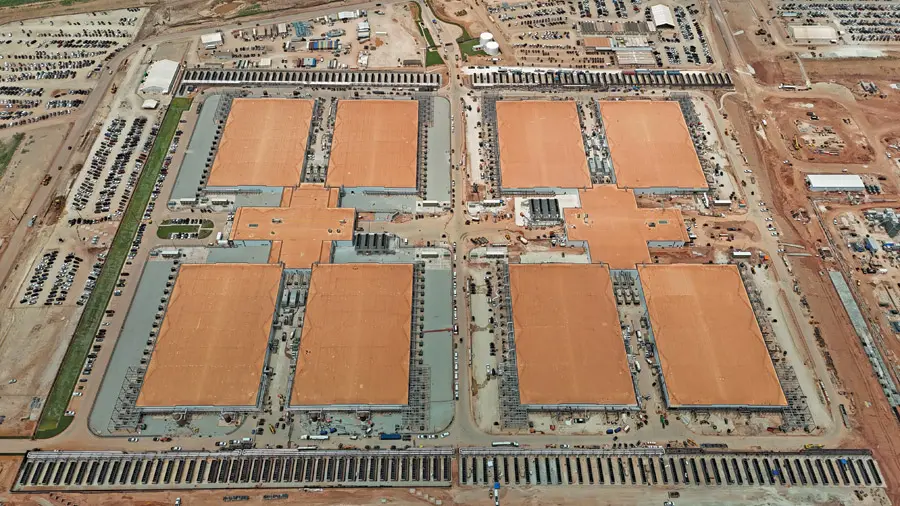
The campus is operated by Oracle. Its developer, called Crusoe, originally started in Bitcoin mining.

Founder Chase Lochmiller was formerly a partner at crypto fund Polychain Capital.

In 2018, he and his childhood friend Cully Cavness discovered that U.S. oil fields were flaring vast amounts of stranded associated natural gas daily. The duo moved generators and mining rigs to the wellheads, using what would have been wasted gas to mine Bitcoin.

The business logic was simple:Find power in remote areas and turn it into computing power very quickly.

Seven years later, their client has shifted from the Bitcoin network to OpenAI. In 2025, Crusoe sold its Bitcoin business of over 425 modular data centers to NYDIG to focus on developing AI.

Crusoe's transformation may seem like a major leap, but its core capabilities have remained consistent: finding power, building data centers, and operating and maintaining them.

Like Crusoe, many other companies and individuals have made similarly impressive pivots from Crypto to AI. They are not like the "PayPal Mafia"—originating from the same company—nor do they share a common organization. What connects them are three types of assets left over from the last Crypto cycle:

  • Electricity, land, and grid interconnection permits secured by mining companies;
  • Engineers and entrepreneurs trained by Crypto companies;
  • Capital accumulated during the last bull market.

After 2022, these three asset types began flowing into AI simultaneously.

Mining Companies Are Selling Electricity to AI, Not Mining Rigs

"The greatest conflict facing humanity's future is the contradiction between the ever-increasing need for data processing and limited computing power."

In 2019, Bitmain founder Jihan Wu wrote this in an article titled "The Beauty of Computing Power," explicitly stating it as the reason Bitmain was investing in AI chips.

At the time, these words seemed like public relations rhetoric. Looking back six years later, they read more like a prophecy written in advance.

In February 2026, Jihan Wu's mining company Bitdeer announced it was liquidating all its Bitcoin inventory to provide liquidity for building AI data centers, decisively pivoting from Crypto to AI.

Bitcoin mining companies pivoting to AI is often misunderstood by the public as "turning mining rigs into AI servers." The reality is different.

Bitcoin mining rigs are mostly ASIC chips designed for specific hash algorithms and cannot be used to train large models. Even the GPUs left over from Ethereum mining farms often fail to meet the networking, memory, liquid cooling, and reliability requirements of today's large AI clusters.

The truly valuable assets of mining companies are their data centers already connected to the power grid.

Building an AI data center, the hardest part is often not buying GPUs, but securing hundreds of megawatts of stable electricity, acquiring land, substations, transmission lines, and construction permits. This process can take years. Mining companies, driven by the need to lower costs and comply with regulations, have already completed much of this groundwork in North America, Northern Europe, and the Middle East.

When Bitcoin mining profits decline and AI companies are willing to sign long-term, high-value contracts, mining companies naturally begin switching clients.

CoreWeave was one of the earliest to complete this transition.

In 2016, three commodity traders placed a GPU on their pool table in a Manhattan office and started mining Ethereum. When the Crypto winter arrived, they took advantage of falling prices to acquire a large number of second-hand graphics cards, later expanding their business into film and TV rendering and machine learning.

The company was initially called Atlantic Crypto, later renamed CoreWeave. Its IPO documents show that before 2022, most of the company's revenue still came from cryptocurrency mining; thereafter, the Crypto business was completely discontinued.

Today, CoreWeave is a leading AI cloud company backed by NVIDIA. Its path is now being replicated by the entire crypto mining industry.

In 2026, TeraWulf signed a data center lease with Anthropic for approximately 401 megawatts over 20 years, with an initial contract value of about $19 billion;

Cipher Mining signed a 300-megawatt, approximately $5.5 billion, 15-year agreement with AWS;

Core Scientific allocated large amounts of data center capacity to CoreWeave on a long-term basis.

Hut 8 signed two consecutive 15-year leases at its Beacon Point campus in Texas, each with a base contract value of about $9.8 billion.

After reaching a $9.7 billion cloud services agreement with Microsoft, IREN in July 2026 disclosed new contracts totaling $2.8 billion.

According to CoinShares statistics, by the first quarter of 2026, publicly listed mining companies had announced over $70 billion in AI and high-performance computing contracts. Meanwhile, Bitcoin mining revenue per unit of hashrate once fell to around $30 to $35 per day per PH/s, pushing some mines using older equipment or with higher electricity costs close to breakeven.

Mining companies have transformed from computing power facilities of the crypto era into the computing power infrastructure of the AI era, remaining squarely in the spotlight.

From OpenSea to OpenRouter

Besides mining farms, people from the Crypto industry are also migrating to AI.

Alex Atallah is the co-founder and former CTO of OpenSea. At the height of the NFT craze, OpenSea's monthly trading volume once exceeded $4 billion. In July 2022, Atallah left the company, planning to start a new venture.

In 2023, he founded OpenRouter.

The problem OpenRouter solves is straightforward: there are increasingly more large language models, each with different prices, speeds, and capabilities. Developers don't want to integrate APIs for each model company. Through OpenRouter, they just need to connect one interface to call hundreds of models, with requests automatically routed based on price, performance, and availability.

In 2025, OpenRouter completed a combined $40 million in funding at a valuation of approximately $500 million.

In May 2026, it completed a $113 million Series B round led by CapitalG, raising its valuation to about $1.3 billion. Over the past six months, the number of tokens processed weekly on the platform grew from 5 trillion to 25 trillion.

OpenRouter and OpenSea don't do exactly the same thing, but their business structures are quite similar.

OpenSea aggregates NFT buyers and sellers, while OpenRouter aggregates models, compute suppliers, and developers. The former facilitates digital asset transactions, the latter facilitates inference requests. The product changed, but the ability to build markets and integrate fragmented supply did not.

Some Crypto traces even remain directly in the product. On OpenRouter's signup page, next to Google and GitHub login, there is still a MetaMask option, and the platform also accepts USDC payments.

Fal.ai is another example.

Founder Burkay Gur previously worked on building a machine learning platform at Coinbase. He started his own company in 2021, initially developing machine learning data pipelines and deployment tools.

After Stable Diffusion was open-sourced, they noticed that while image and video models were proliferating, inference was slow, deployment cumbersome, and GPU utilization low. So Fal.ai shifted its focus to generative media inference.

This pivot paid off quickly.

By mid-2025, Fal.ai's annualized revenue approached $95 million. In December of the same year, the company completed a $140 million Series D round led by Sequoia Capital, reaching a valuation of $4.5 billion. Companies like Adobe, Canva, and Perplexity all use its generative media infrastructure.

Using Crypto Money to Fuel AI

While mining companies provide power and data centers to AI, capital accumulated during the Crypto cycle is entering AI in another way.

The most direct example is Jed McCaleb.

He created the crypto exchange Mt.Gox, and later co-founded Ripple and Stellar, becoming one of the earliest billionaires in the Crypto industry.

In 2023, McCaleb's Navigation Fund allocated approximately $500 million to purchase 24,000 NVIDIA H100 GPUs in one go, forming Voltage Park to rent GPUs to AI companies and research institutions.

He didn't create another public blockchain. Instead, he turned the money earned from Crypto into the most scarce asset in the AI industry.

In 2026, Voltage Park merged with the AI development platform Lightning AI, with the combined entity valued at roughly $2.5 billion. Wealth accumulated from the last crypto cycle thus became part of the balance sheet of an AI cloud company.

The investment portfolio of SBF, founder of the now-collapsed crypto exchange FTX, provides an even more dramatic case.

In 2022, SBF invested $500 million in the then little-known Anthropic, acquiring approximately a 13.5% stake. After FTX's bankruptcy, the liquidation team sold these shares in batches in 2024, recovering about $1.3 billion. Today, Anthropic's post-money valuation is $965 billion. Assuming FTX had not sold its shares, its stake would likely be diluted to around 6.7%, worth approximately $65 billion—a roughly 130-fold return on the initial $500 million investment.

Cursor's story is more extreme.

In April 2022, SBF's fund Alameda participated in an early round of funding for Anysphere with $200,000. This company later launched the AI programming tool Cursor. After FTX entered bankruptcy proceedings, the liquidation team sold this stake for $200,000 in April 2023—almost exactly the original price.

In June 2026, SpaceX announced its acquisition of Anysphere in an all-stock deal valued at $60 billion. According to public reports, Alameda initially received rights representing about 5% of the company. If we completely ignore any dilution from subsequent funding rounds, the paper value of this stake could reach $3 billion—a 15,000-fold return on the initial $200,000 investment.

This shouldn't be interpreted solely as proof of SBF's investment genius. A more accurate understanding is that, even before ChatGPT's launch, some of the most aggressive, highest-risk-capital from the Crypto bull market had already begun seeking out AI projects.

During the Crypto market boom, a significant amount of capital believed two things:Computing power would become increasingly valuable, and software networks could expand globally in a very short time. AI fits both conditions perfectly.

Therefore, when Crypto capital entered AI, it wasn't just buying graphics cards; it was also funding new technological and organizational experiments.

Nous Research is a typical case.

Nous's Hermes Agent is an open-source AI agent capable of accumulating long-term memory and autonomously generating skills. According to OpenRouter statistics, Hermes Agent's token usage ranks first globally, surpassing Claude Code.
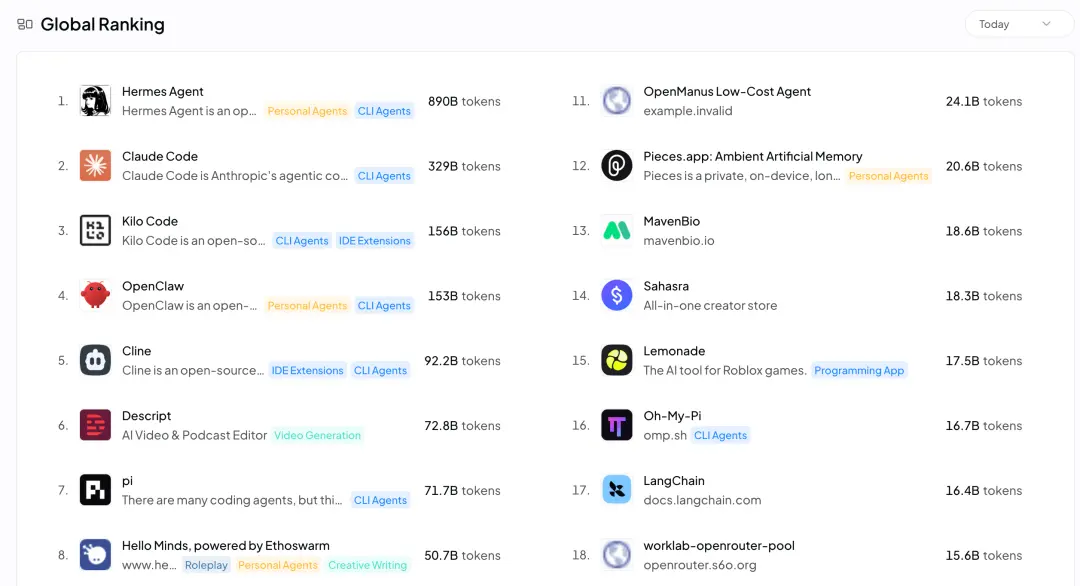
In 2025, Crypto investment firm Paradigm led Nous Research's $50 million Series A round.

According to reports at the time, this financing valued the company's yet-to-be-issued tokens at approximately $1 billion. Previous investors in Nous also included crypto VC Distributed Global and former Coinbase CTO Balaji Srinivasan.

Besides Hermes, Nous is also developing Psyche, a distributed model training network built on Solana.

Traditional AI labs need to concentrate large numbers of GPUs in a single data center. Psyche aims to validate an alternative path: connect GPUs scattered across different regions, owned by different participants, to collaboratively train models, coordinating training progress, verifying participants, and distributing rewards via smart contracts.

Currently, Psyche remains an experiment, with its testnet tokens explicitly labeled by the official team as having no economic value. However, it represents another kind of influence from Crypto capital entering AI.

OpenAI also seriously considered a similar direction in its early days.

OpenAI was founded as a non-profit in 2015, but the funding needed for cutting-edge models soon exceeded what donations could support. By the end of 2017, Sam Altman and Greg Brockman were already discussing new financing structures. One option was a token offering.

Later public internal emails show the team seriously researched issuing tokens in early 2018. Elon Musk explicitly opposed it, believing a token offering would severely damage OpenAI's credibility. OpenAI later added that by the end of January that year, the team itself had gradually lost interest in the plan.

OpenAI ultimately chose to establish a for-profit entity and secured massive investment from Microsoft, but Sam Altman didn't leave Crypto behind.

In 2019, he co-founded Worldcoin with Alex Blania and Max Novendstern. This project uses iris-scanning devices called Orbs to verify that a user is a real and unique human, establishing an identity and payment network via World ID and the WLD token.

From Crusoe and CoreWeave to OpenRouter, Fal.ai, and Nous Research, these individual stories full of survivor bias do not mean that Crypto companies have a higher chance of success when pivoting to AI.

Mining companies left behind electricity, land, and grid permits; exchanges and Web3 companies trained a group of engineers familiar with distributed systems, GPU orchestration, and globalized products; the wealth created by token appreciation then became capital for buying graphics cards, investing in model companies, and funding technological experiments.

Crypto didn't magically transform into AI. It merely channeled the resources left from the last cycle to the next industry that needed them more.


Trending Cryptos

Related Questions

QWhat is the main asset that Bitcoin mining companies are selling to AI companies, and why is it valuable?

ABitcoin mining companies are primarily selling access to electricity and data center infrastructure to AI companies, not their mining hardware. This is valuable because the most difficult and time-consuming part of building an AI data center is securing a stable, high-capacity power supply and obtaining land, permits, and grid connections. Crypto mining firms have already completed this groundwork in their pursuit of cheap, compliant power for mining.

QHow does the transition of companies like OpenSea's co-founder to creating OpenRouter demonstrate a transfer of skills from Crypto to AI?

AThe transition demonstrates a transfer of market-building and aggregation skills. OpenSea's Alex Atallah leveraged his experience in creating a platform that aggregated NFT buyers and sellers to build OpenRouter, which aggregates AI models, compute suppliers, and developers. The core competency—creating a marketplace to connect fragmented supply and demand—remained the same, even though the product shifted from digital assets to AI inference requests.

QIn what way did capital accumulated during the Crypto boom fund the development of the AI industry?

ACrypto capital funded the AI industry in several key ways: 1. Direct purchase of critical hardware, such as Jed McCaleb using his wealth to buy tens of thousands of Nvidia H100 GPUs to create Voltage Park. 2. Early-stage investments in AI startups, as seen with FTX/Alameda's early bets on Anthropic and Cursor (Anysphere). 3. Funding experimental AI projects and organizations, like Paradigm's investment in Nous Research, which explores decentralized model training via crypto-economic mechanisms.

QWhat was the original business model of Crusoe, and what core capability allowed it to pivot from Bitcoin mining to supporting OpenAI's 'Stargate' project?

ACrusoe's original business model involved using otherwise wasted natural gas from oil fields to generate electricity for Bitcoin mining. The core capability that enabled its pivot was its expertise in finding power sources in remote locations, building data centers quickly, and operating and maintaining them. This ability to 'find electricity and turn it into compute power in a very short time' was directly applicable to building the large-scale AI data centers required for projects like OpenAI's Stargate.

QAccording to the article, what are the three main types of assets left from the previous Crypto cycle that are now flowing into the AI sector?

AThe three main types of assets are: 1. Physical Infrastructure: The electricity, land, and grid interconnection permits secured by mining companies. 2. Human Capital: The engineers and entrepreneurs trained in distributed systems, GPU orchestration, and global product development within Crypto and Web3 companies. 3. Financial Capital: The wealth accumulated during the crypto bull market, which is now being deployed to purchase GPUs, invest in AI companies, and fund technical experiments.

Related Reads

After Three Consecutive Quarters of Decline, Can the Crypto Market Find a Window for Stabilization in Q3?

The cryptocurrency market has just concluded its worst-performing quarter since 2022, with total capitalization dropping 12.6% to $2.1 trillion. All core metrics indicate capital is leaving the sector, not just rotating within it. Bitcoin fell 14.2% and Ethereum dropped 25.4% in Q2, breaking their previous correlation with US tech stocks. A key driver is the reversal in US spot Bitcoin ETF flows, which saw a net outflow of approximately $4.67 billion in Q2, including a record monthly outflow near $4.5 billion in June. While recent data suggests long-term holders are accumulating again, sustained ETF outflows mean continued selling pressure. Market focus is now singularly on the Federal Reserve. The upcoming July FOMC meeting is seen as the most critical event for Q3. A dovish signal could support Bitcoin reclaiming a $68,000-$84,000 range, while a hawkish stance might establish a new trading band around $50,000-$56,000. Additionally, regulatory uncertainty persists, with the progress of the crucial *CLARITY Act* stalling in the Senate, reducing its perceived 2026 passage probability to 40-45%. Despite the broad downturn, a few sectors showed growth. Prediction markets saw nominal volume surge 48.7% year-over-year to $113.8 billion, and tokenized collectibles transaction volume rose 143% quarterly to $1.4 billion. The Real-World Asset (RWA) tokenization sector also continued steady growth, now representing ~$28.1 billion in on-chain value. The market's foundation for an extreme crash appears limited, with Bitcoin price hovering near its 200-week moving average. However, the trading paradigm has shifted from narrative-driven speculation to decisions based on price action, policy developments, and interest rate expectations, making a broad sentiment-driven rally unlikely in the near term.

marsbit11h ago

After Three Consecutive Quarters of Decline, Can the Crypto Market Find a Window for Stabilization in Q3?

marsbit11h ago

BIT Trading Moment: BTC Still Suppressed by Weekly 200 EMA, Rejection May Restart Decline; Storage and Semiconductors that Surged Last Night Begin Falling in Evening Trading

**Crypto & Stock Market Wrap: Bitcoin Tests Resistance, Stocks Retreat After AI Surge** Bitcoin consolidates around $66,000, facing key resistance near $68,000—an area seen as a major psychological and technical hurdle where previous rallies have failed. Analysts note the cryptocurrency is caught between its 200-week moving average (~$63,333) and 200-week EMA (~$68,328). A clear break above $68k is needed to signal a stronger bullish trend, while a rejection could lead to a retest of $63k support. Market sentiment remains cautious, with low futures open interest pointing to a low-liquidity rebound rather than a full bull market. Bitcoin spot ETFs saw another $203 million inflow. US stock futures pointed lower after a strong Tuesday session led by a massive rebound in semiconductors and memory stocks. The rally was fueled by renewed optimism about AI-driven hardware demand, with Micron, SanDisk, and SK Hynix surging. However, those gains reversed in pre-market trading. Super Micro Computer (SMCI) soared over 20% after hours on strong guidance and a record backlog. Other standouts included Rocket Lab and nuclear energy plays Oklo and X-Energy. Rising oil prices (Brent above $91) and climbing Treasury yields (10-year near 4.64%), however, are reigniting inflation concerns and acting as a headwind for equities. In Asia, markets were mixed. South Korea's KOSPI pared early gains to close slightly higher as semiconductor stocks like SK Hynix gave back initial surges. Japan's Nikkei edged lower as the yen hit a fresh 38-year low against the dollar, raising fears of potential market intervention. Key events to watch include the Samsung Galaxy launch, AMD's AI event, and a slew of major tech earnings from Alphabet, Tesla, and IBM after the close on Wednesday, followed by the ECB meeting and Intel's earnings on Thursday.

marsbit11h ago

BIT Trading Moment: BTC Still Suppressed by Weekly 200 EMA, Rejection May Restart Decline; Storage and Semiconductors that Surged Last Night Begin Falling in Evening Trading

marsbit11h ago

Former CFTC Chairman, Circle President Tarbert: Preaching Long-Termism While Cashing Out $30 Million Himself

Former CFTC Chairman and Circle President Heath Tarbert has consistently advocated for a long-term vision in public, urging patience from investors as Circle’s stock price has fallen significantly from its peak. However, it has been revealed that since Circle’s IPO, Tarbert has continuously sold his CRCL shares through pre-arranged trading plans, cashing out approximately $30 million, without making any public market purchases. This contrast between his public messaging and personal actions has drawn criticism. Tarbert joined Circle in July 2023 as Chief Legal Officer, leveraging his regulatory experience to help guide the company through its IPO and expansion. Despite promoting stablecoins as long-term infrastructure, he established a 10b5-1 trading plan just before Circle went public, leading to substantial stock sales over the following year. In March 2026, he initiated another plan to sell more shares. His career trajectory highlights a pattern of moving between high-level regulatory roles and influential positions in the financial sector. After resigning as CFTC Chairman in early 2021, he joined Citadel Securities as Chief Legal Officer just 27 days later, during a period of intense regulatory scrutiny for the firm. He later joined Circle, aiding its efforts to navigate regulatory challenges for its public listing. While Tarbert's expertise in policy and compliance is valuable to companies like Circle, his actions—advocating long-term confidence while personally divesting—raise questions about the alignment between his public statements and his private financial decisions, leaving investors who followed his advice to bear the market risks.

marsbit12h ago

Former CFTC Chairman, Circle President Tarbert: Preaching Long-Termism While Cashing Out $30 Million Himself

marsbit12h ago

Gate Research Institute: The 'Wall Street-ization' Wave of Crypto Financial Products – Competition or Integration?

The article titled "Gate Research Institute: Are Crypto Financial Products Sparking a 'Wall Street' Wave—Competition or Convergence?" explores the evolving relationship between the crypto ecosystem and traditional finance (TradFi). The piece begins by reflecting on Bitcoin's original 2009 vision of decentralization, disintermediation, and moving away from banks. It then contrasts this with the 2024 landscape, where key crypto assets like Bitcoin are increasingly held through Wall Street products like ETFs issued by giants like BlackRock. The article questions whether this signifies that TradFi is systematically taking over the rights to issue, price, custody, and distribute crypto financial assets. The core argument is that this is not a zero-sum takeover but rather a bidirectional convergence where each side addresses the other's weaknesses. Crypto offers 24/7 global markets, programmable settlement, and open access but lacks compliant channels, institutional-grade custody, deep fiat liquidity, and mainstream distribution. TradFi possesses these but is constrained by legacy systems, limited operating hours, and slow settlement. Two primary convergence paths are highlighted: * **Path A (CEX to TradFi):** Exemplified by Gate, which has progressed from offering tokenized stocks and CFDs to providing direct, real stock trading (US, Hong Kong, South Korea) within its platform, using USDT. * **Path B (TradFi to Crypto):** Exemplified by Robinhood, which has integrated crypto trading, acquired exchanges like Bitstamp, and is moving traditional assets like stocks onto the blockchain via tokenization and its own Layer 2. Both paths are ultimately competing to become the next-generation, unified financial account—a "super account" where users can seamlessly trade cryptocurrencies, stocks, ETFs, RWA (Real World Assets), and tokenized treasury products in one interface. The growth of RWA and tokenized treasuries (e.g., BlackRock's BUIDL) is presented as the asset-layer fusion, providing stable, yield-bearing assets on-chain and acting as a bridge between the two worlds. In conclusion, the "Wall Street-ization" of crypto is framed as a mutual transformation. Decentralized ideals persist in the protocol layer, while at the application layer, a more efficient, global, and accessible unified capital market is emerging from this convergence. The future competition lies not between crypto exchanges and stockbrokers, but between platforms vying to offer the most comprehensive asset coverage, liquidity, and user experience within a single account.

marsbit12h ago

Gate Research Institute: The 'Wall Street-ization' Wave of Crypto Financial Products – Competition or Integration?

marsbit12h ago

Trading

Spot

Hot Articles

What is $BITCOIN

DIGITAL GOLD ($BITCOIN): A Comprehensive Analysis Introduction to DIGITAL GOLD ($BITCOIN) DIGITAL GOLD ($BITCOIN) is a blockchain-based project operating on the Solana network, which aims to combine the characteristics of traditional precious metals with the innovation of decentralized technologies. While it shares a name with Bitcoin, often referred to as “digital gold” due to its perception as a store of value, DIGITAL GOLD is a separate token designed to create a unique ecosystem within the Web3 landscape. Its goal is to position itself as a viable alternative digital asset, although specifics regarding its applications and functionalities are still developing. What is DIGITAL GOLD ($BITCOIN)? DIGITAL GOLD ($BITCOIN) is a cryptocurrency token explicitly designed for use on the Solana blockchain. In contrast to Bitcoin, which provides a widely recognized value storage role, this token appears to focus on broader applications and characteristics. Notable aspects include: Blockchain Infrastructure: The token is built on the Solana blockchain, known for its capacity to handle high-speed and low-cost transactions. Supply Dynamics: DIGITAL GOLD has a maximum supply capped at 100 quadrillion tokens (100P $BITCOIN), although details regarding its circulating supply are currently undisclosed. Utility: While precise functionalities are not explicitly outlined, there are indications that the token could be utilized for various applications, potentially involving decentralized applications (dApps) or asset tokenization strategies. Who is the Creator of DIGITAL GOLD ($BITCOIN)? At present, the identity of the creators and development team behind DIGITAL GOLD ($BITCOIN) remains unknown. This situation is typical among many innovative projects within the blockchain space, particularly those aligning with decentralized finance and meme coin phenomena. While such anonymity may foster a community-driven culture, it intensifies concerns about governance and accountability. Who are the Investors of DIGITAL GOLD ($BITCOIN)? The available information indicates that DIGITAL GOLD ($BITCOIN) does not have any known institutional backers or prominent venture capital investments. The project seems to operate on a peer-to-peer model focused on community support and adoption rather than traditional funding routes. Its activity and liquidity are primarily situated on decentralized exchanges (DEXs), such as PumpSwap, rather than established centralized trading platforms, further highlighting its grassroots approach. How DIGITAL GOLD ($BITCOIN) Works The operational mechanics of DIGITAL GOLD ($BITCOIN) can be elaborated on based on its blockchain design and network attributes: Consensus Mechanism: By leveraging Solana’s unique proof-of-history (PoH) combined with a proof-of-stake (PoS) model, the project ensures efficient transaction validation contributing to the network's high performance. Tokenomics: While specific deflationary mechanisms have not been extensively detailed, the vast maximum token supply implies that it may cater to microtransactions or niche use cases that are still to be defined. Interoperability: There exists the potential for integration with Solana’s broader ecosystem, including various decentralized finance (DeFi) platforms. However, the details regarding specific integrations remain unspecified. Timeline of Key Events Here is a timeline that highlights significant milestones concerning DIGITAL GOLD ($BITCOIN): 2023: The initial deployment of the token occurs on the Solana blockchain, marked by its contract address. 2024: DIGITAL GOLD gains visibility as it becomes available for trading on decentralized exchanges like PumpSwap, allowing users to trade it against SOL. 2025: The project witnesses sporadic trading activity and potential interest in community-led engagements, although no noteworthy partnerships or technical advancements have been documented as of yet. Critical Analysis Strengths Scalability: The underlying Solana infrastructure supports high transaction volumes, which could enhance the utility of $BITCOIN in various transaction scenarios. Accessibility: The potential low trading price per token could attract retail investors, facilitating wider participation due to fractional ownership opportunities. Risks Lack of Transparency: The absence of publicly known backers, developers, or an audit process may yield skepticism regarding the project's sustainability and trustworthiness. Market Volatility: The trading activity is heavily reliant on speculative behavior, which can result in significant price volatility and uncertainty for investors. Conclusion DIGITAL GOLD ($BITCOIN) emerges as an intriguing yet ambiguous project within the rapidly evolving Solana ecosystem. While it attempts to leverage the “digital gold” narrative, its departure from Bitcoin's established role as a store of value underscores the need for a clearer differentiation of its intended utility and governance structure. Future acceptance and adoption will likely depend on addressing the current opacity and defining its operational and economic strategies more explicitly. Note: This report encompasses synthesised information available as of October 2023, and developments may have transpired beyond the research period.

987 Total ViewsPublished 2025.05.13Updated 2025.05.13

What is $BITCOIN

Discussions

Welcome to the HTX Community. Here, you can stay informed about the latest platform developments and gain access to professional market insights. Users' opinions on the price of BTC (BTC) are presented below.

活动图片














