Makalah Prompt Engineering Diterima di ICML 2026, Warganet Ribut Berdebat

marsbitPublished on 2026-07-15Last updated on 2026-07-15

Abstract

Makalah rekayasa prompt telah diterima di konferensi ICML 2026, memicu perdebatan luas di komunitas. Makalah ini memperkenalkan metode "Verbalized Sampling" (VS) yang hanya dengan mengubah instruksi prompt, dapat meningkatkan keragaman output model bahasa besar (LLM) dan mengurangi masalah "Mode Collapse". Metode ini meminta model untuk menghasilkan beberapa jawaban sekaligus dan memberikan nilai probabilitas verbal untuk setiap opsi. Penulis berargumen bahwa akar masalah homogenitas output terletak pada bias tipikal dalam data preferensi manusia yang digunakan untuk melatih model, bukan semata-mata pada algoritma. Eksperimen menunjukkan peningkatan keragaman 1.6–2.1 kali dalam tugas kreatif tanpa mengorbankan akurasi atau keamanan. Reaksi di komunitas terbelah. Sebagian meragukan nilai inovasi metode yang "hanya" memodifikasi prompt dan mempertanyakan stabilitas serta generalisasinya. Mereka khawatir tren ini mencerminkan standar publikasi yang longgar. Di sisi lain, pendukung menekankan bahwa penelitian yang solid tidak harus kompleks, selama memiliki dasar teoretis, eksperimen ketat, dan hasil yang dapat direproduksi. Mereka menyamakannya dengan awal metode "Chain-of-Thought" (CoT), yang juga dimulai dari instruksi prompt sederhana namun membuka bidang penelitian baru. Makalah ini menandai pergeseran potensial dalam penelitian ML, di mana teknik pada fase inferensi mendapatkan perhatian setara dengan inovasi pelatihan model.

Zaman sekarang, prompt engineering bisa terbit di ICML juga???

Belakangan ini, seorang netizen membagikan sebuah makalah yang baru diterima di ICML 2026 ke Reddit, dan postingannya langsung viral, komentar melonjak drastis.

Tapi semua orang kebingungan: Ini bisa diterima?
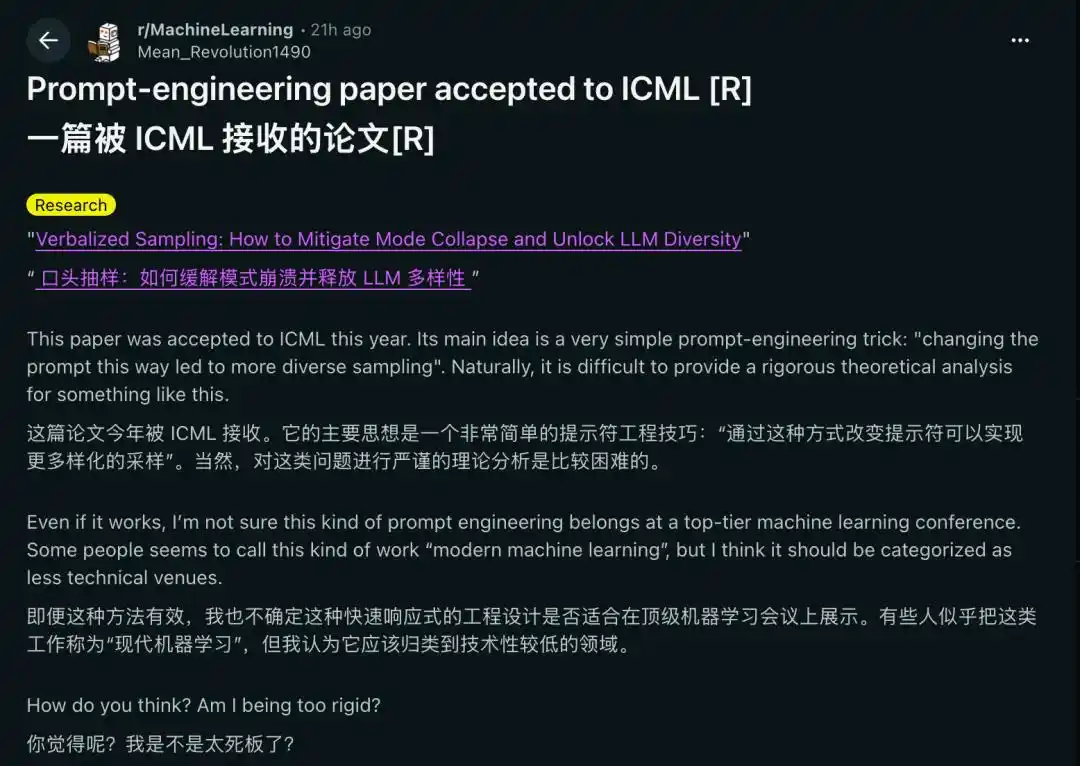
Tidak mengajukan algoritma optimasi baru apa pun, juga tidak melatih model besar baru, penulis hanya melakukan satu hal——

Mengubah Prompt.

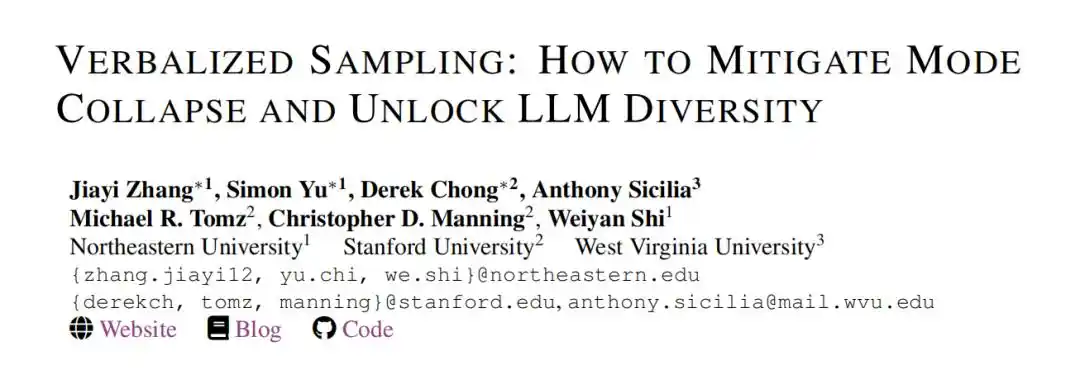
Makalah ini mengusulkan metode bernama Verbalized Sampling (VS), yang hanya dengan menyesuaikan prompt, dapat secara signifikan meningkatkan keragaman output model besar, meredakan masalah Mode Collapse (keruntuhan mode) yang telah lama mengganggu LLM.

Kedengarannya cukup bernilai praktis, tetapi apakah pantas sebuah trik Prompt saja bisa masuk konferensi puncak?

Kalau begitu, mari kita lihat dulu makalahnya, baru ambil kesimpulan.

Sebuah Makalah ICML yang Sangat Kontroversial
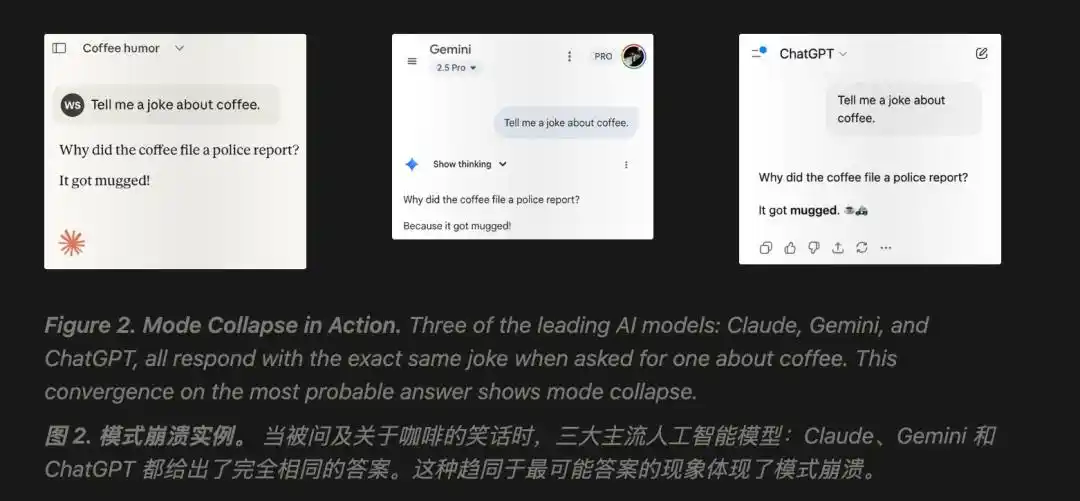
Coba tanya, apakah Anda pernah merasa, AI semakin seragam.

Tanyakan padanya sepuluh kali "buatkan saya sebuah lelucon", jawaban yang didapat sering kali sangat mirip. Dan bukan hanya tugas kreatif, menjawab pertanyaan juga begitu, pembuatan kode juga begitu......

Fenomena ini, di dunia akademis disebut secara kolektif sebagai Mode Collapse (Keruntuhan Mode).

Sederhananya, model semakin suka mengeluarkan jawaban klasik yang paling aman dan memiliki probabilitas tertinggi, sebaliknya menolak ide-ide kreatif yang berbeda.
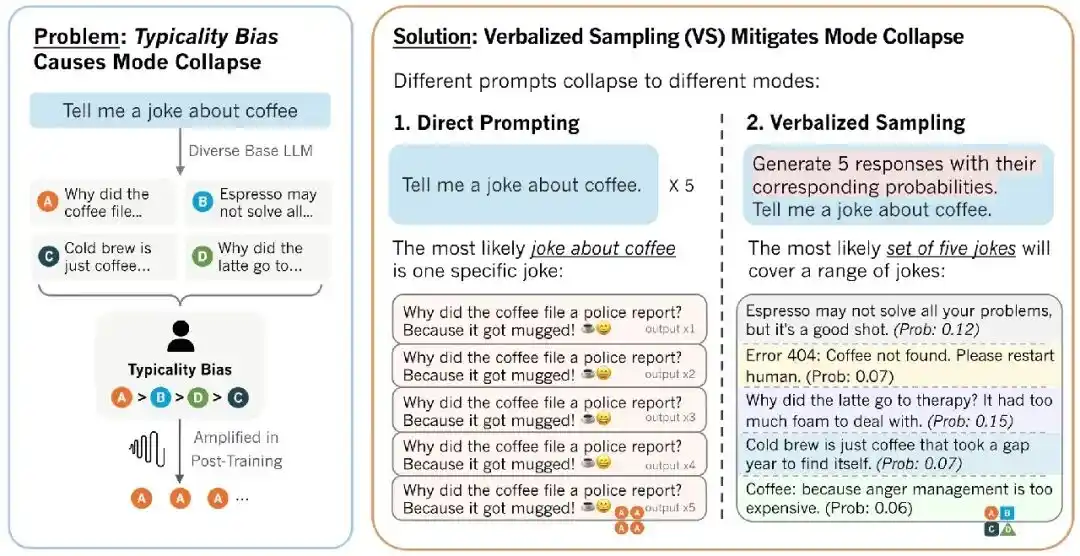
Dulu untuk menyelesaikan masalah model ini, kebanyakan peneliti akan terlebih dahulu memikirkan menyesuaikan parameter sampling, mengubah algoritma dekode, melatih ulang, dll. Tetapi makalah ini mengambil pendekatan berbeda, langsung meminta model untuk mengeluarkan proses sampling-nya sendiri juga.

Sebagai contoh, masih tentang bercerita lelucon tadi, di sini penulis akan mengubah prompt, meminta model:

Hasilkan 5 lelucon, sekaligus berikan nilai probabilitas yang mungkin untuk setiap lelucon.

Kemudian model dapat menghasilkan jawaban yang lebih beragam dan lebih sedikit pengulangan.

Kedengarannya sangat sederhana, bukan? Faktanya inilah kontribusi inti makalah ini——metode Verbalized Sampling. Bahkan fine-tuning pun tidak diperlukan, hanya dengan mengganti cara bertanya, dapat secara besar meningkatkan keragaman konten.
Tetapi dalam makalahnya, penulis juga memberikan proses argumentasi yang ketat.

Pertama yang dijawab adalah penyebab mendasar mengapa model menjadi seragam.

Dulu dunia akademis menyalahkan masalah ini pada level algoritma, misalnya model reward tidak cukup baik, pengaturan penalti KL tidak cukup rasional. Makalah ini menyelidiki lebih dalam, berpendapat bahwa akar penyakit sebenarnya terletak pada data preferensi itu sendiri.

Mereka mengusulkan konsep bernama Bias Tipikalitas, dari sudut pandang psikologi kognitif, anotator manusia secara alami lebih menyukai teks yang familiar, lancar, dan konvensional, saat memberikan skor akan secara alami memberikan nilai lebih tinggi pada jawaban yang stereotip dan populer.
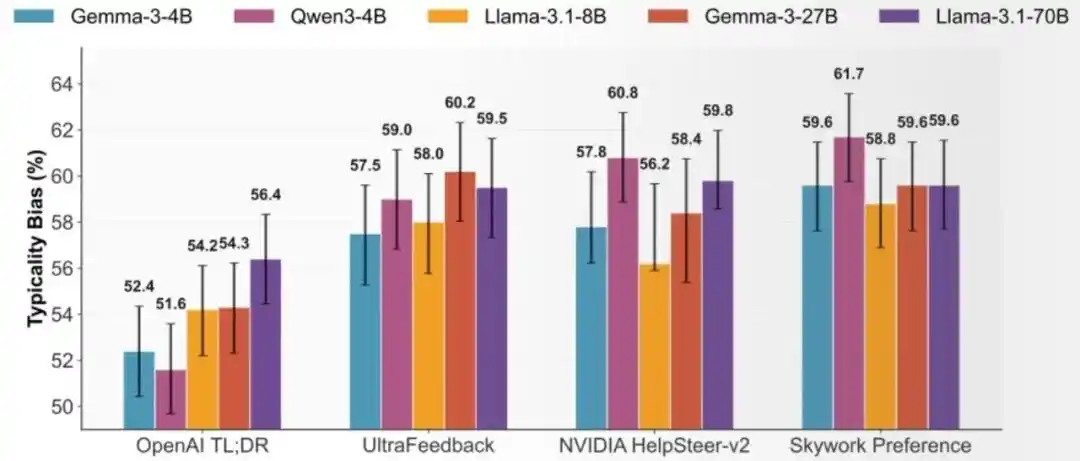
Jadi bahkan jika model reward dan algoritma optimasi dibuat sempurna, selama data preferensi manusia yang digunakan untuk pelatihan membawa bias tipikalitas bawaan, model setelah alignment tetap akan mengalami mode collapse.

Mengenai hal ini, penulis menguji berulang kali pada lima dataset preferensi dan model dasar yang berbeda, kesimpulannya tetap konsisten.

Setelah memahami lapisan ini, penulis berpendapat karena masalahnya tertanam dalam data pelatihan, maka hanya perlu mempertimbangkan merancang skema prompt pada tahap inferensi untuk mengoreksi, yaitu dalam Prompt meminta model mengeluarkan distribusi probabilitas lengkap, sehingga dapat membangkitkan kembali distribusi output yang beragam yang sebenarnya dimiliki model pada tahap pra-pelatihan, menemukan kembali keragaman.

Sisanya adalah menjalankan metode ini di berbagai skenario eksperimen, hasil menunjukkan, dalam tugas penulisan kreatif, keragamannya 1,6~2,1 kali lipat dari prompt biasa, sekaligus juga tidak mengurangi akurasi fakta konten dan tingkat keamanan model.

Dan semakin kuat kemampuan model, semakin besar parameter, efek peningkatan keragaman yang dibawa VS semakin jelas.
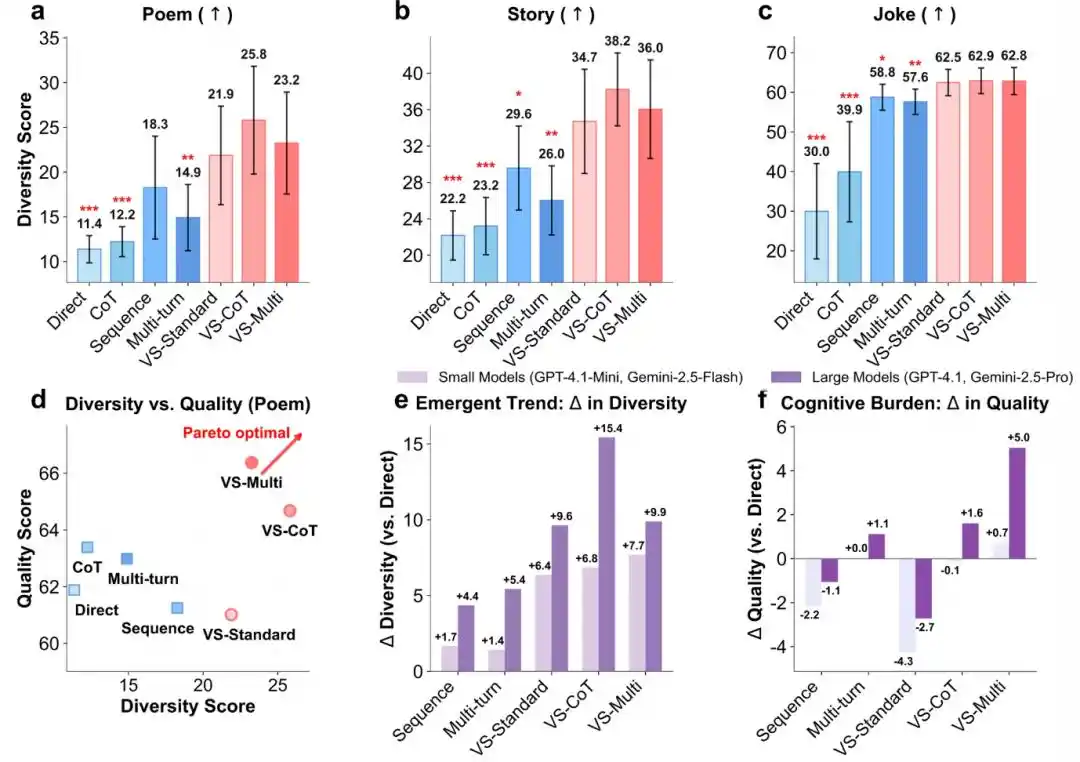
Jadi memang benar metode akhir yang diberikan makalah ini sederhana, tapi ICML tetap Pass dan setuju.

Warganet Reddit Ribut Berdebat

Tapi di bawah postingan asli, evaluasi terhadap makalah ini agak terpolarisasi.

Banyak netizen menyatakan, dulu ICML adalah model baru, algoritma baru, teori baru, inovasi hardcore seperti itu, hanya melakukan Prompt, optimasi alur inferensi belum bisa dianggap sebagai penelitian machine learning yang sesungguhnya.

Dibandingkan dengan itu, inovasi pekerjaan ini agak tipis, juga ada beberapa masalah:

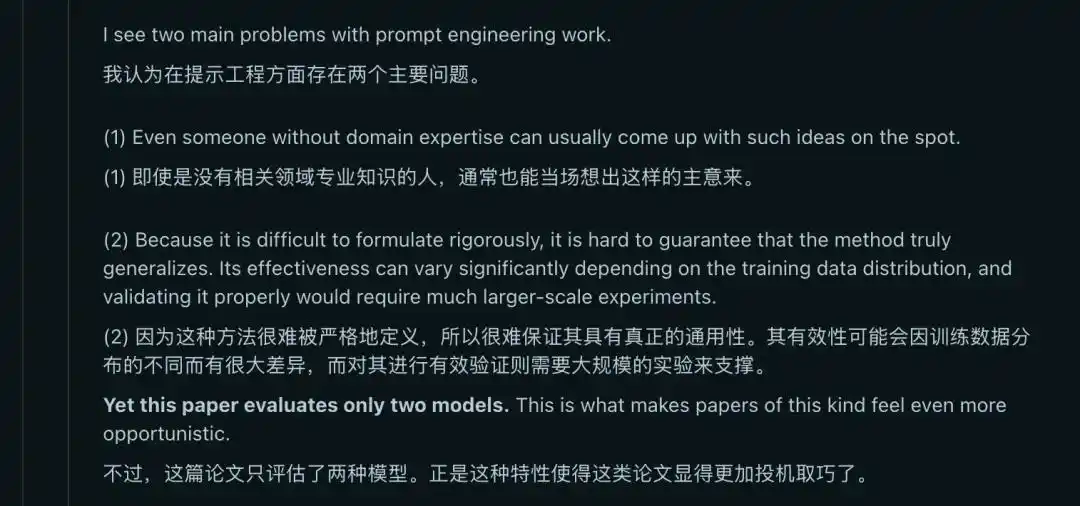
Pertama, metode serupa menulis instruksi juga bukan orisinal, bahkan ada yang mengatakan dirinya kemarin sudah menulis Prompt seperti ini; Kedua, teori tidak mudah diverifikasi, karena Prompt mungkin berganti model bisa gagal, tidak stabil seperti algoritma; Ketiga, skala eksperimen terbatas, tidak cukup untuk membuktikan ini adalah hukum yang universal.
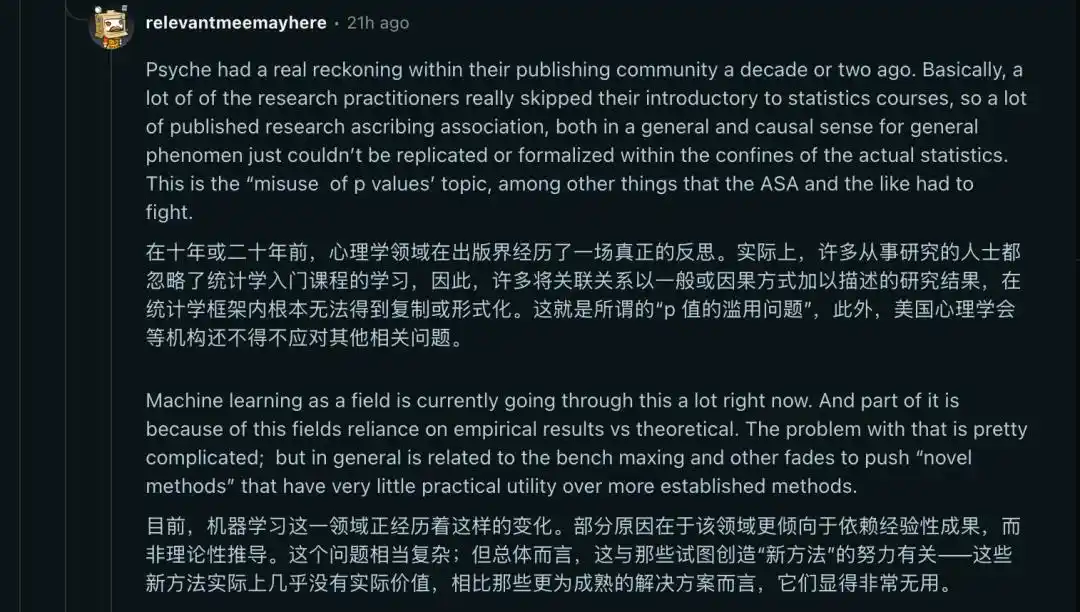
Ada juga netizen yang secara langsung menganalogikan kondisi saat ini di bidang machine learning dengan krisis akademis di dunia psikologi belasan tahun lalu.

Saat itu banyak peneliti dasar statistik lemah, menyalahgunakan alat statistik, menyebabkan kesimpulan banyak makalah tidak dapat direproduksi, industri mengalami krisis kepercayaan parah, sedangkan industri machine learning sekarang juga sangat bergantung pada eksperimen empiris, mengabaikan dukungan teori yang ketat.

Industri yang kompetitif mengejar metode baru, tetapi secara umum ada budaya over-tuning, benchmark chasing. Banyak algoritma inovatif yang disebut-sebut, dibandingkan dengan model baseline matang hampir tidak memiliki nilai praktis implementasi, hanya mengandalkan peningkatan indikator kecil dibungkus sebagai hasil inovasi.

Secara esensial, semuanya adalah masalah publikasi makalah yang disebabkan oleh ekspansi disiplin ilmu yang cepat, namun norma praktisi tidak jelas.
Tapi pendukung berpendapat, penelitian ilmiah bukanlah adu siapa metodenya lebih rumit, selama hipotesis jelas, eksperimen memadai, hasil stabil dan dapat direproduksi, juga bisa dianggap sebagai penelitian yang bagus.

Misalnya makalah ini, dia menjelaskan dengan baik apa itu mode collapse, dan mengajukan bahwa masalah sebenarnya terletak pada preferensi tipikalitas, pandangan ini lebih penting daripada Prompt itu sendiri.
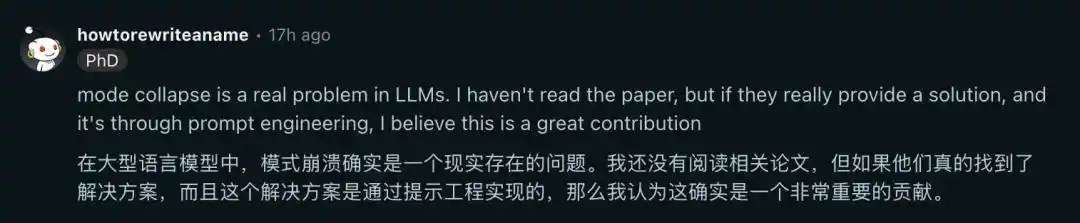
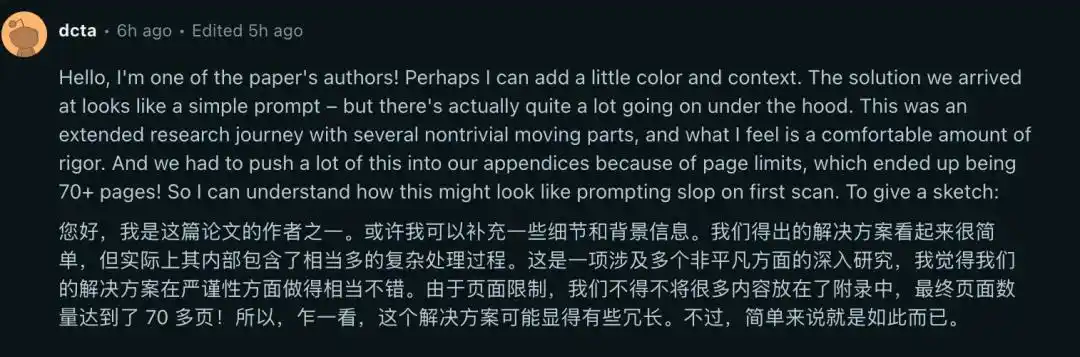
Salah satu penulis sendiri juga membalas di kolom komentar, menyatakan bahwa makalah ini terlihat sederhana, tetapi sebenarnya mengandung banyak sekali proses penanganan yang kompleks.

Seluruh pekerjaan ini mencakup pelacakan masalah lengkap, atribusi teori baru, derivasi matematika, eksperimen kuantitatif multi-dimensi, bukan pekerjaan asal mengutak-atik prompt.
Banyak orang juga menyebutkan Chain-of-Thought (CoT). Ketika CoT pertama kali muncul, esensinya juga hanyalah sebuah Prompt:

Mari kita berpikir langkah demi langkah.

Tapi sekarang hampir semua metode reasoning, dapat ditelusuri kembali ke CoT, ini justru menunjukkan, prompt engineering sudah bukan sekadar menulis prompt, dia sedang menjadi metode baru untuk meneliti perilaku model.

Belasan tahun terakhir, penelitian machine learning hampir semuanya berkisar pada pelatihan, tetapi sekarang beberapa teknik penggunaan di tahap inferensi juga perlahan-lahan menuju inti penelitian machine learning.

Mungkin dalam beberapa tahun ke depan, kita akan melihat semakin banyak makalah seperti ini. Mereka tidak menambahkan satu baris kode pelatihan atau satu parameter model pun, namun tetap dapat mengubah batas kemampuan model besar.

Perkenalan Tim Peneliti

Terakhir kita lihat tim penelitinya.

Pekerjaan ini dilakukan oleh tim Weiyan Shi dari Northeastern University (AS) bersama Manning Lab Stanford, West Virginia University, Jiayi Zhang, Simon Yu, Derek Chong sebagai penulis pertama bersama.

Jiayi Zhang, S1 di University of Michigan, mendapatkan tiga gelar sarjana Ilmu Komputer, Matematika, dan Linguistik, kemudian melanjutkan studi magister Ilmu Komputer di Northeastern University (AS).

Makalah lain miliknya yang diterima di konferensi puncak NLP NAACL 2024, "Analyzing the Role of Semantic Representations in the Era of Large Language Models", juga berkisar pada representasi semantik dan model besar.

Simon Yu, saat ini sedang mengejar gelar doktor di Northeastern University (AS), arah utama penelitiannya adalah mekanisme alignment dan reinforcement learning dalam model besar. S1 dan S2 keduanya di University of Edinburgh, pernah menerbitkan beberapa makalah konferensi puncak.

Selain makalah ini, makalah lain miliknya "Unsafer in Many Turns: Benchmarking and Defending Multi-Turn Safety Risks in Tool-Using Agents" juga diterima di ICML 2026.

Derek Chong, magister lulusan Stanford University, saat ini adalah peneliti di Stanford AI Lab, arah penelitian utama berfokus pada NLP model besar.

Pernah memiliki pengalaman wirausaha pendiri selama tiga tahun, dan bergabung dengan Ello sebagai ilmuwan terapan, berpartisipasi dalam pengembangan implementasi AI di sisi industri, landasan teori penelitiannya solid, sekaligus juga memiliki pengalaman praktik langsung yang kaya.

Referensi tautan:[1]https://www.reddit.com/r/MachineLearning/comments/1uv1xb3/promptengineering_paper_accepted_to_icml_r/

[2]https://www.linkedin.com/in/jiayizx/[3]https://simonucl.github.io/[4]https://www.linkedin.com/in/derekch/

Artikel ini berasal dari akun WeChat publik "量子位", penulis: 关注前沿科技

Trending Cryptos

Related Questions

QApa itu Verbalized Sampling (VS) yang diusulkan dalam makalah ICML 2026?

AVerbalized Sampling (VS) adalah metode baru yang diusulkan dalam makalah tersebut untuk meningkatkan keberagaman output model bahasa besar (LLM). Metode ini bekerja dengan memodifikasi prompt, yaitu dengan meminta model tidak hanya menghasilkan jawaban, tetapi juga memberikan distribusi probabilitas verbal (nilai kemungkinan) untuk beberapa opsi jawaban yang berbeda. Dengan 'mengungkapkan' proses pengambilan sampel internalnya, model dapat mengakses kembali distribusi output yang lebih beragam dari fase pra-pelatihan, sehingga mengurangi masalah mode collapse (keruntuhan mode).

QMengapa metode 'hanya mengubah prompt' ini dapat menimbulkan kontroversi di komunitas seperti yang terlihat di Reddit?

AKontroversi muncul karena beberapa pengguna Reddit menganggap inovasi dalam makalah ini terlalu sederhana untuk konferensi bergengsi seperti ICML. Kritik berfokus pada: (1) Kekurangan kebaruan, karena teknik serupa mungkin sudah digunakan secara informal. (2) Kekhawatiran bahwa efektivitas prompt mungkin tidak stabil atau bergantung pada model tertentu. (3) Kekhawatiran bahwa eksperimen mungkin belum cukup untuk membuktikan prinsip universal. Beberapa berpendapat bahwa riset ML seharusnya lebih berfokus pada algoritma, model, atau teori baru yang ketat, bukan pada optimasi di tahap inferensi.

QApa yang diidentifikasi peneliti sebagai akar penyebab utama mode collapse pada LLM dalam makalah ini?

APara peneliti mengidentifikasi bahwa akar penyebab utama mode collapse bukan pada algoritma pelatihan atau model reward, melainkan pada data preferensi manusia yang digunakan untuk melatih model. Mereka memperkenalkan konsep 'bias tipikalitas' (typicality bias), yaitu kecenderungan alami manusia (annotator) untuk lebih menyukai dan memberikan nilai tinggi pada teks yang familiar, lancar, dan konvensional. Bias ini tertanam dalam data pelatihan, sehingga model yang telah selaras (aligned) dengan data tersebut cenderung menghasilkan respons yang aman dan seragam, meskipun pada dasarnya memiliki kapasitas untuk menghasilkan output yang lebih beragam.

QBagaimana perbandingan peningkatan keberagaman yang dicapai metode VS menurut hasil eksperimen dalam makalah?

AMenurut hasil eksperimen yang dipaparkan dalam makalah, metode Verbalized Sampling (VS) berhasil meningkatkan keberagaman output secara signifikan. Dalam tugas penulisan kreatif, peningkatan keberagamannya mencapai 1.6 hingga 2.1 kali lipat dibandingkan dengan penggunaan prompt standar. Peningkatan ini dicapai tanpa mengorbankan akurasi faktual dari konten atau tingkat keamanan model. Selain itu, penelitian juga menunjukkan bahwa efek peningkatan keberagaman ini lebih terlihat pada model yang lebih kuat dan memiliki parameter lebih besar.

QSiapa saja peneliti utama di balik makalah ICML 2026 tentang Verbalized Sampling ini?

AMakalah ini merupakan kerja sama antara tim Weiyan Shi dari Northeastern University, Manning Laboratory dari Stanford University, dan West Virginia University. Tiga penulis pertama yang berkontribusi sama adalah: (1) Jiayi Zhang, mahasiswa magister di Northeastern University dengan latar belakang ilmu komputer, matematika, dan linguistik. (2) Simon Yu, kandidat PhD di Northeastern University yang fokus pada alignment dan reinforcement learning untuk model besar. (3) Derek Chong, peneliti di Stanford AI Lab dengan pengalaman sebagai pendiri startup dan ilmuwan terapan di industri.

Related Reads

Goldman Sachs: July Smashes Through Crowded Trades, U.S. Stock Bull Market Not Broken but Harder to Navigate

Goldman Sachs: July Sees Crowded Trades Unwound, U.S. Bull Market Intact but Getting Tougher. The U.S. stock market in July did not see an index-level crash, but rather a significant unwinding of speculative positions. While the S&P 500 remained stable—trading within a narrow 3.5% range and staying within 2% of its high—underlying market dynamics were volatile. Heavily crowded trades, particularly in high-momentum tech, AI-linked stocks, and Asian strategies, faced severe pressure and forced deleveraging. Data indicates this was a meaningful cleanse, not a minor adjustment. Global tech exposure saw its largest sell-off in over five years, leverage in Korean equity ETFs plummeted, and Goldman's prime brokerage recorded the largest gross exposure reduction since late 2022. Leverage on momentum factors among fundamental long/short clients fell to the 28th percentile of its one-year range. The AI trade narrative shifted from pure potential to a focus on tangible returns. While Meta failed to show clear AI monetization, Microsoft and Amazon provided evidence that massive capital expenditure is translating into scalable revenue and product growth, preventing a blanket sell-off of the AI sector. The Federal Reserve's more opaque communication style and volatility in long-end Treasury yields have introduced new friction, particularly for rate-sensitive growth and tech stocks. The broader outlook for U.S. equities remains favorable, supported by a strong economy, robust earnings, and substantial AI capital expenditure. However, risk/reward is no longer cheap, and the market's upward elasticity has weakened. The Nasdaq 100's trajectory—up 12% year-to-date despite significant pullbacks—illustrates that the bull trend persists but the path is becoming more difficult. The key lesson from July is that the market no longer rewards crowded, highly leveraged trades, requiring more disciplined and liquid portfolio approaches.

marsbit2h ago

Goldman Sachs: July Smashes Through Crowded Trades, U.S. Stock Bull Market Not Broken but Harder to Navigate

marsbit2h ago

Interview with Robinhood Executive: Meme + Tokenized US Stocks as "Barbell" Customer Acquisition Strategy, All Business Lines Achieve Hundreds of Millions in Revenue

Interview with Robinhood executive Johann Kerbrat reveals the company's "barbell" customer acquisition strategy for its new Robinhood Chain, combining meme tokens with tokenized stocks. Three weeks after mainnet launch, the chain has seen over $3B in weekly DEX volume and 105M transactions. Kerbrat explains the logic behind the permissionless chain: meme tokens attract DeFi users, while tokenized real-world assets (RWA), currently over 90 US stocks and ETFs accessible in 120+ countries, serve global users. The goal is to bring Robinhood's 27 million funded accounts on-chain by simplifying DeFi with a user-friendly interface, exemplified by features like Robinhood Earn which offers yield without requiring wallet management. Built on Arbitrum's technology stack for its speed, low cost, and Ethereum's security, the chain focuses on financial products like Earn, spot trading, and perpetuals. Kerbrat downplays direct competition with platforms like Base, emphasizing the goal of expanding the overall market for on-chain assets. He details selective partnerships (e.g., Morpho, Lighter) based on compliance, unique UX, and differentiation. While regulatory clarity is pending for US perpetuals, the expansion continues via Bitstamp in Europe. Finally, Kerbrat positions Robinhood as a "super app" integrating stocks, options, crypto, banking, and AI trading, with all major business lines generating hundreds of millions in revenue. For the chain, current priority is driving adoption over maximizing gas fee revenue.

marsbit4h ago

Interview with Robinhood Executive: Meme + Tokenized US Stocks as "Barbell" Customer Acquisition Strategy, All Business Lines Achieve Hundreds of Millions in Revenue

marsbit4h ago

Trading

Spot

Hot Articles

What is G$

Understanding GoodDollar ($G$): A Blueprint for Decentralised Universal Basic Income Introduction In the ever-evolving landscape of cryptocurrency and blockchain technology, initiatives that seek to address pressing social issues have garnered increased attention. One such project is GoodDollar ($G$), a Web3-based universal basic income (UBI) solution. GoodDollar endeavours to tackle inequality and bridge the wealth gap by creating and distributing accessible economic resources to those most in need. Through its innovative use of decentralised finance (DeFi), GoodDollar presents a unique model that could potentially reshape the way financial assistance is perceived and delivered globally. What is GoodDollar ($G$)? GoodDollar is a cryptocurrency protocol that facilitates the issuance and distribution of digital tokens, referred to as $G$, to its registered users on a daily basis. These tokens function as a form of universal basic income, promoting financial empowerment for individuals from various backgrounds, especially those traditionally excluded from the financial system. Operating on the blockchain, GoodDollar utilises multiple chains, including Ethereum, Celo, and Fuse, ensuring broad access and usability. The fundamental goal of GoodDollar is to make cryptocurrency accessible and beneficial to everyone, irrespective of their economic starting point. The Creator of GoodDollar ($G$) Details concerning the creator of GoodDollar remain somewhat obscure. However, it is notably highlighted that the project has strong backing from eToro, a widely recognised investment platform that provided the initial funding and foundational support for GoodDollar's development. The vision behind the project is not solely profit-driven but leans heavily towards social entrepreneurship, aiming for a systemic change in economic accessibility. Investors of GoodDollar ($G$) GoodDollar enjoys the financial backing and operational support of eToro. This partnership has played a significant role in launching the protocol and its subsequent developments. While eToro was instrumental in establishing the foundation of the project, GoodDollar envisions transitioning towards a model funded by its community in the long run. This shift to community funding is in line with GoodDollar's commitment to decentralisation, allowing its users to have a direct stake in the project's future. How Does GoodDollar ($G$) Work? GoodDollar's operational framework relies heavily on DeFi principles to generate interest from staked cryptocurrencies. This mechanism allows the project to mint and distribute $G$ tokens as a digital basic income for users worldwide. Several key features contribute to GoodDollar's uniqueness and innovation: Universal Basic Income (UBI): Every day, registered users receive free tokens, establishing an automatic income stream intended to alleviate financial pressures. Sustainable Economic Model: The project’s tokenomics aim to balance supply and demand for $G$ tokens, ensuring that the value remains stable over time. Reserve-Backed Tokens: Each $G$ token is backed by a reserve of cryptocurrencies, providing it with inherent value and reliability, a crucial aspect for maintaining user trust. Decentralised Governance: GoodDollar incorporates a democratic approach to decision-making through token-powered decentralised governance. This allows community members to actively participate in the shaping of the project's trajectory, making it truly community-driven. Global Accessibility: GoodDollar has established a considerable community footprint, boasting over 640,000 members spanning 181 countries. Such widespread reach is instrumental in facilitating UBI on a global scale. Timeline of GoodDollar ($G$) The evolution of GoodDollar is marked by several significant milestones throughout its history: 2019: The launch of the GoodDollar wallet marked the first step in operationalising its vision of delivering UBI through cryptocurrency. 2020: Following the successful wallet rollout, the GoodDollar protocol officially debuted. This marked a crucial phase in its mission to provide daily distributed income. 2021: The project advanced further with the introduction of its Decentralised Autonomous Organization (DAO), fostering a greater level of community involvement and governance. 2022: GoodDollar unveiled its DeFi-friendly version 2 (V2), striving for enhanced user engagement and operational efficiency. The same year also saw the transition to a decentralised governance structure via GoodDAO. 2022: A new roadmap was conceptualised, focusing on initiatives like a grant program designed to promote $G$-related entrepreneurial ventures and an upgraded GoodDollar Marketplace. Key Features of GoodDollar ($G$) The GoodDollar project introduces numerous critical features aimed at redefining the landscape of basic income: Universal Basic Income: Delivering daily free tokens to its users fundamentally underscores its mission to eliminate economic precarity. Multi-Chain Operation: Leveraging multiple blockchain networks enhances accessibility and scalability, ensuring broader participation. Engagement with Decentralised Finance: The use of DeFi allows for sustainable funding of the UBI model, reinforcing its viability as an economic solution. Community Engagement and Governance: GoodDollar envisions a model where the community influences operations through democratic participation, fostering transparency and accountability. Global Community: Boasting a diverse global community enables the project to implement UBI solutions tailored to various cultural and economic contexts. Conclusion GoodDollar represents a transformative leap towards incorporating the principles of universal basic income through the innovative lens of blockchain technology. By harnessing decentralised finance, the project not only provides a solution to financial inequality but also actively engages users in its governance and operations. With a growing community and evolving roadmap, GoodDollar stands as a significant player in the intersection of cryptocurrency and social good, paving the way for a more equitable financial future. As it continues to evolve, GoodDollar’s journey may ultimately inspire other initiatives to consider similar models, furthering the cause of economic empowerment for all.

270 Total ViewsPublished 2024.04.05Updated 2024.12.03

What is G$

What is @G

Graphite Network, $@G: Bridging TradFi and Web3 Introduction to Graphite Network, $@G In the vibrant world of cryptocurrencies and web3 projects, Graphite Network emerges as a beacon of innovation. With its native token, $@G, this Layer-1, Proof-of-Authority (PoA) blockchain is tailored to bridge the gap between traditional finance (TradFi) and the rapidly evolving Web3 ecosystem. As digital currencies gain traction, Graphite Network strives to offer a blockchain platform that prioritises security, compliance, and speed, presenting itself as a facilitator of trust and accountability. What is Graphite Network, $@G? Graphite Network is not merely another blockchain project; it aims to redefine how decentralisation, security, and user accountability are perceived in the digital finance realm. The project boasts a series of distinctive features: Reputation-Based Blockchain: At its core, Graphite Network implements a one-user, one-account policy, fortified with integrated Know Your Customer (KYC) verification and scoring mechanisms. This design ensures a balance between user privacy and transparency—a critical aspect of financial operations in today’s digital world. Entry-Point Node Income: The network incentivises users to set up entry-point nodes, allowing operators to earn rewards from network transactions. This income generation model not only boosts user engagement but also reinforces network health and decentralisation. EVM Compatibility: With an Ethereum-compatible virtual machine (VM), Graphite Network enables seamless integration of existing Solidity decentralised applications (dApps) and smart contracts, thereby inviting developers to leverage its capabilities without extensive modifications. KYC Integration: In an era where compliance is paramount, the integrated KYC framework with multiple verification tiers enhances control over financial operations without mandatory participation, setting a precedent for user autonomy. Who is the Creator of Graphite Network, $@G? The Graphite Network is borne out of the endeavours of the Graphite Foundation, a non-profit organisation dedicated to the development, maintenance, and evolution of the Graphite Network. The foundation’s commitment underscores the project’s vision to create a secure and sustainable blockchain environment focused on genuine user engagement and compliance. Who are the Investors of Graphite Network, $@G? Currently, there is limited information available on the specific investors backing the Graphite Network initiative. The founding organisation, the Graphite Foundation, functions independently in fostering the project’s growth while seeking partnerships that resonate with its vision of a compliant and accessible blockchain platform. How Does Graphite Network, $@G Work? Graphite Network’s operation is grounded in its unique Proof-of-Authority consensus mechanism, which strikes an impressive balance between high throughput and decentralisation. Let's delve into the various components that define its operation: Transport Nodes: Serving as the entry-point nodes, these are critical to the ecosystem. Operators can earn revenue from transactions that traverse the network, which not only empowers individual users but also bolsters network decentralisation. Authorised Nodes: At the heart of the Graphite Network are core validators who undergo rigorous compliance tests, encompassing robust KYC verification along with technical assessments. This layer of trust is essential for ensuring that transactions within the network maintain a high level of integrity. Ticker System: Graphite Network employs a distinctive ticker system for its wrapped tokens, denoted as @G. This feature enhances clarity in asset integration, making user transactions comprehensible and straightforward. Graphite Network’s innovative approach reflects a significant step in addressing the crucial issues of digital finance, positioning itself favourably for the future as more users transition from traditional forms of finance into the world of decentralised applications. Timeline of Graphite Network, $@G To understand the progression and milestones of Graphite Network, it is beneficial to overview key events in its timeline: 2021: The inception of Graphite Network by the Graphite Foundation marks the commencement of a new chapter in blockchain development, focusing on compliance and user empowerment. Key Developments: Following its launch, the introduction of entry-point node income, the establishment of a reputation-based model, integrated KYC verification, and the provision of EVM compatibility represent significant advancements in the project. Recent Activities: The continuous development and nurturing efforts of the Graphite Foundation have focused on augmenting network features while fostering the ecosystem's growth, demonstrating a long-term commitment to sustainability and innovation. Additional Key Points Beyond its foundational components, Graphite Network encompasses several tools and features that bolster its usability: Graphite Wallet: A user-friendly Chrome extension that facilitates access to various network features and applications across Ethereum-compatible chains, enhancing user convenience. Graphite Bridge: This utility allows seamless transfers of Graphite assets across different networks, fostering an integrated and interoperable ecosystem. Graphite Explorer: Serving as an essential tool within the ecosystem, this feature enables users to view and verify smart contract source code, track transactions, and explore other vital information in real-time. Graphite Testnet: The project provides a robust testing environment for developers, allowing them to ensure stability and scalability prior to mainnet deployment. This initiative not only empowers developers but also enhances the reliability of the entire network. Conclusion Graphite Network, with its native token $@G, represents a significant stride toward bridging traditional finance and cutting-edge blockchain technology. By focusing on security, compliance, and decentralisation, this innovative platform is set to lead the transition into the Web3 era. As user engagement grows and more projects leverage its capabilities, Graphite Network is poised to make lasting contributions to the rapidly evolving digital landscape. In conclusion, Graphite Network stands as a testament to what can be achieved when innovative thinking meets the growing demands of modern finance and technology. As the world explores the potential of decentralised finance, Graphite Network will undoubtedly remain a noteworthy player in this arena.

50 Total ViewsPublished 2025.01.06Updated 2025.01.06

What is @G

Discussions

Welcome to the HTX Community. Here, you can stay informed about the latest platform developments and gain access to professional market insights. Users' opinions on the price of G (G) are presented below.

活动图片













