GPT-5.6 Sol一夜变笨,思考预算960砍到128,没智力固定的模型了?

marsbitPublished on 2026-07-15Last updated on 2026-07-15

Abstract

近日,GPT-5.6 Sol模型的“Max档”深度推理能力被许多用户感知到明显下降,反应变快但思考变浅。一个日本开发团队率先报告,其用于复杂任务的Codex Sol MAX表现大幅下滑。社区调查发现,模型背后有一个OpenAI未公开的内部参数“juice value”,它代表推理算力预算。用户测得Sol的Max档该值从960骤降至128,同时可用上下文长度也从约372k缩回272k。 OpenAI负责人Tibo回应称,并未“降智”,而是进行了一场实验性调整。原因是GPT-5.6上线后,其深度推理、多智能体并行等新特性导致资源消耗远超预期,团队通过调低“juice values”来排查用量激增的来源,并承诺已改回原设置。他还提到,上下文窗口的暂时回调是为了解决计费异常,后续会重新开放。 此事揭示了云端AI服务的现实:用户付费购买的“固定智能”并不绝对,模型的实际推理资源配置(如思考时长、探索深度)可能被服务商在后台动态调整。当AI从实验室“奇迹”走向规模化生产工具,其性能与成本间的平衡常由平台掌控。争议的核心在于,如果AI要成为可靠的基础设施,服务商需要提供比模型名称更明确、透明的性能保障边界。

全网都说GPT-5.6 Sol的Max档变笨了,OpenAI偏说没降智,只是「做了个实验」,实验中拧动的那个旋钮,Max档从960掉到128,用户看不见。

一觉醒来,GPT-5.6 Sol变笨了!

一个日本的市场调研团队,早上开工没多久,就发现手里的Codex Sol MAX不太对劲,领队把这一上午的遭遇写成一个长帖,扔到了Reddit的r/codex上。
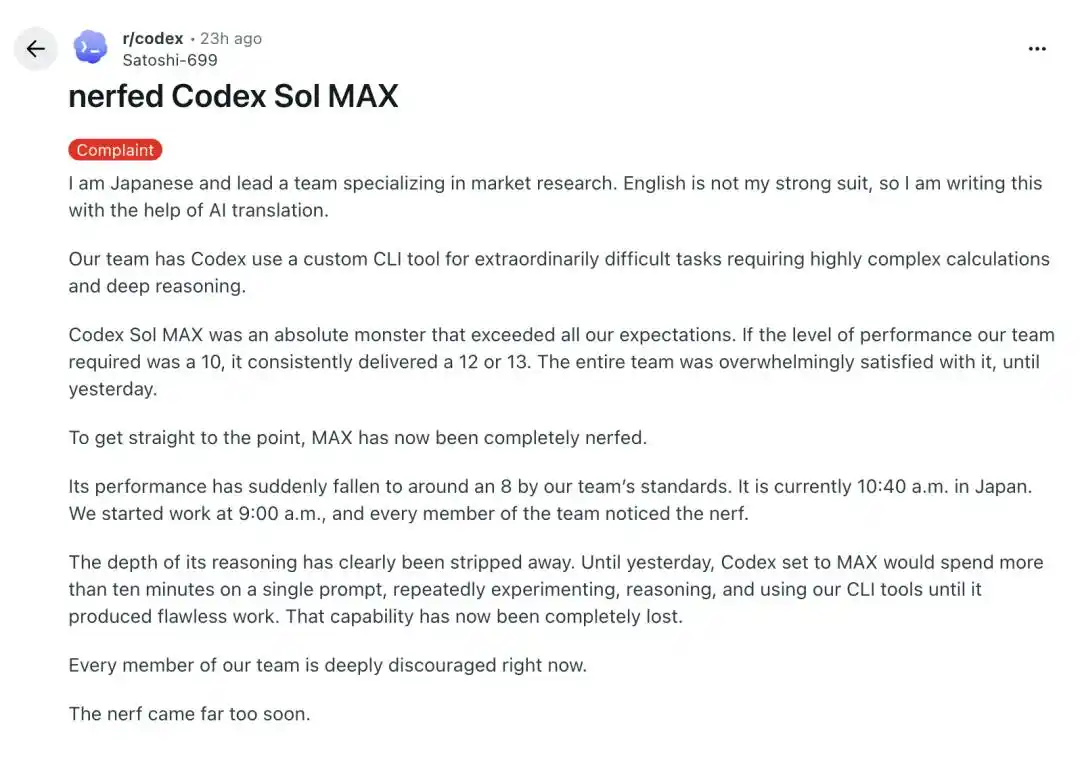
上午9点,该团队照常开工。到10点40分,全队每一个人都察觉到了同一件事。

他们把Codex Sol MAX接在一个自研的CLI工具上,专门啃那种需要极复杂计算和深度推理的活儿。

一开始,Codex Sol MAX也是不负众望,如果对它的要求水平是10分,它一直稳定地交出12分、13分,是一只「远超预期的怪物」,「每个人都对它满意到不行」。

但这天早上,这只「怪物」的表现忽然垮了下来,只剩8分。

推理的深度,明显被剥掉了。

在此之前,Codex Sol MAX面对一个提示词,会花掉十分钟以上,反复试、反复推、反复调用他们的工具,直到把活儿干得挑不出毛病。

但那种能力,就在这个早上「彻底消失了」。

全网都觉得它「变笨」了

这个日本团队的遭遇,只是这几天Codex社区里的一个缩影。

大家的抱怨高度一致:模型确实变快了,回答来得更利索了,但它不肯往深里挖了。以前那种先研究、再动手、边做边自我推翻的劲儿,没了。

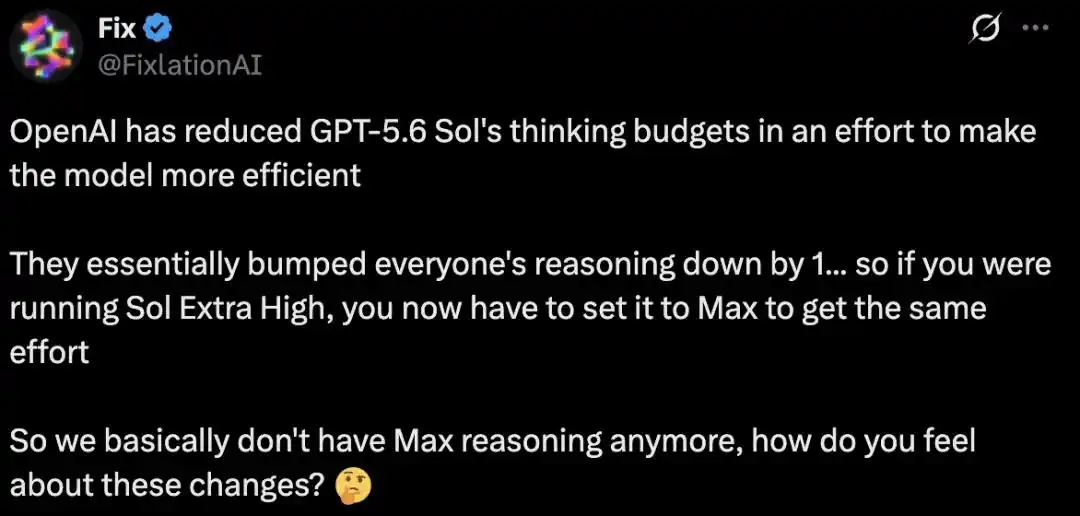
X上网友的一句话,概括了所有人的体感:

所有人的推理档位被集体下调了一级——你原来跑Extra High,现在得把它拧到Max,才能换回原来那点力气。
这种变化,普通用户根本没法证明。

你看不到模型权重有没有换,也看不到服务端给你分了多少算力。

你能感知的只有四样东西:它回得多快,它想得多长,它有没有回头检查自己,它有没有叫上别的智能体一起干。

这些全是间接的信号,没有一样写在模型卡上。

于是,社区有网友自己去翻,翻出了一个OpenAI从来没公开过的内部参数:juice value。

一个官方从没提过的数字

OpenAI公开讲过的,只有推理档位。

7月9日GPT-5.6发布,官方原话是,首次引入max推理强度,「让Sol获得最充足的时间进行深度推理」。再往上还有ultra,默认拉起四个智能体并行干活。

落到ChatGPT里,就是模型选择器里那几个选项:Medium、High、Extra High,背后跑的都是Sol,Pro档跑的是Sol Pro。

而juice value,是这些档位底下的那层东西:内部的推理算力预算。用户看不到,OpenAI也从来没公布过它的取值。

社区用户ns123abc用一段被称作「模型指纹」的隐藏提示词,读到了系统配置里那个数值:juice。

此前社区观测到,Sol的max档对应960。这一次,屏幕上显示的是128,掉了将近87%。
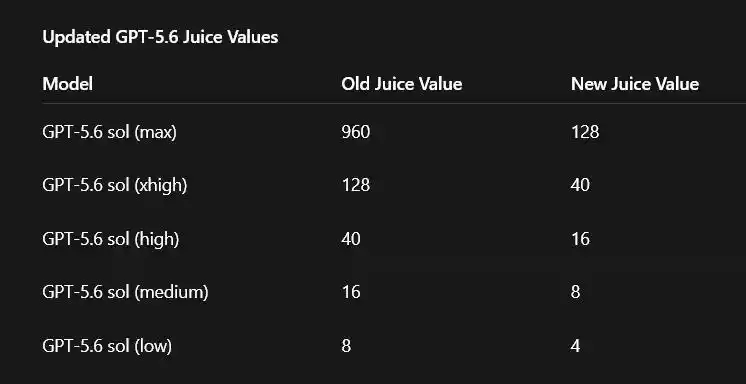
几乎同时,另一组截图也开始传:Codex客户端里用户实际能用的上下文,从约372k退回了272k。
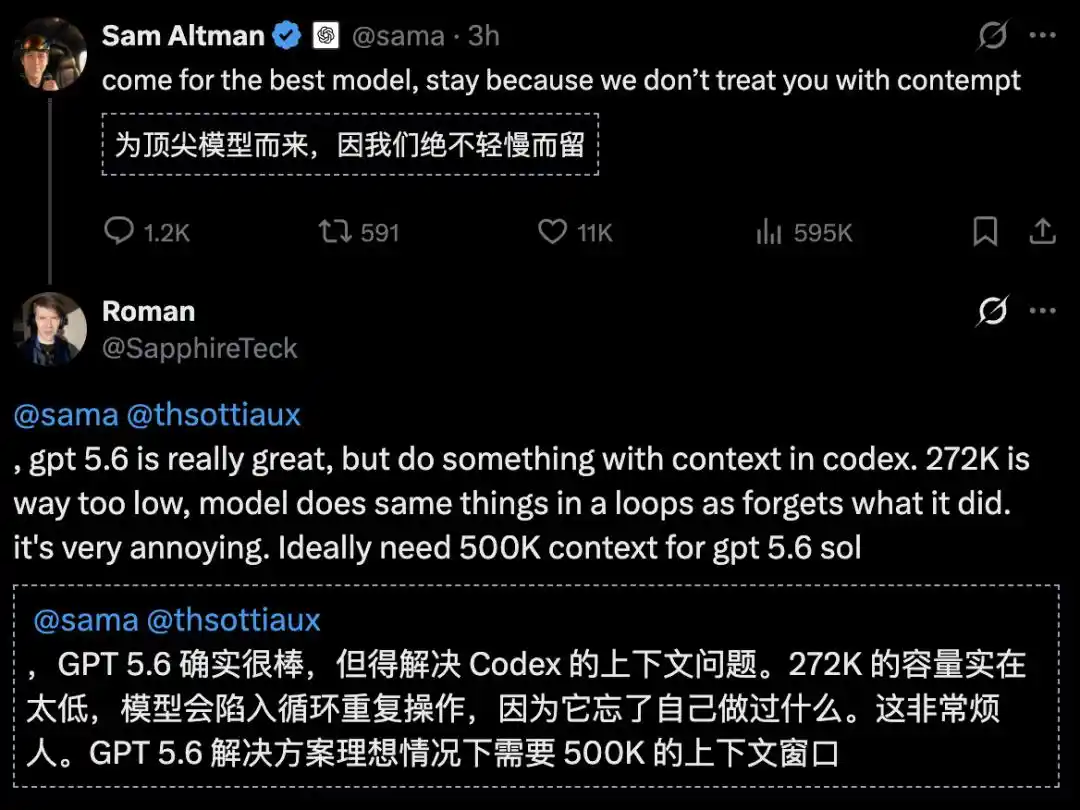
这两个数字,迅速点燃了整个社区。

Tibo:没有降智,我们在查用量

当晚,Tibo(Thibault Sottiaux)就出来说话了,他在OpenAI负责Codex与ChatGPT Work。

Tibo在X上发了一条更新,开头一句就说:没有nerf(降智),只有好事。
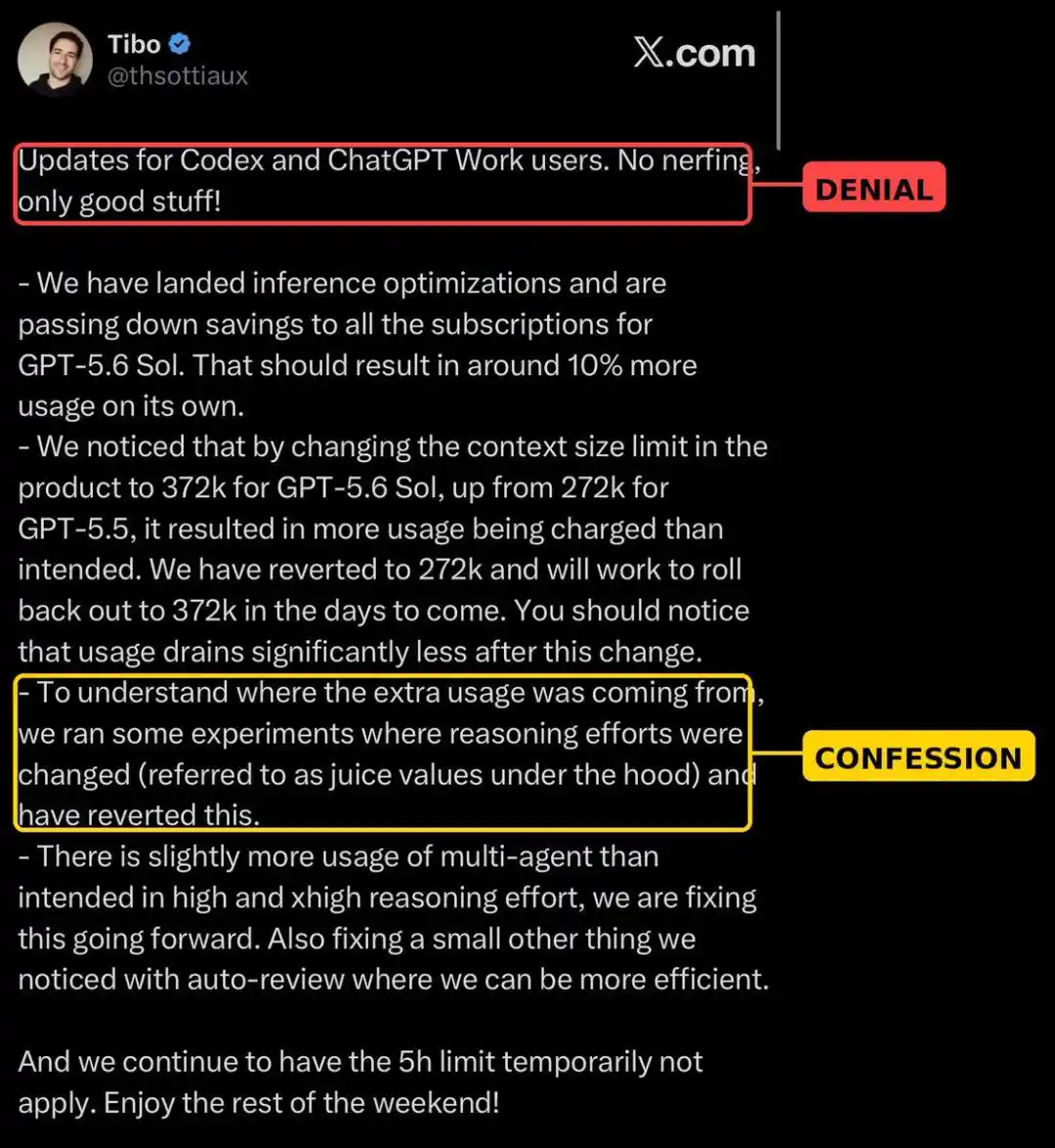
然后,他一口气强调了四点。

第一点,推理效率优化已经上线,省下来的算力回馈给所有订阅用户,光这一项就能多出大约10%的用量。

第二点,Sol的上下文上限被从GPT-5.5的272k提到了372k,结果导致计费比预期多扣了。现在已经退回272k,接下来几天再把372k放出去。

第三点,为了搞清楚多出来的用量到底从哪儿来,团队跑了一些实验,实验里改动了推理强度(reasoning effort),内部管它叫「juice values」。

现在已经改回去了。

第四点,high和xhigh档上多智能体的调用比预期的多,auto-review那边也有浪费,都在修。

Tibo的帖子大意是:不是「降智」,是「调参」。

模型权重动没动,他没提。但用户实际拿到的配置,确实动过:这一点他承认了。

juice到底是什么?从目前能看到的公开信息判断,它更接近系统内部的一个推理资源配置标记,粗略地说,就是系统允许模型在一项任务里投多少推理资源。

虽然预算调低,不等于「模型变弱了」,它仍可能悄悄改变很多东西:

长程任务能够探索多少条路线,多种方案之间会比较几轮,代码生成后会不会主动运行测试,失败之后愿意回滚多少次,以及极难任务中那一小部分决定成败的「长尾能力」等。

说到底,它代表的是模型肯在一个任务上花多少心思。

要终结这次争论,需要一场严格对照实验:同一份模型快照,同一批任务,同一套工具环境,只动juice这一个变量。

看看复杂编码、长程智能体、数学推理和错误恢复,到底会掉多少。

这份证据,到现在还是缺席的。

厂商省的每个token,用户都感觉得到

再回到Tibo口中的那场实验。它是怎么来的?

GPT-5.6上线之后,需求立刻井喷。

OpenAI一度把五小时窗口的使用限制临时放开,来接住汹涌而来的调用量。
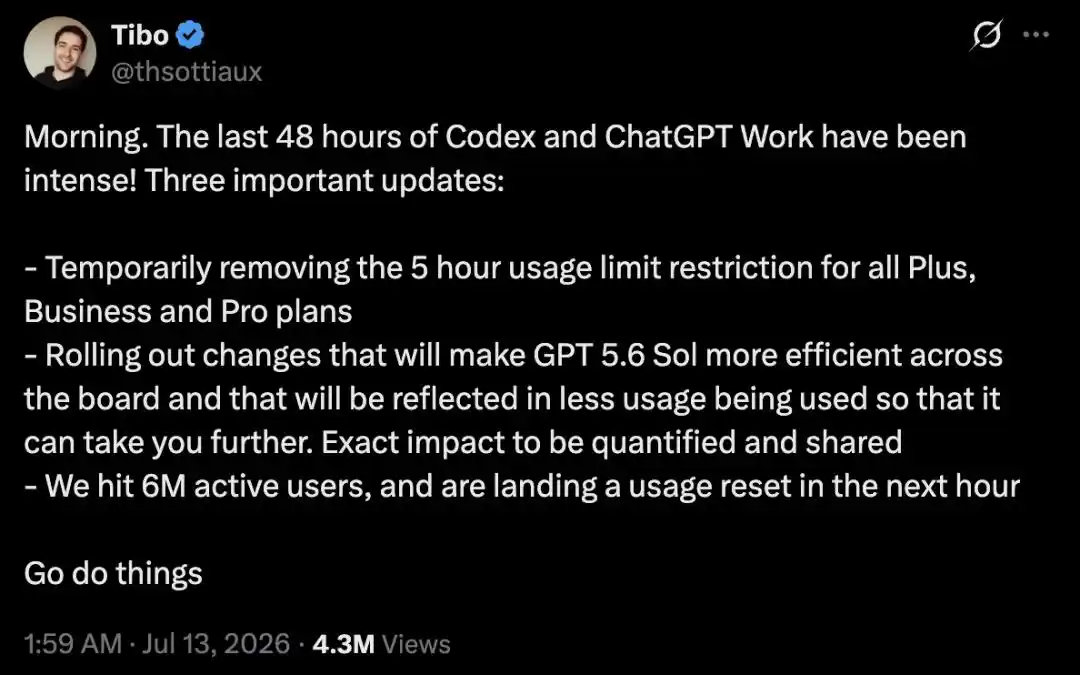
而GPT-5.6最抢眼的几样新东西:max档更长的思考、ultra默认四个智能体并行、更大的上下文窗口,恰恰全是吃token的猛兽。

多出来的用量,正是从这里冒出来的。

于是就有了这场实验。为了查清账目,先把预算这个变量调低,看看用量究竟往哪儿跑,这在工程上完全说得通。

可问题也就出在这儿:厂商这边省token,用户那边是有感知的,最直观的,就是模型「不肯想了」。

那个被调动的变量,刚好是用户能感觉到的那个。

AI不再「显灵」,开始打卡上班

过去几年,大模型公司带给大家的是一种近乎宗教性的想象。

人们也把模型当神谕,指望它在某个深夜吐出一个人类没想到的答案,即使为此慢一点、贵一点、偶尔发疯,都能忍。

可实验室里的奇迹能够不计成本,但到了生产环节的工业基础设施上就不行。

于是Sol等前沿模型,开始从一个实验室中偶尔「显灵」的先知,变成一个能在日常工作流中不停运转的引擎。

这背后更像是一场智能驯化,而这场争议,等于把驯化的现场当众揭开了。同时,用户对「固定智能」的那点幻觉,也要从此结束了。

订阅一个模型,更像是买了一只灯泡:型号是固定的,但亮度旋钮,一直握在平台手里。

这在商业上可能是一个正确的选择,但它不该永远藏在黑箱里。

如果AI真要成为企业的基础设施,厂商就得给出比模型名称更具体的边界,让用户明白自己花钱买的那个Max,到底保证了什么。

否则,它就只是一张价签。

参考资料:

https://x.com/thsottiaux/status/2076495156757577895

https://x.com/FixlationAI/status/2076469274441380349

https://www.reddit.com/r/codex/comments/1uuy5eq/nerfed_codex_sol_max/

本文来自微信公众号“新智元”,作者:元宇

Trending Cryptos

Related Questions

Q为什么用户普遍感觉GPT-5.6 Sol的Max档变笨了?

A用户感觉GPT-5.6 Sol的Max档变笨,主要是因为OpenAI进行了一项内部实验,暂时降低了模型推理资源的预算(juice value从960降至128)。这导致模型在处理复杂任务时,用于深度思考和迭代的资源减少,推理深度和反复验证的意愿下降,回答变得更快但更浅显,从而让用户感觉模型‘不肯想’了。

QOpenAI官方对用户反馈的模型‘降智’有何解释?

AOpenAI的负责人Tibo(Thibault Sottiaux)回应称,没有对模型进行‘降智’。他解释称,团队为了调查GPT-5.6上线后用户用量超出预期的原因,进行了一项实验,实验中临时调整了推理强度(即juice value)。他表示该调整是实验性的,现已恢复原状。他强调这是为了优化推理效率和排查用量问题,而非削弱模型能力。

Q文章中提到的‘juice value’具体是指什么?

A‘juice value’是OpenAI内部使用的一个未公开参数,它代表模型在单个任务上可投入的推理资源预算。这个值可以理解为系统允许模型对一个问题‘花多少心思’,它会影响模型探索的路径数量、方案比较轮次、错误恢复次数以及长尾复杂任务的完成度。用户无法直接看到或控制这个数值。

Q此次事件反映了AI服务提供中的什么矛盾?

A此次事件反映了AI服务提供商在平衡成本与用户体验之间的矛盾。厂商为了控制算力成本、优化效率或进行内部测试,可能会调整后端资源分配(如juice value),但这些调整直接影响模型输出的‘智力表现’。用户花钱购买的是期望中的固定性能,而实际得到的却是一个亮度可调的‘灯泡’,揭示了服务性能的非透明性和动态可变性,打破了用户对‘固定智能’的幻觉。

Q文章作者对未来的AI基础设施提出了什么期望?

A文章作者期望,如果AI要成为可靠的企业基础设施,厂商就不能将关键的性能控制参数完全置于黑箱之中。他们需要向用户提供比模型名称更具体、更明确的性能边界定义和保证,让用户清楚自己付费购买的(例如Max档位)具体包含哪些确定性的能力和资源承诺,而不仅仅是一张模糊的价签。

Related Reads

US Calls for Restrictions on Sports Prediction Markets

The National Football League (NFL) has urged the U.S. Commodity Futures Trading Commission (CFTC) to tighten rules for prediction markets on sports events. In a July letter, the NFL argued that current proposals fail to adequately protect the integrity of games and market participants. Key demands include banning contracts on events easily manipulated by individuals (e.g., a kicker missing a field goal), clarifying definitions to prevent gambling-like contracts, and explicitly prohibiting trading based on non-public insider information. The league also called for restricted person lists, a ban on margin trading, advertising limits, stronger user protections, and a minimum age of 21. This push coincides with an ongoing jurisdictional dispute between the CFTC and several states. The CFTC claims exclusive federal oversight, classifying event contracts as swaps, while states argue these platforms violate local gambling laws. Recent legal actions in Michigan and Minnesota highlight the conflict, with a federal court temporarily blocking Minnesota from applying a new law to CFTC-registered platforms like Kalshi and Polymarket. Meanwhile, prediction markets are experiencing significant growth. In June, driven by events like the World Cup, Kalshi's trading volume exceeded $31 billion (85% from sports contracts), while Polymarket's global platform hit a monthly record of $10.8 billion. However, platforms face legal challenges, such as lawsuits from Kentucky accusing them of operating unlicensed sports betting disguised as prediction markets.

cryptonews.ru6m ago

US Calls for Restrictions on Sports Prediction Markets

cryptonews.ru6m ago

Peskov Says Russia Is Among Top Five Leaders in AI Race. What Do Global Rankings Say?

On July 27, 2026, Kremlin spokesman Dmitry Peskov stated that Russia remains among the top five countries in the global AI development race. He acknowledged Russian models still lag behind leading U.S. counterparts but claimed they have reached a "very high level," aiming to close the gap with "superhuman efforts." He highlighted the differing approaches of Russia's GigaChat, built from scratch, and Yandex, which initially used foreign technology. However, this claim is not supported by major international AI rankings. Stanford University's Global AI Vibrancy Tool (2024-25) ranks Russia 28th out of 36 countries. The top five are the U.S., China, India, South Korea, and the UK. The Stanford AI Index Report 2026 does not mention Russia's position, focusing instead on U.S. and Chinese leadership across various metrics like investments and model performance. In benchmarks, GigaChat ranks 25th on the Russian-language LM Arena. While it passed a financial analyst exam in December 2025, its business usage costs are reportedly tens to hundreds of times higher than China's DeepSeek. In related developments, President Putin signed a law on July 26, 2026, establishing a legal framework for sovereign AI models and granting developers access to state data. Previously, Russia joined 28 other nations, including China, to establish the World AI Cooperation Organization (WAICO) in Shanghai. The article notes that rankings vary due to different criteria, such as research, investment, infrastructure, or responsible AI governance. While Russian authorities are bolstering AI through legislation and international cooperation, independent analyses suggest the country faces significant challenges, including a hardware deficit for training models, which legal frameworks alone cannot resolve.

cryptonews.ru6m ago

Peskov Says Russia Is Among Top Five Leaders in AI Race. What Do Global Rankings Say?

cryptonews.ru6m ago

From Sand to Chips: Hefei's Semiconductor Alchemy

From Sand to Chips: Hefei's Semiconductor "Alchemy" On July 27, 2026, a memory chip maker from Hefei made history by surpassing the market capitalization of Industrial and Commercial Bank of China on its Shanghai Stock Exchange debut. This marks the culmination of Hefei's two-decade industrial transformation, often summarized in three strategic leaps: "Screen, Chip, Vehicle." The journey began in 2008 with a bold investment in BOE, establishing China's first 6th-generation LCD panel line. The second leap was the "Project 506" in 2016, which gave birth to ChangXin Memory Technologies (CXMT). With initial backing of 14.4 billion RMB from Hefei's state-owned investment platform, CXMT aimed to break into the global DRAM market, then over 95% controlled by three overseas giants. CXMT achieved a breakthrough in 2019 by producing China's first 8GB DDR4 DRAM chip, employing "generational leapfrog" R&D to catch up. After years of significant losses, the company turned profitable in 2025. A dramatic surge followed in 2026, driven by AI-driven demand and full capacity utilization, propelling CXMT to become the world's fourth-largest DRAM manufacturer. CXMT's success is not isolated. It anchors a dense, localized semiconductor ecosystem in Hefei. Within its vicinity are numerous supporting companies for equipment, materials, and packaging & testing. This cluster has fueled the regional economy, with Hefei's integrated circuit industry output growing over sevenfold between 2016 and 2025. The ripple effects extend beyond high-tech, revitalizing local communities with new businesses and services catering to the influx of workers. For individuals, Hefei offers competitive tech salaries at a significantly lower cost of living compared to major coastal cities, along with improved amenities and shorter commutes. Hefei's story demonstrates two decades of focused, long-term industrial policy, transforming the city from a provincial capital into a trillion-RMB GDP "Double Ten-Thousand" city (10 million people, 1 trillion RMB GDP). It shows how persistence in strategic sectors—turning sand into chips—can redefine a city's economic destiny.

marsbit36m ago

From Sand to Chips: Hefei's Semiconductor Alchemy

marsbit36m ago

Trading

Spot

Hot Articles

Discussions

Welcome to the HTX Community. Here, you can stay informed about the latest platform developments and gain access to professional market insights. Users' opinions on the price of SOL (SOL) are presented below.

活动图片