Claude Code revela su increíble origen: surgió de la alineación de seguridad, Boris: "Solo hemos completado el 1%"

marsbitPublished on 2026-07-07Last updated on 2026-07-07

Abstract

**Claude Code: El origen inesperado y su futuro infinito** La historia de Claude Code, la herramienta de IA que está transformando la forma de programar, comienza de forma insólita: nació de un proyecto interno de *alineación de seguridad* (Alignment) en Anthropic. Su creador, Boris Cherny, revela que, a pesar de su impacto, solo han completado "el 1%". Todo empezó en 2021 con un equipo liderado por Ben Mann, que construyó una extensión inicial para VS Code. Investigadores como Dawn Drain y Shauna Kravec trabajaban en una visión más ambiciosa: la *ingeniería de software autónoma*. Sin embargo, los desafíos técnicos, como crear un entorno seguro para ejecutar código, fueron una pesadilla, y el proyecto quedó temporalmente en el olvido. Para 2022-2023, el equipo interno desarrolló *clide*, una herramienta de línea de comandos donde los usuarios podían "chatear" con Claude para editar código. Era potente pero demasiado adelantada a su tiempo: lenta, frágil e inestable. El punto de inflexión llegó en septiembre de 2024 con la incorporación de Boris Cherny. Con la misión de crear un sistema de "coding agéntico", Cherny construyó un prototipo de CLI. Un momento clave fue cuando copió un problema en *clide* y este escribió automáticamente un *pull request* completo de 5-10 líneas. La reacción fue de asombro: tenían todas las piezas, solo faltaba ensamblarlas. En diciembre, un pequeño equipo inició un sprint de dos semanas que culminó en el lanzamiento de Claude CLI en febrero d...

【Introducción】Desde que Ben Mann lideró el equipo para construir la primera extensión de VS Code en 2021, pasando por las iteraciones frenéticas de Boris Cherny en 2024, hasta que Claude Code irrumpió en 2025 y cambió radicalmente la forma de operar en Silicon Valley, toda la historia parece una epopeya. Sin embargo, el padre de Claude Code dice: "Solo hemos completado el 1%".

¡Claude Code solo ha completado el 1%!

Boris Cherny, desarrollador principal de Anthropic, reveló el origen, altamente contraintuitivo, de Claude Code: Claude Code nació de un proyecto interno de alineación de seguridad (Alignment) de Anthropic.
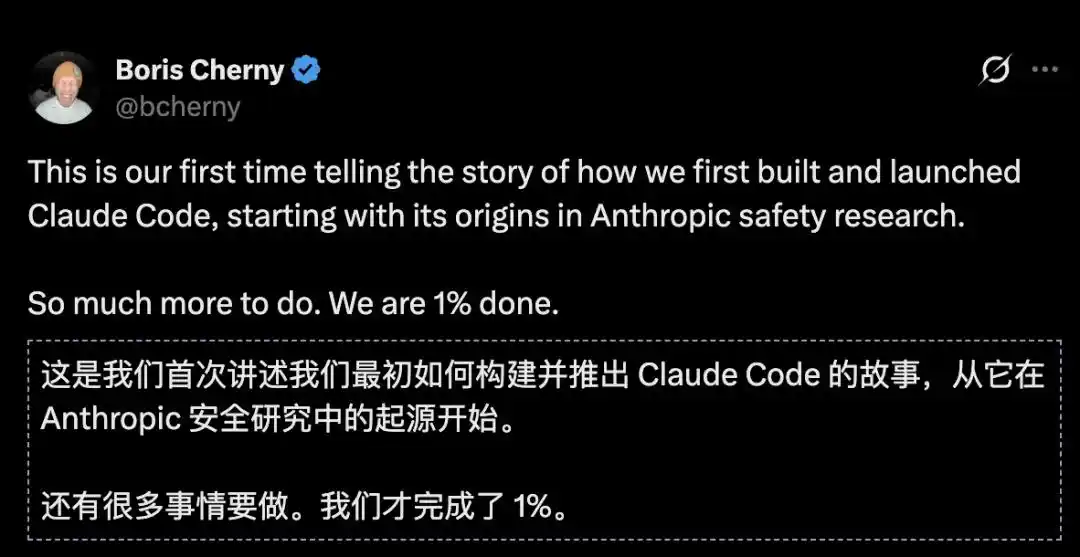
Y la parte más emocionante está en la segunda mitad:

Todavía hay mucho por hacer. Solo hemos completado el 1%.

Porque ese 1% de espacio significa que el 99% del futuro sigue completamente en blanco.

Al mismo tiempo, Claude reveló por primera vez la historia del origen de Claude Code:
La página oficial de Anthropic "The Making of Claude Code" se publicó simultáneamente.
Portal: https://www.anthropic.com/features/making-of-claude-code
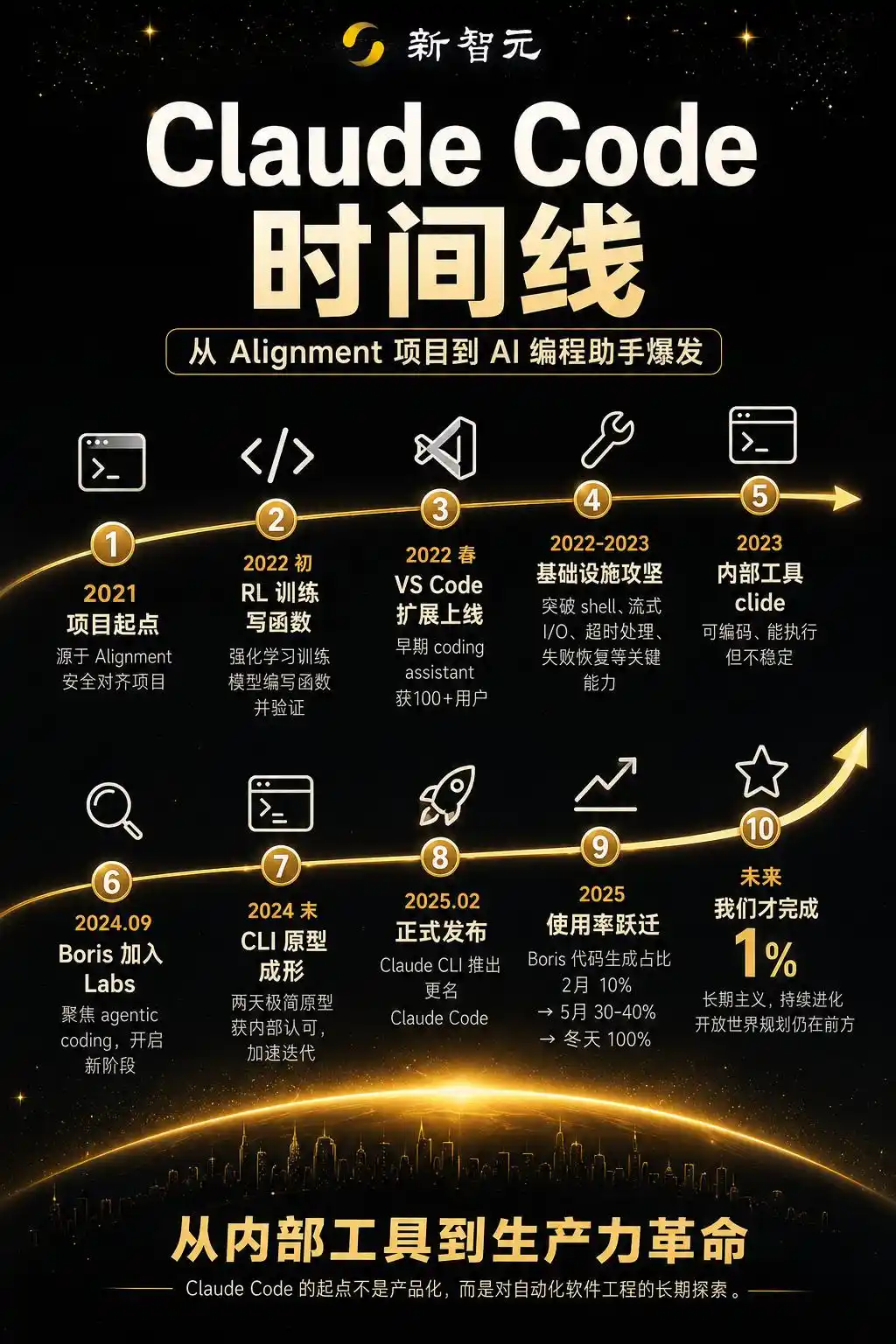
Claude Code casi fue completamente olvidado

La historia comienza en 2021.

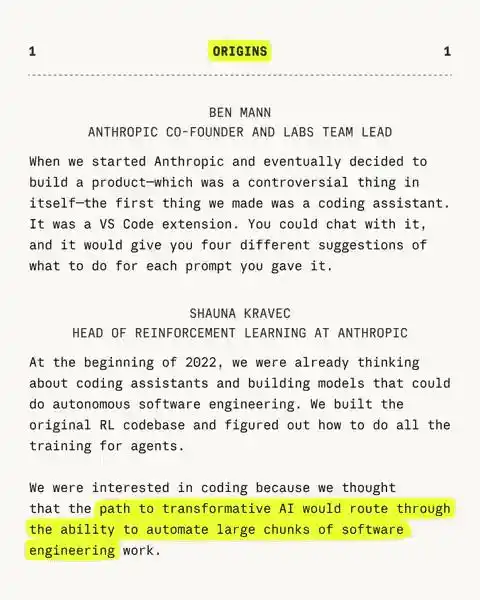
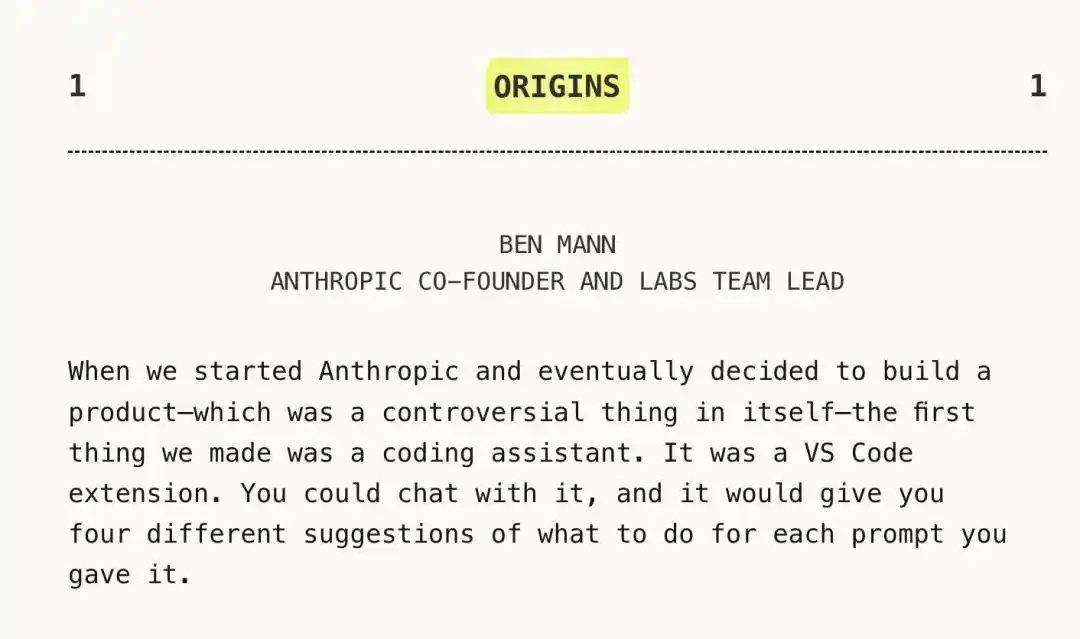
Ben Mann, cofundador de Anthropic y líder del equipo Labs, recuerda:

Cuando fundamos Anthropic y finalmente decidimos construir un producto —una decisión bastante controvertida en ese momento— lo primero que hicimos fue construir un asistente de programación.
Dawn Drain, ingeniera de investigación, se unió recientemente a Anthropic. Su proyecto principal era: hacer que las capacidades de codificación del modelo al menos alcanzaran mi propio nivel.

En el mismo período, el equipo de aprendizaje por refuerzo de Shauna Kravec ya estaba pensando en algo más radical: la ingeniería de software autónoma. No querían construir un chatbot, sino que el modelo realmente "trabajara".

¿Por qué la programación? La respuesta de Shauna sigue siendo impactante:

Creemos que el camino hacia una IA transformadora debe pasar por la automatización del trabajo de ingeniería de software a gran escala.
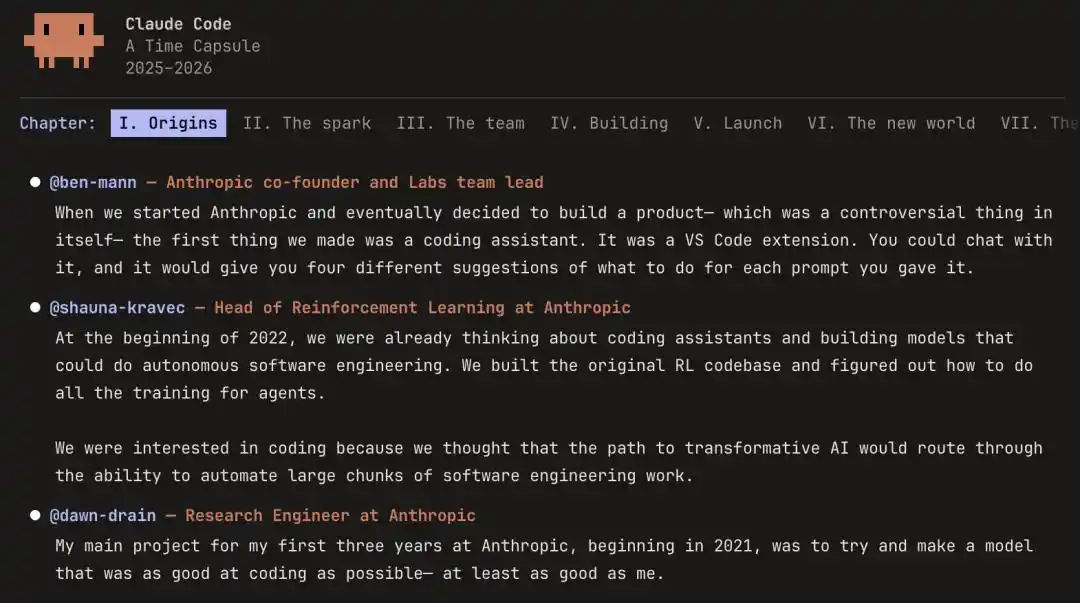
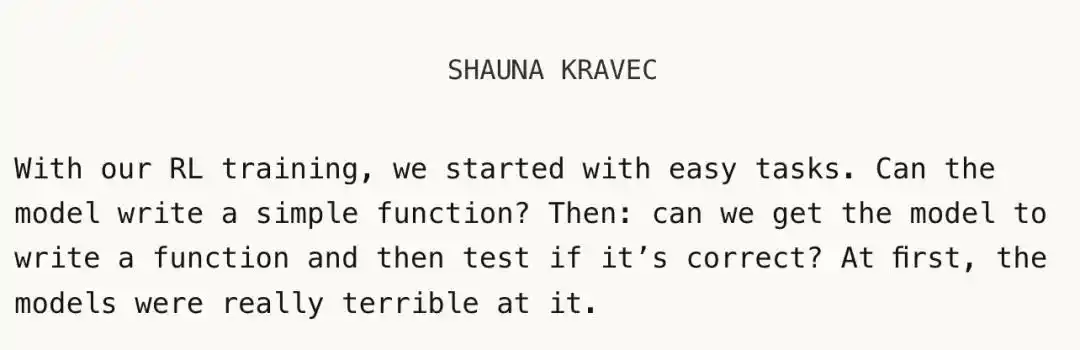
A principios de 2022, ya estaban entrenando modelos con RL para escribir funciones simples y luego probar su corrección.

El resultado: inicialmente, el modelo se desempeñaba muy mal.
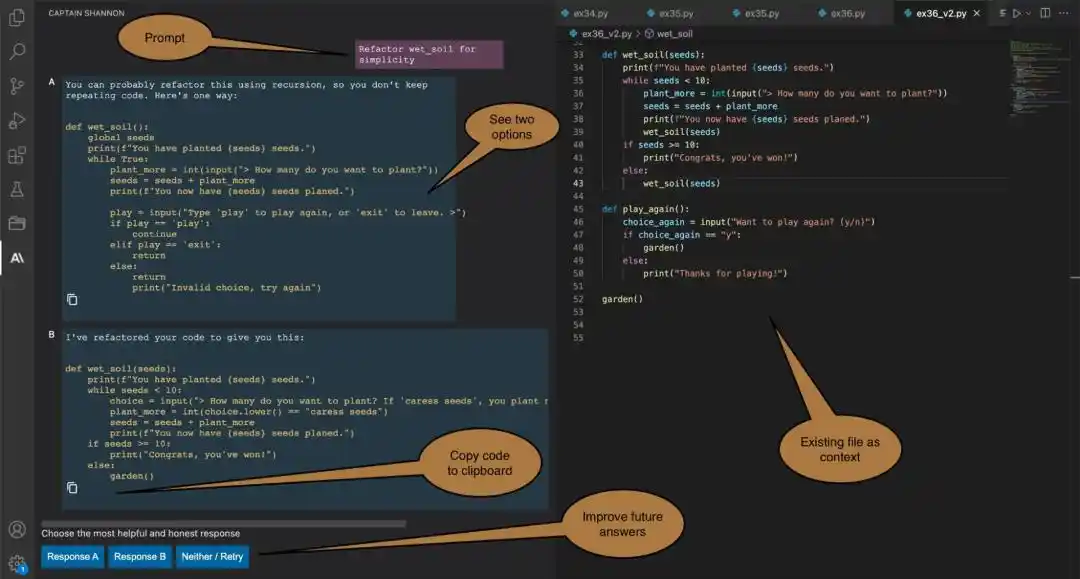
Mientras tanto, el equipo liderado por Ben Mann creó una extensión para VS Code: un asistente de programación temprano. Podía dar cuatro sugerencias diferentes. En la primavera de 2022, esta herramienta ya tenía alrededor de 100 usuarios externos.
Pero inmediatamente después, la realidad les dio un golpe contundente.

Surgió la pesadilla de la infraestructura.

Para lograr una codificación con agentes real, necesitas que el modelo ejecute código en un entorno seguro, lea y escriba archivos, maneje tiempos de espera, gestione fallos...

Estos problemas son casi idénticos a los que aún preocupan a todos hoy en día con los agentes.

Dawn y sus colegas tardaron mucho tiempo en lograr que el modelo tuviera un shell persistente en un contenedor, pudiera manejar entrada/salida en flujo y tratar elegantemente los tiempos de espera.

Luego, Ben Mann regresó de su licencia de paternidad y descubrió que básicamente "todos habían olvidado el asistente de programación".

Sin embargo, el lado de la investigación nunca se detuvo.

Siguieron perfeccionando las piezas centrales de la codificación con agentes: llamadas a funciones (function calling), búsqueda, herramientas bash... Lo que hoy parece obvio, en ese momento era una batalla cuesta arriba.

Anthropic "tan adelantada que era incómodo"

A finales de 2022 y en 2023, el equipo de Shauna logró un avance crucial: dotaron al modelo de herramientas bash, permitiéndole buscar libremente en bases de código.

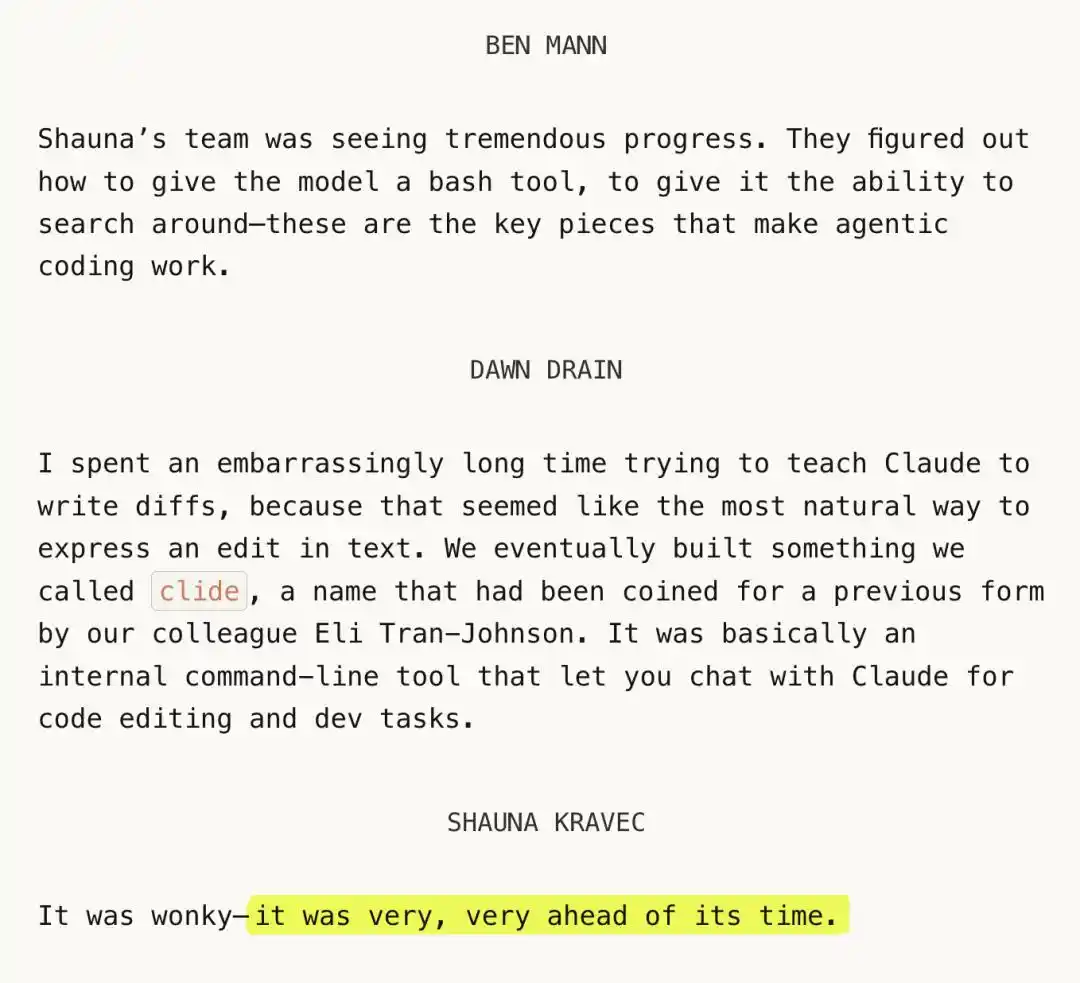
Dawn Drain pasó "un tiempo embarazosamente largo" enseñándole a Claude a escribir diffs.

Finalmente crearon una herramienta interna de línea de comandos llamada clide.

Permitía chatear con Claude para editar código y completar tareas de desarrollo.

Ben Mann dijo: "Me encantó. Era realmente genial, pero podía ser mucho mejor".

El problema: era demasiado avanzada. Sid Bidasaria recordó más tarde: "Todo el mundo hablaba de clide, pero era torpe y lenta".
Adam Wolff, el primer ingeniero de Claude Code, le añadió capacidades de agente rudimentarias: podía inferir la intención del usuario a partir de cambios parciales.
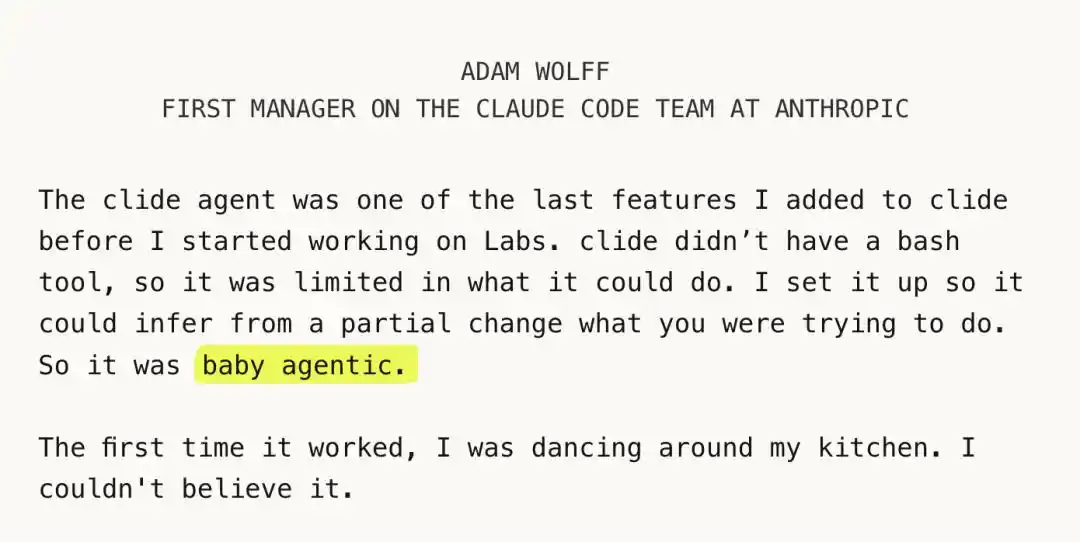
En su primer éxito, "bailó en la cocina".

Pero clide siempre fue un juguete del lado de la investigación.

Era demasiado frágil, lenta e inestable.

Hasta septiembre de 2024, cuando una nueva persona se unió al equipo Labs.

Claude Code despega

En septiembre de 2024, Boris Cherny se unió a Anthropic Labs.

Ben Mann le asignó la tarea de "codificación con agentes", con la instrucción: "No construyas para los modelos de hoy, construye para los modelos de dentro de seis meses".

No fue asignado directamente a un producto de codificación, sino que primero se familiarizó con la API de Anthropic y rápidamente, en dos días, construyó un prototipo minimalista de terminal (CLI).
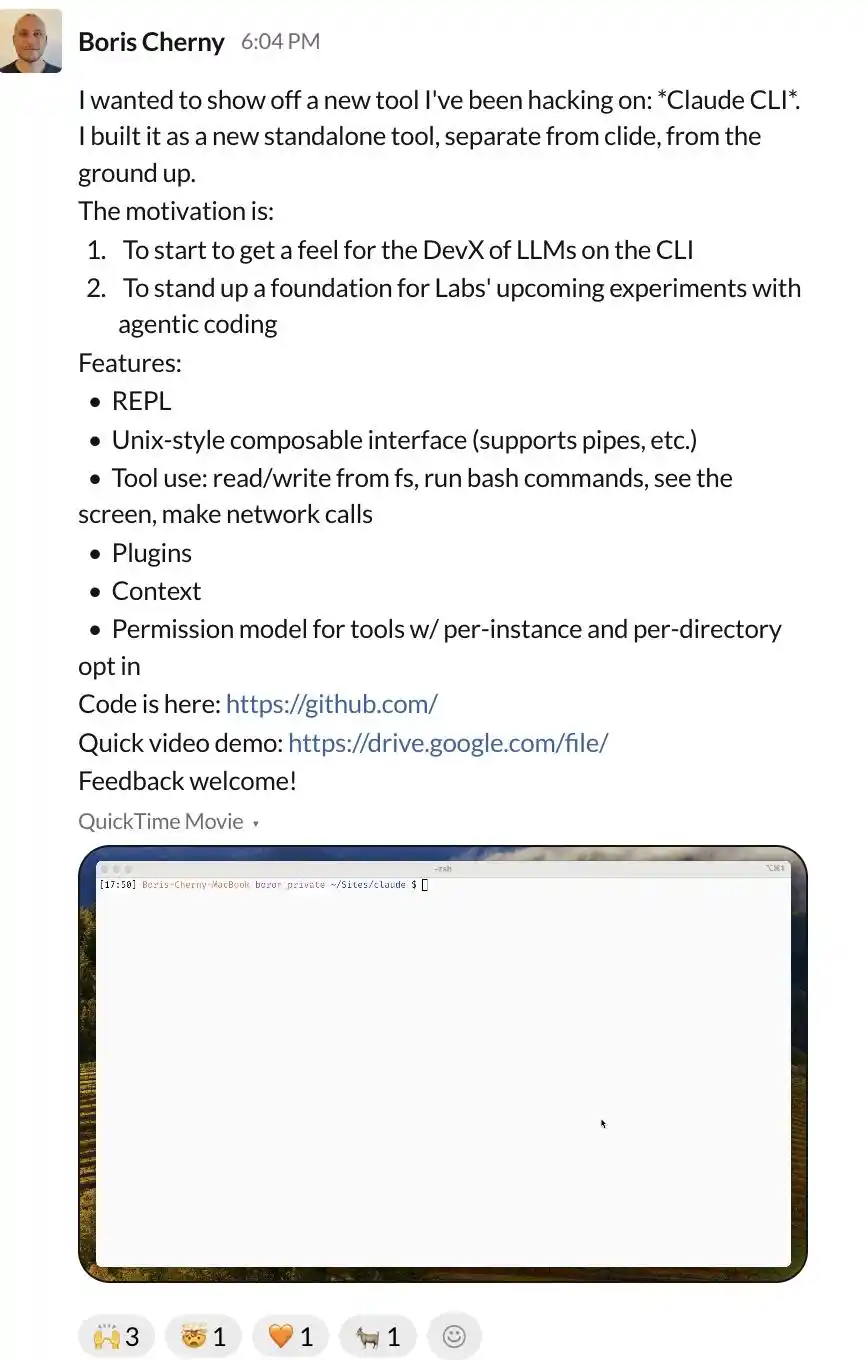
En el demo, podía capturar una pantalla de Apple Music y decirte qué canción estabas escuchando.

Lo publicó en Slack y solo recibió dos o tres 'me gusta'.
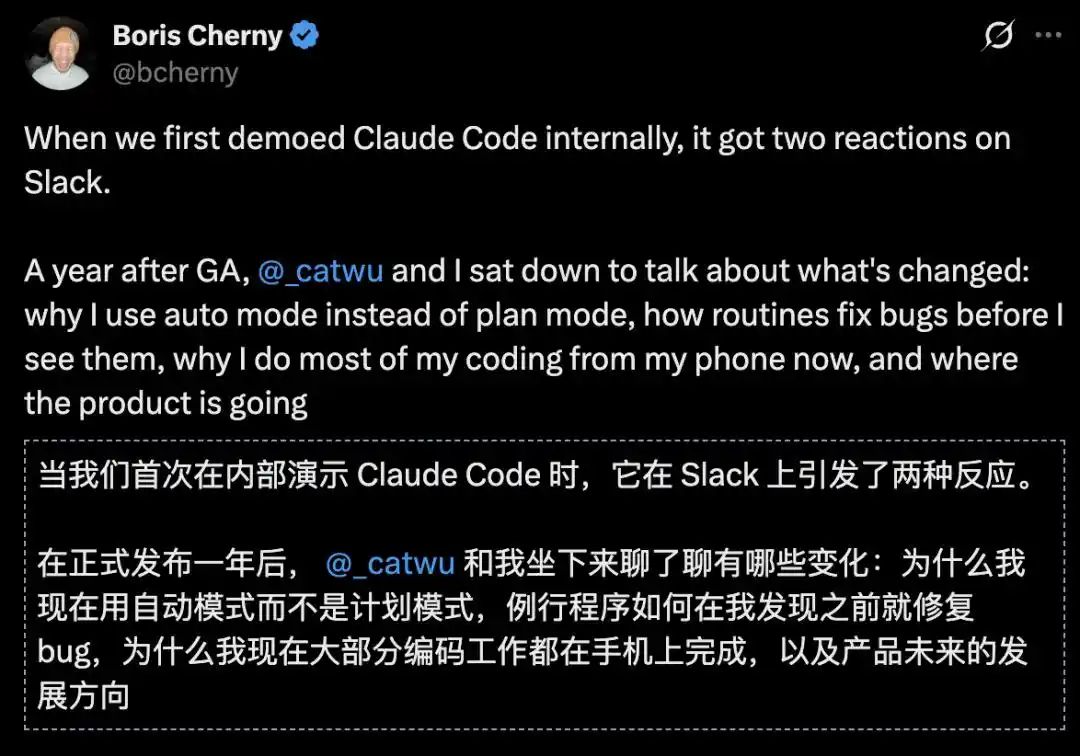
Nadie lo entendió. Ni él mismo lo entendía completamente.

Pero Boris no pudo detenerse. Sus amigos lo llamaban para salir, él rechazaba. Se encerró en casa los fines de semana, inmerso en esta cosa.

Un día, escribió una solicitud de extracción (pull request), Adam la rechazó y le sugirió probar con clide.

Boris copió y pegó el problema en clide, y escribió directamente la solicitud de extracción completa de cinco a diez líneas.

Boris recordó más tarde:

Nunca había visto algo así. Fue demasiado impactante. Se sentía como el futuro.

Ben Mann dijo que la expresión de Boris en ese momento era de "Holy shit".
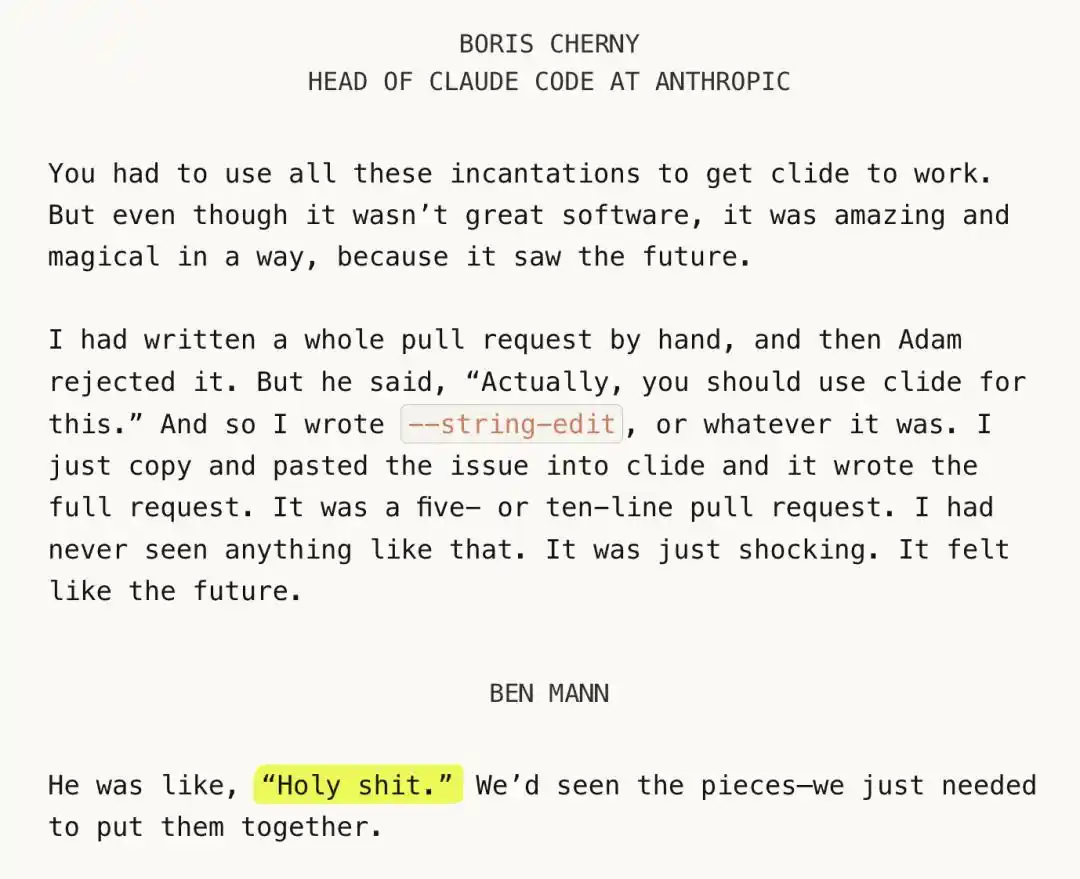
Ya tenían todas las piezas, solo faltaba ensamblarlas.

En diciembre, el equipo Labs finalmente dio luz verde al proyecto.

De repente, de un equipo mínimo compuesto solo por Boris, Sid Bidasaria y Ben, llegaron seis o siete personas más.

Comenzaron la última carrera de dos semanas.

En esas dos semanas, casi todas las funciones centrales se completaron: informes de errores (bug reporting), flujo de inicio de sesión, actualizaciones automáticas (auto-updates), excelentes métricas de uso...

Sin límites en las solicitudes de extracción, sin procesos de revisión, las correcciones podían desplegarse en cinco minutos.

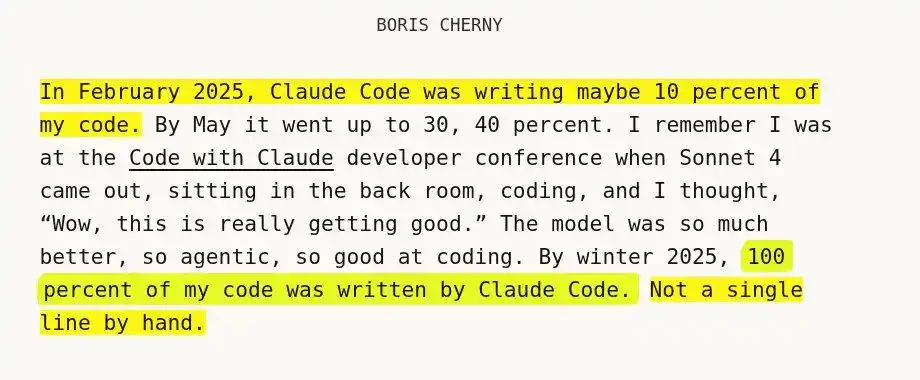
Del 10% al 100%, y el "1%" completado

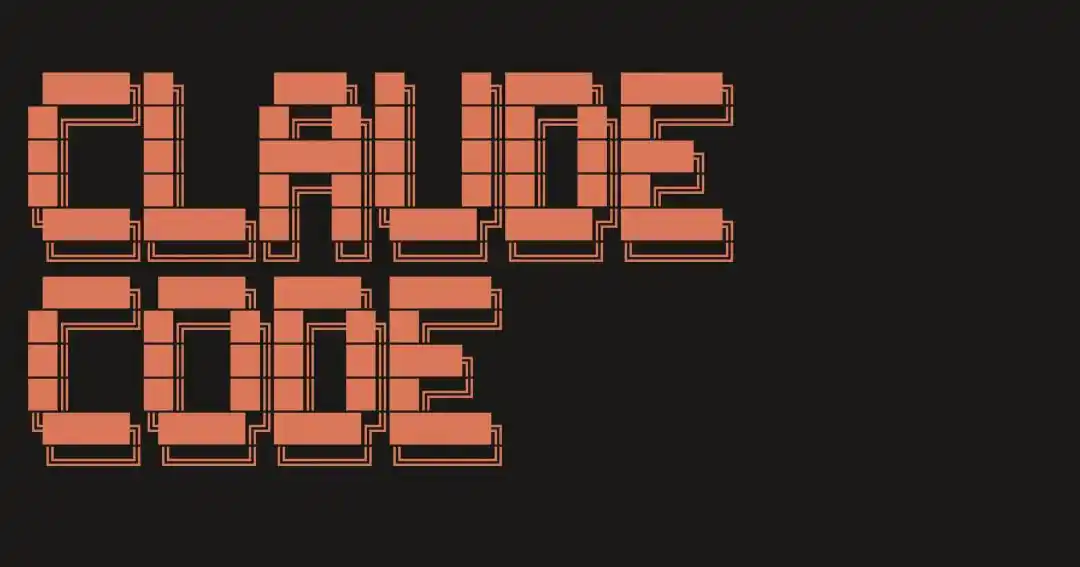
En febrero de 2025, se lanzó públicamente Claude CLI, rebautizado oficialmente como Claude Code.

El logotipo de Claude Code con caracteres ASCII en mayúsculas se convirtió en un diseño icónico de la programación con IA.
La retroalimentación inicial no fue entusiasta. Muchos pensaron que "la idea es genial, pero tiene demasiados errores".

Pero los modelos mejoraban. Cuando se lanzó la serie de modelos Claude 4, todo cambió.

Boris Cherny estaba sentado en la última fila de la conferencia Code with Claude. Cuando se lanzó Sonnet 4, bajó la cabeza para programar y de repente se dio cuenta:

"Vaya, esto realmente se volvió más potente."

Esto cambió radicalmente la forma de operar en Silicon Valley: el responsable técnico de Ramp fue completamente conquistado en cinco minutos; el fundador de Bun lo utilizó para descifrar instantáneamente un complejo código de protocolo de red.

Para el invierno de 2025, había llegado un nuevo mundo irreversible.
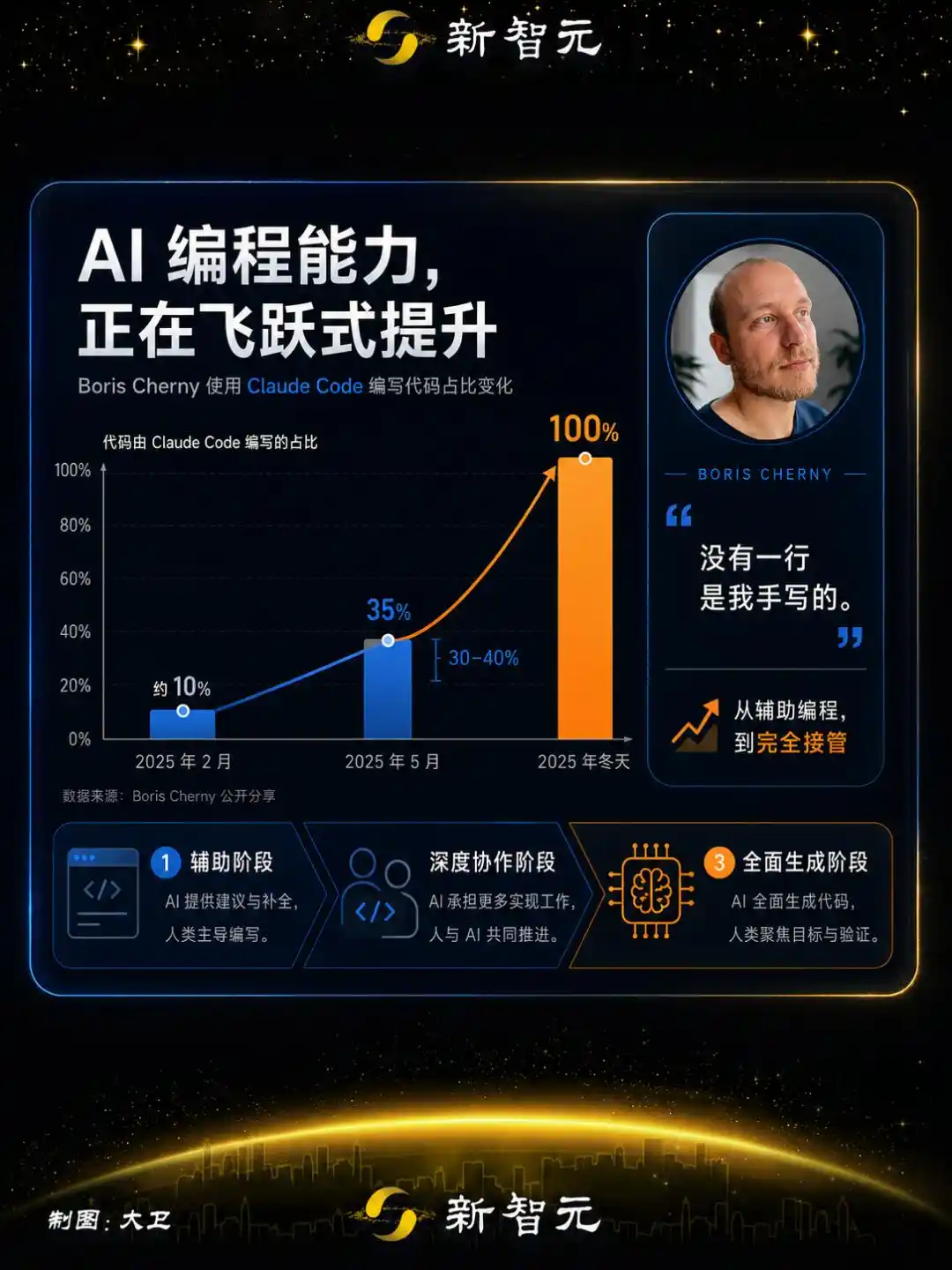
Boris Cherny, responsable de Claude Code, que antes se quemaba las pestañas programando, descubrió que ya no escribía ni una sola línea de código manualmente: el 100% del trabajo lo realizaba Claude Code silenciosamente en el terminal de fondo.
Incluso usó Claude Code todo un día para escribir código, realizó 88 confirmaciones (commits), mientras su esposa y su perro lo acompañaban cómodamente en el sofá, todo relajado y agradable.

Cat Wu dijo que lo que más le conmovió fue el cambio en las solicitudes de permisos:

Al principio, todos leían cuidadosamente cada solicitud de permiso. Ahora, una gran parte de los usuarios las acepta automáticamente (auto-accept).

Se está construyendo confianza.

Y Boris sigue diciendo esa frase: Solo hemos completado el 1%.

Porque las verdaderas capacidades de autonomía a largo plazo, memoria persistente, gestión de contextos complejos, planificación en mundos abiertos... estas habilidades aún están lejos de llegar.

El rol del ingeniero humano está migrando de "arquitecto de código" a "administrador de IA".

La programación ya no es un privilegio críptico y difícil para geeks, y esto es solo el comienzo del camino de los agentes de IA hacia el mundo real, para resolver los problemas últimos de la humanidad.

Referencias: https://www.anthropic.com/features/making-of-claude-code

Este artículo proviene del WeChat Public Account "新智元" (Nueva Era de la Inteligencia Artificial), autor: ASI启示录; editor: David

Trending Cryptos

Related Questions

Q¿Cuál es el origen poco convencional de Claude Code según Boris Cherny?

AClaude Code se originó a partir de un proyecto interno de alineación de seguridad (Alignment) de Anthropic.

Q¿Qué problema fundamental enfrentó el equipo de Anthropic al desarrollar un asistente de programación 'agéntico' en 2022?

AEnfrentaron una 'pesadilla de infraestructura' relacionada con la ejecución segura de código, lectura/escritura de archivos, manejo de tiempos de espera y fallos en un entorno controlado.

Q¿Qué herramienta interna de línea de comandos (CLI) creó el equipo de investigación de Anthropic antes de Claude Code, y cuál era su principal problema?

ACrearon una herramienta CLI interna llamada 'clide'. Su principal problema era que era 'demasiado avanzada para su tiempo', siendo torpe, lenta e inestable.

Q¿Qué momento clave hizo que Boris Cherny se diera cuenta del potencial revolucionario del prototipo que estaba desarrollando?

AEl momento clave fue cuando pegó un problema (issue) en 'clide' y este escribió por completo una solicitud de extracción (pull request) de 5 a 10 líneas de código funcional. Esto le hizo sentir que estaba viendo 'el futuro'.

Q¿Por qué Boris Cherny insiste en que Claude Code solo ha completado el 1% de su desarrollo potencial?

APorque cree que capacidades fundamentales como la autonomía de larga duración, memoria persistente, gestión de contextos complejos y planificación en mundos abiertos aún están muy lejos de realizarse, lo que deja un 99% de futuro por explorar.

Related Reads

Trading

Spot

Hot Articles

What is SONIC

Sonic: Pioneering the Future of Gaming in Web3 Introduction to Sonic In the ever-evolving landscape of Web3, the gaming industry stands out as one of the most dynamic and promising sectors. At the forefront of this revolution is Sonic, a project designed to amplify the gaming ecosystem on the Solana blockchain. Leveraging cutting-edge technology, Sonic aims to deliver an unparalleled gaming experience by efficiently processing millions of requests per second, ensuring that players enjoy seamless gameplay while maintaining low transaction costs. This article delves into the intricate details of Sonic, exploring its creators, funding sources, operational mechanics, and the timeline of significant events that have shaped its journey. What is Sonic? Sonic is an innovative layer-2 network that operates atop the Solana blockchain, specifically tailored to enhance the existing Solana gaming ecosystem. It accomplishes this through a customised, VM-agnostic game engine paired with a HyperGrid interpreter, facilitating sovereign game economies that roll up back to the Solana platform. The primary goals of Sonic include: Enhanced Gaming Experiences: Sonic is committed to offering lightning-fast on-chain gameplay, allowing players and developers to engage with games at previously unattainable speeds. Atomic Interoperability: This feature enables transactions to be executed within Sonic without the need to redeploy Solana programmes and accounts. This makes the process more efficient and directly benefits from Solana Layer1 services and liquidity. Seamless Deployment: Sonic allows developers to write for Ethereum Virtual Machine (EVM) based systems and execute them on Solana’s SVM infrastructure. This interoperability is crucial for attracting a broader range of dApps and decentralised applications to the platform. Support for Developers: By offering native composable gaming primitives and extensible data types - dining within the Entity-Component-System (ECS) framework - game creators can craft intricate business logic with ease. Overall, Sonic's unique approach not only caters to players but also provides an accessible and low-cost environment for developers to innovate and thrive. Creator of Sonic The information regarding the creator of Sonic is somewhat ambiguous. However, it is known that Sonic's SVM is owned by the company Mirror World. The absence of detailed information about the individuals behind Sonic reflects a common trend in several Web3 projects, where collective efforts and partnerships often overshadow individual contributions. Investors of Sonic Sonic has garnered considerable attention and support from various investors within the crypto and gaming sectors. Notably, the project raised an impressive $12 million during its Series A funding round. The round was led by BITKRAFT Ventures, with other notable investors including Galaxy, Okx Ventures, Interactive, Big Brain Holdings, and Mirana. This financial backing signifies the confidence that investment foundations have in Sonic’s potential to revolutionise the Web3 gaming landscape, further validating its innovative approaches and technologies. How Does Sonic Work? Sonic utilises the HyperGrid framework, a sophisticated parallel processing mechanism that enhances its scalability and customisability. Here are the core features that set Sonic apart: Lightning Speed at Low Costs: Sonic offers one of the fastest on-chain gaming experiences compared to other Layer-1 solutions, powered by the scalability of Solana’s virtual machine (SVM). Atomic Interoperability: Sonic enables transaction execution without redeployment of Solana programmes and accounts, effectively streamlining the interaction between users and the blockchain. EVM Compatibility: Developers can effortlessly migrate decentralised applications from EVM chains to the Solana environment using Sonic’s HyperGrid interpreter, increasing the accessibility and integration of various dApps. Ecosystem Support for Developers: By exposing native composable gaming primitives, Sonic facilitates a sandbox-like environment where developers can experiment and implement business logic, greatly enhancing the overall development experience. Monetisation Infrastructure: Sonic natively supports growth and monetisation efforts, providing frameworks for traffic generation, payments, and settlements, thereby ensuring that gaming projects are not only viable but also sustainable financially. Timeline of Sonic The evolution of Sonic has been marked by several key milestones. Below is a brief timeline highlighting critical events in the project's history: 2022: The Sonic cryptocurrency was officially launched, marking the beginning of its journey in the Web3 gaming arena. 2024: June: Sonic SVM successfully raised $12 million in a Series A funding round. This investment allowed Sonic to further develop its platform and expand its offerings. August: The launch of the Sonic Odyssey testnet provided users with the first opportunity to engage with the platform, offering interactive activities such as collecting rings—a nod to gaming nostalgia. October: SonicX, an innovative crypto game integrated with Solana, made its debut on TikTok, capturing the attention of over 120,000 users within a short span. This integration illustrated Sonic’s commitment to reaching a broader, global audience and showcased the potential of blockchain gaming. Key Points Sonic SVM is a revolutionary layer-2 network on Solana explicitly designed to enhance the GameFi landscape, demonstrating great potential for future development. HyperGrid Framework empowers Sonic by introducing horizontal scaling capabilities, ensuring that the network can handle the demands of Web3 gaming. Integration with Social Platforms: The successful launch of SonicX on TikTok displays Sonic’s strategy to leverage social media platforms to engage users, exponentially increasing the exposure and reach of its projects. Investment Confidence: The substantial funding from BITKRAFT Ventures, among others, emphasizes the robust backing Sonic has, paving the way for its ambitious future. In conclusion, Sonic encapsulates the essence of Web3 gaming innovation, striking a balance between cutting-edge technology, developer-centric tools, and community engagement. As the project continues to evolve, it is poised to redefine the gaming landscape, making it a notable entity for gamers and developers alike. As Sonic moves forward, it will undoubtedly attract greater interest and participation, solidifying its place within the broader narrative of blockchain gaming.

1.8k Total ViewsPublished 2024.04.04Updated 2024.12.03

What is SONIC

What is $S$

Understanding SPERO: A Comprehensive Overview Introduction to SPERO As the landscape of innovation continues to evolve, the emergence of web3 technologies and cryptocurrency projects plays a pivotal role in shaping the digital future. One project that has garnered attention in this dynamic field is SPERO, denoted as SPERO,$$s$. This article aims to gather and present detailed information about SPERO, to help enthusiasts and investors understand its foundations, objectives, and innovations within the web3 and crypto domains. What is SPERO,$$s$? SPERO,$$s$ is a unique project within the crypto space that seeks to leverage the principles of decentralisation and blockchain technology to create an ecosystem that promotes engagement, utility, and financial inclusion. The project is tailored to facilitate peer-to-peer interactions in new ways, providing users with innovative financial solutions and services. At its core, SPERO,$$s$ aims to empower individuals by providing tools and platforms that enhance user experience in the cryptocurrency space. This includes enabling more flexible transaction methods, fostering community-driven initiatives, and creating pathways for financial opportunities through decentralised applications (dApps). The underlying vision of SPERO,$$s$ revolves around inclusiveness, aiming to bridge gaps within traditional finance while harnessing the benefits of blockchain technology. Who is the Creator of SPERO,$$s$? The identity of the creator of SPERO,$$s$ remains somewhat obscure, as there are limited publicly available resources providing detailed background information on its founder(s). This lack of transparency can stem from the project's commitment to decentralisation—an ethos that many web3 projects share, prioritising collective contributions over individual recognition. By centring discussions around the community and its collective goals, SPERO,$$s$ embodies the essence of empowerment without singling out specific individuals. As such, understanding the ethos and mission of SPERO remains more important than identifying a singular creator. Who are the Investors of SPERO,$$s$? SPERO,$$s$ is supported by a diverse array of investors ranging from venture capitalists to angel investors dedicated to fostering innovation in the crypto sector. The focus of these investors generally aligns with SPERO's mission—prioritising projects that promise societal technological advancement, financial inclusivity, and decentralised governance. These investor foundations are typically interested in projects that not only offer innovative products but also contribute positively to the blockchain community and its ecosystems. The backing from these investors reinforces SPERO,$$s$ as a noteworthy contender in the rapidly evolving domain of crypto projects. How Does SPERO,$$s$ Work? SPERO,$$s$ employs a multi-faceted framework that distinguishes it from conventional cryptocurrency projects. Here are some of the key features that underline its uniqueness and innovation: Decentralised Governance: SPERO,$$s$ integrates decentralised governance models, empowering users to participate actively in decision-making processes regarding the project’s future. This approach fosters a sense of ownership and accountability among community members. Token Utility: SPERO,$$s$ utilises its own cryptocurrency token, designed to serve various functions within the ecosystem. These tokens enable transactions, rewards, and the facilitation of services offered on the platform, enhancing overall engagement and utility. Layered Architecture: The technical architecture of SPERO,$$s$ supports modularity and scalability, allowing for seamless integration of additional features and applications as the project evolves. This adaptability is paramount for sustaining relevance in the ever-changing crypto landscape. Community Engagement: The project emphasises community-driven initiatives, employing mechanisms that incentivise collaboration and feedback. By nurturing a strong community, SPERO,$$s$ can better address user needs and adapt to market trends. Focus on Inclusion: By offering low transaction fees and user-friendly interfaces, SPERO,$$s$ aims to attract a diverse user base, including individuals who may not previously have engaged in the crypto space. This commitment to inclusion aligns with its overarching mission of empowerment through accessibility. Timeline of SPERO,$$s$ Understanding a project's history provides crucial insights into its development trajectory and milestones. Below is a suggested timeline mapping significant events in the evolution of SPERO,$$s$: Conceptualisation and Ideation Phase: The initial ideas forming the basis of SPERO,$$s$ were conceived, aligning closely with the principles of decentralisation and community focus within the blockchain industry. Launch of Project Whitepaper: Following the conceptual phase, a comprehensive whitepaper detailing the vision, goals, and technological infrastructure of SPERO,$$s$ was released to garner community interest and feedback. Community Building and Early Engagements: Active outreach efforts were made to build a community of early adopters and potential investors, facilitating discussions around the project’s goals and garnering support. Token Generation Event: SPERO,$$s$ conducted a token generation event (TGE) to distribute its native tokens to early supporters and establish initial liquidity within the ecosystem. Launch of Initial dApp: The first decentralised application (dApp) associated with SPERO,$$s$ went live, allowing users to engage with the platform's core functionalities. Ongoing Development and Partnerships: Continuous updates and enhancements to the project's offerings, including strategic partnerships with other players in the blockchain space, have shaped SPERO,$$s$ into a competitive and evolving player in the crypto market. Conclusion SPERO,$$s$ stands as a testament to the potential of web3 and cryptocurrency to revolutionise financial systems and empower individuals. With a commitment to decentralised governance, community engagement, and innovatively designed functionalities, it paves the way toward a more inclusive financial landscape. As with any investment in the rapidly evolving crypto space, potential investors and users are encouraged to research thoroughly and engage thoughtfully with the ongoing developments within SPERO,$$s$. The project showcases the innovative spirit of the crypto industry, inviting further exploration into its myriad possibilities. While the journey of SPERO,$$s$ is still unfolding, its foundational principles may indeed influence the future of how we interact with technology, finance, and each other in interconnected digital ecosystems.

99 Total ViewsPublished 2024.12.17Updated 2024.12.17

What is $S$

What is AGENT S

Agent S: The Future of Autonomous Interaction in Web3 Introduction In the ever-evolving landscape of Web3 and cryptocurrency, innovations are constantly redefining how individuals interact with digital platforms. One such pioneering project, Agent S, promises to revolutionise human-computer interaction through its open agentic framework. By paving the way for autonomous interactions, Agent S aims to simplify complex tasks, offering transformative applications in artificial intelligence (AI). This detailed exploration will delve into the project's intricacies, its unique features, and the implications for the cryptocurrency domain. What is Agent S? Agent S stands as a groundbreaking open agentic framework, specifically designed to tackle three fundamental challenges in the automation of computer tasks: Acquiring Domain-Specific Knowledge: The framework intelligently learns from various external knowledge sources and internal experiences. This dual approach empowers it to build a rich repository of domain-specific knowledge, enhancing its performance in task execution. Planning Over Long Task Horizons: Agent S employs experience-augmented hierarchical planning, a strategic approach that facilitates efficient breakdown and execution of intricate tasks. This feature significantly enhances its ability to manage multiple subtasks efficiently and effectively. Handling Dynamic, Non-Uniform Interfaces: The project introduces the Agent-Computer Interface (ACI), an innovative solution that enhances the interaction between agents and users. Utilizing Multimodal Large Language Models (MLLMs), Agent S can navigate and manipulate diverse graphical user interfaces seamlessly. Through these pioneering features, Agent S provides a robust framework that addresses the complexities involved in automating human interaction with machines, setting the stage for myriad applications in AI and beyond. Who is the Creator of Agent S? While the concept of Agent S is fundamentally innovative, specific information about its creator remains elusive. The creator is currently unknown, which highlights either the nascent stage of the project or the strategic choice to keep founding members under wraps. Regardless of anonymity, the focus remains on the framework's capabilities and potential. Who are the Investors of Agent S? As Agent S is relatively new in the cryptographic ecosystem, detailed information regarding its investors and financial backers is not explicitly documented. The lack of publicly available insights into the investment foundations or organisations supporting the project raises questions about its funding structure and development roadmap. Understanding the backing is crucial for gauging the project's sustainability and potential market impact. How Does Agent S Work? At the core of Agent S lies cutting-edge technology that enables it to function effectively in diverse settings. Its operational model is built around several key features: Human-like Computer Interaction: The framework offers advanced AI planning, striving to make interactions with computers more intuitive. By mimicking human behaviour in tasks execution, it promises to elevate user experiences. Narrative Memory: Employed to leverage high-level experiences, Agent S utilises narrative memory to keep track of task histories, thereby enhancing its decision-making processes. Episodic Memory: This feature provides users with step-by-step guidance, allowing the framework to offer contextual support as tasks unfold. Support for OpenACI: With the ability to run locally, Agent S allows users to maintain control over their interactions and workflows, aligning with the decentralised ethos of Web3. Easy Integration with External APIs: Its versatility and compatibility with various AI platforms ensure that Agent S can fit seamlessly into existing technological ecosystems, making it an appealing choice for developers and organisations. These functionalities collectively contribute to Agent S's unique position within the crypto space, as it automates complex, multi-step tasks with minimal human intervention. As the project evolves, its potential applications in Web3 could redefine how digital interactions unfold. Timeline of Agent S The development and milestones of Agent S can be encapsulated in a timeline that highlights its significant events: September 27, 2024: The concept of Agent S was launched in a comprehensive research paper titled “An Open Agentic Framework that Uses Computers Like a Human,” showcasing the groundwork for the project. October 10, 2024: The research paper was made publicly available on arXiv, offering an in-depth exploration of the framework and its performance evaluation based on the OSWorld benchmark. October 12, 2024: A video presentation was released, providing a visual insight into the capabilities and features of Agent S, further engaging potential users and investors. These markers in the timeline not only illustrate the progress of Agent S but also indicate its commitment to transparency and community engagement. Key Points About Agent S As the Agent S framework continues to evolve, several key attributes stand out, underscoring its innovative nature and potential: Innovative Framework: Designed to provide an intuitive use of computers akin to human interaction, Agent S brings a novel approach to task automation. Autonomous Interaction: The ability to interact autonomously with computers through GUI signifies a leap towards more intelligent and efficient computing solutions. Complex Task Automation: With its robust methodology, it can automate complex, multi-step tasks, making processes faster and less error-prone. Continuous Improvement: The learning mechanisms enable Agent S to improve from past experiences, continually enhancing its performance and efficacy. Versatility: Its adaptability across different operating environments like OSWorld and WindowsAgentArena ensures that it can serve a broad range of applications. As Agent S positions itself in the Web3 and crypto landscape, its potential to enhance interaction capabilities and automate processes signifies a significant advancement in AI technologies. Through its innovative framework, Agent S exemplifies the future of digital interactions, promising a more seamless and efficient experience for users across various industries. Conclusion Agent S represents a bold leap forward in the marriage of AI and Web3, with the capacity to redefine how we interact with technology. While still in its early stages, the possibilities for its application are vast and compelling. Through its comprehensive framework addressing critical challenges, Agent S aims to bring autonomous interactions to the forefront of the digital experience. As we move deeper into the realms of cryptocurrency and decentralisation, projects like Agent S will undoubtedly play a crucial role in shaping the future of technology and human-computer collaboration.

767 Total ViewsPublished 2025.01.14Updated 2025.01.14

What is AGENT S

Discussions

Welcome to the HTX Community. Here, you can stay informed about the latest platform developments and gain access to professional market insights. Users' opinions on the price of S (S) are presented below.

活动图片