Analisis Laporan Penelitian Goldman Sachs: Circle dan USDC Melangkah Keluar dari Dunia Kripto, Pembayaran Lintas Batas dan AI Agent Menjadi Medan Pertempuran Baru

marsbitPublished on 2026-07-07Last updated on 2026-07-07

Abstract

**Ringkasan Laporan Riset Goldman Sachs: Circle dan USDC Melampaui Dunia Kripto, Beralih ke Pembayaran Lintas Batas dan Pembayaran Agen AI** Pada 5 Juli, Goldman Sachs merilis catatan rapat manajemen Circle Internet Group (CRCL.US), penerbit USDC. Inti laporan ini adalah bahwa stablecoin sedang bertransformasi dari alat pinggiran di ekosistem kripto menjadi infrastruktur fundamental untuk keuangan tradisional dan ekonomi AI. Pertumbuhan USDC telah terlepas dari siklus pasar kripto, didorong oleh diversifikasi penggunaan. Circle mengidentifikasi lima lapisan penggunaan: (1) **Ekosistem Kripto** (basis utama), (2) **Pembayaran Lintas Batas & Manajemen Treasury** (segmen pertumbuhan tercepat, terutama di pasar berkembang untuk "dolarisasi digital"), (3) **E-commerce & Konsumsi** (didukung oleh platform seperti Stripe dan Shopify), (4) **Pasar Modal** (sebagai agunan dan alat penyelesaian untuk derivatif serta tokenisasi aset riil), dan (5) **Pembayaran Agen AI** (kasus penggunaan unggulan, di mana USDC mendominasi ~99% transaksi pada protokol seperti x402 untuk penyelesaian atomik dan biaya rendah). Circle menekankan bahwa keunggulan kompetitif USDC terletak pada **efek jaringan** yang kuat, likuiditas global yang dalam, dan infrastruktur kepatuhan regulasi di berbagai yurisdiksi. Perusahaan membedakan USDC dari pesaing seperti deposit tokenisasi (yang dianggap sebagai perpanjangan sistem perbankan tertutup dan membawa risiko kredit) serta stablecoin baru yang kesulitan menya...

Penulis: Rita

Panduan Tren

Pada 5 Juli, Goldman Sachs merilis catatan pertemuan manajemen Circle Internet Group (CRCL.US). Circle adalah penerbit USDC, inti pertemuan ini adalah: stablecoin sedang berubah dari alat tepi dunia kripto menjadi infrastruktur ekonomi keuangan tradisional dan AI. Kasus penggunaan USDC berkembang pesat, meluas dari perdagangan kripto ke pembayaran lintas batas, e-commerce konsumen, penyelesaian pasar modal, bahkan pembayaran AI agent. Goldman Sachs memberikan peringkat 'Netral' untuk Circle, target harga $96, harga saham saat ini $64.62, potensi kenaikan sekitar 48.6%.

Pertumbuhan Stablecoin Sudah Terlepas dari Siklus Pasar Kripto

Manajemen Circle berulang kali menekankan penilaian dalam pertemuan: pertumbuhan stablecoin sudah terlepas dari naik turunnya pasar kripto. Beberapa kuartal terakhir, volume dan harga perdagangan pasar kripto mengalami penurunan, tetapi kapitalisasi pasar dan volume perdagangan stablecoin terus naik.

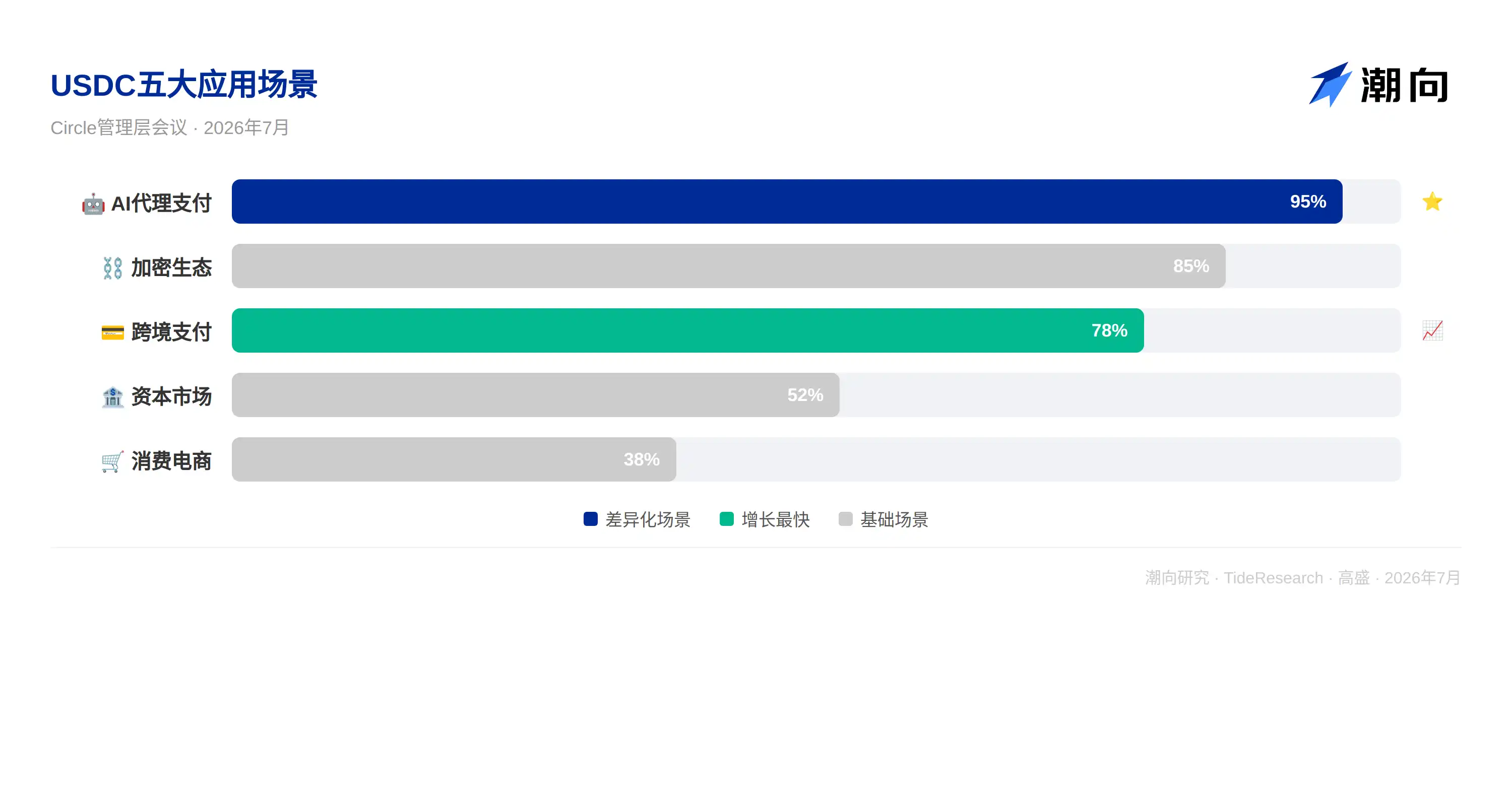
Alasannya adalah diversifikasi kasus penggunaan. Circle membagi skenario penerapan USDC menjadi lima lapisan, mencakup spektrum lengkap dari ekosistem kripto hingga pembayaran AI agent.

Ekosistem kripto adalah basis dasar USDC, dengan kolaborasi platform seperti Hyperliquid yang tumbuh cepat, terus memperluas likuiditas.

Pembayaran lintas batas dan manajemen treasury saat ini adalah sektor dengan pertumbuhan tercepat. Penyelesaian instan dan biaya transaksi sangat rendah dari USDC sedang mengubah proses pembayaran lintas batas tradisional bilateral. Circle menyebutkan, permintaan terhadap stablecoin dolar di pasar berkembang sangat kuat, ini adalah tren 'dolarisasi digital', orang menggunakan USDC sebagai pengganti mata uang lokal atau sistem perbankan yang tidak dapat diandalkan.

Kasus penggunaan e-commerce konsumen juga mulai terbentuk. Platform e-commerce utama seperti Stripe dan Shopify telah mulai mendukung pembayaran USDC, pengguna dapat langsung memilih pembayaran dengan USDC saat checkout. Kartu kredit yang terkait dengan stablecoin juga sedang naik, pengguna dapat memegang dan membelanjakan stablecoin.

Terobosan di pasar modal lebih kritis. Circle melihat potensi USDC sebagai agunan dan mata uang penyelesaian derivatif. Baru-baru ini CFTC menyetujui agar Future Commission Merchant menganggap stablecoin tertentu sebagai agunan yang dapat segera dicairkan, ini adalah katalis kelembagaan penting. Tokenisasi aset dunia nyata juga memperluas skenario penerapan USDC, stablecoin adalah alat penyelesaian tunai alami untuk perdagangan on-chain.

Dan skenario diferensiasi yang paling ditekankan Circle adalah pembayaran AI agent. AI agent sedang menjalankan aktivitas ekonomi secara mandiri, x402 saat ini adalah protokol pembayaran agent terdepan, USDC menyumbang sekitar 99% dari semua transaksi di protokol tersebut. AI agent memerlukan penyelesaian atomik dan biaya transaksi yang sangat rendah, stablecoin adalah alat pembayaran yang paling sesuai.
Penghalang Kompetitif USDC adalah Efek Jaringan

Manajemen percaya bahwa stablecoin adalah bisnis khas efek jaringan. Jaringan USDC adalah infrastruktur keuangan internet publik, siapa pun dapat mengaksesnya, individu, perusahaan, pengembang semuanya dapat menggunakannya.

Circle menyebutkan tiga keunggulan kompetitif USDC.
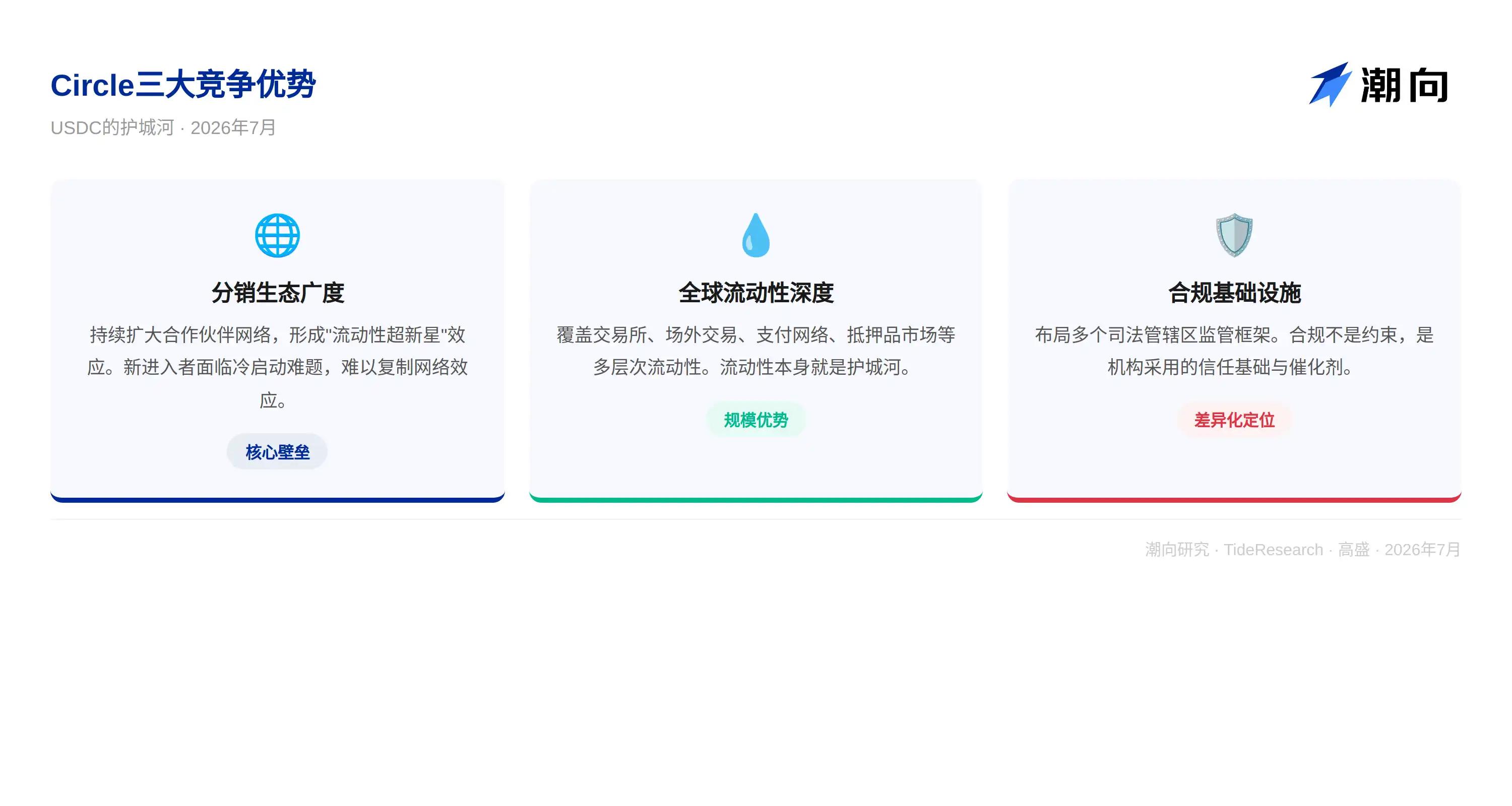
Pertama adalah keluasan distribusi dan ekosistem platform. USDC memperkuat likuiditas melalui peningkatan mitra berkelanjutan, membentuk efek 'supernova likuiditas'. Stablecoin baru sulit meniru efek jaringan ini karena ada masalah cold-start, tanpa likuiditas tidak ada pengguna, tanpa pengguna tidak ada likuiditas.

Kedua adalah kedalaman likuiditas global. USDC memiliki likuiditas yang dalam di bursa, pasar over-the-counter, jaringan pembayaran, dan pasar agunan, kedalaman ini sendiri adalah parit pertahanan.

Ketiga adalah infrastruktur kepatuhan. USDC memiliki tata kelola regulasi di banyak yurisdiksi, manajemen percaya ini justru adalah pendorong kunci adopsi institusional, bukan batasan.

Tentang persaingan, Circle membedakan dua jenis pesaing. Satu adalah deposit tokenized, sertifikat deposit digital yang diterbitkan bank. Circle berpendapat stablecoin lebih unggul daripada deposit tokenized karena stablecoin terbuka, dapat dioperasikan, tanpa risiko kredit bank, dan 100% cadangan. Jenis lain adalah pesaing stablecoin baru, Circle memperkirakan akan ada lebih banyak stablecoin baru, tetapi mereka kekurangan efek jaringan yang telah dikumpulkan Circle selama lebih dari sepuluh tahun.

Perbedaan Deposit Tokenized dan Stablecoin adalah Struktural

Circle berpendapat perbedaan antara stablecoin dan deposit tokenized adalah struktural, bukan hanya masalah siapa yang lebih dulu.

Stablecoin adalah sistem keuangan internet publik yang terbuka, siapa pun dapat mengaksesnya, likuiditas dapat mengalir bebas melintasi platform. Deposit tokenized lebih seperti ekstensi sistem perbankan, masih akan terperangkap dalam ekosistem bank tunggal atau aliansi. Ini adalah dua arsitektur yang sama sekali berbeda, stablecoin adalah native internet, deposit tokenized adalah peningkatan digital sistem perbankan.

Perbedaan kunci lainnya adalah risiko kredit. Stablecoin adalah uang tunai digital 100% cadangan, tanpa risiko kredit. Deposit tokenized pada dasarnya adalah kewajiban bank, membawa risiko kredit bank. Menurut Circle, perbedaan ini adalah fundamental.

Tiga Produk Strategis Circle, Tujuannya Mengubah Stablecoin Menjadi Sistem Operasi

Circle bukan hanya penerbit stablecoin, mereka sedang mengubah diri menjadi platform keuangan internet. Manajemen menekankan tiga produk strategis dalam pertemuan.

Arc adalah blockchain Layer 1 yang dikembangkan sendiri oleh Circle, diposisikan sebagai sistem operasi keuangan komprehensif, tujuannya meningkatkan likuiditas dan interoperabilitas, terutama menarik lembaga keuangan tradisional.

Circle Payments Network (CPN) adalah produk pembayaran lintas batas, mencapai pembayaran lintas batas yang lebih cepat dan efisien melalui penyelesaian blockchain, tingkat adopsi institusional sedang tumbuh.

Agentic Stack adalah lini produk untuk AI agent, tujuannya mempertahankan pangsa dominan USDC dalam aktivitas ekonomi terkait AI. Mengingat USDC sudah menyumbang sekitar 99% volume transaksi di protokol x402, keunggulan pertama di bidang ini jelas.

Regulasi adalah Katalis, Bukan Batasan

Pasar selalu khawatir regulasi stablecoin akan membatasi model bisnis Circle, tetapi manajemen Circle memberikan interpretasi yang sebaliknya. Undang-Undang Struktur Pasar CLARITY Act jika disahkan, Circle percaya ini akan menjadi katalis pertumbuhan USDC, bukan menjadi kendala bisnis. Alasannya ada tiga: undang-undang mengizinkan penerbit terus memberikan insentif bagi hasil kepada distributor, Circle dapat terus memperluas mitra; undang-undang dapat membuka adopsi kripto tingkat institusional, membawa volume penggunaan stablecoin yang lebih besar; undang-undang mendorong mekanisme reward berbasis penggunaan, bukan penahanan pasif, ini akan mendorong penggunaan aktif USDC, mengurangi penumpukan tidak aktif.

Perspektif Tren

Peringkat Goldman Sachs untuk Circle adalah Netral, tetapi catatan ini sendiri sudah menjelaskan banyak hal. Circle sedang memperluas USDC dari alat perdagangan kripto menjadi infrastruktur keuangan internet, arah ini benar.

Yang patut dipertanyakan adalah, seberapa dalam parit pertahanan Circle? Efek jaringan memang ada, tetapi pesaing terbesar USDC, USDT, masih memimpin dalam kapitalisasi pasar stablecoin. Keunggulan kepatuhan yang diandalkan Circle, dalam pandangan fundamentalis kripto justru adalah kelemahan, transparansi berarti dapat diregulasi, dapat diregulasi berarti dapat dibekukan. Posisi institusional USDC adalah pedang bermata dua.

Poin lain yang perlu diperhatikan adalah kerangka penilaian Goldman Sachs. Target harga $96 sesuai dengan PER 35 kali, tetapi profitabilitas Circle saat ini sangat bergantung pada pendapatan bunga aset cadangan. Jika suku bunga turun, laba Circle akan langsung tertekan, risiko ini hanya disinggung ringan dalam catatan, tetapi dampak aktualnya terhadap valuasi lebih besar daripada regulasi.
Pernyataan Tanggung Jawab

Artikel ini adalah penyusunan dan interpretasi Chaoxiang Research terhadap laporan penelitian pihak ketiga. Peringkat, target harga, prediksi laba, dan penilaian terkait yang dikutip dalam artikel adalah pandangan analis pihak ketiga tersebut, hanya mewakili posisi institusi mereka, tidak mewakili pandangan Chaoxiang Research, dan tidak membentuk saran investasi apa pun.

Pasar memiliki risiko, keputusan harus independen. Artikel ini tidak boleh dijadikan dasar untuk membeli atau menjual sekuritas apa pun.


Trending Cryptos

Related Questions

QMenurut laporan Goldman Sachs, apa tren utama yang sedang dialami oleh USDC dan Circle?

AMenurut laporan Goldman Sachs, USDC dan Circle sedang bertransisi dari sekadar alat di dunia kripto menjadi infrastruktur dasar untuk keuangan tradisional dan ekonomi AI. Kasus penggunaan USDC meluas ke pembayaran lintas batas, e-niaga konsumen, penyelesaian pasar modal, dan bahkan pembayaran untuk agen AI.

QMengapa pertumbuhan stablecoin seperti USDC dikatakan telah terlepas dari siklus pasar kripto?

APertumbuhan stablecoin telah terlepas dari siklus pasar kripto karena kasus penggunaannya yang semakin beragam. Meskipun volume dan harga perdagangan kripto turun, nilai pasar dan volume transaksi stablecoin tetap meningkat didorong oleh adopsi di bidang pembayaran lintas batas, manajemen aset, e-niaga, dan pembayaran untuk agen AI.

QApa saja keunggulan kompetitif USDC menurut manajemen Circle?

AMenurut manajemen Circle, keunggulan kompetitif USDC terletak pada: 1) Efek jaringan dan luasnya ekosistem platform distribusi, 2) Kedalaman likuiditas global di berbagai pasar, dan 3) Infrastruktur kepatuhan yang kuat di berbagai yurisdiksi.

QApa perbedaan struktural utama antara stablecoin (seperti USDC) dan deposit tokenisasi menurut Circle?

APerbedaan struktural utamanya adalah: 1) Stablecoin bersifat terbuka, dapat dioperasikan, dan tanpa risiko kredit karena berbasis cadangan penuh. 2) Deposit tokenisasi merupakan perluasan sistem perbankan, terbatas pada ekosistem bank atau aliansi tertentu, dan membawa risiko kredit bank yang menerbitkannya.

QBagaimana Circle memandang peran regulasi terhadap bisnis mereka, menurut catatan rapat manajemen tersebut?

ACircle memandang regulasi (seperti CLARITY Act) sebagai katalisator pertumbuhan, bukan hambatan. Regulasi diyakini dapat membuka adopsi kripto tingkat institusional, mendorong penggunaan aktif USDC melalui mekanisme insentif berbasis penggunaan, dan tetap mengizinkan model bagi hasil pendapatan dengan mitra distribusi.

Related Reads

Misjudged A-Shares: Resilience, Expectations, and Confidence

China's A-share market recently faced selling pressure, especially in tech sectors, initially triggered by a global tech sell-off that began in South Korea. However, the article argues this is a case of "mistaken injury" and highlights the market's underlying resilience. This resilience stems from three main pillars: **1) Tech Sector Fundamentals:** Unlike Korea's market dominated by a few memory chip stocks, China's tech sector is diversified across computing, communications, electronics, and semiconductors, supported by dual narratives of global AI supply chains and domestic substitution. Core areas like optical modules and fiber optics continue to show strong earnings growth. **2) "National Team" Support:** State-backed institutions and large corporations have made significant market purchases and announced buybacks, providing liquidity and signaling confidence. This is seen as a stabilizing policy signal, often associated with market bottoms. **3) Broader Market Pillars:** Other major sectors are showing endogenous recovery momentum. Consumer stocks benefit from stabilizing CPI and signs of sector recovery (e.g., liquor price hikes). Cyclical sectors like aluminum have high earnings, potential price increases due to tight supply, and low valuations. The financial sector offers stable dividends and low valuations. The conclusion is that the sell-off was driven by external contagion, not a collapse in fundamentals. With strong policy support and recovering momentum across key sectors, the A-share market possesses the toughness to regain stability.

marsbit5m ago

Misjudged A-Shares: Resilience, Expectations, and Confidence

marsbit5m ago

The Clarity Act's Journey Through Congress: The Thorny Path of Bipartisan Compromise in the U.S.

The U.S. Congress is struggling to advance the crypto market structure bill known as the Clarity Act, with bipartisan compromise proving difficult. Key hurdles include unresolved disputes over "yield" products and, more critically, the inclusion of strong ethics provisions for elected officials—a non-negotiable demand for many Democrats. While a compromise on yield was reached in May, securing only limited Democratic support in committee, the separate Senate Agriculture Committee version later passed with no Democratic votes due to the ethics impasse. As Republicans push for a full Senate vote in July, demands for ethics rules have expanded, and other contentious issues like developer protections and concerns from law enforcement and large banks further complicate negotiations. Despite consensus on the need for legislation, the path forward is unclear. Recent discussions between senators and White House officials aim to find acceptable ethics language. Some lawmakers question whether a compromise text can garner enough bipartisan support, with one Democrat stating the current proposal lacks the strong ethics provisions required for their vote. Potential short-term goals for the crypto community include symbolic Senate action before the August recess, a longer-term aim for passage by 2026, or establishing a detailed framework that addresses ethics and other compromises. The process remains arduous, relying on the traditional, vote-by-vote effort to build bipartisan support.

marsbit24m ago

The Clarity Act's Journey Through Congress: The Thorny Path of Bipartisan Compromise in the U.S.

marsbit24m ago

Are Kalshi and Polymarket Founders at Odds? This Business Rivalry Is More Brutal Than You Think

"The Rivalry Between Kalshi and Polymarket Founders Turns Bitter and Litigious" The intense feud between Tarek Mansour, CEO of Kalshi, and Shayne Coplan, founder of Polymarket, has escalated far beyond typical business competition into personal animosity and regulatory battles. Both lead billion-dollar prediction market platforms, but their approaches differ sharply. Kalshi positions itself as the compliant operator, securing U.S. regulatory approval before launching. In contrast, Polymarket initially operated offshore, allowing U.S. users to access its platform via VPN, which drew regulatory scrutiny. The conflict reached a peak in November 2024 when FBI agents raided Coplan's New York apartment. While Coplan publicly blamed political motives, his team privately suspected Kalshi was involved. According to sources, Kalshi's lawyers had previously reported Polymarket's operations to federal prosecutors, highlighting its accessibility to U.S. users despite a ban. This incident fueled mutual accusations and underhanded tactics, including social media smear campaigns and attempts to sabotage each other's major business deals. Their rivalry also played out in Washington, influencing regulatory debates. Kalshi actively lobbied against Polymarket's practices, framing them as illegal and unethical. Polymarket, after facing a CFTC fine and investigation, later acquired a licensed U.S. firm to launch a domestic app, regaining a foothold. Despite the hostility, both companies have seen massive growth, with combined trading volumes soaring. However, increased regulatory scrutiny, particularly around insider trading on Polymarket's platform, continues to pose challenges. The founders' deep-seated mutual disdain ensures their battle for market dominance remains as much a personal vendetta as a commercial one.

marsbit33m ago

Are Kalshi and Polymarket Founders at Odds? This Business Rivalry Is More Brutal Than You Think

marsbit33m ago

Trading

Spot

Hot Articles

What is USDC(WORMHOLE)

USD Coin (Wormhole): A Comprehensive Overview Introduction In the rapidly evolving world of cryptocurrencies, USD Coin (Wormhole), referred to as $USDC(Wormhole), stands out as a pioneering solution within the DeFi (Decentralized Finance) landscape. Operating on several blockchain platforms, including Solana, USD Coin (Wormhole) is more than just a digital representation of the United States dollar. It embodies the innovative spirit of modern finance, enabling seamless cross-chain transactions and enhanced interoperability among diverse blockchain ecosystems through the advanced Wormhole protocol. What is USD Coin (Wormhole)? USD Coin (Wormhole) is a tokenized version of the US dollar designed to facilitate frictionless transactions across different blockchain networks. Its primary aim is to bolster liquidity and enhance the functionality of the DeFi ecosystem. By leveraging the Wormhole protocol, which establishes a robust cross-chain communication network, users can effortlessly transfer USDC tokens across various platforms. This cross-chain capability marks a significant advancement in cryptocurrency use, promoting a more interconnected and efficient ecosystem where assets can flow freely between different blockchains. The value proposition of USD Coin (Wormhole) lies not only in its stability, being pegged to the US dollar, but also in its ability to bridge gaps between disparate blockchain environments. This innovative approach fosters a greater level of participation among users and developers, paving the way for new and exciting applications within decentralized finance. Who is the creator of USD Coin (Wormhole)? The origins of USD Coin (Wormhole) are intricately tied to the Wormhole network, which was developed by Jump Crypto. While specific individual creators are not prominently documented, Jump Crypto is notable for its involvement in advancing blockchain technology and supporting its applications in finance. By creating the Wormhole network, Jump Crypto has played a vital role in promoting cross-chain asset transfers, enhancing the efficiency and diversity of cryptocurrency usage. Who are the investors of USD Coin (Wormhole)? The success of USD Coin (Wormhole) is supported by investments from several notable funds and organizations within the cryptocurrency realm. Key investors include: Coinbase Ventures: A prominent venture capital arm backed by one of the leading cryptocurrency exchanges in the industry, Coinbase Ventures provides essential capital and strategic support to promising blockchain projects. Arrington XRP Capital: Specializing in digital assets, Arrington XRP Capital recognizes the potential of innovative projects like USD Coin (Wormhole) and has invested accordingly to back its development. Jump Trading: As the parent organization of Jump Crypto, Jump Trading brings not only investment but a wealth of expertise in trading technology and market dynamics to bolster the Wormhole project. How Does USD Coin (Wormhole) Work? The operational framework of USD Coin (Wormhole) is intricately designed to facilitate effective cross-chain transactions, maximizing security and efficiency. Here’s a simplified overview of how it functions: Asset Locking: When a user wishes to transfer USDC from one blockchain to another, they first lock their tokens on the source blockchain. This process ensures that the assets are secure and are set to be either burned or moved later. Token Minting: After the tokens are locked, an equivalent amount of USDC is minted on the destination blockchain. This provides the user with access to their funds on a new platform, reflecting the flexibility that the Wormhole protocol enables. Cross-Chain Transfer: The Wormhole protocol efficiently facilitates the entire transfer process. It ensures that once the USDC is minted on the destination chain, the equivalent tokens are burned on the source chain. The result is a seamless transfer of value between two distinct blockchain environments. This cross-chain methodology ensures that transactions remain secure and transparent, significantly enhancing liquidity within the different DeFi ecosystems. Timeline of USD Coin (Wormhole) Understanding the evolution of USD Coin (Wormhole) provides vital context for its significance in the cryptocurrency arena. Here’s a timeline highlighting important milestones in the project’s history: 2021: The Wormhole project is launched, establishing a framework for cross-chain asset transfers and setting the stage for the development of USD Coin (Wormhole). 2022: The Wormhole network experiences a significant challenge with a security breach that results in a $325 million theft. However, the incident is later addressed and refunded by Jump Crypto, showcasing the project’s commitment to security and transparency. 2023: USD Coin (Wormhole) integrates with Circle’s Cross-Chain Transfer Protocol (CCTP), enhancing its capabilities for cross-chain transfers and further solidifying its place within the DeFi ecosystem. 2024: Ongoing development and expansion of the Wormhole network continue, aimed at increasing the utility and reach of USD Coin (Wormhole) as well as enhancing its operational framework. Key Features The success of USD Coin (Wormhole) can be attributed to several key features that differentiate it from other cryptocurrency offerings: Cross-Chain Interoperability At the core of USD Coin (Wormhole) is its ability to facilitate seamless transfers across multiple blockchain networks. This interoperability serves as a cornerstone for decentralized finance, allowing various platforms to interact with each other, thereby accelerating the evolution of financial services. Security Wormhole employs a well-designed Guardian Network comprised of node validators that ensure secure cross-chain transactions. This collective oversight minimizes the risk of fraud and provides users with confidence that their assets are protected during cross-chain transfers. Liquidity Enhancement By enabling USDC to circulate freely across different blockchains, USD Coin (Wormhole) enhances liquidity in the DeFi ecosystem. This increased liquidity can foster more efficient trading, contribute to better pricing strategies, and improve the overall market dynamics encompassing various digital assets. Conclusion USD Coin (Wormhole) is a pivotal innovation in the blockchain space, reinforcing the capabilities of decentralized finance (DeFi) and establishing a more connected financial ecosystem. With its robust framework for cross-chain transactions, security features, and strong backing from reputable investors, USD Coin (Wormhole) is positioned to play a key role in the future of cryptocurrency. As the digital finance landscape continues to evolve, USD Coin (Wormhole) not only embraces the future of interconnectivity among blockchain networks but also reaffirms the power of tokenization and blockchain technology in transforming how we perceive and utilize value in a digital world. By navigating the complexities of cross-chain functionality, it demonstrates a sophisticated approach to enabling financial inclusivity and innovation in the world of cryptocurrencies.

1.5k Total ViewsPublished 2024.04.01Updated 2024.12.03

What is USDC(WORMHOLE)

What is $USDC

Classic USDC: A Comprehensive Overview Introduction to Classic USDC In the rapidly evolving landscape of the cryptocurrency market, stablecoins have emerged as critical components, particularly in providing stability amid the volatility that characterizes digital assets. One such project is Classic USDC, a digital currency initiative that aims to deliver a stable and reliable medium of exchange. By maintaining a 1:1 peg with the US dollar, Classic USDC strives to offer users a dependable digital asset, equipped for various applications within the web3 and cryptocurrency ecosystems. What is Classic USDC? Classic USDC is fundamentally a stablecoin, which is a type of cryptocurrency designed to minimize the price volatility typically seen in the digital asset market. Specifically, Classic USDC aspires to represent the value of the US dollar closely, ensuring that users can leverage this digital currency for transactions, savings, and other financial activities without the fear of sudden price fluctuations that can otherwise plague many cryptocurrencies. The primary aim of Classic USDC is to provide a reliable and trustworthy digital equivalent of the US dollar, designed for seamless integration into a wide range of web3 applications, decentralized finance (DeFi) platforms, and other crypto-related financial systems. By delivering a stable digital currency, Classic USDC seeks to facilitate everyday commerce, make blockchain technology more user-friendly, and encourage the adoption of cryptocurrencies for mainstream usage. Creator of Classic USDC The identity of the creator or the development team behind Classic USDC remains largely unknown, and the lack of transparency has led to a degree of uncertainty regarding the project’s origins. While many cryptocurrency initiatives prominently showcase their founders and development teams, Classic USDC does not provide clear information about its creators, which poses challenges for potential users or investors weighing the project's credibility and reliability. Investors of Classic USDC Alongside the ambiguity surrounding its creators, Classic USDC also lacks specificity with regards to its investors. The financial backing of a project can often lend it credibility and stabilize its operations; however, the absence of documented investment foundations or organizations supporting Classic USDC raises questions about its funding structure. This lack of clarity could potentially hinder stakeholder confidence in the project. How Does Classic USDC Work? The operational mechanics of Classic USDC rely heavily on its reserve system, which is fundamental to the underpinnings of any stablecoin. Classic USDC undertakes to maintain a reserve of assets that directly correspond to the value of the digital currency in circulation. Specifically, for every Classic USDC token issued, an equivalent amount of backing assets is retained in reserve, whether in cash or near-cash equivalents. This strategy is designed to uphold the value of Classic USDC, offering reassurance to users that redeeming their tokens for US dollars is feasible at any time. This reserve structure aims to enhance the stability and reliability of Classic USDC, positioning it as a secure alternative in the cryptocurrency market. By ensuring that the value of Classic USDC is consistently correlated with the US dollar, the project aspires to engender trust among users who may be wary of the broader market dynamics. Timeline of Classic USDC The history of Classic USDC is marked by several key milestones that reflect its journey and evolution within the cryptocurrency ecosystem: 2021: The inception of Classic USDC is noted, introducing a new digital currency option designed for stability. During this year, the first records of the token’s activity surfaced and its initial price levels were established. 2024: Classic USDC begins to experience notable price fluctuations, as the crypto market overall grapples with various trends and user sentiment. Predictions regarding its future potential emerge, indicating a strong interest from market observers and analysts who foresee growth opportunities. Future Projections Experts speculate that Classic USDC may reach higher levels of adoption and stability in the years to come, with potential further developments anticipated around 2025 and 2026. However, these projections should be approached with cautious optimism, as the cryptocurrency market is inherently unpredictable, and various external factors may influence the trajectory of Classic USDC. Key Points About Classic USDC Stability: Classic USDC’s core proposition revolves around providing a digital currency that parallels the value of the US dollar, thereby ensuring stability in an often volatile marketplace. Reserve System: The project’s commitment to maintaining a reserve of assets to back its value underscores its reliability and operational soundness. Web3 and Crypto Integration: Classic USDC is engineered to facilitate easy integration within various applications, aiming to enhance the user experience and broaden the acceptance of cryptocurrency in everyday transactions. Future Growth Potential: While still emerging, Classic USDC holds prospective avenues for growth as awareness and utilization of stablecoins increases in the web3 and crypto contexts. Conclusion Classic USDC presents itself as a notable stablecoin initiative within the cryptocurrency sphere, striving to provide users with a reliable digital currency that embodies the stability of the US dollar. Despite uncertainties regarding its creators and financial backing, the underpinning principles of Classic USDC—centered on reserve-backed assurances—endeavour to position it as a trustworthy option for individuals and businesses navigating the digital economy. With an eye towards the future, market analysts are keen to observe how Classic USDC evolves in response to the shifting dynamics of the cryptocurrency landscape, potentially establishing itself as a significant player in the realm of stablecoins.

782 Total ViewsPublished 2024.05.01Updated 2024.12.03

What is $USDC

Discussions

Welcome to the HTX Community. Here, you can stay informed about the latest platform developments and gain access to professional market insights. Users' opinions on the price of USDC (USDC) are presented below.

活动图片