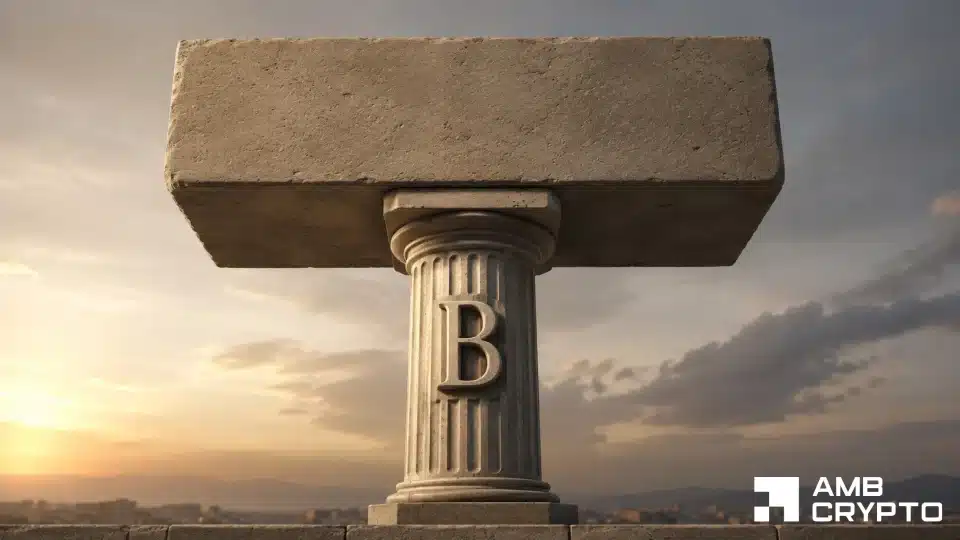
Aceptando una pérdida de 55 millones de dólares: la fe de Strategy tiene fecha de pago de intereses

链捕手Published on 2026-07-06Last updated on 2026-07-06

Abstract

El 6 de julio, Michael Saylor anunció que MicroStrategy había vendido 3.588 BTC, obteniendo aproximadamente 216 millones de dólares para pagar dividendos de sus valores de crédito digital. Esta venta, realizada entre el 29 de junio y el 5 de julio a un precio promedio de 60.197 dólares, representa una pérdida de más de 15.000 dólares por BTC, con una pérdida total realizada de unos 55,45 millones, ya que el costo promedio de adquisición fue de 75.651 dólares. Este movimiento contradice su postura previa de "nunca vender" Bitcoin. La decisión se debe a la necesidad de cumplir con obligaciones financieras rígidas. Los pagos anuales de dividendos e intereses de sus acciones preferentes (como la serie STRC) ascienden a entre 1.700 y 1.760 millones de dólares. Con sus canales de financiación (acciones preferentes, ordinarias y bonos convertibles) efectivamente cerrados debido a la baja prima de su valor liquidativo (mNAV), vender Bitcoin se convirtió en la opción racional para generar liquidez. Como consecuencia, MicroStrategy ha pasado de ser el comprador marginal constante del mercado a un vendedor programado. Se estima que, si cubriera todas sus obligaciones anuales vendiendo BTC, generaría una presión de venta de aproximadamente 29.000 BTC al año. Aunque su reserva de efectivo de 2.550 millones cubre unos 17 meses de gastos, este cambio estructural altera la dinámica del mercado y pone en duda el modelo de negocio de las empresas del sector de tesorería de activos digitales ...

Autor: Shenchao TechFlow

El 6 de julio, Michael Saylor publicó en X un tuit completamente opuesto a su imagen de los últimos seis años: Strategy ha vendido 3,588 BTC, obteniendo aproximadamente 216 millones de dólares en efectivo, para pagar los dividendos de los valores de crédito digital. Hasta el 5 de julio, la empresa aún poseía 843,775 BTC y una reserva de efectivo de 2,550 millones de dólares.

Esta transacción ocurrió entre el 29 de junio y el 5 de julio, a un precio promedio de 60,197 dólares. Sin embargo, el costo promedio de adquisición previo de Strategy era de 75,651 dólares. Es decir, esta fue una venta con una pérdida de más de 15,000 dólares por BTC, alcanzando una pérdida realizada total de aproximadamente 55.45 millones de dólares. Saylor, quien alguna vez dijo "nunca vendería" y que "Bitcoin es una salida, no una entrada", eligió vender con pérdidas cuando el precio de la criptomoneda se acercaba a los mínimos del ciclo.

Para entender este evento, es necesario responder dos preguntas: ¿por qué tuvo que vender? ¿Cuánto tiempo durará esta venta?

De 32 a 3588 BTC en solo 35 días

Retrocedamos hasta finales de mayo.

Del 26 al 31 de mayo, Strategy vendió 32 BTC por un total de aproximadamente 2.5 millones de dólares, siendo la primera venta de la compañía desde 2022. 32 BTC representaban el 0.004% de sus tenencias totales, un monto financieramente insignificante. El mercado interpretó esto como una "prueba de desensibilización": Saylor estaba probando qué tan doloroso sería para el mercado cuando la venta ocurriera.

La respuesta fue que fue muy doloroso. Las noticias, combinadas con presiones macroeconómicas, llevaron a Bitcoin a caer por debajo de los 61,000 dólares el 5 de junio, alcanzando un mínimo no visto desde febrero. Las acciones preferentes perpetuas de Strategy, STRC, cayeron a un mínimo histórico de 73.77 dólares el 25 de junio, con un descuento de más del 26% respecto a su valor nominal de 100 dólares. Las acciones ordinarias MSTR cayeron por debajo de los 90 dólares el mismo día, retrocediendo casi un 80% desde sus máximos, una caída más profunda que la de Bitcoin, que retrocedió aproximadamente un 50% en el mismo período.

El verdadero punto de inflexión llegó el 30 de junio.

La junta directiva de Strategy aprobó un paquete de medidas: autorizó la venta de hasta 1,250 millones de dólares en Bitcoin, cuyos ingresos solo se usarían para recomprar valores, pagar dividendos/intereses o complementar las reservas en dólares; estableció una reserva en efectivo de 2,550 millones de dólares para cubrir 17.4 meses de obligaciones anuales; lanzó un plan de recompra dual por 2,000 millones de dólares; y aumentó la tasa de dividendo anual de STRC al 12% a partir del 1 de julio.

Este anuncio convirtió la "venta de criptomonedas para pagar intereses" de un tabú en parte de los estatutos de la compañía. Cinco días después, se ejecutó la venta de 3,588 BTC. Desde la prueba de desensibilización hasta la operación rutinaria, Strategy solo necesitó 35 días.

La rueda de la fortuna se invierte: según la fórmula de Saylor, vender es la solución óptima

El motor de crecimiento de Strategy durante los últimos seis años ha sido una rueda de la fortuna dependiente de la prima: siempre que la capitalización de mercado de MSTR sea significativamente mayor que su valor neto en Bitcoin (es decir, mNAV > 1), la empresa puede emitir acciones para financiar la compra de más BTC, aumentando el contenido de Bitcoin por acción y haciendo subir el precio de las acciones, lo que respalda la siguiente emisión. En el mercado alcista, esta rueda era tan poderosa que el volumen de negociación de MSTR superó alguna vez al de Nvidia.

En la llamada de resultados del primer trimestre de este año, la gerencia estableció un valor umbral para esta rueda: un múltiplo de mNAV de 1.22. Si la prima supera 1.22, es ventajoso emitir acciones para comprar BTC; si cae por debajo de 1.22, emitir acciones ordinarias perjudica a los accionistas existentes. En este caso, vender Bitcoin para pagar dividendos o recomprar acciones se convierte en la opción óptima para aumentar el contenido de Bitcoin por acción.

Ahora, los tres engranajes de esta rueda están atascados.

Primero, el canal de financiamiento STRC. Está diseñado para anclar su precio cerca del valor nominal de 100 dólares ajustando dinámicamente la tasa de dividendo, permitiendo así la financiación continua a valor nominal. Cuando el mercado secundario ofrece STRC a solo 75 dólares, nadie suscribiría nuevas acciones a 100 dólares. El canal de financiamiento mediante acciones preferentes está efectivamente cerrado. Además, el coeficiente de correlación a 90 días entre STRC y Bitcoin alcanzó un máximo histórico de alrededor de 0.70, lo que erosiona la estabilidad que buscan los inversores de renta.

Segundo, el canal de acciones ordinarias ATM. Cuando el mNAV se acerca al valor umbral, cada acción emitida diluye la fe de los accionistas.

Tercero, el canal de bonos convertibles. Los 8,200 millones de dólares en bonos pendientes comenzarán a vencer desde 2028. Aumentar la deuda solo reduciría el margen de maniobra futuro.

Mientras los tres canales de financiamiento están bloqueados, las facturas del lado del gasto son obligatorias.

Las cinco series de acciones preferentes emitidas por Strategy (STRF, STRE, STRK, STRD, STRC) implican obligaciones anuales de dividendos e intereses de aproximadamente 1,700 a 1,760 millones de dólares. Solo STRC, con un tamaño de emisión de unos 10,500 millones de dólares y una tasa de dividendo del 12%, representa un gasto anual superior a 1,200 millones de dólares. Legalmente, los dividendos de las acciones preferentes se pueden posponer, pero si no se pagan, las multas por intereses y la pérdida de reputación crediticia destruirían toda capacidad futura de financiación. Para una empresa que depende de la transfusión del mercado de capitales, este dinero no es diferente del interés de la deuda.

Por lo tanto, la naturaleza real de esta venta es: bajo las reglas establecidas por el propio Saylor, esta es la solución racional, incluso la única, dadas las restricciones actuales. Cuando el mercado estaba dispuesto a pagar una prima, él convirtió su fe en valores y se la vendió a inversores de renta; cuando la prima desapareció, la fe convertida en valores comenzó a cobrar intereses, y esos intereses solo pueden pagarse con Bitcoin.

El mayor comprador del mundo se convierte en un vendedor con calendario

Las consecuencias pueden analizarse a lo largo de tres líneas.

Para el mercado de Bitcoin, este es un cambio histórico en la estructura de oferta y demanda. Strategy posee aproximadamente 840,000 BTC, aproximadamente el 4% del suministro total. Durante los últimos seis años, ha sido el comprador marginal más estable y despreocupado por el precio. Según un cálculo aproximado al precio actual de 60,000 dólares, si las obligaciones anuales de 1,760 millones se cubrieran completamente vendiendo Bitcoin, esto implicaría una presión de venta anual de unos 29,000 BTC, o aproximadamente 2,400 BTC mensuales. Este volumen no es fatal en comparación con el volumen diario de los ETF al contado de Bitcoin. Lo verdaderamente fatal es la expectativa: el mercado ahora sabe que al final de cada trimestre y de cada mes, podría haber una orden de venta independiente del precio esperando. El ancla de fe se ha convertido en un calendario pendiente.

Para el sector DAT (Tesorería de Activos Digitales), Strategy es el ancla de valoración para todos los imitadores. Cuando el maestro fundador comienza a vender Bitcoin para pagar intereses, la justificación de la prima mNAV de las docenas de compañías que usan el mismo modelo para emitir acciones preferentes y comprar BTC o ETH será reexaminada. Lo más probable es que el diferencial crediticio de este sector se amplíe sistémicamente.

Para la propia Strategy, la situación no es tan desesperada como la pintan las emociones. La reserva de efectivo de 2,550 millones de dólares puede cubrir aproximadamente 17 meses de obligaciones. La deuda se concentra en vencimientos después de 2028. Las pruebas de estrés de los analistas muestran que, incluso en un escenario extremo donde el precio de Bitcoin se redujera a la mitad y los mercados de capitales se cerraran, el principal riesgo sería la compresión continua del contenido de Bitcoin por acción, no una espiral de liquidación inmediata. La diferencia esencial con la espiral de muerte estilo LUNA es que los dividendos de las acciones preferentes no se emiten automáticamente al incumplirse, y los tenedores tienen derecho de reclamación prioritario sobre los 840,000 BTC en caso de liquidación. Strategy no morirá súbitamente, pero podría quedar atrapada en un estado que consume aún más la fe: tener que elegir cada mes entre "vender acciones" y "vender Bitcoin" la opción menos mala.

Solo hay un punto de ruptura: que STRC vuelva a cotizar cerca de su valor nominal de 100 dólares, reabriendo el canal de financiación mediante acciones preferentes y permitiendo que la rueda de la fortuna gire en la dirección correcta. Y la condición previa para que STRC regrese a su ancla es, con alta probabilidad, que el precio de Bitcoin primero se estabilice y se recupere.

En otras palabras, Strategy ha convertido su destino en un razonamiento circular: si el precio de Bitcoin es bueno, todo el modelo es válido; si el precio de Bitcoin es malo, el modelo en sí mismo ejerce presión sobre el precio.

Trending Cryptos

Related Questions

Q¿Por qué MicroStrategy vendió 3,588 BTC a pesar de sufrir una pérdida de aproximadamente 55 millones de dólares?

AMicroStrategy vendió los bitcoins para generar efectivo y cumplir con sus obligaciones de dividendos de sus valores de crédito digital, específicamente para pagar los dividendos de sus acciones preferentes STRC. Con canales de financiación cerrados y facturas obligatorias, vender una parte de sus BTC se convirtió en la única opción viable para cubrir estos pagos, incluso asumiendo pérdidas.

Q¿Cómo evolucionó la postura de venta de MicroStrategy desde la prueba inicial de 32 BTC hasta la venta masiva?

AInicialmente, en mayo, vendió solo 32 BTC, interpretado como una "prueba de desensibilización" para medir la reacción del mercado. Luego, el 30 de junio, la junta autorizó oficialmente la venta de hasta 1,250 millones de dólares en BTC para pagos de dividendos y recompra de valores. Solo cinco días después, ejecutó la venta de 3,588 BTC, transformando la venta de un tabú a una operación rutinaria en solo 35 días.

Q¿Qué es el 'flywheel' (volante de inercia) de MicroStrategy y por qué se ha atascado?

AEl 'flywheel' de MicroStrategy era un modelo de crecimiento basado en la prima de su valoración (mNAV). Cuando la capitalización de mercado (MSTR) superaba significativamente el valor neto de sus bitcoins, la empresa emitía acciones para comprar más BTC, aumentando el valor por acción y atrayendo más inversión. Este ciclo se ha atascado porque la prima mNAV cayó por debajo del umbral crítico de 1.22x, las acciones preferentes STRC cotizan con gran descuento, y las vías de financiación (acciones preferentes, ordinarias y bonos convertibles) están esencialmente cerradas.

Q¿Qué impacto tendrán las ventas de MicroStrategy en el mercado de bitcoin y en el sector DAT?

APara el mercado de bitcoin, marca un cambio histórico: el mayor comprador se convierte en un vendedor programado, creando una presión de venta predecible (estimada en ~2,900 BTC mensuales si se cubren todas las obligaciones anuales) y afectando la psicología del mercado. Para el sector de los Tesoros de Activos Digitales (DAT), la credibilidad del modelo se ve cuestionada, lo que probablemente conducirá a una revisión a la baja de las primas de valoración (mNAV) y a un aumento del diferencial de crédito para todas las empresas que lo imitan.

Q¿Cuál es la situación financiera actual de MicroStrategy y cómo podría resolver su dilema?

AMicroStrategy tiene una reserva de efectivo de 2,550 millones de dólares, suficiente para cubrir aproximadamente 17 meses de obligaciones. Su deuda principal vence después de 2028. No enfrenta un riesgo de liquidación inmediato como en una espiral de muerte al estilo de LUNA, pero su modelo está bajo presión. La única salida para reactivar su 'flywheel' es que el precio de bitcoin se recupere y se estabilice, permitiendo que sus acciones preferentes STRC vuelvan a cotizar cerca de su valor nominal de 100 dólares y reabriendo así su principal canal de financiación.

Related Reads

MSTR Discloses Sale of 3,588 Bitcoins, Stock Price Drops Over 5% at One Point During Trading

MicroStrategy, the world's largest corporate holder of Bitcoin, has significantly shifted its business model. Between June 29 and July 5, the company sold 3,588 bitcoins for approximately $216 million to fund quarterly dividends for its preferred stock. This marks its largest-ever Bitcoin sale and signals a strategic pivot: Bitcoin is transitioning from a "buy-and-hold" reserve asset to a liquidity management tool for the company. This move follows a recent authorization allowing Bitcoin sales when equity fundraising is less attractive. The announcement contributed to a more than 5% intraday drop in MicroStrategy's stock price, while Bitcoin fell to around $61,800—below the company's average holding cost of roughly $75,700. The sale represents a major departure from MicroStrategy's long-standing "never sell" commitment, which saw its first minor breach in May with a $2.5 million sale. The latest, hundred-times-larger transaction underscores growing financial pressures. Analysts note the company faces about $1.5 billion in annual preferred dividend obligations, far exceeding cash flow from its software business. As of July 5, MicroStrategy holds 843,775 bitcoins. Its current operational logic involves buying Bitcoin during favorable financing conditions and selling portions to cover dividends when needed, creating a flexible capital management cycle amidst a challenging market environment.

华尔街日报1h ago

MSTR Discloses Sale of 3,588 Bitcoins, Stock Price Drops Over 5% at One Point During Trading

华尔街日报1h ago

Q-Day Countdown: Will Quantum Computing End Cryptocurrencies?

Quantum Computing's Threat to Cryptocurrency: A Countdown to Q-Day Quantum computing, specifically Shor's algorithm, poses a fundamental threat to the public-key cryptography (e.g., ECDSA, RSA) that secures blockchain networks like Bitcoin and Ethereum. This critical juncture, known as Q-Day, is estimated to occur potentially within the next 5-15 years. The core vulnerability stems from the public and immutable nature of blockchains. Assets in addresses where the public key is already exposed on-chain (e.g., spent outputs) are at direct risk, as a sufficiently powerful quantum computer could derive the private key. This threatens the very trust model of cryptocurrencies. The response lies in Post-Quantum Cryptography (PQC)—algorithms like lattice-based ML-DSA and hash-based SLH-DSA, which are resistant to quantum attacks. NIST has standardized key PQC algorithms (FIPS 203, 204, 205), providing a migration path. However, the primary challenge is not technical but socio-economic and involves complex governance: * **Bitcoin's** path is constrained by its conservative ethos. Migrating requires a soft-fork to new address types, facing hurdles like significantly larger signature sizes and, most critically, the divisive governance question of how to handle at-risk legacy UTXOs without violating core principles. * **Ethereum** is pursuing a "cryptographic agility" strategy, with a multi-layered roadmap. It leverages account abstraction for user accounts and is developing compressed hash-based signatures (e.g., leanXMSS) for its consensus layer, aiming for a full-stack upgrade over time. In conclusion, quantum computing does not spell an instant end for cryptocurrency but initiates a critical countdown. The industry has a limited "engineering comfort window" to orchestrate a coordinated, ecosystem-wide migration to PQC. The ultimate bottlenecks are the immense coordination efforts and governance decisions required for this foundational transition.

marsbit2h ago

Q-Day Countdown: Will Quantum Computing End Cryptocurrencies?

marsbit2h ago

Trump, the President Who Knows Best How to 'Trade Stocks'

Former US President Donald Trump reported a record-breaking $2.2 billion in personal income for 2025, the highest annual income ever disclosed by a sitting president. This figure, from a 927-page government ethics filing, represented a 3.5-fold increase from his $600 million income in 2024 and boosted his net worth to $6.5 billion. The primary drivers were cryptocurrency (64% of income, approximately $1.4 billion) and real estate (26%, approximately $575 million). His crypto earnings stemmed largely from the launch of his personal meme coin, $TRUMP, generating over $600 million in licensing fees, and substantial profits from the WLFI token and its parent company. Despite a sluggish property market, his Mar-a-Lago resort and associated golf clubs saw revenue surges of 50% and 27%, respectively, attributed to their use as venues for presidential events. Trump's financial disclosure also revealed an unprecedented level of stock market activity, with over 22,000 trades executed in 2025, averaging 87 trades per market day. Media analyses noted several instances where significant trading coincided with major policy announcements, such as proposed tariffs, raising questions about potential conflicts of interest. While the White House stated these trades were handled by a family-managed trust fund and not Trump directly, critics highlighted this as a departure from the blind trusts traditionally used by presidents post-Watergate. The report has intensified debate over the commercialization of the presidency. Supporters view it as a success story of a businessman-president, while critics argue it demonstrates an unprecedented conversion of public influence into private wealth, with policy decisions potentially linked to personal financial gains. The controversy centers on whether Trump's earnings represent innovative entrepreneurship or a fundamental conflict of interest, sparking renewed calls for stricter ethics reforms in US governance.

marsbit3h ago

Trump, the President Who Knows Best How to 'Trade Stocks'

marsbit3h ago

Countdown to Q-Day: Will Quantum Computing End Cryptocurrencies?

The article explores the existential threat quantum computing poses to cryptocurrencies and the urgent need for "post-quantum" migration. It outlines that quantum computers, through Shor's algorithm, could break the elliptic-curve cryptography (ECC) underlying blockchain security, potentially allowing private keys to be derived from public keys. The core challenge is not a lack of post-quantum cryptography (PQC) standards—like NIST's ML-KEM and ML-DSA—but the immense complexity of upgrading entire ecosystems before "Q-Day" (when quantum computers become capable of such attacks, estimated around 2035-2045). Key points include: * **Bitcoin's** risk is concentrated in legacy UTXOs with exposed public keys (e.g., early P2PK outputs). Migration faces massive hurdles: PQC signatures are much larger, increasing transaction size and cost, and the governance dilemma of handling un-migrated assets threatens its "code is law" ethos. * **Ethereum's** strategy focuses on "cryptographic agility," using Account Abstraction for user accounts and developing compressed hash-based signatures (like leanXMSS with SNARK aggregation) for consensus. Its migration is a complex, full-stack overhaul of execution, consensus, and data layers. * The "security debt" is enormous. The comfortable engineering window for a coordinated, ecosystem-wide upgrade is only 5-8 years. High-value infrastructure (exchanges, bridges) may face pressure before mainnet protocols. In conclusion, quantum computing is not an instant "doomsday" event but a forcing function for systemic change. Bitcoin's ultimate test is social consensus and property rights governance, while Ethereum's is technical complexity. Failure to migrate in time could lead to a fundamental re-pricing of crypto assets.

链捕手3h ago

Countdown to Q-Day: Will Quantum Computing End Cryptocurrencies?

链捕手3h ago

Trading

Spot

Hot Articles

What is SONIC

Sonic: Pioneering the Future of Gaming in Web3 Introduction to Sonic In the ever-evolving landscape of Web3, the gaming industry stands out as one of the most dynamic and promising sectors. At the forefront of this revolution is Sonic, a project designed to amplify the gaming ecosystem on the Solana blockchain. Leveraging cutting-edge technology, Sonic aims to deliver an unparalleled gaming experience by efficiently processing millions of requests per second, ensuring that players enjoy seamless gameplay while maintaining low transaction costs. This article delves into the intricate details of Sonic, exploring its creators, funding sources, operational mechanics, and the timeline of significant events that have shaped its journey. What is Sonic? Sonic is an innovative layer-2 network that operates atop the Solana blockchain, specifically tailored to enhance the existing Solana gaming ecosystem. It accomplishes this through a customised, VM-agnostic game engine paired with a HyperGrid interpreter, facilitating sovereign game economies that roll up back to the Solana platform. The primary goals of Sonic include: Enhanced Gaming Experiences: Sonic is committed to offering lightning-fast on-chain gameplay, allowing players and developers to engage with games at previously unattainable speeds. Atomic Interoperability: This feature enables transactions to be executed within Sonic without the need to redeploy Solana programmes and accounts. This makes the process more efficient and directly benefits from Solana Layer1 services and liquidity. Seamless Deployment: Sonic allows developers to write for Ethereum Virtual Machine (EVM) based systems and execute them on Solana’s SVM infrastructure. This interoperability is crucial for attracting a broader range of dApps and decentralised applications to the platform. Support for Developers: By offering native composable gaming primitives and extensible data types - dining within the Entity-Component-System (ECS) framework - game creators can craft intricate business logic with ease. Overall, Sonic's unique approach not only caters to players but also provides an accessible and low-cost environment for developers to innovate and thrive. Creator of Sonic The information regarding the creator of Sonic is somewhat ambiguous. However, it is known that Sonic's SVM is owned by the company Mirror World. The absence of detailed information about the individuals behind Sonic reflects a common trend in several Web3 projects, where collective efforts and partnerships often overshadow individual contributions. Investors of Sonic Sonic has garnered considerable attention and support from various investors within the crypto and gaming sectors. Notably, the project raised an impressive $12 million during its Series A funding round. The round was led by BITKRAFT Ventures, with other notable investors including Galaxy, Okx Ventures, Interactive, Big Brain Holdings, and Mirana. This financial backing signifies the confidence that investment foundations have in Sonic’s potential to revolutionise the Web3 gaming landscape, further validating its innovative approaches and technologies. How Does Sonic Work? Sonic utilises the HyperGrid framework, a sophisticated parallel processing mechanism that enhances its scalability and customisability. Here are the core features that set Sonic apart: Lightning Speed at Low Costs: Sonic offers one of the fastest on-chain gaming experiences compared to other Layer-1 solutions, powered by the scalability of Solana’s virtual machine (SVM). Atomic Interoperability: Sonic enables transaction execution without redeployment of Solana programmes and accounts, effectively streamlining the interaction between users and the blockchain. EVM Compatibility: Developers can effortlessly migrate decentralised applications from EVM chains to the Solana environment using Sonic’s HyperGrid interpreter, increasing the accessibility and integration of various dApps. Ecosystem Support for Developers: By exposing native composable gaming primitives, Sonic facilitates a sandbox-like environment where developers can experiment and implement business logic, greatly enhancing the overall development experience. Monetisation Infrastructure: Sonic natively supports growth and monetisation efforts, providing frameworks for traffic generation, payments, and settlements, thereby ensuring that gaming projects are not only viable but also sustainable financially. Timeline of Sonic The evolution of Sonic has been marked by several key milestones. Below is a brief timeline highlighting critical events in the project's history: 2022: The Sonic cryptocurrency was officially launched, marking the beginning of its journey in the Web3 gaming arena. 2024: June: Sonic SVM successfully raised $12 million in a Series A funding round. This investment allowed Sonic to further develop its platform and expand its offerings. August: The launch of the Sonic Odyssey testnet provided users with the first opportunity to engage with the platform, offering interactive activities such as collecting rings—a nod to gaming nostalgia. October: SonicX, an innovative crypto game integrated with Solana, made its debut on TikTok, capturing the attention of over 120,000 users within a short span. This integration illustrated Sonic’s commitment to reaching a broader, global audience and showcased the potential of blockchain gaming. Key Points Sonic SVM is a revolutionary layer-2 network on Solana explicitly designed to enhance the GameFi landscape, demonstrating great potential for future development. HyperGrid Framework empowers Sonic by introducing horizontal scaling capabilities, ensuring that the network can handle the demands of Web3 gaming. Integration with Social Platforms: The successful launch of SonicX on TikTok displays Sonic’s strategy to leverage social media platforms to engage users, exponentially increasing the exposure and reach of its projects. Investment Confidence: The substantial funding from BITKRAFT Ventures, among others, emphasizes the robust backing Sonic has, paving the way for its ambitious future. In conclusion, Sonic encapsulates the essence of Web3 gaming innovation, striking a balance between cutting-edge technology, developer-centric tools, and community engagement. As the project continues to evolve, it is poised to redefine the gaming landscape, making it a notable entity for gamers and developers alike. As Sonic moves forward, it will undoubtedly attract greater interest and participation, solidifying its place within the broader narrative of blockchain gaming.

1.7k Total ViewsPublished 2024.04.04Updated 2024.12.03

What is SONIC

What is $S$

Understanding SPERO: A Comprehensive Overview Introduction to SPERO As the landscape of innovation continues to evolve, the emergence of web3 technologies and cryptocurrency projects plays a pivotal role in shaping the digital future. One project that has garnered attention in this dynamic field is SPERO, denoted as SPERO,$$s$. This article aims to gather and present detailed information about SPERO, to help enthusiasts and investors understand its foundations, objectives, and innovations within the web3 and crypto domains. What is SPERO,$$s$? SPERO,$$s$ is a unique project within the crypto space that seeks to leverage the principles of decentralisation and blockchain technology to create an ecosystem that promotes engagement, utility, and financial inclusion. The project is tailored to facilitate peer-to-peer interactions in new ways, providing users with innovative financial solutions and services. At its core, SPERO,$$s$ aims to empower individuals by providing tools and platforms that enhance user experience in the cryptocurrency space. This includes enabling more flexible transaction methods, fostering community-driven initiatives, and creating pathways for financial opportunities through decentralised applications (dApps). The underlying vision of SPERO,$$s$ revolves around inclusiveness, aiming to bridge gaps within traditional finance while harnessing the benefits of blockchain technology. Who is the Creator of SPERO,$$s$? The identity of the creator of SPERO,$$s$ remains somewhat obscure, as there are limited publicly available resources providing detailed background information on its founder(s). This lack of transparency can stem from the project's commitment to decentralisation—an ethos that many web3 projects share, prioritising collective contributions over individual recognition. By centring discussions around the community and its collective goals, SPERO,$$s$ embodies the essence of empowerment without singling out specific individuals. As such, understanding the ethos and mission of SPERO remains more important than identifying a singular creator. Who are the Investors of SPERO,$$s$? SPERO,$$s$ is supported by a diverse array of investors ranging from venture capitalists to angel investors dedicated to fostering innovation in the crypto sector. The focus of these investors generally aligns with SPERO's mission—prioritising projects that promise societal technological advancement, financial inclusivity, and decentralised governance. These investor foundations are typically interested in projects that not only offer innovative products but also contribute positively to the blockchain community and its ecosystems. The backing from these investors reinforces SPERO,$$s$ as a noteworthy contender in the rapidly evolving domain of crypto projects. How Does SPERO,$$s$ Work? SPERO,$$s$ employs a multi-faceted framework that distinguishes it from conventional cryptocurrency projects. Here are some of the key features that underline its uniqueness and innovation: Decentralised Governance: SPERO,$$s$ integrates decentralised governance models, empowering users to participate actively in decision-making processes regarding the project’s future. This approach fosters a sense of ownership and accountability among community members. Token Utility: SPERO,$$s$ utilises its own cryptocurrency token, designed to serve various functions within the ecosystem. These tokens enable transactions, rewards, and the facilitation of services offered on the platform, enhancing overall engagement and utility. Layered Architecture: The technical architecture of SPERO,$$s$ supports modularity and scalability, allowing for seamless integration of additional features and applications as the project evolves. This adaptability is paramount for sustaining relevance in the ever-changing crypto landscape. Community Engagement: The project emphasises community-driven initiatives, employing mechanisms that incentivise collaboration and feedback. By nurturing a strong community, SPERO,$$s$ can better address user needs and adapt to market trends. Focus on Inclusion: By offering low transaction fees and user-friendly interfaces, SPERO,$$s$ aims to attract a diverse user base, including individuals who may not previously have engaged in the crypto space. This commitment to inclusion aligns with its overarching mission of empowerment through accessibility. Timeline of SPERO,$$s$ Understanding a project's history provides crucial insights into its development trajectory and milestones. Below is a suggested timeline mapping significant events in the evolution of SPERO,$$s$: Conceptualisation and Ideation Phase: The initial ideas forming the basis of SPERO,$$s$ were conceived, aligning closely with the principles of decentralisation and community focus within the blockchain industry. Launch of Project Whitepaper: Following the conceptual phase, a comprehensive whitepaper detailing the vision, goals, and technological infrastructure of SPERO,$$s$ was released to garner community interest and feedback. Community Building and Early Engagements: Active outreach efforts were made to build a community of early adopters and potential investors, facilitating discussions around the project’s goals and garnering support. Token Generation Event: SPERO,$$s$ conducted a token generation event (TGE) to distribute its native tokens to early supporters and establish initial liquidity within the ecosystem. Launch of Initial dApp: The first decentralised application (dApp) associated with SPERO,$$s$ went live, allowing users to engage with the platform's core functionalities. Ongoing Development and Partnerships: Continuous updates and enhancements to the project's offerings, including strategic partnerships with other players in the blockchain space, have shaped SPERO,$$s$ into a competitive and evolving player in the crypto market. Conclusion SPERO,$$s$ stands as a testament to the potential of web3 and cryptocurrency to revolutionise financial systems and empower individuals. With a commitment to decentralised governance, community engagement, and innovatively designed functionalities, it paves the way toward a more inclusive financial landscape. As with any investment in the rapidly evolving crypto space, potential investors and users are encouraged to research thoroughly and engage thoughtfully with the ongoing developments within SPERO,$$s$. The project showcases the innovative spirit of the crypto industry, inviting further exploration into its myriad possibilities. While the journey of SPERO,$$s$ is still unfolding, its foundational principles may indeed influence the future of how we interact with technology, finance, and each other in interconnected digital ecosystems.

93 Total ViewsPublished 2024.12.17Updated 2024.12.17

What is $S$

What is AGENT S

Agent S: The Future of Autonomous Interaction in Web3 Introduction In the ever-evolving landscape of Web3 and cryptocurrency, innovations are constantly redefining how individuals interact with digital platforms. One such pioneering project, Agent S, promises to revolutionise human-computer interaction through its open agentic framework. By paving the way for autonomous interactions, Agent S aims to simplify complex tasks, offering transformative applications in artificial intelligence (AI). This detailed exploration will delve into the project's intricacies, its unique features, and the implications for the cryptocurrency domain. What is Agent S? Agent S stands as a groundbreaking open agentic framework, specifically designed to tackle three fundamental challenges in the automation of computer tasks: Acquiring Domain-Specific Knowledge: The framework intelligently learns from various external knowledge sources and internal experiences. This dual approach empowers it to build a rich repository of domain-specific knowledge, enhancing its performance in task execution. Planning Over Long Task Horizons: Agent S employs experience-augmented hierarchical planning, a strategic approach that facilitates efficient breakdown and execution of intricate tasks. This feature significantly enhances its ability to manage multiple subtasks efficiently and effectively. Handling Dynamic, Non-Uniform Interfaces: The project introduces the Agent-Computer Interface (ACI), an innovative solution that enhances the interaction between agents and users. Utilizing Multimodal Large Language Models (MLLMs), Agent S can navigate and manipulate diverse graphical user interfaces seamlessly. Through these pioneering features, Agent S provides a robust framework that addresses the complexities involved in automating human interaction with machines, setting the stage for myriad applications in AI and beyond. Who is the Creator of Agent S? While the concept of Agent S is fundamentally innovative, specific information about its creator remains elusive. The creator is currently unknown, which highlights either the nascent stage of the project or the strategic choice to keep founding members under wraps. Regardless of anonymity, the focus remains on the framework's capabilities and potential. Who are the Investors of Agent S? As Agent S is relatively new in the cryptographic ecosystem, detailed information regarding its investors and financial backers is not explicitly documented. The lack of publicly available insights into the investment foundations or organisations supporting the project raises questions about its funding structure and development roadmap. Understanding the backing is crucial for gauging the project's sustainability and potential market impact. How Does Agent S Work? At the core of Agent S lies cutting-edge technology that enables it to function effectively in diverse settings. Its operational model is built around several key features: Human-like Computer Interaction: The framework offers advanced AI planning, striving to make interactions with computers more intuitive. By mimicking human behaviour in tasks execution, it promises to elevate user experiences. Narrative Memory: Employed to leverage high-level experiences, Agent S utilises narrative memory to keep track of task histories, thereby enhancing its decision-making processes. Episodic Memory: This feature provides users with step-by-step guidance, allowing the framework to offer contextual support as tasks unfold. Support for OpenACI: With the ability to run locally, Agent S allows users to maintain control over their interactions and workflows, aligning with the decentralised ethos of Web3. Easy Integration with External APIs: Its versatility and compatibility with various AI platforms ensure that Agent S can fit seamlessly into existing technological ecosystems, making it an appealing choice for developers and organisations. These functionalities collectively contribute to Agent S's unique position within the crypto space, as it automates complex, multi-step tasks with minimal human intervention. As the project evolves, its potential applications in Web3 could redefine how digital interactions unfold. Timeline of Agent S The development and milestones of Agent S can be encapsulated in a timeline that highlights its significant events: September 27, 2024: The concept of Agent S was launched in a comprehensive research paper titled “An Open Agentic Framework that Uses Computers Like a Human,” showcasing the groundwork for the project. October 10, 2024: The research paper was made publicly available on arXiv, offering an in-depth exploration of the framework and its performance evaluation based on the OSWorld benchmark. October 12, 2024: A video presentation was released, providing a visual insight into the capabilities and features of Agent S, further engaging potential users and investors. These markers in the timeline not only illustrate the progress of Agent S but also indicate its commitment to transparency and community engagement. Key Points About Agent S As the Agent S framework continues to evolve, several key attributes stand out, underscoring its innovative nature and potential: Innovative Framework: Designed to provide an intuitive use of computers akin to human interaction, Agent S brings a novel approach to task automation. Autonomous Interaction: The ability to interact autonomously with computers through GUI signifies a leap towards more intelligent and efficient computing solutions. Complex Task Automation: With its robust methodology, it can automate complex, multi-step tasks, making processes faster and less error-prone. Continuous Improvement: The learning mechanisms enable Agent S to improve from past experiences, continually enhancing its performance and efficacy. Versatility: Its adaptability across different operating environments like OSWorld and WindowsAgentArena ensures that it can serve a broad range of applications. As Agent S positions itself in the Web3 and crypto landscape, its potential to enhance interaction capabilities and automate processes signifies a significant advancement in AI technologies. Through its innovative framework, Agent S exemplifies the future of digital interactions, promising a more seamless and efficient experience for users across various industries. Conclusion Agent S represents a bold leap forward in the marriage of AI and Web3, with the capacity to redefine how we interact with technology. While still in its early stages, the possibilities for its application are vast and compelling. Through its comprehensive framework addressing critical challenges, Agent S aims to bring autonomous interactions to the forefront of the digital experience. As we move deeper into the realms of cryptocurrency and decentralisation, projects like Agent S will undoubtedly play a crucial role in shaping the future of technology and human-computer collaboration.

763 Total ViewsPublished 2025.01.14Updated 2025.01.14

What is AGENT S

Discussions

Welcome to the HTX Community. Here, you can stay informed about the latest platform developments and gain access to professional market insights. Users' opinions on the price of S (S) are presented below.

活动图片