GPT-5.6 Sol首批内测结果来了,同任务成本只有Fable 5一半

marsbitPublished on 2026-07-06Last updated on 2026-07-06

Abstract

GPT-5.6 Sol预览版首批内测结果出炉,表现强劲。英伟达工程师称其在30小时内即达到Opus需64小时的CUDA加速效果,后续版本或能碾压Opus。在图像生成(如飞船设计)和前端设计上,其细节、层次感和一致性优于GPT-5.5。该模型定位为处理高难度推理和复杂代码的长链路任务,特点是代码简洁(代码量仅为Opus的1/5)、追求深度优化而非快速试错。 与竞争对手Fable 5相比,Sol在部分基准测试上持平或反超,但在整体体验和代码质量上仍略逊一筹。不过,Sol的成本优势显著:其每百万Token输入成本5美元、输出成本30美元,仅为Fable 5(输入10美元、输出50美元)的一半左右。此外,Fable 5因安全限制过严常被用户诟病,Sol的限制则相对较小。 模型预计将于近期向全体用户正式开放,届时将提供更全面的实测对比。

GPT-5.6 Sol预览版发布小半个月了,首批用户内测报告终于新鲜出炉!

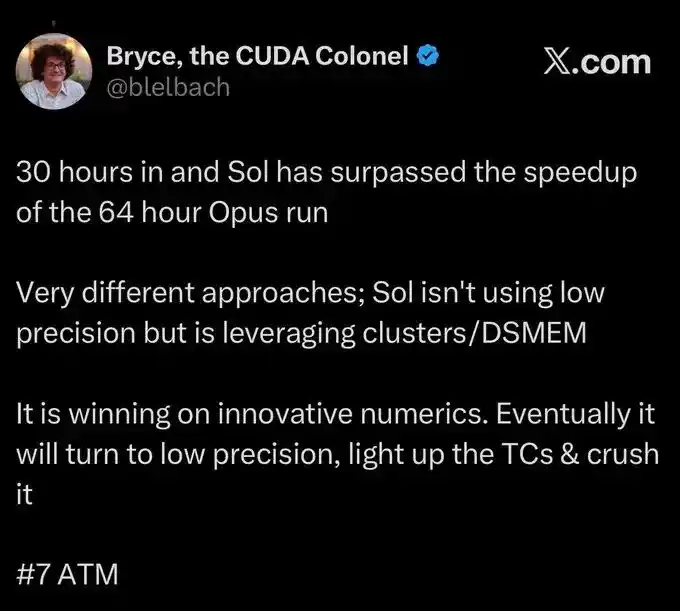
英伟达首席工程师用最直白最不绕弯子的话告诉你:

Sol很猛!30小时,就跑赢了Opus 64小时才达到的CUDA加速效果。

后续版本优化后,或将彻底碾压Opus......
网友们也没闲着,直接给整活上了,各种对(la)比(cai)层出不穷:

同样是造飞船,且看GPT-5.6这边的舱内走廊,色彩搭配和光线选择就很有科技感,明暗层次拉得开;反观5.5这边,色调偏暖偏灰,画面整体扁平了不少,怎么看都更像公司更衣室。

更甭说飞船外的宇宙场景,GPT-5.5活像马赛克聚会。(doge)

这一局GPT-5.6完胜!

要说为啥最近GPT-5.6再度热度爆表,一是老对家Fable 5复出,二就是模型终!于!动!了!

等了这么多天,终于有消息传出,模型将在最近两天正式上线。

届时不再是少数「合作伙伴」可用,这一次全体都有!

(等等党赢了~)

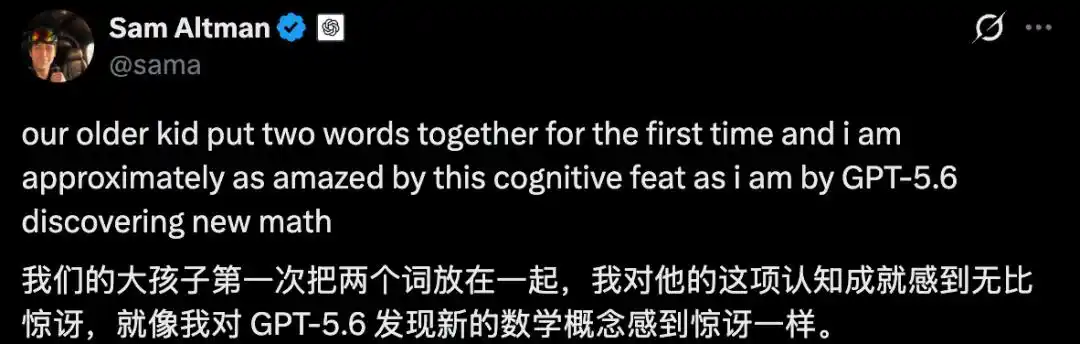
奥特曼也亲自下场凡尔赛,把气氛烘到最高潮:

我家好大儿生平第一次会说两个字的词,那种震撼程度,跟GPT-5.6发现全新数学理论时一毛一样。

没毛病!都是亲生的(doge)
首批内测结果出炉

翻了一圈内测用户的发帖,几个共识还挺一致。

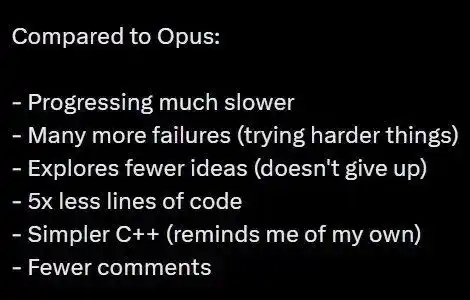
头一个,就是前面那位英伟达工程师提及的:代码更简洁,总体代码量更少。

同样一个需求,别的模型可能写一堆,Sol则明显克制得多,能三行解决绝不写五行,代码行数仅为Opus的1/5。尤其是C++,写法和真人手搓很像,注释也更少。

对于要长期维护的项目来说,优势在Sol。

当然,编码上也不是全无槽点,比如迭代推进速度较慢,失败次数也较多,因为Sol总是会去尝试难度更高的任务。

相比Opus,它试错探索的思路也更少,一旦认准方向就死磕到底。

简单来说,就是模型放弃了大量无脑试错,转为长线深耕,不追求表面输出结果好看,核心就盯着底层性能优化。

这也很符合OpenAI给Sol的定位——

面向高难度推理、复杂代码等长链路任务,尤其适合需要规划、迭代、调用工具、协调步骤的复杂工作流。
同一个提示词,丢给SolGPT-5.5 Pro,对比效果也很直观:

无论是交互式SVG、3D模型还是生成游戏,Sol的指令遵循和空间推理能力都更胜一筹,在一致性上也更好。

其中前端设计这块,Sol也交出了更干净整洁的答卷。

相比GPT-5.5,Sol页面布局和层次留白都拿捏得相当到位,画面也更精致。视觉这一关,Sol稳稳高分通过。

狙击Fable 5成功?

不过要说网友们最关心的问题——对比Fable 5如何?

效果可能还是略逊一筹

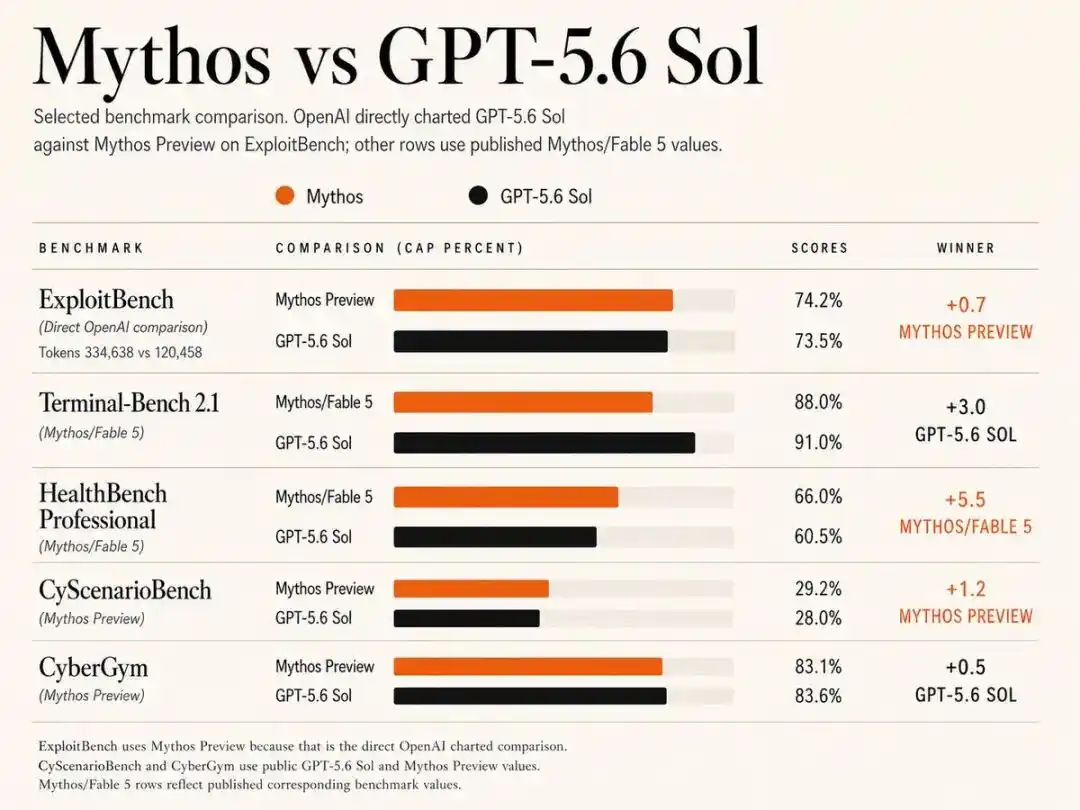
在部分基准测试上,Sol和Fable 5得分持平甚至反超,但在整体模型体验和代码质量上和Fable 5还存在一定差距。
比如网友Gipp就做了一项3D FPS游戏对比。

当GPT 5.6还在努力适配游戏世界、光照和玩法时,Fable 5已经能把一个提示词转换为一款可玩的成品游戏。

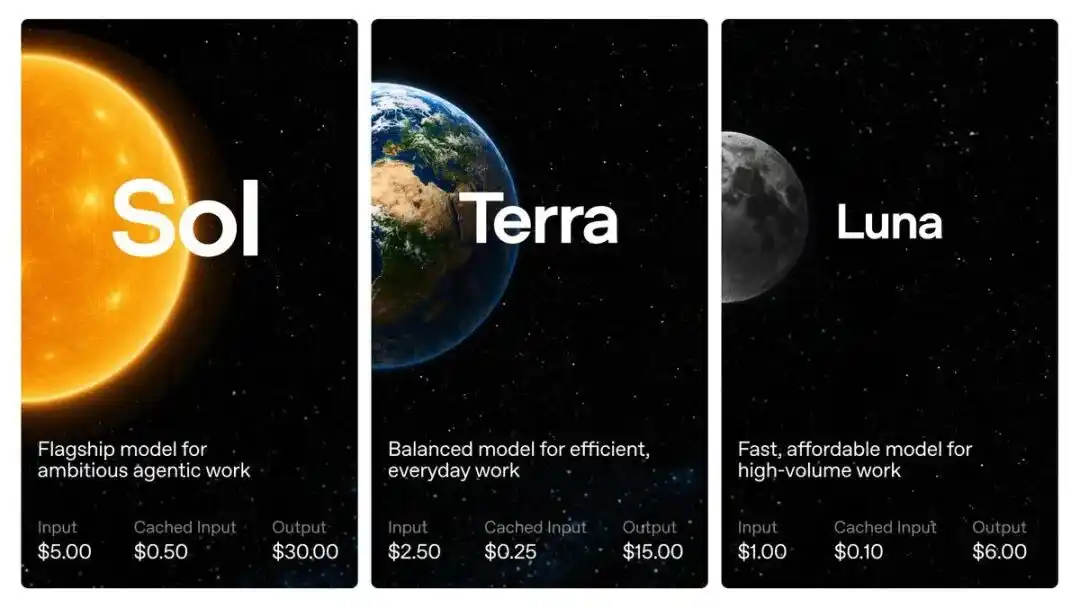
不过Fable 5的成本要高得多,每百万输入Token 10美元,输出Token 50美元,Sol的投入成本只有每百万Token 5美元,输出成本30美元。

Sol几乎便宜了一半!

所以在模型能力相近的情况下,Sol和Fable 5到底鹿死谁手还真不好说。
更要命的是安全限制,自从Fable 5被制裁后,这次二进宫出来,网友明显感觉Fable 5压根不干活了。

正常写代码、debug,稍不留神就会被系统判成高风险,任务直接降维给Opus 4.8处理,就连「raspberry里有几个r」这种问题都被拦截了。

网友们反手给Fable 5一个差评......

GPT-5.6这边,情况稍好一些。官方已经明确表示,已经添加了更强大的安全系统,也会根据不同模型能力配置不同的保护策略,限制也会比Fable 5要小一些。

总之,燥候GPT-5.6全量上线吧,到时候咱们再实测见分晓~

参考链接:

[1]https://x.com/mark_k/status/2073467892889272609?s=20

[2]https://x.com/kimmonismus/status/2073799386535006210

[3]https://x.com/gippp69/status/2073697790723596469

本文来自微信公众号“量子位”,作者:鹭羽

Trending Cryptos

Related Questions

Q根据文章内容,GPT-5.6 Sol在哪些类型的任务上具有明显优势?

A根据文章内容,GPT-5.6 Sol的优势主要体现在面向高难度推理、复杂代码等长链路任务,尤其适合需要规划、迭代、调用工具、协调步骤的复杂工作流。例如,在代码编写上更简洁,代码行数仅为Opus的1/5;在交互式SVG、3D模型生成、游戏开发以及前端设计方面,其指令遵循能力、空间推理能力和一致性表现更佳。

Q文章中提到的GPT-5.6 Sol与Fable 5的成本对比结果是什么?

A根据文章内容,GPT-5.6 Sol的成本相比Fable 5有显著优势。Fable 5的定价为每百万输入Token 10美元,输出Token 50美元。而GPT-5.6 Sol的成本为每百万输入Token 5美元,输出Token 30美元。文章总结为“Sol几乎便宜了一半”。

Q英伟达首席工程师对GPT-5.6 Sol的评价是什么?

A文章中英伟达首席工程师的评价非常直接,他表示:“Sol很猛!30小时,就跑赢了Opus 64小时才达到的CUDA加速效果。”并预测后续版本优化后,或将彻底碾压Opus。

Q文章中提到GPT-5.6 Sol在编码方面的主要优点和槽点分别是什么?

A主要优点是代码更简洁,总体代码量更少。同样需求下,代码行数仅为Opus的1/5,写法与真人手搓类似,注释也更少,有利于项目长期维护。主要槽点是迭代推进速度较慢,失败次数较多,因为它总是尝试难度更高的任务,并且试错探索的思路较少,一旦认准方向就死磕到底。

Q文章中网友们对Fable 5复出后的主要不满是什么?

A网友们对复出后的Fable 5主要不满在于其过于严格的安全限制。文中提到,正常进行写代码、调试等操作时,稍有不慎就会被系统判定为高风险,任务会被降级给Opus 4.8处理,甚至连“raspberry里有几个r”这种简单问题都会被拦截,导致模型“压根不干活了”。

Related Reads

Losing $55 Million to Sell Bitcoin, MicroStrategy's Faith Reaches Its Interest Payment Day

On July 6th, Michael Saylor's MicroStrategy announced the sale of 3,588 BTC for approximately $216 million, incurring a realized loss of around $55.45 million compared to its average cost basis. This move, contradicting Saylor's long-standing "never sell" Bitcoin philosophy, was executed to pay dividends on its digital credit securities. The article traces this shift from a small "desensitization test" sale of 32 BTC in late May to the board's authorization on June 30th to sell up to $1.25 billion in Bitcoin for corporate purposes like dividends and buybacks. Analysis reveals that MicroStrategy's previous growth "flywheel"—using stock premiums to fund more Bitcoin purchases—has stalled. With its stock trading near a critical threshold (1.22x its Bitcoin NAV), issuing new shares would dilute value. Simultaneously, its financing channels (preferred stock, common stock ATM, convertible notes) are constrained while facing rigid annual dividend/interest obligations of roughly $1.76 billion. Consequently, selling Bitcoin became the calculated "optimal solution" under its own financial model. This transforms MicroStrategy from crypto's most prominent steady buyer into a predictable seller, creating a potential overhead of ~2,400 BTC in monthly selling pressure if obligations are fully covered by sales. This shift challenges the valuation models of the entire Digital Asset Treasury (DAT) sector that emulated MicroStrategy. The company's path forward now hinges on Bitcoin's price recovery, which would allow its preferred stock to trade at par and reopen its financing flywheel, creating a cyclical dependency between the firm's financial model and the asset it holds.

链捕手7m ago

Losing $55 Million to Sell Bitcoin, MicroStrategy's Faith Reaches Its Interest Payment Day

链捕手7m ago

OUSD Fake Partnership Controversy? Stablecoins and the Credit Game of Giant Endorsements

Author: Chloe, ChainCatcher Last week, Open Standard launched the dollar stablecoin OpenUSD (OUSD) with a list of over 140 supposedly supporting companies, including major names like Visa, Mastercard, Stripe, American Express, BlackRock, BNY, Standard Chartered, Google, Shopify, Samsung, Coinbase, Solana, and Ripple. The announcement initially impacted Circle's stock price, but doubts about the list quickly emerged. Several Korean firms named, including Samsung Electronics, Shinhan Financial Group, Dunamu (Upbit's parent), and K Bank, clarified they had not formally agreed to join the alliance. Some stated they were only approached for potential interest or learned of their inclusion from news reports, expressing surprise. Similar concerns were raised by U.S. entities, suggesting the list may be misleading. OUSD, led by Zach Abrams of Bridge (acquired by Stripe in 2024), promotes zero-fee minting/redemption, no transaction limits, and sharing reserve asset yields with partners instead of keeping profits. However, this model makes listed partnership imply economic benefits, turning it into a serious credibility issue. This incident reflects a common crypto marketing tactic of leveraging big names. A Chainstory analysis found over 62% of crypto press releases in late 2025 were high-risk or scams. The situation recalls Facebook's Libra (later Diem), which collapsed in 2022 after initial heavyweight backers like Visa and PayPal withdrew under regulatory pressure. Circle CEO Jeremy Allaire welcomed the competition but highlighted the challenges. He argued stablecoin success relies on network effects and real usage, not just alliances. He criticized OUSD's "free" model and full revenue sharing as potentially starving infrastructure development. Noting the dominance of USDT (~$1.84T) and USDC (~$730B) in the ~$2.91T stablecoin market, he suggested many new entrants lack real utility despite inflated circulation from incentives. In conclusion, while OUSD has genuine backing and a distinct model, its future depends on actual adoption in B2B payments, settlements, and cross-border transactions, not just a prestigious partner list. The market will determine if it is a credible challenger or merely another marketing promise.

链捕手10m ago

OUSD Fake Partnership Controversy? Stablecoins and the Credit Game of Giant Endorsements

链捕手10m ago

Selling at a Loss of $55 Million: MicroStrategy's Faith Reaches Its Interest Payment Date

On July 6th, Michael Saylor's MicroStrategy sold 3,588 BTC for approximately $216 million to fund dividends for its digital credit securities, incurring a realized loss of around $55.45 million. This move, from a company that long championed a "never sell" Bitcoin strategy, marks a significant shift. The sale followed a board-approved plan authorizing up to $1.25 billion in BTC sales for corporate purposes like dividends and buybacks. MicroStrategy's core growth model relied on issuing premium-priced shares to buy more Bitcoin. However, with its share price trading near the critical 1.22x mNAV (market value to net asset value) threshold, issuing new equity became dilutive. Simultaneously, its financing channels have constricted, while its annual dividend and interest obligations (roughly $1.76 billion) remain a rigid expense. Consequently, selling Bitcoin became the rational choice under its own framework. MicroStrategy now holds ~843,775 BTC and $2.55 billion in cash reserves. If annual obligations were fully covered by BTC sales, it could create consistent selling pressure of roughly 29,000 BTC per year. This transforms the market's largest consistent buyer into a scheduled seller, potentially pressuring Bitcoin prices and challenging the valuation models of similar digital asset treasury companies. For MicroStrategy, the path forward hinges on Bitcoin's price recovery, which would help restore the premium on its securities and restart its acquisition flywheel. Its fate is now cyclically tied to the asset it holds: a strong Bitcoin price validates its model, while a weak price strains the very model that exerts selling pressure.

marsbit45m ago

Selling at a Loss of $55 Million: MicroStrategy's Faith Reaches Its Interest Payment Date

marsbit45m ago

Trading

Spot

Hot Articles

Discussions

Welcome to the HTX Community. Here, you can stay informed about the latest platform developments and gain access to professional market insights. Users' opinions on the price of SOL (SOL) are presented below.

活动图片