Le plus grand centre de données au monde tombe à l'eau

marsbitPublished on 2026-07-06Last updated on 2026-07-06

Abstract

Le géant mondial du capital-investissement Blackstone a officiellement mis fin à son projet phare de centre de données « Digital Gateway » en Virginie, un campus qui devait devenir le plus grand au monde. Ce revirement survient peu après la vente par Blackstone d'autres actifs de centres de données matures pour 3,5 milliards de dollars, signalant un changement stratégique brutal. Le projet, d'un investissement prévu de 100 milliards de dollars sur 2100 acres, a été bloqué par cinq ans de fortes oppositions locales concernant son impact environnemental et patrimonial, étant situé près d'un champ de bataille historique. Un vice de procédure dans l'approbation du zonage, invalidée par un tribunal en mars, et le retrait du partenaire Compass Datacenters ont scellé son sort. Ce cas illustre les défis croissants auxquels est confrontée la frénésie de construction de centres de données pour l'IA. Outre la résistance des communautés, les goulets d'étranglement majeurs sont l'approvisionnement en électricité - les centres de données pourraient tripler leur consommation aux États-Unis d'ici 2035 - et le durcissement réglementaire. Un rapport indique que des projets d'une valeur de 1300 milliards de dollars étaient en retard au premier trimestre 2026. L'action de Blackstone, considérée comme un signal d'alarme, suggère que l'industrie doit maintenant composer avec ces limites physiques et sociales.

Alors que le marché commente encore la vente par Blackstone de trois centres de données en Virginie pour 3,5 milliards de dollars, ce géant mondial de la gestion d'actifs alternatifs, qui supervise plus de 1 300 milliards de dollars d'actifs, a effectué une manœuvre encore plus surprenante : son opérateur de centres de données QTS a officiellement arrêté le projet de construction du centre de données Digital Gateway sur place.

Ce projet superlatif, qui prétendait devenir le « plus grand campus de centres de données au monde » avec une superficie totale supérieure à deux fois celle de Central Park à New York, est ainsi complètement à l'arrêt.

En quelques jours à peine, Blackstone a simultanément encaissé des actifs matures à des prix élevés et abandonné de manière proactive un projet de réserve géant. Ce virage soudain expose clairement à tous les difficultés réelles masquées par la frénésie actuelle des infrastructures de calcul pour l'IA.

01

Fin de partie après cinq ans de bras de fer, l'histoire d'un projet pharaonique avorté

Ce projet abandonné est situé dans le comté de Prince William, en Virginie. Il s'étendait sur 2 100 acres (environ 850 hectares) et prévoyait initialement un investissement de plus de 100 milliards de dollars pour construire 37 bâtiments de centres de données, totalisant 22 millions de pieds carrés (environ 2 millions de m²). Une fois achevé, il aurait été sans conteste le plus grand campus de centres de données au monde.

Mais dès le premier jour de la présentation du projet, il s'est retrouvé plongé dans la controverse.

Le terrain est adjacent au site historique d'un champ de bataille de la guerre de Sécession. Originellement une zone protégée au développement limité par la politique, l'idée de le raser pour y construire une multitude de centres de données a immédiatement rencontré l'opposition des résidents locaux.
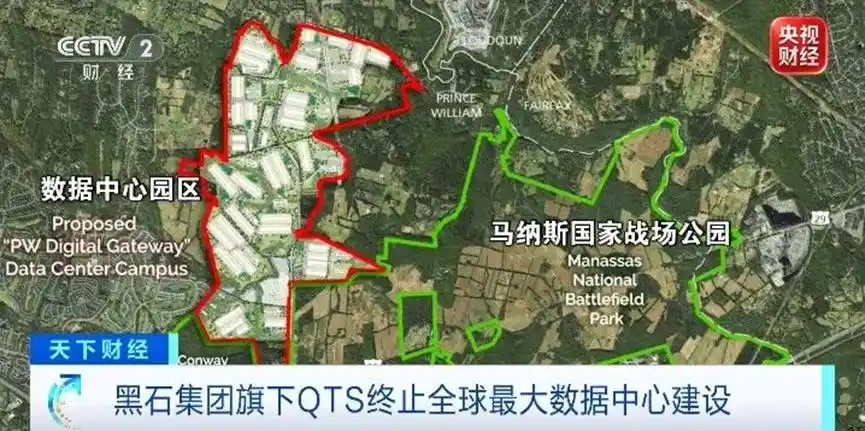
Source : Internet

Cette résistance a duré cinq longues années.

Les résidents ont fait pression sur les élus locaux, intenté des procès contre les procédures de planification, faisant progressivement stagner le projet.

Ce qui a porté un coup fatal à l'approbation du projet fut une faille procédurale apparemment mineure.

En 2023, le comté concerné de Virginie a organisé une audience de zonage de 27 heures sur la conversion de terres agricoles et semi-rurales en usage pour centres de données. Des centaines de partisans et d'opposants étaient présents pour exprimer leur point de vue.

Après l'audience, l'administration régionale a approuvé la demande de conversion à une faible majorité, mais l'intervalle entre les deux publications dans le journal n'a pas respecté le délai minimum de six jours requis par la réglementation.

Les opposants se sont fermement accrochés à cette faille, portant finalement l'affaire devant les tribunaux de l'État.

En mars de cette année, un tribunal de Virginie a statué que l'approbation du zonage était invalide, privant ainsi le projet de son statut de développement légal.

Deux mois plus tard, l'autre grand promoteur du projet — Compass Datacenters, filiale du géant canadien de la gestion d'actifs Brookfield — a décidé de se retirer le premier.

Le président de la société a déclaré par la suite que les litiges judiciaires incessants et les barrières réglementaires accumulées avaient complètement bloqué toute voie viable pour faire avancer le projet.

Une fois le partenaire parti, tous les coûts de transformation des infrastructures majeures comme les réseaux d'eau et d'électricité, initialement partagés par les deux parties, sont retombés sur les seules épaules de QTS.

Ajouté à cela, la décision du tribunal risquait de créer un précédent judiciaire défavorable, promettant encore plus de tracas à l'avenir.

Après avoir pesé le pour et le contre, Blackstone a finalement jugé qu'il n'était pas rentable de poursuivre et a choisi de limiter ses pertes en se retirant.

Cette opposition n'est pas un cas isolé.

Un récent sondage Gallup montre que sept Américains sur dix s'opposent à la construction d'un centre de données pour l'IA près de chez eux, près de la moitié d'entre eux s'y opposant fermement.
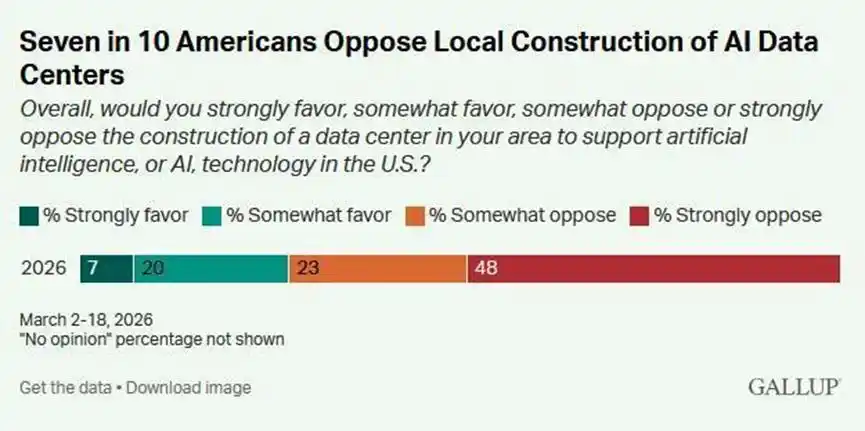
Source : Internet

Les préoccupations des citoyens sont très concrètes : les centres de données consomment d'énormes quantités d'eau et d'électricité, génèrent du bruit, de la pollution de l'air et de l'eau, augmentent le coût de la vie locale et aggravent les embouteillages.

Face à la vie quotidienne des gens ordinaires, même le récit le plus grandiose sur l'IA semble quelque peu lointain.

02

Le capital commence à se retirer au sommet, les infrastructures pour l'IA se heurtent à un plafond de réalité

La raison pour laquelle les actions de Blackstone ont provoqué un tel émoi à Wall Street et dans la tech réside dans le fait que l'entreprise elle-même est un acteur phare de cette vague d'investissement dans les centres de données.

Après l'acquisition de QTS en 2021, celle du fournisseur de services de calcul australien AirTrunk en 2024, et l'introduction en bourse en mai dernier de sa plateforme d'acquisition de centres de données Blackstone Digital Infrastructure Trust, Blackstone s'est elle-même proclamée le plus grand fournisseur mondial de services de centres de données.

Pourtant, c'est précisément ce leader du secteur qui, aujourd'hui, vend des actifs matures tout en abandonnant des projets de réserve, reproduisant la stratégie employée lors de son « exit » du marché des bureaux.

Plus tôt, avec l'essor du télétravail et la chute continue des loyers et de la valeur des bureaux, Blackstone avait vendu à prix cassé plusieurs immeubles de bureaux emblématiques, anticipant avec précision le point d'inflexion du cycle.

Aujourd'hui, cette approche est répliquée dans le secteur des centres de données, ce que le milieu considère également comme un signal de « prise de bénéfices au sommet ». Lorsque le capital, qui comprend le mieux les cycles, commence à se retirer, cela signifie souvent que les risques de la filière commencent à dépasser les rendements.
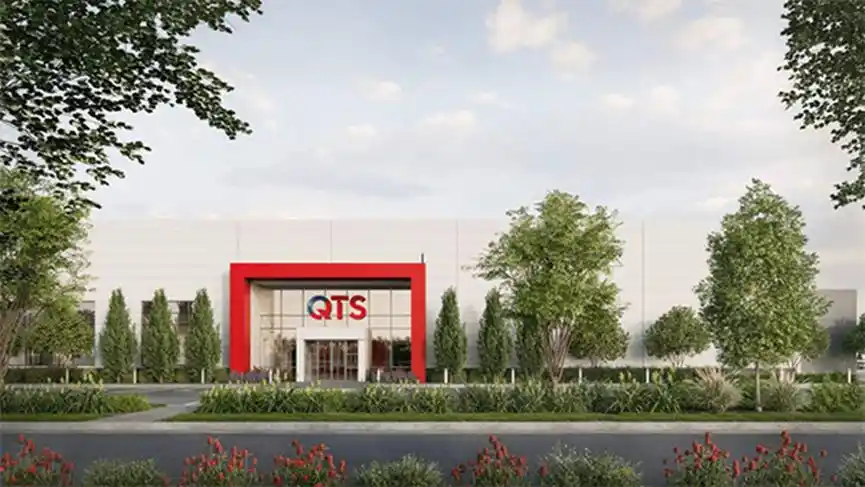
QTS, opérateur de centres de données du groupe américain Blackstone Source : Internet

En réalité, si l'on met de côté la frénésie actuelle autour du calcul pour l'IA, les goulets d'étranglement de l'industrie des centres de données étaient déjà apparents.

Un rapport de recherche de la société américaine d'information sur l'IA, Data Center Watch, indique qu'au premier trimestre de cette année seulement, la valeur totale des projets de centres de données retardés aux États-Unis s'élevait à environ 1300 milliards de dollars.

Un rapport de JPMorgan, basé sur l'analyse d'images satellites, indique que parmi les projets de centres de données prévus pour 2027, plus de 60 % n'ont pas encore commencé leur construction, et 7 % supplémentaires sont déjà en retard. Les principales raisons invoquées sont les goulets d'étranglement d'approvisionnement en électricité et l'opposition citoyenne.

Un fait incontournable est que les centres de données poussent la consommation d'électricité américaine vers des sommets historiques.

Les données de l'Institut de recherche sur l'énergie électrique (EPRI) montrent que les centres de données représentent actuellement 5 % de la demande d'électricité américaine, et pourraient tripler d'ici 2035 ; en Virginie, cette proportion dépasse déjà 25 %.

L'EPRI souligne clairement que le réseau électrique et les politiques associées n'ont initialement pas été conçus pour la vitesse et l'ampleur de la demande générée par les infrastructures pour l'IA. La construction de centres de données se heurte d'abord, au niveau physique, à un plafond d'alimentation électrique.

Même si en mars dernier, des géants comme Microsoft, Google, Amazon, Oracle, Meta et OpenAI se sont conjointement engagés à supporter les coûts de mise à niveau des infrastructures, en construisant eux-mêmes ou en achetant l'électricité supplémentaire nécessaire à leurs projets, même les financements les plus substantiels ne peuvent résoudre immédiatement les problèmes de retard dans la livraison des équipements électriques et l'accumulation des autorisations en attente.

Outre les contraintes d'approvisionnement en électricité, la forte opposition citoyenne devient un autre facteur majeur entravant l'implantation des centres de données.

Le rapport de Data Center Watch montre que le premier trimestre 2026 a été la période la plus marquée par des blocages et retards de projets de centres de données depuis que des records sont tenus, les opposants ayant entravé ou retardé au moins 75 projets en trois mois à travers les États-Unis.

Le nombre d'organisations citoyennes d'opposition actives aux centres de données à travers le pays est passé de 396 fin 2025 à 833 en mars, couvrant 49 États, le Maryland, l'Ohio et le Texas étant les plus touchés.

Dans de nombreux cas, les forces d'opposition se mobilisent avant même le dépôt officiel de la demande de projet.

En mai dernier, des centaines de personnes se sont rassemblées devant le Capitole de l'Utah pour protester contre le projet géant Stratos, couvrant 40 000 acres (environ 16 200 hectares), prévu dans le comté de Box Elder.

Plus crucial encore, l'orientation politique au niveau local se resserre.

La Virginie a adopté une loi budgétaire ajoutant une taxe sur la consommation d'énergie des centres de données, et plusieurs États envisagent également d'émettre des moratoires sur la construction de nouveaux centres de données.

L'argent chaud du capital se heurtant à l'opposition citoyenne, au durcissement des politiques et aux déficits infrastructurels, la question de savoir si l'expansion frénétique des infrastructures de calcul pour l'IA pourra se maintenir devient de plus en plus floue.

Le retrait de Blackstone n'est peut-être qu'un début. Une fois la frénésie retombée, l'industrie devra finalement revenir sur la voie de la prise en compte réelle des coûts et du respect de la réalité.

Références :

« La construction de centres de données aux États-Unis rencontre des obstacles, 1300 milliards de dollars de projets sont au point mort au T1 », 21st Century Business Herald

« La construction du plus grand centre de données au monde est terminée », Caixin

Cet article provient du compte WeChat « Phoenix Network Finance », auteur : Storm Eye

Trending Cryptos

Related Questions

QPourquoi le projet du plus grand centre de données du monde, le Digital Gateway, a-t-il été annulé ?

ALe projet a été annulé principalement en raison d'une opposition locale prolongée, d'un vice de procédure dans l'approbation du zonage (un délai de publication non respecté), d'un retrait du partenaire principal Compass Datacenters, et des coûts et risques juridiques jugés trop élevés par Blackstone.

QQuel est le principal défi rencontré par la construction de centres de données aux États-Unis, selon l'article ?

ALe principal défi est la double contrainte des goulots d'étranglement dans l'approvisionnement en électricité (le réseau n'est pas conçu pour une demande aussi massive et rapide) et de la forte opposition des citoyens et des groupes locaux préoccupés par la consommation de ressources, la pollution et l'impact sur la qualité de vie.

QComment l'article interprète-t-il la décision de Blackstone de vendre des actifs matures et d'annuler un grand projet ?

AL'article interprète ces actions comme un signal de "prise de bénéfices à un niveau élevé" et un changement de cap stratégique, similaire à la manœuvre de Blackstone lors du ralentissement du marché des bureaux. Cela suggère que les risques perçus dans le secteur des centres de données pourraient désormais surpasser les avantages.

QQuelle est l'attitude du public américain envers la construction de centres de données pour l'IA près de chez eux, selon le sondage cité ?

ASelon un sondage Gallup cité, environ 70 % des Américains s'opposent à la construction de centres de données pour l'IA près de chez eux, et près de la moitié d'entre eux y sont "fortement opposés".

QQuels indicateurs montrent que la résistance aux centres de données s'intensifie aux États-Unis ?

ALes indicateurs incluent : une forte augmentation du nombre de groupes d'opposition locaux (de 396 à 833 en trois mois), un nombre record de projets bloqués ou retardés au premier trimestre 2026 (valeur d'environ 1300 milliards de dollars), et des manifestations importantes comme celle contre le projet Stratos dans l'Utah. De plus, plusieurs États envisagent des moratoires ou des taxes sur la consommation d'énergie.

Related Reads

End of Correction or Continuation of Trend: Technical Structure Review of BTC and HYPE | Guest Analysis

**Weekly Technical Analysis: BTC & HYPE Structure Review** This analysis covers the multi-timeframe technical structure for Bitcoin (BTC) and HYPE. **Bitcoin (BTC) Analysis:** BTC's correction from its May 6 high has formed a clear four-segment pattern on the daily chart. The market is currently in a (3-4) rebound phase. The key determinant for the short-term trend is the endpoint of this rebound ("Endpoint 4"): * **Path 1 (Preferred Scenario):** If the rebound surpasses the $65,700 resistance, subsequent pullbacks are less likely to break the key support at $57,820 (July 1 low). This would suggest a transition into a consolidating range, building energy for a potential bullish reversal. * **Path 2:** Failure to reach $65,700, or even $64,500, increases the probability of a breakdown below $57,820, continuing the downtrend. The 4-hour chart shows a completed five-wave decline from June 15, culminating in a momentum divergence at the low, which supported the recent bounce. **BTC Weekly Outlook & Strategy (Jul 6-12):** * **Core View:** Focus on the high point of the daily rebound from $57,820. * **Key Levels:** * Resistance: $64,500-$65,700; $67,300; $69,500-$71,000. * Support: $60,950-$62,300; $57,820; $55,000. * **Strategy:** * **Mid-term:** Maintain ~20% short position. Consider increasing shorts to <50% if price stalls in the $65,700-$67,300 zone with confirming model signals. * **Short-term:** Use 30% capital for swing trades between support/resistance. * **Plans:** * **Plan A (Short):** Enter shorts (~30%) if price is rejected at $65,700-$67,300. * **Plan B (Long):** Enter longs (~15%) only if price breaks above $65,700 first, then pulls back and finds support near $57,820. **HYPE Analysis:** The rebound from the June 25 low has developed a seven-segment structure on the 4-hour chart. Price is approaching the historical high zone near $76.94. Internal models have triggered top warnings, suggesting caution against chasing the rally and highlighting near-term pullback risks. **HYPE Weekly Outlook & Strategy:** * **Core View:** Observe price action in the $75-$76.94 resistance area. * **Key Levels:** * Resistance: $75-$76.94; $80. * Support: $68; $65.5; $60.5-$61.5. * **Strategy:** Prioritize profit-taking and risk management. If holding longs, consider moving stop-loss to ~$68 to protect gains. Close positions promptly on signs of a downturn. **Trade Recap:** A recent short-term long trade in HYPE, entered at $64 based on model buy signals and exited at ~$70.55 on sell signals, yielded a profit of approximately 10.23%. **General Risk Management:** Always set an initial stop-loss. Move stop-loss to breakeven at +1% profit, and trail it upwards by 1% for every subsequent 1% gain to lock in profits. *Disclaimer: Market conditions change rapidly. All analysis, models, and strategies presented are for educational/log purposes only and do not constitute investment advice. Trade at your own risk.*

Odaily星球日报12m ago

End of Correction or Continuation of Trend: Technical Structure Review of BTC and HYPE | Guest Analysis

Odaily星球日报12m ago

Is Anyone Still Buying in the Crypto Market? Unpacking 3 Common Watch-and-Wait Mentalities Today

Is Anyone Still Buying in the Crypto Market? Unpacking 3 Common Wait-and-See Mindsets This article analyzes the current cautious sentiment in the crypto market, distilled from conversations with sophisticated investors. The author identifies three dominant investor mindsets: 1. **Satisfied with Current Holdings:** Many retain a long-term belief in digital assets but see no immediate catalyst for significant price appreciation. They hold positions to avoid missing a future surge but allocate minimal new capital or attention. A shift requires a new, observable catalyst or a rotation from other portfolio areas. 2. **Waiting for Lower Prices:** This reflects not just short-term timing but a belief about crypto's total addressable market and upside potential. It could change if key perceived cycle bottoms pass without a crash, a major bullish event occurs (e.g., sovereign adoption), or price rebounds trigger FOMO-driven buying. 3. **High Opportunity Cost of Allocation:** The core question is comparative growth. With AI-related equities appearing to offer relentless, high-speed growth, justifying marginal investment into assets without similar perceived momentum is difficult. A slowdown in the AI trade could potentially mark a bottom and trigger capital reallocation into crypto. In conclusion, while long-term conviction persists for many, near-term marginal capital flows are constrained by these beliefs. The author suggests the market may be closer to a bottom than a top, but the current climate is defined by this wait-and-see approach, awaiting a catalyst to reignite broader investor commitment.

marsbit1h ago

Is Anyone Still Buying in the Crypto Market? Unpacking 3 Common Watch-and-Wait Mentalities Today

marsbit1h ago

China Added 67 New Unicorns in Half a Year, with AI and Robotics Accounting for Over Half

China added 67 new unicorn companies in the first half of 2026, reaching a total of 517 unicorns with a combined valuation of approximately $2.39 trillion. This surge marks a significant rebound after a post-2022 slowdown and sets a new semi-annual record. The growth is primarily driven by Artificial Intelligence (AI) and Robotics, which together account for over 53% of the new entrants. Specifically, 19 new unicorns are in robotics and 17 in AI. Notable companies include DeepSeek ($615.38B) and Kling AI ($18B). The trend indicates a decisive shift from internet consumer models to hard tech innovation. Geographically, new unicorns are highly concentrated in four cities: Beijing (19), Shanghai (18), Shenzhen (9), and Hangzhou (5), which together host 76.1% of the new companies. Hangzhou's overall valuation is boosted significantly by DeepSeek. Valuation distribution among new unicorns is pyramidal: 77.6% are valued between $1B and $2B, indicating early-stage status, while only two exceed $10B. There is a notable "speed divide": many AI/robotics startups achieved unicorn status in under three years, often via corporate spin-offs or led by star founders, while hard tech companies in semiconductors or biotech typically took over eight years. The report concludes that this wave reflects China's accelerating transition into an AI and robotics-powered innovation cycle, characterized by faster company formation, heightened geographic concentration, and a clear focus on foundational technologies.

marsbit2h ago

China Added 67 New Unicorns in Half a Year, with AI and Robotics Accounting for Over Half

marsbit2h ago

Trading

Spot

Hot Articles

What is SONIC

Sonic: Pioneering the Future of Gaming in Web3 Introduction to Sonic In the ever-evolving landscape of Web3, the gaming industry stands out as one of the most dynamic and promising sectors. At the forefront of this revolution is Sonic, a project designed to amplify the gaming ecosystem on the Solana blockchain. Leveraging cutting-edge technology, Sonic aims to deliver an unparalleled gaming experience by efficiently processing millions of requests per second, ensuring that players enjoy seamless gameplay while maintaining low transaction costs. This article delves into the intricate details of Sonic, exploring its creators, funding sources, operational mechanics, and the timeline of significant events that have shaped its journey. What is Sonic? Sonic is an innovative layer-2 network that operates atop the Solana blockchain, specifically tailored to enhance the existing Solana gaming ecosystem. It accomplishes this through a customised, VM-agnostic game engine paired with a HyperGrid interpreter, facilitating sovereign game economies that roll up back to the Solana platform. The primary goals of Sonic include: Enhanced Gaming Experiences: Sonic is committed to offering lightning-fast on-chain gameplay, allowing players and developers to engage with games at previously unattainable speeds. Atomic Interoperability: This feature enables transactions to be executed within Sonic without the need to redeploy Solana programmes and accounts. This makes the process more efficient and directly benefits from Solana Layer1 services and liquidity. Seamless Deployment: Sonic allows developers to write for Ethereum Virtual Machine (EVM) based systems and execute them on Solana’s SVM infrastructure. This interoperability is crucial for attracting a broader range of dApps and decentralised applications to the platform. Support for Developers: By offering native composable gaming primitives and extensible data types - dining within the Entity-Component-System (ECS) framework - game creators can craft intricate business logic with ease. Overall, Sonic's unique approach not only caters to players but also provides an accessible and low-cost environment for developers to innovate and thrive. Creator of Sonic The information regarding the creator of Sonic is somewhat ambiguous. However, it is known that Sonic's SVM is owned by the company Mirror World. The absence of detailed information about the individuals behind Sonic reflects a common trend in several Web3 projects, where collective efforts and partnerships often overshadow individual contributions. Investors of Sonic Sonic has garnered considerable attention and support from various investors within the crypto and gaming sectors. Notably, the project raised an impressive $12 million during its Series A funding round. The round was led by BITKRAFT Ventures, with other notable investors including Galaxy, Okx Ventures, Interactive, Big Brain Holdings, and Mirana. This financial backing signifies the confidence that investment foundations have in Sonic’s potential to revolutionise the Web3 gaming landscape, further validating its innovative approaches and technologies. How Does Sonic Work? Sonic utilises the HyperGrid framework, a sophisticated parallel processing mechanism that enhances its scalability and customisability. Here are the core features that set Sonic apart: Lightning Speed at Low Costs: Sonic offers one of the fastest on-chain gaming experiences compared to other Layer-1 solutions, powered by the scalability of Solana’s virtual machine (SVM). Atomic Interoperability: Sonic enables transaction execution without redeployment of Solana programmes and accounts, effectively streamlining the interaction between users and the blockchain. EVM Compatibility: Developers can effortlessly migrate decentralised applications from EVM chains to the Solana environment using Sonic’s HyperGrid interpreter, increasing the accessibility and integration of various dApps. Ecosystem Support for Developers: By exposing native composable gaming primitives, Sonic facilitates a sandbox-like environment where developers can experiment and implement business logic, greatly enhancing the overall development experience. Monetisation Infrastructure: Sonic natively supports growth and monetisation efforts, providing frameworks for traffic generation, payments, and settlements, thereby ensuring that gaming projects are not only viable but also sustainable financially. Timeline of Sonic The evolution of Sonic has been marked by several key milestones. Below is a brief timeline highlighting critical events in the project's history: 2022: The Sonic cryptocurrency was officially launched, marking the beginning of its journey in the Web3 gaming arena. 2024: June: Sonic SVM successfully raised $12 million in a Series A funding round. This investment allowed Sonic to further develop its platform and expand its offerings. August: The launch of the Sonic Odyssey testnet provided users with the first opportunity to engage with the platform, offering interactive activities such as collecting rings—a nod to gaming nostalgia. October: SonicX, an innovative crypto game integrated with Solana, made its debut on TikTok, capturing the attention of over 120,000 users within a short span. This integration illustrated Sonic’s commitment to reaching a broader, global audience and showcased the potential of blockchain gaming. Key Points Sonic SVM is a revolutionary layer-2 network on Solana explicitly designed to enhance the GameFi landscape, demonstrating great potential for future development. HyperGrid Framework empowers Sonic by introducing horizontal scaling capabilities, ensuring that the network can handle the demands of Web3 gaming. Integration with Social Platforms: The successful launch of SonicX on TikTok displays Sonic’s strategy to leverage social media platforms to engage users, exponentially increasing the exposure and reach of its projects. Investment Confidence: The substantial funding from BITKRAFT Ventures, among others, emphasizes the robust backing Sonic has, paving the way for its ambitious future. In conclusion, Sonic encapsulates the essence of Web3 gaming innovation, striking a balance between cutting-edge technology, developer-centric tools, and community engagement. As the project continues to evolve, it is poised to redefine the gaming landscape, making it a notable entity for gamers and developers alike. As Sonic moves forward, it will undoubtedly attract greater interest and participation, solidifying its place within the broader narrative of blockchain gaming.

1.7k Total ViewsPublished 2024.04.04Updated 2024.12.03

What is SONIC

What is $S$

Understanding SPERO: A Comprehensive Overview Introduction to SPERO As the landscape of innovation continues to evolve, the emergence of web3 technologies and cryptocurrency projects plays a pivotal role in shaping the digital future. One project that has garnered attention in this dynamic field is SPERO, denoted as SPERO,$$s$. This article aims to gather and present detailed information about SPERO, to help enthusiasts and investors understand its foundations, objectives, and innovations within the web3 and crypto domains. What is SPERO,$$s$? SPERO,$$s$ is a unique project within the crypto space that seeks to leverage the principles of decentralisation and blockchain technology to create an ecosystem that promotes engagement, utility, and financial inclusion. The project is tailored to facilitate peer-to-peer interactions in new ways, providing users with innovative financial solutions and services. At its core, SPERO,$$s$ aims to empower individuals by providing tools and platforms that enhance user experience in the cryptocurrency space. This includes enabling more flexible transaction methods, fostering community-driven initiatives, and creating pathways for financial opportunities through decentralised applications (dApps). The underlying vision of SPERO,$$s$ revolves around inclusiveness, aiming to bridge gaps within traditional finance while harnessing the benefits of blockchain technology. Who is the Creator of SPERO,$$s$? The identity of the creator of SPERO,$$s$ remains somewhat obscure, as there are limited publicly available resources providing detailed background information on its founder(s). This lack of transparency can stem from the project's commitment to decentralisation—an ethos that many web3 projects share, prioritising collective contributions over individual recognition. By centring discussions around the community and its collective goals, SPERO,$$s$ embodies the essence of empowerment without singling out specific individuals. As such, understanding the ethos and mission of SPERO remains more important than identifying a singular creator. Who are the Investors of SPERO,$$s$? SPERO,$$s$ is supported by a diverse array of investors ranging from venture capitalists to angel investors dedicated to fostering innovation in the crypto sector. The focus of these investors generally aligns with SPERO's mission—prioritising projects that promise societal technological advancement, financial inclusivity, and decentralised governance. These investor foundations are typically interested in projects that not only offer innovative products but also contribute positively to the blockchain community and its ecosystems. The backing from these investors reinforces SPERO,$$s$ as a noteworthy contender in the rapidly evolving domain of crypto projects. How Does SPERO,$$s$ Work? SPERO,$$s$ employs a multi-faceted framework that distinguishes it from conventional cryptocurrency projects. Here are some of the key features that underline its uniqueness and innovation: Decentralised Governance: SPERO,$$s$ integrates decentralised governance models, empowering users to participate actively in decision-making processes regarding the project’s future. This approach fosters a sense of ownership and accountability among community members. Token Utility: SPERO,$$s$ utilises its own cryptocurrency token, designed to serve various functions within the ecosystem. These tokens enable transactions, rewards, and the facilitation of services offered on the platform, enhancing overall engagement and utility. Layered Architecture: The technical architecture of SPERO,$$s$ supports modularity and scalability, allowing for seamless integration of additional features and applications as the project evolves. This adaptability is paramount for sustaining relevance in the ever-changing crypto landscape. Community Engagement: The project emphasises community-driven initiatives, employing mechanisms that incentivise collaboration and feedback. By nurturing a strong community, SPERO,$$s$ can better address user needs and adapt to market trends. Focus on Inclusion: By offering low transaction fees and user-friendly interfaces, SPERO,$$s$ aims to attract a diverse user base, including individuals who may not previously have engaged in the crypto space. This commitment to inclusion aligns with its overarching mission of empowerment through accessibility. Timeline of SPERO,$$s$ Understanding a project's history provides crucial insights into its development trajectory and milestones. Below is a suggested timeline mapping significant events in the evolution of SPERO,$$s$: Conceptualisation and Ideation Phase: The initial ideas forming the basis of SPERO,$$s$ were conceived, aligning closely with the principles of decentralisation and community focus within the blockchain industry. Launch of Project Whitepaper: Following the conceptual phase, a comprehensive whitepaper detailing the vision, goals, and technological infrastructure of SPERO,$$s$ was released to garner community interest and feedback. Community Building and Early Engagements: Active outreach efforts were made to build a community of early adopters and potential investors, facilitating discussions around the project’s goals and garnering support. Token Generation Event: SPERO,$$s$ conducted a token generation event (TGE) to distribute its native tokens to early supporters and establish initial liquidity within the ecosystem. Launch of Initial dApp: The first decentralised application (dApp) associated with SPERO,$$s$ went live, allowing users to engage with the platform's core functionalities. Ongoing Development and Partnerships: Continuous updates and enhancements to the project's offerings, including strategic partnerships with other players in the blockchain space, have shaped SPERO,$$s$ into a competitive and evolving player in the crypto market. Conclusion SPERO,$$s$ stands as a testament to the potential of web3 and cryptocurrency to revolutionise financial systems and empower individuals. With a commitment to decentralised governance, community engagement, and innovatively designed functionalities, it paves the way toward a more inclusive financial landscape. As with any investment in the rapidly evolving crypto space, potential investors and users are encouraged to research thoroughly and engage thoughtfully with the ongoing developments within SPERO,$$s$. The project showcases the innovative spirit of the crypto industry, inviting further exploration into its myriad possibilities. While the journey of SPERO,$$s$ is still unfolding, its foundational principles may indeed influence the future of how we interact with technology, finance, and each other in interconnected digital ecosystems.

93 Total ViewsPublished 2024.12.17Updated 2024.12.17

What is $S$

What is AGENT S

Agent S: The Future of Autonomous Interaction in Web3 Introduction In the ever-evolving landscape of Web3 and cryptocurrency, innovations are constantly redefining how individuals interact with digital platforms. One such pioneering project, Agent S, promises to revolutionise human-computer interaction through its open agentic framework. By paving the way for autonomous interactions, Agent S aims to simplify complex tasks, offering transformative applications in artificial intelligence (AI). This detailed exploration will delve into the project's intricacies, its unique features, and the implications for the cryptocurrency domain. What is Agent S? Agent S stands as a groundbreaking open agentic framework, specifically designed to tackle three fundamental challenges in the automation of computer tasks: Acquiring Domain-Specific Knowledge: The framework intelligently learns from various external knowledge sources and internal experiences. This dual approach empowers it to build a rich repository of domain-specific knowledge, enhancing its performance in task execution. Planning Over Long Task Horizons: Agent S employs experience-augmented hierarchical planning, a strategic approach that facilitates efficient breakdown and execution of intricate tasks. This feature significantly enhances its ability to manage multiple subtasks efficiently and effectively. Handling Dynamic, Non-Uniform Interfaces: The project introduces the Agent-Computer Interface (ACI), an innovative solution that enhances the interaction between agents and users. Utilizing Multimodal Large Language Models (MLLMs), Agent S can navigate and manipulate diverse graphical user interfaces seamlessly. Through these pioneering features, Agent S provides a robust framework that addresses the complexities involved in automating human interaction with machines, setting the stage for myriad applications in AI and beyond. Who is the Creator of Agent S? While the concept of Agent S is fundamentally innovative, specific information about its creator remains elusive. The creator is currently unknown, which highlights either the nascent stage of the project or the strategic choice to keep founding members under wraps. Regardless of anonymity, the focus remains on the framework's capabilities and potential. Who are the Investors of Agent S? As Agent S is relatively new in the cryptographic ecosystem, detailed information regarding its investors and financial backers is not explicitly documented. The lack of publicly available insights into the investment foundations or organisations supporting the project raises questions about its funding structure and development roadmap. Understanding the backing is crucial for gauging the project's sustainability and potential market impact. How Does Agent S Work? At the core of Agent S lies cutting-edge technology that enables it to function effectively in diverse settings. Its operational model is built around several key features: Human-like Computer Interaction: The framework offers advanced AI planning, striving to make interactions with computers more intuitive. By mimicking human behaviour in tasks execution, it promises to elevate user experiences. Narrative Memory: Employed to leverage high-level experiences, Agent S utilises narrative memory to keep track of task histories, thereby enhancing its decision-making processes. Episodic Memory: This feature provides users with step-by-step guidance, allowing the framework to offer contextual support as tasks unfold. Support for OpenACI: With the ability to run locally, Agent S allows users to maintain control over their interactions and workflows, aligning with the decentralised ethos of Web3. Easy Integration with External APIs: Its versatility and compatibility with various AI platforms ensure that Agent S can fit seamlessly into existing technological ecosystems, making it an appealing choice for developers and organisations. These functionalities collectively contribute to Agent S's unique position within the crypto space, as it automates complex, multi-step tasks with minimal human intervention. As the project evolves, its potential applications in Web3 could redefine how digital interactions unfold. Timeline of Agent S The development and milestones of Agent S can be encapsulated in a timeline that highlights its significant events: September 27, 2024: The concept of Agent S was launched in a comprehensive research paper titled “An Open Agentic Framework that Uses Computers Like a Human,” showcasing the groundwork for the project. October 10, 2024: The research paper was made publicly available on arXiv, offering an in-depth exploration of the framework and its performance evaluation based on the OSWorld benchmark. October 12, 2024: A video presentation was released, providing a visual insight into the capabilities and features of Agent S, further engaging potential users and investors. These markers in the timeline not only illustrate the progress of Agent S but also indicate its commitment to transparency and community engagement. Key Points About Agent S As the Agent S framework continues to evolve, several key attributes stand out, underscoring its innovative nature and potential: Innovative Framework: Designed to provide an intuitive use of computers akin to human interaction, Agent S brings a novel approach to task automation. Autonomous Interaction: The ability to interact autonomously with computers through GUI signifies a leap towards more intelligent and efficient computing solutions. Complex Task Automation: With its robust methodology, it can automate complex, multi-step tasks, making processes faster and less error-prone. Continuous Improvement: The learning mechanisms enable Agent S to improve from past experiences, continually enhancing its performance and efficacy. Versatility: Its adaptability across different operating environments like OSWorld and WindowsAgentArena ensures that it can serve a broad range of applications. As Agent S positions itself in the Web3 and crypto landscape, its potential to enhance interaction capabilities and automate processes signifies a significant advancement in AI technologies. Through its innovative framework, Agent S exemplifies the future of digital interactions, promising a more seamless and efficient experience for users across various industries. Conclusion Agent S represents a bold leap forward in the marriage of AI and Web3, with the capacity to redefine how we interact with technology. While still in its early stages, the possibilities for its application are vast and compelling. Through its comprehensive framework addressing critical challenges, Agent S aims to bring autonomous interactions to the forefront of the digital experience. As we move deeper into the realms of cryptocurrency and decentralisation, projects like Agent S will undoubtedly play a crucial role in shaping the future of technology and human-computer collaboration.

763 Total ViewsPublished 2025.01.14Updated 2025.01.14

What is AGENT S

Discussions

Welcome to the HTX Community. Here, you can stay informed about the latest platform developments and gain access to professional market insights. Users' opinions on the price of S (S) are presented below.

活动图片