Tự tay tạo nên USDC, tại sao Coinbase lại quay sang hỗ trợ đối thủ OUSD?

Foresight NewsPublished on 2026-07-03Last updated on 2026-07-03

Abstract

Bài viết phân tích sự ra đời của stablecoin Open USD (OUSD) - một liên minh do hơn 140 công ty tài chính, công nghệ và tiền mã hóa, bao gồm Coinbase, Visa, Mastercard, Stripe, BlackRock và Google, cùng xây dựng. Động lực chính là giải quyết mâu thuẫn lợi ích trong ngành stablecoin truyền thống, nơi các nhà phát hành như Circle (USDC) giữ toàn bộ lợi nhuận từ lãi suất tài sản dự trữ. OUSD hướng tới phân phối phần lớn lợi nhuận này cho các nền tảng phân phối - những bên nắm giữ lưu lượng người dùng. Việc Coinbase, đối tác phân phối quan trọng nhất của USDC, tham gia sáng lập OUSD được coi là một động thái chiến lược, tăng sức mạnh đàm phán khi hợp đồng với Circle hết hạn vào năm 2026 và phản ánh xu hướng đòi hỏi chia sẻ lợi nhuận từ kênh phân phối. Giám đốc điều hành Circle, Jeremy Allaire, bảo vệ mô hình của USDC, nhấn mạnh tính thanh khoản vượt trội, mạng lưới sinh thái rộng lớn và những thách thức vận hành của một liên minh lớn. Ông cảnh báo việc phân phối toàn bộ lợi nhuận có thể làm suy yếu khả năng đầu tư vào cơ sở hạ tầng tuân thủ. Các nhà phân tích tỏ ra thận trọng về triển vọng của OUSD, chỉ ra những trở ngại như khó khăn khởi động, sự phối hợp chậm chạp trong liên minh phức tạp, thách thức về quản trị, rủi ro giám sát chống độc quyền và sự cạnh tranh từ các sản phẩm stablecoin riêng của chính các thành viên. Sự xuất hiện của OUSD cho thấy cuộc cạnh tranh trong ngành stablecoin đang chuyển trọng tâm từ công nghệ sang việc phân chia quyền lợi từ mạng lưới, đánh dấu ...


Biên tập: Oluwapelumi Adejumo

Biên dịch: Saoirse, Foresight News


Lợi nhuận dài hạn trong làn đường stablecoin hầu hết đều do các doanh nghiệp phát hành stablecoin hưởng độc quyền: họ hấp thụ tiền mặt của người dùng, đưa dự trữ vào trái phiếu chính phủ ngắn hạn và kiếm lãi từ đó. Nhưng ngày nay, các bên phân phối chịu trách nhiệm phân phối stablecoin, nắm giữ lưu lượng người dùng, muốn chia sẻ nhiều lợi nhuận hơn. Sự ra đời của dự án Open USD (viết tắt là OUSD) bắt nguồn chính xác từ mâu thuẫn lợi ích này. Stablecoin này được cùng nhau xây dựng bởi hơn 140 doanh nghiệp tài chính, công nghệ và tiền mã hóa, với Coinbase, Visa, Mastercard, Stripe, BlackRock và Google đều nằm trong danh sách thành viên liên minh.


Dự án này cung cấp dịch vụ đúc và mua lại miễn phí cho doanh nghiệp, đồng thời thiết kế cơ chế phân phối lợi nhuận dự trữ mới, phân phối phần lớn lợi nhuận trực tiếp cho các nền tảng kênh phân phối chịu trách nhiệm mở rộng người dùng và phạm vi lưu thông.


Đối với Circle, đơn vị phát hành USDC, cái tên đe dọa nhất trong danh sách hợp tác này chính là Coinbase. Chính sàn giao dịch này đã giúp USDC trở thành một trong những stablecoin đô la Mỹ được lưu hành rộng rãi nhất trên thị trường tiền mã hóa. Dữ liệu báo cáo tài chính quý I của Coinbase cho thấy, nền tảng này nắm giữ hơn 25% USDC đang lưu hành, với quy mô trung bình khoảng 19 tỷ USD; mạng lớp hai Base của họ đã xử lý 62% tổng khối lượng giao dịch stablecoin trên chuỗi toàn cầu trong một quý duy nhất.


Điều này có nghĩa việc Coinbase ủng hộ OUSD tuyệt đối không chỉ là sự bảo trợ bề ngoài. Trong bối cảnh tranh cãi về quy tắc phân phối lợi nhuận stablecoin ngày càng gay gắt, đối tác phân phối quan trọng nhất của Circle đã quay đầu đầu tư vào một hệ thống stablecoin cạnh tranh.


Trò chơi chi phí phân phối kênh


Việc liên minh OUSD chính thức ra mắt đã trực tiếp làm rung chuyển cấu trúc thị trường hiện tại của stablecoin với tổng vốn hóa thị trường vượt quá 3.200 tỷ USD. Trong một thời gian dài, các doanh nghiệp như Circle và Tether duy trì mô hình lợi nhuận cao: toàn bộ lãi suất sinh ra từ hàng trăm tỷ dự trữ hỗ trợ phát hành token đều thuộc về bên phát hành.


Nhưng khi stablecoin không còn chỉ là công cụ giao dịch đầu cơ, mà dần trở thành hạ tầng thanh toán bù trừ toàn cầu và xuyên biên giới, các doanh nghiệp kênh phân phối nắm giữ tài nguyên người dùng cuối đã yêu cầu tái cấu trúc triệt để hệ thống phân phối lợi nhuận. OUSD giải quyết đúng điểm đau này: hủy bỏ phí đúc và mua lại thông thường, đồng thời từ góc độ cơ chế, trả lại phần lớn lãi suất dự trữ trực tiếp cho các đối tác phân phối.


Thị trường ngay lập tức đưa ra phản hồi trực quan: trong ngày liên minh công bố, giá cổ phiếu Circle giảm mạnh 16%. Mức giảm này đã phản ánh đầy đủ lo ngại của nhà đầu tư - mối liên kết hợp tác kinh doanh cốt lõi giữa Circle và Coinbase có thể đứt gãy bất cứ lúc nào.


Sự hợp tác trước đây của hai bên vốn là cùng có lợi, nhưng sự phân kỳ lợi ích tiếp tục gia tăng. Năm 2024, Circle đã trả cho Coinbase 908 triệu USD theo thỏa thuận chia sẻ lợi nhuận, đủ để chứng minh Coinbase là kênh lưu thông và thanh khoản cực kỳ quan trọng cho USDC.


Báo cáo tài chính công khai cho thấy, lợi nhuận Coinbase nhận được từ USDC vượt xa kỳ vọng của hầu hết nhà đầu tư thị trường, điều này cũng khẳng định một sự thật: trong chuỗi công nghiệp stablecoin, tiếng nói của kênh phân phối đã cao hơn hoạt động phát hành đơn thuần. Cả năm 2025, tổng doanh thu liên quan đến stablecoin của Coinbase vào khoảng 1,35 tỷ USD, chiếm 19% tổng doanh thu cả năm của công ty.


Việc Coinbase trở thành thành viên sáng lập của OUSD tương đương với việc nắm trong tay một quân bài dự phòng mạnh mẽ, trong khi thỏa thuận phân phối hiện tại của họ với Circle sắp đến thời điểm then chốt: hợp đồng hợp tác ba năm một lần của hai bên sẽ hết hạn vào tháng 8 năm 2026. Tiger Research đánh giá: Tham gia đàm phán với tư cách là người xây dựng cốt lõi của một stablecoin đối thủ cạnh tranh, giúp Coinbase có sức mạnh thương lượng thương mại cực kỳ lớn.


Giám đốc điều hành Coinbase, Brian Armstrong, phát biểu ngắn gọn với bên ngoài, chỉ nói rằng công ty "mong muốn thúc đẩy sự phổ biến của stablecoin, đổi mới hệ thống tài chính toàn cầu". Nhưng đằng sau mô hình kinh doanh này phản ánh sự đồng thuận của toàn ngành: các nền tảng nắm giữ mạng lưới phân phối không còn muốn nhìn thấy phần lớn lợi nhuận lãi suất sinh ra từ dự trữ chảy vào túi của bên phát hành.


Circle bảo vệ mô hình trưởng thành của chính mình


Circle không đồng ý với luận điểm "bên kênh phân phối có thể dễ dàng sao chép mạng lưới trưởng thành hiện có", chủ động đứng ra bảo vệ hệ thống USDC. Giám đốc điều hành Circle, Jeremy Allaire, đã đăng một bài viết dài trên nền tảng X, giải thích chi tiết ưu thế hệ sinh thái của USDC. Ông cho biết stablecoin có thuộc tính nền tảng và hiệu ứng mạng, phát triển dài hạn sẽ tạo thành mô hình "kẻ chiến thắng ăn tất".


Allaire viện dẫn dữ liệu từ nền tảng Artemis cho biết, tổng khối lượng giao dịch trên chuỗi của USDC trong quý I năm 2026 đạt gần 30 nghìn tỷ USD, chiếm 80% tổng khối lượng giao dịch stablecoin đô la Mỹ trên tất cả các chuỗi công khai chính. Ông nói: "Hiện nay USDC ổn định ở vị trí ba tài sản kỹ thuật số có thanh khoản hàng đầu toàn cầu, các tài sản đứng sau có thanh khoản sụt giảm theo kiểu đứt gãy. BTC, USDT, USDC có thanh khoản hàng đầu, quy mô thanh khoản của các stablecoin đô la Mỹ khác chỉ bằng một phần mười của chúng; và thanh khoản của đối thủ cạnh tranh chủ yếu tập trung trong các lệnh tạo lập thị trường của một sàn giao dịch duy nhất, trong khi thanh khoản của USDC được phân tán rộng rãi trong hàng chục loại kịch bản ứng dụng. Xây dựng hệ thống thanh khoản này, chúng tôi đã không ngừng đào sâu gần mười năm."
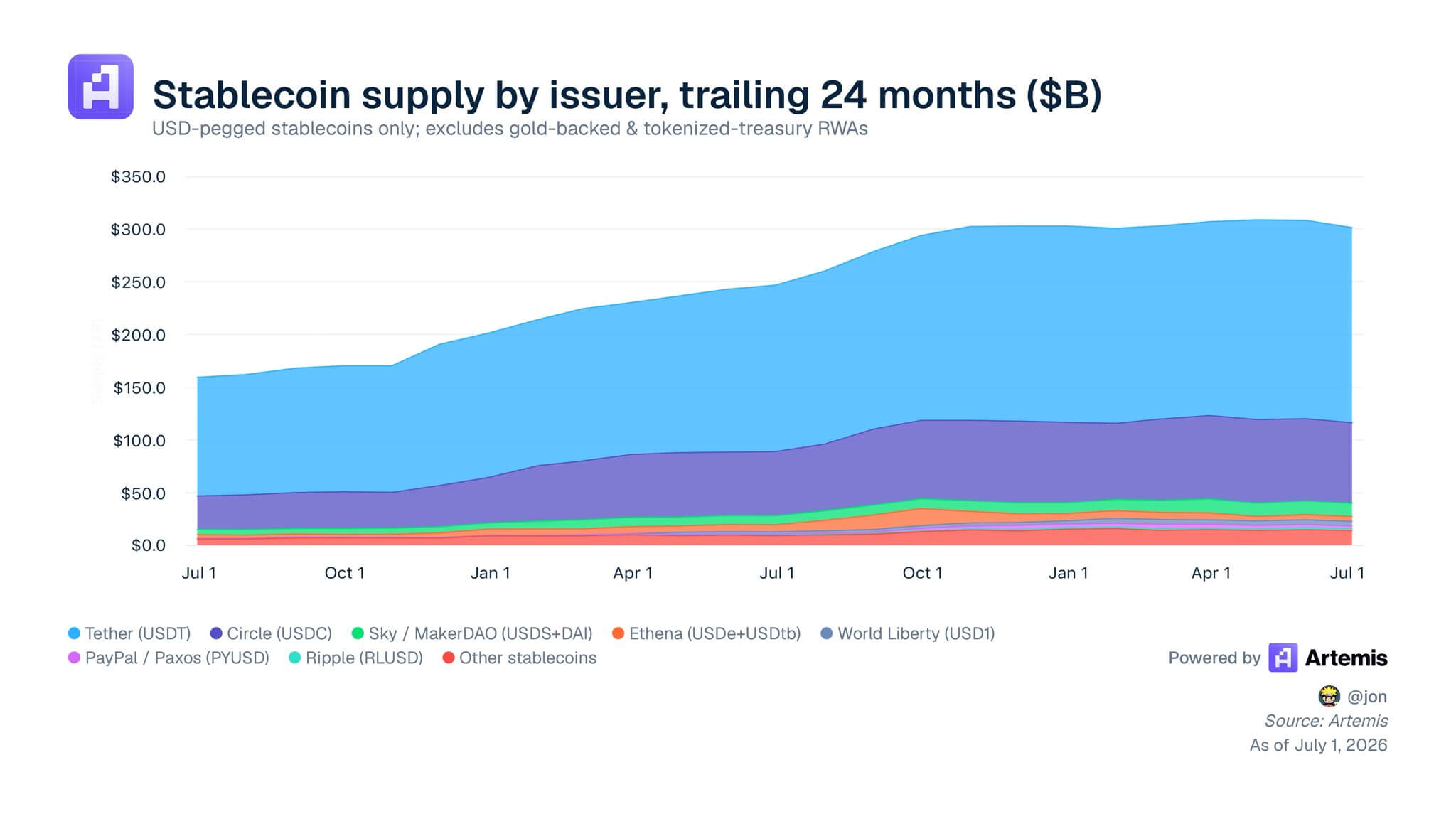

Nguồn cung stablecoin của các bên phát hành trong hai năm qua (Nguồn dữ liệu: Artemis)


Allaire tin rằng, đằng sau những dữ liệu trên là sự tích hợp hệ sinh thái sâu rộng trong suốt mười năm, tuyệt đối không phải điều mà một liên minh doanh nghiệp có thể thay thế trong một sớm một chiều. USDC bao phủ toàn diện các trung tâm giao dịch tài chính lớn trên toàn cầu, các giao thức tài chính phi tập trung và nhà cung cấp dịch vụ thanh toán toàn cầu, xây dựng hào rào vận hành khó vượt qua.


Đối với mô hình không phí giao dịch được OUSD quảng cáo, Allaire đặt câu hỏi: Lời nói quảng cáo không phí trông có vẻ hấp dẫn, nhưng khi áp dụng vào thị trường thực, thường cần các giải pháp thương mại trưởng thành hơn, có cấu trúc để hỗ trợ. Ông tiết lộ, Circle từ lâu đã thông qua việc ký kết hợp đồng tùy chỉnh chuyên biệt với các đối tác thanh toán doanh nghiệp để giảm chi phí giao dịch lưu chuyển, thay vì đơn giản là miễn tất cả phí giao dịch một cách cứng nhắc.


Ngoài ra, Allaire nghi ngờ liệu các liên minh doanh nghiệp lớn có thể vận hành hiệu quả trong ngành tài sản kỹ thuật số biến đổi nhanh chóng hay không, ông đánh giá các liên minh lớn trong ngành tài chính trước đây thường "tiến triển chậm chạp, kết quả đã có thể dự đoán trước". Ông nói: "Các liên minh lớn được thành lập bởi một lượng lớn doanh nghiệp lớn rất khó phối hợp các bên, nhu cầu lợi ích của các bên khó thống nhất, làm chậm tiến độ tổng thể, hầu như rất khó nuôi dưỡng những thành quả đổi mới có sức cạnh tranh lâu dài."


Ông cũng tiết lộ, trong giai đoạn đầu phát triển USDC, Circle cũng từng thử mô hình kiến trúc liên minh quy mô nhỏ, cuối cùng phát hiện ra rằng mô hình hợp tác chiến lược tự chủ tinh gọn có hiệu quả cao hơn nhiều so với mạng lưới liên minh do ủy ban dẫn dắt.


Từ góc độ chi phí vận hành, Allaire cảnh báo: Nếu phân phối toàn bộ lợi nhuận dự trữ cho các kênh phân phối, bên vận hành stablecoin sẽ không có vốn lưu lại để đầu tư vào cơ sở hạ tầng như xin giấy phép tuân thủ toàn cầu, triển khai quản lý rủi ro và tuân thủ, quản lý quỹ kho bạc 24/7.


Nhiều trở ngại cho việc triển khai quy mô của OUSD


Nhà phân tích thị trường cũng giữ thái độ thận trọng: Ngay cả khi liên minh OUSD có sự bảo trợ của hàng loạt doanh nghiệp nổi tiếng, cũng rất khó để nhanh chóng chuyển đổi thành thanh khoản trên chuỗi thực tế.


Lorenzo Valente, Trưởng bộ phận Nghiên cứu Tài sản Kỹ thuật số tại Ark Invest, chỉ ra rằng bất kỳ stablecoin mới nào cũng phải đối mặt với tình trạng khởi động lạnh khó khăn. Hệ thống giao dịch của thị trường vốn và các sàn giao dịch tiền mã hóa đã được tối ưu hóa sâu theo các cặp giao dịch trưởng thành của USDT và USDC. Ông viết: "Hàng trăm doanh nghiệp cạnh tranh lẫn nhau thành lập liên minh, trong ngành chưa có tiền lệ thành công. Circle và Tether có thể tự chủ lập kế hoạch lặp lại sản phẩm, tự chủ triển khai nghiệp vụ, không cần thỏa hiệp với bất kỳ đối tác nào; còn liên minh xuyên qua nhiều doanh nghiệp cạnh tranh, tốc độ thúc đẩy quyết định sẽ cực kỳ chậm."


Valente cũng đề cập đến những rủi ro về mặt giám sát và chống độc quyền: Circle và Tether đã mất nhiều năm để có được nhiều giấy phép tuân thủ trên khắp thế giới, xây dựng kênh liên lạc giám sát, đủ để đối phó với áp lực giám sát của các quốc gia; nhưng OUSD đồng thời tập hợp các tổ chức thẻ hàng đầu toàn cầu, công ty quản lý tài sản, ngân hàng lớn, mục tiêu quá nổi bật, rất dễ trở thành đối tượng kiểm tra trọng điểm của cơ quan giám sát chống độc quyền.


Đồng thời, liệu các thành viên sáng lập OUSD có thể thống nhất trận tuyến lâu dài hay không vẫn là ẩn số. Gần đây, Stripe đã mua lại doanh nghiệp hạ tầng stablecoin Bridge, tiếp tục xây dựng hệ thống dịch vụ tài chính riêng; các ngân hàng lớn đang thử nghiệm sản phẩm tiền gửi được token hóa tự nghiên cứu; Ripple cũng đang ra mắt stablecoin chuyên biệt. Những doanh nghiệp nắm giữ kênh phân phối khổng lồ này đều đồng thời bố trí nhiều tuyến sản phẩm tài sản kỹ thuật số, sẽ không dẫn lưu lượng độc quyền cho OUSD, việc phân tán lưu lượng sẽ làm suy yếu đáng kể tốc độ mở rộng mạng lưới của OUSD.


Kayla Phillips từ công ty đầu tư mạo hiểm blockchain Hivemind đánh giá về điều này: "Làm thế nào để nhiều tổ chức như vậy có thể đồng quản trị? Nếu muốn vận hành hiệu quả, không thể để 140 doanh nghiệp có quyền quyết định bình đẳng; nếu một số doanh nghiệp không thể vào được tầng quản trị cốt lõi, thì làm thế nào để tiếp tục khuyến khích họ ở lại liên minh tham gia vận hành?"


Làn đường thanh toán bù trừ trên chuỗi đi đến phân hóa


Sự ra đời của OUSD phản ánh một xu hướng lớn hơn trong ngành stablecoin: làn đường dần phân liệt, tầng thanh toán bù trừ cơ sở của stablecoin có thể đi đến đa dạng hóa. Các doanh nghiệp lớn không còn coi stablecoin như một sản phẩm độc lập dành cho người tiêu dùng phổ thông, mà coi nó nhiều hơn như một công cụ thanh toán bù trừ phụ trợ có thể tái sử dụng và tiêu chuẩn hóa.


Đối với Circle, để giữ vững thị phần, họ phải đẩy nhanh việc quảng bá các công cụ phát triển giá trị gia tăng như giao thức chuyển tiền xuyên chuỗi CCTP, ví nhúng cho tổ chức, để hệ sinh thái phần mềm của chính họ cung cấp giá trị gia tăng vượt xa việc chia sẻ lợi nhuận.


Xét cho cùng, cốt lõi cạnh tranh trong làn đường stablecoin đã chuyển từ so kè công nghệ cơ sở thành cuộc đấu tranh trực tiếp về quyền phân phối lợi nhuận mạng lưới. Hiện tại các nền tảng kênh phân phối liên kết với nhau, muốn thu hồi lợi nhuận lãi suất do lưu lượng người dùng của chính họ tạo ra, mô hình stablecoin do bên phát hành dẫn dắt đang đối mặt với thách thức mạnh nhất từ phía kênh phân phối từ trước đến nay.

Trending Cryptos

Related Questions

QTại sao Coinbase, công ty từng hỗ trợ phát triển USDC, lại quay sang ủng hộ đối thủ cạnh tranh OUSD?

ABài viết chỉ ra rằng động lực chính của Coinbase là muốn giành lại phần lớn hơn trong lợi nhuận từ lãi suất dự trữ của stablecoin. Với tư cách là kênh phân phối chính của USDC, Coinbase nhận thấy sức mạnh thị trường và muốn định hình lại mô hình chia sẻ doanh thu, vốn đang nghiêng về nhà phát hành như Circle. Việc tham gia liên minh OUSD, một stablecoin hứa hẹn phân phối hầu hết lợi nhuận dự trữ cho các đối tác phân phối, mang lại cho Coinbase đòn bẩy thương lượng mạnh mẽ với Circle.

QMô hình kinh doanh của OUSD khác biệt như thế nào so với USDC về việc phân phối lợi nhuận?

AOUSD được thiết kế với cơ chế phân bổ lợi nhuận dự trữ mới, hướng tới việc phân phối phần lớn lợi nhuận từ lãi suất dự trữ trực tiếp cho các nền tảng kênh phân phối, những bên chịu trách nhiệm mở rộng người dùng và lưu thông. Ngoài ra, OUSD cung cấp dịch vụ đúc và mua lại miễn phí cho doanh nghiệp. Ngược lại, mô hình truyền thống của USDC và Tether là các nhà phát hành giữ toàn bộ lợi nhuận từ lãi suất dự trữ, mặc dù Circle có chia sẻ một phần doanh thu với các đối tác phân phối như Coinbase theo thỏa thuận.

QLý do chính nào khiến CEO của Circle, Jeremy Allaire, tin rằng USDC vẫn giữ được lợi thế cạnh tranh trước OUSD?

AJeremy Allaire lập luận rằng USDC có lợi thế mạng lưới và hiệu ứng nền tảng khó có thể sao chép trong một sớm một chiều. Ông chỉ ra rằng USDC có tính thanh khoản hàng đầu và được tích hợp sâu rộng trên toàn cầu trong các trung tâm giao dịch tài chính, giao thức DeFi và nhà cung cấp dịch vụ thanh toán, là kết quả của gần một thập kỷ phát triển. Ông cũng nghi ngờ tính hiệu quả của các liên minh doanh nghiệp lớn và cảnh báo rằng việc phân phối tất cả lợi nhuận dự trữ sẽ khiến nhà phát hành không còn kinh phí để đầu tư vào cơ sở hạ tầng quan trọng như tuân thủ quy định và quản lý rủi ro.

QNhững thách thức chính nào mà OUSD có thể phải đối mặt trong việc mở rộng quy mô và cạnh tranh với các stablecoin đã thành lập?

ABài viết nêu ra một số thách thức chính đối với OUSD: 1) Vấn đề khởi động lạnh và khó khăn trong việc tạo ra tính thanh khoản trên chuỗi so với các cặp giao dịch USDT/USDC đã được thiết lập. 2) Sự phối hợp chậm chạp và khó khăn trong việc ra quyết định trong một liên minh lớn gồm hơn 140 công ty, nhiều công ty trong số đó là đối thủ cạnh tranh. 3) Rủi ro về quy định và chống độc quyền do sự tham gia của các công ty tài chính và công nghệ lớn. 4) Khả năng các thành viên sáng lập không tập trung nguồn lực độc quyền cho OUSD vì họ đang phát triển các sản phẩm stablecoin hoặc tài sản kỹ thuật số riêng.

QSự ra đời của OUSD phản ánh xu hướng lớn hơn nào trong ngành công nghiệp stablecoin theo bài viết?

ABài viết kết luận rằng sự ra đời của OUSD phản ánh xu hướng phân mảnh của ngành stablecoin, nơi lớp thanh toán cơ sở (clearing layer) có thể trở nên đa dạng hơn. Các doanh nghiệp lớn ngày càng coi stablecoin không chỉ là sản phẩm tiêu dùng độc lập mà còn là công cụ thanh toán tiêu chuẩn hóa, có thể tái sử dụng cho hạ tầng phía sau. Cuộc cạnh tranh cốt lõi đã chuyển từ so sánh công nghệ sang cuộc đấu tranh trực tiếp về quyền phân phối lợi nhuận mạng lưới, với các nền tảng kênh phân phối liên minh để yêu cầu lấy lại lợi nhuận từ lưu lượng người dùng mà họ tạo ra.

Related Reads

MSTR Discloses Sale of 3,588 Bitcoins, Stock Price Drops Over 5% at One Point During Trading

MicroStrategy, the world's largest corporate holder of Bitcoin, has significantly shifted its business model. Between June 29 and July 5, the company sold 3,588 bitcoins for approximately $216 million to fund quarterly dividends for its preferred stock. This marks its largest-ever Bitcoin sale and signals a strategic pivot: Bitcoin is transitioning from a "buy-and-hold" reserve asset to a liquidity management tool for the company. This move follows a recent authorization allowing Bitcoin sales when equity fundraising is less attractive. The announcement contributed to a more than 5% intraday drop in MicroStrategy's stock price, while Bitcoin fell to around $61,800—below the company's average holding cost of roughly $75,700. The sale represents a major departure from MicroStrategy's long-standing "never sell" commitment, which saw its first minor breach in May with a $2.5 million sale. The latest, hundred-times-larger transaction underscores growing financial pressures. Analysts note the company faces about $1.5 billion in annual preferred dividend obligations, far exceeding cash flow from its software business. As of July 5, MicroStrategy holds 843,775 bitcoins. Its current operational logic involves buying Bitcoin during favorable financing conditions and selling portions to cover dividends when needed, creating a flexible capital management cycle amidst a challenging market environment.

华尔街日报32m ago

MSTR Discloses Sale of 3,588 Bitcoins, Stock Price Drops Over 5% at One Point During Trading

华尔街日报32m ago

Q-Day Countdown: Will Quantum Computing End Cryptocurrencies?

Quantum Computing's Threat to Cryptocurrency: A Countdown to Q-Day Quantum computing, specifically Shor's algorithm, poses a fundamental threat to the public-key cryptography (e.g., ECDSA, RSA) that secures blockchain networks like Bitcoin and Ethereum. This critical juncture, known as Q-Day, is estimated to occur potentially within the next 5-15 years. The core vulnerability stems from the public and immutable nature of blockchains. Assets in addresses where the public key is already exposed on-chain (e.g., spent outputs) are at direct risk, as a sufficiently powerful quantum computer could derive the private key. This threatens the very trust model of cryptocurrencies. The response lies in Post-Quantum Cryptography (PQC)—algorithms like lattice-based ML-DSA and hash-based SLH-DSA, which are resistant to quantum attacks. NIST has standardized key PQC algorithms (FIPS 203, 204, 205), providing a migration path. However, the primary challenge is not technical but socio-economic and involves complex governance: * **Bitcoin's** path is constrained by its conservative ethos. Migrating requires a soft-fork to new address types, facing hurdles like significantly larger signature sizes and, most critically, the divisive governance question of how to handle at-risk legacy UTXOs without violating core principles. * **Ethereum** is pursuing a "cryptographic agility" strategy, with a multi-layered roadmap. It leverages account abstraction for user accounts and is developing compressed hash-based signatures (e.g., leanXMSS) for its consensus layer, aiming for a full-stack upgrade over time. In conclusion, quantum computing does not spell an instant end for cryptocurrency but initiates a critical countdown. The industry has a limited "engineering comfort window" to orchestrate a coordinated, ecosystem-wide migration to PQC. The ultimate bottlenecks are the immense coordination efforts and governance decisions required for this foundational transition.

marsbit1h ago

Q-Day Countdown: Will Quantum Computing End Cryptocurrencies?

marsbit1h ago

Trump, the President Who Knows Best How to 'Trade Stocks'

Former US President Donald Trump reported a record-breaking $2.2 billion in personal income for 2025, the highest annual income ever disclosed by a sitting president. This figure, from a 927-page government ethics filing, represented a 3.5-fold increase from his $600 million income in 2024 and boosted his net worth to $6.5 billion. The primary drivers were cryptocurrency (64% of income, approximately $1.4 billion) and real estate (26%, approximately $575 million). His crypto earnings stemmed largely from the launch of his personal meme coin, $TRUMP, generating over $600 million in licensing fees, and substantial profits from the WLFI token and its parent company. Despite a sluggish property market, his Mar-a-Lago resort and associated golf clubs saw revenue surges of 50% and 27%, respectively, attributed to their use as venues for presidential events. Trump's financial disclosure also revealed an unprecedented level of stock market activity, with over 22,000 trades executed in 2025, averaging 87 trades per market day. Media analyses noted several instances where significant trading coincided with major policy announcements, such as proposed tariffs, raising questions about potential conflicts of interest. While the White House stated these trades were handled by a family-managed trust fund and not Trump directly, critics highlighted this as a departure from the blind trusts traditionally used by presidents post-Watergate. The report has intensified debate over the commercialization of the presidency. Supporters view it as a success story of a businessman-president, while critics argue it demonstrates an unprecedented conversion of public influence into private wealth, with policy decisions potentially linked to personal financial gains. The controversy centers on whether Trump's earnings represent innovative entrepreneurship or a fundamental conflict of interest, sparking renewed calls for stricter ethics reforms in US governance.

marsbit1h ago

Trump, the President Who Knows Best How to 'Trade Stocks'

marsbit1h ago

Countdown to Q-Day: Will Quantum Computing End Cryptocurrencies?

The article explores the existential threat quantum computing poses to cryptocurrencies and the urgent need for "post-quantum" migration. It outlines that quantum computers, through Shor's algorithm, could break the elliptic-curve cryptography (ECC) underlying blockchain security, potentially allowing private keys to be derived from public keys. The core challenge is not a lack of post-quantum cryptography (PQC) standards—like NIST's ML-KEM and ML-DSA—but the immense complexity of upgrading entire ecosystems before "Q-Day" (when quantum computers become capable of such attacks, estimated around 2035-2045). Key points include: * **Bitcoin's** risk is concentrated in legacy UTXOs with exposed public keys (e.g., early P2PK outputs). Migration faces massive hurdles: PQC signatures are much larger, increasing transaction size and cost, and the governance dilemma of handling un-migrated assets threatens its "code is law" ethos. * **Ethereum's** strategy focuses on "cryptographic agility," using Account Abstraction for user accounts and developing compressed hash-based signatures (like leanXMSS with SNARK aggregation) for consensus. Its migration is a complex, full-stack overhaul of execution, consensus, and data layers. * The "security debt" is enormous. The comfortable engineering window for a coordinated, ecosystem-wide upgrade is only 5-8 years. High-value infrastructure (exchanges, bridges) may face pressure before mainnet protocols. In conclusion, quantum computing is not an instant "doomsday" event but a forcing function for systemic change. Bitcoin's ultimate test is social consensus and property rights governance, while Ethereum's is technical complexity. Failure to migrate in time could lead to a fundamental re-pricing of crypto assets.

链捕手1h ago

Countdown to Q-Day: Will Quantum Computing End Cryptocurrencies?

链捕手1h ago

Trading

Spot

Hot Articles

What is USDC(WORMHOLE)

USD Coin (Wormhole): A Comprehensive Overview Introduction In the rapidly evolving world of cryptocurrencies, USD Coin (Wormhole), referred to as $USDC(Wormhole), stands out as a pioneering solution within the DeFi (Decentralized Finance) landscape. Operating on several blockchain platforms, including Solana, USD Coin (Wormhole) is more than just a digital representation of the United States dollar. It embodies the innovative spirit of modern finance, enabling seamless cross-chain transactions and enhanced interoperability among diverse blockchain ecosystems through the advanced Wormhole protocol. What is USD Coin (Wormhole)? USD Coin (Wormhole) is a tokenized version of the US dollar designed to facilitate frictionless transactions across different blockchain networks. Its primary aim is to bolster liquidity and enhance the functionality of the DeFi ecosystem. By leveraging the Wormhole protocol, which establishes a robust cross-chain communication network, users can effortlessly transfer USDC tokens across various platforms. This cross-chain capability marks a significant advancement in cryptocurrency use, promoting a more interconnected and efficient ecosystem where assets can flow freely between different blockchains. The value proposition of USD Coin (Wormhole) lies not only in its stability, being pegged to the US dollar, but also in its ability to bridge gaps between disparate blockchain environments. This innovative approach fosters a greater level of participation among users and developers, paving the way for new and exciting applications within decentralized finance. Who is the creator of USD Coin (Wormhole)? The origins of USD Coin (Wormhole) are intricately tied to the Wormhole network, which was developed by Jump Crypto. While specific individual creators are not prominently documented, Jump Crypto is notable for its involvement in advancing blockchain technology and supporting its applications in finance. By creating the Wormhole network, Jump Crypto has played a vital role in promoting cross-chain asset transfers, enhancing the efficiency and diversity of cryptocurrency usage. Who are the investors of USD Coin (Wormhole)? The success of USD Coin (Wormhole) is supported by investments from several notable funds and organizations within the cryptocurrency realm. Key investors include: Coinbase Ventures: A prominent venture capital arm backed by one of the leading cryptocurrency exchanges in the industry, Coinbase Ventures provides essential capital and strategic support to promising blockchain projects. Arrington XRP Capital: Specializing in digital assets, Arrington XRP Capital recognizes the potential of innovative projects like USD Coin (Wormhole) and has invested accordingly to back its development. Jump Trading: As the parent organization of Jump Crypto, Jump Trading brings not only investment but a wealth of expertise in trading technology and market dynamics to bolster the Wormhole project. How Does USD Coin (Wormhole) Work? The operational framework of USD Coin (Wormhole) is intricately designed to facilitate effective cross-chain transactions, maximizing security and efficiency. Here’s a simplified overview of how it functions: Asset Locking: When a user wishes to transfer USDC from one blockchain to another, they first lock their tokens on the source blockchain. This process ensures that the assets are secure and are set to be either burned or moved later. Token Minting: After the tokens are locked, an equivalent amount of USDC is minted on the destination blockchain. This provides the user with access to their funds on a new platform, reflecting the flexibility that the Wormhole protocol enables. Cross-Chain Transfer: The Wormhole protocol efficiently facilitates the entire transfer process. It ensures that once the USDC is minted on the destination chain, the equivalent tokens are burned on the source chain. The result is a seamless transfer of value between two distinct blockchain environments. This cross-chain methodology ensures that transactions remain secure and transparent, significantly enhancing liquidity within the different DeFi ecosystems. Timeline of USD Coin (Wormhole) Understanding the evolution of USD Coin (Wormhole) provides vital context for its significance in the cryptocurrency arena. Here’s a timeline highlighting important milestones in the project’s history: 2021: The Wormhole project is launched, establishing a framework for cross-chain asset transfers and setting the stage for the development of USD Coin (Wormhole). 2022: The Wormhole network experiences a significant challenge with a security breach that results in a $325 million theft. However, the incident is later addressed and refunded by Jump Crypto, showcasing the project’s commitment to security and transparency. 2023: USD Coin (Wormhole) integrates with Circle’s Cross-Chain Transfer Protocol (CCTP), enhancing its capabilities for cross-chain transfers and further solidifying its place within the DeFi ecosystem. 2024: Ongoing development and expansion of the Wormhole network continue, aimed at increasing the utility and reach of USD Coin (Wormhole) as well as enhancing its operational framework. Key Features The success of USD Coin (Wormhole) can be attributed to several key features that differentiate it from other cryptocurrency offerings: Cross-Chain Interoperability At the core of USD Coin (Wormhole) is its ability to facilitate seamless transfers across multiple blockchain networks. This interoperability serves as a cornerstone for decentralized finance, allowing various platforms to interact with each other, thereby accelerating the evolution of financial services. Security Wormhole employs a well-designed Guardian Network comprised of node validators that ensure secure cross-chain transactions. This collective oversight minimizes the risk of fraud and provides users with confidence that their assets are protected during cross-chain transfers. Liquidity Enhancement By enabling USDC to circulate freely across different blockchains, USD Coin (Wormhole) enhances liquidity in the DeFi ecosystem. This increased liquidity can foster more efficient trading, contribute to better pricing strategies, and improve the overall market dynamics encompassing various digital assets. Conclusion USD Coin (Wormhole) is a pivotal innovation in the blockchain space, reinforcing the capabilities of decentralized finance (DeFi) and establishing a more connected financial ecosystem. With its robust framework for cross-chain transactions, security features, and strong backing from reputable investors, USD Coin (Wormhole) is positioned to play a key role in the future of cryptocurrency. As the digital finance landscape continues to evolve, USD Coin (Wormhole) not only embraces the future of interconnectivity among blockchain networks but also reaffirms the power of tokenization and blockchain technology in transforming how we perceive and utilize value in a digital world. By navigating the complexities of cross-chain functionality, it demonstrates a sophisticated approach to enabling financial inclusivity and innovation in the world of cryptocurrencies.

1.3k Total ViewsPublished 2024.04.01Updated 2024.12.03

What is USDC(WORMHOLE)

What is $USDC

Classic USDC: A Comprehensive Overview Introduction to Classic USDC In the rapidly evolving landscape of the cryptocurrency market, stablecoins have emerged as critical components, particularly in providing stability amid the volatility that characterizes digital assets. One such project is Classic USDC, a digital currency initiative that aims to deliver a stable and reliable medium of exchange. By maintaining a 1:1 peg with the US dollar, Classic USDC strives to offer users a dependable digital asset, equipped for various applications within the web3 and cryptocurrency ecosystems. What is Classic USDC? Classic USDC is fundamentally a stablecoin, which is a type of cryptocurrency designed to minimize the price volatility typically seen in the digital asset market. Specifically, Classic USDC aspires to represent the value of the US dollar closely, ensuring that users can leverage this digital currency for transactions, savings, and other financial activities without the fear of sudden price fluctuations that can otherwise plague many cryptocurrencies. The primary aim of Classic USDC is to provide a reliable and trustworthy digital equivalent of the US dollar, designed for seamless integration into a wide range of web3 applications, decentralized finance (DeFi) platforms, and other crypto-related financial systems. By delivering a stable digital currency, Classic USDC seeks to facilitate everyday commerce, make blockchain technology more user-friendly, and encourage the adoption of cryptocurrencies for mainstream usage. Creator of Classic USDC The identity of the creator or the development team behind Classic USDC remains largely unknown, and the lack of transparency has led to a degree of uncertainty regarding the project’s origins. While many cryptocurrency initiatives prominently showcase their founders and development teams, Classic USDC does not provide clear information about its creators, which poses challenges for potential users or investors weighing the project's credibility and reliability. Investors of Classic USDC Alongside the ambiguity surrounding its creators, Classic USDC also lacks specificity with regards to its investors. The financial backing of a project can often lend it credibility and stabilize its operations; however, the absence of documented investment foundations or organizations supporting Classic USDC raises questions about its funding structure. This lack of clarity could potentially hinder stakeholder confidence in the project. How Does Classic USDC Work? The operational mechanics of Classic USDC rely heavily on its reserve system, which is fundamental to the underpinnings of any stablecoin. Classic USDC undertakes to maintain a reserve of assets that directly correspond to the value of the digital currency in circulation. Specifically, for every Classic USDC token issued, an equivalent amount of backing assets is retained in reserve, whether in cash or near-cash equivalents. This strategy is designed to uphold the value of Classic USDC, offering reassurance to users that redeeming their tokens for US dollars is feasible at any time. This reserve structure aims to enhance the stability and reliability of Classic USDC, positioning it as a secure alternative in the cryptocurrency market. By ensuring that the value of Classic USDC is consistently correlated with the US dollar, the project aspires to engender trust among users who may be wary of the broader market dynamics. Timeline of Classic USDC The history of Classic USDC is marked by several key milestones that reflect its journey and evolution within the cryptocurrency ecosystem: 2021: The inception of Classic USDC is noted, introducing a new digital currency option designed for stability. During this year, the first records of the token’s activity surfaced and its initial price levels were established. 2024: Classic USDC begins to experience notable price fluctuations, as the crypto market overall grapples with various trends and user sentiment. Predictions regarding its future potential emerge, indicating a strong interest from market observers and analysts who foresee growth opportunities. Future Projections Experts speculate that Classic USDC may reach higher levels of adoption and stability in the years to come, with potential further developments anticipated around 2025 and 2026. However, these projections should be approached with cautious optimism, as the cryptocurrency market is inherently unpredictable, and various external factors may influence the trajectory of Classic USDC. Key Points About Classic USDC Stability: Classic USDC’s core proposition revolves around providing a digital currency that parallels the value of the US dollar, thereby ensuring stability in an often volatile marketplace. Reserve System: The project’s commitment to maintaining a reserve of assets to back its value underscores its reliability and operational soundness. Web3 and Crypto Integration: Classic USDC is engineered to facilitate easy integration within various applications, aiming to enhance the user experience and broaden the acceptance of cryptocurrency in everyday transactions. Future Growth Potential: While still emerging, Classic USDC holds prospective avenues for growth as awareness and utilization of stablecoins increases in the web3 and crypto contexts. Conclusion Classic USDC presents itself as a notable stablecoin initiative within the cryptocurrency sphere, striving to provide users with a reliable digital currency that embodies the stability of the US dollar. Despite uncertainties regarding its creators and financial backing, the underpinning principles of Classic USDC—centered on reserve-backed assurances—endeavour to position it as a trustworthy option for individuals and businesses navigating the digital economy. With an eye towards the future, market analysts are keen to observe how Classic USDC evolves in response to the shifting dynamics of the cryptocurrency landscape, potentially establishing itself as a significant player in the realm of stablecoins.

695 Total ViewsPublished 2024.05.01Updated 2024.12.03

What is $USDC

Discussions

Welcome to the HTX Community. Here, you can stay informed about the latest platform developments and gain access to professional market insights. Users' opinions on the price of USDC (USDC) are presented below.

活动图片