Karpathy, une nouvelle fois légendaire, renverse le RAG et transforme vos notes en un second cerveau

marsbitPublished on 2026-07-01Last updated on 2026-07-01

Abstract

Karapthy, ancien directeur IA de Tesla et cofondateur d'OpenAI, propose une nouvelle approche radicale pour gérer nos connaissances personnelles : traiter nos notes comme du code source immuable et utiliser un LLM comme compilateur. Cette méthode, nommée LLM-WIKI, contraste avec les systèmes RAG traditionnels qui souffrent de fragmentation et d'incohérence. L'idée est simple : au lieu de faire re-parcourir toutes les notes à l'IA à chaque question (comme le fait le RAG), on laisse le LLM "compiler" une fois l'ensemble des notes brutes en un wiki structuré, interconnecté et cohérent. Ce wiki, constamment mis à jour, devient la source unique de vérité. Le processus repose sur trois couches : les notes brutes (Raw), un schéma de structuration (Schema) défini par l'utilisateur, et le wiki final (Wiki) généré et maintenu par l'IA. Cette automation élimine la tâche fastidieuse de "comptabilité" cognitive – mise à jour des liens, détection des contradictions, révision des résumés – qui a rendu irréalisable la vision du "Memex" de Vannevar Bush en 1945. L'humain est ainsi libéré des corvées d'organisation pour se concentrer sur l'essentiel : choisir ce qu'il ingère et en interpréter le sens. Il ne s'agit pas d'un simple outil, mais d'un changement fondamental dans notre relation à la production de connaissances.

Collectionner n'est pas posséder, surligner n'est pas comprendre.

Ces articles profonds qui vous enthousiasmaient à deux heures du matin, ces innombrables liens bidirectionnels extraits d'Obsidian, ces bases de données méticuleusement mises en page dans Notion, ce sont tous des « momies cybernétiques » dormant dans vos applications de prise de notes.

Le graphe semble impressionnant, mais il est en réalité déjà pourri.

C'est l'échec systémique de toute cette ère de surcharge informationnelle.

L'ingénieur actuel d'Anthropic, ancien cofondateur d'OpenAI, ancien directeur de l'IA chez Tesla, Karpathy, n'en pouvait plus et a lâché une bombe.
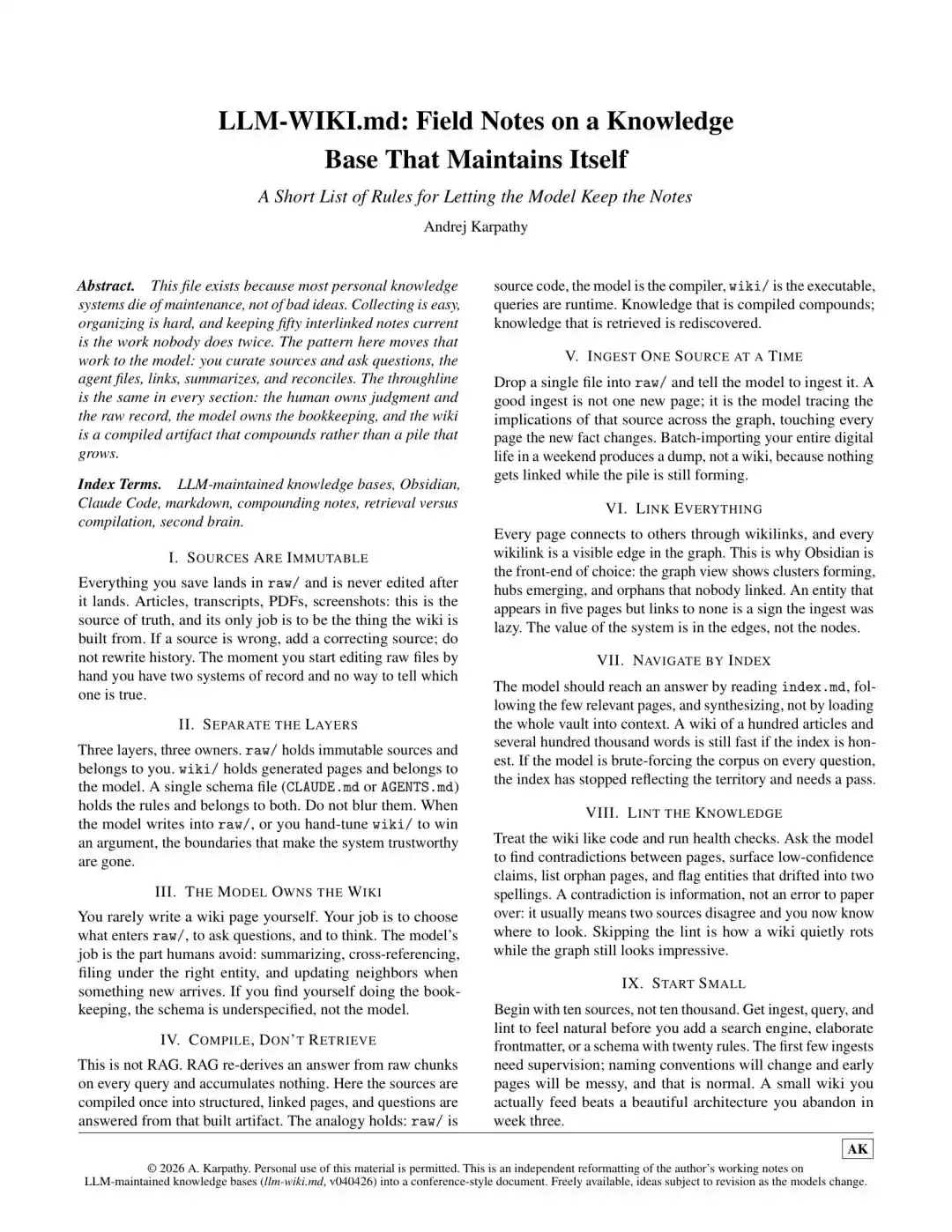
Portail : https://gist.github.com/karpathy/442a6bf555914893e9891c11519de94f

Il n'a pas annoncé de nouveau modèle, ni publié de nouveau framework. Il a simplement dit : Considérez vos notes comme un code source immuable, et laissez le LLM être le compilateur.

Deux mois plus tard, ce document a déjà déclenché une migration silencieuse mais intense dans les communautés Obsidian, Claude et Cursor.

Certains ont déjà étendu leur Wiki à des centaines de pages, des centaines de milliers de mots.

Des plugins d'automatisation commencent à apparaître. Chercheurs académiques, entrepreneurs indépendants, apprenants tout au long de la vie se tournent collectivement vers un tout nouveau mode de production de connaissances.

Le crépuscule du RAG, le transport d'information ne sauvera pas votre pensée

Avant l'avènement du LLM-WIKI, la solution principale était le RAG (Retrieval-Augmented Generation).

En bref, on donne au grand modèle un « fouilleur » : quand vous posez une question, il va chercher quelques extraits dans vos notes, puis assemble une réponse.
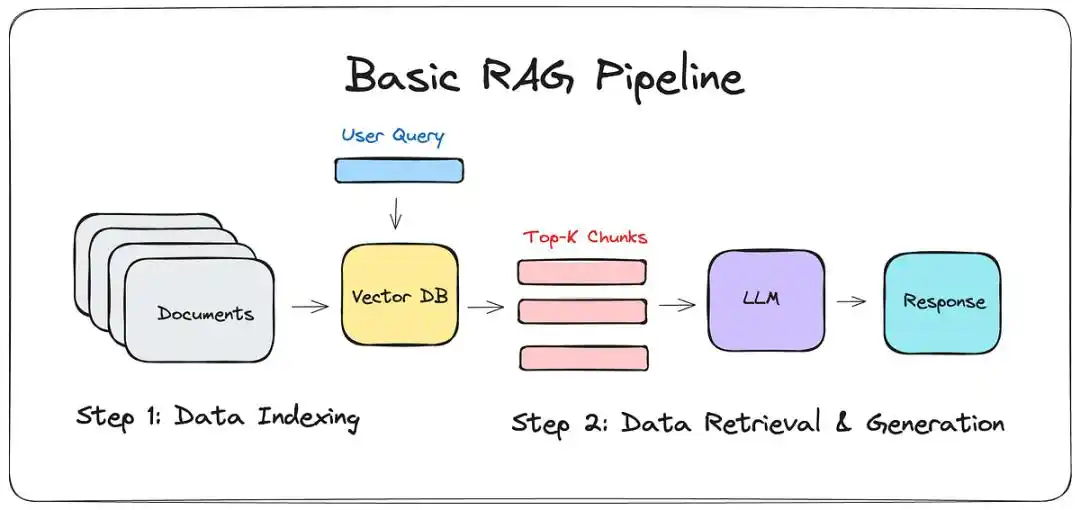
Cela semble beau, mais ceux qui l'ont utilisé connaissent l'écart entre la « présentation » et la « réalité ».

Il n'est qu'un manutentionnaire : Le RAG ne peut traiter que localement, il ne comprend pas la vue d'ensemble.

Il peut vous dire que la 5ème note mentionne A, mais il ne peut pas vous révéler la logique sous-jacente commune à ces 500 notes.

Il devient « schizophrène » : Si vous pensiez que A était vrai il y a six mois, mais que vous avez écrit une note hier pour réfuter A, le RAG tombe souvent dans des contradictions, crachant un tas de bêtises logiquement incohérentes.

Pourriture du graphe : Les liens de connaissances maintenus manuellement sont comme du code sans fonction de nettoyage automatique. Avec le temps, les liens morts pullulent, et l'efficacité de la recherche diminue de façon exponentielle.

L'intuition de Karpathy est extrêmement tranchante : La recherche et la récupération sont une manifestation de l'incapacité humaine. Nous avons besoin de « consensus », de « structure », de « vérité ».

Considérer la connaissance comme du code source, laisser le LLM être le compilateur

La réponse de Karpathy vient d'une action que les programmeurs font tous les jours, mais n'ont jamais pensée pour la connaissance : la compilation.

Vous écrivez un morceau de code source, vous ne le relisez pas à chaque exécution du programme.

Vous le compilez en un fichier binaire. Cette compilation est coûteuse, mais ensuite chaque exécution est rapide. Le coût de la compilation est amorti par des milliers d'utilisations ultérieures.

Pourquoi la connaissance ne pourrait-elle pas fonctionner ainsi ?

Karpathy dit : Considérez vos notes brutes comme un code source immuable, considérez le LLM comme un compilateur, et laissez-le « compiler » une fois pour toutes ce tas de matériel désordonné en un Wiki structuré et interconnecté.
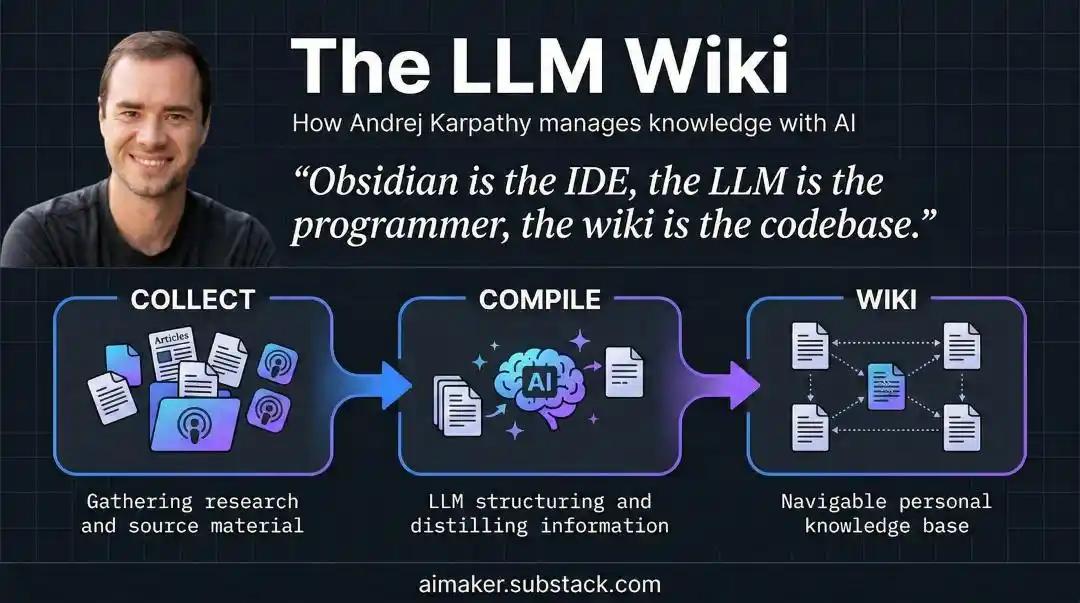
À chaque ajout d'un nouveau matériau, l'IA effectue une fusion : met à jour les pages d'entrées concernées, révise les synthèses, signale les conflits entre nouvelles données et anciennes conclusions, et renforce ou remet en question les jugements existants.
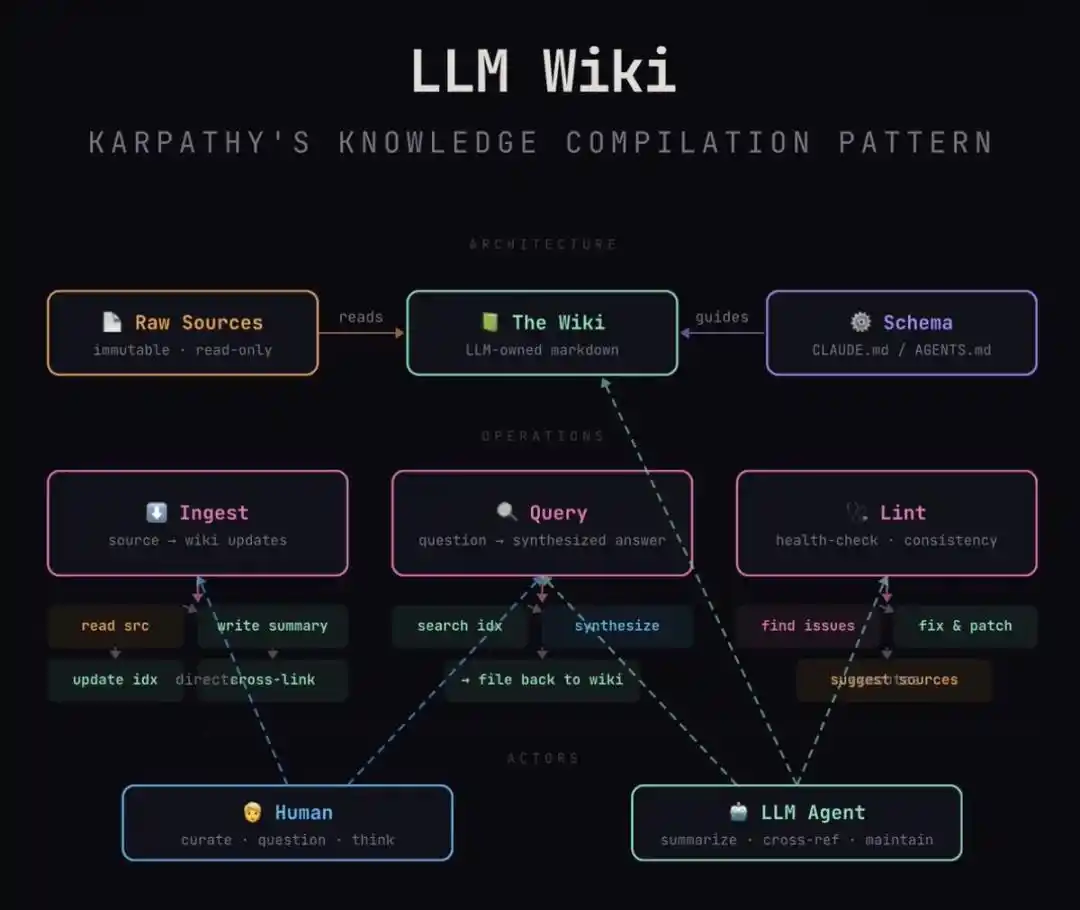
La différence cruciale est ici : Les connaissances sont compilées une fois, puis restent fraîches, au lieu d'être reconstruites temporairement à chaque interrogation.

Lorsque vous venez poser une question, les renvois croisés sont déjà là, les contradictions sont déjà signalées, les synthèses reflètent déjà tout ce que vous avez lu.

Vous ne recompilez pas le code source à chaque exécution du programme. Alors pourquoi, à chaque question, faudrait-il que l'IA relise toutes vos notes ?

Le transfert fondamental des rapports de production cognitive

Dans son framework LLM-WIKI, les notes ne sont plus des mots morts, mais du « code source ».

Le grand modèle n'est plus un traducteur cherchant dans le dictionnaire, mais un « compilateur ».

Cette architecture réalise de manière extrêmement ingénieuse un découplage en trois couches :

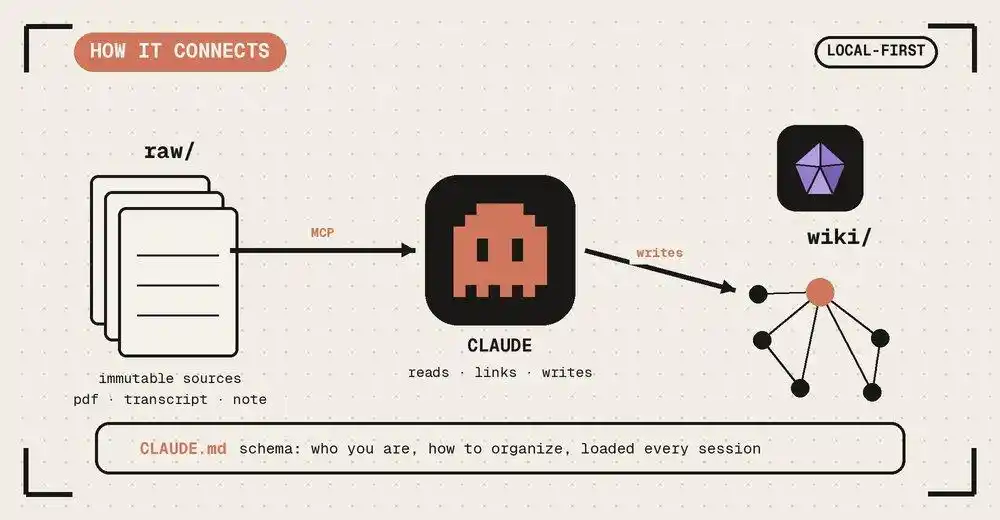
1. La couche Raw (matériau brut) : C'est votre minerai d'inspiration brut. Les idées notées rapidement, les articles élagués, les comptes-rendus de réunion. Elle est « immuable », préservant la nature brute et imparfaite de l'entrée humaine.

2. La couche Schema (constitution de la connaissance) : C'est le « règlement » que vous écrivez pour l'IA. Par exemple, vous stipulez : chaque entrée de personnage doit contenir « motivation, limites, réalisations clés » ; chaque pile technologique doit expliquer « avantages/inconvénients ».

3. La couche Wiki (produit compilé) : C'est la zone entièrement maintenue par l'IA. Elle compile, selon votre Schema, ce tas de Raw désordonné en pages d'encyclopédie structurées, croisées et logiquement cohérentes.
Au quotidien, trois actions seulement :

1. Ingest (ingestion) : Jetez-y un nouveau matériau. L'IA le lit, passe en revue les points clés avec vous, écrit un résumé, balaye toute la base pour mettre à jour les pages concernées — une source peut impacter une dizaine de pages.

2. Query (interrogation) : Interrogez directement le Wiki compilé. Les réponses viennent avec des citations. Le plus génial : les bonnes réponses peuvent directement être archivées en nouvelles pages, chaque exploration que vous faites génère aussi des intérêts composés.

3. Lint (examen de santé) : Faites régulièrement passer à l'IA un examen d'auto-vérification, comme une revue de code — chercher les contradictions, les affirmations dépassées, les pages isolées sans liens, les lacunes à combler. Nettoyer tôt, pour éviter que la base ne pourrisse en grandissant.

Vous n'êtes plus le manutentionnaire de la connaissance, mais l'architecte de cet empire de la sagesse.

Vous êtes seulement responsable de l'entrée et de la revue finale. L'IA s'occupe de tout le « travail ingrat » : organiser, aligner, créer des liens croisés, détecter les contradictions.

C'est le transfert fondamental des rapports de production cognitive.

Ce n'est pas un autre chatbot. ChatGPT connaît Internet, LLM-Wiki vous connaît — plus précisément, ce que vous lui avez enseigné.

Chaque réponse vient avec des [liens-wiki] vers votre graphe de connaissances. Chaque réponse est un point de départ pour une piste d'exploration, et non une fin.

Une invention en retard de 80 ans

À ce stade, vous pourriez penser que ce n'est qu'un flux de travail intelligent ?

Pas seulement.

À la fin de son gist, Karpathy mentionne légèrement un nom : Vannevar Bush, et son article de 1945, « As We May Think ».
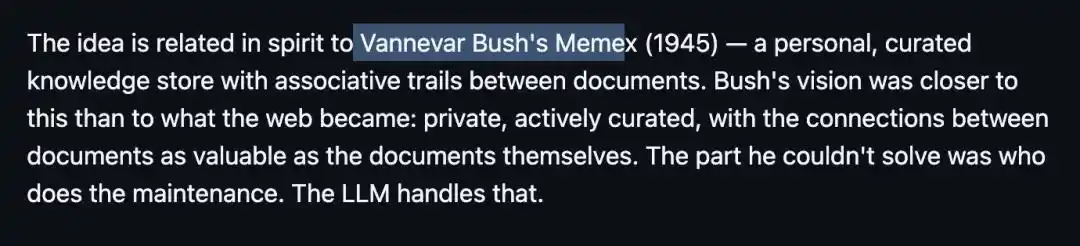
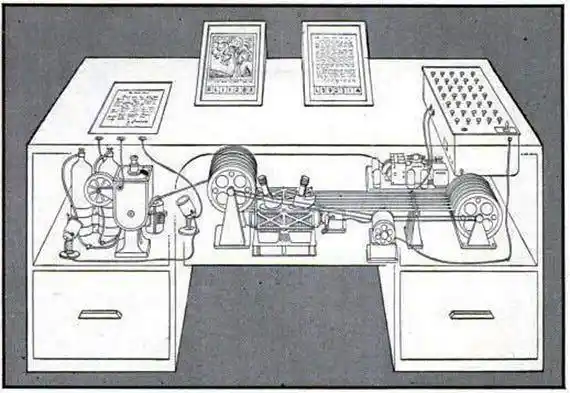
1945, juste après la Seconde Guerre mondiale, ce grand nom de la science américaine imagina une machine appelée « Memex » :

Un bureau mécanique, capable de stocker tous vos livres, notes, correspondances, et d'établir entre les entrées pertinentes des « chemins d'association » — les connexions entre documents étant aussi précieuses que les documents eux-mêmes.
Cela vous semble familier ? C'est presque la description mot pour mot du LLM-Wiki.

La vision de Bush était en fait plus proche de cela que le Web ne l'a été plus tard : un réseau de connaissances privé, personnellement organisé, où la connexion est la valeur.
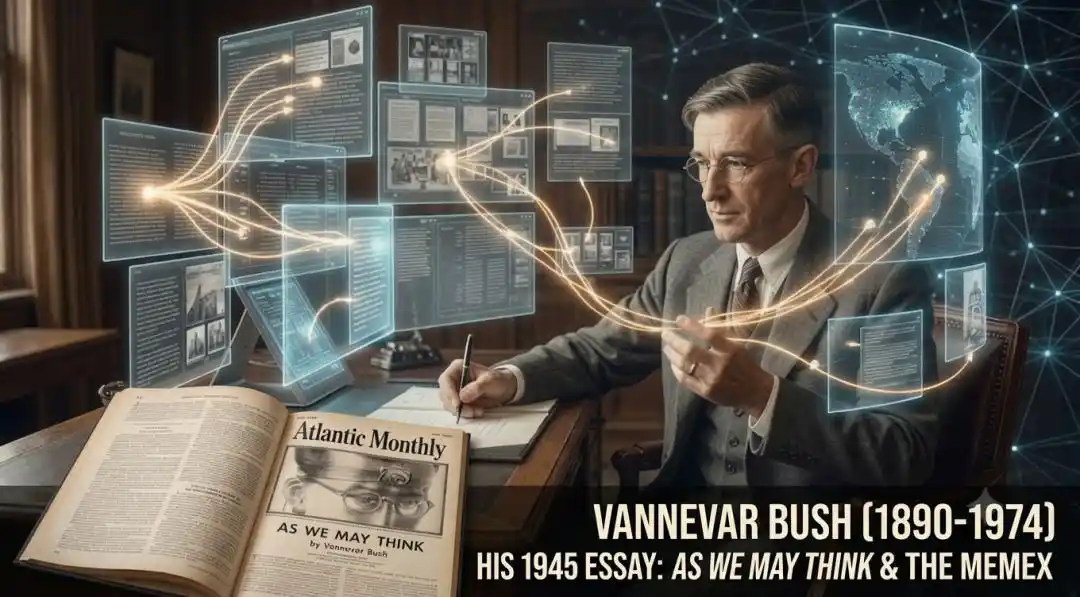
Alors pourquoi le Memex n'a-t-il pas été construit en 80 ans ?

Parce que Bush est resté bloqué sur un problème qu'il ne pouvait résoudre — Qui allait le maintenir ?

Chaque chemin d'association devait être établi manuellement. Chaque référence croisée devait être connectée par quelqu'un.

Bush imaginait des « opérateurs » dédiés traçant des sentiers dans la connaissance pour vous.

Mais la réalité est qu'aucun être humain ne peut, à grande échelle, persister dans cette corvée fastidieuse. Les humains abandonnent la maintenance, car son coût augmente toujours plus vite que la valeur qu'elle apporte.

Cette phrase de Karpathy est le point crucial de tout le paradigme : La partie la plus fatigante de la maintenance d'une base de connaissances n'a jamais été la lecture, c'est la « tenue des comptes ».

Mettre à jour les références croisées, garder les résumés frais, signaler les conflits entre nouvelles données et anciennes conclusions, maintenir la cohérence entre des dizaines de pages. Cette monotonie est suffisante pour décourager tout le monde.

Et le grand modèle, lui, n'oubliera pas de mettre à jour une référence croisée, peut modifier 15 fichiers d'un coup.

Il ne se fatigue pas. Ne s'ennuie pas. N'est pas épuisé par les nuits tardives. Le coût de maintenance est ramené à pratiquement zéro.

Ainsi, cette machine qui a bloqué l'humanité pendant quatre-vingts ans, s'est soudain mise en marche.

Ce qui est libéré, c'est l'attention humaine

En y repensant, LLM-Wiki est la troisième pièce du puzzle de Karpathy sur la « collaboration homme-machine », et aussi la plus sobre.

La première, Vibe Coding (février 2025) : Accepter le code écrit par l'IA, ne pas le revoir ligne par ligne, faire confiance au modèle, tester le résultat.

La deuxième, Agentic Engineering (janvier 2026) : Les humains orchestrent des agents IA, au lieu de coder eux-mêmes.

La troisième, LLM Knowledge Bases (avril 2026) : Ce que l'IA gère n'est plus seulement du code, mais la connaissance elle-même.
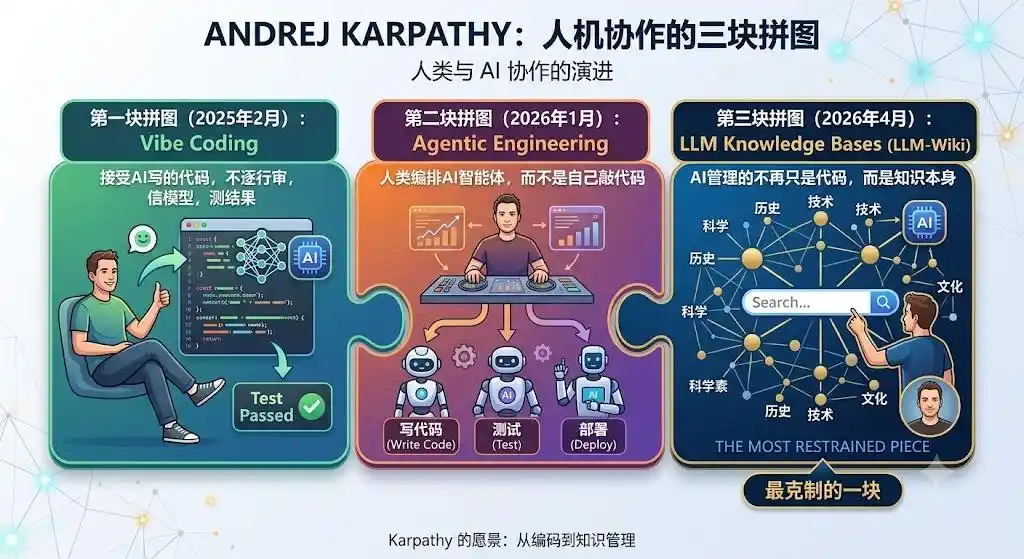
Dans ce nouveau paradigme, ce qui est retiré à l'humain, ce sont les tâches ingrates que personne n'aime faire : collectionner, organiser, lier, tenir les comptes.

Ce qui reste à l'humain, ce ne sont que deux choses : décider de quoi lire, et, comprendre ce que tout cela signifie vraiment. Ce sont précisément les deux choses que la machine ne peut pas encore faire à votre place, et ne devrait surtout pas faire pour vous.

C'est l'histoire d'un outil qui, en évoluant à l'extrême, finit par faire un cercle complet et rendre l'attention humaine à l'humain lui-même.

Ce fichier markdown si sobre qu'il en est presque frustrant, n'a pas sorti de modèle, n'a pas dominé de classements.

Il rappelle simplement, tranquillement, une chose : votre cerveau n'était pas fait pour tenir des comptes.

Cet article provient du compte public WeChat « 新智元 » (New Wisdom Era), auteur : ASI Apocalypse

Trending Cryptos

Related Questions

QQuel est le concept principal proposé par Karpathy pour gérer les notes personnelles, selon l'article ?

AKarpathy propose de traiter vos notes comme du code source immuable et d'utiliser un LLM comme un compilateur pour les transformer en une base de connaissances structurée et liée (un Wiki), plutôt que de compter sur le RAG pour des recherches ponctuelles.

QQuels sont les trois principaux problèmes du RAG (Recherche Augmentée par Génération) mentionnés dans l'article ?

ALes trois principaux problèmes du RAG mentionnés sont : 1) Il ne fait que traiter des fragments locaux, sans comprendre la vue d'ensemble. 2) Il peut produire des réponses contradictoires si les notes évoluent dans le temps. 3) Les graphes de connaissances manuellement entretenus finissent par 'pourrir' avec des liens brisés et une efficacité de recherche qui décline.

QQuelles sont les trois couches de l'architecture LLM-WIKI décrite par Karpathy ?

ALes trois couches sont : 1) La couche Raw (matériaux bruts) : les notes et inspirations originales immuables. 2) La couche Schema (constitution de la connaissance) : les règles définies par l'utilisateur pour structurer l'information. 3) La couche Wiki (produit compilé) : la base de connaissances structurée, liée et maintenue par l'IA.

QQuel visionnaire des années 1940 et quelle idée Karpathy associe-t-il à son concept de LLM-WIKI ?

AKarpathy associe son concept au visionnaire Vannevar Bush et à son article de 1945 'As We May Think', qui décrivait une machine hypothétique appelée 'Memex' capable de stocker toutes les connaissances d'une personne et d'établir des 'sentiers associatifs' entre elles.

QSelon la conclusion de l'article, quel est l'impact fondamental de l'approche LLM-WIKI sur le rôle de l'humain dans la gestion des connaissances ?

AL'approche LLM-WIKI libère l'humain des tâches fastidieuses de collecte, d'organisation, de liaison et de mise à jour ('tenir les comptes') des connaissances. Elle permet à l'humain de se concentrer sur les deux choses essentielles que la machine ne peut pas faire : décider quoi lire/étudier, et réfléchir au sens profond de l'information.

Related Reads

Trading

Spot

Hot Articles

What is SONIC

Sonic: Pioneering the Future of Gaming in Web3 Introduction to Sonic In the ever-evolving landscape of Web3, the gaming industry stands out as one of the most dynamic and promising sectors. At the forefront of this revolution is Sonic, a project designed to amplify the gaming ecosystem on the Solana blockchain. Leveraging cutting-edge technology, Sonic aims to deliver an unparalleled gaming experience by efficiently processing millions of requests per second, ensuring that players enjoy seamless gameplay while maintaining low transaction costs. This article delves into the intricate details of Sonic, exploring its creators, funding sources, operational mechanics, and the timeline of significant events that have shaped its journey. What is Sonic? Sonic is an innovative layer-2 network that operates atop the Solana blockchain, specifically tailored to enhance the existing Solana gaming ecosystem. It accomplishes this through a customised, VM-agnostic game engine paired with a HyperGrid interpreter, facilitating sovereign game economies that roll up back to the Solana platform. The primary goals of Sonic include: Enhanced Gaming Experiences: Sonic is committed to offering lightning-fast on-chain gameplay, allowing players and developers to engage with games at previously unattainable speeds. Atomic Interoperability: This feature enables transactions to be executed within Sonic without the need to redeploy Solana programmes and accounts. This makes the process more efficient and directly benefits from Solana Layer1 services and liquidity. Seamless Deployment: Sonic allows developers to write for Ethereum Virtual Machine (EVM) based systems and execute them on Solana’s SVM infrastructure. This interoperability is crucial for attracting a broader range of dApps and decentralised applications to the platform. Support for Developers: By offering native composable gaming primitives and extensible data types - dining within the Entity-Component-System (ECS) framework - game creators can craft intricate business logic with ease. Overall, Sonic's unique approach not only caters to players but also provides an accessible and low-cost environment for developers to innovate and thrive. Creator of Sonic The information regarding the creator of Sonic is somewhat ambiguous. However, it is known that Sonic's SVM is owned by the company Mirror World. The absence of detailed information about the individuals behind Sonic reflects a common trend in several Web3 projects, where collective efforts and partnerships often overshadow individual contributions. Investors of Sonic Sonic has garnered considerable attention and support from various investors within the crypto and gaming sectors. Notably, the project raised an impressive $12 million during its Series A funding round. The round was led by BITKRAFT Ventures, with other notable investors including Galaxy, Okx Ventures, Interactive, Big Brain Holdings, and Mirana. This financial backing signifies the confidence that investment foundations have in Sonic’s potential to revolutionise the Web3 gaming landscape, further validating its innovative approaches and technologies. How Does Sonic Work? Sonic utilises the HyperGrid framework, a sophisticated parallel processing mechanism that enhances its scalability and customisability. Here are the core features that set Sonic apart: Lightning Speed at Low Costs: Sonic offers one of the fastest on-chain gaming experiences compared to other Layer-1 solutions, powered by the scalability of Solana’s virtual machine (SVM). Atomic Interoperability: Sonic enables transaction execution without redeployment of Solana programmes and accounts, effectively streamlining the interaction between users and the blockchain. EVM Compatibility: Developers can effortlessly migrate decentralised applications from EVM chains to the Solana environment using Sonic’s HyperGrid interpreter, increasing the accessibility and integration of various dApps. Ecosystem Support for Developers: By exposing native composable gaming primitives, Sonic facilitates a sandbox-like environment where developers can experiment and implement business logic, greatly enhancing the overall development experience. Monetisation Infrastructure: Sonic natively supports growth and monetisation efforts, providing frameworks for traffic generation, payments, and settlements, thereby ensuring that gaming projects are not only viable but also sustainable financially. Timeline of Sonic The evolution of Sonic has been marked by several key milestones. Below is a brief timeline highlighting critical events in the project's history: 2022: The Sonic cryptocurrency was officially launched, marking the beginning of its journey in the Web3 gaming arena. 2024: June: Sonic SVM successfully raised $12 million in a Series A funding round. This investment allowed Sonic to further develop its platform and expand its offerings. August: The launch of the Sonic Odyssey testnet provided users with the first opportunity to engage with the platform, offering interactive activities such as collecting rings—a nod to gaming nostalgia. October: SonicX, an innovative crypto game integrated with Solana, made its debut on TikTok, capturing the attention of over 120,000 users within a short span. This integration illustrated Sonic’s commitment to reaching a broader, global audience and showcased the potential of blockchain gaming. Key Points Sonic SVM is a revolutionary layer-2 network on Solana explicitly designed to enhance the GameFi landscape, demonstrating great potential for future development. HyperGrid Framework empowers Sonic by introducing horizontal scaling capabilities, ensuring that the network can handle the demands of Web3 gaming. Integration with Social Platforms: The successful launch of SonicX on TikTok displays Sonic’s strategy to leverage social media platforms to engage users, exponentially increasing the exposure and reach of its projects. Investment Confidence: The substantial funding from BITKRAFT Ventures, among others, emphasizes the robust backing Sonic has, paving the way for its ambitious future. In conclusion, Sonic encapsulates the essence of Web3 gaming innovation, striking a balance between cutting-edge technology, developer-centric tools, and community engagement. As the project continues to evolve, it is poised to redefine the gaming landscape, making it a notable entity for gamers and developers alike. As Sonic moves forward, it will undoubtedly attract greater interest and participation, solidifying its place within the broader narrative of blockchain gaming.

1.8k Total ViewsPublished 2024.04.04Updated 2024.12.03

What is SONIC

What is $S$

Understanding SPERO: A Comprehensive Overview Introduction to SPERO As the landscape of innovation continues to evolve, the emergence of web3 technologies and cryptocurrency projects plays a pivotal role in shaping the digital future. One project that has garnered attention in this dynamic field is SPERO, denoted as SPERO,$$s$. This article aims to gather and present detailed information about SPERO, to help enthusiasts and investors understand its foundations, objectives, and innovations within the web3 and crypto domains. What is SPERO,$$s$? SPERO,$$s$ is a unique project within the crypto space that seeks to leverage the principles of decentralisation and blockchain technology to create an ecosystem that promotes engagement, utility, and financial inclusion. The project is tailored to facilitate peer-to-peer interactions in new ways, providing users with innovative financial solutions and services. At its core, SPERO,$$s$ aims to empower individuals by providing tools and platforms that enhance user experience in the cryptocurrency space. This includes enabling more flexible transaction methods, fostering community-driven initiatives, and creating pathways for financial opportunities through decentralised applications (dApps). The underlying vision of SPERO,$$s$ revolves around inclusiveness, aiming to bridge gaps within traditional finance while harnessing the benefits of blockchain technology. Who is the Creator of SPERO,$$s$? The identity of the creator of SPERO,$$s$ remains somewhat obscure, as there are limited publicly available resources providing detailed background information on its founder(s). This lack of transparency can stem from the project's commitment to decentralisation—an ethos that many web3 projects share, prioritising collective contributions over individual recognition. By centring discussions around the community and its collective goals, SPERO,$$s$ embodies the essence of empowerment without singling out specific individuals. As such, understanding the ethos and mission of SPERO remains more important than identifying a singular creator. Who are the Investors of SPERO,$$s$? SPERO,$$s$ is supported by a diverse array of investors ranging from venture capitalists to angel investors dedicated to fostering innovation in the crypto sector. The focus of these investors generally aligns with SPERO's mission—prioritising projects that promise societal technological advancement, financial inclusivity, and decentralised governance. These investor foundations are typically interested in projects that not only offer innovative products but also contribute positively to the blockchain community and its ecosystems. The backing from these investors reinforces SPERO,$$s$ as a noteworthy contender in the rapidly evolving domain of crypto projects. How Does SPERO,$$s$ Work? SPERO,$$s$ employs a multi-faceted framework that distinguishes it from conventional cryptocurrency projects. Here are some of the key features that underline its uniqueness and innovation: Decentralised Governance: SPERO,$$s$ integrates decentralised governance models, empowering users to participate actively in decision-making processes regarding the project’s future. This approach fosters a sense of ownership and accountability among community members. Token Utility: SPERO,$$s$ utilises its own cryptocurrency token, designed to serve various functions within the ecosystem. These tokens enable transactions, rewards, and the facilitation of services offered on the platform, enhancing overall engagement and utility. Layered Architecture: The technical architecture of SPERO,$$s$ supports modularity and scalability, allowing for seamless integration of additional features and applications as the project evolves. This adaptability is paramount for sustaining relevance in the ever-changing crypto landscape. Community Engagement: The project emphasises community-driven initiatives, employing mechanisms that incentivise collaboration and feedback. By nurturing a strong community, SPERO,$$s$ can better address user needs and adapt to market trends. Focus on Inclusion: By offering low transaction fees and user-friendly interfaces, SPERO,$$s$ aims to attract a diverse user base, including individuals who may not previously have engaged in the crypto space. This commitment to inclusion aligns with its overarching mission of empowerment through accessibility. Timeline of SPERO,$$s$ Understanding a project's history provides crucial insights into its development trajectory and milestones. Below is a suggested timeline mapping significant events in the evolution of SPERO,$$s$: Conceptualisation and Ideation Phase: The initial ideas forming the basis of SPERO,$$s$ were conceived, aligning closely with the principles of decentralisation and community focus within the blockchain industry. Launch of Project Whitepaper: Following the conceptual phase, a comprehensive whitepaper detailing the vision, goals, and technological infrastructure of SPERO,$$s$ was released to garner community interest and feedback. Community Building and Early Engagements: Active outreach efforts were made to build a community of early adopters and potential investors, facilitating discussions around the project’s goals and garnering support. Token Generation Event: SPERO,$$s$ conducted a token generation event (TGE) to distribute its native tokens to early supporters and establish initial liquidity within the ecosystem. Launch of Initial dApp: The first decentralised application (dApp) associated with SPERO,$$s$ went live, allowing users to engage with the platform's core functionalities. Ongoing Development and Partnerships: Continuous updates and enhancements to the project's offerings, including strategic partnerships with other players in the blockchain space, have shaped SPERO,$$s$ into a competitive and evolving player in the crypto market. Conclusion SPERO,$$s$ stands as a testament to the potential of web3 and cryptocurrency to revolutionise financial systems and empower individuals. With a commitment to decentralised governance, community engagement, and innovatively designed functionalities, it paves the way toward a more inclusive financial landscape. As with any investment in the rapidly evolving crypto space, potential investors and users are encouraged to research thoroughly and engage thoughtfully with the ongoing developments within SPERO,$$s$. The project showcases the innovative spirit of the crypto industry, inviting further exploration into its myriad possibilities. While the journey of SPERO,$$s$ is still unfolding, its foundational principles may indeed influence the future of how we interact with technology, finance, and each other in interconnected digital ecosystems.

101 Total ViewsPublished 2024.12.17Updated 2024.12.17

What is $S$

What is AGENT S

Agent S: The Future of Autonomous Interaction in Web3 Introduction In the ever-evolving landscape of Web3 and cryptocurrency, innovations are constantly redefining how individuals interact with digital platforms. One such pioneering project, Agent S, promises to revolutionise human-computer interaction through its open agentic framework. By paving the way for autonomous interactions, Agent S aims to simplify complex tasks, offering transformative applications in artificial intelligence (AI). This detailed exploration will delve into the project's intricacies, its unique features, and the implications for the cryptocurrency domain. What is Agent S? Agent S stands as a groundbreaking open agentic framework, specifically designed to tackle three fundamental challenges in the automation of computer tasks: Acquiring Domain-Specific Knowledge: The framework intelligently learns from various external knowledge sources and internal experiences. This dual approach empowers it to build a rich repository of domain-specific knowledge, enhancing its performance in task execution. Planning Over Long Task Horizons: Agent S employs experience-augmented hierarchical planning, a strategic approach that facilitates efficient breakdown and execution of intricate tasks. This feature significantly enhances its ability to manage multiple subtasks efficiently and effectively. Handling Dynamic, Non-Uniform Interfaces: The project introduces the Agent-Computer Interface (ACI), an innovative solution that enhances the interaction between agents and users. Utilizing Multimodal Large Language Models (MLLMs), Agent S can navigate and manipulate diverse graphical user interfaces seamlessly. Through these pioneering features, Agent S provides a robust framework that addresses the complexities involved in automating human interaction with machines, setting the stage for myriad applications in AI and beyond. Who is the Creator of Agent S? While the concept of Agent S is fundamentally innovative, specific information about its creator remains elusive. The creator is currently unknown, which highlights either the nascent stage of the project or the strategic choice to keep founding members under wraps. Regardless of anonymity, the focus remains on the framework's capabilities and potential. Who are the Investors of Agent S? As Agent S is relatively new in the cryptographic ecosystem, detailed information regarding its investors and financial backers is not explicitly documented. The lack of publicly available insights into the investment foundations or organisations supporting the project raises questions about its funding structure and development roadmap. Understanding the backing is crucial for gauging the project's sustainability and potential market impact. How Does Agent S Work? At the core of Agent S lies cutting-edge technology that enables it to function effectively in diverse settings. Its operational model is built around several key features: Human-like Computer Interaction: The framework offers advanced AI planning, striving to make interactions with computers more intuitive. By mimicking human behaviour in tasks execution, it promises to elevate user experiences. Narrative Memory: Employed to leverage high-level experiences, Agent S utilises narrative memory to keep track of task histories, thereby enhancing its decision-making processes. Episodic Memory: This feature provides users with step-by-step guidance, allowing the framework to offer contextual support as tasks unfold. Support for OpenACI: With the ability to run locally, Agent S allows users to maintain control over their interactions and workflows, aligning with the decentralised ethos of Web3. Easy Integration with External APIs: Its versatility and compatibility with various AI platforms ensure that Agent S can fit seamlessly into existing technological ecosystems, making it an appealing choice for developers and organisations. These functionalities collectively contribute to Agent S's unique position within the crypto space, as it automates complex, multi-step tasks with minimal human intervention. As the project evolves, its potential applications in Web3 could redefine how digital interactions unfold. Timeline of Agent S The development and milestones of Agent S can be encapsulated in a timeline that highlights its significant events: September 27, 2024: The concept of Agent S was launched in a comprehensive research paper titled “An Open Agentic Framework that Uses Computers Like a Human,” showcasing the groundwork for the project. October 10, 2024: The research paper was made publicly available on arXiv, offering an in-depth exploration of the framework and its performance evaluation based on the OSWorld benchmark. October 12, 2024: A video presentation was released, providing a visual insight into the capabilities and features of Agent S, further engaging potential users and investors. These markers in the timeline not only illustrate the progress of Agent S but also indicate its commitment to transparency and community engagement. Key Points About Agent S As the Agent S framework continues to evolve, several key attributes stand out, underscoring its innovative nature and potential: Innovative Framework: Designed to provide an intuitive use of computers akin to human interaction, Agent S brings a novel approach to task automation. Autonomous Interaction: The ability to interact autonomously with computers through GUI signifies a leap towards more intelligent and efficient computing solutions. Complex Task Automation: With its robust methodology, it can automate complex, multi-step tasks, making processes faster and less error-prone. Continuous Improvement: The learning mechanisms enable Agent S to improve from past experiences, continually enhancing its performance and efficacy. Versatility: Its adaptability across different operating environments like OSWorld and WindowsAgentArena ensures that it can serve a broad range of applications. As Agent S positions itself in the Web3 and crypto landscape, its potential to enhance interaction capabilities and automate processes signifies a significant advancement in AI technologies. Through its innovative framework, Agent S exemplifies the future of digital interactions, promising a more seamless and efficient experience for users across various industries. Conclusion Agent S represents a bold leap forward in the marriage of AI and Web3, with the capacity to redefine how we interact with technology. While still in its early stages, the possibilities for its application are vast and compelling. Through its comprehensive framework addressing critical challenges, Agent S aims to bring autonomous interactions to the forefront of the digital experience. As we move deeper into the realms of cryptocurrency and decentralisation, projects like Agent S will undoubtedly play a crucial role in shaping the future of technology and human-computer collaboration.

770 Total ViewsPublished 2025.01.14Updated 2025.01.14

What is AGENT S

Discussions

Welcome to the HTX Community. Here, you can stay informed about the latest platform developments and gain access to professional market insights. Users' opinions on the price of S (S) are presented below.

活动图片